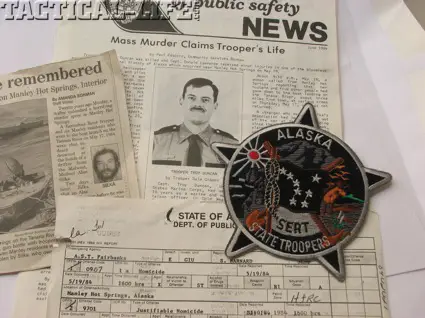
Michael Alan Silka
Spree killer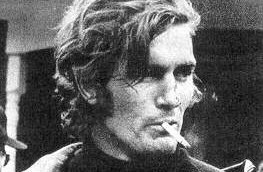 Paul John Knowles
Spree killer · USA · 1974
Paul John Knowles (April 17, 1946 – November 18, 1974) was an American spree ki…
35 victims
Paul John Knowles
Spree killer · USA · 1974
Paul John Knowles (April 17, 1946 – November 18, 1974) was an American spree ki…
35 victims
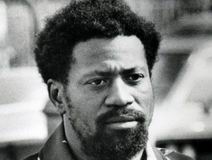 Bobby Joe Maxwell
Spree killer · USA · 1978
Name: Bobby Joe Maxwell Sex: M Race: B Type: T Motive: PC-nonspecific Method of…
11 victims
Bobby Joe Maxwell
Spree killer · USA · 1978
Name: Bobby Joe Maxwell Sex: M Race: B Type: T Motive: PC-nonspecific Method of…
11 victims
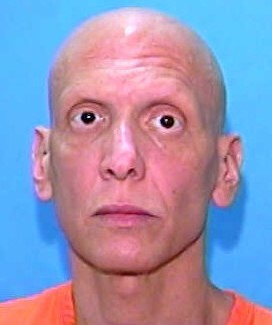 Manuel Pardo
Spree killer · USA · 1986
Manuel Pardo, Jr. was a former police officer who was convicted of nine counts…
9 victims
Manuel Pardo
Spree killer · USA · 1986
Manuel Pardo, Jr. was a former police officer who was convicted of nine counts…
9 victims
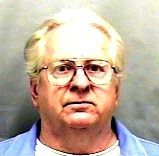 Allen Leroy Anderson
Spree killer · USA · 1976
Allen Leroy Anderson was a 34-year-old vagrant with a long record of felony arr…
8 victims
Allen Leroy Anderson
Spree killer · USA · 1976
Allen Leroy Anderson was a 34-year-old vagrant with a long record of felony arr…
8 victims
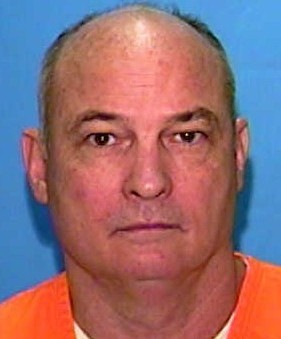 Harold Gene Lucas
Murderer · USA · 1976
Harold Gene Lucas was sentenced to death in Florida. Harold Lucas knew the vict…
1 victim
Harold Gene Lucas
Murderer · USA · 1976
Harold Gene Lucas was sentenced to death in Florida. Harold Lucas knew the vict…
1 victim
 Daisuke Mori
Murderer · Japan · 2000
Daisuke Mori (守大助, Mori Daisuke, born April 28, 1971) was a Japanese nurse who…
1 victim
Daisuke Mori
Murderer · Japan · 2000
Daisuke Mori (守大助, Mori Daisuke, born April 28, 1971) was a Japanese nurse who…
1 victim
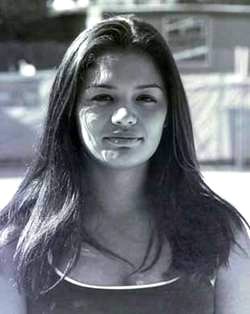 Katrina Sarkissian
Homicide · USA · 2001
Katrina Sarkissian was 17 at the time of the killing of Deanna Maran. Deanna Ma…
1 victim
Katrina Sarkissian
Homicide · USA · 2001
Katrina Sarkissian was 17 at the time of the killing of Deanna Maran. Deanna Ma…
1 victim
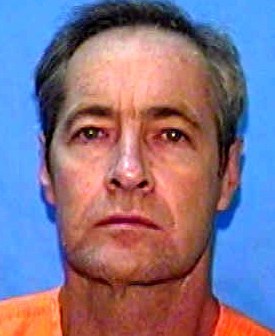 William K. Taylor
Murderer · USA · 2001
Name: William K. Taylor · Date of birth: 09/08/58 · DC#: 111640 · Thirteenth Ju…
1 victim
William K. Taylor
Murderer · USA · 2001
Name: William K. Taylor · Date of birth: 09/08/58 · DC#: 111640 · Thirteenth Ju…
1 victim
- Gender
- male
- Country
- USA
- Location
- Manley Hot Springs, Alaska, USA
- Date of birth
- August 20, 1958
- Age at first offence
- 26
- Characteristics
- fugitive
- Victim profile
- Roger Culp / Fred Burk, 27 / Lyman Klein, 31, his pregnant wife Joyce, and their 2 year old son, Marshall / Dale Madajski, 24 / Larry Joe McVey, 37 / Albert Hagen / Trooper Troy L. Duncan, 34
- Method of murder
- Shooting
- Date(s) of murder
- May 18, 1984
- Years active
- 1984
- Date of arrest
- —
- Status
-
Died in custody
Killed during a shoot-out with the police on May 19, 1984
Case record: Michael Alan Silka
STATUS / outcome
Michael Alan Silka was killed during a shoot-out with the police on May 19, 1984.
The offence
Silka went on a three-hour rampage at Manley Hot Springs on the Tanana river boat ramp before dumping the bodies in the swift current. Police described him as having killed a total of nine people, including a pregnant woman and a 2 year old child. Seven victims were believed to have been killed on a boat landing near Manley Hot Springs and their bodies were dumped into the Tanana River. Silka killed a state trooper in a helicopter pursuing him. A “scraggly” drifter from Hoffman Estates was described as having killed nine people before being gunned down in a shootout near the tiny fishing village.
The victims identified by name were:
- Fred Burk, 27 years old
- Lyman Klein, 31
- Joyce Klein, pregnant wife of Lyman Klein
- Marshall Klein, 2 year old son of Lyman Klein
- Dale Madajski, 24
- Larry Joe McVey, 37
- Joe McVey
- Albert Hagen
- Roger Culp, 34
Authorities described drag marks on the shore indicating Silka dumped the bodies in the river. Police believed Silka fled upriver in a boat he got from one of the victims of the slaughter on the boat landing. Local residents identified a family of three who went for a pleasure ride on Thursday: Lyman Klein, his pregnant wife Joyce, and their 2 year old son, Marshall. Other reported missing people were:
- Joe McVey and Dale Madski, who had gone to the landing to take a boat to their fish camp
- Albert Hagen, who was hauling brush to the landing Fred Burk was described as travelling to the landing in his boat.
Investigation and search
Police were seeking Silka for questioning when they learned that he had turned up in Manley Hot Springs in the Tanana Valley 90 miles west of Fairbanks. Troopers speculated that Silka killed six townspeople with his shotgun Thursday and tossed their bodies in the swirling, mud-choked Tanana River before fleeing upstream. The only sign of the slaughter was a blood-spattered boat landing three miles from town.
Authorities received a missing persons report on Roger Culp. Two weeks after that disturbance report, authorities received the missing persons report on Roger Culp, 34, who lived next door to Silka. They returned to Silka’s cabin, but he had left. They retested the blood on the ground and determined it was human.
Police used diving gear and grappling hooks to search for bodies in the silt-laden and icy river Sunday, but there was little hope the victims would be recovered. Bernard said: “That river doesn?t give up its dead very often,” and Bernard’s name was also given as Bernard. Sam Barnard was described as a homicide investigator and also said: “That river doesn?t give up its dead very often.”
Police used helicopters and planes and found Silka hiding on the shore upstream Saturday. The SERT team was searching for Silka. Troopers had sent several fixed wings and two helicopters to search an area of 50,000 square miles. Silka was believed to have gone up the Tanana River to the Zitziana (the “Zit”) River. The plan was to go up the Zit to establish a trapping cabin.
Two Fish and Wildlife troopers spotted Silka’s canoe 30 miles from Manley, headed up the Zit.
Arrest / confrontation / shoot-out
On May 19, 1984, troopers closed in on Silka in two helicopters. The second helicopter carried Trooper Dave Hamilton and Lieutenant John Meyers, the SERT team leader. Dave carried a Steyr SSG with a 6X scope, and the Lt. had an M16.
The helicopter pursuit involved a helicopter with:
- Tom Davis, pilot, described as a two-tour Vietnam combat pilot
- Captain Don Lawrence, “E” detachment commander, sitting in the right rear
- Trooper Troy L. Duncan, 34, of Fairbanks, sitting in the left rear seat
- The narrative writer in the left front seat, with seat harnesses tethered to a hard point on the floor The left-side doors of the helicopter had been removed.
Troy Duncan was armed with a Colt M16A1 with a Colt 3X scope; the narrative writer had an M16A1 with iron sights. Both guns held 20-round magazines loaded with tracer rounds. They each carried two handguns and the usual S.W.A.T. team gear.
The operational order was to shoot Silka if he did anything other than stop and put his hands in the air.
As the helicopters approached, the second helo diverted to check a man standing on the bank of the river. They spotted the canoe, tethered behind Fred Burke’s riverboat, tied to a tree in a slough off the river.
The narrative described Silka bending over and reaching for something in the boat as the helicopter flew over and turned into the wind to land. The helicopter began its descent, coming into ground effect. The narrative included the following radio communication: “I yelled over the radio for Tom to get us up, out of the landing zone, because Silka had a good position below a dirt bank and behind three trees.”
Silka attacked as the helicopters traded kerosene for altitude. The narrative described the firing and weapons use verbatim: “Silka, Troy, and I all firing at the same time; Troy and I firing 55-gr. tracers. Then, Troy fired three shots, I fired a burst of eight or nine, and Silka his first shot. He was using a Ruger #1, single shot, in .30-06. Silka fired again, hitting Troy in the neck. I fired another burst, hitting Silka eight times in the legs, body and head. Both Troy and Silka died instantly.”
The narrative stated that Captain Lawrence was hit in the face from fragments of the bullet that had killed Troy. The narrative also described the duration and number of shots: “I figure the entire shooting lasted two seconds—25 rounds fired, two dead, one wounded, two seconds.”
After the shooting, the narrative stated they headed for Manley. The second helicopter landed and dealt with Silka and found him dead.
Captain Donald Lawrence was described as being hit by bullet fragments and treated for minor wounds to his face. Silka was killed by return fire from a state trooper’s M-16 automatic rifle.
The narrative included: “As we traded kerosene for altitude, Silka attacked.”
Police were described as having said Silka opened fire from a hidden position and they returned the fire. Captain Donald Lawrence was quoted: “Silka opened fire from a hidden position and we returned the fire,” said Captain Donald Lawrence, a commander who was hit by bullet fragments and was treated for minor wounds to his face. A quote from the investigative team and the commander was also included:
Timeline
- May 19, 1984 — Silka was killed during a shoot-out with the police.
- May 18, 1984 — The prior day, Silka was described as having killed six residents of Manley Hot Springs, including a 2-year-old boy and a pregnant woman, and also killing a trapper, Fred Burk.
- May 17, 1984 — Bodies of four of seven people presumed shot and killed by Michael Silka were recovered from a river; one body was identified as Fred Burk (27).
- June 24, 1984 — The New York Times reported that bodies of four of seven people presumed shot and killed by Michael Silka had been recovered from a river; it described the locations and prior separate findings of the other bodies.
- April 28 — Police received a report of a disturbance in a remote part of Fairbanks, where they talked to Silka and saw blood on the ground; Silka said he had butchered a moose.
- October 1975 — Silka was arrested for a break-in at a Des Plaines sporting goods store.
- February 1977 — Silka was arrested by Hoffman Estates police for carrying a loaded black powder rifle through a park in town.
- July 1983 — Silka was arrested for a weapons-related offense by South Barrington police.
- Fall — Silka disappeared sometime in the fall after police issued a warrant for his arrest.
Background
Michael Alan Silka was described as a drifter and an unemployed transient. Police stated he had been in Alaska only a month when a neighbor, Roger Culp of Fairbanks, disappeared and was presumed murdered. Silka was described as having been in Alaska only a month and as having rented a cabin in a remote part of Fairbanks in April. Silka was described as having camped at Manley while waiting for the ice to go out on the river. His plan was described as becoming a trapper in the wilderness west of Denali National Park. Silka was described as having camped by the river for about a week and arriving in a brown sedan with a canoe lashed to its roof.
Local residents described Silka’s behavior:
- Patricia Lee, who with her husband, Bob, operated the Manley Roadhouse, said Silka “He was scraggly and he acted really weird. He aced real crazy,” and said he talked about how he could smell clams through the dirt.
- Patricia Lee also said: “He was scraggly and he acted really weird. He aced real crazy,” and: “He talked about how he could smell clams through the dirt. Through the dirt,” and: “When I met him, I felt uneasy, but I kept telling myself that was silly.”
- Teresa Conger said she ran into Silka a few days before the rampage and described his knife behavior: “but then he couldn?t stop messing around with that knife. He had a huge knife he just kept sharpening and sharpening. He was just obsessed with that.”
- Sabrenia Gurtler, 18, described the town and drifters: “Its just the end of the road,” and: “They've gone as far as it takes them.”
- Investigator Jim McCann was quoted about a 2-year-old child: “We just sat there and I tried to imagine what it was like ... a 2 year old kid. We knew he was ours if he came back,” and: “We just sat there and I tried to imagine what it was like ... a 2 year old kid. We knew he was ours if he came back.”
Residents described when they realized friends were missing:
- Lieutenant John Myers said: “This is a small town. It took them a while to put two and two together.”
- Residents called for help late Friday after determining many friends were missing, and troopers arrived about 2 a.m. Saturday.
- Investigator Jim McCann also described the waiting behavior: “We just sat there and I tried to imagine what it was like ... a 2 year old kid. a 2 year old kid.
Police statements also included a quote from Sam Barnard, homicide investigator: “Whoever drove up to that boat landing between 2 p.m. and 5 p.m. Thursday, he killed, I don't know why.”
Prior arrests and troubled past (before Alaska)
Police said Silka was picked up for a series of arrests for unlawful use of a weapon, burglary, shoplifting, and resisting police over the past nine years. Silka’s police record started in October 1975 after he was arrested for a break-in at a Des Plaines sporting goods store. At age 17, he was sentenced to 30 days in a correctional institution and two years probation after charges were reduced from burglary to criminal damage to property. In February 1977, he was arrested by Hoffman Estates police for carrying a loaded black powder rifle through a park in town. Just over a month later, he was arrested again for carrying the muzzle-loading rifle through a field in town. In both cases, he was charged with unlawful use of a weapon. He was arrested again for a similar offense by South Barrington police in July 1983. Police said they spotted a gun in his car when they stopped him for a traffic offense. Police said that Silka showed up for two court appearances in South Barrington. South Barrington Police Chief Peter Swistowicz said: “He showed up for two court appearances.” Police issued a warrant for Silka’s arrest, but it received a low priority because the weapons charge was only a misdemeanor. Police described Silka as heading for Alaska to live the life of a woodsman. Mike Ostes, who graduated from Hoffman Estates high school in 1977, described Silka as “always a troubled kid” and said: “It's a surprise when you hear about it,” and: “But after you think about how he was, it's no big surprise. You could just picture this guy growing up to do something bad.” Bill Spaletto, a Hoffman Estates physical education teacher, said Silka had disciplinary problems during high school and stated: “He patterned his life to find himself in this kind of trouble,” and: “He patterned his life to find himself in this kind of trouble.” A former neighbor, Ferman Hurst, said Silka always “meant well” and his previous “scrapes” with the law might have happened to any teenager. Ferman Hurst said: “This came as a shock to us, I can't believe what happened,” and “I understand he did very, very well,” and “He was always very nice to us.” Ferman Hurst said he wrote a letter of recommendation when Silka enlisted in Air Force helicopter services and said: “I understand he did very, very well,” and “He was always very nice to us.” Ferman Hurst also said he and his wife informed Silka’s father, Frank, of the death of his son: “It was like the Sears Tower falling over on him.” Police said a former classmate described Silka as “basically a loner.” Paul Edscorn, information officer for Alaska state troopers, described that police received a report of a disturbance around April 28 and talked to Silka, who said he had butchered a moose. Paul Edscorn said: “We received a report of a disturbance down there about April 28, and we actually talked to Silka,” and: “We saw some blood on the ground. He said he had butchered a moose.”
Other details (Canada / North Dakota suspicions and unrecovered people)
Silka was also suspected of killing two women in Canada and a man in North Dakota, and two passengers seen in his vehicle were never located.
The narrative stated the SERT team underestimated Silka and described him as a dead shot and motivated. It stated: “We underestimated our opponent!” It said Silka “crumble[d] when we showed up,” but then stated: “The problem was that Silka wasn’t impressed.” It stated: “Silka was ‘just some **** from Chicago’; he’d crumble when we showed up.” It stated: “The problem was that Silka wasn’t impressed.” It also stated: “He was a dead shot, was in tremendous physical shape, and was motivated—he had nothing to lose.”
The narrative listed equipment gaps and training lessons, including that there were no noise flash devices at the time and discussing flash-bangs and snipers needing a back-up weapon. It included a quote from Thucydides: “He is best who trains in the severest school.”
The narrative quoted Clint Smith: “Some people just need to be shot.”
Outcomes in the shoot-out
The shoot-out resulted in death for:
- Trooper Troy L. Duncan, 34, of Fairbanks
- Silka
Captain Donald Lawrence was treated for minor wounds to his face after being hit in the face from bullet fragments.
Spotted an error, or have more information about this case?