Michael Player
Spree killer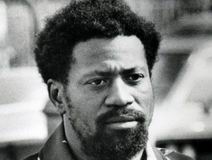 Bobby Joe Maxwell
Spree killer · USA · 1978
Name: Bobby Joe Maxwell Sex: M Race: B Type: T Motive: PC-nonspecific Method of…
11 victims
Bobby Joe Maxwell
Spree killer · USA · 1978
Name: Bobby Joe Maxwell Sex: M Race: B Type: T Motive: PC-nonspecific Method of…
11 victims
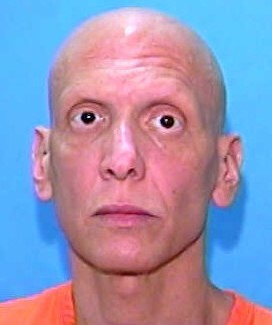 Manuel Pardo
Spree killer · USA · 1986
Manuel Pardo, Jr. was a former police officer who was convicted of nine counts…
9 victims
Manuel Pardo
Spree killer · USA · 1986
Manuel Pardo, Jr. was a former police officer who was convicted of nine counts…
9 victims
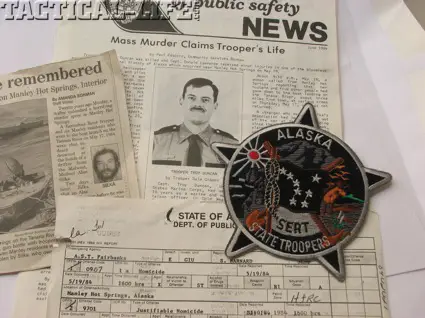 Michael Alan Silka
Spree killer · USA · 1984
Michael Alan Silka was killed during a shoot-out with the police on May 19, 198…
9 victims
Michael Alan Silka
Spree killer · USA · 1984
Michael Alan Silka was killed during a shoot-out with the police on May 19, 198…
9 victims
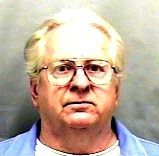 Allen Leroy Anderson
Spree killer · USA · 1976
Allen Leroy Anderson was a 34-year-old vagrant with a long record of felony arr…
8 victims
Allen Leroy Anderson
Spree killer · USA · 1976
Allen Leroy Anderson was a 34-year-old vagrant with a long record of felony arr…
8 victims
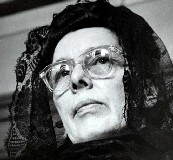 Marie Besnard
Serial killer? · France · 1927
Marie Besnard (also known as Marie Davaillaud) was born in Loudon, France, on A…
12 victims
Marie Besnard
Serial killer? · France · 1927
Marie Besnard (also known as Marie Davaillaud) was born in Loudon, France, on A…
12 victims
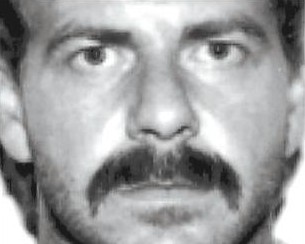 Tommy David Strickler
Murderer · USA · 1989
Tommy David Strickler was executed by lethal injection in Virginia on July 21,…
1 victim
Tommy David Strickler
Murderer · USA · 1989
Tommy David Strickler was executed by lethal injection in Virginia on July 21,…
1 victim
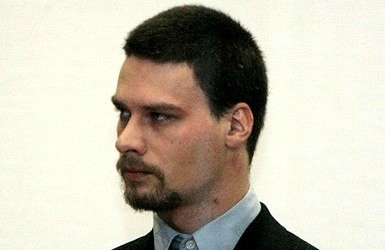 Zdenek Hrbac
Murderer · Germany · 2007
Zdenek Hrbac Zdenek Hrbac was sentenced to life in prison on December 15, 2007.…
1 victim
Zdenek Hrbac
Murderer · Germany · 2007
Zdenek Hrbac Zdenek Hrbac was sentenced to life in prison on December 15, 2007.…
1 victim
 Michael Lee McBride
Murderer · USA · 1985
Michael Lee McBride was a bartender and moved to Lubbock to be close to Christi…
2 victims
Michael Lee McBride
Murderer · USA · 1985
Michael Lee McBride was a bartender and moved to Lubbock to be close to Christi…
2 victims
 Arturo Daniel Aranda
Murderer · USA · 1976
Arturo Daniel Aranda was sentenced to death on May 18, 1979. Aranda Arturo, a 7…
1 victim
Arturo Daniel Aranda
Murderer · USA · 1976
Arturo Daniel Aranda was sentenced to death on May 18, 1979. Aranda Arturo, a 7…
1 victim
 Rachel Capra Craig
Homicide · Canada · 2001
Rachel Capra Craig was a Canadian woman accused of the murder of her fourteen-y…
1 victim
Rachel Capra Craig
Homicide · Canada · 2001
Rachel Capra Craig was a Canadian woman accused of the murder of her fourteen-y…
1 victim
- Gender
- male
- Country
- USA
- Location
- Los Angeles, California, USA
- Date of birth
- 1960
- Age at first offence
- 26
- Characteristics
- spree killer, homeless, robbery, convicted rapist
- Victim profile
- Lone men, most of them homeless
- Method of murder
- Shooting
- Date(s) of murder
- September 4-October 9, 1986
- Years active
- 1986
- Date of arrest
- —
- Status
-
Died in custody
Committed suicide by shooting himself on October 10, 1986
Case record: Michael Player (AKA: Marcus Nisby)
Background
Michael Player was 26 years old when he died. He also was known as Marcus Nisby and was referred to as the “Skid Row Slayer.” He had been convicted within the past two years on charges of theft, armed robbery, violating probation and carrying a concealed pistol. Police had questioned Player as a suspect in the murder of Rudolfo Roque and had released him for lack of evidence.
Michael Player shot and killed multiple lone men, most of them homeless, in and around the Skid Row area in Los Angeles. Police characterised the victims as “targets of opportunity,” and said the slayings had an “added affliction” effect on the city’s homeless population.
The offence
Police identified Michael Player (also known as Marcus Nisby) as the suspect who killed 10 lone men in a series of slayings. The victims were described as being slain in a 36-day period beginning Sept. 4 and ending Oct. 9 with an 11th attack on a man who survived. The killings were described as taking place in the early morning hours without provocation in and around the Skid Row area. Several victims were shot in the back of the head. Some victims were attacked as they slept in alleys or on park benches.
Investigation
Los Angeles Police detectives were led to the suspect through records from the coroner’s department and ballistic tests after the series of killings ended.
Police said the suspect was linked to the slayings by ballistics evidence, the accounts of witnesses and physical evidence collected in a search, with a warrant, of a relative’s residence where Player occasionally stayed.
Police said Player came under suspicion because he had been mentioned as a possible witness to the killing of Rudolfo Roque, the first victim, who was slain Sept. 4.
Police said that after the killings ended and after detectives failed to find Player for an interview, detectives searched the coroner’s records and determined that Player had shot himself to death.
A search of Player’s belongings led police to name him as the Skid Row Slayer, and the case was closed in February 1987.
At the investigation update, Los Angeles Police Chief Daryl Gates stated:
“That closes this case,” the chief said.
Chief Gates also stated:
“That Closes This Case” Bullets fired from the pistol Mr. Nisby used to kill himself were subjected to ballistic tests with several bullets recovered from the slayings, Chief Gates said. ''That closes this case,'' the chief said.
Chief Gates said that bullets fired from the pistol Player used to kill himself were subjected to ballistic tests with several bullets recovered from the slayings.
Arrest
No arrest was recorded. Police said they identified the suspect by investigation after the series of killings ended, and that he shot himself to death.
Death and identification
On October 10, 1986 detectives were searching for a suspect when a well-dressed black man checked into a Wilshire Boulevard hotel, paying in cash and signing the register as “Marcus Nisby.”
In his room, the guest removed his jacket, hung it in the closet, then lay down upon the bed and shot himself to death. Upon discovery of his corpse the next day, a fingerprint comparison identified “Nisby” as 26-year-old Michael Player.
Timeline
- Sept. 4, 1986 — Rudolfo Roque was killed as he walked along a sidewalk.
- September 13, 1986 — Rojello Sirven was killed outright by a shot to the head; Joseph Griffin was a surviving gunshot victim who later lived until October 5.
- Sept. 20, 1986 — Michael Singer was shot in the back of the head.
- Three days later (after Sept. 20, 1986) — David Towns, a vagrant, was killed in his sleep.
- Sept. 30, 1986 — Christopher Boyle (25) and Leon Gaines (56) were murdered in separate attacks.
- Oct. 7, 1986 — Chang Kang (23) was gunned down while visiting Los Angeles.
- Oct. 8, 1986 — Wayne Ellis (44) was killed in Athens Park.
- Oct. 9, 1986 — An 11th attack occurred on a man who survived; Chief Gates said Player shot himself one day after this attack.
- Oct. 10, 1986 — Player checked into a Wilshire Boulevard hotel under the name “Marcus Nisby” and shot himself to death.
Victims
Police described 10 victims who were slain and an 11th attack in which a man survived.
The victims identified in the case narrative included:
- Rudolfo Roque, 54 — killed on the street by a gunman who stepped up behind him and fired a .22-caliber slug through the back of his head.
- Rick Stamps, 66 — killed a few days later using the same .22-caliber weapon.
- Rojello Sirven, 31 — killed outright by a shot to the head.
- Joseph Griffin, 47 — lived until October 5 after being shot.
- Michael Singer, 66 — shot in the back of the head.
- David Towns, 36 — killed in his sleep.
- Christopher Boyle, 25 — murdered in a separate attack.
- Leon Gaines, 56 — murdered in a separate attack.
- Chang Kang, 23 — gunned down while visiting Los Angeles.
- Wayne Ellis, 44 — killed in Athens Park.
Police also said an 11th attack occurred on a man who survived.
Other details
A surviving gunshot victim described the assailant as a youngish black man, providing police their first solid lead in the case.
Police said that after Player was identified, the case was closed in February 1987.
Vaughn Orrin Greenwood was cited as a prior example: he was convicted of the throat slashings of nine men in 1974 and 1975.
Bobby Joe Maxwell was cited as another prior example: he was convicted of two of 10 stabbing murders of victims on Skid Row in 1978 and 1979.
Norman Bernard was cited as another prior example: he pleaded guilty in 1984 to shooting three derelicts.
The narrative also mentioned a separate series of killings: police announced the arrest of Joseph Danks, described as a 24-year-old drifter from Gaylord, Mich., who they said had confessed to killing six homeless men. It was stated that five of the victims were stabbed to death in the Koreatown district in the first week in January. It was also stated that Danks had a history of mental problems, pleaded not guilty to six counts of murder and two counts of attempted murder, and that the District Attorney’s office asserted that a tape recorded statement included his dislike of “bums” and “dirty” derelicts. The District Attorney said Danks had arrived in Los Angeles from Michigan last October.
The narrative further stated that Los Angeles police were still looking for one person believed to have taken the lives of nearly a score of prostitutes.
People
- Michael Player — identified by fingerprint comparison as the suspect; 26 years old; also known as Marcus Nisby.
- Marcus Nisby — name used when signing into a Wilshire Boulevard hotel; identified as Michael Player.
- Daryl Gates — Los Angeles Police Chief; gave statements about the case.
- Rudolfo Roque — 54-year-old victim.
- Rick Stamps — 66-year-old victim.
- Rojello Sirven — 31-year-old victim.
- Joseph Griffin — 47-year-old victim who lived until October 5.
- Michael Singer — 66-year-old victim.
- David Towns — 36-year-old victim.
- Christopher Boyle — 25-year-old victim.
- Leon Gaines — 56-year-old victim.
- Chang Kang — 23-year-old Korean resident of Texas; visiting Los Angeles when killed.
- Wayne Ellis — 44-year-old vagrant; killed in Athens Park.
- Joseph Danks — mentioned in a separate case; 24-year-old drifter who was described as having confessed to killing six homeless men.
- Vaughn Orrin Greenwood — mentioned as a prior convicted serial killer example.
- Bobby Joe Maxwell — mentioned as a prior convicted serial killer example.
- Norman Bernard — mentioned as a prior guilty plea example.
- Michael Newton — referenced as an author in a listing tied to the case narrative.
- Judith Cummings — named as a reporter in a listing tied to the case narrative.
Spotted an error, or have more information about this case?