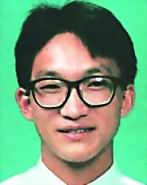
Daisuke Mori
Murderer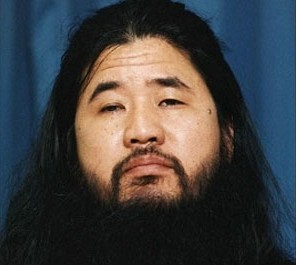 Shoko Asahara
Murderer · Japan · 1995
Shoko Asahara was the founder of Japan's controversial Buddhist religious group…
12 victims
Shoko Asahara
Murderer · Japan · 1995
Shoko Asahara was the founder of Japan's controversial Buddhist religious group…
12 victims
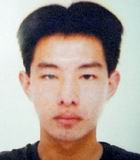 Masahiro Kanagawa
Murderer · Japan · 2008
Masahiro Kanagawa (金川 真大; Kanagawa Masahiro; born 1983) was a Japanese man. · M…
2 victims
Masahiro Kanagawa
Murderer · Japan · 2008
Masahiro Kanagawa (金川 真大; Kanagawa Masahiro; born 1983) was a Japanese man. · M…
2 victims
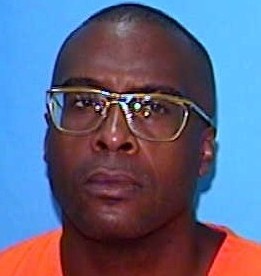 Chadwick Willacy
Murderer · USA · 1990
Chadwick Willacy was born on 09/23/67. His case involved the Eighteenth Judicia…
1 victim
Chadwick Willacy
Murderer · USA · 1990
Chadwick Willacy was born on 09/23/67. His case involved the Eighteenth Judicia…
1 victim
 Bruce Mendenhall
Murderer · USA · 2007
Bruce Mendenhall grew up in Crawford County, Illinois. He was married and has t…
4 victims
Bruce Mendenhall
Murderer · USA · 2007
Bruce Mendenhall grew up in Crawford County, Illinois. He was married and has t…
4 victims
 John Dwayne Freeman
Murderer · USA · 1986
John Dwayne Freeman was sentenced to death on November 2, 1988. The case involv…
2 victims
John Dwayne Freeman
Murderer · USA · 1986
John Dwayne Freeman was sentenced to death on November 2, 1988. The case involv…
2 victims
- Gender
- male
- Country
- Japan
- Location
- Sendai, Miyagi Prefecture, Japan
- Date of birth
- April 28, 1971
- Age at first offence
- 29
- Characteristics
- nurse, poisoner
- Victim profile
- Yukiko Shimoyama, 89 (patient)
- Method of murder
- Poisoning (overdose of vecuronium bromide)
- Date(s) of murder
- November 24, 2000
- Years active
- 2000
- Date of arrest
- January 6, 2001
- Status
-
Life imprisonment
Sentenced to life in prison on March 30, 2004; conviction upheld by the Sendai High Court on March 22, 2006; sentence upheld by the Supreme Court on February 25, 2008
Background
Daisuke Mori (守大助, Mori Daisuke, born April 28, 1971) was a Japanese nurse who was suspected of being a medical serial killer. He was convicted of giving muscle relaxant to patients in a clinic in Izumi-ku, Sendai, Miyagi Prefecture.
Mori was suspected of a murder of 89-year-old woman Yukiko Shimoyama on November 24, 2000. He was also suspected of four attempted murders: a 1-year-old girl on 2 February 2000, an 11-year-old girl on 31 October 2000, a four-year-old boy on 13 November 2000, and a 45-year-old man on 24 November 2000.
When Mori was arrested, he was reported to have murdered at least 10 people. However, he insisted on his innocence four days after his arrest. He may have protected his girlfriend. There were also many problems and mysterious deaths in his hospital, so his lawyers insisted that he was accused as their substitute. The U.S. newsmagazine Time criticized Japanese hospitals as well as him.
The offence
Mori was convicted for killing Yukiko Shimoyama and trying to murder four other patients at a Sendai clinic in 2000 by administering muscle relaxant.
In the case of the 11-year-old girl in Sendai, she was admitted with apparent appendicitis. Just 25 minutes later, her condition deteriorated rapidly to the point where she had trouble breathing and lost consciousness. If police allegations were true, Mori attempted to kill her by mixing a muscle relaxant into her intravenous saline and antibiotic solution.
Mori was convicted of killing Yukiko Shimoyama, 89, and trying to murder four other patients, including a 1-year-old girl, in separate incidents at Hokuryo Clinic in 2000. Another of the four, a girl aged 11 at the time, remains unconscious. The record described “wrapping up 32 months of proceedings,” with the Sendai District Court ruling that Mori had intent to kill and was the only one capable of administrating the intravenous doses at the times of the crimes.
Investigation
Police suspected a pattern involving the administration of the muscle relaxant vecuronium bromide intravenously.
Police made statements about vecuronium’s molecular mass. Japanese police insisted that Vecuronium’s molecular mass is 258, but the defense pointed out a contradiction on the high court, asserting that the “true molecular mass is 557.” The defense pointed out this contradiction on the high court.
Arrest
Mori was arrested on January 6, 2001.
A press statement attributed to the Miyagi prefecture police chief of criminal investigations Hideo Kuramoto was included, describing the arrest and the alleged attempt to murder:
“This is the most atrocious crime I've ever experienced,” Miyagi prefecture police chief of criminal investigations Hideo Kuramoto said at a press conference on Jan. 6, after arresting Mori on suspicion of attempted murder.
Trial
The Sendai District Court sentenced Mori to life imprisonment.
The Weekly April 10, 2004 account stated that the Sendai District Court ruled that Mori, 32, had intent to kill and was the only one capable of administrating the intravenous doses at the times of the crimes.
In the 2004 account, Mori immediately filed an appeal. He had pleaded not guilty and insisted that the charges had been fabricated by police.
The Time article included additional quotations and narrative material about allegations. The article described how the 11-year-old girl’s condition deteriorated rapidly and included the nurse’s alleged role, as well as editorial commentary about Japanese medical transparency and accountability. It also described suspicion among colleagues and the clinic’s drug supply records:
- The clinic colleagues nicknamed Mori “Fast-Change Mori” because the condition of patients often reversed course quickly and dramatically without a reasonable explanation.
- The record included the quotation from a lawyer specializing in medical malpractice:
“Paternalism in medicine hasn't changed a bit,” says Naoki Fukuchi, a lawyer who specializes in medical malpractice. “People, and doctors themselves, have a fantasy that doctors are infallible. And doctors are eager to hide their mistakes.”
The Time article also included quotations from clinic staff and family members:
“I thought it happened too much to be a coincidence,” a nurse at the clinic told the daily Asahi Shimbun.
Handa also said she was aware of an ‘‘unnatural’’ fall in the hospital’s supply of muscle relaxant after the suspect began working there.
“It was so terrifying that I couldn't ask him about it,” Handa said at a press conference.
It further included a description of a note on the parents’ front door:
“Please understand,” it read. “She's still unconscious. Looking back at the past just makes us cry.”
Sentencing
The district court in Sendai sentenced Mori to life imprisonment on March 30, 2004.
Appeals
The high court in Sendai upheld the original sentence on March 22, 2006.
Mori appealed to the Supreme Court, which upheld the sentence on February 25, 2008.
Japanese police insisted on the molecular mass figure, and the defense pointed out a contradiction on the high court. The record stated that the high court in Sendai upheld the original sentence despite the defense’s argument.
Outcome
Mori was convicted of killing Yukiko Shimoyama, 89, and attempting to murder four other patients by administering muscle relaxant at a Sendai clinic in 2000.
Another of the four attempted-murder incidents involved an 11-year-old girl who remained unconscious.
Aftermath
The investigation included reports that Mori was being questioned over other deaths, including the death of a kindergarten boy who died shortly after receiving an injection from Mori in September (a connection was reported as under investigation).
A Kyodo report included details about other elderly patients who were sent to the clinic during the period Mori worked there, including:
- five people, aged 85 to 94, sent to the clinic for treatment during the 22-month period Mori worked there, all of whom died within 10 days of being admitted, including one who died the day after being hospitalized;
- an 88-year-old woman who took a turn for the worse and died soon after receiving an intravenous drip administered by Mori on the day she was to be discharged from the clinic.
A doctor at the clinic said the cause of death was stroke, and the report included the statement that “it was not rare” for the health conditions of elderly people to suddenly worsen:
“it was not rare” for the health conditions of elderly people to suddenly worsen, family members said.
Police investigated the connection between Mori and the deaths but had not yet said if he was directly involved at the time of the arrest-related reports.
The Time article also described “sloppy record-keeping of drug supplies” preventing earlier discovery, the absence of a full-time pharmacist for the previous two years at Hokuryo, and a November inspection by Dr. Handa that discovered a dwindling inventory of the muscle relaxant despite the drug having been used in just 10 surgeries that year. It described that Dr. Handa continued to let Mori work at the clinic and that more than two weeks passed before police were informed. It also said the clinic was closed last week.
Other details
The record included the drug name “vecuronium bromide” and described its potential to kill within two minutes when injected, as it can affect the heart muscle.
The Kyodo report stated Mori was a licensed practical nurse at the private hospital from February 1999 until “last month,” and described that he was arrested on suspicion of attempted murder while being investigated over the deaths of five other people at Hokuryo Clinic in 1999 and 2000.
The arrest-related reports included a claim that Mori reportedly told police that he was not satisfied with his salary and working conditions and he wanted to put the hospital and its owners into great trouble.
Spotted an error, or have more information about this case?