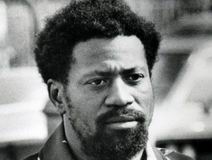
Bobby Joe Maxwell
Spree killer Paul John Knowles
Spree killer · USA · 1974
Paul John Knowles (April 17, 1946 – November 18, 1974) was an American spree ki…
35 victims
Paul John Knowles
Spree killer · USA · 1974
Paul John Knowles (April 17, 1946 – November 18, 1974) was an American spree ki…
35 victims
 Manuel Pardo
Spree killer · USA · 1986
Manuel Pardo, Jr. was a former police officer who was convicted of nine counts…
9 victims
Manuel Pardo
Spree killer · USA · 1986
Manuel Pardo, Jr. was a former police officer who was convicted of nine counts…
9 victims
 Mark Essex
Spree killer · USA · 1973
Mark James Robert Essex was a Navy veteran who engaged in a shooting and arson…
9 victims
Mark Essex
Spree killer · USA · 1973
Mark James Robert Essex was a Navy veteran who engaged in a shooting and arson…
9 victims
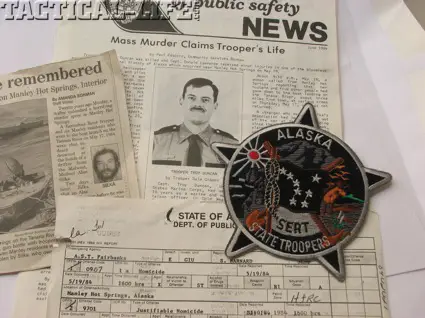 Michael Alan Silka
Spree killer · USA · 1984
Michael Alan Silka was killed during a shoot-out with the police on May 19, 198…
9 victims
Michael Alan Silka
Spree killer · USA · 1984
Michael Alan Silka was killed during a shoot-out with the police on May 19, 198…
9 victims
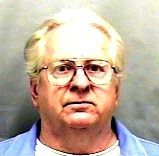 Allen Leroy Anderson
Spree killer · USA · 1976
Allen Leroy Anderson was a 34-year-old vagrant with a long record of felony arr…
8 victims
Allen Leroy Anderson
Spree killer · USA · 1976
Allen Leroy Anderson was a 34-year-old vagrant with a long record of felony arr…
8 victims
 Kathleen Folbigg
Murderer · Australia · 1989
Kathleen Megan Folbigg (née Donovan) was an Australian child killer. She was co…
4 victims
Kathleen Folbigg
Murderer · Australia · 1989
Kathleen Megan Folbigg (née Donovan) was an Australian child killer. She was co…
4 victims
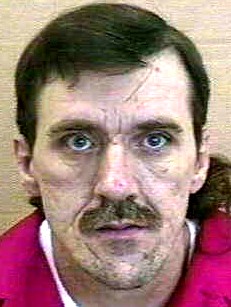 John Hardy Rose
Murderer · USA · 1991
John Hardy Rose was convicted of capital murder for the murder of Patricia Stew…
1 victim
John Hardy Rose
Murderer · USA · 1991
John Hardy Rose was convicted of capital murder for the murder of Patricia Stew…
1 victim
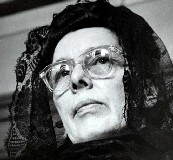 Marie Besnard
Serial killer? · France · 1927
Marie Besnard (also known as Marie Davaillaud) was born in Loudon, France, on A…
12 victims
Marie Besnard
Serial killer? · France · 1927
Marie Besnard (also known as Marie Davaillaud) was born in Loudon, France, on A…
12 victims
 Cheng Chieh
Mass murderer · Taiwan · 2014
Cheng Chieh (鄭捷) was a 21-year-old university student. He was a second-year stu…
4 victims
Cheng Chieh
Mass murderer · Taiwan · 2014
Cheng Chieh (鄭捷) was a 21-year-old university student. He was a second-year stu…
4 victims
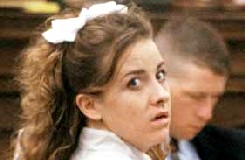 Brittany Holberg
Murderer · USA · 1996
Brittany Holberg robbed and murdered an 80-year-old white male in his home. The…
1 victim
Brittany Holberg
Murderer · USA · 1996
Brittany Holberg robbed and murdered an 80-year-old white male in his home. The…
1 victim
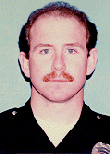 Alan Winterborne
Mass murderer · USA · 1993
Alan Winterborne (33) wanted a job and became involved in a long dispute with u…
4 victims
Alan Winterborne
Mass murderer · USA · 1993
Alan Winterborne (33) wanted a job and became involved in a long dispute with u…
4 victims
- Gender
- male
- Country
- USA
- Location
- Los Angeles, California, USA
- Date of birth
- 1945
- Age at first offence
- 33
- Characteristics
- abduction
- Victim profile
- Jessie Martinez, 50 / Jose Cortez, 32 / Bruce Emmett Drake, 46 / J.P. Henderson, 65 / David Martin Jones, 39 / Francisco Perez Rodriguez, 57 / Frank Floyd Reed, 36 / Augustine E. Luna, 49 / Jimmy White Buffalo, 34 / Frank Garcia, 45 / Luis Alvarez, 26
- Method of murder
- Stabbing with knife
- Date(s) of murder
- October 1978 - January 1979
- Years active
- 1978–1979
- Date of arrest
- April 4, 1979
- Status
-
Convicted on two of ten counts of murder in 1984 and sentenced to life in prison without parole; conviction overturned in November 2010
Other details
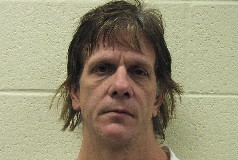
Name: Bobby Joe Maxwell
Sex: M Race: B Type: T Motive: PC-nonspecific Method of operation (MO): Occultist and ritual slayer of homeless men
Maxwell was a Tennessee native and had served time for robbery in the Volunteer State. Cellmates recalled his devotion to Satan whom Maxwell called "Luther."
A search of Maxwell's flat turned up knives compatible with nine of the Stabber slayings. Maxwell's palm print matched the latent print recovered from the bench where Frank Garcia died.
Maxwell charged with ten counts of murder and five counts of robbery in May 1979.
Legal wrangling delayed Maxwell's trial until January 1984, and testimony took another seven months.
The case involved the "Skid Row Stabber" targeting Los Angeles homeless men, with knives favored once again and suggestions of familiar ritual about the murders.
Background
Los Angeles police were recovering from jibes about the "Skid Row Slasher" case when transients started falling prey to another random slayer. Newsmen dubbed the latest maniac the "Skid Row Stabber" to avoid confusion.
The killings featured ritual elements, including a name of Satan scrawled in blood on cardboard near one victim's body.
Handwriting evidence was described as relevant to the case, including a cardboard scrap labeled "Satan" placed beside one victim that matched an inscription in a Greyhound Station bathroom stall:
"My name is Luther. I kill winos to put them out of their misery."
An eyewitness to the killing of David Martin Jones at the library also testified to hearing the slayer declare:
"I'm Luther, I'm the peacemaker."
The material described Luther as Maxwell's nickname for "Lucifer." The trial also included an issue in which the judge charged Maxwell's lawyers with conflict of interest for accepting the book rights to their client's life story in lieu of fees, since an acquittal would make any book about the case worthless; the State Supreme Court ruled this was an acceptable exchange.
The offence
The first victim identified was Jesse Martinez, age 50. He was found in a skid row parking lot on the morning of October 23, 1978.
Five days later, Jose Cortez, age 32, was knifed to death in an alley.
On October 30, Bruce Drake, age 46, was killed.
J.P. Henderson, age 65, was found sprawled on a sidewalk in the predawn hours of November 4.
Five days later, David Jones, age 39, was killed on a walkway of L.A.'s Central Library.
Francisco Rodriguez, age 57, and Frank Reed, age 36, were both found in parking lots, killed on November 11 and 12, respectively.
On November 12, Augustine Luna, age 49, was stabbed to death behind a building on South Main Street.
Jimmie White Buffalo, age 34 and identified as Indian, became the ninth victim. He was stabbed repeatedly in the upper torso with a long-bladed knife, and his body was dumped in a parking lot.
Thus far, the Stabber's victims had been claimed within an area of fifteen blocks, and there were no survivors until a change on November 20.
On November 20, transients Jose Ramirez, age 27, and Ricardo Seja, age 24, were wounded in separate attacks. Detectives admitted a "strong likelihood" of the Stabber's involvement.
If a motive was needed, it was described as being found on the wall of a downtown bus station:
"I'm Luther. I kill winos to put them out of their misery."
On Thanksgiving Day, Frank Garcia, age 45, was stabbed to death on a bench in City Hall Plaza, less than 200 feet from the entrance of L.A. police headquarters.
A latent palm print was recovered from the bench, but it was described as useless to authorities without a suspect for comparison.
The material further listed additional victims in a spree described as taking place from 1978-79 in Los Angeles:
- Jessie Martinez, 50 — killed October 23, 1978 near Fifth and Wall; charges against Maxwell for this single case were dismissed for insufficient evidence.
- Jose Cortez, 32 — killed October 28, 1978 in an alley in the 300 block of East 3rd Street.
- Bruce Emmett Drake, 46 — killed October 30, 1978, 600 block of South Kohler Street.
- J.P. Henderson, 65 — killed November 4, 1978, on a sidewalk in the 500 block of West 7th Street.
- David Martin Jones, 39 — killed November 9, 1978 on a Central Library walkway, 630 West 5th Street.
- Francisco Perez Rodriguez, 57 — killed November 11, 1978 in a parking lot at 416 South Main.
- Frank Floyd Reed, 36 — killed November 12, 1978 in a parking area at 237 East Fifth Street.
- Augustine E. Luna, 49 — killed November 12, 1978 behind 448 South Main.
- Jimmy White Buffalo, 34 — killed November 17, 1978 in a parking lot at 320 South Main.
- Ricardo Seja, 26 — survived a knifing on November 19, 1978 at Main and 3rd.
- Jose Ramirez, 27 — survived a knifing on November 19, 1978 at Main and 3rd.
- Frank Garcia, 45 — killed November 23, 1978, Thanksgiving Day, on a City Hall Plaza bench opposite Parker Center police headquarters; Maxwell's palm print was found on the bench.
- Luis Alvarez, 26 — killed January 21, 1979 at 415 Harlem Place.
Investigation
A latent palm print was recovered from the bench where Frank Garcia died. The print was described as useless to authorities without a suspect for comparison.
The knife evidence was described as follows: Maxwell's knife remained in police hands after he was searched on December 14, 1978, and was later said to be compatible with the wounds on all but two victims.
The investigation included the suggestion that a two-month break in the killings indicated the assailant might have been incarcerated, leading to a search of local jail records and surveillance of Maxwell.
The investigation later relied on handwriting and handwriting experts, described as matching cardboard scrap material and inscriptions to Maxwell's letters and journals found in his South Los Angeles apartment.
A Tennessee native, Maxwell had devotion to Satan whom Maxwell called "Luther," and cellmates recalled this devotion.
Arrest
Maxwell was arrested downtown on August 2, 1978, while standing over an intoxicated man sleeping on the sidewalk. He was described as an unemployed laborer and a Skid Row habitué.
Police searched him on December 14, 1978 and found a double-edged stainless steel, cork-handled knife. Maxwell was charged with carrying a concealed weapon and jailed until January 18, 1979.
Maxwell was arrested on April 4, 1979.
Two months after Frank Garcia's death, Maxwell was arrested while standing over a skid row derelict, clutching a ten-inch dagger in his hand.
Trial
Maxwell pleaded guilty on misdemeanor weapons charges and was sentenced to 60 days in jail while police pressed their investigation of the most promising suspect to date.
He was charged with ten counts of murder and five counts of robbery in May 1979.
Legal wrangling delayed Maxwell's trial until January 1984, and testimony took another seven months, leaving jurors divided in their opinions of his guilt.
During the trial, jurors were divided in their opinions of his guilt.
On July 12, Maxwell was convicted of murdering Frank Garcia and David Jones.
The jury acquitted him of three murder counts, with jurors failing to reach a decision on five homicides.
In 1984, two murder convictions resulted in a life imprisonment term for Maxwell.
Maxwell was described as smilingly confiding to another prisoner that he had killed the derelicts in order "to obtain souls for Satan."
The trial included penalty phase testimony from retired San Quentin warden Lawrence E. Wilson and former guards about the physical effects of death by gas and a case in which a Death Row inmate was freed after the real killer confessed, which the material described as likely discouraging jurors from a death sentence.
During the trial, the judge charged Maxwell's lawyers with conflict of interest for accepting the book rights to their client's life story in lieu of fees, since an acquittal would make any book about the case worthless; the State Supreme Court ruled this was an acceptable exchange.
Sentencing
Maxwell received a term of life imprisonment based on his two murder convictions.
The material described prosecutors seeking the death penalty, but a jury rejecting that in favor of a life sentence without parole after hearing testimony about prisoners who had been wrongly executed.
Appeals
An appeals court found the conviction was based on a jailhouse informant's lies and overturned Maxwell's life sentence and murder conviction.
The ruling came from the 9th U.S. Circuit Court of Appeals in San Francisco, which ordered a new trial or release for Bobby Joe Maxwell. It was described that Maxwell was convicted in 1984 in two homeless deaths and accused of 10 killings that took place from 1978-79 in Los Angeles.
Maxwell, now 60, had been in jail for over 30 years.
Trying him again was described as difficult because the prosecution's key witness was dead and the court said there was little physical evidence in the case.
The appellate court described the jailhouse informant as Sidney Storch and called him a "habitual liar." The appellate court described that Storch's many arrests included one for impersonating a CIA officer and Howard Johnson, heir of the Howard Johnson hotel chain.
The case was described as thin until Storch emerged. The only physical evidence was described as a palm print found on a bench in an area Maxwell frequented.
The appellate court described the account given by Storch about learning of the print and asking Maxwell about it after reading about it in news accounts. Storch claimed that Maxwell confessed he had made a mistake failing to wear gloves during the stabbings; Maxwell denied making the comment.
The appellate decision also described a lineup in which Maxwell appeared and said that three homeless men who allegedly witnessed one of the killings were asked if they saw the killer in the lineup; it quoted one of the men as saying:
"You've got everyone up there that doesn't look like him."
The appellate court said lower courts erred in finding that Storch told the truth in Maxwell's trial and that prosecutors rested their case on his testimony despite a lack of solid physical evidence.
The appellate court described Maxwell as maintaining that he was innocent and that Storch was lying throughout the nine month trial.
The appellate court described a violation in which jurors were never told Storch negotiated a deal with prosecutors for an early release from prison if he testified against Maxwell.
The ruling said the office was waiting for the state attorney general on how to proceed, and it mentioned Sandi Gibbons as a spokeswoman for the Los Angeles County district attorney.
The appellate court described Storch's record as a liar and forger and stated that his false testimony in numerous cases played a role in a wide-ranging informant probe that shook the Los Angeles County justice system in the 1980s.
The appellate court described that Storch later testified for the county in at least six other cases, several of them high profile.
The appellate court described that Storch always used news articles to familiarize himself with the details, then claimed to have heard confessions.
The appellate court described that Storch was later caught fabricating evidence and charged with perjury, but died in prison before he could be tried.
The appellate court quoted circumstances about Storch at the time he was apprehended and placed in a cell with Maxwell:
"At the time he was apprehended and placed in a cell with Maxwell, Storch was in possession of a false California driver's license, forged checks, and stolen credit cards,"
It further described a detective who arrested Storch testifying that:
"he 'would not trust anything Sidney Storch said unless you could corroborate the information with some source,'"
Outcome
The appeals court overturned Maxwell's conviction and life sentence.
The outcome was described as murder convictions thrown out after 26 years as appeal court rules it was based on lies of cellmate.
A new trial or release was ordered.
Timeline
August 2, 1978 — Maxwell was arrested downtown for assault with a deadly weapon and spent about two months in jail. October 23, 1978 — Jesse Martinez was killed in a skid row parking lot on the morning of October 23, 1978. October 28, 1978 — Jose Cortez was killed in an alley in the 300 block of East 3rd Street. October 30, 1978 — Bruce Emmett Drake was killed on the 600 block of South Kohler Street. November 4, 1978 — J.P. Henderson was killed on a sidewalk in the 500 block of West 7th Street. November 9, 1978 — David Martin Jones was killed on a Central Library walkway, 630 West 5th Street. November 11, 1978 — Francisco Perez Rodriguez was killed in a parking lot at 416 South Main. November 12, 1978 — Frank Floyd Reed was killed in a parking area at 237 East Fifth Street. November 12, 1978 — Augustine E. Luna was killed behind 448 South Main. November 17, 1978 — Jimmy White Buffalo was killed in a parking lot at 320 South Main. November 19, 1978 — Ricardo Seja survived a knifing at Main and 3rd. November 19, 1978 — Jose Ramirez survived a knifing at Main and 3rd. November 23, 1978 — Frank Garcia was stabbed to death on a City Hall Plaza bench opposite Parker Center police headquarters. December 14, 1978 — Police spotted Maxwell standing over an intoxicated man sleeping on the sidewalk, searched him, and found a double-edged stainless steel, cork-handled knife; he was charged with carrying a concealed weapon and was jailed until January 18, 1979. January 18, 1979 — Maxwell was jailed until this date following the concealed weapons charge. January 21, 1979 — Luis Alvarez was killed at 415 Harlem Place. April 4, 1979 — Maxwell was arrested and his case went to trial in late 1983. May 1979 — Maxwell was charged with ten counts of murder and five counts of robbery. January 1984 — Maxwell's trial began after legal wrangling delayed it until January 1984. July 12, 1984 — Maxwell was convicted of murdering Frank Garcia and David Jones. November 2010 — Maxwell's conviction was overturned. December 1, 2010 — The material described an appeals court decision released on this date.
People and victims
- Bobby Joe Maxwell — defendant
- Jesse Martinez, 50 — victim; killed October 23, 1978 near Fifth and Wall; charges against Maxwell for this single case were dismissed for insufficient evidence.
- Jose Cortez, 32 — victim; killed October 28, 1978 in an alley in the 300 block of East 3rd Street.
- Bruce Emmett Drake, 46 — victim; killed October 30, 1978, 600 block of South Kohler Street.
- J.P. Henderson, 65 — victim; killed November 4, 1978 on a sidewalk in the 500 block of West 7th Street.
- David Martin Jones, 39 — victim; killed November 9, 1978 on a Central Library walkway, 630 West 5th Street.
- Francisco Perez Rodriguez, 57 — victim; killed November 11, 1978 in a parking lot at 416 South Main.
- Frank Floyd Reed, 36 — victim; killed November 12, 1978 in a parking area at 237 East Fifth Street.
- Augustine E. Luna, 49 — victim; killed November 12, 1978 behind 448 South Main.
- Jimmy White Buffalo, 34 — victim; killed November 17, 1978 in a parking lot at 320 South Main.
- Frank Garcia, 45 — victim; killed November 23, 1978 (Thanksgiving Day) on a City Hall Plaza bench opposite Parker Center police headquarters.
- Luis Alvarez, 26 — victim; killed January 21, 1979 at 415 Harlem Place.
- Sidney Storch — jailhouse informant; called a "habitual liar" by the appellate court.
- Lawrence E. Wilson — retired San Quentin warden; testified during the penalty phase.
- Sandi Gibbons — spokeswoman for the Los Angeles County district attorney.
Methods, evidence, and specific statements
A palm print was recovered from the bench where Frank Garcia died; it was described as latent.
Maxwell was arrested while standing over a skid row derelict, clutching a ten-inch dagger in his hand.
The material described a cardboard scrap labeled "Satan" placed beside one victim and stated it matched handwriting in a Greyhound Station bathroom stall. The stall read:
The material described a wall of a downtown bus station with the statement:
An eyewitness testified to hearing the slayer declare:
Maxwell smilingly confided to another prisoner that he had killed the derelicts in order:
"to obtain souls for Satan."
The appellate court included a quote from a lineup witness:
The appellate court included a quote about trust in Sidney Storch:
The appellate court included a quote describing Storch's false documentation and forged items:

Spotted an error, or have more information about this case?