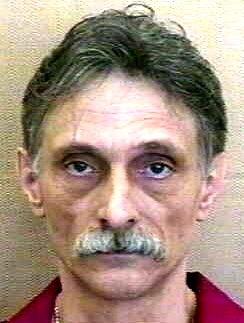
Kenneth Lee Boyd
Murderer Brian Kevin Rosenfeld
Murderer · USA · 1985
Brian Kevin Rosenfeld Brian Kevin Rosenfeld was sentenced to three concurrent l…
23 victims
Brian Kevin Rosenfeld
Murderer · USA · 1985
Brian Kevin Rosenfeld Brian Kevin Rosenfeld was sentenced to three concurrent l…
23 victims
 Yahweh ben Yahweh
Murderer · USA · 1980
Yahweh ben Yahweh was born and legally named Hulon Mitchell Jr. (October 27, 19…
23 victims
Yahweh ben Yahweh
Murderer · USA · 1980
Yahweh ben Yahweh was born and legally named Hulon Mitchell Jr. (October 27, 19…
23 victims
 Russell Ellwood
Murderer · USA · 1991
Russell Ellwood was a former taxi driver. Authorities suspected him of killing…
20 victims
Russell Ellwood
Murderer · USA · 1991
Russell Ellwood was a former taxi driver. Authorities suspected him of killing…
20 victims
 Robert Martines Perez
Murderer · USA · 1994
Name: Robert Martines Perez · Other name used in proceedings: Robert Martinez P…
15 victims
Robert Martines Perez
Murderer · USA · 1994
Name: Robert Martines Perez · Other name used in proceedings: Robert Martinez P…
15 victims
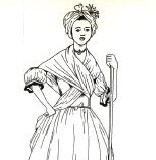 Susanna Cox
Murderer · USA · 1809
Susanna Cox (1785–1809) was a young domestic servant in Berks County, Pennsylva…
1 victim
Susanna Cox
Murderer · USA · 1809
Susanna Cox (1785–1809) was a young domestic servant in Berks County, Pennsylva…
1 victim
 Kenisha Berry
Murderer · USA · 1998
Kenisha Berry was convicted in February 2004 of capital murder relating to the…
1 victim
Kenisha Berry
Murderer · USA · 1998
Kenisha Berry was convicted in February 2004 of capital murder relating to the…
1 victim
 Cleophus Prince
Serial killer · USA · 1990
Cleophus Prince Jr. (also known as "The Clairemont" Killer) was an American ser…
6 victims
Cleophus Prince
Serial killer · USA · 1990
Cleophus Prince Jr. (also known as "The Clairemont" Killer) was an American ser…
6 victims
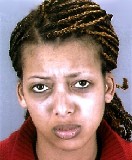 Megan Hogg
Murderer · USA · 1998
Megan Hogg was sentenced to 25 years to life on September 24, 1999, for the 199…
3 victims
Megan Hogg
Murderer · USA · 1998
Megan Hogg was sentenced to 25 years to life on September 24, 1999, for the 199…
3 victims
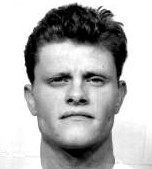 Robert Drew
Murderer · USA · 1983
Robert Nelson Drew was executed by lethal injection in Texas on August 2, 1994.…
1 victim
Robert Drew
Murderer · USA · 1983
Robert Nelson Drew was executed by lethal injection in Texas on August 2, 1994.…
1 victim
- Gender
- male
- Country
- USA
- Location
- Rockingham County, North Carolina, USA
- Date of birth
- January 19, 1948
- Age at first offence
- 40
- Characteristics
- parricide, alcohol, drunken rage
- Victim profile
- His estranged wife Julie Curry Boyd and her father Thomas Dillard Curry
- Method of murder
- Shooting ( .357 Magnum pistol)
- Date(s) of murder
- March 4, 1988
- Years active
- 1988
- Date of arrest
- Same day
- Status
-
Executed
Executed by lethal injection in North Carolina on December 2, 2005
Case overview
Kenneth Lee Boyd was convicted of the murders of Thomas Dillard Curry and Julie Curry Boyd and was sentenced to death in Rockingham County Superior Court. He was executed by lethal injection in North Carolina on December 2, 2005.
Timeline
- 10/13/2005 — Correction Secretary Theodis Beck set November 18, 2005 as the execution date for Kenneth Boyd.
- 10/3/2005 — The U.S. Supreme Court denied Boyd’s petition for a writ of certiorari.
- 7/31/1996 — The North Carolina Supreme Court confirmed Boyd’s conviction and sentence of death.
- 7/14/1994 — Kenneth Lee Boyd was sentenced to death in Rockingham County Superior Court for the murders of Thomas Dillard Curry and Julie Curry Boyd.
- Dec. 2, 2005 — Boyd was executed by lethal injection; he was pronounced dead at 2:15 a.m.
The offence
Boyd was sentenced to death for the murders of Julie Curry Boyd and Thomas Dillard Curry. The killings occurred in March 1988 in Rockingham County.
Prosecutors said Boyd went on a rampage inside the Rockingham County home, stalked his estranged wife through the house, and shot her nine times, pausing to reload. Boyd’s sons witnessed the slayings of their mother and grandfather.
Family testimony and narrative accounts in the materials described Boyd as entering the home of his estranged wife’s father and shooting and killing both Julie Boyd and Dillard Curry with a .357 Magnum pistol. The shootings were committed in the presence of Boyd’s children: Chris (aged thirteen), Jamie (aged twelve), and Daniel (aged ten). One account described the boy Christopher as pinned under his mother’s body as Boyd unloaded a .357-caliber Magnum into her; the boy pushed his way under a bed to escape. Another son grabbed the pistol while Boyd tried to reload.
A separate description stated Boyd shot Curry twice before turning the gun on Julie; he shot her eight times. Evidence described law enforcement arriving and Boyd coming out of the woods with his hands up and surrendering. Boyd also made a lengthy inculpatory statement describing the shootings.
Boyd’s inculpatory statement included the following verbatim account:
"I walked to the back door and opened it. It was unlocked. As I walked in, I saw a silhouette that I believe was Dillard. It was just like I was in Vietnam. I pulled the gun out and started shooting. I think I shot Dillard one time and he fell. Then I walked past him and into the kitchen and living room area. The whole time I was pointing and shooting. Then I saw another silhouette that I believe was Julie come out of the bedroom. I shot again, probably several times. Then I reloaded my gun. I dropped the empty shell casings onto the floor. As I reloaded, I heard someone groan, Julie I guess. I turned and aimed, shooting again. My only thoughts were to shoot my way out of the house. I kept pointing and shooting at anything that moved. I went back out the same door that I came in, and I saw a big guy pointing a gun at me. I think this was Craig Curry, Julie's brother. I shot at him three or four times as I was running towards the woods."
People
- Kenneth Lee Boyd — defendant; sentenced to death; executed by lethal injection.
- Julie Curry Boyd — victim; estranged wife; age 36 in multiple accounts.
- Thomas Dillard Curry — victim; Boyd’s father-in-law; age 57 in multiple accounts.
- Chris Boyd — one of Boyd’s sons; described as age thirteen in the materials.
- Jamie — one of Boyd’s sons; described as age twelve in the materials.
- Daniel — one of Boyd’s sons; described as age ten in the materials; also described as placing a tearful phone call to Kenneth Smith.
- Craig Curry — Boyd’s brother-in-law; described as being in the house that night, witnessing the slayings, and being threatened and shot at by Boyd.
- Kathy Smith — described as a daughter-in-law (wife of a son from Boyd’s first marriage); addressed by Boyd during the execution viewing.
- Kenneth Smith — Boyd’s son; also described as visiting Boyd.
- Cheryl Boyd — described as a daughter-in-law; gave statements about prayer for clemency and the execution.
- Pamela Walker — spokesperson for the Department of Corrections.
- Marvin Polk — Central Prison Warden.
- Theodis Beck — Correction Secretary.
- Sam Page — Rockingham County Sheriff.
- Thomas Maher — Boyd’s attorney.
- Belinda Foster / Belinda J. Foster — prosecutor for Rockingham County.
- The U.S. Supreme Court — court denying certiorari and declining intervention.
- Gov. Mike Easley — Governor of North Carolina; denied clemency.
- Gov. Mark R. Warner — Virginia Governor; granted clemency to Robin Lovitt earlier in the materials.
- Robin Lovitt — described as a person granted clemency by Gov. Mark Warner.
- Shawn Humphries — referenced as the scheduled next execution after Boyd.
- Marvin Polk — Central Prison Warden who explained execution procedures during a media tour.
Investigation and legal process
Law enforcement officers were called to the scene. Boyd surrendered to the officers as they approached and later gave a lengthy inculpatory statement.
At trial, expert witnesses testified about Boyd’s psychiatric state of mind. Dr. Patricio Lara testified that Boyd suffered from adjustment disorder with psychotic emotional features, alcohol abuse, and a personality disorder with predominate compulsive dependant features. Dr. John Warren testified that Boyd suffered from chronic depression, alcohol abuse disorder, dependant personality disorder, and a reading disability. Warren stated Boyd did not act with a “cool state of mind” at the time of the murders, and additional material described that his testimony was later ruled inadmissible in part.
Jury and sentencing findings
The trial court submitted aggravating circumstances and mitigating circumstances. In the sentencing phase described by the materials, the jury found one aggravating circumstance in each murder case: the murder was part of a course of conduct that included the commission by Boyd of other crimes of violence against other persons, referencing N.C.G.S. § 15A-2000(e)(11) (1988). The jury unanimously found four of ten mitigating circumstances but failed to find unanimously six mitigating circumstances, including mitigating circumstances that (1) Boyd was under the influence of a mental or emotional disturbance and (2) his capacity to conform his conduct to the requirements of law was impaired when he committed the murders, referencing N.C.G.S. § 15A-2000(f)(2), (6) (1988).
In one account of the evidence presented at trial, the materials stated that Boyd’s son Christopher was pinned under his mother’s body as Boyd unloaded a .357-caliber Magnum into her, the boy pushed under a bed to escape, and another son grabbed the pistol while Boyd tried to reload.
Post-trial legal history and appeals
The North Carolina Supreme Court set aside the jury outcome and remanded in earlier appellate decisions connected to trial errors during jury selection and sentencing issues.
A legal decision in 1992 (State v. Boyd, 332 N.C. 101, 418 S.E.2d 471 (N.C. 1992) (Direct Appeal)) stated:
- the trial court’s private conversation with a juror warranted a new trial;
- the defendant was entitled to state-paid mental health expert if defendant did not have sufficient funds to pay for one;
- the case was remanded for new trial. The decision described that defendant was entitled to new trial because the trial court excused a juror during jury selection after a private, unrecorded bench conference with the juror.
The materials quoted a portion of the trial transcript showing:
CLERK: William Harris, Charlotte Jackson. (Ms. Jackson brought a letter up and handed it to the Bailiff, who then handed it to the judge. The judge then talked to the lady at the Bench.)
COURT: Ma'am Clerk, at this time I am going to defer that particular juror's service until one of the terms during the summer months. And if you will call another juror.
The materials also stated that defendant’s absence during chambers discussions about mitigating circumstances was harmless beyond a reasonable doubt in a later decision.
A legal decision in 1996 (State v. Boyd, 343 N.C. 699, 473 S.E.2d 327 (N.C. 1996) (Retrial Direct Appeal)) stated:
- the trial court did not err in prohibiting expert in forensic psychology from testifying that defendant was not acting with a “cool state of mind” during commission of murders;
- a statement of a witness about belief that defendant was “going to kill everybody” fell within permissible lay testimony;
- the trial court did not err in refusing to instruct the jury on voluntary intoxication;
- the court correctly refused to instruct on defense of unconsciousness;
- the court correctly denied defendant’s request for a peremptory instruction as to mitigating circumstance that defendant was under the influence of mental or emotional disturbance;
- error in conducting conference in chambers to discuss mitigating circumstances without defendant present was harmless beyond a reasonable doubt;
- death sentences were not excessive or disproportionate compared to similar cases considering both the crime and defendant;
- “NO ERROR.”
A U.S. Supreme Court denial of certiorari occurred in 10/3/2005. A U.S. Supreme Court decision also declined to intervene, and Gov. Mike Easley declined to intervene with clemency. The materials stated that the U.S. Supreme Court rejected Boyd’s last legal appeals based on claims of juror misconduct and bias.
A federal habeas corpus section (Boyd v. Lee) described that on direct appeal the Supreme Court of North Carolina set aside convictions and ordered a new trial due to legal error involving unrecorded, private bench conferences with prospective jurors during jury selection. It also described that convictions and sentences were affirmed by the Supreme Court of North Carolina and that the U.S. Supreme Court denied certiorari review.
Execution details and final statements
Boyd was scheduled to be executed at Central Prison in Raleigh at 2 a.m., with execution procedures explained by Central Prison Warden Marvin Polk during a media tour scheduled for Monday, November 28 at 10:00 a.m. The media tour was described as the only opportunity to photograph the execution chamber and deathwatch area before the execution.
During the execution process described in the materials:
- The death watch area was on the prison’s second floor.
- At 1 a.m. the warden asked Boyd to strip to his shorts and socks.
- Boyd was led from the death watch area to a staging room, then secured to a gurney by ankles and wrists.
- Two saline intravenous lines were started, one in each arm.
- The inmate was given the opportunity to make a final statement, which the warden took down and made public after the execution.
- The inmate was given a chance to pray with the chaplain.
- A third call was made at 2 a.m. giving the warden permission to execute the inmate.
- A drug sequence included:
- sodium pentothal (described as not less than 3,000 milligrams),
- saline to flush the IV line,
- Pavulon (described as not less than 40 milligrams),
- potassium chloride (described as not less than 160 millequivalents),
- and a final injection of saline.
- After the heart monitor flat-lined for five minutes, he was pronounced dead.
- A curtain was drawn over the observation window and witnesses were informed. The body was released to the medical examiner.
Boyd’s last words included:
"God bless everybody in here."
Another verbatim quote attributed to Boyd in the materials included:
"I'd hate to be remembered as that,"
and also: "I don't like the idea of being picked as a number."
Outcome
Boyd was executed by lethal injection in North Carolina on December 2, 2005.
Spotted an error, or have more information about this case?