
Stephen Michael West
Murderer Brian Kevin Rosenfeld
Murderer · USA · 1985
Brian Kevin Rosenfeld Brian Kevin Rosenfeld was sentenced to three concurrent l…
23 victims
Brian Kevin Rosenfeld
Murderer · USA · 1985
Brian Kevin Rosenfeld Brian Kevin Rosenfeld was sentenced to three concurrent l…
23 victims
 Yahweh ben Yahweh
Murderer · USA · 1980
Yahweh ben Yahweh was born and legally named Hulon Mitchell Jr. (October 27, 19…
23 victims
Yahweh ben Yahweh
Murderer · USA · 1980
Yahweh ben Yahweh was born and legally named Hulon Mitchell Jr. (October 27, 19…
23 victims
 Russell Ellwood
Murderer · USA · 1991
Russell Ellwood was a former taxi driver. Authorities suspected him of killing…
20 victims
Russell Ellwood
Murderer · USA · 1991
Russell Ellwood was a former taxi driver. Authorities suspected him of killing…
20 victims
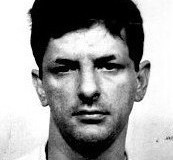 Stephen Peter Morin
Serial killer · USA · 1981
Offender: Stephen Peter Morin (February 19, 1951 – March 13, 1985) Execution da…
3 victims
Stephen Peter Morin
Serial killer · USA · 1981
Offender: Stephen Peter Morin (February 19, 1951 – March 13, 1985) Execution da…
3 victims
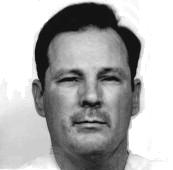 Thomas Wayne Mason
Murderer · USA · 1991
Thomas Wayne Mason Thomas Wayne Mason was executed by lethal injection in Texas…
2 victims
Thomas Wayne Mason
Murderer · USA · 1991
Thomas Wayne Mason Thomas Wayne Mason was executed by lethal injection in Texas…
2 victims
 Evan Savoie
Homicide · USA · 2003
Evan Drake Savoie was a 12-year-old boy from Ephrata, Washington. Craig Sorger…
1 victim
Evan Savoie
Homicide · USA · 2003
Evan Drake Savoie was a 12-year-old boy from Ephrata, Washington. Craig Sorger…
1 victim
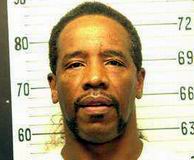 Michael Eugene Sample
Murderer · USA · 1981
Michael Eugene Sample was sentenced to death on February 7, 1983. He and his co…
2 victims
Michael Eugene Sample
Murderer · USA · 1981
Michael Eugene Sample was sentenced to death on February 7, 1983. He and his co…
2 victims
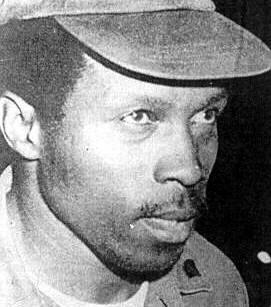 William Henry Hance
Serial killer · USA · 1977
William Henry Hance was executed by electrocution in Georgia on March 31, 1994.…
3 victims
William Henry Hance
Serial killer · USA · 1977
William Henry Hance was executed by electrocution in Georgia on March 31, 1994.…
3 victims
- Gender
- male
- Country
- USA
- Location
- Union County, Tennessee, USA
- Date of birth
- September 16, 1962
- Age at first offence
- 24
- Characteristics
- rape, abuse, mentally ill
- Victim profile
- Wanda Romines, 51, and her daughter Sheila, 16
- Method of murder
- St abbing with knife
- Date(s) of murder
- March 17, 1986
- Years active
- 1986
- Date of arrest
- Next day
- Status
-
Sentenced to death
Sentenced to death on March 25, 1987
Case record: Stephen Michael West
Background
Stephen Michael West was sentenced to death in 1987. A jury in Union County found him guilty of first degree premeditated murder of Wanda Romines and her daughter Sheila Romines, aggravated kidnapping of Wanda and Sheila Romines, and aggravated rape of Sheila Romines.
West was twenty-three years of age at the time of the murders. West had served three years in the military and worked at McDonald’s in Lake City, Tennessee, on the day of the murder. At trial, West testified and admitted he was present during the commission of the crimes but denied participation in inflicting bodily harm upon either victim.
West also had no criminal record at the time of his arrest and he denied any prior criminal record at trial. He testified that he was an honor student in school and had never had any disciplinary problems.
West described his inability to act against Ronnie Martin during the murders. He told the jury his response was “I couldn’t do nothing”.
West’s childhood background included severe child abuse while growing up in a family with a history of psychiatric illness. He was born in a mental institution because his mother was hospitalized at the time. He was constantly beaten, and his alcoholic father disavowed paternity.
Prison officials recognized that West suffered from severe mental illnesses including auditory hallucinations. Psychological evidence showed West was more likely to be a follower who was easily influenced by the more aggressive Martin. West could become a very passive person and could be susceptible to breaks with reality in situations of extreme stress.
Prison doctors diagnosed West with major depressive disorder with psychotic features, paranoid schizophrenia, and schizoaffective disorder. West was prescribed powerful medications to combat the symptoms of these illnesses.
The offence
Wanda Romines and her fifteen-year-old daughter, Sheila Romines, were killed at the Romines’ home in the Big Ridge community of Union County.
The murders occurred between 6:00 a.m. and 8:30 a.m. on 17 March 1986. West and Ronnie Martin committed the murders at the Romines’ home during that time period.
A jury found that Sheila Romines was raped before she was killed. Forensic evidence and testimony described torture-type wounds to both victims.
Investigation
Jack Romines testified that he kept a thirty-eight caliber unloaded pistol in the drawer of a chest in Sheila’s bedroom and that it was missing on the afternoon of the murders, along with an envelope containing more than $200 in cash.
Investigating officers found a thirty-eight caliber unloaded pistol in a storm drain in Norris, Tennessee, that was identified as the one belonging to Jack Romines. The information that led to the recovery of the gun came from John Allen, a friend of Ronnie Martin. There was testimony that at about 4:00 a.m. Martin stopped at John Allen’s house and obtained a butcher knife from Allen.
Investigating officers found that the telephone wires at the Romines house had been pulled out of the wall.
West made multiple statements after his arrest about what occurred in the Romines’ house. In his first statements, West insisted that he and Martin had left the house together after some sexual activity and that both mother and daughter were unharmed. West said that Martin decided to return and get some money from the victims, Martin was gone approximately thirty minutes, and then the two drove away.
In mid-afternoon on 15 March after his mother had visited him, West made another statement in which he said he had seen part of a video taped interview of Martin, who was putting all the blame on him. West then put all the blame on Martin.
In his statement of 18 March and later statements, and at trial, West admitted he was present when the murders occurred but denied participating in inflicting bodily harm upon either victim.
West’s last statement began at 11:52 a.m. and terminated at 1:31 p.m. when a retained lawyer arrived. In that statement, West said that after killing Wanda Romines in one bedroom, Martin and West went into Sheila’s bedroom, where Martin handed West one of the knives and said, “I killed the mother and now you kill Sheila”; West said he refused and threw the knife down on the floor.
The statement continued as follows:
The co-worker , still armed with a gun, got down on his knees, and Sheila started begging to him and asking him why. Co-worker's reply was, "I owe you, I owe you." Co-worker was giggling as he said that co-worker would ease the knife in and would work the handle back and forth trying to hurt her. This went on for a while. . . .
Arrest
West and Ronnie Martin were arrested in connection with the murders. West was 23 years of age and Martin was 17 years of age at the time of the murders. West and Martin left work at McDonald’s in Lake City, Tennessee, on March 17 and went driving around and drinking in Martin’s car for several hours.
Timeline
- 17 March 1986 — West and Ronnie Martin left work at McDonald’s in Lake City, Tennessee, and drove around and drank in Martin’s car for several hours; they later went to the Romines’ home, where the murders occurred between 6:00 a.m. and 8:30 a.m.
- 5:20 a.m. (17 March 1986) — Jack Romines left for work; Martin knocked on the door with West standing nearby; once the door was opened, the two made their way into the house.
- 4:00 a.m. (approx., 17 March 1986) — Martin stopped at John Allen’s house and obtained a butcher knife from Allen.
- 15 March 1986 — After his mother had visited him, West made a statement about having seen part of a video taped interview of Martin putting blame on West.
- 18 March 1986 — West made additional statements admitting he was present when the murders occurred but denying participation in bodily harm.
- 19 March 1986 — West was arrested at his home about 8:30 a.m. on 18 March 1986 and interrogated thereafter; prior to taking the fifth statement, Agent Scott had West sign a written waiver at 11:52 a.m. in connection with the later suppression hearing proceedings; the proof included a signature on a waiver dated 19 March 1986 at 11:52 a.m.
- 25 February 1987 — West filed a motion to be furnished a transcript of the suppression hearing at State expense for use at trial.
- 16 March 1987 — Trial began.
- March 25, 1987 — West was sentenced to death.
- February 6, 1989 — Supreme Court of Tennessee denied rehearing; “Petition to Rehear Denied March 27, 1989.”
- 8th day of May, 1989 — The death sentence was to be carried out unless stayed by appropriate authority.
Trial
The State prosecuted West first. West and Martin were tried separately.
At trial, the State prosecuted West for first degree premeditated murder of Wanda Romines and Sheila Romines, aggravated kidnapping of Wanda and Sheila Romines, and aggravated rape of Sheila Romines.
Jury verdict and findings at sentencing
A jury in Union County found West guilty of:
- first degree premeditated murder of Wanda Romines and her daughter Sheila Romines
- aggravated kidnapping of Wanda and Sheila Romines
- aggravated rape of Sheila Romines
At the sentencing hearing, the jury found three aggravating circumstances applicable to both victims:
- the murders were especially heinous, atrocious or cruel
- the murders were committed to avoid arrest or prosecution
- the murders were committed while West engaged in committing first degree murder, rape or kidnapping
These aggravating circumstances were identified as subsections 5, 6 and 7 of T.C.A. § 39-2-203(i).
West was sentenced to death for each murder and to forty years imprisonment on each of the three convictions for rape and kidnapping.
West’s statements and testimony
West admitted he was present during the murders but denied participating in inflicting bodily harm upon either victim.
West testified that Martin had a pistol and two knives and threatened West’s life numerous times while they were in the Romines’ house if West did not obey Martin’s orders. West said Martin directed Sheila to “give him head”. West also said he was forced to have sexual intercourse on top of him while Martin entered her anally.
On direct examination, West was asked why he did not try to stop Martin. West responded: “I couldn’t do nothing”.
West later said he was incapable of doing what Martin did and that he “couldn’t even clean a fish”.
West claimed that Martin had threatened to have a friend kill Martin’s wife. West said this threat was the first time when they left the Romines’ house by the back door after both victims had been murdered. West said Martin allegedly directed him to get the car and pick up Martin on the other side of a wooded area, and then Martin threatened that if West tried anything “smart,” Martin would make a phone call and West would find his wife and child dead when he got home. West’s wife was pregnant with their first child at the time.
West claimed that Martin cocked a pistol, put it right between his eyes, and said, “I ought to just kill you, and he was laughing.” West said this occurred after Martin had stabbed Sheila one time.
West also claimed he saw a man standing on the road near Martin’s car as Martin left the house. West said he wanted to tell the man what had happened, but that he “kept seeing Karen [his wife] like that poor girl was.”
West worked his regular shift at McDonald’s the day of the murder and did not tell anyone what had happened at the Romines’ house.
Evidence of vehicle and neighborhood activity
Neighbors identified the blue vehicle that the State proved Martin and West were using as being parked in the neighborhood from approximately 6:00 a.m. to 8:30 a.m. on 17 March 1986.
Mr. Hicks testified that he looked out his front door and saw a car stuck at the end of his driveway. He went outside and found that two men had taken down a fence post in his yard to use in getting the car out of the ditch. The two men got the car out of the ditch and drove away. Mr. Hicks identified West as one of the men in the car.
Mr. Hicks’s wife identified the car as the one the State proved Martin and West were using on 17 March.
Medical testimony
Dr. Cleland Blake, a forensic pathologist, testified about injuries to Sheila and Wanda Romines.
Dr. Blake testified that Sheila had been stabbed seventeen times in the abdomen. Dr. Blake described fourteen of the stab wounds as torture-type cuts. Sheila had three fatal wounds through the chest wall into the heart to a depth of five and one-half inches. Dr. Blake testified those wounds were inflicted by knives at least that long.
Dr. Blake opined that the torture wounds to the abdomen were inflicted prior to the fatal wounds to the heart based on the manner in which the blood drained. Some of the torture wounds to the abdomen penetrated the liver and the mesentery, with considerable bleeding from those wounds into the abdominal cavity.
Dr. Blake testified that blood would not have been pumped into the abdominal cavity if the heart had stopped pumping, which it did in less than a minute after the fatal heart wounds.
Dr. Blake testified that Sheila had two defensive type wounds: one on her left forearm and one on her left thumb. Dr. Blake was of the opinion that Sheila sustained great pain and suffering from the various stab wounds in the abdomen, particularly those going into the liver.
Dr. Blake testified that Wanda Romines had suffered a number of deep stab wounds, including one that caused the right lung to collapse and others that cut into the colon, liver, gall bladder, etc.
Dr. Blake testified that the fatal wound completely severed the right common iliac artery, the large artery that takes blood under pressure down to the right leg. Dr. Blake testified that the wound caused massive hemorrhaging into the abdominal cavity. Dr. Blake testified that death followed within five to ten minutes.
Dr. Blake visited the crime scene, examined the bodies, and later performed an autopsy on each victim.
Dr. Blake testified that, based on the width, depth, and pattern of the wounds inflicted upon Sheila, he concluded that two different knives were used and that some wounds were inflicted while Sheila was on the bed in her bedroom and some were inflicted while she lay on the floor beside the bed where she was found.
Dr. Blake testified: “My Conclusion is that two people were involved in the infliction of the wounds as well as participating in keeping these two women separated until they were probably brought to the end of their lives with these horrible stab wounds.”
Defense medical witness
The only witness other than West called by the defense during the guilt or innocence phase was Dr. John Evans, a general pathologist who had performed “at least five hundred autopsies.”
Dr. Evans testified that he had reviewed Dr. Blake’s autopsy report on both victims and saw no basis for Dr. Blake’s conclusion that the victims had been stabbed by two individuals.
On cross-examination, Dr. Evans acknowledged Dr. Blake was a well-qualified, board-certified forensic pathologist. Dr. Evans was somewhat equivocal regarding whether Dr. Blake, who had seen the bodies at the crime scene and performed the autopsies, was in a better position than Dr. Evans to reach that conclusion.
Suppression motion and Miranda issues
West contended that the trial judge erred in overruling his motion to suppress the five statements he gave to law enforcement officers.
West asserted that he was never advised of his Miranda rights and that there was no knowing and intelligent waiver.
Officer Breeding testified that he advised West of Miranda rights promptly after his arrest. One or more officers involved in taking each of the five statements testified that before taking each statement, West was informed of the rights mandated in Miranda v. Arizona, 384 U.S. 436, 86 S.Ct. 1602 (1966).
Before taking the fifth statement on 19 March, Agent Scott had West sign a written waiver.
West testified that none of the warnings were given, and denied that his signature was signed at 11:52 a.m. on 19 March 1986 under the circumstances described. The proof was that West was arrested at his home about 8:30 a.m. on 18 March 1986 and transported to jail.
That morning, West was interrogated by Officer Breeding and T.B.I. Agents Pressnell and Scott. Later he was shown a portion of Martin’s videotaped statement implicating West.
Around 3:00 p.m. that day, after members of West’s family had been permitted to visit him, West requested to speak to one of the agents. After giving a statement to Pressnell in the presence of West’s mother, Agent Scott interviewed West.
West testified that at the suppression hearing he was taken before a magistrate that evening. Around 5:00 a.m. the next morning, Agent Scott sought to interrogate West again, but West refused to sign a waiver. West later sent word that he wished to speak to Agent Scott. Agent Scott testified that West signed a T.B.I. form of Miranda rights and a waiver before the interrogation began.
Agent Scott wrote out a lengthy rendition of what West said at that time, but West’s lawyer arrived before the interview was completed and all interrogation ceased. West did not sign the statement.
West contended that the failure of the officers to attempt to obtain a written waiver prior to 5:00 a.m. on 19 March and West’s rejection at that time tended to preponderate against the trial court’s finding that Miranda warnings were given at all stages of the interrogation.
The statements West sought to suppress were acknowledged to have been written by the interrogating officer and did not purport to be other than the officers’ rendition of the oral information West had given at that particular interview. The date and time of each interview were noted on the statements.
West testified at trial that he was not telling the truth in his first statements and insisted he was telling the truth in later statements in which he said Martin continuously had the other occupants under his complete dominion and control with an unloaded pistol and knives.
West also asserted that other than his initial statements, his statements given subsequently to the offense were extremely consistent.
West testified that he was denied solid food and refused permission to use restroom facilities. Sheriff Lloyd testified that West was offered food at every meal but refused solid food, taking only liquids because “he just didn’t have the stomach to eat.” Sheriff Lloyd denied that West was refused use of restroom facilities. The trial judge resolved credibility issues against West.
Prosecutorial misconduct claims
West contended that the district attorney attempted to inflame the passions and prejudices of the jurors in the opening statement by describing the murders and the agony and terror suffered by the victims and by Jack Romines upon discovery of the bodies.
West also contended it was improper for the prosecution to tell the jury that West lied to his wife and the investigating officers. West admitted on the witness stand that he lied to his wife and investigating officers, and the court found the prosecutor’s opening statement within permissible limits of the proof presented.
West argued the trial judge erred by refusing to accept West’s offer to stipulate the identity of all property taken from the Romines’ residence at the time of the murders.
West argued that the prosecution conducted an improper cross examination that accused him of giving ten different versions, badgered him about differences between statements and his direct testimony, and questioned why he did not report the killings and why he left his pregnant wife alone that night.
West also alleged multiple other instances of improper questions during cross examination that defense counsel objected to and the trial judge sustained.
The district attorney asked West if he denied seeing the video in which Martin accused West of committing the murders. The trial judge promptly sustained the objection. The jury already knew Martin had accused West because it was in West’s third statement, offered by West as a reason for changing his story.
West contended prosecutorial misconduct occurred during closing argument, including that the prosecutor called West a liar; made comments implying defense counsel was misleading the jury; implied West and Martin were under the influence of drugs as well as alcohol at the time of the murders; stated that Jack Romines was a necessary witness; and stated that West was guilty of character assassination in making the statement that Sheila Romines consented to have sex.
West also charged that the prosecutor told the jury that a neighbor across the road was caring for her elderly mother, had a telephone, and was “ready to come to the aid of the Romines family,” and complained about other instances where West claimed the prosecutor argued matters not supported by the evidence.
The court characterized some remarks as improper and found other instances were harmless beyond a reasonable doubt, including the contention that some comments about drugs were borderline supported or unsupported.
West argued the trial judge erred in excluding testimony of Libby Woods that Martin allegedly threatened to kill Sheila Romines on several occasions, and excluding a tape recording of Steve Hunley, a cellmate of Martin’s, in which Hunley said that Martin allegedly admitted committing both murders.
The trial judge excluded both offers of proof as inadmissible hearsay.
Excluded threats and tape recording evidence
West contended that Libby Woods’s testimony was admissible under Green v. State, 154 Tenn. 26, 285 S.W. 554 (1926) and Hensley v. State, 28 Tenn. 243 (1848). West argued threats made against victims by a person other than West, who was not on trial and was in a better position to commit the crime, were held admissible.
The State distinguished the case by arguing that hearsay would be attributed to a co-defendant, that any such proof would be cumulative, and that the proof would not prove West’s innocence.
West asserted that the Hunley tape was admissible on two grounds: refusal to admit the recording deprived him of due process under Chambers v. Mississippi, 410 U.S. 284, 93 S.Ct. 1038 (1973); and it was a declaration against penal interest.
In addressing Chambers, the discussion included that the Supreme Court found Chambers had been denied a fair trial where the Mississippi court excluded statements against penal interest and applied voucher rules to prevent Chambers from benefiting from testimony and cross-examination of a declarant who was available for cross-examination.
The court found that Martin’s guilt did not exonerate West because West was present and participated, and that West’s defense that participation was commanded at gun point by Martin would not have been corroborated by excluded evidence.
The court discussed that in Chambers the declarant was available for cross examination, while Martin, the declarant here, was unavailable to the State or West because Martin would have invoked the privilege against self-incrimination.
The court also addressed reliability and corroboration for the Hunley tape as silent on corroboration and cited Smith v. State, 587 S.W.2d 659 (Tenn.1979) regarding trustworthiness requiring independent corroboration.
Limiting instruction issue
West contended that the trial judge erred in failing to give a jury limiting instruction that prior inconsistent statements could only be used for impeachment purposes, not as substantive evidence. West did not request a limiting instruction and did not raise the issue in his motion for a new trial.
West relied on State v. Reece, 637 S.W.2d 858 (Tenn.1982).
The court found that in the instant case the error was neither fundamental nor prejudicial and was waived.
Enmund/Tison and participation argument
West contended that he could not be subjected to the death penalty because the proof failed to show West directly participated in the murder.
The court interpreted Enmund v. Florida, 458 U.S. 782, 102 S.Ct. 3368 (1982) and Tison v. Arizona, along with Cabana v. Bullock, as requiring a major participant who acted with reckless indifference to human life unless the state courts made a reliable determination that those factors were met.
The court found West was a major participant in the underlying felonies of rape and kidnapping and was present throughout the time period during which numerous stabbings took place.
West’s claim of unwilling participation under threat of harm was rejected by the jury.
The court found West’s claims unworthy of belief and found no corroboration of the version that he was unwilling.
Venue, transcript, exhibits, and other rulings
West contended the trial judge erred in overruling his motion for a change of venue due to intense publicity and sensational reporting around the time of the offense and arrest and again as trial approached.
West’s brief failed to identify the jurors he claimed were rehabilitated or the jurors he claimed were challenged peremptorily when they should have been excused for cause.
The murders occurred 17 March 1986 and trial began 16 March 1987. West introduced into the record multiple articles from the Knoxville News Centennial, Knoxville Journal, Clinton Courier, Appalachian Observer, and The Town Crier. The court found the articles were routine reporting and that the closest approach to sensationalism was described as a quote from West’s lawyer saying the stabbings “may have been some sort of Satanic, cult worship act”.
The court found the trial judge correctly denied the motion to change venue.
West attempted to make another issue out of the Hunley tape at sentencing and contended the trial judge effectively suppressed the tape. The court described that the trial judge ruled West could introduce the Hunley tape at sentencing but if West introduced the tape, the State could introduce recordings of Martin’s statements to investigating officers where Martin incriminated West. West chose not to introduce the Hunley tape and the court found no merit in the issue.
West contended the trial judge erred by denying his motion to authorize hiring a psychologist at State expense to testify about viability of a duress defense to the rape charge. The court discussed that the issue of whether West was forced to have sexual intercourse under threat of death or injury was a pure fact issue for which no expert testimony would be admissible. The court found the request failed to fall within the category of necessary expert services to protect constitutional rights.
West contended the trial judge erred in failing to order Martin to be brought into court for the jury to compare size. West’s brief claimed State’s evidence was misleading but West’s counsel failed to inform the trial judge of the position with specifics. The court described West’s entire presentation to the trial judge where West requested Martin be brought for the jury to see his size for identification purposes. The trial judge refused to order anyone brought to be observed for that purpose and cited that it would not participate in presenting proof and would not order anyone brought before the court.
The court found West was not denied compulsory process because he could subpoena Martin, and the court found West failed to show any violation of compulsory process.
West argued his sentence was unconstitutional because it forced him to be incarcerated on death row and relied on Groseclose v. Dutton. The court discussed that the Sixth Circuit had reversed and remanded that case and that litigation was pending, and that conditions of death row had not been judged to render conviction and sentence unconstitutional.
West contended the trial judge erred in allowing Dr. Blake to express an opinion that the sum and total of the injuries were inflicted by two individuals. The court found any error harmless and that Dr. Blake stated reasons grounded in forensic pathology facts.
West argued that the death penalty could not be imposed because Martin only received two life sentences. The court found that the statutes prohibiting imposition of the death penalty on juveniles provided a rational basis for disparity and cited State v. Carter and State v. Groseclose.
West contended diagrams and photos introduced by the State showing relative size were inadmissible and prejudicial. The court found admissibility beyond question and referenced State v. Banks, and held demonstrative exhibits were within the trial judge’s discretion referencing State v. Delk.
West contended the trial court erred in failing to provide him with a transcript of the suppression hearing for trial. The court described that West filed a motion on 25 February 1987 and the trial judge denied it on 16 March 1987 finding no necessity at that time. The court noted the suppression hearing transcript was part of the record on appeal and found West failed to show that the transcript was needed to vindicate a legal right.
Closing argument at sentencing and Caldwell discussion
West contended the prosecutor’s closing argument at the sentencing phase minimized or shifted responsibility away from the jury, violating Caldwell v. Mississippi.
During closing argument, the district attorney made the following statements:
The decision you are going to be called upon to make obviously is very serious, it is one of the most serious you will ever make. But, on the other hand, if you will listen to what the Judge tells you the law is, you will see that it is not necessarily a difficult decision in that sense. In the application of the law. Because the law provides certain guidelines, certain perimeters within which you are to consider the verdict, your secondary verdict in this case. And basically that rests with a decision of fact. The weighing of fact, the discerning of what side proofwise outweighs the other. See, the law in Tennessee, and the law of the land, in this sense, is self-executing, in the sense that the law mandates, require a death sentence in certain situations, unless it is out-weighed by other factors. The law is clear. Your responsibility once again is to weigh proof, to make a finding of fact, apply the applicable law to those facts and the law provides the punishment, not you, not you. You do not set punishment in this case, per se. You make decisions based upon fact and the law, self-executing, based upon your weighing the facts.
As the law states, and the Judge will tell you this, once the State proves aggravating circumstances, one or more, beyond a reasonable doubt, if they are not outweighed by mitigating circumstances the defendant shows you, the punishment shall be death. That is a matter of law. It is a matter of law. I am not going to stand here and tell you that that is an easy application of the law, because it is not. It is a difficult application. But, just keep in mind, you don't impose the sentence, the law provides the sentence, you are merely finders of fact.
The court agreed that some statements violated Caldwell and then evaluated whether the trial judge corrected the impression.
The court described that the trial judge reminded the jury that the court “was the proper source from which you get the law” and that statements about the law should not be authoritative when presented by counsel argument.
The court found other portions of the arguments correctly set forth the jury’s responsibility and found the errors harmless beyond a reasonable doubt.
Question at sentencing and mistrial
West argued the trial judge erred in denying a mistrial because of a question by the district attorney on cross examination at the sentencing hearing.
The prosecutor asked West if it was not true that “just before this happened,” West’s wife was about to leave him, which West denied. The prosecutor then asked: “isn't it true that she is still afraid that you will get out someday?”
West objected and the trial judge sustained the objection promptly. After district attorney’s cross examination, West moved for mistrial. The trial judge denied the motion and instructed the jury to “disregard the question and any inference to be drawn from the question.”
Additional evidentiary and instruction issues
West contended the trial judge erred in overruling his objection to a portion of the district attorney’s rebuttal argument.
The court described that the district attorney argued the evidence indicated more than one participant and that unless West’s explanation created a reasonable doubt he should be convicted, and the trial judge reminded the jury that mere presence at the scene did not make someone an aider or abettor, correctly charging the burden of proof.
The trial judge overruled the objection and the issue was considered as to its merit.
Appeals
West challenged his conviction and sentence through appeals, including challenges to:
- suppression of his statements under Miranda
- alleged prosecutorial misconduct and closing argument
- exclusion of hearsay evidence including threats and the Hunley tape
- the jury’s consideration of his prior inconsistent statements without a limiting instruction
- death eligibility under Enmund and Tison
- mistrial request related to a sentencing cross-examination question
- change of venue
- requests for additional expert services and other court orders
- evidentiary rulings regarding expert testimony and exhibits
- transcripts for the suppression hearing
Supreme Court of Tennessee proceedings shown in record
The record included the title: “Supreme Court of Tennessee February 6, 1989 STATE OF TENNESSEE, APPELLEE v. STEPHEN MICHAEL WEST, APPELLANT Union Criminal, SC # 3, Honorable Lee Asbury, Judge Petition to Rehear Denied March 27, 1989”
The record included the opinion: “The opinion of the court was delivered by: Fones WM. H. D. FONES, Justice”
Outcome
The conviction of first degree murder and the sentence of death were affirmed.
The court stated that the death sentence would be carried out on the 8th day of May, 1989 unless stayed by appropriate authority.
The other convictions were also affirmed, including grand larceny.

Spotted an error, or have more information about this case?