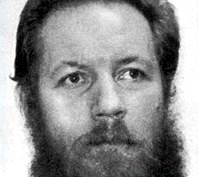
Thomas Silverstein
Murderer Brian Kevin Rosenfeld
Murderer · USA · 1985
Brian Kevin Rosenfeld Brian Kevin Rosenfeld was sentenced to three concurrent l…
23 victims
Brian Kevin Rosenfeld
Murderer · USA · 1985
Brian Kevin Rosenfeld Brian Kevin Rosenfeld was sentenced to three concurrent l…
23 victims
 Marvin Gray
Murderer · USA · 1975
Marvin Gray was convicted killer who claimed responsibility for 23 slayings and…
23 victims
Marvin Gray
Murderer · USA · 1975
Marvin Gray was convicted killer who claimed responsibility for 23 slayings and…
23 victims
 Yahweh ben Yahweh
Murderer · USA · 1980
Yahweh ben Yahweh was born and legally named Hulon Mitchell Jr. (October 27, 19…
23 victims
Yahweh ben Yahweh
Murderer · USA · 1980
Yahweh ben Yahweh was born and legally named Hulon Mitchell Jr. (October 27, 19…
23 victims
 Russell Ellwood
Murderer · USA · 1991
Russell Ellwood was a former taxi driver. Authorities suspected him of killing…
20 victims
Russell Ellwood
Murderer · USA · 1991
Russell Ellwood was a former taxi driver. Authorities suspected him of killing…
20 victims
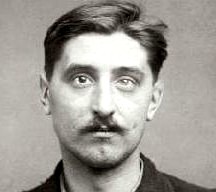 Albert Soleilland
Murderer · France · 1907
Albert Soleilland was sentenced to death on July 24, 1907 for a homicide involv…
1 victim
Albert Soleilland
Murderer · France · 1907
Albert Soleilland was sentenced to death on July 24, 1907 for a homicide involv…
1 victim
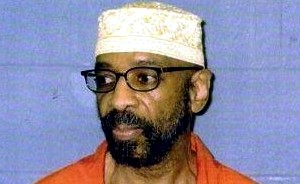 Russell Shoatz
Murderer · USA · 1970
Russell "Maroon" Shoatz (1943 - ) was a former Black Panther and Black Liberati…
1 victim
Russell Shoatz
Murderer · USA · 1970
Russell "Maroon" Shoatz (1943 - ) was a former Black Panther and Black Liberati…
1 victim
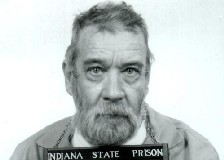 Larry Dale Potts
Murderer · USA · 1987
Larry Dale Potts was sentenced to death on October 6, 1988. While separated, Sh…
2 victims
Larry Dale Potts
Murderer · USA · 1987
Larry Dale Potts was sentenced to death on October 6, 1988. While separated, Sh…
2 victims
 Darrell Eston Lee
Murderer · USA · 1991
Darrell Eston Lee Darrell Lee and Karen Thompson were described as approaching…
1 victim
Darrell Eston Lee
Murderer · USA · 1991
Darrell Eston Lee Darrell Lee and Karen Thompson were described as approaching…
1 victim
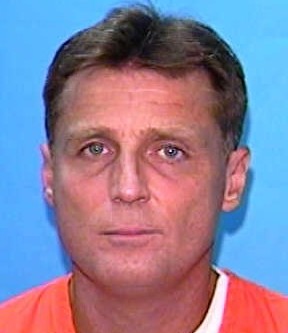 Glen Edward Rogers
Serial killer · USA · 1993
Glen Edward Rogers was a spree killer whose cross-country rampage in 1994-95 le…
70 victims
Glen Edward Rogers
Serial killer · USA · 1993
Glen Edward Rogers was a spree killer whose cross-country rampage in 1994-95 le…
70 victims
 Jesse Jacobs
Murderer · USA · 1986
Jesse Jacobs (#872) was the offender. He was executed in Texas on January 4, 19…
1 victim
Jesse Jacobs
Murderer · USA · 1986
Jesse Jacobs (#872) was the offender. He was executed in Texas on January 4, 19…
1 victim
- Gender
- male
- Country
- USA
- Location
- USP Marion, Williamson County, Illinois, USA
- Date of birth
- 1952
- Age at first offence
- 31
- Characteristics
- convicted rapist, murder for hire, former mental patient, gang, abuse
- Victim profile
- Robert Chappelle (member of the DC Blacks prison gang) / Raymond “Cadillac” Smith (the national leader of the D.C. Blacks prison gang) / Merle E. Clutts, 51 (Marion Corrections Officer)
- Method of murder
- Strangulation / Stabbing with a homemade knife
- Date(s) of murder
- 1 981 - 1983
- Years active
- 1983
- Date of arrest
- —
- Status
-
Life imprisonment
Sentenced to three life terms in prison in 1981
Case record: Thomas Silverstein
Status and overall case
Thomas Silverstein (1952–) was a convicted American murderer. He was described as a brutal killer and a former leader of the Aryan Brotherhood prison gang.
He maintained that dehumanizing conditions inside the prison system were responsible for the three murders he committed. He was held in a specially designed cell at Leavenworth federal penitentiary. He was the longest held prisoner in total solitary confinement within the Bureau of Prisons.
Silverstein was sentenced to three life terms in prison in 1981.
People
- Thomas Silverstein — defendant; convicted murderer; former leader of the Aryan Brotherhood prison gang.
- Merle Clutts — victim; Marion Officer; killed by Silverstein.
- Danny Atwell — inmate; victim of a murder conviction that was later overturned as based on false testimony from jailhouse informants.
- Robert Chappelle (Robert M. Chappelle; also shown as Robert Marvin Chappelle; also shown as Chappelle) — inmate; member of the DC Blacks prison gang; killed in the Control Unit of the federal penitentiary at Marion, Illinois.
- Raymond “Cadillac” Smith — national leader of the D.C. Blacks prison gang; put in the control unit in Marion and placed in a cell near Silverstein; killed by Silverstein.
- Clayton Fountain — defendant; involved in prison guard murders in the Control Unit.
- Randy Gometz (Randy K. Gometz) — defendant; tried together with Silverstein; convicted of aiding and abetting.
- Edgar Hevle — defendant; member of the Aryan Brotherhood’s commission.
- Adolph Reynosa — defendant; member of the Mexican Mafia.
- Norman Matthews — inmate witness in the case involving Chappelle’s murder; gave a confession in open court, then asserted a Fifth Amendment right and was excused.
- Fountain — referenced as Clayton Fountain.
- Hoffman — guard killed by Fountain.
- Ditterline — guard injured by Fountain; survived but was permanently disabled.
- Powles — guard injured by Fountain.
- Ronnie Bruscino — convicted murderer; cell near Silverstein in 1983; made statements attributed to him.
- John Greschner — prisoner referenced as recalling statements by Clutts.
- Ted Sellers — black former convict who met Silverstein during 25 years spent in jail.
- Pete Earley — author; referenced in relation to quotes from a Bureau of Prisoners official.
- FBI agents — referenced as theorizing about how Chappelle was murdered.
- BBC News Online — referenced as carrying statements by Ted Sellers.
Timeline
- 1971 — At age nineteen, Silverstein was sent to San Quentin for armed robbery.
- 1975 — Silverstein stated he had been incarcerated since 1975.
- 1980 — Silverstein was moved to USP Marion after being convicted of the murder of inmate Danny Atwell; the conviction was later overturned as based on false testimony from jailhouse informants.
- 1981 — Silverstein was accused of the murder of Robert Chappelle and was convicted and sentenced to life in prison based on testimony from informants.
- 1981 (August) — Reynosa told Perumean that Chappelle, the “disrespecter” of Vargas, was being moved to the Control Unit.
- 1981 (after Owens and Hevle conversations) — Owens asked Hevle what the Aryan Brotherhood intended to do about Chappelle; Hevle replied Bartosh would be sent with Silverstein to Atlanta to testify in a case and they would discuss the matter there.
- 1981 — Silverstein and another inmate, Clayton Fountain, were let out to recreate; Chappelle was found dead on the floor of his cell.
- August 1981 (referenced by jury question) — The jury asked whether it was possible to get “testimony of August '81 of Silverstein and Reynosa making contact about murdering Robert Marvin Chappelle.”
- 1981 — Silverstein pleaded not guilty to the killing of Chappelle and was convicted based on informant testimony; he received life imprisonment.
- September 27, 1982 — Silverstein was convicted of stabbing Raymond Cadillac Smith to death.
- October 22, 1983 — Silverstein killed Marion Officer Merle E. Clutts by stabbing him with a shank.
- 1987 — During the 1987 riot by Cuban detainees at the Atlanta federal penitentiary, the Cubans released Silverstein from his isolation cell.
- 1987 (one week later) — Silverstein was handed over to the Federal Hostage Rescue Team.
- 2005 — When USP Leavenworth was designated to become a medium security facility, Silverstein was moved to ADX Florence.
- November 2, 2095 — Silverstein’s earliest theoretical date of release.
Background
Silverstein was born in Long Beach, California, to Virginia Silverstein.
Virginia Silverstein divorced her first husband in 1952 while pregnant with Thomas Silverstein and immediately married Thomas Conway, whom Thomas Silverstein said was his natural father. Four years later, she divorced Conway and married Sid Silverstein, who legally adopted her son.
Silverstein remembered the marriage as rocky and said fights were common. He was timid, awkward, shy, and frequently bullied as a child in the middle-class neighborhood where the family lived. Everyone assumed he was Jewish, and he was treated as an outcast.
Virginia Silverstein told her son that if he ever came home again crying because he had been beaten up by a bully, she would be waiting to give him a second licking.
Silverstein stated:
“That’s how my mom was. She stood her mud. If someone came at you with a bat, you got your bat and you both went at it.”
At age 14 Silverstein was sentenced to a California reformatory. Silverstein stated that his attitudes about violence were reinforced there, and he said: “Anyone not willing to fight was abused.”
In 1971, at age nineteen, he was sent to San Quentin for armed robbery. Four years later, he was paroled, but he was arrested soon after along with his father, Thomas Conway, and his uncle for three armed robberies. Their take was less than $1,400. A probation officer later blamed the older men for getting Silverstein, then age twenty-three, involved in the crimes. Silverstein was sentenced to 15 years for armed robbery.
The offence(s)
Armed robbery background
Silverstein was originally jailed for armed robbery and was later again arrested for three armed robberies with Thomas Conway and his uncle, with a take of less than $1,400.
Murders at Marion Supermax / Control Unit
Conviction later overturned: inmate Danny Atwell
In 1980, Silverstein was moved to USP Marion after being convicted of the murder of inmate Danny Atwell. The conviction was later overturned as based on false testimony from jailhouse informants.
Murder of Robert Chappelle (Control Unit)
In 1981, Silverstein was accused of the murder of Robert Chappelle, a member of the DC Blacks prison gang. Silverstein was again convicted based on testimony from informants and sentenced to life in prison.
Silverstein maintained he was innocent.
While Silverstein and Fountain were on trial for Chappelle’s murder, the Bureau transferred Raymond “Cadillac” Smith, the national leader of the D.C. Blacks prison gang, from another prison into the control unit in Marion and placed him in a cell near Silverstein’s.
Silverstein described Smith’s conduct after arrival in the control unit and stated:
“I tried to tell Cadillac that I didn’t kill Chappelle, but he didn’t believe me and he bragged that he was going to kill me.”
Silverstein also stated:
“Everyone knew what was going on and no one did anything to keep us apart. The guards wanted one of us to kill the other.”
Silverstein and another prisoner killed Smith, and Silverstein received another life sentence.
The text also included the statement that Silverstein’s initial conviction for the murder of Atwell (the reason he was transferred to USP Marion in the first place) was quashed because the testimony that convicted him was adjudged perjured.
Jury trial description of Chappelle’s murder events (from consolidated appellate discussion)
In the Control Unit at Marion, the ranges were locked at each end and each cell had only one occupant. Inmates were let out once a day for about an hour and ten minutes to recreate in the range corridor or in the special recreation yard, or to take a shower. Meals were served in their cells by guards. Inmates from different ranges were not allowed to mingle, but they could occasionally talk or shout to inmates in other ranges.
In August 1981, Reynosa told Perumean that Chappelle was being moved to the Control Unit. The text described planning and communications among prison gang members leading to the murder.
Nine days after Bartosh and Silverstein returned from the trip to Atlanta, Silverstein and another inmate of C range, Fountain, were let out to recreate. They were not kept under continuous observation by guards during the hour they roamed the corridor of C range. About one hour and a quarter after Silverstein and Fountain were returned to their cells, Chappelle was found dead on the floor of his cell.
Medical evidence showed Chappelle had been strangled about an hour after eating, by a cord held by two people as he lay on his bed with his head leaning against the bars of the cell.
The text stated that the next day Reynosa told Perumean, “we finally got the son of a bitch,” and later Silverstein told Perumean that he and Fountain had “yoked the nigger.” It also stated that Fountain told another inmate, “I am glad we killed him,” and Silverstein told another, “I am just sorry I had to kill him through the bars and couldn’t get next to him.”
The jury convicted Silverstein and Fountain of murder and sentenced them to life imprisonment. The jury convicted Silverstein, Hevle, and Reynosa of conspiracy to murder. Silverstein was sentenced to 20 years in prison, and Hevle and Reynosa to 40 years each, for the conspiracy. All sentences were made consecutive to other sentences the defendants were serving.
Additional contradictory or disputed narrative within the case text
The narrative described that Chappelle’s body was found dead under his bed in his locked cell and that FBI agents theorized he had been murdered while lying on his bunk, with his head on a pillow propped up against the cell bars. The narrative also stated that federal prosecutors based their case on testimony from inmate informants who cut deals.
A portion of the text included the statement that Silverstein pleaded not guilty but was convicted based on testimony of inmates that cut deals with the prosecutor, and that the judge gave Silverstein a sentence of life in prison for killing a gang member in segregation at the United States Penitentiary in Marion, Illinois.
Murder of Merle E. Clutts
On October 22, 1983, Silverstein killed Marion Officer Merle E.
The narrative described the following sequence:
- After being let out of his cell for a shower, Silverstein used a ruse to get Clutts to walk ahead of him, placing Silverstein between Clutts and other officers.
- Silverstein stopped at another cell, where an inmate passed him the shank and unlocked his handcuffs using a homemade key.
- Silverstein attacked Clutts, stabbing him several dozen times.
Silverstein claimed Clutts was deliberately harassing him.
After the murder, Silverstein was transferred to a special “no human contact” cell at Atlanta Prison. Later that same day, another inmate member of the Aryan Brotherhood killed another federal corrections officer in the same manner, stopping at a cell to have an accomplice unlock his cuffs and pass him a shank.
Following these two murders, Marion was placed on an indefinite lockdown.
A separate appellate discussion described that guards escorting Fountain and Silverstein did not carry weapons, and that on the same October day in 1983 Silverstein stopped next to Randy Gometz’s cell while being escorted from the shower to his cell. While two escorting officers were at a distance, Silverstein reached his handcuffed hands into the cell. The third officer heard the click of the handcuffs being released and saw Gometz raise his shirt to reveal a home-made knife (“shank”) protruding from his waistband.
Silverstein drew the knife and attacked one of the guards, Clutts, stabbing him 29 times and killing him.
While pacing the corridor after the killing, Silverstein explained:
“this is no cop thing. This is a personal thing between me and Clutts. The man disrespected me and I had to get him for it.”
Having gotten this off his chest, Silverstein returned to his cell.
The appellate discussion did not match the “several dozen times” phrasing used elsewhere in the case narrative; it specified 29 times.
Riot in Atlanta and transfer to Leavenworth
During the 1987 riot by Cuban detainees at the Atlanta federal penitentiary, the Cubans released Silverstein from his isolation cell.
They handed Silverstein over to the Federal Hostage Rescue Team one week later. The narrative stated that BOP officials were reputedly afraid Silverstein would begin killing correctional officers held hostage by the Cubans. It said BOP negotiators convinced Cuban riot leaders to hand over Silverstein as a gesture of good faith.
Silverstein was moved to Leavenworth Penitentiary in Leavenworth, Kansas, with security recorded as “no human contact.” He was placed in a cell located underground, with lights burned 24 hours a day and he was watched by guards constantly.
When USP Leavenworth was designated to become a medium security facility, in 2005, Silverstein was moved to ADX Florence, a supermax facility in Colorado. His earliest theoretical date of release was November 2, 2095.
Allegations of torture and injustice
Silverstein claimed his “no human contact” status was essentially a form of torture reserved for those who kill correctional officers.
A Bureau of Prisoners official told author Pete Earley:
“When an inmate kills a guard, he must be punished,”
and continued:
“We can’t execute Silverstein, so we have no choice but to make his life a living hell. Otherwise other inmates will kill guards too. There has to be some supreme punishment. Every convict knows what Silverstein is going through. We want them to realize that if they cross the same line that he did, they will pay a heavy price.”
Ted Sellers said he became a “legend” at Leavenworth. Sellers told BBC News Online:
“He is not as bad as they portray. Sure he is dangerous if they push him to the wall. But there were some dirty rotten guards at Marion... They would purposely screw you around. You are dealing with a person locked up 23 hours a day. Of course he's got a short fuse.”
Silverstein also maintained that because he was in Marion supermax on a conviction that was later overturned, he should have been released long before and he would never have killed anyone but for the false conviction and brutality of the prison system.
Silverstein’s statements included verbatim
The text included a long first-person statement by Silverstein, beginning:
“My name is Tom Silverstein, A/K/A, Tommy. I’ve been incarcerated since 1975 and am currently the longest held prisoner in total solitary confinement within the BOP (Bureau of Prisons) and perhaps in America and the world Not even the notorious ‘Birdman of Alcatraz’ was held in (total solitary confinement) absolute insolation, as I have been subjected to the past 23 years! He was able to see and speak with his neighbors in adjacent cells beside and across from his cell at U.S.P. Leavenworth in building 63 (where I had spent over a year in 1979-80). Whereas I am deprived of any and all contact with fellow prisoners. Prisoncrats have sadly, but most definitely, surpassed their previous diabolical means of burying a man alive in the twenty first century since the Birdman’s era. These pathetically sadistic agents of oppression eerily have excelled at intensifying the environment of sensory deprivation and psychological torture, which is what causes sane men to be driven completely insane. This has been scientifically proven; I do not arbitrarily charge my tormentors as ‘sadist.’ They know exactly the effects of long term insolation and intentionally, with malice and forethought, continue it. I’ll include my recent appeal’s so you can read it for yourself my argument for getting out of this damnation and their denials.”
That statement continued with multiple assertions about appeals, solitary confinement, torture, and legal arguments, including quoted statements attributed to officials and quoted material attributed to John Yoo and New York magazine, and quoted material attributed to Jane Mayer. It also included the statement:
“Your new pal, I hope! Tommy Silverstein”
and references to prisoner identification numbers and a website.
Trial and proceedings
Shackling and psychiatric request
At both trials, the judge ordered the defendants and their inmate witnesses to be shackled at the ankles while in court. Curtains at counsel tables shielded defendants’ shackles from the jury’s view, but the shackles were visible when witnesses were en route to or from the witness stand.
The appellate discussion described the judge refusing the request for a psychiatrist. On the day of trial, Silverstein’s lawyer requested a psychiatrist appointment, and the judge refused, saying:
“I don’t think that is within my prerogative to do that and the court would not grant a continuance at this late date for that.”
Cross-examination about prior convictions and “peaceable man” question
On cross-examination, the prosecutor asked Silverstein detailed questions about prior convictions and ended with:
“You are a peaceable man?”
Silverstein answered:
“I like to think so.”
The appellate discussion also stated that the jury could see the violence character implied by the defendants.
Testimony exclusion: Norman Matthews
In the Chappelle conspiracy/murder appeals, the appellate discussion described a defense witness, Norman Matthews, who had been an inmate in C range on the day of Chappelle’s murder and had been let out to recreate right after Silverstein and Fountain were returned to their cells.
When called to testify, Matthews answered:
“It was the day I killed Chappelle.”
After counsel asked him about his Fifth Amendment rights, Matthews replied:
“Yes.”
The judge excused Matthews after questioning him about waiver of Fifth Amendment privilege. During that exchange, Matthews said:
“maybe I should take the Fifth . . . You convinced me I should protect my rights, sir.”
The judge instructed the jury to disregard the questions and answers.
Jury question during deliberations (Reynosa)
The appellate discussion described the jury submitting a question to the judge: “Is it possible to get the testimony of August '81 of Silverstein and Reynosa making contact about murdering Robert Marvin Chappelle?” The judge replied:
“Sorry, it is not possible to furnish the requested information. Please continue with your deliberations. Judge Foreman.”
Appeals
The consolidated appeals included issues about evidentiary rulings and sentencing. The appellate decision described consolidated appeals in cases of murder of prison guards in the Control Unit of Marion, Illinois, and it reviewed whether sentences could be term-of-years rather than life.
In the sentencing discussion, the appellate court stated that because first-degree murder punishment under federal statute was life imprisonment or death, and death had been held unconstitutional, life was the only punishment possible; therefore the trial court’s sentences were unlawful and needed vacating.
The appellate decision concluded:
- It affirmed convictions.
- It vacated the sentences and remanded for entry of life sentences, recalculation of restitution, and inclusion of a time limit consistent with the statute.
The appellate decision’s disposition included the line:
- “AFFIRMED IN PART, REVERSED IN PART, AND REMANDED.”
A dissent by SWYGERT stated that certain holdings were not accepted. It listed concurrence with multiple holdings including:
- no error in ordering shackles,
- no abuse of discretion in denying the psychiatric request as untimely,
- sufficiency of evidence to convict Gometz,
- error in sentencing to term of years instead of life,
- error in failing to place a time limit on restitution liability.
The dissent disputed the majority’s rationale on evidentiary intent and restitution issues.
Sentencing and restitution
The appellate discussion described sentences in terms of life and consecutive terms, plus restitution ordered under the Victim and Witness Protection Act of 1982.
For Fountain, the appellate discussion stated the judge sentenced him to “not less than 50 nor more than 150 years in prison,” and ordered restitution of:
- $92,000 to Hoffman’s estate,
- $98,000 to Ditterline,
- nearly $300,000 to the Department of Labor.
For Silverstein and Gometz, the appellate discussion stated they received “the same 50 to 150 year sentences as Fountain” and were ordered to pay restitution to Clutts’s estate and to the Department of Labor of $68,000 and $2,000 respectively.
The appellate decision vacated term-of-years sentences, directing life imprisonment sentences.
The appellate decision also discussed restitution and remand recalculation, including whether to include contested lost future earnings and whether restitution awards should include a time limit.
Outcome
The appellate court’s overall outcome was:
- convictions were affirmed,
- sentences were vacated with directions for life imprisonment,
- restitution awards were to be recalculated and remanded with incorporation of a time limit consistent with the statute.
Silverstein’s status remained that he was sentenced to three life terms in prison in 1981.
Other details
Leavenworth and solitary confinement
The narrative stated Silverstein was held in total solitary confinement for 23 years and described a specially designed cell and “no human contact” status.
It also stated the BOP opened ADX in Florence, Colorado in 1994.
Statements about guards, harassments, and prisoner rivalry (as presented in the narrative)
The narrative attributed statements to John Greschner describing Clutts’s remarks, including:
“Hey, I’m running this shit. You ain’t running it. You’re a fucking prisoner! I’m the cop. Who the fuck do you think you are?”
Ronnie Bruscino was attributed a statement:
“Twenty years from now every guard will still know you are the one who killed a cop, because that is something the guards never, never forget.”
A statement attributed to Ronnie Bruscino also included:
“I told Tommy, hey man, when you kill a cop, you know it’s over. Your life is gone.”
The narrative included statements about Silverstein stopping violating prison rules and “settled down at Leavenworth in 1987,” and that he had not received a disciplinary report in 19 years.
The narrative also included a description of the BOP denying that Merle Eugene Clutts harassed Silverstein.
Compiled appellate case captions and judges
The text included appellate case captions:
- “UNITED STATES OF AMERICA, Plaintiff-Appellee, v. CLAYTON FOUNTAIN, THOMAS E. SILVERSTEIN, and RANDY K. GOMETZ, Defendants-Appellants UNITED STATES COURT OF APPEALS FOR THE SEVENTH CIRCUIT Nos. 84-1939, 84-1940, 84-1949” with dates “February 15, 1985” (argued) and “July 8, 1985” (decided) and “POSNER, Circuit Judge.”
- THOMAS E. SILVERSTEIN, ADOLPH REYNOSA, CLAYTON A. FOUNTAIN, and EDGAR HEVLE, Defendants-Appellants UNITED STATES COURT OF APPEALS FOR THE SEVENTH CIRCUIT Nos. 82-2453, 82-2454, 82-2456, 82-2457” with dates “February 13, 1984” (argued) and “April 26, 1984” (decided) and “POSNER, Circuit Judge.”
Additional quote: Silverstein’s text about appeals levels
Within Silverstein’s long first-person statement, he described appeal levels and asserted procedural claims, including statements:
“We have four levels of appeals.”
and:
“We (prisoners) seldom win an appeal.”
and:
“It’s really just a sham they use to assure the public that any grievances we have are reviewed by higher level administrators.”
and:
“The BOP enjoys giving the illusion that our problems will be solved if we (the prisoners) would only file appeals.”
and:
“Which is comparable to the cops policing themselves.”
and:
“If all goes well, we hope to enlist some profound columnist to share their investigative insights into the U.S. penal/injustice system so you all can see what is happening within the U.S. penitentiaries since your hard earned and over taxed dollars are paying for it.”
Spotted an error, or have more information about this case?