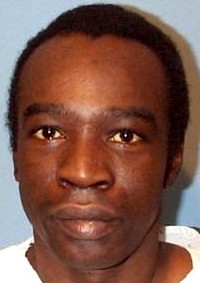
Luther Jerome Williams
Murderer Brian Kevin Rosenfeld
Murderer · USA · 1985
Brian Kevin Rosenfeld Brian Kevin Rosenfeld was sentenced to three concurrent l…
23 victims
Brian Kevin Rosenfeld
Murderer · USA · 1985
Brian Kevin Rosenfeld Brian Kevin Rosenfeld was sentenced to three concurrent l…
23 victims
 Yahweh ben Yahweh
Murderer · USA · 1980
Yahweh ben Yahweh was born and legally named Hulon Mitchell Jr. (October 27, 19…
23 victims
Yahweh ben Yahweh
Murderer · USA · 1980
Yahweh ben Yahweh was born and legally named Hulon Mitchell Jr. (October 27, 19…
23 victims
 Russell Ellwood
Murderer · USA · 1991
Russell Ellwood was a former taxi driver. Authorities suspected him of killing…
20 victims
Russell Ellwood
Murderer · USA · 1991
Russell Ellwood was a former taxi driver. Authorities suspected him of killing…
20 victims
 Robert Martines Perez
Murderer · USA · 1994
Name: Robert Martines Perez · Other name used in proceedings: Robert Martinez P…
15 victims
Robert Martines Perez
Murderer · USA · 1994
Name: Robert Martines Perez · Other name used in proceedings: Robert Martinez P…
15 victims
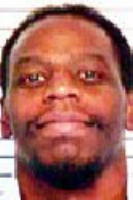 Ernest Marvin Carter
Murderer · USA · 1990
Ernest Marvin Carter was executed by lethal injection in Oklahoma on December 1…
1 victim
Ernest Marvin Carter
Murderer · USA · 1990
Ernest Marvin Carter was executed by lethal injection in Oklahoma on December 1…
1 victim
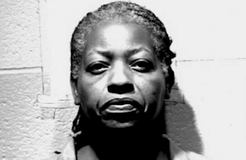 Robin Johnson
Murderer · USA · 2008
Robin Johnson was a 300-pound homeless woman in her 40s who was involved in a d…
1 victim
Robin Johnson
Murderer · USA · 2008
Robin Johnson was a 300-pound homeless woman in her 40s who was involved in a d…
1 victim
 Sarah Johnson
Homicide · USA · 2003
Sarah Johnson was convicted of murdering her parents, Alan Scott Johnson and Di…
2 victims
Sarah Johnson
Homicide · USA · 2003
Sarah Johnson was convicted of murdering her parents, Alan Scott Johnson and Di…
2 victims
 Laura Rogers
Murderer · USA · 2004
Laura Rogers was convicted of manslaughter after the shooting death of her husb…
1 victim
Laura Rogers
Murderer · USA · 2004
Laura Rogers was convicted of manslaughter after the shooting death of her husb…
1 victim
 Miranda Barbour
Murderer · USA · 2013
Miranda Barbour, 19, defendant. · Elytte Barbour, 22, defendant and husband of…
100 victims
Miranda Barbour
Murderer · USA · 2013
Miranda Barbour, 19, defendant. · Elytte Barbour, 22, defendant and husband of…
100 victims
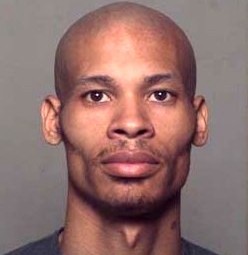 Paul Durousseau
Serial killer · USA · 1997
Paul Durousseau was an American serial killer born on August 11, 1970, in Beaum…
7 victims
Paul Durousseau
Serial killer · USA · 1997
Paul Durousseau was an American serial killer born on August 11, 1970, in Beaum…
7 victims
- Gender
- male
- Country
- USA
- Location
- Tuscaloosa County, Alabama, USA
- Date of birth
- November 15, 1959
- Age at first offence
- 29
- Characteristics
- robbery
- Victim profile
- John Robert Kirk (male, 63)
- Method of murder
- Shooting ( .22 caliber pistol)
- Date(s) of murder
- January 23, 1988
- Years active
- 1988
- Date of arrest
- —
- Status
-
Executed
Executed by lethal injection in Alabama on August 23, 2007
Background
Luther Jerome Williams was convicted in 1989 for the murder of John Robert Kirk. Kirk was a veteran of the Omaha Beach landing during World War II. He was shot in the back of the head, and Williams was sentenced to death.
Kirk was heading home to Gordo from his job in Helena. On cold January night in 1988, Kirk stopped his vehicle near the West Blocton exit on Interstate 59 South in Tuscaloosa County because of mechanical problems.
Williams was described as on the run from a prison work release program a week before Kirk was killed.
Williams had an extensive prior criminal history. After his conviction, an Alabama Board of Pardons and Paroles investigation report referenced by court documents described him as having antisocial personality disorder and noted that psychiatrists concluded that “the only diagnosis for Williams would be that of antisocial personality disorder.” His attorneys argued that his mental status was never thoroughly evaluated and that he lagged years behind his age group in school.
Court files indicated that Williams was abandoned by his parents and lived with his grandmother in Birmingham until she died when he was 7. He then lived with his sister’s grandmother, who adopted the children before she died in 1989. His attorneys wrote in an appeal that he was often locked out of his home as a teenager and that at age 16 he was only 4 feet, 10 inches tall and 65 pounds. Williams was expelled from school after a fight when he was a 20-year-old ninth-grader. He told a parole officer in 1990 that he had been seeing two girls and that he “popped” one of them because he thought she was going to stab him. Williams told officials that he began shoplifting at about age 9 or 10 but was never arrested for a crime until he was 16.
Records from Taylor-Hardin Secure Medical Facility referenced in court documents noted several scars Williams bore: two from an operation on his left jaw after he was struck by “a flying object” in 1981, and another from back surgery after he was stabbed that same year. He had a scar from a fight at a football game and another from a fight with a girlfriend. Williams reported an extensive history of alcohol and marijuana use and said he had drunk a half-gallon of whiskey and smoked a “dime bag” of marijuana the night before Kirk’s murder. Williams told the parole officer that he worked for a property management company doing masonry, but the company was unable to verify his employment.
The offence
On January 22, 1988, a 1981 dark blue Oldsmobile Regency automobile was stolen from a motel parking lot in Birmingham, Alabama. In the trunk of this vehicle was, among other items, a .22 caliber pistol.
A dark blue car arrived at the Smithfield housing project in Birmingham later that same evening, and Williams was identified as the sole occupant.
On the morning of January 23, 1988, John Robert Kirk stopped his vehicle, a red 1984 Chevrolet pickup truck with a camper on the back, near the West Blocton exit on Interstate 59 South in Tuscaloosa County because of mechanical problems.
Williams and two other men confronted Kirk after noticing Kirk’s vehicle. Williams led Kirk to a nearby wooded area. Williams shot Kirk once in the left side of the head “execution style” with the .22 caliber pistol. Kirk’s body was left at the site of the shooting, and Kirk’s money and vehicle were taken.
Later that same day, several witnesses identified Williams as the driver of a red “camper truck” parked at the Smithfield housing project.
Prosecutors said Williams was one of three men who saw the 63-year-old World War II veteran stopped on the side of the exit ramp, shot him execution-style not far from the road, and robbed him of his wallet and truck.
Court-related narrative also described that the victim was probably forced to his knees before he was killed with a single bullet to the back of the head, based on autopsy results.
Investigation
Priscilla Jones testified that Williams visited her on the day of the murder and told her “he had killed a white man and stole his truck,” and that he proceeded to show her the weapon, described as having a white handle.
During an interview conducted after a call placed by Rosie Mims, members of the Birmingham Police Department interviewed Priscilla Jones regarding Williams after learning of Williams’s statement concerning the shooting of a white man. Police learned that Williams was staying at an apartment in the Smithfield housing project and that he was an escapee from the supervised intensive restitution (SIR) program.
Arrest
During the very early morning hours of January 25, 1988, Birmingham police, after verifying that Williams had escaped from the SIR program and that a warrant was still outstanding, went to the apartment at the Smithfield housing project where Williams was reportedly staying.
Police talked with the lessee of the apartment, Margie Bush. Margie Bush turned toward a curtain separating the front of the apartment from a back bedroom and shouted for Bootsie, who then appeared from behind the curtain. Bootsie stated that she did not know where Williams was at that time. One of the officers looked behind the curtain and saw Williams lying in the bed.
After a struggle, Williams was taken into custody. The supervising officer informed Margie Bush that Williams was thought to have a gun and requested permission to search the apartment for it. Margie Bush gave permission. During the search, Bootsie stated that Williams had hidden the gun in the bedroom. The murder weapon was found inside a black purse on top of a dresser in the room where Williams was apprehended.
Trial
Williams was indicted on April 29, 1988, for the murder of John Robert Kirk during a robbery.
After his indictment, Williams was sent at his own request to the Taylor Hardin Secure Medical Facility for an evaluation of his mental competency to stand trial.
Evidence presented at trial included a statement that Williams made while at Taylor Hardin: “I have killed one white m____ f____; I’ll kill another one.” There was some conflict regarding the person to whom the statement was directed.
Williams was found competent to stand trial and was discharged from the facility on December 23, 1988.
After numerous continuances, Williams’s trial began on November 27, 1989. The jury returned a verdict of guilty on November 30, 1989.
Sentencing began on December 1, 1989. The jury recommended the death penalty by a vote of 10-2. The trial court accepted the recommendation and sentenced Williams to death.
The trial court made findings related to aggravating and mitigating circumstances. In aggravation, the trial court found that the offense was committed while Williams was under sentence of imprisonment for a previous offense, and that it was committed during the course of a robbery.
The trial court found as nonstatutory mitigating circumstances that Williams had an antisocial personality, that he did not have a significant prior history of assaultive or violent conduct, that he did not have a stable family environment during his formative years, and that he had extensively abused alcohol and drugs since he was about 16 years old.
The sentencing record also included a separate bench sentencing hearing after the jury’s recommendation and after the presentence investigation had been completed.
Appeals
Direct appeal (Alabama Court of Criminal Appeals)
Williams v. State, 601 So.2d 1062 (Ala.Crim.App.1991) involved his conviction and death sentence affirmed by the Court of Criminal Appeals.
The Court of Criminal Appeals held that:
- a 22-month delay between the date of arrest and the date of trial did not violate Williams’s speedy trial rights;
- Williams had no expectation of privacy in the purse in which the murder weapon was found where the purse was in an area of the apartment to which all occupants had access;
- the sentence of death was not excessive.
The opinion stated that the appellant, Luther Jerome Williams, was convicted of intentional murder during the course of a robbery, making it a capital offense by § 13A-5-40(a)(2), Code of Alabama 1975. It further stated that the jury recommended that the appellant be sentenced to death, and the trial court sentenced him to death by electrocution.
The Court of Criminal Appeals addressed several issues raised in a supplemental brief.
The opinion quoted a portion of the prosecutor’s rebuttal closing argument in the guilt phase. The prosecutor stated:
“Circumstantial evidence is kind of like a big rat and a little rat in a box. Circumstantial evidence is when you put that lid on that box at night and make sure there are no holes. And you open up the box the next day. The big rat ... is still there but the little mouse is gone. You look down there and you say, ‘Well, that big rat ate that little mouse’ which is what you have in this case. But then what happens is that you look at that big rat and what does the big rat say? This is not circumstantial evidence. He says, ‘I ate the mouse.’ He says that to some of the first people that saw him. He also has in his possession some of the fur of the little mouse that the little mouse had. And also at a later time he says ‘I ate the little mouse and I will eat another little mouse if you give me a chance.’ ”
The Court of Criminal Appeals described the appellant’s argument that the underlined portion was a comment that Williams would kill again.
The opinion also quoted a comment made by the appellant that had been received into evidence:
“I killed one white m____ f____; I'll kill another one.”
In discussing race-related arguments, the Court of Criminal Appeals quoted the trial court’s admonition to the jury:
“The fact that the deceased was a white man or that the defendant was a black man is irrelevant insofar as your determination and duty in this case is concerned. Whether or not race played any part in the death of John Robert Kirk and regardless of the presence, if any, of any racial epithets or statements, considerations of race simply do not enter into this courtroom or inject themselves into your consideration of the evidence in the case.”
The opinion also quoted comments made by the prosecutor in closing argument, including:
“You heard his comment about ‘Well, it's just as possible that Trosky and Carmichael were the ones that shot Mr. Kirk as anybody else,’ and I submit to you: What fathom of evidence at all indicates that they were involved in the execution of John Robert Kirk? What fathom of evidence at all indicates that this weapon hidden in a purse in that very room-if you are going to use this as an item to pawn, you don't hide it in the room that you are staying in; you hide it somewhere else or you get rid of this quick. If you are going to use it as a tool of the trade, you keep it handy.”
And:
“The last thing I will submit to you is that, you know, when you talk about circumstantial evidence, one thing everybody says is when some parts of the case are circumstantial, circumstantial evidence is just as good as regular evidence. You notice he didn't comment on this part at all. In this case, first you have the circumstance that he is found with the murder weapon. That in and of itself is sufficient circumstances unless something else is shown as to why that person had that gun other than they did the killing. There is no evidence of that whatsoever.”
The opinion quoted a defense counsel closing argument segment about reasonable doubt and about the gun:
“Reasonable doubt is a doubt for which you have a reason. If you can tell me, ladies and gentlemen, that based on the facts in this case that you can exclude Trosky Gregory and Albert Carmichael as the persons that pulled the trigger in this case based on the evidence that is before you like going out to the scene.... “.... “I want to talk to you about the gun. To the person who shot Mr. Kirk, this is a weapon, but to a thief who steals and pawns things, this is money; this is money. To the person who shot Mr. Kirk, you take this with the knowledge that Mr. Kirk has been shot and you get rid of this evidence. To the person who has stolen that and has not used it as a murder weapon, you keep it until you sell it. Which did Luther Williams do? He kept it in a purse at the house. He didn't get rid of it.”
The opinion addressed the trial court’s written findings about mitigation. It quoted the trial court’s findings on the mitigating circumstance of “no significant history of prior criminal activity”:
“The mitigating circumstances. The defense asserted the presence of mitigating circumstances. Although the defense did not rely on all of the statutory mitigating circumstances, the court reviews all of the statutory mitigating circumstances in this sentencing order. “1. The defendant has no significant history of prior criminal activity. See Ala.Code § 13A-5-51(1) (1982 repl. vol.). The court finds that this mitigating circumstance is inapplicable. “The defense argued that the defendant has no significant history of prior criminal activity. According to the defense this mitigating circumstance should be deemed established by the absence of previous convictions for crimes of violence. Although the defendant does not have a record of prior convictions for violent felonies, he does have a history of prior criminal activity, and that history is significant. In 1979 he was convicted of grand larceny. By his own account, he was sent to the Frank Lee Youth Center, but after only four months he was transferred to Draper prison. Then he was placed in a work-release program in Mobile, but was ‘busted’ for shoplifting and returned to prison, this time at Atmore. In 1981 he was convicted of burglary in the third degree. He served the two-year sentence. Obviously, though, he did not serve the entire sentence, for in 1982 he was convicted of possessing burglar's tools. In 1983 he was convicted of two counts of breaking and entering a motor vehicle and one count of burglary in the third degree. He served a split sentence on the burglary conviction. In 1984 he was convicted of receiving stolen property, burglary in the third degree, and violation of the Alabama Controlled Substances Act. He was given two fifteen year sentences to run concurrently on the first two convictions. He was on escape from these sentences when he committed this capital offense. He also has been convicted of giving false information and disorderly conduct. Moreover, in 1978 the defendant was adjudicated a youthful offender in 1978 based on a charge of grand larceny. The court can consider that adjudication. See Ala.Code § 15-19-7(a) (1982 repl. vol.) (‘[I]f he is subsequently convicted of crime, the prior adjudication as youthful offender shall be considered.’). This mitigating circumstance refers to no significant history of prior criminal ‘activity,’ not convictions. Even if that adjudication were not considered by the court though, the defendant nevertheless has an extensive criminal record. “Additionally, the defendant has served at least portions of six separate sentences. He has had at least one probation sentence revoked. He has violated the conditions in two separate work release programs. Thus, disregarding the youthful offender adjudication and the misdemeanor convictions, the defendant has five prior felony convictions. “The defense proffered the opinion of a witness that ‘the defendant does not have a significant history of violent or assaultive behavior in his prior criminal activity.’ That is true, but does not establish this mitigating circumstance. The statutory definition never refers to violent or assaultive conduct. The court discussed this circumstance to this degree only in deference to the defense's argument that it was present. The defendant's long and substantial history of criminal behavior requires the court to reject this mitigating circumstance.”
The Court of Criminal Appeals concluded with an “AFFIRMED” disposition.
Alabama Supreme Court and U.S. Supreme Court denials
The Supreme Court of Alabama denied Williams’s petition for a writ of certiorari. The United States Supreme Court denied Williams’s petition for a writ of certiorari on November 2, 1992.
Rule 32 post-conviction
Williams filed a Rule 32 post-conviction petition with the Tuscaloosa circuit court raising numerous claims for relief. The petition was denied by then Tuscaloosa Circuit Judge Robert Harwood Jr. The Alabama Court of Criminal Appeals affirmed denial. The Alabama Supreme Court denied Williams’s petition for a writ of certiorari.
Federal habeas (11th Circuit)
Williams v. Allen, 458 F.3d 1233 involved his appeal from denial of federal habeas relief under 28 U.S.C. § 2254.
The Court of Appeals held that:
- habeas review of an ineffective assistance claim related to failure to review a secured mental facility file was barred;
- Williams’s statement about killing a white man and killing another was relevant;
- Williams was not deprived of effective assistance of counsel in connection with preparation and presentation of mitigating evidence in the penalty phase;
- Williams was not deprived of effective assistance of counsel during the guilt phase.
Federal execution-method litigation and stay efforts
Williams’s attorneys filed to challenge Alabama’s lethal injection method, and the matter was before the 11th Circuit Court of Appeals with a request for a stay of execution. A federal judge dismissed the case, and Williams appealed to the 11th Circuit Court of Appeals with an effort to obtain a stay pending a federal judge’s ruling in October about whether Alabama’s lethal injection method constitutes cruel and unusual punishment.
Gov. Bob Riley issued a statement rejecting a request for a stay.
The U.S. Supreme Court voted 5-4 on Thursday to deny a stay of execution.
Williams’s last appeal was denied 2-1 by the 11th Circuit Court of Appeals Tuesday, and Gov. Bob Riley refused to stay the execution.
Sentencing
Williams was sentenced to death by electrocution in the direct appeal opinion of the Alabama Court of Criminal Appeals.
The later execution occurred by lethal injection on August 23, 2007.
Outcome
Luther Jerome Williams was executed by lethal injection in Alabama on August 23, 2007. He was pronounced dead at 6:21 p.m. CDT at Holman Correctional Facility in southern Alabama.
Williams ate a hot dog, a green salad and orange juice as his last meal. He spoke through the glass partition separating him from two members of the victim’s family, who came to witness his death, and he proclaimed his innocence.
Williams raised his head to look at the family of the man he was convicted of killing and said: “I didn’t do it,” to Peggy Guy, sister of victim John Robert Kirk.
Williams maintained his innocence until the end and continued speaking in his final statement through the microphone provided for his last words. He prayed with prison chaplain Chris Summers, who knelt beside the bed holding his hand. After the chaplain’s prayer, Williams breathed deeply, readjusted his head on the pillow, and his hand lost grip of Summers’ hand at 6:07 p.m. His head tilted to the left and his mouth was slightly open. Williams lay there until breathing ceased. The medical examiner declared a time of death after the curtain closed.
His wish was to be cremated. A couple in Rhode Island accepted the body. They would pay for the cremation and give the remains to Koreen Bush.
Aftermath
Two of Kirk’s family members, his sister Peggy Guy and her son Lewis Kirk Guy, witnessed the execution and declined to comment after the execution.
Kirk’s widow, Norma, died a few years prior, and his daughter in Florida did not come.
Don Blocker, a volunteer minister at Holman, was the lone familiar face besides the family members in the witness rooms.
Williams’s possessions included a 13-inch black-and-white television, one box of legal paper, and a check for all that remained in his prison account in the amount of $38.97, which Williams left to his son Koreen Bush.
Williams’s cremation arrangements involved a couple in Rhode Island who accepted the body and would provide the cremation and give the remains to Koreen Bush.
Trosky Eric Gregory, now 43, was incarcerated at Staton Correctional Facility in Elmore with the possibility of parole. Albert Carmichael Jr., now 45, was paroled May 3, 2004.
Williams had previously exhausted all his appeals. U.S. Supreme Court denial of a stay of execution and denial by the 11th Circuit and refusal by Gov. Bob Riley completed the remaining steps before execution.
Spotted an error, or have more information about this case?