David Alexander Snow
Murderer Allan Legere
Murderer · Canada · 1986
Name: Allan Legere · Citation: R. v. Legere (1988), 89 N.B.R. (2d) 361 · Other…
5 victims
Allan Legere
Murderer · Canada · 1986
Name: Allan Legere · Citation: R. v. Legere (1988), 89 N.B.R. (2d) 361 · Other…
5 victims
 Angelo Colalillo
Murderer · Canada · 1993
Angelo Colalillo was suspected of committing serial sexual assaults and murders…
3 victims
Angelo Colalillo
Murderer · Canada · 1993
Angelo Colalillo was suspected of committing serial sexual assaults and murders…
3 victims
 Denis Lortie
Murderer · Canada · 1984
Denis Lortie was a Canadian army corporal in the Royal 22 e Régiment of the Can…
3 victims
Denis Lortie
Murderer · Canada · 1984
Denis Lortie was a Canadian army corporal in the Royal 22 e Régiment of the Can…
3 victims
 Nicholas Vernage
Murderer · Canada · 1991
Nicholas Vernage (26) murdered Sgt Alan King and also killed Lorna Bogle and Ja…
3 victims
Nicholas Vernage
Murderer · Canada · 1991
Nicholas Vernage (26) murdered Sgt Alan King and also killed Lorna Bogle and Ja…
3 victims
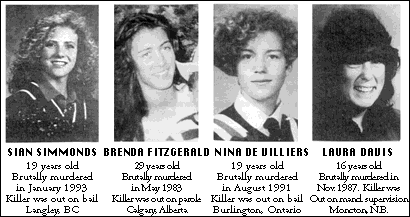 Jonathan Yeo
Murderer · Canada · 1991
Jonathan Yeo died by suicide by gunshot to avoid arrest in August 1991. On Augu…
2 victims
Jonathan Yeo
Murderer · Canada · 1991
Jonathan Yeo died by suicide by gunshot to avoid arrest in August 1991. On Augu…
2 victims
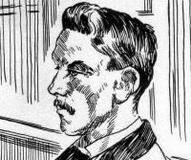 Herbert John Bennett
Murderer · United Kingdom · 1900
Herbert John Bennett was convicted of murdering his wife, Mrs Bennett. · 22 Jul…
1 victim
Herbert John Bennett
Murderer · United Kingdom · 1900
Herbert John Bennett was convicted of murdering his wife, Mrs Bennett. · 22 Jul…
1 victim
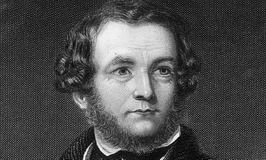 Thomas Simpson
Murderer · USA · 1840
Thomas Simpson was fatally shot at a wilderness camp in the U.S. territory of M…
2 victims
Thomas Simpson
Murderer · USA · 1840
Thomas Simpson was fatally shot at a wilderness camp in the U.S. territory of M…
2 victims
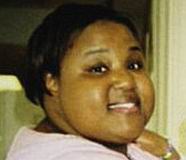 Veronica Cirella
Murderer · USA · 2011
Veronica Cirella was 31 and lived in Plainview, New York. She was the mother of…
1 victim
Veronica Cirella
Murderer · USA · 2011
Veronica Cirella was 31 and lived in Plainview, New York. She was the mother of…
1 victim
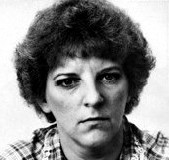 Genene Jones
Serial killer · USA · 1977
Genene Anne Jones (born July 13, 1950) was a former pediatric nurse who worked…
11 victims
Genene Jones
Serial killer · USA · 1977
Genene Anne Jones (born July 13, 1950) was a former pediatric nurse who worked…
11 victims
 John Giuca
Murderer · USA · 2003
John Giuca was born October 1983. He was an American man who studied criminal j…
1 victim
John Giuca
Murderer · USA · 2003
John Giuca was born October 1983. He was an American man who studied criminal j…
1 victim
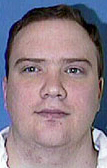 Ron Shamburger
Murderer · USA · 1994
Ron Scott Shamburger was executed by lethal injection in Texas on September 18,…
1 victim
Ron Shamburger
Murderer · USA · 1994
Ron Scott Shamburger was executed by lethal injection in Texas on September 18,…
1 victim
- Gender
- male
- Country
- Canada
- Location
- Toronto, Ontario, Canada
- Date of birth
- 1955
- Age at first offence
- 37
- Characteristics
- rape
- Victim profile
- Ian Blackburn, 55, and his wife, Nancy, 49
- Method of murder
- Suffocation - Strangulation
- Date(s) of murder
- April 7, 1992
- Years active
- 1992
- Date of arrest
- J uly 12, 1992
- Status
-
Life imprisonment
Sentenced to life in prison in 1997
Case record: David Alexander Snow
Background
David Alexander Snow was an Orangeville antique dealer who was described as a drifter and as a moody loner and a military buff. He was sometimes called the "house hermit" because police investigating cottage break-ins in Caledon and other nearby areas believed that he was taking shelter in empty buildings.
Snow was known to Alison Shaw and her then-husband, Darris, and Darris was a business partner in a venture involving demolishing old buildings and selling antiques and other collectibles. Alison Shaw and her husband came to call Snow "uncle David" because Snow was close enough to the Shaws' first child.
Alison Shaw testified at trial that she saw a Toronto newspaper account of the slaying of Ian Blackburn and Nancy Blackburn and that an accompanying illustration showing a sample of handwritten military lists led her to advise police that David Alexander Snow must somehow be involved. She later gave two statements to police.
The offence
Deaths of Ian and Nancy Blackburn
Ian Blackburn, 55, and Nancy Blackburn, 49, were last seen alive on April 7, 1992. Their bodies were found six days later in Mrs. Blackburn's Chevrolet, parked in the driveway of their North Toronto home. The bodies were nude, and they were found in the trunk of their car.
An autopsy showed that Ian Blackburn died of asphyxia and Nancy Blackburn had been strangled. Prosecutor Hank Goody said in opening statement that Snow strangled, gagged and hog-tied Nancy Blackburn and that Ian was also bound. Crown attorney Hank Goody said evidence would show that after the killings the accused took a train to Vancouver, where he kidnapped, stripped and sexually assaulted four young female victims.
Carolyn Case and remains near Caledon
Caroline Case disappeared on Oct. 2, 1991, from her Bloor Street gift shop, The Jewelled Elephant. Almost seven months after the bodies of the Toronto couple were found in the trunk of their car, police found human remains near Caledon while searching for the body of Caroline Case. The remains were found near the First Line East, south of 10 Sideroad, and had not been identified last night at the time of the report.
A bloodstained Mercedes-Benz belonging to the 47-year-old woman was found in a ditch near Caledon not far from the farm where police believed that the Blackburns met their killer. The day after her family reported her missing, police said they resumed the search for her because of new information about the methods of attack Snow used. Metro Toronto Police said Snow was a "good suspect" in Ms. Case's disappearance.
Abduction and sexual assault of a woman (Dalia Gelineau)
A North Vancouver grandmother, Dalia Gelineau, 58, testified and asked the court to lift a publication ban on her name and photo.
Gelineau recounted that Snow forced her to the ground behind a restaurant as she closed up about 3:20 a.m. July 12, 1992, and beat her. Court heard Snow was apprehended at the scene of the attack, after Gelineau had alerted security guards when she failed to disarm her restaurant's security system. The attack occurred less than 24 hours after Snow fled from Mount Seymour Park, where the RCMP freed two women who had been held hostage by Snow.
Gelineau testified that Snow stomped on her stomach while she lay on the ground and that he punched her repeatedly. She testified that Snow ripped off her clothing to bind her wrists behind her back and her legs, stuffed her slip down her throat, gagged her and covered her head with a bag. She testified that she felt something extremely sharp cutting into her neck and that she lost consciousness. She described the aftermath as "very, very calm - very, very bright and I was feeling something warm ... I'm in Heaven." She said she spent five days in hospital. When she first saw herself in a mirror, she testified: "I saw a monster from another planet. My breast bone and rib cage had separated. I was in a great deal of pain."
Gelineau also quoted Snow and herself during the incident:
"I'm going to f--- you to death," she quoted Snow as saying while he stomped on her stomach as she lay on the ground.
"Like hell you are," she snapped back at him.
"This is where my World War III started. By magic, I felt my skirt come up and over my head and I was naked. I was fighting here like crazy and he's trying to tear my T-shirt."
Gelineau said: "I was already having difficulty breathing and then I felt something extremely sharp cutting into my neck," and she also testified: "Then I was gone. I lost consciousness."
Hostage and rape allegations involving a 26-year-old woman
A 26-year-old woman testified that Snow pointed a handgun to her face and asked, "Do you want me to show you what I can do to you?"
She testified that Snow posed as a customer seeking a family portrait at her East Hastings Ave. photo shop in Vancouver. She said Snow abducted her at gunpoint as she was closing her store at 6 p.m. and marched her 8 km into a densely wooded area in North Vancouver on the night of July 3, 1992. She said Snow kept her as his sexual toy for eight days, only half a block from a Safeway store at the Westview Shopping Centre at the busy TransCanada Highway. She testified that in her first weekend of captivity Snow would lift her "about an inch perhaps off the ground" and drop her, and that Snow molested her. She testified that Snow forced her to perform sexual acts three or four times a day and "spanked" her one day, and that he never punched her after the first night.
The same witness testified that Snow brandished three handguns and called her his "outstanding catch." She quoted Snow as he displayed his three stolen guns before aiming the smallest weapon at her head:
"I want to show you," she quoted Snow as saying as he displayed his three stolen guns before aiming the smallest weapon at her head.
"Do you want me to show you what I can do to you?"
Investigation
Briefcase evidence and identification of military lists
Victor Snow, 49, testified as a Crown witness at David Snow's murder trial. Victor Snow testified that in March or April of 1992 he came across a black briefcase while cleaning out a closet in an Orangeville, Ont., house once occupied by David Snow and their mother.
Victor Snow said the briefcase contained "pornographic pictures," sheets of paper with "what seemed to be listings of ships or submarines" in his brother's handwriting, and photographs of an octagonal barn on the Blackburns' Caledon farm.
The jury heard that Ian Blackburn, 54, and Mrs. Blackburn, 49, were last seen alive on April 7, 1992, and that their bodies were found six days later in Mrs. Blackburn's Chevrolet. Crown attorney Hank Goody said evidence would show that after the killings the accused took a train to Vancouver, where he kidnapped, stripped and sexually assaulted four young female victims, and said he would call witnesses to identify pages of "hand-printed military lists" found at locations David Snow was believed to have occupied in Ontario and British Columbia. Victor Snow said in his opinion the proposed exhibits were in his brother's handwriting and that several were "almost identical" to lists he had seen in the briefcase.
Police linking Snow via journal and newspaper illustration
Alison Shaw testified that she recognized handwriting from a Toronto newspaper illustration and that it appeared to be David's. She described the entries she saw in a journal she found among items David Snow had stored in a Quonset-style warehouse in Orangeville as "war-related -- weaponry, battleships, planes," accompanied by "a lot of numbers." She testified: "I recognized it immediately. . . . It appeared to be David's." She also testified: "When she noticed the hand printing I knew I had seen it before. It looked like what I had seen in this book in the Quonset hut. . . . I concluded that it was David's."
She told the trial that she called Metropolitan Toronto Police and that her call was returned by Constable Brendan Keenoy of the Ontario Provincial Police detachment in Caledon. She testified: "I told him I could identify the author of the list as David Snow," and that she later gave two statements to police. She agreed with defence lawyer Sheldon Goldberg that her husband and the accused had been close friends, and when asked why she had not called police when Mr. Snow disappeared, she replied: "I really didn't think about him because he had done it before."
Recovered or described ammunition ordering
An Orangeville man told the jury that in the summer of 1991 David Snow ordered ammunition for a revolver he had been carrying in his briefcase to a job they were working on near Madoc, Ont. The witness, Kevin Desaulniers, testified that when Snow tried to purchase bullets at a Madoc gun shop he was told none were in stock and they would have to be ordered. Desaulniers testified that three weeks later Snow returned to the shop and was told the bullets had not arrived.
During cross-examination by defence lawyer Sheldon Goldberg, Desaulniers conceded that he had only recently told police about the revolver. He explained that the subject had not arisen in earlier interviews and that he offered the information when asked whether there was anything else he could recall about his dealings with Snow, who had hired him to work as a labourer.
Desaulniers testified that the Blackburn barn was pointed out to him one day as he drove Snow to the Madoc job, which involved re-erecting a frame house that Snow and a partner, Darris Shaw, had disassembled near Bolton, Ont., in 1990. Desaulniers testified that he last saw Snow in August of 1991, about a week after his employer had abandoned the house project without notice.
Arrest and custody
Snow was in a British Columbia jail when police charged him with first-degree murder in the deaths of Ian Blackburn and Nancy Blackburn. Snow was also apprehended at the scene of the attack on Gelineau, and the court heard that the attack on Gelineau occurred less than 24 hours after Snow fled from Mount Seymour Park, where the RCMP freed two women held hostage by Snow. Snow awaited sentencing in Victoria on other charges.
Snow was pleaded not guilty to first-degree murder in the April 7, 1992 deaths of Ian Blackburn and Nancy Blackburn.
At the time of the hostage attack described by the 26-year-old woman, Snow abducted her at gunpoint at 6 p.m. on the night of July 3, 1992.
Trial
Murder trial for Ian and Nancy Blackburn
Snow faced two counts of first-degree murder in the deaths of Ian Blackburn and Nancy Blackburn. The trial was presided over by Justice Eugene Ewaschuk of the Ontario Court's General Division, and the Ontario Court jury heard that Ian Blackburn and Mrs. Blackburn were last seen alive on April 7, 1992 and were found six days later.
The Crown witness Victor Snow testified about the black briefcase and its contents, including "pornographic pictures" and sheets of paper with "what seemed to be listings of ships or submarines" in David Snow's handwriting, and photographs of an octagonal barn on the Blackburns' Caledon farm.
Crown attorney Hank Goody told the jury that evidence would show that after the killings the accused took a train to Vancouver, where he kidnapped, stripped and sexually assaulted four young female victims, and that he would call witnesses to identify pages of "hand-printed military lists" found at locations David Snow was believed to have occupied in Ontario and British Columbia.
A defence lawyer, Sheldon Goldberg, conducted cross-examination of witnesses including Kevin Desaulniers and Alison Shaw.
Defence conduct and appellate assessment
The trial judge, Justice Eugene Ewaschuk, frequently became exasperated and regularly interrupted the cross-examination of Crown witnesses. In the end, the Ontario Court of Appeal agreed that the trial was not fair while upholding the conviction, based on the strength of the Crown's case.
Sentencing
Despite the fact that Snow's last victim when found had a ligature around her neck, Snow was acquitted of a charge of attempted murder, yet was ultimately declared a dangerous offender and sentenced to an indeterminate jail term for the North Shore kidnappings and rapes. He was sentenced to life in prison in 1997.
Other charges and guilty pleas in British Columbia
Snow was described as awaiting sentencing in Victoria on charges of sexual assault, unlawful confinement, attempted strangulation and robbery after pleading guilty in the abduction of two B.C. women and sexual attacks on them.
He also was tried and convicted in August of choking and sexually assaulting a 53-year-old Vancouver woman on July 12.
Metro Toronto Police suspected Snow early in the investigation of the Blackburn killings but were unable to locate him. In June, police issued a Canada-wide warrant for a moody loner and a military buff. Snow was described as being transferred to Toronto in January to face two charges of first-degree murder and two counts of kidnapping after he was sentenced in British Columbia, and before that sentencing the court would hear an application to have him declared a dangerous offender. The report stated that if the Crown's application was successful, Snow could receive an indefinite prison sentence with little chance of ever being released.
Outcome
Snow was acquitted of a charge of attempted murder. He was convicted of first-degree murder and was later sentenced to an indeterminate jail term as a dangerous offender for the North Shore kidnappings and rapes. The Ontario Court of Appeal agreed that the trial was not fair while upholding the conviction. Snow was sentenced to life in prison in 1997.
Aftermath
A movie titled A Friend of the Family aired on CTV and was promoted as "based on a true story." The movie was described as being inspired by the real-life memoir of Alison Shaw, "A Friend of the Family: The True Story of David Snow." The article described multiple differences between the movie and the known reality, including that the serial killings shown in the movie involved young women in British Columbia, while in reality the loner described as having been dubbed "The Cottage Killer" was dubbed "The House Hermit" before his identity was known, and had vanished in the fall of 1992 after apparently taking the life of Etobicoke shop owner Carolyn Case.
The same account said that after Ms. Case's car was found near Highway 10 in Caledon, David Snow went to various locations north and east, hiding up in empty cottages and at one point kidnapping and robbing a Penetanguishene couple, before picking the weekend retreat of Ian and Nancy Blackburn on Caledon's Grange Sideroad, where he likely killed either the husband or wife. It stated that their bodies were in the trunk of their car when it was found in the driveway of their Toronto home, and that Snow did not drive.
It stated that after the Blackburn killings he decided to head west and that about three months later he began kidnapping a new and almost killed one of his three female victims, at least one of whom was repeatedly raped. It also stated that none of the known or suspected murder victims was a young female resembling Alison Shaw as depicted in the movie.
It said that none of the scenes were filmed in Orangeville, Caledon, or the North Shore area of Greater Vancouver, where it said he kidnapped all three women and tried to strangle two of them. It described Vancouver footage as a roughly 15-second clip of Burrard Inlet with North Vancouver in the background and said the only shooting in Ontario was apparently in Dundas, which supposedly resembled either Orangeville or the fictitious Ontario location where the Shaws and Snow had supposedly been neighbours.
The account also noted acting performances including Laura Harris as Alison Shaw, Eric Johnson as Darris Shaw and Kim Coates as David Snow, and that it was a shame that no one had produced the real "true story," which it said was known only by Snow himself. It further described the legal proceedings as "almost as bizarre as the various criminal offences."
Spotted an error, or have more information about this case?