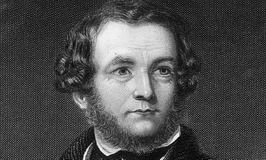
Thomas Simpson
Murderer Edward Rulloff
Murderer · USA · 1845
Edward Rulloff was executed by hanging on May 18, 1871. His execution followed…
3 victims
Edward Rulloff
Murderer · USA · 1845
Edward Rulloff was executed by hanging on May 18, 1871. His execution followed…
3 victims
 John White Webster
Murderer · USA · 1849
John White Webster (May 20, 1793–August 30, 1850) was born in Boston, Massachus…
1 victim
John White Webster
Murderer · USA · 1849
John White Webster (May 20, 1793–August 30, 1850) was born in Boston, Massachus…
1 victim
 Clinton Lee Young
Murderer · USA
Clinton Lee Young (born July 19, 1983) was convicted of murdering two men in No…
2001 victims
Clinton Lee Young
Murderer · USA
Clinton Lee Young (born July 19, 1983) was convicted of murdering two men in No…
2001 victims
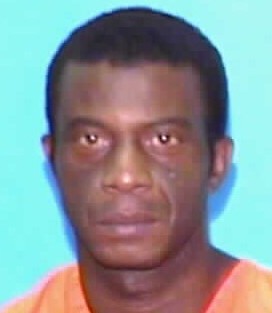 Bruce Douglas Pace
Murderer · USA · 1988
Defendant: Bruce Douglas Pace · Date of birth: 12/12/59 · Case number (trial co…
1 victim
Bruce Douglas Pace
Murderer · USA · 1988
Defendant: Bruce Douglas Pace · Date of birth: 12/12/59 · Case number (trial co…
1 victim
 Steven Dean Gordon
Serial killer · USA · 2013
Steven Dean Gordon was sentenced to death on February 3, 2017. · 2013 (late) —…
4 victims
Steven Dean Gordon
Serial killer · USA · 2013
Steven Dean Gordon was sentenced to death on February 3, 2017. · 2013 (late) —…
4 victims
 Marco Bergamo
Serial killer · Italy · 1985
Marco Bergamo (detto il “mostro di Bolzano”) was a saldatore and carpentiere wh…
5 victims
Marco Bergamo
Serial killer · Italy · 1985
Marco Bergamo (detto il “mostro di Bolzano”) was a saldatore and carpentiere wh…
5 victims
- Gender
- male
- Country
- USA
- Location
- Minnesota, USA
- Date of birth
- July 2, 1808
- Age at first offence
- 32
- Characteristics
- murder-suicide, abduction
- Victim profile
- John Bird and Antoine Legros Senior (his traveling companions)
- Method of murder
- Shooting
- Date(s) of murder
- June 14, 1840
- Years active
- 1840
- Date of arrest
- —
- Status
-
Died in custody
Committed suicide by shooting himself the same day Thomas Simpson was shot and killed at a wilderness camp; authorities ruled the deaths a case of murder-suicide
Case record: Thomas Simpson
Status / outcome
Thomas Simpson was fatally shot at a wilderness camp in the U.S. territory of Minnesota. According to the two survivors, Simpson had become increasingly anxious and even deranged during the trip and accused two companions of plotting to kill him. Simpson shot them, and the witnesses fled, returning to the larger party. Authorities ruled the deaths a case of murder-suicide, and all involved said that the wound was self-inflicted.
Timeline
- June 6, 1840 — Thomas Simpson left the Red River Colony, intending to travel south to the Minnesota River.
- June 14, 1840 — Simpson and two companions were fatally shot at a wilderness camp in the U.S. territory of Minnesota.
- June 15, 1840 — Simpson’s body was found by later members of the party; witnesses later gave conflicting accounts of the shooting.
- 13 July 1840 — James Bruce gave his evidence before Mr. Sibley (now General Sibley) at St. Peters, on the upper Mississippi.
- 14 October 1840 — R. Logan gave his evidence before Alex. Ross, J.P., at Red River.
- 11 October 1840 — James Flett gave evidence before John Bunn, magistrate.
- 1843 — Thomas Simpson’s brother Alexander Simpson published “Thomas' Narrative of the Discoveries on the North Coast of America, effected by the Officers of the Hudson’s Bay Company, during the years 1836—39.”
- 1845 — Alexander Simpson wrote “The Life and Times of Thomas Simpson, the Arctic Explorer (London, 1845).”
- 1938 — Vilhjalmur Stefansson included the Simpson case in his 1938 book “Unsolved Mysteries of the Arctic.”
- December 23, 1886 — “A Tragedy of the Plains: The Fate of Thomas Simpson, The Arctic Explorer” by Alexander McArthur was published in Manitoba Historical Society Transactions, Series 1, No. 25.
Background
Thomas Simpson (July 2, 1808 – June 14, 1840) was a sickly and timid youth who avoided rough sport. He was educated with a view to becoming a clergyman and was sent to King’s College, Aberdeen at the age of seventeen. Sir George Simpson offered him a position in the Hudson’s Bay Company in 1826, which he declined to complete his studies. He graduated in 1828 at age 20 with a Master of Arts, then enrolled in a divinity class with the goal of becoming a clergyman when the Hudson’s Bay Company offer was again extended and this time he accepted.
In 1829 he arrived in Norway House to join the Hudson’s Bay Company as George Simpson’s secretary. Simpson was stationed at the Red River Colony in the 1830s, serving as second officer to chief factor Christie.
Simpson was born in Dingwall, Scotland, the son of magistrate Alexander Simpson (1751–1821) by his second wife Mary, who helped raise George Simpson. He was a cousin of HBC governor Sir George Simpson. After his death, Thomas’s younger brother Alexander published a narrative of the expedition and later wrote a biography examining competing views of the death.
The offence / incident
What happened at the camp
On June 14, 1840, Simpson and two companions were fatally shot at a wilderness camp in the U.S. territory of Minnesota. According to the two survivors, Simpson had become increasingly anxious and even deranged during the trip, finally accusing two companions of plotting to kill him. Simpson shot them, then the witnesses fled, returning to the larger party. A portion of that larger party then went to Simpson’s encampment.
Witness depositions agreed that Simpson shot John Bird dead and mortally wounded Antoine Legros (dit Lecomte) Senior. Legros Junior and James Bruce fled to the main party. When the posse reached the site they found Legros Sr. dead and Simpson alive. Five minutes later Simpson was dead. All involved said that the wound was self-inflicted. Witness depositions also described that Simpson had a shotgun beside him.
In a separate contemporaneous discussion of the evidence, a party of five travelers arranged their camp for the night with all being armed with guns and pistols, and it was described that “the Sioux are on the warpath,” while the more dangerous elements were described as internal. Of what happened that night, “but one of the two survivors has ever told us.” That survivor described hearing the report of a gun while pitching the tent and seeing Simpson shoot, first John Bird and then Antoine Legros, senior. Bird fell dead; Legros had time to give his son a last embrace. Simpson asked if the witness knew of any plot to steal his papers, and when the answer was negative, Simpson asked for an assurance that his life was safe.
The survivor said Simpson placed little confidence in the assurance, took horse and fled accompanied by Legros’ son, leaving Simpson alone with the dead. The survivor then described Simpson as the last seen alive.
Companions and later discovery
The later accounts described that the following morning a party came from the south and approached the camp. The evidence was presented as being based on only a subset of witnesses.
The discussion presented in full quotation included the following depositions and verbatim phrasing:
James Bruce (quoted deposition / testimony)
James Bruce’s testimony included the following verbatim passage:
“Continued to call on Simpson by name, and receiving no reply they fired at the said dog and drove him away. They then discharged their guns at the top of the cart with the intention of alarming the said Simpson if still alive. The witness then asked one of the party to go with him to the cart, and the witness found that Simpson had shot himself through the head. He was quite dead.”
The discussion also stated that Bruce deposed Simpson “at no time showed symptoms of insanity.”
Robert Logan, jr. (quoted deposition / testimony)
Robert Logan, jr.’s testimony included the following quoted passage:
“Early on the morning of the 15th, about sunrise, just as we had left our encampment, *** two rides came after us at full speed, the one riding Simpson’s horse, the other Legro’s.”
Logan’s narrative then described the party hearing a gun report and then firing:
“After passing the spot we all joined again, when Richotte said he saw Simpson lying across as if dead. His body was lying stretched out with one leg across the other, and the butt end of his double barreled gun between his legs, the right hand with the glove off directed to the trigger, the left hand with the glove on holding the gun near the muzzle on his breast. All the head above the nose was blown off, and we found a white night cap lying ten or fifteen yards off with a hole in it, as if made by a gun shot, and singed by fire and some of his hair sticking to it. The five guns and four pistols were at the spot. We turned they body and found it warm, but no signs of life.”
James Flett (quoted deposition / testimony)
James Flett’s testimony included the following verbatim passages:
“We approached cautiously, and when 200 yards (600 feet ) off hallooed and called him by name, and immediately we heard a shot and I distinctly heard the hissing of a ball, and Gaubin told me he heard the same. We then made a turn round behind him and separated ourselves and took the horses which we were standing at some distance supposing he would how himself. We approached his left, and when within 200 yards (still 200 yards) we fired in the direction of the cart. Still not seeing him, Michael Richotte galloped on horseback close behind the spot but still could not see him. We then approached still nearer by a hollow but still could not see him. Then James Bruce and another crawled along the creek and to within 20 yards, when they called out he was dead.”
Flett also included the following quoted passage:
“We then approached and saw him lying with his face downward, near but not on a blanket, which was spread alongside of the cart. I do not know how many shots were fired, as we did not all fire together. Do not believe any hit him. His eyes were not blown out. Was told one of his hands was grasping the barrel of his gun and the other, that is his right hand, down towards the trigger, but this I did not see, at least do not remember if I did.”
Investigation / authorities’ handling
The investigation was conducted by the U.S. territory of Iowa for administrative reasons, based on witness depositions submitted in various locations. Authorities ruled the deaths a case of murder-suicide. It was stated that the authorities’ ruling included the conclusion that Simpson shot Bird and mortally wounded Antoine Legros (dit Lecomte) Senior, and then that Simpson’s wound was self-inflicted.
Arrest
No arrest was described.
Trial
No criminal trial was described.
Sentencing
No sentencing was described.
Appeals
No appeals were described.
Outcome
Bruce’s deposition in the narrative discussion said Simpson showed no symptoms of insanity. Witness depositions agreed Simpson shot John Bird dead and mortally wounded Antoine Legros (dit Lecomte) Senior, and that Simpson died shortly afterward with a shotgun beside him, with all involved saying the wound was self-inflicted.
Aftermath
Papers and disappearance of documents
Three years later, Sir George Simpson sent the papers to Thomas’s younger brother Alexander, and the diary and all correspondence between Sir George and Thomas were missing. What the missing papers may have contained was unknown. Simpson had transmitted a plan for an expedition and had left immediately for the Red River Colony; later it was stated that after Simpson’s death the company’s directors in London had sent permission for him to continue explorations.
Honors and burial
After Simpson’s death, it was stated that he had been awarded the Royal Geographical Society’s gold medal and the British government had announced its intention of granting him a pension of £100 a year. Instead, he was accused of murder and suicide and was buried in an unmarked grave in Canada.
The contemporaneous narrative discussion described burial as being refused for superstition by some countrymen and that “wolves had left of Thomas Simpson.” It also stated that his body was allowed to become prey for wild animals, and only when that reached the ears of the government were orders given to have his bones picked up on the prairie and brought for internment. It further stated that no mark was placed over the grave and that the expression “No man knows his sepulcher” was used in the discussion.
Later publications and views of the death
Alexander Simpson published Thomas’s narrative in 1843 and later wrote “The Life and Times of Thomas Simpson, the Arctic Explorer (London, 1845),” examining a possibility that the traveling companions were planning to steal Simpson’s notes and maps to sell to the Hudson’s Bay Company’s American rivals, and that Simpson was a victim of homicide.
A number of people studied the evidence without reaching a conclusion, and the narrative described three main competing views:
- The official finding: a deranged Simpson murdered two of his companions and then killed himself.
- The conspiracy theory: Simpson’s companions murdered him, perhaps for his papers, and then covered up the crime.
- The shootout theory: Simpson attacked his companions, killing two, but was then shot by the others, who made up the suicide story.
Vilhjalmur Stefansson included the Simpson case in “Unsolved Mysteries of the Arctic” (1938) and found the official story based on witnesses’ depositions to be unconvincing though not impossible. It was also said that historians noted the official investigation was far from thorough, perhaps because of the remote location of the deaths.
Administrative and meeting discussion
A brief discussion followed the presentation of the paper, including comments attributed to multiple named individuals. The narrative discussion included:
- Dr. Bryce agreed with Mr. McArthur.
- Mr. McArthur stated that superstitious objections had been made to the burial of Simpson’s remains in the church yard, and that “as a compromise they were interred beside the wall on one side.”
- Mr. K. N. L. Macdonald took an opposite view of the evidence and believed Simpson had murdered his companions and committed suicide due to a strange hallucination during the crossing.
- After remarks by Judge Ardagh and others, and passing a unanimous vote of thanks to Mr. McArthur for his paper, the meeting adjourned.
Missing diary and correspondence
It was described that Sir George Simpson made an effort to suppress the narrative which Simpson completed on the McKenzie, writing that he wished it reserved for himself to incorporate in a work he had in contemplation to publish at some future time. It was also stated that the first memoir written by Alexander Simpson was left in the company’s office in London and was missing when wanted.
Claim about “papers”
The narrative stated that Bruce’s deposition claimed that Simpson told him he killed the two men because they intended to "murder him on that night for his papers." These papers were later sent to Sir George Simpson.
Other details
Arctic exploration background and movements
Thomas Simpson was described as being involved in an expedition from 1836 to 1839 to chart the Arctic coast of Canada to fill gaps in expeditions in search of the Northwest Passage. The expedition was headed by Peter Warren Dease, a chief factor of the Hudson’s Bay Company. Simpson was described as the junior officer but it was said Dease ceded most of the responsibility to Simpson.
The expedition included ten men, including canoemen James McKay and George Sinclair. The party was organized by the Hudson’s Bay Company rather than the Royal Navy. The route was described as descending the Mackenzie River to the Arctic, turning west, and closing the gap between John Franklin’s 1826 furthest west and Frederick William Beechey’s furthest east at Point Barrow. The next summer they were to go down Coppermine River, repeat Franklin’s 1821 route east to Cape Turnagain, and continue along the unknown coast at least to the mouth of the Back River.
The narrative described multiple dated phases:
- Winter of 1836–37 at Fort Chipewyan, where they built two 24-foot boats.
- June 1, 1837 (west): left on June 1; reached the mouth of the Great Bear River a month later; detached four men to build winter quarters at Fort Confidence while the rest went down the Mackenzie to the Arctic, reaching it on 9 July; reached Boat Extreme about 50 miles east of Point Barrow where blocked by ice; Simpson and five men continued on foot to reach Point Barrow on 4 August; returned to Fort Confidence on 25 September.
- Early in 1838 (east): Simpson went overland to find the upper Coppermine River; in summer descended the Coppermine, waited two weeks for ice to clear, and worked slowly east; on 20 August were blocked by ice a few miles from Franklin’s Point Turnagain on the Kent Peninsula; Dease stayed behind with the boats while Simpson walked about 100 miles to a place he called Point Alexander; he saw and named "Victoria Land" to the north and saw open water in Queen Maud Gulf to the east; he returned to Dease and the frozen-in boats; a few days later the ice cleared and they sailed back to the Coppermine.
- In 1839 (east again): followed the same route; passed Point Turnagain and Cape Alexander; sailed for the first time through Dease Strait and the Queen Maud Gulf; found the Adelaide Peninsula and Simpson Strait to its north; reached Chantry Inlet where McKay and Sinclair had been in 1834; at Montreal Island (Nunavut) they found a cache left by George Back in 1834; leaving Chantry Inlet they were struck by a gale lasting four days; turned back at Castor and Pollux River about fifty miles northeast; returned by following the south shore of King William Island to a point called Cape Hershel, then followed the south shore of Queen Maud Gulf and the south shore of Victoria Island; the narrative described this as the longest boat voyage ever made in Canadian Arctic waters; returned to Great Slave Lake in September; Thomas drew up a letter to the directors of the Hudson’s Bay Company describing the expedition results, which was published in many newspapers; he also transmitted a plan for an expedition to complete further exploration between the straits of Fury and Hecla and the eastern limits of his previous explorations.
- To attend preparations for the new expedition, he left for the Red River Colony, making the 1,910 mi (3,070 km) journey in 61 days, arriving on February 2, 1840.
Departure and companions
After word failed to reach England in time for response to his authorization request, it was described that without authorization from the Directors Simpson had no authority to arrange another expedition. Instead of waiting, he decided to return to England in person. Thomas left the Red River Colony on June 6, 1840, and intended to travel south to the Minnesota River where he would embark on a voyage to take him to England. He initially set out with a group of settlers and Métis, then soon left the main party with four Méti traveling companions to make better time.
Appearance and character as described in the narrative
The narrative described Simpson as under the average height, broad shouldered, with a frame for endurance. It said his dark brown hair clustered full around his head, and that there was much merriment in the expression of the eye and a look of great kindness. It also described his mouth as small and determined. It further stated that every letter “breathes his attachment to home and relations,” that he was strongly attached to his family, and that his chief anxiety considering the dangers ahead of him was that his mother might be left unprovided for. It stated that in his will he devised to her any wealth devised by his services, and that she reaped little benefit.
Fund for a monument
The narrative stated that several officers of the Hudson’s Bay Company signified a desire to contribute to a fund for the erection of a monument to Simpson. It said donations could be sent to Chief Factor McFarlane, care of the Hudson’s Bay Company, Winnipeg, who consented to act as treasurer. It also said the Royal Geographical Society would send a contribution.
Spotted an error, or have more information about this case?