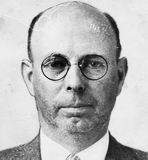
James Howard Snook
Murderer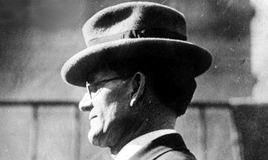 William Hale
Murderer · USA · 1921
Name: William Hale · Known as: the so-called "King of the Osage Hills" · Occupa…
24 victims
William Hale
Murderer · USA · 1921
Name: William Hale · Known as: the so-called "King of the Osage Hills" · Occupa…
24 victims
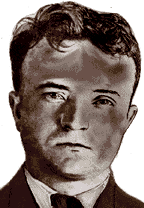 Paul Jaworski
Murderer · USA · 1926
Paul Jaworski was born in Poland as Paul Poluszynski in 1900. He later immigrat…
20 victims
Paul Jaworski
Murderer · USA · 1926
Paul Jaworski was born in Poland as Paul Poluszynski in 1900. He later immigrat…
20 victims
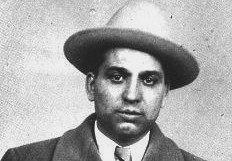 Harry Maione
Murderer · USA · 1937
Harry “Happy” Maione (1908 – February 19, 1942) was a New York mobster who serv…
12 victims
Harry Maione
Murderer · USA · 1937
Harry “Happy” Maione (1908 – February 19, 1942) was a New York mobster who serv…
12 victims
 Edward Adams
Murderer · USA · 1920
Edward J. "Eddie" Adams was born in 1887 on a farm in Hutchinson, Kansas as W.J…
7 victims
Edward Adams
Murderer · USA · 1920
Edward J. "Eddie" Adams was born in 1887 on a farm in Hutchinson, Kansas as W.J…
7 victims
 William Kenneth Wagner
Murderer · USA · 1924
William Kenneth (Kinnie) Wagner (born February 18, 1903 in Scott County, VA) wa…
6 victims
William Kenneth Wagner
Murderer · USA · 1924
William Kenneth (Kinnie) Wagner (born February 18, 1903 in Scott County, VA) wa…
6 victims
 Harry Powers
Murderer · USA · 1931
Harry Powers was executed by hanging on March 18, 1932, at the West Virginia Pe…
5 victims
Harry Powers
Murderer · USA · 1931
Harry Powers was executed by hanging on March 18, 1932, at the West Virginia Pe…
5 victims
 Genaro Ruiz Camacho
Murderer · USA · 1988
Name: Genaro Ruiz Camacho Also known as: Geno Camacho Alias in federal appellat…
6 victims
Genaro Ruiz Camacho
Murderer · USA · 1988
Name: Genaro Ruiz Camacho Also known as: Geno Camacho Alias in federal appellat…
6 victims
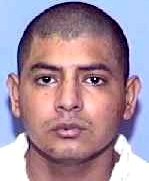 Jesus Flores
Murderer · USA · 2001
Jesus Flores received a death sentence and was later found dead in his cell wit…
1 victim
Jesus Flores
Murderer · USA · 2001
Jesus Flores received a death sentence and was later found dead in his cell wit…
1 victim
 Jackie Lee Willingham
Murderer · USA · 1994
Jackie Lee Willingham was executed by lethal injection in Oklahoma on July 24,…
1 victim
Jackie Lee Willingham
Murderer · USA · 1994
Jackie Lee Willingham was executed by lethal injection in Oklahoma on July 24,…
1 victim
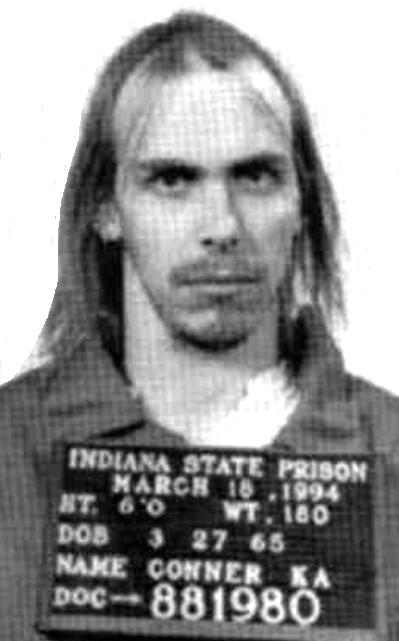 Kevin Aaron Conner
Murderer · USA · 1988
Kevin Aaron Conner was convicted by jury in the Marion Superior Court, Criminal…
4 victims
Kevin Aaron Conner
Murderer · USA · 1988
Kevin Aaron Conner was convicted by jury in the Marion Superior Court, Criminal…
4 victims
 James Rodgers
Murderer · USA · 1957
James W. Rodgers (August 3, 1910 – March 30, 1960) was an American who was sent…
1 victim
James Rodgers
Murderer · USA · 1957
James W. Rodgers (August 3, 1910 – March 30, 1960) was an American who was sent…
1 victim
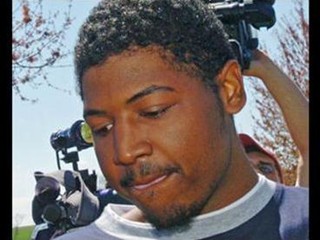 Jesse Wise
Mass murderer · USA · 2006
Jesse Dee Wise, also known as “Jay,” lived with his grandparents at the home wh…
6 victims
Jesse Wise
Mass murderer · USA · 2006
Jesse Dee Wise, also known as “Jay,” lived with his grandparents at the home wh…
6 victims
- Gender
- male
- Country
- USA
- Location
- Columbus, Ohio, USA
- Date of birth
- September 17, 1879
- Age at first offence
- 50
- Characteristics
- rape, sexual assault
- Victim profile
- Theora Hix, 29 (medical student with whom he had had a three-year sexual affair)
- Method of murder
- Cutting her throat
- Date(s) of murder
- June 15, 1929
- Years active
- 1929
- Date of arrest
- Next day
- Status
-
Executed
Executed by electrocution at the Ohio Penitentiary on February 28, 1930
Case record: James Howard Snook
Background
James Howard Snook (17 September 1879, West Lebanon, Ohio – 28 February 1930, Columbus, Ohio) was an Ohio athlete and physician.
Snook was a member of the U.S. Olympic Pistol Team, which won a Gold Medal at the 1920 Olympics in Antwerp, Belgium. He later served as the head of the Department of Veterinary Medicine at The Ohio State University. He invented the snook hook, a surgical instrument still used in spaying animals.
Snook was described as a respected member of the veterinary school's faculty and a licensed veterinarian. He was a member of the Scioto Country Club and was described as “a fine veterinarian . . . a very fine man . . . a good neighbor.”
Snook was married and had a young daughter. He lived on East 10th Avenue near the university campus with his wife Helen and their young daughter.
Snook began an affair with Theora Hix, an OSU medical student. The affair was described as a three-year love affair prior to the murder.
During their relationship, Snook and Hix met at locations around Columbus and sometimes drove out to the country. Between 1926 and 1929, Snook rented a rooming house at 24 Hubbard Avenue so they could have a more permanent meeting place. They met there as many as two to three times a week, usually between 6:00 PM and 9:00 PM. The rooming house was later referred to as the “love nest.”
Hix was described as moody and disagreeable. She told Snook that her other lover, Marion Myers, was sexually superior to Snook and gave her much more pleasure. Hix recommended that Snook study sexual matters and referred him to books. Snook testified that their relationship was purely sexual and that “We satisfied each other's needs.”
Theora Hix was said to have become frightened after a break-in at her dorm room. Snook gave her a Remington derringer for protection.
Hix and Snook practiced shooting at the New York Central shooting range on Fisher Road near McKinley Avenue.
Hix was described as physically aggressive with a “slightly sado-masochistic bent,” and her physical aggressiveness was described as culminating on the night of her murder.
Snook was described as mild-mannered and as cooperating with city officials during the course of his arrest and trial.
During questioning, Snook claimed his confession was coerced and that a prosecutor named Jack Chester slapped him while he was at the County Jail being questioned. Police Chief Harry French verified that Snook had been slapped, and Snook’s only reply was, “Now, Mr. Chester, don't resort to that; don't resort to that.”
Snook and Hix had sexual experiences that were described as so sexually explicit that newspapers did not publish the explicit material included in the trial testimony.
The offence
James Howard Snook was convicted of murdering Theora Hix, an OSU medical student.
Theora Hix was later described as a 29-year-old medical student in one account, and as a 22-year-old medical student in another account.
Hix’s body was discovered on June 16, 1929 by two 16-year-old boys: Paul Krumlauf and Milton Miller, who drove Miller’s Whippet Four sedan to the rifle range on Fisher Road. They were described as being from the north campus area. The body was found at the rifle range on Fisher Road near McKinley Avenue.
Beatrice and Alice Bustin filed a missing person report on Theora Hix after she did not return home. The Bustin roommates later identified Hix’s body.
Coroner Murphy testified that he found several hammer blows to Hix’s head, including one that drove particles of bone into her brain. The reported cause of death was the severing of the jugular vein and carotid artery. Murphy also stated that the method by which the vein and artery were severed appeared to have been done by someone knowledgeable and experienced in anatomy.
A chemist and his assistants testified that Hix’s stomach contents included “a beef sandwich, a small piece of brown paper, four cucumber seeds, some strawberry seeds, a green material determined to be Spanish Fly (an aphrodisiac that Hix was fond of taking), and cannabis indica, a narcotic.”
The evidence presented at trial included Snook’s blood found inside his car and on his clothing the night of the murder, along with evidence on his pocket knife and a hammer. Theora Hix’s blood was described as found inside Snook’s car, on the clothing he wore the night of the murder, on his ball-peen hammer, and on his pocket knife.
Snook testified that he had struck Hix with a ball-peen hammer after he freed himself from her grasp, after she threatened to kill him and after he believed she was reaching for a pistol. Snook said he did not remember stabbing or slashing her throat. He also said later that he had cut her throat because he did not want to see her suffer.
Two parts of Snook’s testimony about the killing were described: he first stated he did not know how her neck had been cut open, but later said he had cut her throat.
During trial testimony, Snook described sexual and situational details leading to the killing. He described meeting Hix and driving to a remote area of the Scioto Country Club to make love, then driving through a route that included Lane Avenue, the river road (Riverside Drive), the Gloria Barbecue, across the river bridge to McKinley Avenue, north to Fisher Road and into the rifle range.
Snook testified that Hix became enraged when he said he needed to leave to prepare for a trip to his mother’s home for the weekend. Snook testified that Hix threatened his wife and his family, including saying she would kill his young daughter.
Snook testified about the confrontation and blows, stating:
“She said, 'You have got to help me out.' She grabbed open my trousers and went down on me then, and she didn't do it very nicely and she bit me and got hold of my privates and pulled so hard I simply could not stand it. I got hold of something out of this kit (in the back seat of the car) and hit her with it. I finally got her loose, very nearly twisted her arm off and she sat up there a little bit and said, 'Damn you, I will kill you, too.' "She grabbed her purse and slid out of the (car.) I was in so much pain and when I tried to straighten up, all at once it flashed through my mind that she was getting out and I knew if she got out she would shoot me. "I hit her once then, I hit her again and she slid right out on the ground and I followed her out. I got up behind her and hit her once more with the hammer and she went down and her head hit against the running board of the (car), and that is all I can remember of hitting her.”
Snook’s testimony included an exchange quoted during his account of threats: “Damn your mother. I don't care about your mother. Damn Mrs. Snook. I'm going to kill her and get her out of the way.”
Investigation
Two 16-year-old boys, Paul Krumlauf and Milton Miller, drove to the rifle range on Fisher Road where Hix’s body was found and then went to old police headquarters on Sullivant Avenue immediately after the discovery.
Beatrice and Alice Bustin had filed a missing person report earlier that day after Hix did not return home.
It was described that Theora’s roommates identified several people as Hix’s “boyfriends,” but that identification of Snook occurred after Mrs. Margaret Smalley recognized Snook’s picture in The Columbus Dispatch and told police he was the man who rented the room at her 24 Hubbard Avenue rooming house. Snook identified himself as Howard Snook, a salt salesman, and described Hix as his young wife.
Arrest
Snook was arrested after being identified as the man who rented the 24 Hubbard Avenue rooming house.
Snook was questioned and described as being slapped by prosecutor Jack Chester while Snook was at the County Jail being questioned. Snook claimed Chester said: “Damn you, go ahead and tell the story; you have got to tell it; we know that you know more and you must tell it.”
Later that day, Snook confessed to the murder.
Trial
The trial was held in a Columbus courtroom. Jurors were described as being selected in a “questionable fashion.” Most of the 14 jurors (12 jurors and two alternates) were residents of the Columbus area, with only two initial jurors who were women. One of the women was disqualified from duty because of a conversation she had with one of Snook’s attorneys, which was described as leaving the jury out of balance in terms of gender.
A statement attributed to attorney Jack Chester, Jr.’s prosecution and the jury outcome described that witnesses and Snook himself revealed sexual content during the trial that could not be published in newspapers at the time.
Snook hired attorneys John F. Seidel and E. O. Ricketts. Max Seyfert of Circleville also joined the trial.
Seidel made a press statement: “If Dr. Snook killed that girl, I helped him do it.”
Snook’s attorneys sought to postpone the trial and managed to push back the opening date by two days. On July 24, 1929, Dr. Snook was brought to Courtroom I for opening arguments.
The courtroom was described as packed to capacity with 200 people, including people waiting in line for hours. Theora Hix’s parents were seated in the front row. They were described as coming from Florida.
Three long tables were placed across one end of the courtroom for 40 members of the press. Reporters from all of the Columbus and area newspapers were present, along with James L. Kilgallen of the International News Service and Morris DeHaven Tracy of the United Press Association.
The prosecution was described as being made by Attorney Jack Chester, Jr., who called a total of 21 witnesses. Franklin County Coroner Dr. Joseph A. Murphy testified about the cause of death and the hammer blows. Dr. Murphy also removed Hix’s stomach and took it to a chemist for examination.
The chemist and his assistants testified about items found in Hix’s stomach contents, including Spanish Fly and cannabis indica.
Forensic examination of Snook’s clothing found human blood later determined to be Hix’s. The same blood was described as found in Snook’s car, along with Snook’s pocket knife and a hammer.
It was described that Snook had lied to detectives early in the investigation, claiming he had not had his car cleaned the day after the murder. Testimony for the prosecution stated that Snook had paid a man to clean his car thoroughly that day, and it was described that the cleaning job was not thorough enough.
The defense called 42 witnesses, including Snook’s wife and mother. Helen Snook testified that she had never seen him angry and that she was unaware of her husband’s affair until his arrest and admission less than a month earlier. Snook’s mother testified that she had pride in her son’s desire to stay to himself and read and study animals.
During Snook’s testimony, he stated that Hix taught him about sex and suggested he should “read up on the subject.” Snook also testified that Hix had told him about a prior affair in which she and Marion Meyers were caught having sex along the Scioto River by police and were fined $20 each.
It was described that during cross-examination by Chester, Snook gave additional detail about his sexual activity with Hix, and that Snook said he had not mentioned the explicit aspects before because: “I was ashamed of it, ashamed of any sex perversion because I never knew anyone that would do that before.”
Snook testified that he had taught Hix to shoot at the rifle range on Fisher Road where her body was found. Witnesses thought Hix was in the company of another man rather than Snook when she was described as shooting.
Snook testified that he and Hix tried to have sex in the tiny car and decided it was “unsatisfactory for both of us.”
The trial’s length was described as less than a month. The jury deliberated for 28 minutes and returned a verdict: “guilty of murder in the first degree as he stands charged in the indictment.”
Judge Scarlett charged the jury.
Following the verdict, Snook was sentenced to die in the Ohio Penitentiary’s electric chair.
Snook’s confession prior to execution was described as being made to the warden shortly before his execution, and the warden stated that: Snook had placed the hammer and knife in the car so they were close at hand when the opportunity presented itself, and that the rendezvous at the shooting range had been his first opportunity for the murder, which he made look like the workings of a maniac.
It was also described that Snook’s full confession account was believed by some to have been fabricated by the warden and that Snook’s signature was likely forged on the document.
Snook made attempts to obtain a new trial or to change the verdict to manslaughter or second degree murder.
In one account, the trial lasted less than a month and ended August 14, 1929, and the jury returned the guilty verdict on August 14, 1929.
Sentencing
Snook was sentenced to death by electrocution in the Ohio Penitentiary.
Appeals
After appeals through the U.S. Supreme Court failed, Snook was put to death.
Outcome
James Howard Snook was executed by electrocution at the Ohio Penitentiary at Columbus, Ohio on February 28, 1930.
Before execution, a short pre-dawn service was held by Rev. Isaac Miller of the King Avenue Methodist Church.
After the execution, Snook was given a private burial at Green Lawn Cemetery.
Aftermath
Snook’s burial details included Green Lawn Cemetery with a short service at the King Avenue Methodist Church. Snook’s tombstone, on Lot 243 of Section 87, omitted his last name and read only “James Howard.”
More than 75 years after the execution, it was described that the Ohio Exploration Society found his grave in the summer of 2005. Snook was described as being buried in Section 87 of the cemetery, with his tombstone reading “James Howard; 1879-1930.”

Spotted an error, or have more information about this case?