Jonathan Yeo
Murderer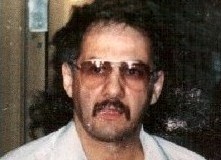 Allan Legere
Murderer · Canada · 1986
Name: Allan Legere · Citation: R. v. Legere (1988), 89 N.B.R. (2d) 361 · Other…
5 victims
Allan Legere
Murderer · Canada · 1986
Name: Allan Legere · Citation: R. v. Legere (1988), 89 N.B.R. (2d) 361 · Other…
5 victims
 Angelo Colalillo
Murderer · Canada · 1993
Angelo Colalillo was suspected of committing serial sexual assaults and murders…
3 victims
Angelo Colalillo
Murderer · Canada · 1993
Angelo Colalillo was suspected of committing serial sexual assaults and murders…
3 victims
 Denis Lortie
Murderer · Canada · 1984
Denis Lortie was a Canadian army corporal in the Royal 22 e Régiment of the Can…
3 victims
Denis Lortie
Murderer · Canada · 1984
Denis Lortie was a Canadian army corporal in the Royal 22 e Régiment of the Can…
3 victims
 Nicholas Vernage
Murderer · Canada · 1991
Nicholas Vernage (26) murdered Sgt Alan King and also killed Lorna Bogle and Ja…
3 victims
Nicholas Vernage
Murderer · Canada · 1991
Nicholas Vernage (26) murdered Sgt Alan King and also killed Lorna Bogle and Ja…
3 victims
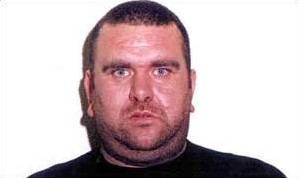 Philip John Smith
Spree killer · United Kingdom · 2000
Philip John Smith was a former fairground worker and taxi driver who was servin…
3 victims
Philip John Smith
Spree killer · United Kingdom · 2000
Philip John Smith was a former fairground worker and taxi driver who was servin…
3 victims
 Allan Baker
Murderer · Australia · 1973
Allan Baker was convicted with Kevin Crump for the murder of Ian James Lamb and…
2 victims
Allan Baker
Murderer · Australia · 1973
Allan Baker was convicted with Kevin Crump for the murder of Ian James Lamb and…
2 victims
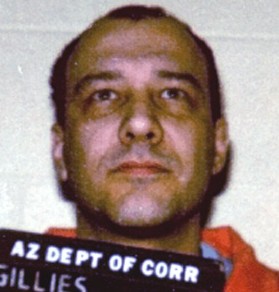 Jess James Gillies
Murderer · USA · 1981
Defendant: Jess James Gillies (38) · Co-defendant/friend: Mike Logan · Victim:…
1 victim
Jess James Gillies
Murderer · USA · 1981
Defendant: Jess James Gillies (38) · Co-defendant/friend: Mike Logan · Victim:…
1 victim
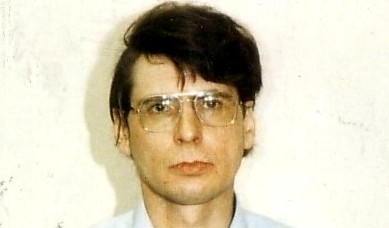 Dennis Nilsen
Serial killer · United Kingdom · 1978
Dennis Andrew Nilsen was born on November 23, 1945. He lived in London. He was…
16 victims
Dennis Nilsen
Serial killer · United Kingdom · 1978
Dennis Andrew Nilsen was born on November 23, 1945. He lived in London. He was…
16 victims
 Bârd Eithun
Murderer · Norway · 1992
Bård G. "Faust" Eithun was a Norwegian drummer. He was best known for his work…
1 victim
Bârd Eithun
Murderer · Norway · 1992
Bård G. "Faust" Eithun was a Norwegian drummer. He was best known for his work…
1 victim
- Gender
- male
- Country
- Canada
- Location
- Hamilton, Ontario, Canada
- Date of birth
- 1959
- Age at first offence
- 32
- Characteristics
- kidnapping, rape
- Victim profile
- Nina de Villiers, 19 / Karen Marquis, 29
- Method of murder
- Shooting (.22 caliber rifle)
- Date(s) of murder
- August 9/11, 1991
- Years active
- 1991
- Date of arrest
- —
- Status
-
Died in custody
Suicide by gunshot to avoid arrest, August 1991
Case record: Jonathan Yeo
Status
Jonathan Yeo died by suicide by gunshot to avoid arrest in August 1991.
Background
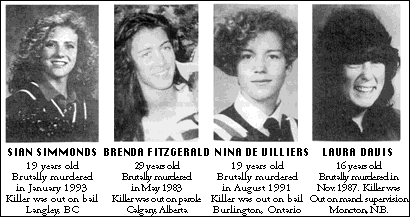
On August 9, 1991, my daughter Nina de Villiers disappeared in Burlington, Ontario. She was 19-year-old Nina de Villiers. Nine days later, her body was found in a marsh near Napanee, Ontario. She had been murdered and shot in the back of the head.
After Nina de Villiers's body was found, Jonathan Yeo was identified as the main suspect in her murder. Questions emerged about his release on bail.
Two days after killing Nina de Villiers, Jonathan Yeo murdered Karen Marquis, 29, of Moncton, New Brunswick, in a similar fashion. Not long after that, he fatally shot himself during a police chase.
For four months, the coroner's motto in the courtroom at 50 Main Street East in Hamilton was visible: "From the death of one we may learn to help lengthen the lives of many."
The offence
Nina de Villiers was abducted and murdered on August 9, 1991, while jogging in Burlington, Ontario, by Jonathan Yeo.
Jonathan Yeo murdered Karen Marquis in New Brunswick in a similar fashion.
In his car, Jonathan Yeo had live ammunition and a .22 calibre rifle, the subsequent murder weapon of the two women.
Investigation
A Coroner's Inquest examined Jonathan Yeo's eleven year history of attacks on women and how he had continually slipped through cracks in the Justice and Mental Health systems.
Inquest findings included the following:
- Prior to killing Nina de Villiers, Jonathan Yeo had been released on $3,000 bail, with no weapons restrictions, after being charged with sexual assault and using a firearm.
- Jonathan Yeo tried to leave the country, but was stopped at the border by a U.S. customs officer.
- The officer reported to Canadian Customs that Jonathan Yeo seemed dangerous and had a firearm, his bail release form, and a suicide note.
- Canadian Customs officers felt they had no legal right to separate Jonathan Yeo from his weapon, even though he was in violation of his bail by trying to leave the country.
- Jonathan Yeo was allowed to return freely to Canada.
- One hour later, Jonathan Yeo abducted Nina de Villiers in Burlington and killed her using the same rifle he had used in the previous assault for which he was out on bail.
- Next, he went on to murder Karen Marquis in New Brunswick and then shot himself during a police pursuit in Hamilton, Ontario.
The jury of the Yeo inquest produced 137 recommendations aimed at preventing such a tragedy from happening again.
Arrest
Three months before the killings, Jonathan Yeo was charged in Hamilton with sexual assault, forcible confinement and uttering death threats.
Soon after his arrest, he was released on $3,000 bail with no firearm restrictions, despite the fact that he had allegedly used a gun and a knife during the assault.
On the evening of Nina de Villiers's murder, Jonathan Yeo was detained by U.S. immigration officials in Niagara Falls as he attempted to cross the border into the U.S. He claimed to be heading to Florida, even though a condition of his bail required him to be home by 10 p.m. each evening.
In his car he had live ammunition and a .22 calibre rifle.
A U.S. customs and immigration official notified Niagara Regional Police and the Hamilton-Wentworth Police, but neither force decided to arrest Yeo—and so he was released.
Trial
A bail hearing occurred in which questions arose about statements made in the press.
On August 23, Barbara Krever, a representative of the Attorney-General, was quoted in the press saying: "A lawyer for the Crown did everything humanly and legally possible to make sure Jonathan Yeo was prohibited from possessing a weapon when granted bail June 7."
The account that followed stated that a reading of the transcript of the bail hearing made this statement "ill-informed" and "patently untrue."
Attorney-General Howard Hampton endorsed similar statements publicly on radio on Sept. 18, and the account described that it became clear there would be no voluntary investigation into the bail hearing by his office.
Sentencing
No sentencing information was provided in the case record.
Appeals
No appeals information was provided in the case record.
Outcome
Jonathan Yeo was identified as the main suspect in Nina de Villiers's murder. He died by suicide by gunshot to avoid arrest in August 1991.
Aftermath
Coroner’s inquest and recommendations
After five weeks of acting as counsel for my family, I decided I would ask for expert counsel. Twelve skilled lawyers represented the various individuals and departments involved, and someone equally knowledgeable was needed to cross-examine on Nina's and Karen's behalf, and by extension on behalf of society in general.
The account stated that through their exhaustive work, Chief Coroner Dr. James Young, inquest counsel Ted Minden, and Inspector Jack Goodlett of the Ontario Provincial Police, had done everything possible to hold a sweeping investigation of the administration of Justice in Ontario.
The 137 recommendations of the jury were described as spelled out in clear, simple terms and said to not require a major restructuring of justice in Ontario.
The account described that there is a public perception that inquests are a cosmetic exercise and that their recommendations are all too frequently ignored, and stated that there is no legal obligation to respond to coroners juries' recommendations.
It described a desire for the Coroner's Act to be given some "teeth ", quoting the lawyer Mark Sandler: "It is time the Coroner's Act is given some "teeth ", to quote my lawyer, Mark Sandler."
Dr. Young, in his summation, discussed three steps in solving a problem: "Identifying it, suggesting possible solutions and implementing them."
The account described hope that the jury's recommendations be addressed quickly, and that the public be informed about their implementation or, when not possible, the reasons why. It described that a free and frank opening of the process was essential to regain trust in the justice system.
De Villiers Petition and subsequent actions
The de Villiers family, along with some friends, decided to launch a petition to give Canadians a means of voicing fear that the community felt. The petition was launched by Priscilla and Dr. Rocco de Villiers, with the assistance of Hamilton Mountain M.P., Beth Phinney.
On February 7, 1994, the de Villiers Petition, signed by 2.5 million Canadians, was presented to Justice Minister Allan Rock, in Ottawa.
The account stated that Priscilla and Rocco de Villiers later met with Prime Minister Jean Chretien to discuss the petition.
CAVEAT came into formal being as a voice committed to seeing that the jury's recommendations are acted upon, and it wanted an integrated justice system that shares information and is accountable for the decisions. The account also stated: "We seek justice, not revenge."
It also stated: "We believe that the protection of the public must be the overriding goal of the justice system, and that the offender's rights should not be greater than those of the victim."
A section titled "The de Villiers Petition" included the following text verbatim:
"PETITION TO THE HOUSE OF COMMONS IN PARLIAMENT ASSEMBLED
"We, the undersigned residents of Canada, in support of the parents of Nina de Villiers, draw the attention of the House to the following:
"THAT the murder of Nina de Villiers on the ninth of August, 1991, has exposed serious deficiencies in the criminal justice system. There are many vulnerable persons who have little protection under the current system. Women, children and disabled persons are at particular risk;
"THAT crimes of violence against the person are intolerable and constitute the most abhorrent crime society faces;
"THAT current criminal law does not require bail hearings in crimes of violence to be presided over by Judges;
"THAT current criminal law may require only a simple signature on a document, with no money actually posted, as surety for the release of accused perpetrators of crimes of violence;
"THAT sentencing in crimes of violence does not appropriately reflect society's abhorrence of violence in order to act as a true deterrent, and to protect the public by removal of the offender from society;
"THAT the risk to society posed by the early release of a violent offender appears to be of secondary consideration to the rights of the individual criminal;
"THAT the statutes governing the criminal justice system in Canada must be revised to reflect societal attitudes.
"THEREFORE, your petitioners request that Parliament recognize that crimes of violence against the person are serious and abhorrent to society and amend the Criminal Code of Canada, the Bail Reform Act of 1972 and the Parole Act accordingly."
Other details
The account described personal events on August 9, 1991, including that the last time Nina de Villiers was seen was that evening when she ran into the house to fetch some pants that needed tailoring. The plan described was that she would go from the tailor to the racquet club to play tennis with her father, and she called "Bye, Mom," as she ran out the door. That was described as the last time the narrator saw her.
The account described that from April to August, 1992, a Coroner's Inquest examined Jonathan Yeo's eleven year history of attacks on women and how he had continually slipped through cracks in the Justice and Mental Health systems.
The account described that on February 7, 1994, The de Villiers Petition was presented to Justice Minister Allan Rock, in Ottawa.
The account also included narrative about personal loss, grief, and economic loss after Nina's death.
The account described petition response and circulation by stating that Due to public demand, CAVEAT continues to circulate the petition to allow concerned Canadians, who have not already done so, to sign it.

Spotted an error, or have more information about this case?