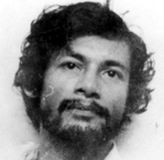
Charles Sobhraj
Serial killer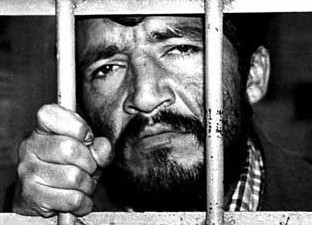 Pedro Alonso Lopez
Serial killer · Peru - Ecuador - Colombia · 1969
Name: Pedro Alonso Lopez · Nationality/Background: Colombian-born · Birth: born…
300 victims
Pedro Alonso Lopez
Serial killer · Peru - Ecuador - Colombia · 1969
Name: Pedro Alonso Lopez · Nationality/Background: Colombian-born · Birth: born…
300 victims
 Donald Henry Gaskins
Serial killer · USA · 1969
Donald Henry Gaskins, also known as Donald “Pee Wee” Gaskins, was a serial kill…
200 victims
Donald Henry Gaskins
Serial killer · USA · 1969
Donald Henry Gaskins, also known as Donald “Pee Wee” Gaskins, was a serial kill…
200 victims
 Carl Eugene Watts
Serial killer · USA · 1974
Carl Eugene Watts (born November 7, 1953; died September 21, 2007), also known…
100 victims
Carl Eugene Watts
Serial killer · USA · 1974
Carl Eugene Watts (born November 7, 1953; died September 21, 2007), also known…
100 victims
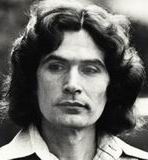 Rodney Alcala
Serial killer · USA · 1977
Rodney James Alcala (born August 23, 1943) was also known as Rodrigo Jacques Al…
100 victims
Rodney Alcala
Serial killer · USA · 1977
Rodney James Alcala (born August 23, 1943) was also known as Rodrigo Jacques Al…
100 victims
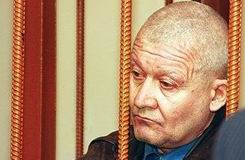 Serhiy Tkach
Serial killer · Ukraine · 1980
Serhiy Tkach (Russian: Серге́й Фёдорович Ткач, born 12 September 1952 in Kisely…
100 victims
Serhiy Tkach
Serial killer · Ukraine · 1980
Serhiy Tkach (Russian: Серге́й Фёдорович Ткач, born 12 September 1952 in Kisely…
100 victims
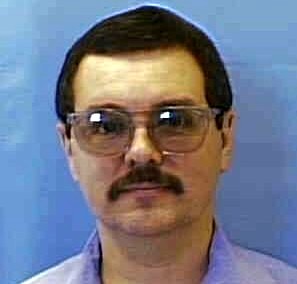 Donald Harvey
Serial killer · USA · 1970
Donald Harvey was known as an American serial killer and a self-professed “Ange…
87 victims
Donald Harvey
Serial killer · USA · 1970
Donald Harvey was known as an American serial killer and a self-professed “Ange…
87 victims
 Pamela Phillips
Murderer · USA · 1996
Pamela Phillips was tried in Tucson, Arizona, for the 1996 car-bomb murder of h…
1 victim
Pamela Phillips
Murderer · USA · 1996
Pamela Phillips was tried in Tucson, Arizona, for the 1996 car-bomb murder of h…
1 victim
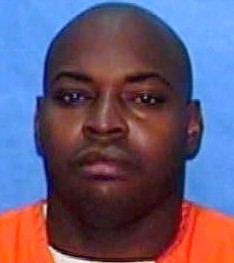 James Eugene Hunter
Murderer · USA · 1992
James Eugene Hunter was sentenced to death on August 18, 1993. The case involve…
1 victim
James Eugene Hunter
Murderer · USA · 1992
James Eugene Hunter was sentenced to death on August 18, 1993. The case involve…
1 victim
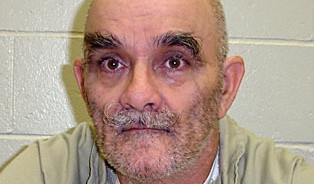 Timothy Krajcir
Serial killer · USA · 1977
Timothy Krajcir was a convicted American serial killer from Allentown, Pennsylv…
9 victims
Timothy Krajcir
Serial killer · USA · 1977
Timothy Krajcir was a convicted American serial killer from Allentown, Pennsylv…
9 victims
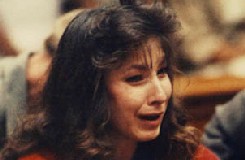 Cynthia Coffman
Serial killer · USA · 1986
Name: Cynthia Coffman · Race: White · Date of birth: 1962 · Age at crime: 24 ·…
4 victims
Cynthia Coffman
Serial killer · USA · 1986
Name: Cynthia Coffman · Race: White · Date of birth: 1962 · Age at crime: 24 ·…
4 victims
 Alexander Tchayka
Spree killer · Russia · 1994
Alexander Tchayka (born in 1974 in Sumy, USSR (now, Ukraine)) was a Russian ser…
4 victims
Alexander Tchayka
Spree killer · Russia · 1994
Alexander Tchayka (born in 1974 in Sumy, USSR (now, Ukraine)) was a Russian ser…
4 victims
- Gender
- male
- Country
- Thailand / Nepal / India / Malaysia
- Location
- Thailand / Nepal / India / Malaysia
- Date of birth
- April 6, 1944
- Age at first offence
- 31
- Characteristics
- poisoner, robbery
- Victim profile
- Teresa Knowlton / Jennie Bollivar / Vitali Hakim / Henk Bintanja, 29, and his fiancée Cornelia Hemker, 25 / Charmayne Carrou / Laurent Ormond Carrière, 26 / Connie Bronzich, 29 / Avoni Jacob / Ajay Chowdhury / Jean-Luc Solomon
- Method of murder
- Poisoning - Drowning - Strangulation
- Date(s) of murder
- 1975 - 1976
- Years active
- 1975–1976
- Date of arrest
- July 5, 1976 / September 19, 2003
- Status
-
Life imprisonment
Released on February 27, 1997 after being sentenced to 12 years in prison in India in 1976; sentenced to life imprisonment in Nepal on August 20, 2004
Overview
Charles Sobhraj was born in April 1944 as “Charles Gurmukh Born Hotchand Bhawnani Gurmukh Sobhraj.” He became involved in robbery and other criminal activity and later killed multiple people.
Timeline
- April 1944 — Charles Sobhraj was born as Charles Gurmukh Born Hotchand Bhawnani Gurmukh Sobhraj.
- September 1972 — Charles Sobhraj’s first known murder victim was a Pakistani chauffeur named Habib, hired for a drive between Rawalpindi and Peshawar; Habib was killed after Charles injected him with a drug and his body was dumped in a river.
- November 1973 — Sobhraj was in Istanbul teaming up with his brother Guy to drug and rob wealthy tourists; both were arrested in Greece, and Charles escaped leaving his brother in jail.
- October 1975 — Charles Sobhraj killed American tourist Teresa Knowlton in his Delhi flat; a sidekick dumped her body.
- December 16, 1975 — Sobhraj strangled Dutch tourists Cornelia Hemker and Henricus Bitanja in Bangkok and burned their bodies.
- December 21–22, 1975 — Sobhraj and Leclerc murdered Canadian Laurent Ormond Carrière (26) and Californian Connie Bronzich (29) in Nepal.
- January 9, 1976 — Sobhraj and two accomplices drugged a trio of Frenchmen at Goa and dumped their bodies at roadside; the three victims survived.
- July 5, 1976 — Charles Sobhraj was arrested; he was linked with at least ten homicides spanning the past three years.
- 1976 (trial and sentencing) — Sobhraj was convicted in the Solomon case of “culpable homicide,” sentenced to seven years at hard labor, with two more years tacked on for drugging the French students.
- 1982 — Sobhraj was sentenced to life imprisonment for the murder of Allen Jacobs.
- February 17, 1997 — Charles Sobhraj was released from prison at age 52.
- August 20, 2004 — The Kathmandu District Court sentenced him to life imprisonment for the 1975 murders of Bronzich and Carrière.
- 2005 — His conviction was confirmed by Kathmandu’s Court of Appeals.
- 7 July 2008 — Through his fiancée Nihita, Sobhraj claimed he was never convicted of murder by any court and asked the media not to refer to him as a serial killer.
- October 9, 2008 — It was claimed that he married his fiancée on the occasion of Bada Dashami in a wedding that took place in jail itself.
- (following day, after October 9, 2008) — Nepalese jail authorities dismissed the claim of his marriage.
- July 2010 — The Supreme Court of Nepal postponed the verdict on an appeal filed against a district court’s life imprisonment sentence for the murder of American backpacker Connie Jo Bronzich in 1975.
- July 30, 2010 — The Nepalese Supreme Court upheld the district court verdict, ordering a 20-year life term for the murder of US citizen Connie Jo Bronzich and another year plus a Rs 2,000 fine for using a fake passport to travel; the seizure of all his properties was also ordered.
Background
Charles Sobhraj was born in April 1944 in Asia. He was described as the illegitimate son of a Vietnamese peasant girl and a wealthy Indian merchant living in Saigon. Soon after his birth, his father married an Indian woman in Pooma, and his mother retaliated by wedding a French military officer when Sobhraj was four years old. Sobhraj witnessed many acts of violence before his step-father took the family to France in 1953.
Sobhraj hated Europe and the Catholic boarding school in Paris where he became the butt of racial jokes and insults. The school’s lasting mark was a name change—to “Charles”—after he impersonated comedian Charlie Chaplin.
In his teens, he twice ran away to Saigon. His father sent him back each time, but he finally agreed to pay his passage for a trial visit home. The ticket never came, and Sobhraj turned to robbery, landing briefly in jail on his second try. He later reached Vietnam, but the family reunion was tense. He was packed off to live with relatives in India after wrecking his father’s car. When he turned up in Saigon again, uninvited, his father sent him back to France.
In Paris, Sobhraj was locked up twice for auto theft. After his second jail term, he had a short-lived desire to “go straight.” He married, found a job, and then returned to crime. He was jailed for writing forged checks on his sister’s account; he was freed when she dropped the charges. He continued bouncing checks thereafter and saved up some 30,000 francs before he took his wife to Bombay and set up as an international con man and smuggler, specializing in theft of passports from American and European tourists.
Sobhraj was arrested for a jewel robbery in Delhi and granted bail despite an escape attempt. He fled to Kabul, in Afghanistan, where he was jailed for auto theft and lesser charges. Another escape brought him back to France, where he kidnapped his infant daughter from his mother-in-law, leaving the woman drugged and locked in a hotel room.
Sobhraj’s early criminal life included a first known jail sentence for burglary in 1963 at Poissy prison near Paris. While imprisoned, he used self-defense and manipulation, and he gained special favors such as keeping books in his cell. He developed a relationship with a visitor named Felix d’Escogne.
After his parole, he moved in with d’Escogne and shared his time between Paris high society and the criminal underworld. He accumulated money through scams and burglaries and had a relationship with Chantal, a woman from a conservative Parisian family. He was arrested for evading police in a stolen car on the same night he proposed to her and was sent back to Poissy for eight months while Chantal waited.
Sobhraj and Chantal were married upon his release. Facing mounting suspicions by French authorities, he and Chantal left France for Asia to escape arrest, traveling through Eastern Europe using fake documents and robbing people who befriended them. They arrived around 1970 in Bombay, where Chantal gave birth to a baby girl. Sobhraj resumed criminal activity by running a car theft and smuggling operation, and the profits were used to support his gambling addiction.
The offence
Sobhraj committed multiple murders alongside robbery and swindling activity across India, Nepal, and Thailand. The record described a pattern of drugging and killing victims, burning or destroying bodies in several cases, and also stealing passports and identity papers from victims to support travel and further crimes.
Murder of Habib (September 1972)
Sobhraj’s first known murder victim was a Pakistani chauffeur named Habib, hired by Charles and a female companion in September 1972 for a drive between Rawalpindi and Peshawar. Charles injected Habib with a drug that took his life and then dumped the body in a river.
Murder of Teresa Knowlton (October 1975)
In October 1975, Sobhraj killed American tourist Teresa Knowlton in his Delhi flat. A sidekick dumped her body.
Beating and burning of Vitali Hakim
A Turkish competitor in the drug trade, Vitali Hakim, was beaten; his neck was snapped, his corpse was doused with gasoline, and he was set afire.
Strangling of Stephanie Parry
In Bangkok, Charles strangled Hakim’s French contact, one Stephanie Parry.
Murder of Cornelia Hemker and Henricus Bitanja (December 16, 1975)
In Bangkok, Sobhraj strangled Dutch tourists Cornelia Hemker and Henricus Bitanja on December 16, burning their bodies as a hedge against arrest.
Deaths in Kathmandu (shortly before Christmas, 1975)
Shortly before Christmas, Canadian Laurent Carriere and American Connie Bronzick were found dead in Katmandu, their bodies burned. Sobhraj was described as traveling using the name Henricus Bitanja with his victim’s passport, and he slipped out of Nepal after preliminary questioning.
Murder of Laurent Carrière and Connie Bronzich (December 21–22, 1975)
Sobhraj and Leclerc entered Nepal using a couple’s passports. On December 21–22, 1975, they murdered Canadian Laurent Ormond Carrière (26) and Californian Connie Bronzich (29).
The record also stated that in some sources the two victims were incorrectly identified as Laddie DuParr and Annabella Tremont.
Murder of other victims connected in the record
The record included murders of Israeli Allen Jacobs for his passport at Varanasi in northern India. It described that after preliminary questioning Sobhraj escaped Nepal and continued killing.
It also described an incident on January 9, 1976 in Goa where Sobhraj and two accomplices drugged a trio of Frenchmen and dumped their bodies at roadside, but all three victims survived.
In Hong Kong, Allen Gore was also described as surviving; he lost $8,000 but kept his life despite a jolt of Sobhraj’s chemical cocktail.
Sobhraj was also linked in the record to multiple other killings, including the murder of Jean-Luc Solomon after poisoning intended to incapacitate him during a robbery. The record further described the murder of Avoni Jacob in Calcutta and other deaths connected to the use of false passports and stolen documents.
Investigation
Sobhraj’s escape attempts and use of stolen passports and false identities were described as enabling him to evade authorities across multiple countries.
The record described that warrants were issued for suspect “Damon Seaman” after Habib’s killing, but another year passed before Sobhraj was identified. It also described that after arrests of other suspects and escapes across borders, authorities later built an evidentiary record.
In the record, a major figure in the accumulation of evidence was Dutch embassy diplomat Herman Knippenberg, who investigated murders of Dutch backpackers and searched Sobhraj’s apartment with police permission. Knippenberg found evidence including victims’ documents and poison-laced medicines and continued building evidence over decades despite lack of cooperation by law enforcement.
Interpol was also described as containing a dossier on Charles Sobhraj and linking him to the aborted jewel robbery at Hotel Ashoka in 1973. The record stated that Interpol had not initially connected Sobhraj to the Bikini killings in Thailand.
Arrest
The record described numerous arrests and escape events, including:
- Sobhraj’s arrest for a jewel robbery in Delhi, after which he escaped at once.
- His arrest in Kabul for auto theft and lesser charges, followed by escape.
- His arrest in Greece with his brother Guy after drugging and robbing wealthy tourists in November 1973; Charles escaped and left his brother in jail.
- His arrest in Bangkok with false passports; he was allowed to walk after doling out bribes.
- His arrest in Penang for trying to cash stolen traveler's checks; he managed to talk his way out of jail.
- His arrest on July 5, 1976, after police waiting for the drugging of a class of French engineering students. He was linked with at least ten homicides spanning the past three years.
The record also described recapture in Nepal after years on the run:
- On September 17, 2003, Sobhraj was spotted by a journalist in a street of Kathmandu and quickly reported to local authorities.
- On September 19, 2003, he was arrested by Nepalese police in the casino of the Yak and Yeti hotel.
Trial
India: conviction for culpable homicide in the Solomon case
Sobhraj was convicted of “culpable homicide” in the Solomon case and sentenced to seven years at hard labor, with two more years tacked on for drugging the French students. The record also stated that the accused had been taken to Tihar Prison outside Delhi while awaiting formal trial.
The record described trial proceedings including:
- Barbara and Mary Ellen cracking and confessing during interrogation.
- Prison conditions at Tihar being described as unbearable, with Barbara and Mary Ellen attempting suicide during the two years before trial.
- Sobhraj entering with gems concealed in his body and being described as experienced in bribing captors and living comfortably.
- Sobhraj turning his trial into a show by hiring and firing lawyers, and bringing in his recently-paroled and loyal brother André to help.
- Sobhraj going on a hunger strike.
- He was sentenced to 12 years in prison instead of the expected death penalty.
The record also stated that the prosecution argued for the death penalty and that a mid-trial appeal occurred to the Indian Supreme Court.
It also stated that Marie was found not guilty, but returned to Tihar to await trial in the poisoning of the French graduate students. It further described that she later served some time and was released on mercy parole when diagnosed with ovarian cancer; she died at home in Canada.
India: later life sentence for murder of Allen Jacobs (1982)
The record stated that in 1982, Sobhraj was sentenced to life imprisonment for the murder of Allen Jacobs.
Nepal: Kathmandu District Court sentencing and appeals
After his arrest in Kathmandu, the Kathmandu District Court sentenced him to life imprisonment on August 20, 2004 for the 1975 murders of Bronzich and Carrière.
The record stated that his conviction was confirmed in 2005 by Kathmandu’s Court of Appeals.
The record further stated that in July 2010 the Supreme Court of Nepal postponed the verdict on an appeal against a district court’s life imprisonment sentence for the murder of American backpacker Connie Jo Bronzich in 1975, and that on July 30, 2010 the Supreme Court of Nepal upheld the district court verdict ordering a 20-year life term for the murder and an additional year plus a Rs 2,000 fine for using a fake passport to travel; it also ordered seizure of all properties.
The record also included statements about dissatisfaction with the verdict by his mother-in-law/lawyer and his wife Nihita, and that Sobhraj had been “denied” justice.
Sentencing
Sobhraj’s sentencing was described in multiple jurisdictions:
- In India in 1976, he was sentenced to 12 years in prison.
- In 1982, he was sentenced to life imprisonment for the murder of Allen Jacobs.
- In Nepal on August 20, 2004, the Kathmandu District Court sentenced him to life imprisonment for the 1975 murders of Bronzich and Carrière.
- On July 30, 2010, the Supreme Court of Nepal upheld the verdict issuing a 20-year life term for the murder of US citizen Connie Jo Bronzich and another year plus a Rs 2,000 fine for using a fake passport to travel and ordered seizure of all his properties.
Appeals
The record stated that Sobhraj appealed the conviction in Nepal, claiming he was sentenced without trial. It also stated that his conviction was confirmed in 2005 by Kathmandu’s Court of Appeals.
The record stated that in July 2010 the Nepalese Supreme Court postponed the verdict on an appeal filed by Sobhraj in relation to a district court’s life imprisonment sentencing for the murder of American backpacker Connie Jo Bronzich in 1975, and that on July 30, 2010 the Supreme Court upheld the verdict and related penalties.
Outcome
Sobhraj was released on February 27, 1997 after serving time in India.
In Nepal, he was sentenced to life imprisonment on August 20, 2004, and the conviction was confirmed in 2005. The Nepalese Supreme Court upheld the district court’s verdict on July 30, 2010, including a 20-year life term for the murder of Connie Jo Bronzich, an additional year plus a Rs 2,000 fine for use of a fake passport, and an order for seizure of his properties.
Aftermath
After his release in February 1997, authorities returned him to France due to lack of deportation options. He lived in the suburbs of Paris and continued to charge money for interviews and photographs, including discussion of film rights and a movie deal based on his life.
The record included personal developments:
- In 2008, he announced an engagement to Nihita Biswas (aged 20) from Nepal.
- Through his fiancée Nihita on 7 July 2008, he claimed he was never convicted of murder by any court and asked the media not to refer to him as a serial killer.
- It was later claimed he married Nihita in jail on October 9, 2008 on the occasion of Bada Dashami, but Nepalese jail authorities dismissed the claim the following day, describing the event as a tika ceremony within Dashain festival activities.
The record also stated that Sobhraj had another case pending in Bhaktapur district court for the murder of Laurent Armand Carrière, a Canadian-born tourist.
Other details
Escape attempt and prison matters in the record
The record described an escape attempt from Tihar Prison by pretending to have a bleeding ulcer, being taken to a local hospital, convincing staff of appendicitis, and escaping with Chantal’s help by drugging his guard.
It also described that in March 1986, during his tenth year in prison, he threw a party for prisoner and guard friends after drugging them with sleeping pills and walked out of jail. He was quickly caught in Goa and his prison term was prolonged by 10 years.
Additional people named in the record
The record named:
- Habib — Pakistani chauffeur (murder victim, September 1972).
- Teresa Knowlton — American tourist (murdered in October 1975).
- Vitali Hakim — Turkish competitor in the drug trade (beaten and killed).
- Stephanie Parry — French contact of Vitali Hakim (strangled in Bangkok).
- Cornelia Hemker (25) — Dutch tourist (strangled and burned on December 16, 1975).
- Henricus Bitanja — Dutch tourist (strangled and burned on December 16, 1975).
- Laurent Ormond Carrière (26) — Canadian victim murdered in Nepal on December 21–22, 1975.
- Connie Bronzich (29) — American victim murdered in Nepal on December 21–22, 1975.
- Allen Jacobs — Israeli scholar (murdered for his passport at Varanasi).
- Allen Gore — described as surviving in Hong Kong.
- Jean-Luc Solomon — French tourist (died after being drugged and giving in to the poison).
- Avoni Jacob — Israeli scholar (drugged and strangled in Calcutta; his passport and traveler's checks were missing).
- Ajay Chowdhury — described as a lieutenant and missing after leaving jewels with Sobhraj in Malaysia.
- Guy — brother involved in November 1973 drugging and robbing of tourists.
- André — Sobhraj’s younger brother who was described as jailed for theft and sentenced to 18 years at hard labor.
- Marie-Andrée Leclerc (Leclerc) — partner in crime in the record and later described in relation to the French graduate students case.
- Chantal — described as Sobhraj’s wife and accomplice in escapes.
- Felix d’Escogne — prison visitor and later friend.
- Herman Knippenberg — Dutch diplomat who investigated the murders and accumulated evidence.
- Nicolas Sarkozy — referenced in relation to media reports of an appeal.
- Nihita Biswas — fiancée and later referenced as wife; also mentioned in relation to the alleged wedding.
- Richard Neville — mentioned as an author journalist who interviewed Sobhraj.
- Michael Newton — referenced as an encyclopedia author.
- Bernard Fremont (Law & Order: Criminal Intent) and Nicole Wallace — referenced as fictional characters based on Sobhraj and others.
Verbatim quotation included in the record
Sobhraj told journalist Richard Neville during his trial in India:
“If I have ever killed, or have ordered killings, then it was purely for reasons of business, just a job, like a general in the army,”
And he told Richard Neville:
“I have already taken from the past what is best for me, what helps me live in the present and prepare for the future,” “If I play back a murder, it will be to see what I have learned from the method. I won't even notice the body.”
Felix d’Escogne wrote to the judge at the time of sentencing, describing Sobhraj:
“He exploits 100 percent the weaknesses of those around him,”
“He has a small conscience, if any ... is capable of politeness, but calculatedly so. Impulsive and aggressive.”
Knippenberg described Sobhraj’s desired family-like structure in the record:
“his own family of Charles Manson-like characters, with himself as the father. The ones he killed were the people who saw through his mask and who tried to get away.”
The record also attributed these words to Sobhraj’s agent:
“No money, no meeting.”
Explore related records
Spotted an error, or have more information about this case?