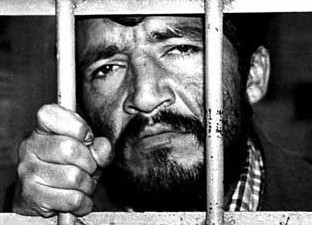
Pedro Alonso Lopez
Serial killer Donald Henry Gaskins
Serial killer · USA · 1969
Donald Henry Gaskins, also known as Donald “Pee Wee” Gaskins, was a serial kill…
200 victims
Donald Henry Gaskins
Serial killer · USA · 1969
Donald Henry Gaskins, also known as Donald “Pee Wee” Gaskins, was a serial kill…
200 victims
 Carl Eugene Watts
Serial killer · USA · 1974
Carl Eugene Watts (born November 7, 1953; died September 21, 2007), also known…
100 victims
Carl Eugene Watts
Serial killer · USA · 1974
Carl Eugene Watts (born November 7, 1953; died September 21, 2007), also known…
100 victims
 Rodney Alcala
Serial killer · USA · 1977
Rodney James Alcala (born August 23, 1943) was also known as Rodrigo Jacques Al…
100 victims
Rodney Alcala
Serial killer · USA · 1977
Rodney James Alcala (born August 23, 1943) was also known as Rodrigo Jacques Al…
100 victims
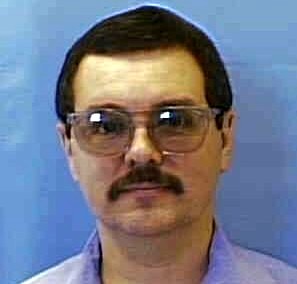 Donald Harvey
Serial killer · USA · 1970
Donald Harvey was known as an American serial killer and a self-professed “Ange…
87 victims
Donald Harvey
Serial killer · USA · 1970
Donald Harvey was known as an American serial killer and a self-professed “Ange…
87 victims
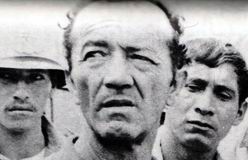 Daniel Camargo Barbosa
Serial killer · Colombia / Ecuador · 1974
Daniel Camargo Barbosa was a psychopathic serial killer from Colombia. It was b…
72 victims
Daniel Camargo Barbosa
Serial killer · Colombia / Ecuador · 1974
Daniel Camargo Barbosa was a psychopathic serial killer from Colombia. It was b…
72 victims
 Shonda Johnson
Murderer · USA · 1997
Shonda Johnson was also known as Shonda Nicole Richards. She was White. She was…
1 victim
Shonda Johnson
Murderer · USA · 1997
Shonda Johnson was also known as Shonda Nicole Richards. She was White. She was…
1 victim
 Zhou Youping
Serial killer · China · 2009
Zhou Youping was a Chinese karaoke singer who organized sexually abusive chokin…
6 victims
Zhou Youping
Serial killer · China · 2009
Zhou Youping was a Chinese karaoke singer who organized sexually abusive chokin…
6 victims
 Norman Timberlake
Murderer · USA · 1993
Norman Timberlake and a friend drove from New Albany, Indiana to Indianapolis i…
1 victim
Norman Timberlake
Murderer · USA · 1993
Norman Timberlake and a friend drove from New Albany, Indiana to Indianapolis i…
1 victim
 Marianne Bachmeier
Homicide · Germany · 1981
Marianne Bachmeier (born 3 June 1950 in Sarstedt; died 17 September 1996 in Lüb…
1 victim
Marianne Bachmeier
Homicide · Germany · 1981
Marianne Bachmeier (born 3 June 1950 in Sarstedt; died 17 September 1996 in Lüb…
1 victim
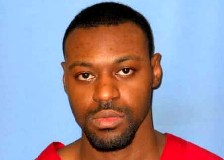 Caleb Carrothers
Murderer · USA · 2009
July 11, 2009 — Caleb Carrothers shot and killed Frank Clark and his son, Taylo…
2 victims
Caleb Carrothers
Murderer · USA · 2009
July 11, 2009 — Caleb Carrothers shot and killed Frank Clark and his son, Taylo…
2 victims
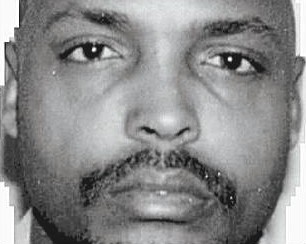 Carl Chichester
Murderer · USA · 1991
Carl Chichester · Carl Hamilton Chichester — defendant; was convicted of capita…
1 victim
Carl Chichester
Murderer · USA · 1991
Carl Chichester · Carl Hamilton Chichester — defendant; was convicted of capita…
1 victim
- Gender
- male
- Country
- Peru - Ecuador - Colombia
- Location
- Peru - Ecuador - Colombia
- Date of birth
- October 8, 1948
- Age at first offence
- 21
- Characteristics
- rape
- Victim profile
- Girls between nine and twelve years old
- Method of murder
- Strangulation
- Date(s) of murder
- 1969 - 1980
- Years active
- 1969–1980
- Date of arrest
- March 9, 1980
- Status
-
Imprisoned
Sentenced to 16 years in prison in Ecuador on January 25, 1981; released on August 31, 1994; re-arrested an hour later as an illegal immigrant and handed over to Colombian authorities who charged him with a twenty year old murder; found to be insane and held in a psychiatric wing of a Bogotá hospital; declared sane in 1998 and released on $50 bail; no one knows if he is dead or alive
Case information
- Name: Pedro Alonso Lopez
- Nationality/Background: Colombian-born
- Birth: born 8 October 1948 in Santa Isabel, Colombia
- Other identification: Pedro Alonzo López / Pedro Alonzo Lopez / Pedro Lopez / Pedro Alonzo Monster of Andes
- Crimes described: accused of raping and killing more than 300 girls across South America; confessed to killing more than 300 girls
Timeline
- 1957 — Lopez was eight years old when his mother caught him fondling his younger sister; she evicted him from the family home.
- March 1980 — Lopez was arrested in March; he confessed to killing 103 girls, including 53 whose bodies had been found.
- Late April 1980 — A flash flood near Ambato, Ecuador uncovered bodies of four vanished children.
- First week of March 1980 — Lopez was jailed in Ambato, capital of Tungurahua province.
- July 1980 — International attention followed interviews and Associated Press wire reports; bodies of 53 girls had been found, and Lopez had confessed.
- September 1980 — Lopez led investigators to the graves of 53 of his victims and additional sites.
- January 25, 1981 — Lopez was sentenced to 16 years in prison in Ecuador.
- January 27, 1981 — Court officials reported Lopez was convicted on three counts of murder and received the 16-year maximum punishment under Ecuadorian law.
- August 31, 1994 — Lopez was released from Ecuadorian prison.
- An hour later on August 31, 1994 — Lopez was re-arrested as an illegal immigrant and handed over to Colombian authorities.
- 1998 — Lopez was declared sane and released on $50 bail.
- 1998 or 1999 (as described in narrative) — Lopez was released for “good behaviour” and deported; after being deported, police found him back in Ecuador; he was taken back to Colombia and has not been heard of since.
- 2002 — An Interpol advisory was released for his re-arrest by Colombian authorities over a fresh murder in 2002 (as stated in documentary narration).
Background
Pedro Alonso López was born 8 October 1948 in Santa Isabel, Colombia. He was described as a Colombian-born confessed serial killer accused of raping and killing more than 300 girls across South America. He was also referred to as “the ‘Monster of the Andes’.”
López’s background was described as including a childhood sexual history involving his sister. His mother, described as a prostitute with thirteen children, caught him fondling his younger sister in 1957 when he was eight years old and evicted him from the family home. He was then picked up by a man, taken to a deserted house, and repeatedly sodomized.
At age twelve, he was taken in by an American family and enrolled in a school for orphans. He ran away after he was allegedly molested by a male teacher.
After serving a jail term for car theft, he was described as being gang-raped by four older inmates; he claimed he killed three of the rapists while still incarcerated.
After his jail term, he was described as starting to prey on young girls in Peru. He claimed that by 1978 he had killed over 100 girls. He was described as being caught by a native tribe that was preparing to execute him; an American missionary intervened and persuaded the tribe to hand him over to state police, which soon released him. He relocated to Colombia and later Ecuador, where he was described as killing about three girls a week.
It was described that authorities previously believed the disappearance of many girls was due to sexual slavery or prostitution.
The offence
Lopez confessed to sexually assaulting and strangling 300 Indian girls in three South American countries. He confessed to killing 53 girls whose bodies were found and to additional murders in Ecuador, Colombia, and Peru.
Victim details and scope (as stated)
- In the Ambato case leading to the discovery of 53 bodies, the girls were described as aged eight to twelve; other descriptions said nine to twelve years old.
- Lopez’s confessions were described as including at least 50 other victims in addition to the 53 whose bodies were found in Ecuador, Colombia and Peru.
- He was described as pleading guilty to 110 charges of murder.
- He was described as confessing to a further 240 murders of missing girls in neighbouring Peru and Colombia.
- Later narratives described him as being responsible for up to 350 young girls (with some statements describing “more than 350” or “350 children” and “300 sexual assaults and stranglings”).
Methods described
Lopez was described as luring children away from busy markets and streets with promises of trinkets. He was described as taking victims to secret hideaways where graves were prepared, sometimes with bodies of earlier victims lying in shallow pits. He was described as raping victims at sunrise and strangling them when the sun rose; he claimed he never killed anyone at night.
He was described as checking whether victims were still breathing using a mirror. He was described as spending a long time with victims to ensure they were dead, taking five to fifteen minutes to die, and sometimes needing to kill them all over again. He was also described as slitting wrists or throats to see if blood was still pumping (as narrated in one account).
Investigation
A flash flood near Ambato, Ecuador, uncovered bodies of four vanished children. Three days later, Lopez was captured after an attempted abduction failed and he was trapped by market traders; he was held by townspeople until police arrived.
Police pursued different strategies to obtain cooperation. They placed Father Cordoba Gudino, in prison garb, into a cell with Lopez so the priest could win Lopez’s confidence and hear stories of crimes.
Police were initially skeptical of Lopez’s claims, but doubts were described as evaporating after Lopez led detectives to graves of 53 victims. Searchers were described as coming up empty at 28 other sites.
An Associated Press account described police placing undercover detective Pastor Gonzales in the cell to obtain confession, and it was described that Lopez confessed to murder after murder in Ecuador, Colombia and Peru. Lopez was described as leading police to the graves of 53 victims and then refusing to help further.
Arrest
Lopez was arrested after he approached a girl in a public plaza in Ambato; he was held in Ambato until a court determined the charges to be brought.
He was described as being captured when a mother, Carlina Poveda, saw him walking away hand in hand with her daughter Maria and screamed, leading to an angry mob of market workers holding him down until police arrived.
Lopez was described as having been captured once before by Indians in Peru and being deported to Ecuador after an American missionary intervened.
Trial
Lopez was convicted in Ecuador of murder on multiple counts. Ecuadorian law set the maximum punishment for murder at 16 years and prohibited consecutive sentences. He was convicted on three counts of murder and sentenced to 16 years in prison.
Lopez was sentenced Monday in the southern town of Ambato by Judge Jose Roberto Cobos Moscoso. He was arrested there nine months earlier, and police told the court that he bragged of killing girls in the Andes regions of Ecuador, Peru and Colombia. He led investigators to graves of 59 girls between the ages of 7 and 13 (as described in the January 27, 1981 Associated Press report).
The record also described that Lopez pleaded guilty to 110 charges of murder.
Sentencing
Lopez was sentenced to life imprisonment, described as normally amounting to 16 years in custody, in Ecuador for murder. The court sentenced him to 16 years in prison in accordance with Ecuadorian law.
Appeals
No appeals were stated in the provided text.
Outcome
Lopez was released from Ecuadorian prison on August 31, 1994. He was re-arrested an hour later as an illegal immigrant and handed over to Colombian authorities who charged him with a twenty-year-old murder.
He was found to be insane and held in a psychiatric wing of a Bogotá hospital. In 1998 he was declared sane and released on $50 bail.
A narrative account described his release as being for “good behaviour” and described that Ecuador deported him to Colombia because he had no visa to stay in Ecuador. Police later found him back in Ecuador and took him back to Colombia. It was stated that he has not been heard from or seen since his release and that no one knows if he is dead or alive.
Aftermath
Lopez remained associated with “the ‘Monster of the Andes’” in later reporting. Authorities described him as unreformed and totally remorseless. A governor of Ambato jail was quoted describing concern that he might strike again.
Associated Press reporting described police finding 53 bodies of little girls who were raped and murdered by a man dubbed the “monster of the Andes,” with bodies found in shallow graves in the Andean provinces of Tungurahua, Cotopaxi, Chimborazo, Pinchincha and Imbatura.
It was stated that, after Lopez’s release and deportation, phone lines in Ecuador, Colombia, and Peru were full of sightings and citizens called on police to act immediately.
Other details
Location and persons named in connection with the case
- Ambato (capital of Tungurahua province; also mentioned as capital city Quito in prison-van narrative)
- Quito (mentioned in connection with newspapers and later the psychiatric wing narrative in Bogotá)
- Bogotá hospital (psychiatric wing)
- Tungurahua, Cotopaxi, Chimborazo, Pinchincha, Imbatura (Andean provinces where bodies were found, as described)
- Plaza Rosa marketplace (Ambato marketplace mentioned)
- Father Cordoba Gudino (priest placed in a cell with Lopez in prison garb)
- Major Victor Lascano (director of Ambato prison; quoted about confessions)
- Judge Jose Roberto Cobos Moscoso (sentencing judge)
- Pastor Gonzales (undercover detective placed in Lopez’s cell, as described)
- Carlina Ramon Poveda (mother who spotted Lopez and screamed)
- Maria Poveda (daughter seen with Lopez)
- Jose Rivas (commander of Carchi police in Ecuador mentioned in narrative)
- Prisons Minister Pablo Faguero (quoted about release law)
- Victor Lascaño (governor of Ambato jail, referred to in narrative)
Quotations (verbatim)
Major Victor Lascano was quoted about confessions: “If someone confesses to 53 you find and hundreds more you don't, you tend to believe what he says.”
Major Victor Lascano was also quoted: “I think his estimate of 300 is very low, because in the beginning he cooperated with us and took us each day to three or four hidden corpses. But then he tired, changed his mind, and stopped helping.”
The judge, described in one narrative account about release, was not quoted; a quote was attributed to a Prisons Minister and others.
Prisons Minister Pablo Faguero was quoted: “Yes it does sound strange, but that is our law. The law of no executions or sentences longer than 20 years was passed over 100 years ago to protect presidents of Ecuador from being killed following revolutions and military coups. In the past they had been executed in horrific ways like being pulled apart by four horses. The law seemed humane.”
A governor of Ambato jail, Victor Lascaño, was quoted: “God save the children. He is unreformed and totally remorseless. This whole nightmare may start again!”
The mother of Maria Poveda was quoted: “He won't live long,” and also: “It will be a kindness to the world for someone to murder this fiend. The Monster of the Andes won't last long on the outside. Maybe that is why we haven’t heard of more missing girls. Perhaps someone, even the police in Columbia or Ecuador, have already killed him. If they have, I hope they made him suffer.”
Lopez was quoted in relation to release: “I will soon be a free man again. They are releasing me on good behaviour.”
Lopez was quoted as describing himself in prison: “I am the man of the century. No one will ever forget me.”
Lopez told police: “I like the girls in Ecuador, they are more gentle and trusting, more innocent. They are not as suspicious of strangers as Colombian girls.”
In an interview excerpt, Lopez was quoted: “I lost my innocence at age eight,” he told interrogators, “so I decided to do the same to as many young girls as I could.”
Lopez was quoted: “At the first sign of light I would get excited. I forced the girl into sex and put my hands around her throat. When the sun rose I would strangle her. “It was only good if I could see her eyes. I never killed anyone at night. It would have been wasted in the dark. I had to watch them by daylight.”
Lopez was quoted: “I was very considerate. I would spend a long time with them making sure they were dead. I would use a mirror to check whether they were still breathing.”
Lopez was quoted: “I often had to kill them all over again,” and also: “They never screamed because they didn't expect anything would happen. They were so innocent.”
In an interview excerpt, Lopez was quoted: “I walked among the markets searching for a girl with a certain look of innocence and beauty.”
Lopez was quoted: “She would be a good girl, always working with her mother. I followed them, sometimes for two or three days, waiting for the moment when she was left alone.”
Lopez was quoted about finding victims in daylight and what he wanted to do with tourists: “I spent many days following English and Scottish families and their beautiful blonde daughters. But I never got the chance to take some. Their parents were too watchful.”
Lopez was quoted about killing on a regular schedule: “Just as other men shave, shower and eat, Lopez killed on a regular basis slaying two, sometimes three girls every week, every month, every year over a three-year-long murder rampage.”
Lopez was quoted in relation to a “divine moment”: “I am the man of the century. No one will ever forget me.” and in a separate interview excerpt: “There is a wonderful moment, a divine moment when I have my hands around a young girl's throat. I look into her eyes and see a certain light, a spark, suddenly go out. The moment of death is enthralling and exciting. Only those who actually kill know what I mean.”
Lopez was quoted: “Someday, when I am released, I will feel that moment again. I will be happy to kill again. It is my mission.”
Lopez was quoted about how long it took for victims to die: “It took the girls five to 15 minutes to die.”
Lopez was quoted about checking whether victims were dead: “Sometimes I had to kill them all over again,” and: “I was very considerate.
Lopez was quoted about “parties”: “My little friends liked to have company. I often put three or four girls in a single hole and talked to them. “It was like having a party. But after a while, because they couldn't move, I got bored and went looking for more girls.”
Lopez was quoted about not killing at night: “I never killed anyone at night.
Carlina Ramon Poveda’s quote was included with her prediction about him and the idea of why there were no more missing girls.
Associated Press reporting (verbatim identifiers)
The July 14, 1980 Associated Press reporting described the discovery of 53 bodies of little girls raped and murdered by a man described as the “monster of the Andes.”
The January 27, 1981 Associated Press report described Lopez as convicted and sentenced to 16 years in prison.
Spotted an error, or have more information about this case?