
Cecil Barriner
Murderer Russell Ellwood
Murderer · USA · 1991
Russell Ellwood was a former taxi driver. Authorities suspected him of killing…
20 victims
Russell Ellwood
Murderer · USA · 1991
Russell Ellwood was a former taxi driver. Authorities suspected him of killing…
20 victims
 Robert Martines Perez
Murderer · USA · 1994
Name: Robert Martines Perez · Other name used in proceedings: Robert Martinez P…
15 victims
Robert Martines Perez
Murderer · USA · 1994
Name: Robert Martines Perez · Other name used in proceedings: Robert Martinez P…
15 victims
 Billy Frank Vickers
Murderer · USA · 1993
Billy Frank Vickers Vickers was executed by lethal injection in Texas on Januar…
14 victims
Billy Frank Vickers
Murderer · USA · 1993
Billy Frank Vickers Vickers was executed by lethal injection in Texas on Januar…
14 victims
 David Thomas Dawson
Murderer · USA · 1986
David Thomas Dawson · April 18, 1986 — Dawson checked into the room next to the…
3 victims
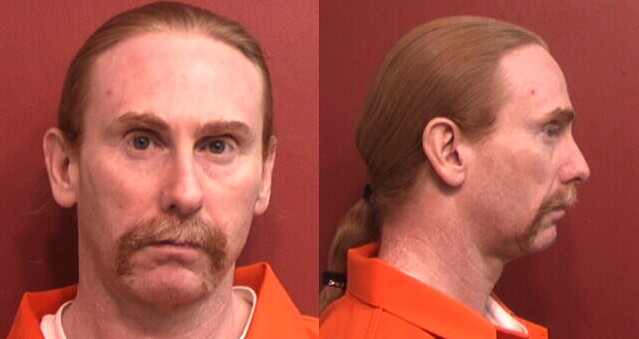
David Thomas Dawson
Murderer · USA · 1986
David Thomas Dawson · April 18, 1986 — Dawson checked into the room next to the…
3 victims
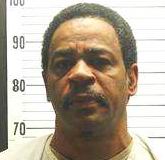 Farris Morris
Murderer · USA · 1994
Farris Genner Morris Jr. was the defendant in State of Tennessee v. Farris Genn…
2 victims
Farris Morris
Murderer · USA · 1994
Farris Genner Morris Jr. was the defendant in State of Tennessee v. Farris Genn…
2 victims
 Nanette Johnston
Murderer · USA · 1994
Nanette Johnston was sentenced to life in prison without the possibility of par…
1 victim
Nanette Johnston
Murderer · USA · 1994
Nanette Johnston was sentenced to life in prison without the possibility of par…
1 victim
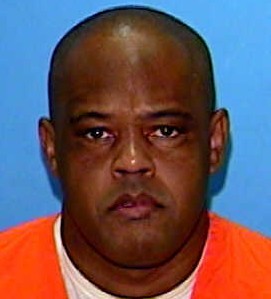 Kayle Barrington Bates
Murderer · 1982
Kayle Barrington Bates was convicted of first-degree murder, kidnapping, armed…
1 victim
Kayle Barrington Bates
Murderer · 1982
Kayle Barrington Bates was convicted of first-degree murder, kidnapping, armed…
1 victim
 Angela Simpson
Murderer · USA · 2009
Angela Simpson — defendant · Terry Neely — victim; 46 years old · Edward McFarl…
1 victim
Angela Simpson
Murderer · USA · 2009
Angela Simpson — defendant · Terry Neely — victim; 46 years old · Edward McFarl…
1 victim
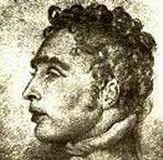 John Williams
Mass murderer · United Kingdom · 1811
John Williams (also known as Murphy) was a 27-year-old Scottish or Irish seaman…
7 victims
John Williams
Mass murderer · United Kingdom · 1811
John Williams (also known as Murphy) was a 27-year-old Scottish or Irish seaman…
7 victims
- Gender
- male
- Country
- USA
- Location
- Dent County, Missouri, USA
- Date of birth
- January 5, 1962
- Age at first offence
- 34
- Characteristics
- rape
- Victim profile
- Irene Sisk, 74, and her granddaughter Candy Sisk, 19
- Method of murder
- St abbing with knife
- Date(s) of murder
- December 16, 1996
- Years active
- 1996
- Date of arrest
- 2 days after
- Status
-
Sentenced to death
Resentenced to life in prison in 2004 after being sentenced to death on May 5, 1999
Case details
Cecil Barriner was tried for the homicides of Irene Sisk and her granddaughter Candy Sisk at their Tallapoosa, Missouri residence in December 1996.
Timeline
- December 15, 1996 — Barriner travelled to the Tallapoosa, Missouri residence of Candy Sisk and Irene Sisk to obtain money, following fears about failing a urinalysis test for controlled substances and concern about probation being revoked.
- December 16, 1996 — Candy reported a man had been at the house earlier and described the car as a white Ford Taurus; a bank teller in Risco attended to a man driving a white Ford Taurus and gave one thousand dollars in cash after a check was signed by Candy.
- December 16, 1996 (morning, shortly after 9:00 a.m.) — Debbie Dubois attempted to telephone Candy and Irene repeatedly without success and drove to the Sisk house.
- December 16, 1996 (when Dubois arrived) — Debbie Dubois found Candy and Irene dead at the Tallapoosa residence.
- December 18, 1996 — Lieutenant Steven Hinesly of the Missouri State Highway Patrol and Deputy Sheriff Scott Johnston contacted Barriner at his brother’s home; Barriner agreed to accompany the officers to troop headquarters in Poplar Bluff to discuss the homicide.
Background
In December 1996, Barriner began to fear that he had failed a urinalysis test for the presence of controlled substances. Barriner was concerned that his probation would be revoked. Resolving to leave his residence in Poplar Bluff, Barriner planned to travel to the Tallapoosa, Missouri, residence of nineteen year old Candy Sisk and Candy’s seventy-four year old grandmother, Irene Sisk, to obtain money from them.
Barriner had been in a relationship with Candy Sisk’s mother, Shirley Niswonger, from 1993 until 1996, and during that time had become acquainted with Candy. Barriner had accompanied Niswonger on at least two occasions when she traveled to the Sisks’ house to borrow money. Barriner believed that the Sisks were financially well-to-do.
Late in the afternoon of December 15, 1996, Barriner visited Daniel and Samantha Simmons, friends who lived only a few miles from the Sisk residence. Barriner told Samantha Simmons that he was going to Tallapoosa to collect some money and drove away in the white Ford Taurus automobile he was using for transportation. Barriner returned shortly thereafter, stating that no one had been home. Daniel and Samantha Simmons then accompanied Barriner to Tallapoosa in the Ford Taurus, where Barriner passed by the Sisk house three times.
During the drive, Barriner said that "the girl was going to pay him some money" and pointed to a note that he had left on the Sisks’ door. Samantha Simmons noticed that during the drive Barriner held and played with a purple Crown Royal bag that contained something that she could not see.
The offence
Candy Sisk and Irene Sisk were found dead in their Tallapoosa home.
Candy Sisk’s body was on the bed in her bedroom. Her hands were bound in front of her with rope. She was unclothed below the waist, and a pair of sweatpants and a pair of panties were on the floor nearby. Her neck had been slashed six to eight times. A knife protruded from her chest. An autopsy revealed that Candy bled to death from the neck slashes, and that the knife was thrust into her chest after she died. Several bite marks were identified on her body.
Irene Sisk’s body was on the floor of her bedroom next to the bed. She had been hog-tied, her wrists and ankles bound together with the same length of rope. An autopsy revealed that seventeen superficial stab wounds in a localized area on her left chest, five of which penetrated the chest cavity and lung, were inflicted fifteen to forty-five minutes before she died. Three deep slashes to her throat caused her death.
Investigation
After the bodies were discovered, multiple details were found and later described about the condition of the victims, including that Candy’s hands were bound with rope, that she was unclothed below the waist, and that her neck had been slashed six to eight times with a knife protruding from her chest.
Two days after the bodies of Irene and Candy were discovered, Lieutenant Steven Hinesly of the Missouri State Highway Patrol and Deputy Sheriff Scott Johnston of Butler County contacted Barriner at his brother’s home. Barriner agreed to accompany the officers to troop headquarters in Poplar Bluff to discuss the homicide.
Barriner denied knowing that the Sisks had been murdered and denied killing them. Barriner claimed to have made trips to Cape Girardeau and two other towns on the morning of the murders to do some Christmas shopping. When Lieutenant Hinesly professed skepticism that Barriner could have traveled so far so quickly, Barriner changed his story; he then claimed that he was using methamphetamine at the home of Kevin Dennis when the murders were committed.
Arrest
On December 18, Lieutenant Steven Hinesly and Deputy Sheriff Scott Johnston contacted Barriner at his brother’s home, and Barriner agreed to accompany the officers to troop headquarters in Poplar Bluff to discuss the homicide.
Trial
Barriner was convicted of murdering Irene Sisk, 74, and her granddaughter Candy Sisk, 19, in their Tallapoosa home on December 16, 1996. The proceedings were held in Boone County before a jury of seven men and five women chosen in neighboring Callaway County.
The case was submitted to the jury late Thursday afternoon following two days of testimony. After seven hours of deliberations that concluded Friday morning, the jury rendered the guilty verdicts.
After the guilty verdicts, the trial entered the penalty phase. Assistant attorney general Kevin Zoellner urged jurors to sentence Barriner to death, and Zoellner said: "Obviously he believes in the death penalty and is willing to impose it on others"
Zoellner, who assisted New Madrid County Prosecuting Attorney Lewis Recker with the case, said the heinous nature of the crimes merited the ultimate punishment. Zoellner said: "This man here enjoyed it."
Defense attorney Bradford Kessler acknowledged that the aggravating factors required to impose a capital sentence would likely be found present in this case. Kessler asked jurors to show mercy and reject Zoellner’s call for vengeance, saying: "He is asking you to reduce yourselves to being the same type of person you just found Cecil Barriner to be,"
In rebuttal, Zoellner dismissed the notion that to sentence Barriner to die is to become him, saying: "Mercy is for God," "Unfortunately, down here on Earth we have to deliver justice."
The jury deliberated about ninety minutes on sentence and handed down its recommendation of life in prison without parole, which was the only option available other than the death sentence.
Sentencing
Senior Judge Frank Conley was scheduled to formally sentence Barriner on December 17. Conley had no discretion to set aside the jury’s sentence and impose the death penalty.
After Barriner was found guilty of two counts of first degree murder, the jury spared his life by handing down two sentences of life in prison, meaning he would spend the rest of his days behind bars without chance for parole.
Barriner had twice before been sent to Missouri’s death row for the brutal stabbing deaths of two New Madrid County women, and the Missouri Supreme Court overturned both prior convictions.
In his third trial, he was convicted again of murdering Irene Sisk and Candy Sisk.
Appeals
The Missouri Supreme Court overturned both prior convictions.
The court voted 5-2 in 2000 to reverse the Dent County verdict. The court ruled the trial judge erroneously allowed the prosecution to present irrelevant and prejudicial evidence.
The court overturned the result of the second trial in 2003 in a close 4-3 decision, stating the jury was wrongly prohibited from considering potentially exculpatory evidence.
Outcome
Barriner was sentenced to death on May 5, 1999 and was resentenced to life in prison in 2004.
Other details
Juries in Dent and Warren counties separately convicted Barriner in 1999 and 2002. He received two death sentences following each trial. Barriner was 42 and a former resident of Poplar Bluff.
Candy Sisk and Irene Sisk were killed in their Tallapoosa home. Samantha Simmons observed Barriner holding and playing with a purple Crown Royal bag that contained something she could not see while Barriner was driving toward Tallapoosa.
Candy telephoned her aunt, Debbie Dubois, and reported that a man had been at the house a short time before. Candy told Dubois that the man had told Irene that he had "a Christmas gift for Candy from her mother in jail." Candy told Dubois that her grandmother said that the man had acted strangely, and that the same man had been in Tallapoosa the day before asking for directions to the Sisk residence. Candy reported that she had not seen the man herself, but had observed the man’s car, which was a white Ford Taurus.
Debbie Dubois attempted to telephone a relative to ask him to check on Irene and Candy but was unable to reach him. Dubois then called Candy, told her she had failed to reach the relative, and instructed Candy to call her again if the man returned.
A bank teller at a bank in nearby Risco attended to a man driving a white Ford Taurus at approximately 9:00 a.m. to give one thousand dollars in cash. The teller saw Candy riding in the passenger seat dressed in a nightgown and wrapped in a blanket. The teller saw another person in the rear seat. The driver gave the teller a check in the amount of one thousand dollars, signed by Candy and to be drawn on her account. After Candy signed the required cash receipt, the teller gave the man one thousand dollars in cash, with one hundred dollars in twenty dollar bills, as the driver requested.
At approximately 10:45 that morning, Dubois attempted at least twice to telephone Candy and Irene at the Sisk residence. The telephone rang repeatedly, but no one answered. Dubois was concerned because one telephone line had an answering machine and because Candy, who had undergone back surgery four days before, was not supposed to leave the house for six weeks.
When Dubois drove to the Sisk house, she found Candy and Irene dead. She tried to call the police, but, upon finding that the telephones in the house were missing, she drove to see a relative, who notified the authorities.
Spotted an error, or have more information about this case?