
Steven Spader
Homicide David Attias
Homicide · USA · 2001
David Attias was described as an 18-year-old student at the University of Calif…
4 victims
David Attias
Homicide · USA · 2001
David Attias was described as an 18-year-old student at the University of Calif…
4 victims
 Nicholas Browning
Homicide · USA · 2008
Nicholas W. Browning — 15-year-old boy charged as an adult with four counts of…
4 victims
Nicholas Browning
Homicide · USA · 2008
Nicholas W. Browning — 15-year-old boy charged as an adult with four counts of…
4 victims
 Alec Kreider
Homicide · USA · 2007
Alec Devon Kreider (born February 4, 1991) was a Lancaster County, Pennsylvania…
3 victims
Alec Kreider
Homicide · USA · 2007
Alec Devon Kreider (born February 4, 1991) was a Lancaster County, Pennsylvania…
3 victims
 Cody Posey
Homicide · USA · 2004
Cody Posey was a New Mexico teenager who was born October 9, 1989. In 1992, whe…
3 victims
Cody Posey
Homicide · USA · 2004
Cody Posey was a New Mexico teenager who was born October 9, 1989. In 1992, whe…
3 victims
 Jason Rose
Homicide · USA · 2005
Jason Allen Rose was 21 at the time of sentencing and was convicted of setting…
3 victims
Jason Rose
Homicide · USA · 2005
Jason Allen Rose was 21 at the time of sentencing and was convicted of setting…
3 victims
 Wallace Fugate
Murderer · USA · 1991
Wallace Fugate was executed by lethal injection in Georgia on August 16, 2002.…
1 victim
Wallace Fugate
Murderer · USA · 1991
Wallace Fugate was executed by lethal injection in Georgia on August 16, 2002.…
1 victim
 Floyd Allen
Murderer · USA · 1912
Floyd Allen (July 5, 1856 – March 28, 1913) was an American landowner and patri…
5 victims
Floyd Allen
Murderer · USA · 1912
Floyd Allen (July 5, 1856 – March 28, 1913) was an American landowner and patri…
5 victims
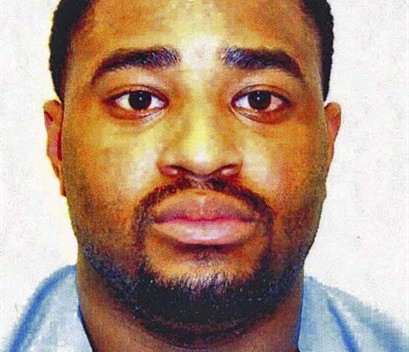 Kevin Green
Murderer · USA · 1998
August 21, 1998 — Kevin Green robbed a convenience store owned by Lawrence T. V…
1 victim
Kevin Green
Murderer · USA · 1998
August 21, 1998 — Kevin Green robbed a convenience store owned by Lawrence T. V…
1 victim
 Angela Garcia
Murderer · USA · 1999
Angela Garcia was convicted in 2001 of setting a fire that killed her two young…
2 victims
Angela Garcia
Murderer · USA · 1999
Angela Garcia was convicted in 2001 of setting a fire that killed her two young…
2 victims
 David Santiago Renteria
Murderer · USA · 2001
David Santiago Renteria (TDCJ Number 999460) was born on 11/22/1969 and was rec…
1 victim
David Santiago Renteria
Murderer · USA · 2001
David Santiago Renteria (TDCJ Number 999460) was born on 11/22/1969 and was rec…
1 victim
- Gender
- male
- Country
- USA
- Location
- Mont Vernon, Hillsborough County, New Hampshire, USA
- Date of birth
- November 1991
- Age at first offence
- 18
- Characteristics
- juvenile (17), thrill killing
- Victim profile
- Kimberley Cates, 42
- Method of murder
- Stabbing with a machete
- Date(s) of murder
- October 4, 2009
- Years active
- 2009
- Date of arrest
- Next day
- Status
-
Life imprisonment
Sentenced to life in prison without chance of parole plus 76 years in prison on November 9, 2010
Overview
Steven Spader was convicted in connection with the October 4, 2009 home invasion murder of Kimberly Cates in Mont Vernon, New Hampshire, in which her 10-year-old daughter Jamie was severely maimed. Spader admitted to hacking Kimberly Cates to death with 36 blows to the head and torso. He later sought sentencing rehearings as a minor following the U.S. Supreme Court’s Miller v. Alabama ruling, and his life-plus-76-years sentence was upheld after resentencing.
Timeline
- October 4, 2009 — 17-year-old Spader and Christopher Gribble murdered Kimberly Cates and severely maimed her daughter Jamie during a home invasion in Mont Vernon, New Hampshire; both victims were assaulted with a machete.
- October 6, 2009 — Prosecutors described the attack as a random home invasion in which four teenagers entered an isolated home intending to kill whoever was home.
- November 9, 2010 — Steven Spader was convicted of murder and other charges and was sentenced to life in prison without chance of parole plus 76 years in prison.
- April 22, 2013 — Spader’s resentencing hearing occurred in Hillsborough County Superior Court; he did not appear and waived the right to argue for a lesser sentence.
- April 23, 2013 — Spader’s apology statement was described in coverage following resentencing proceedings.
- May 2013 — The New Hampshire Supreme Court allowed Spader to drop the appeal of his conviction.
- February 2014 — Spader was moved to a New Jersey prison and subsequently sustained injuries in a prison fight.
- October 2014 — Christopher Gribble sought a reduction in his sentence based on his young age; the court did not rule immediately.
The offence
On October 4, 2009, Spader and Christopher Gribble murdered Kimberly Cates and severely maimed her daughter Jamie during a home invasion in Mont Vernon, New Hampshire. The attack involved a middle-of-the-night entry into an isolated home, where prosecutors described the selection as random.
Spader and Gribble were accused of assaulting both Kimberly Cates and her daughter with a machete.
Jamie Cates survived the attack by pretending to be dead, then staggered covered in blood to a kitchen phone to call police. A doctor testified she would have died of a punctured lung if she had lost consciousness before summoning help. The jury heard testimony that blows cutting off portions of Jamie’s left foot, splitting open her head, and striking her face with enough force to break her jaw had to have come from a heavy and sharp weapon such as a machete.
Background and planning
Spader formed a club he called “The Disciples of Destruction” shortly before the murder and recruited confederates. Spader designed a logo with the initials D.O.D. Spader told his recruits that the home invasion was to be a rite of “initiation” for club members. Investigators and prosecutors described the attack as random and intended to kill whoever was present.
Prosecutors said the planned attack involved a group of accomplices and that the teens picked the home at random because it was on an isolated road. They also said all four knew of the plan to kill whoever was home, and that a homeowner was killed in her bed while a young child was seriously injured.
Investigation and arrest
Four teenagers entered the isolated home intending to kill in a middle-of-the-night attack that left Kimberly Cates dead and her daughter seriously injured. Prosecutors said one was armed with a machete and another was armed with a knife.
According to coverage from October 6, 2009, the teens were arrested Monday and made brief court appearances late Tuesday morning in nearby Milford. They entered no pleas and spoke only briefly to say either they had no questions or planned to request court-appointed lawyers.
Charges at arraignment
Spader and Christopher Gribble were charged with:
- first-degree murder
- conspiracy to commit murder
- attempted murder
They were ordered held without bail.
William Marks and Quinn Glover were charged with:
- burglary
- conspiracy to commit burglary
- robbery
They were ordered held on $500,000 cash bail.
Authorities released few details and sealed the affidavits supporting the charges.
Spader was accused of driving the teens to Cates’ neighborhood sometime before 4 a.m. on Sunday and cutting Kimberly Cates with a machete in the head, torso, arms, and legs. Gribble was accused of stabbing Kimberly Cates with a knife and both were accused of attacking Kimberly Cates’ daughter.
Trial
Steven Spader was the first person to go on trial in the October 2009 attacks. During the trial, defense attorney Jonathan Cohen assailed the credibility of three co-defendants who brokered plea deals and testified against Spader, and he suggested they, not Spader, were involved in the attacks.
Jurors deliberated for about 90 minutes before returning guilty verdicts against Spader. The jury found Spader guilty of:
- premeditated murder
- intentional murder during the commission of a burglary
- attempted murder
- conspiracy to commit both murder and burglary
- tampering with a witness
Mont Vernon police Chief Kyle Aspinwall, who was present for much of the 11-day trial, said he was satisfied with the verdicts.
Spader showed no reaction to the verdicts, and as jurors were polled individually on each of their six guilty verdicts, several jurors glared at Spader and responded emphatically. Spader’s mother, Christine Spader, wept briefly; his father was stoic.
At the resentencing proceedings later described in coverage, it was noted that a judge recognized Jaimie Cates, now 14, in court.
Sentencing
Initial sentencing (November 9, 2010)
Judge Gillian Abramson handed down the maximum sentence. Spader received:
- a mandatory life sentence with no chance for parole for first-degree murder conviction (automatic under New Hampshire law)
- an additional sentence of 76 years
In sentencing coverage, Abramson said she could go on for days about the depths of his depravity and that the sentence ensured “you will stay in that cage for the rest of your pointless life.”
CBS News coverage described the sentence as the maximum against 19-year-old Steven Spader.
Spader received the mandatory life sentence with no chance for parole, and Abramson said the sentence ensured: “you will stay in that cage for the rest of your pointless life,” he told Spader.
Appeals
Following the U.S. Supreme Court’s Miller v. Alabama ruling that circumscribed sentencing of minors to life sentences, both Spader and Christopher Gribble were granted sentencing rehearings.
A jury convicted Spader in 2010, and his case was described as still pending direct appeal before the state Supreme Court at one point after resentencing was triggered.
Resentencing and direct appeal status
At a resentencing hearing in April 2013, Spader did not appear and waived his right to argue for a reduced sentence.
His sentence of life plus 76 years was upheld. In May 2013, the New Hampshire Supreme Court allowed Spader to drop the appeal of his conviction.
His appellate attorney told the press that Spader did not want to appeal for “personal and moral reasons.”
Resentencing (April 2013)
Statement and apology
During the April 22, 2013 resentencing hearing, defense attorney Jonathan Cohen read Spader’s statement aloud in Hillsborough County Superior Court. David Cates and his daughter Jaimie listened from the front row of the gallery.
“Through my impulsive actions, I have harmed numerous individuals, both physically and mentally. I have torn apart families and ruined lives,” Cohen read from Spader’s hand-written statement.
“But still, I must beg forgiveness from everyone I have harmed. To the Cates family, I know my words hold no meaning. But I am truly sorry for the pain that I have caused you,” Cohen continued reading.
In other coverage, Spader’s statement was described as:
“Through my impulsive actions, I have torn apart families and ruined lives,” said the statement by Steven Spader, which was read by his lawyer.
“I am truly sorry for the pain I have caused you. I do not expect forgiveness, nor do I deserve any.”
Spader’s sentencing position
Spader was described as not wanting a reduction in sentence and not appearing at the resentencing hearing.
In sentencing-related coverage, his lawyers said he had forbidden them from submitting any evidence to bid for a reduced sentence, and a quote from Spader described:
“I choose not to slip by on some technicality,” Spader’s statement said.
“Instead I choose to accept responsibility for my actions.”
At resentencing, Senior Assistant Attorney General Jeffery A. Strelzin argued to keep intact the life sentence and an additional sentence of 76 years for the attempted murder of Jamie and other crimes.
Quotes from prosecutors and court remarks
The state portrayed Spader as a psychopathic ringleader and argued that he regarded remorse as “weak” and “unnecessary,” and likely would commit more crimes if freed.
“This isn’t someone who is going to grow out of his problems. His problem is he is a psychopath. That is what he is. It isn't a phase,” Senior Assistant Attorney General Jeffery A. Strelzin told Judge Gillian L. Abramson.
Strelzin dismissed the letter as “clearly disingenuous,” noting Spader in December told mental health experts he felt no remorse for his crimes.
Strelzin was also quoted describing his view of Spader’s lack of remorse:
“I never felt remorse. I think it is weak -- not so much weak, as unnecessary.”
Evidence discussed at resentencing
The resentencing hearing was triggered by a 2012 U.S. Supreme Court ruling that voided Spader’s initial sentence. The ruling required the court to hold a sentencing hearing to consider aggravating and mitigating factors related to Spader’s maturity, recklessness, ability to appreciate consequences and risks, home life, susceptibility to peer pressure, and capacity for rehabilitation. The court could still impose a mandatory life sentence without chance of parole.
Strelzin said Spader tested “very high” in psychopathic tendencies and was not amenable to rehabilitation. Strelzin cited as examples Spader’s “reveling” in the Mont Vernon killing and attempts to create a “criminal enterprise” in prison whereby he would enlist people who could help him escape prison.
Other details
Additional sentencing status for co-defendants
Both Spader and Christopher Gribble were sentenced to life in prison, and three other accomplices were also serving prison time.
At the time of trial, it was described that three others accepted a plea deal and testified against Spader.
Injuries in prison fight
Spader was moved to a New Jersey prison in February 2014 and subsequently sustained injuries in a prison fight.
New Hampshire legislative impact
The murder led to the New Hampshire legislature expanding the crimes punishable by the death penalty to include murder during a home invasion.
Clubs, letters, and bragging
Spader was described as having bragged about the attacks vocally and in letters from jail. He wrote detailed notes to cellmates while awaiting trial.
Spader wrote:
“I am probably the most sick and twisted person you will ever meet,” as the prelude to one of his notes to a fellow inmate.
Additional quotations described in the case narrative included that Spader could see brains, “lots of blood,” and “her eyeball hanging out of its socket,” and that he wrote he “whacked the mother 36 times.”
Relationships and sentencing hearing participants
David Cates held a golf tournament on the anniversary of the attack for a scholarship in his wife’s name, and the police officers who worked on the case played in the tournament.
A quote attributed to Lt. James Geraghty stated:
“You know why it was different? Because we had a live victim. And we don't get a lot of live victims.”
Geraghty said:
“I think random crimes are so few and far between in New Hampshire, and this was so random, it scared people,” and that “People went and got dogs. People went and got guns. People put bars on their windows. It just struck home.”
Geraghty also said:
“I think that's what gets people, is that they knew these kids,” and that “I had to see the faces of the people who ripped out the heart and soul of this community,” was said by Deputy House Speaker Linda Foster.
Foster was described as calling it “a picture-perfect town,” and she said:
“These are not kids that came up from the big bad city. These are kids who grew up beside you. It's evil.”
Spader’s parents were Steven and Christine Spader, who adopted Steven when he was 5 days old.
David Cates and Jaimie were described as declining to address the court or comment as they left court after resentencing proceedings, and a family friend and chairman of the Kimberly Cates Memorial Scholarship board, Christopher Lussier, said:
“David and Jaime wish only to heal and move forward,”
Notes on plea posture
Strelzin revealed that Spader had been willing to plead guilty and accept a sentence of life without possibility of parole but would not plead to any crimes involving Jaimie.
Disclaimer regarding other appeals
The New Hampshire Supreme Court allowed Spader to drop the appeal of his conviction in May 2013.
Age-related sentencing issues
The U.S. Supreme Court’s Miller v. Alabama decision was described as ruling that mandatory life sentences without chance of parole for those under 18 when the crime was committed amounted to cruel and unusual punishment.


Spotted an error, or have more information about this case?