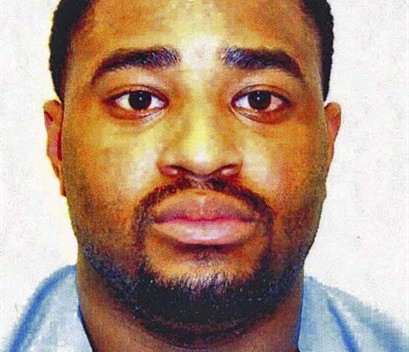
Kevin Green
Murderer Russell Ellwood
Murderer · USA · 1991
Russell Ellwood was a former taxi driver. Authorities suspected him of killing…
20 victims
Russell Ellwood
Murderer · USA · 1991
Russell Ellwood was a former taxi driver. Authorities suspected him of killing…
20 victims
 Robert Martines Perez
Murderer · USA · 1994
Name: Robert Martines Perez · Other name used in proceedings: Robert Martinez P…
15 victims
Robert Martines Perez
Murderer · USA · 1994
Name: Robert Martines Perez · Other name used in proceedings: Robert Martinez P…
15 victims
 Billy Frank Vickers
Murderer · USA · 1993
Billy Frank Vickers Vickers was executed by lethal injection in Texas on Januar…
14 victims
Billy Frank Vickers
Murderer · USA · 1993
Billy Frank Vickers Vickers was executed by lethal injection in Texas on Januar…
14 victims
 Walter Dye
Murderer · USA · 1996
Walter L. Dye was sentenced to death on January 20, 1998. Dye conceded that giv…
3 victims
Walter Dye
Murderer · USA · 1996
Walter L. Dye was sentenced to death on January 20, 1998. Dye conceded that giv…
3 victims
 Trevor William Hamilton
Murderer · United Kingdom · 2003
Trevor William Hamilton was convicted of the murder of Bridgit Attracta Harron…
1 victim
Trevor William Hamilton
Murderer · United Kingdom · 2003
Trevor William Hamilton was convicted of the murder of Bridgit Attracta Harron…
1 victim
 Gundolf Köhler
Mass murderer · Germany · 1980
Gundolf Köhler (August 27, 1959 – September 26, 1980) was a German right-wing e…
12 victims
Gundolf Köhler
Mass murderer · Germany · 1980
Gundolf Köhler (August 27, 1959 – September 26, 1980) was a German right-wing e…
12 victims
 Robert Raymond Cook
Mass murderer · Canada · 1959
Robert Raymond Cook (also known as Bobby Cook): convicted murderer; eldest son…
7 victims
Robert Raymond Cook
Mass murderer · Canada · 1959
Robert Raymond Cook (also known as Bobby Cook): convicted murderer; eldest son…
7 victims
 Andrew Garforth
Murderer · Australia · 1992
Andrew Peter Garforth (born August 8, 1963) was an Australian criminal. He was…
1 victim
Andrew Garforth
Murderer · Australia · 1992
Andrew Peter Garforth (born August 8, 1963) was an Australian criminal. He was…
1 victim
 Tianle Li
Murderer · USA · 2011
Tianle Li was convicted of fatally poisoning her husband, Xiaoye Wang, with tha…
1 victim
Tianle Li
Murderer · USA · 2011
Tianle Li was convicted of fatally poisoning her husband, Xiaoye Wang, with tha…
1 victim
- Gender
- male
- Country
- USA
- Location
- Brunswick County, Virginia, USA
- Date of birth
- May 11, 1977
- Age at first offence
- 21
- Characteristics
- robbery
- Victim profile
- Patricia L. Vaughan, 53 (convenience store owner)
- Method of murder
- Shooting
- Date(s) of murder
- August 21, 1998
- Years active
- 1998
- Date of arrest
- —
- Status
-
Executed
Executed by lethal injection in Virginia on May 27, 2008
Timeline
- August 21, 1998 — Kevin Green robbed a convenience store owned by Lawrence T. Vaughan and his wife Patricia L. Vaughan and shot both owners; Patricia Vaughan died and Lawrence Vaughan survived.
- June 2000 — Kevin Green was convicted of capital murder of Patricia L. Vaughan during the commission of robbery; the jury also convicted him of robbery, malicious wounding of Lawrence T. Vaughan, and three counts of illegal use of a firearm; the jury fixed his punishment for the capital murder at death.
- October 6, 2000 — Circuit Judge James A. Luke sentenced Kevin Green to die.
- 2001 — The Virginia Supreme Court reversed Green’s capital murder conviction and death sentence because the trial judge failed to strike two biased jurors; the non-capital convictions were not appealed and were not before the court.
- November 2001 — Green was retried for capital murder.
- 2001 — After retrial, a jury again found Kevin Green guilty of capital murder during the commission of robbery and again fixed his punishment at death; the circuit court sentenced him in accord with the jury verdict.
- June 6, 2003 — The Virginia Supreme Court affirmed the death penalty sentence.
- December 5, 2005 — The United States Supreme Court denied Green’s petition for a writ of certiorari relating to his state habeas case.
- March 26, 2007 — The United States District Court for the Eastern District of Virginia granted Green’s habeas petition certificate of appealability on Atkins and ineffective assistance issues but ultimately dismissed the petition.
- May 27, 2008 — Kevin Green was executed by lethal injection at 10:05 p.m. at Greensville Correctional Center in Jarratt, Virginia.
Background
Kevin Green was convicted of capital murder and robbery related to the August 21, 1998 robbery of a convenience store in Brunswick County. Patricia L. Vaughan and her husband Lawrence T. Vaughan owned and operated a small grocery store in Brunswick County in the community of Dolphin. Green was sentenced to death.
The offence
On Friday, August 21, 1998, Lawrence T. Vaughan went to a bank and returned with currency. He placed $10,000 in a bank bag in a cabinet underneath the cash register, another $10,000 elsewhere in the store, and the remaining cash in a safe.
Two men entered the store. Mr. Vaughan recognized the taller of the two men as Kevin Green. Mr. Vaughan heard his wife scream, “Oh, God.” At trial, Mr. Vaughan testified:
It was four bangs. Bang, bang and I was hit. I didn't know where I was hit, but I was hurt. I turned a complete turn and fell on the floor, sit [sic] down on my right foot and broke my right ankle. And about [the] time I went down, I looked up and I realized it was a gun being fired. I could see him, he shot toward my wife with the fourth shot. I saw his hand with a pistol in it. He was holding [it] like he was target practicing.
Mr. Vaughan testified that Green, after firing four shots, walked back to the door and stood there “as a lookout” while the other man came around behind the counter and tried to open the cash register. When the drawer jammed, Green directed the shorter man to look under the counter. The shorter man found the bank bag containing approximately $9,000 and Mr. Vaughan’s pistol, and he used the pistol to shoot through the key hole in the cash register drawer.
After the shorter man exited with the bank bag and pistol, Green walked a few steps to where Mrs. Vaughan was lying on the floor and pointed the gun at her again. Mr. Vaughan testified that the gun misfired and that Green ejected a live cartridge onto the floor. Green fired two more shots in the direction of Mrs. Vaughan. Mr. Vaughan heard the gun “snap” one more time but did not know whether Green was pointing the gun at him or his wife. When the gun was empty, Green left the store.
Mr. Vaughan dragged himself approximately five feet to a telephone and dialed “911” but was too weak to reach his wife, who was still lying on the floor.
Patricia L. Vaughan was shot four times during the robbery and died at the scene. Lawrence T. Vaughan was shot twice but survived and later testified against Green.
Autopsy findings attributed to the forensic pathologist Dr. Jose Abrenio included four gunshot wounds. One bullet penetrated the left side of Mrs. Vaughan’s head, passed through the temporal and frontal lobes of her brain, and lodged in the inner frontal sinus of her face. Another bullet entered the right side of her chest and went into the upper lobe of her right lung. A third bullet penetrated the left side of her back and was the only non-lethal wound. The fourth bullet entered the right side of Mrs. Vaughan’s back and penetrated two lobes of her right lung. Dr. Abrenio opined that the fourth wound caused hemorrhaging in the thoracic cavity, which led to difficulty in breathing and had the effect of suffocating her, and that Mrs. Vaughan survived “seconds to minutes” after she was first shot.
Four days after the murder, a warrant was issued to search Green, his residence, and automobile. During the search of his home, six bullets were retrieved from the trunk of a tree in his yard behind a “makeshift target” hanging on the tree. Forensic testing on those six bullets and the four bullets recovered from Mrs. Vaughan’s body revealed that all ten “caliber 25 Auto full metal jacketed bullets” had been fired from one weapon. About 35 to 50 feet from the tree, 16 25-caliber empty cartridge casings were also recovered.
After Green was arrested, he executed a form waiving Miranda rights and agreed to be questioned by law enforcement officers. During interrogation, Green admitted he and his cousin, David Green, robbed the Vaughans’ grocery store and that he selected their store because he knew the Vaughans kept a lot of money there. Green and his cousin originally planned to wear masks to conceal their faces but discarded the masks after they had to wait behind the store in their automobile for about an hour because other people were in the grocery store. Green admitted he shot both of the Vaughans, hitting Mrs. Vaughan four times.
On the day of the offence, Green entered the store shortly before 2 p.m. with his nephew, David Green, then 16. After shooting the two Vaughans, Green stood watch while David Green stole a bank bag with $9,000 in cash and Lawrence Vaughan’s handgun from under a counter. Green shot Patricia Vaughan again before he ran out of ammunition and left. Green and the two others fled to Washington and returned several days later, were arrested, and admitted the crime.
David Green was sentenced to 23 years.
Investigation and arrest
A local volunteer medical examiner determined that Mrs. Vaughan had died at the scene of the shooting. A subsequent autopsy of Mrs. Vaughan’s body revealed four gunshot wounds.
After the murder, police issued a warrant to search Green, his residence, and automobile. During the search, six bullets were retrieved from the trunk of a tree in his yard behind a “makeshift target” and forensic testing connected the bullets fired from the weapon.
After arrest, Green waived his Miranda rights and admitted involvement in the robbery and shootings.
Trial
Green was tried before a jury in the Circuit Court, Brunswick County, and was convicted of capital murder and robbery. The jury found him guilty of the capital murder of Patricia L. Vaughan during the commission of robbery in violation of Code § 18.2-31(4). The jury also found him guilty of robbery, malicious wounding of Lawrence T. Vaughan, and three counts of the illegal use of a firearm.
Guilt phase evidence
During trial, Mr. Vaughan testified to the shooting events, the timing of the gunfire, and that Green stood “as a lookout” while the other man attempted to open the cash register. Mr. Vaughan also testified that the gun misfired, that Green ejected a live cartridge onto the floor, that Green fired two more shots in the direction of Mrs. Vaughan, and that he only learned the gun was empty when Green left the store. Mr. Vaughan also testified that after Green left, he dragged himself approximately five feet to a telephone and dialed “911” but could not reach his wife.
Jury findings and sentences at first trial
In the penalty phase of the capital murder trial, the jury fixed Green’s punishment at death for the capital murder conviction. The jury found that he represented a continuing serious threat to society and that his conduct in committing the offense was outrageously or wantonly vile, horrible, or inhuman in that it involved torture, depravity of mind, or aggravated battery to the victim under Code § 19.2-264.2.
The jury fixed punishment for non-capital offenses as follows: life imprisonment for the robbery, 20 years imprisonment for the malicious wounding, and three sentences of three years each for the illegal use of a firearm convictions.
Circuit Judge James A. Luke sentenced Green to die on October 6, 2000.
Green’s trial counsel appealed Green’s capital murder conviction and death sentence but not the non-capital convictions. Non-capital convictions were therefore not before the Virginia Supreme Court and were not affected by its later opinion.
Voir dire and reversal on appeal
Green argued that the circuit court erred by overruling his motion to strike for cause prospective jurors Charles Overby and Edith Pearson. The Virginia Supreme Court held that the trial court abused its discretion by refusing to remove those jurors and that such abuse constituted manifest error. The Virginia Supreme Court reversed the judgment confirming Green’s capital murder conviction and the sentence of death and remanded for a new trial on the capital murder offense.
The Virginia Supreme Court found that Overby had a firm belief in “an eye for an eye, tooth for a tooth” and would vote to fix punishment at death if the Commonwealth proved guilt beyond a reasonable doubt. The court concluded that Overby was not impartial and was “indifferent in the cause.”
The Virginia Supreme Court also found that Pearson initially informed the circuit court that she “suppose[d]” the defendant was guilty because she had read in a newspaper that the defendant was present when the crimes occurred, and later made conflicting statements about whether she would find the defendant guilty if he presented no evidence. The Virginia Supreme Court concluded that Pearson had formed firm opinions that would have impaired her ability to be impartial and stand indifferent in the cause.
Retrial
After remand, Green was retried in November of 2001. A jury again found Green guilty of capital murder during the commission of robbery and fixed his punishment at death.
During the penalty phase at retrial, the jury fixed Green’s punishment at death, finding “that there is a probability that [Green] would commit criminal acts of violence that would constitute a continuing serious threat to society” and finding “that his conduct in committing the offense [was] outrageously or wantonly vile, horrible or inhuman in that it involved ... both aggravated battery to the victim and depravity of mind” (the “vileness” predicate). The circuit court subsequently sentenced Green in accordance with the jury verdict.
Penalty-phase evidence at retrial
During the penalty phase of the retrial, the Commonwealth presented testimony from several correctional officers who had supervised Green’s incarceration at different times and facilities. Testimony described incidents where Green exhibited disruptive behavior, refused to obey instructions, and made threats. One officer testified that Green “clinched” the bars of his cell and said, “I'll get you, I will get you.” Another officer testified that when Green had to be placed in isolation, Green started throwing anything he could find, flushing the toilet, and throwing water into the hallway. Green told that officer he was going to make the officer’s life “a living hell.” Other personnel described incidents where Green threw food, trash, and feces on the floor and refused to take his medication.
The Commonwealth called Clement Leon Cleaton, an acquaintance of Green. Cleaton testified that Green had threatened to rob and kill him, that Cleaton heard Green threaten to rob a man selling ice cream from a truck, and that Cleaton related an incident in which Green had shot several times toward Cleaton’s “hog pen” while Cleaton was feeding his hogs, after Cleaton asked Green not to shoot in that direction.
Green presented mitigating evidence through testimony from Dr. Jack Daniel, an expert in forensic pathology. Dr. Daniel reviewed Mrs. Vaughan’s death certificate, the medical examiner’s report, and Dr. Abrenio’s autopsy report. He testified he found no evidence in those documents that Mrs. Vaughan endured prolonged suffering before she died from the gunshot wounds. Dr. Daniel agreed it was not possible to determine whether the blood found in Mrs. Vaughan’s chest cavity during the autopsy was due to immediate bleeding at the time of the injury or accumulated during the hours following her death.
Green also presented evidence through Dr. Scott W. Sautter, an expert in neuropsychology, who tested Green’s I.Q. on two separate occasions using the “Wechsler abbreviated intelligence scale” and the “Wechsler [A]dult [I]ntelligence [S]cale [R]evised.” Dr. Sautter testified that while the formats were similar, the two tests were “not exactly the same.” Dr. Sautter reported that Green had a full-scale I.Q. score of 74 on the Wechsler Adult Intelligence Scale and a score of 55 on the “abbreviated” test. Dr. Sautter stated Green could work best in a structured environment with guidance and supervision and would be expected to have difficulties in independent living, managing a budget, and going to a job on a consistent basis. In a maximum-security situation, Dr. Sautter opined Green would not be a danger to others and his behavior would be appropriate. In a less secure environment, Dr. Sautter opined Green would be susceptible to harm from other people because of limited capacity for communication.
Two clinical psychologists testified for the Commonwealth in rebuttal. Dr. Lynda J. Hyatt reported Green had an I.Q. score of 84 on the “Ammons & Ammons quick test,” placing Green in the category of “low average” mental functioning. Dr. Thomas A. Pasquale diagnosed depression, alcohol dependency, drug abuse, anti-social personality disorder, and malingering. Dr. Pasquale testified Green had a full-scale I.Q. score of 74 on the Weschler Adult Intelligence Scale, placing him in the “borderline range” of intellectual functioning. Dr. Pasquale testified that Green had worked at a pizza restaurant, taking orders, delivering pizzas, and using the cash register. Dr. Pasquale testified Green paid his own rent, lived with a friend, and had a driver’s license. Dr. Pasquale also opined Green was a high risk for violence in an “open community” but that in a prison setting the probability of such risk was low.
Appeal and affirmance
Green appealed again. The Virginia Supreme Court affirmed the judgment and the death sentence. The court held that the denial of Green’s request for appointment of an investigator was not an abuse of discretion, that the refusal to allow Green to ask prospective jurors seven of his 52 questions during voir dire was not an abuse of discretion, that excusal of a potential juror for cause was not manifest error, that evidence was sufficient to establish premeditation, and that the death sentence was not excessive. The court also conducted statutory review and determined that the death sentence was not imposed under the influence of passion, prejudice, or other arbitrary factors and was not excessive or disproportionate compared with similar cases.
Sentencing
At the first trial, the jury fixed punishment at death for capital murder and Circuit Judge James A. At retrial, a jury again fixed Green’s punishment at death and the circuit court sentenced Green in accordance with the jury’s verdict.
In a non-capital portion of the case, the jury fixed punishment at life imprisonment for robbery, 20 years imprisonment for malicious wounding, and three sentences of three years each for illegal use of a firearm.
Appeals
The Virginia Supreme Court reversed Green’s capital murder conviction and death sentence in 2001 due to failure to strike two biased jurors and remanded for a new trial on the capital murder offense.
After retrial, the Virginia Supreme Court affirmed the death penalty sentence in June 2003.
The United States Supreme Court denied certiorari on February 23, 2004.
Green v. Commonwealth II was an appeal from the retrial resulting in the affirmation of the death sentence, where the Virginia Supreme Court addressed multiple penalty-phase issues and ultimately affirmed.
Habeas corpus and federal proceedings
After affirmance, Kevin Green sought federal habeas relief. The United States District Court for the Eastern District of Virginia, adopted the magistrate judge’s report and recommendation and denied and dismissed the petition, and the denial was appealed.
In Green v. Johnson, the Court of Appeals held that the Virginia Supreme Court’s determination that Green had not established a claim of mental retardation was not contrary to clearly established federal law or an unreasonable application of Supreme Court precedent, that Green was not mentally retarded under Virginia law, and that his ineffective assistance of counsel claim was time-barred. The Court of Appeals affirmed.
The district court granted a certificate of appealability on two issues: (1) whether Green was mentally retarded so that his sentence was unconstitutional under the Eighth Amendment as interpreted in Atkins v. Virginia, and (2) whether trial counsel rendered ineffective assistance by failing to appeal non-capital convictions after the first trial.
The state supreme court dismissed Green’s state habeas petition, including finding that the ineffective assistance claim was untimely under Code § 8.01-654 and that Green failed to prove that his Atkins claim was not frivolous under Virginia Code § 8.01-654.2. The state court addressed the IQ evidence including that Green scored an 84 on the Ammons & Ammons quick test, a 74 on the Wechsler Adult Intelligence Scale Third Edition, a 74 on the Wechsler Adult Intelligence Scale Revised, and below a 70 on the Abbreviated Wechsler Adult Intelligence Scale.
The Supreme Court of the United States denied Green’s petition for a writ of certiorari relating to his state habeas case on December 5, 2005. Green filed his federal habeas petition on December 1, 2005, naming Virginia Department of Corrections Director Gene M. Johnson as the respondent.
A magistrate judge held an evidentiary hearing and recommended denial; the district court adopted the recommendation and dismissed the petition.
Outcome
Kevin Green was executed by lethal injection in Virginia on May 27, 2008. He was pronounced dead at 10:05 p.m. at Greensville Correctional Center in Jarratt.
When asked if he had any last words, Kevin Green said, “No, I don't got nothing to say.”
The Attorney General’s statement on May 27, 2008 said Kevin Green was executed “for the 1998 murder of Patricia Vaughan” and stated that Patricia Vaughan was shot and killed by Green in his armed robbery of the small convenience store she owned with her husband, Lawrence, in Brunswick County in the community of Dolphin, that during that robbery Green also shot Mr. Vaughan two times and Mr. Vaughan survived. The statement also said that guilt and death sentence had been reviewed and upheld by the Supreme Court of Virginia, a United States District Court, the United States Court of Appeals for the Fourth Circuit, and the Supreme Court of the United States. The statement ended with: “Tonight, justice has been served. Our thoughts and prayers remain with Mr. Vaughan, their daughters, and all the family and friends of Patricia Vaughan.”
A Department of Corrections spokesman Larry Traylor said Green met with at least one of his lawyers before execution and did not meet with any family members. Traylor said Green did not have a spiritual adviser. Traylor also said Green requested that prison officials not release the contents of his last meal and that Green did not meet with family or a spiritual adviser that Tuesday but did speak to his attorneys.
Marsha Brown, a daughter of the Vaughans, said: “I feel like we're the puppets and they're being the puppeteers. It's just a fine line between being hopeful and helpless. I really regret that another life has to be involved -- that an execution has to happen -- but I just think it needs to be carried out.” After the execution, the widower of Patricia Vaughan, Lawrence Vaughan, said, “He got his wish.” Reached by telephone after the execution, Lawrence Vaughan said, “I think justice has been done . . . he got what the 12 jurors said he should get.”
Before Green’s execution, when he was asked if he had anything to say at sentencing, Green responded: “Not really. No,” and then said, “Do I have any remorse? No, I don't. I'm ready to die.”
Other details
Green was described as 31 at execution. Patricia L. Vaughan was 53. Lawrence Vaughan was 68.
During the January 2002 sentencing by the trial judge, the judge asked Green if he had anything to say; Green responded as quoted above. Green requested a last meal before execution but did not want it disclosed.
During Green’s earlier proceedings, prosecutors argued Green knew the owners, entered the store unmasked, and therefore the shooting was premeditated. Green indicated that he did not intend to shoot anyone; he did not have the gun on safety and it accidentally went off. Green’s conviction of capital murder and robbery led to a death sentence after the jury deliberated one hour and recommended death.
During the penalty phase at the first trial, the prosecutor referred to Green’s indictment of capital murder in an unrelated case in Mecklenburg County as evidence of future dangerousness to society. The defense presented an expert witness who testified Green was mildly retarded.
The following year, a jury acquitted Green of the capital murder in Mecklenburg County.
In March 2007, two judges from Norfolk U.S. District Court ruled that Green was not mentally retarded. The ruling stated that although Green’s IQ was below 70, he failed the required two-prong test because he had “conceptual, social and practical skills" as evidenced by prior employment, and the ruling was expected to be appealed.
At retrial, the jury heard that Green was already serving a life sentence for the store robbery because his non-capital convictions had not been appealed after the first trial.

Spotted an error, or have more information about this case?