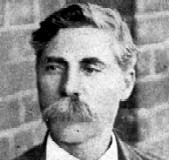
Floyd Allen
Murderer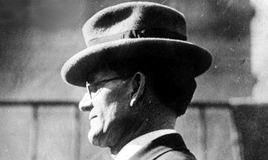 William Hale
Murderer · USA · 1921
Name: William Hale · Known as: the so-called "King of the Osage Hills" · Occupa…
24 victims
William Hale
Murderer · USA · 1921
Name: William Hale · Known as: the so-called "King of the Osage Hills" · Occupa…
24 victims
 John S. Williams
Murderer · USA · 1910
John S. Williams was convicted of murder and sentenced to life imprisonment on…
18 victims
John S. Williams
Murderer · USA · 1910
John S. Williams was convicted of murder and sentenced to life imprisonment on…
18 victims
 Edward Adams
Murderer · USA · 1920
Edward J. "Eddie" Adams was born in 1887 on a farm in Hutchinson, Kansas as W.J…
7 victims
Edward Adams
Murderer · USA · 1920
Edward J. "Eddie" Adams was born in 1887 on a farm in Hutchinson, Kansas as W.J…
7 victims
 Carl Otto Wanderer
Murderer · USA · 1920
Carl Otto Wanderer (1887–1921) was described as a murderer known for what becam…
2 victims
Carl Otto Wanderer
Murderer · USA · 1920
Carl Otto Wanderer (1887–1921) was described as a murderer known for what becam…
2 victims
 Anibal Gonzalez Igonet
—
Aníbal González Igonet, apodado “El Loco del Martillo”, fue encarcelado tras un…
Anibal Gonzalez Igonet
—
Aníbal González Igonet, apodado “El Loco del Martillo”, fue encarcelado tras un…
 Juan Manuel Álvarez
Mass murderer · California · 2005
Juan Manuel Álvarez (born February 26, 1979) was a laborer from Compton, Califo…
11 victims
Juan Manuel Álvarez
Mass murderer · California · 2005
Juan Manuel Álvarez (born February 26, 1979) was a laborer from Compton, Califo…
11 victims
 Tommie Smith
Murderer · USA · 1980
Tommie Smith was executed by lethal injection in Indiana on July 18, 1996. His…
1 victim
Tommie Smith
Murderer · USA · 1980
Tommie Smith was executed by lethal injection in Indiana on July 18, 1996. His…
1 victim
 David Stephen Middleton
Murderer · USA · 1994
David Stephen Middleton was a one-time Miami police officer who was sentenced t…
2 victims
David Stephen Middleton
Murderer · USA · 1994
David Stephen Middleton was a one-time Miami police officer who was sentenced t…
2 victims
 Ynobe Matthews
Serial killer · USA · 1999
Ynobe Matthews was convicted of capital murder in June 2001 and was sentenced t…
6 victims
Ynobe Matthews
Serial killer · USA · 1999
Ynobe Matthews was convicted of capital murder in June 2001 and was sentenced t…
6 victims
- Gender
- male
- Country
- USA
- Location
- Hillsville, Carroll County, Virginia, USA
- Date of birth
- July 5, 1856
- Age at first offence
- 56
- Characteristics
- —
- Victim profile
- Thornton Lemmon Massie , judge / Lewis Franklin Webb , Carroll County sheriff / William McDonald Foster , Commonwealth's Attorney / Augustus Cezar Fowler , juror / Nancy Elizabeth Ayres , witness
- Method of murder
- Shooting
- Date(s) of murder
- March 14, 1912
- Years active
- 1912
- Date of arrest
- Same day
- Status
-
Executed
Executed by electrocution in Virginia on March 28, 1913
Case overview
Floyd Allen (July 5, 1856 – March 28, 1913) was an American landowner and patriarch of the Allen clan of Carroll County, Virginia. He was convicted and executed in 1913 for murder after a courthouse shootout in Hillsville, Virginia, on March 14, 1912, that left a judge, prosecutor, sheriff, and two others dead and left additional people wounded. The conviction was followed by multiple trials and sentences for Floyd Allen and other participants.
Background
Floyd Allen was born in 1856 and spent much of his life living in Cana, below Fancy Gap Mountain in Carroll County, Virginia. He was the chief patriarch of Carroll County's leading family. The family owned large tracts of farmland and a prosperous general store and were active in local politics and in illegal liquor manufacture and bootlegging.
Floyd Allen was noted for generosity and for a quick temper and easily-injured pride. The Allens were proud Democrats and active in local politics in Carroll County. Many of the Allens held local offices, including constable, deputy sheriff, tax collector, or deputy sheriff, and supported political friends for office. Floyd Allen had a reputation for courage and for violent altercations.
Prior violent incidents and legal proceedings
Floyd Allen had a history of violent altercations, including shooting a man in North Carolina, beating up a police officer in Mount Airy, and later shooting his own cousin.
In May 1889, Floyd's brothers, Garland and Sidna Allen, were tried for carrying concealed pistols and assaulting a group of thirteen men. In July 1889 the Carroll County court indicted Floyd for assault, but in December of that year the Commonwealth's Attorney dropped the case. In September 1889, after pleading no contest to the assault, Garland and Sidna were fined $5 each plus court costs, and the prosecutor dropped the weapons charges.
Judge Robert C. Jackson, an attorney in Roanoke and Judge Thornton Massie's predecessor in the Carroll County courtroom, described Floyd Allen as:
"Floyd Allen was perhaps the worst man of the clan--overbearing, vindictive, high tempered, brutal, with no respect for law and little or no regard for human life. During my term of office Floyd Allen was several times charged with violations of law. In several instances he escaped indictment, I am satisfied, because the witnesses were afraid to testify to the facts before the grand jury."
Judge Jackson recalled a trial in 1904 in which Floyd was convicted of assaulting a neighbor, Noah Combs. In that matter, Floyd wanted to buy a farm owned by one of his brothers but could not agree on a price. Noah Combs bought the land despite Floyd’s warnings not to “butt in.” Not long afterward Floyd shot Combs, who recovered. Floyd was indicted and tried on charges of assault. The jury sentenced Floyd to an hour in jail and a $100 fine, plus costs. Floyd posted bail pending an appeal.
Floyd’s defense team included former Commonwealth's Attorney Walter Tipton and recent County Court Judge Oglesby. At the next term of court, Floyd produced a pardon from Governor Andrew J. Montague suspending the jail sentence.
Gunfight with Jasper (Jack) Allen
In another instance, arguing over the administration of their father's estate, Floyd Allen got into a gunfight with his brother Jasper (Jack) Allen, a local constable. In a fusillade of shots, Floyd hit Jack in the head, striking a glancing blow on Jack's scalp, while one of Jack's bullets hit Floyd in the chest. With his pistol empty, Floyd proceeded to beat Jack with the butt of his empty revolver. Floyd was sentenced to a $100 fine and one hour in jail for wounding his cousin. Floyd refused to go, saying that he “would never spend a minute in jail as long as the blood flowed through his veins”.
The description stated that Floyd's body bore scars of thirteen bullet wounds, five of them inflicted in quarrels with his own family.
1908 assault upon prisoners and clemency
In 1908, while serving as special deputies, Floyd and H.C. (Henry) Allen were charged with unlawful assault upon prisoners held in their custody who reportedly resisted arrest. On February 1, 1908 the Allens were convicted and sentenced to ten days in jail and a fine of $10. Their petition for executive clemency was granted by Governor Claude A. Swanson, restoring their political rights to hold office.
1910 federal criminal proceedings involving Sidna Allen
In 1910 Sidna Allen, Floyd's brother, was tried in a United States court at Greensboro, N. C., for making twenty-dollar counterfeit coins. The federal court found him not guilty. Sidna’s alleged accomplice, Preston Dickens, was found guilty and sentenced to serve five years in federal prison. Sidna was retried, found guilty of perjury in his trial testimony, and was sentenced to two years' imprisonment. Sidna promptly appealed and gained a new trial on the perjury charge.
Appointment as police officer
After the Allens complained they could not expect justice from William Foster, a Republican Commonwealth Attorney of the county who had recently switched parties, Judge Thornton L. Massie appointed both Floyd and H. C. (Henry) Allen to the post of police officer for the New River section of the county.
Virginia’s judicial structure was altered through legal reforms that replaced the county court system with circuit courts. Under the new system, a full-time judge held court at scheduled intervals in a circuit of several counties, reducing the ability of individual delegates to ensure a preferred judge for a particular county. The reforms also prevented judges from practicing law for private clients while on the bench, and reduced susceptibility to local influence and public opinion.
Arrest of the Edwards brothers and Floyd’s involvement
One night in December 1910 (some sources say 1911), two of Allen's nephews, Wesley Edwards and Sidna Edwards, attended a corn shucking bee in Hillsville. Wesley kissed a girl romantically linked to a local youth, Will Thomas. This led to an altercation between Thomas and Edwards. At a church service the next morning conducted by Wesley Edwards' uncle, Garland Allen, Will Thomas reportedly called out Wesley Edwards into a fight.
According to Wesley Edwards, Thomas and three friends assaulted him and he defended himself with the help of his brother Sidna, who rushed to join the fight. Following a complaint lodged by Wesley Edwards' father, George, Wesley and his brother Sidna Edwards were charged with disorderly conduct, assault with a deadly weapon, disturbing a public worship service, and other violations.
Wesley Edwards and Sidna Edwards fled over the state line to Mt. Airy in Surry County, North Carolina and found jobs in a granite quarry. Deputy Clerk of Carroll County, Dexter Goad, obtained a new warrant for the brothers' arrest and notified the sheriff in Surry County, who arrested both men. Deputy Clerk Goad sent a deputy, Thomas F. Samuel, with a driver, Peter Easter, to the North Carolina border to receive the Edwards brothers.
At the state line, Deputy Thomas F. Samuel and Peter Easter traveled in Easter's buggy and received the Edwards brothers from Sheriff Haynes and Deputy Oscar Monday, who had arrested the brothers at work. There was only one set of handcuffs; because Sidna Edwards tried to escape a couple of times, Wesley was handcuffed in the front seat of the buggy beside Easter and Sidna was tied in the back seat beside Samuel.
On the way to the courthouse, the buggy passed by several properties owned by the Allens. Floyd Allen met the buggy south of Sidna Allen's home while he was on the way to his own home. Deputy Samuel pulled a gun (later determined to be inoperative) and ordered Floyd to move away. Floyd rode back past the buggy to Sidna's store, where he blocked the narrow road with his mare. Samuel again pulled his gun on Floyd. A fight ensued and Floyd beat Samuel with Samuel’s own pistol.
Wesley Edwards tried to grapple with Easter, but Easter got away and fired a shot at Floyd, wounding Floyd in the finger. Floyd then released the Edwards brothers. Easter escaped on foot to an acquaintance’s home, where he telephoned the sheriff at Hillsville. Deputy Samuel was left lying unconscious in a ditch, and his horses were run off.
Floyd Allen later stated that he never intended to have the boys set completely free and said he only wanted them released from their manacles and treated as humans rather than animals. Some accounts said the boys were manacled and being dragged behind the buggy.
On the following Monday, Wesley and Sidna Edwards were turned over to the court by Floyd Allen. The Edwards brothers were tried and convicted. Wesley was sentenced to sixty days and his brother thirty, served outside jail on work-release.
Pre-trial courtroom intimidation dispute
Floyd Allen, Sidna Allen, and Barnett Allen were indicted for interfering with the deputies. Floyd Allen was indicted for assault and battery. Sidna Allen was never tried for his part in the altercation. Barnett was tried and acquitted.
Shortly before trial, a rumor about the Allens intimidating witnesses was presented to the court. Judge Massie called Constable Jack Allen and Floyd Allen to the bar and questioned them about the alleged intimidation. Jack Allen denied responsibility, stated the allegations were not true, and stated both he and Floyd were not guilty of wrongdoing. The judge told them that if the law could not be enforced in Carroll County by the county officers that he would get rid of the officers and bring in state troops if necessary to maintain order.
A witness later testified that Floyd Allen remarked he “would not let any man talk to me that way.”
Trial for Floyd Allen and the March 14, 1912 courthouse shooting
Trial and representation
Floyd was brought to trial after close to a year of delays on March 13, 1912. Judge Thornton L. Massie presided over the trial, and it was the same judge who had appointed Floyd to the post of county police officer six months earlier.
Floyd Allen was represented by Walter Scott Tipton and David Winton Bolen, both of whom were retired Carroll County judges.
Rumors in the community claimed that Floyd had reportedly sent word to Deputy Samuel that he would kill Samuel if Samuel testified against him. Floyd Allen later denied this. The threat, whoever sent it, was sufficient to cause Deputy Samuel to leave the state on the same night the threat was delivered.
Because Samuel had left, Commonwealth’s Attorney (prosecutor) William M. Foster relied on testimony from Deputy Easter. Foster had been Commonwealth’s Attorney of Carroll County for eight years, first elected on the Democratic ticket, then later changed to the Republican party. By 1912 he was a prominent leader in the GOP in Carroll County, and had been elected the last time on the Republican ticket.
Foster was described as a political enemy of the Allens because the Allens supported Constable Jack Allen's son Walter as Democratic candidate for Commonwealth's Attorney against Foster in the last election, which Walter lost.
In grand jury testimony, Floyd admitted roughing up Samuel but denied an intent to release the prisoners:
"That there Samuel[s] was abusing the boys. He had them handcuffed and tied up with a rope. I just can't bear to see anyone drug around."
Fearful of the Allens’ reaction and having received death threats, officials of the court armed themselves. At least Judge Massie and Sheriff Webb told friends they expected trouble. Many members of the Allen clan were among spectators in the courtroom, most armed with pistols. Sidna Allen and Claud Allen stood in the northeast corner standing on benches to see over the crowd. Friel Allen sat in the back. The Edwards boys stood on benches next to the north wall.
Verdict and sentencing threat
When the jury returned a guilty verdict against Floyd, sentencing him to one year in the penitentiary, Floyd Allen is reported to have said to Judge Massie:
"If you sentence me on that verdict, I will kill you."
Judge Massie proceeded to sentence Floyd to one year in imprisonment.
Defense counsel David Winton Bolen testified:
"[Floyd] hesitated a moment, and then he arose...He looked to me like a man who was about to say something, and had hardly made up his mind what he was going to say, but as he got straight, he moved off to my left, I would say five or six feet, and he seemed to gain his speech, and he said something like this, 'I just tell you, I ain't a'going.'"
Shots broke out in the courtroom shortly afterward. Accounts differed about who fired the first shot. Many accounts claimed Allen initiated the confrontation by pulling a gun in court.
In Floyd Allen’s defense testimony, he said Sheriff Lew F. Webb fired first, but the shot missed him. Floyd testified that Deputy Clerk Goad fired next and hit Floyd, causing him to fall. Floyd stated that when he fell, wounded, he landed on top of his lawyer David Bolen, who is reported to have said:
“Floyd, they are going to kill me shooting at you!”
Floyd testified that only then did he draw his own revolver and begin shooting.
Shooting, deaths, wounds, and immediate events
After a fusillade of shots, the Allen clan left the courthouse, armed with pistols and 12-gauge pump shotguns, and shot as they ran.
Judge Massie, Sheriff Webb, Commonwealth's Attorney Foster, the jury foreman (Augustus C. Fowler), and a nineteen-year-old girl, Elizabeth Ayers, were all hit and died from wounds sustained in the crossfire. Elizabeth Ayers, a subpoenaed witness who had testified against Floyd Allen, was shot in the back while trying to leave the courtroom and died the next day. Seven others were wounded, including Deputy Clerk Goad and Floyd Allen.
Floyd was wounded in the hip, thigh, and knee and could not leave town. He spent the night in the Elliott Hotel accompanied by his eldest son Victor, who was later found not to have been involved in the shootout. Upon his arrest at the hotel, Floyd attempted to slash his own throat with a pocketknife but was overpowered before he could complete the job.
Initial legal crisis and emergency response
Virginia law held that when a sheriff died his deputies lost all legal powers, so Carroll County was left without law enforcement by the shooting.
Assistant Commonwealth's Attorney S. Floyd Landreth sent a telegram to Democratic Governor William Hodges Mann:
"Send troops to the County of Carroll at once. Mob violence, the court. Commonwealth's Attorney, Sheriff, some jurors and others shot on the conviction of Floyd Allen for a felony. Sheriff and Commonwealth's Attorney dead, court serious. Look after this now."
Governor Mann called upon the Baldwin-Felts Detective Agency to find those responsible and arrest them. Rewards were posted by the State of Virginia: $1000 for Sidna Allen, $1000 for Sidna Edwards, $800 for Claude Allen, $500 for Friel Allen, and $500 for Wesley Edwards, dead or alive.
Within a month, all parties were in custody save for Sidna Allen and Wesley Edwards. A manhunt began for the remaining Allen fugitives, and multiple posses searched the surrounding countryside. The U.S. Revenue Service sent an agent, Deputy Agent Faddis, to investigate illegal liquor trafficking by the Allens. Agent Faddis and four men raided Floyd Allen’s property, seizing illegal stills and fifty gallons of moonshine. Two more illegal stills were found at Sidna Edwards' house. Claud Allen and Sidna Edwards were placed into custody after a brief search.
Friel Allen gave himself to detectives in the company of his father Jack Allen, who was concerned his son might be killed while being apprehended. Sidna Allen and Wesley Edwards fled the state.
After several months’ chase, the two were located in Iowa by Baldwin-Felts detectives after a tip from an informant. Sidna Allen maintained until the end of his life that the informant was Maude Iroller, Wesley’s fiancée, who provided information in exchange for $500 from the detective agency. Other accounts said Maude’s father—who had not approved of her relationship with Wesley Edwards—had tipped off the detectives that Maude was going to Des Moines to marry Wesley. Baldwin-Felts detectives located the men, arrested them, and returned them to Carroll County to stand trial.
Subsequent murder trials and evidence
Floyd Allen was the first to be brought to trial on a charge of murdering Judge Massie, Sheriff Webb, and Commonwealth's Attorney Foster. Judge W.R. Staples presided over the courthouse shooting trials, and the prosecution was by State's Attorney General Samuel W. Williams.
The prosecution’s case was based on formation of a conspiracy by the Allens to kill the trial judge, local law enforcement, and others who had wronged them in the event of a guilty verdict.
Ammunition and testimony
J. E. Kearn, a travelling salesman from Roanoke, testified to having sold Sidna Allen a lot of ammunition at the March term of the Hillsville court. Kearn sold Sidna Allen 500 each of .32 and .38 caliber pistol cartridges and 500 12-gauge shotgun shells.
Dispute remained about who fired the first shot. The prosecution attempted to show Floyd and Claud Allen prompted the gun battle by standing, pulling pistols, and opening fire. One prosecution witness was attorney Walter S. Tipton, who was in the court at the time of the shooting and was representing Floyd Allen at the time. Tipton testified that he saw Claud Allen in the courthouse and saw him with a pistol raised in both hands as if he had just fired it. He testified that looking a second time he saw Floyd with his pistol raised in both hands and saw Floyd Allen fire his pistol.
Floyd Allen and his relatives claimed Deputy Clerk Dexter Goad fired first, prompted by a long-standing vendetta he and Foster held against the family.
The defense attempted to show that Deputy Clerk Goad shot Elizabeth Ayers during the exchange of fire; Goad denied firing that shot.
Years later, an allegation surfaced that Deputy Clerk H.C. Quesinberry confessed on his deathbed to starting the shooting. Two men swore an affidavit to that effect in 1967 for which each man was reportedly paid $25.00. Other accounts described the hearsay nature of the affidavit as worthless and disputed that it reliably established who began the shooting. Another claim was that Sheriff Webb accidentally discharged his own revolver, instigating the fusillade.
Statements and testimony from additional witnesses
Former judge David Winton Bolen, present during the shooting as one of Floyd Allen’s defense attorneys, testified for the prosecution. Bolen testified that the first shot fired was by Claud Allen and that Claud Allen’s pistol shot, together with a second shot fired by Sidna Allen, killed Judge Massie.
Another lawyer who witnessed the shooting, W.A. Daugherty of Pikeville, stated that several young men were standing on court benches at the back of the room firing their pistols “like Custer's cavalrymen at the Little Big Horn”.
In Floyd Allen’s testimony at his murder trial, Floyd admitted firing at Deputy Clerk H.C. Quesinberry and again twice more at other unknown persons after he left the courthouse.
Deputy Sheriff George W. Edwards, who later became sheriff of Carroll County after Sheriff Webb’s death, testified to a conversation with Floyd Allen just after Floyd had been indicted. Floyd said Commonwealth’s Attorney Foster would not give him a show; he said that if Foster did not there would be a "big hole put in the court house."
Sidney Towe largely corroborated Edwards, stating he heard Floyd make the same threat of putting the biggest hole in the court house.
By his own admission in court, Deputy Clerk Dexter Goad fired the second shot at Floyd, striking him in the pelvis. Goad testified his reason was that he thought Floyd’s fumbling with sweater buttons was a prelude to drawing a pistol. Goad denied firing the first shot in the fusillade.
S. E. Gardner, a Hillsville undertaker who prepared Sheriff Webb for burial, testified that the sheriff was shot no less than five times. Gardner described: one bullet entered the back and ranged upward, lodging directly under the collarbone; a second shot entered the back about four inches lower; a third shot cut the sheriff across the chin; another entered at the cap of the left hip and passed through the abdomen; the last and fifth shot went into the calf of the leg and when trousers were removed a .32 caliber bullet was discovered.
Attorney Howard C. Gilmer of Pulaski, Virginia, testified to hearing two quick shots, a slight interval, and then a great volley of firing. Gilmer testified that he saw the crowd come out and recognized Floyd and Sidna as the last to leave the courtroom, following and firing as they backed out, apparently in response to fire from within the courthouse.
County Treasurer J. B. Marshall testified that as shooting started he turned to escape. After getting down the steps, he leaned against the window of his office when two girls, Dora and Elizabeth Ayers, passed him. Marshall testified that one of the girls pointed out some of the Allens leaving the courthouse; Sidna Allen came toward him, pointed his pistol toward him, and fired. Marshall testified that Sidna’s bullet buried itself in the window about six inches above his head. Marshall also testified he was standing near Sheriff Webb before leaving the courtroom but did not see any pistol in the sheriff’s hand.
Walter Petty, a witness to the courtroom shooting, testified that first shots were fired from the northeast corner of the courtroom where Claud Allen was standing and that he witnessed a pistol duel between Sidna Allen and Deputy Clerk Dexter Goad.
Trial testimony and claims in other shooting cases
Claud Allen trial
At Claude Allen's trial for the murder of Commonwealth's Attorney Foster, Judge David W. Bolen again testified. Bolen confirmed his prior testimony that he saw Claud Allen fire the first shot at Judge Massie from the northeast corner of the courtroom. Bolen testified that Claud advanced toward the court officers to where Commonwealth's Attorney Foster was standing.
Claud Allen admitted firing his pistol while in the courtroom. Claud testified that he saw Sidna Allen firing about the time he saw Deputy Clerk Goad fire. Victor Allen testified that his pistol was used in the courthouse shooting; Victor testified that he saw Wesley Edwards from outside the courtroom firing a revolver through the courthouse window and over the heads of spectators just after the shooting began, and later saw him run from the courthouse together with Sidna Allen. Victor also asserted that Claud's shooting must have been done with Victor’s gun because Claud had taken possession of Victor’s handgun as the two were leaving their hotel in Hillsville on the morning of the tragedy. Claud verified that portion of Victor’s testimony.
Sidna Edwards testified he was not armed that day and did not like to carry guns. Sidna Edwards denied firing a gun during the courthouse shootings. He stated he did not see who fired the first shot but thought it came from the vicinity of Deputy Clerk Goad’s desk. He stated he had scalded his foot some years earlier and was partially lame, so he limped out of the courthouse by riding his mother's horse back to his home.
Sidna Allen denied that he shot Judge Massie or fired at Commonwealth’s Attorney Foster, Sheriff Webb, or at Juror Fowler. Sidna testified that when the shooting commenced he drew his own revolver and fired five times at Deputy Clerk Goad and Deputy Sheriff Gillespie because both men were firing at him. Sidna testified that after firing five times he dropped to his knees and reloaded. Sidna testified that after he left the courthouse, Deputy Clerk Goad followed behind him and shot him through the left arm, with the bullet lodging in his left side. Sidna testified that he fired back at Goad on the courthouse steps but denied shooting at Treasurer J. B. Marshall. After the shooting, Sidna testified he went to Blankenship’s Livery Stable, met other family members, left Hillsville in the company of Claude Allen, Wesley Edwards, and Sidna Edwards, and traveled cross-country through farm fields rather than public roads. Sidna Allen later left the state with Wesley Edwards and reached Des Moines, Iowa.
Trial outcomes and sentencing
Floyd Allen
Floyd Allen was tried for first-degree murder of Commonwealth's Attorney Foster.
On May 18, 1912, Floyd Allen was found guilty by the jury. Floyd wept when the verdict was read. Floyd and Claude Allen were sentenced to death by electrocution for their roles in the shooting.
Floyd Allen was electrocuted on March 28, 1913 at 1:20 PM.
Other defendants sentenced and acquitted
In July 1912, after three separate trials, Claud Allen was convicted of first-degree murder for the killing of Commonwealth's Attorney Foster and for second-degree murder for the killing of Judge Massie.
Sidna Allen received a total of 35 years in prison for the voluntary manslaughter of Commonwealth's Attorney Foster and for second-degree murder of Judge Massie. Sidna Allen also pled guilty to second-degree murder for the shooting of Sheriff Webb and was sentenced to 18 years' imprisonment.
Wesley Edwards drew nine years for each count of murder for the slaying of Foster, Massie, and Webb, for a total of 27 years' imprisonment.
Sidna Edwards pled guilty in August 1912 to second-degree murder and was sentenced to 15 years in the penitentiary.
Friel Allen was tried in August 1912 and, after confessing to shooting Foster, was sentenced to 18 years in prison.
Victor Allen and Barnett Allen were acquitted.
Burden “Byrd” Marion had all charges against him dropped. Shortly after the Allen trials, law enforcement officers found a still in an old house on Burden Marion’s farm and he was arrested for making illegal liquor. He was tried in federal court, found guilty, and sentenced to a year in federal prison at Moundsville, West Virginia. He began his sentence in August 1913 and died (officially) of pneumonia in prison on November 25, 1913.
Appeals and clemency
Friel Allen and Sidna Edwards were pardoned by Democratic Governor Elbert Lee Trinkle in 1922. Sidna Allen and Wesley Edwards were pardoned by Governor Trinkle in 1926.
Governor Mann refused a request to commute the death sentences to life imprisonment. Petitions with thousands of signatures were delivered to Governor Mann requesting commutation of Claud’s sentence, described as based on claims that Claud had been shooting only in his father’s defense. The petitions failed to convince Governor Mann. Governor Mann was also unmoved by death threats mailed to him, and he cut short a trip to Pennsylvania after learning that Lieutenant Governor James Taylor Ellyson had attempted to commute the Allens’ sentences in his absence, which led to a constitutional power struggle between the two men. Baldwin-Felts detectives were never able to prove who wrote the threatening letters sent to the Commonwealth’s Attorney Foster and those mailed to Governor Mann, and the letters stored with his papers.
Outcome
Floyd Allen was executed by electrocution in Virginia on March 28, 1913 at 1:20 PM. His eldest son Victor was described as being involved in neither the shootout nor the execution outcomes, and Claud also died shortly after execution in the same punishment episode.
After a public display of the bodies at Biyle’s Funeral Parlor, Floyd and other Allens were buried in Wisler Cemetery in Cana, Virginia. The narrative described that it was alleged that the men were buried under a headstone reading in part:
"Judicially Murdered By The State Of Virginia Over The Protests Of More Than 100,000 Of Its Citizens."
The narrative also stated that photographic proof of this headstone inscription had never surfaced, despite many photos existing of other items relating to the event and despite a reward offered for a photograph of the inscription.
Aftermath and consequences for the family
The Carroll County prosecutor placed liens on all property owned by Floyd and Sidna Allen for the heirs of the victims. As a result of three wrongful death lawsuits by the victims' estates and survivors, the property of Sidna and Floyd Allen was confiscated and sold at auction. This forced Sidna Allen's wife and two small daughters to live in rented quarters and work at menial jobs until Sidna Allen's pardon. Floyd Allen's son, Victor, bought Floyd Allen’s house so his mother would not have to move. In 1921 Victor moved his family to Tabernacle, New Jersey.
Jasper (Jack) Allen lost his job as constable as a result of the Hillsville shooting. On March 17, 1916, Jack Allen stopped for the night in a roadhouse near Mt. Airy, North Carolina where he encountered Will McGraw, a moonshine hauler. A dispute arose between McGraw and Jack Allen about the Hillsville tragedy. During the confrontation McGraw drew a gun and shot Allen twice, killing him on the spot. Jack Allen was buried near his home in Carroll County in the presence of a thousand mourners.
List of the dead and wounded
Dead Thornton Lemmon Massie, judge
Thornton Lemmon Massie, judge.
Lewis Franklin Webb, Carroll County sheriff.
William McDonald Foster, Commonwealth's Attorney.
Augustus Cezar Fowler, juror.
Nancy Elizabeth Ayres, witness.
Elizabeth Ayers, subpoenaed witness who had testified against Floyd Allen.
Wounded
Floyd Allen, defendant.
Sidna Allen, defendant.
Dexter Goad, Clerk of Court.
Christopher Columbus Cain, juror.
Andrew T. Howlett, spectator.
Elihue Clark Gillespie, Deputy.
Stuart Worrell, spectator.
Other individuals mentioned
Walter Scott Tipton, attorney for Floyd Allen.
David Winton Bolen, attorney for Floyd Allen.
S. Floyd Landreth, Assistant Commonwealth’s Attorney.
William Hodges Mann, Governor.
Baldwin-Felts Detective Agency, detective agency called to investigate.
Walter M. Foster, Commonwealth's Attorney.
Sheriff Webb.
Judge David W. Bolen.
Judge W.R. Staples.
Samuel W. Williams, State's Attorney General.
Assistant clerk of court S. Floyd Landreth.
Deputy Clerk Dexter Goad.
Deputy Thomas F. Samuel.
Peter Easter.
Sheriff Haynes.
Deputy Oscar Monday.
Deputy Agent Faddis.
Governor Andrew J. Montague.
Governor Claude A. Swanson.
Governor Elbert Lee Trinkle.
Lieutenant Governor James Taylor Ellyson.
Governor Mann’s Lieutenant Governor Ellyson attempted to commute sentences in his absence.
Victor Allen.
Wesley Edwards.
Sidna Edwards.
Friel Allen.
Claud Allen.
Jasper (Jack) Allen.
Garland Allen.
Sidna Allen.
Barnett Allen.
George Edwards.
George, Wesley Edwards’ father.
George W. Edwards, deputy sheriff at the time.
Sidney Towe.
Howard C. Gilmer.
J. B. Marshall.
S. E. Gardner.
Walter Petty.
Betty Ayers.
Dora Ayers.
Clerk of Court Dexter Goad.
Constable Jack Allen.
Deputy Sheriff Gillespie.
Juror Fowler (Augustus C. Fowler).
Deputy Oscar Monday.
William Foster.
Roddy Moore, director of the Blue Ridge Institute at Ferrum College.
Joseph T. Fitzpatrick, Virginia State Senator.
Rufus Gardner, author and museum owner described in narrative.
Bill White, courthouse custodian described in narrative.
Mrs. Viola Harrison.
Maude Iroller.
Spotted an error, or have more information about this case?