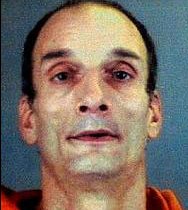
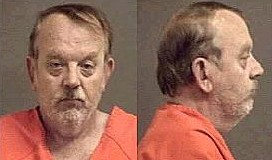
Robert Spahalski
Serial killer Glen Edward Rogers
Serial killer · USA · 1993
Glen Edward Rogers was a spree killer whose cross-country rampage in 1994-95 le…
70 victims
Glen Edward Rogers
Serial killer · USA · 1993
Glen Edward Rogers was a spree killer whose cross-country rampage in 1994-95 le…
70 victims
 Michael Swango
Serial killer · USA · 1981
Michael Swango (Joseph Michael Swango) was a physician and American serial kill…
60 victims
Michael Swango
Serial killer · USA · 1981
Michael Swango (Joseph Michael Swango) was a physician and American serial kill…
60 victims
 Efren Saldivar
Serial killer · USA · 1989
Efren Saldivar (born 30 September 1969) was an American serial killer who murde…
50 victims
Efren Saldivar
Serial killer · USA · 1989
Efren Saldivar (born 30 September 1969) was an American serial killer who murde…
50 victims
 Gary Ridgway
Serial killer · USA · 1982
Gary Leon Ridgway Ridgway was born 18-February-1949 in Salt Lake City, UT. He w…
49 victims
Gary Ridgway
Serial killer · USA · 1982
Gary Leon Ridgway Ridgway was born 18-February-1949 in Salt Lake City, UT. He w…
49 victims
 Charles Cullen
Serial killer · USA · 1984
Charles Cullen (born February 22, 1960) was a former nurse and the most prolifi…
45 victims
Charles Cullen
Serial killer · USA · 1984
Charles Cullen (born February 22, 1960) was a former nurse and the most prolifi…
45 victims
 David Wayne Stoker
Murderer · USA · 1986
David Wayne Stoker (born October 26, 1987 referenced in the record as “David St…
1 victim
David Wayne Stoker
Murderer · USA · 1986
David Wayne Stoker (born October 26, 1987 referenced in the record as “David St…
1 victim
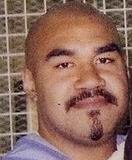 William Satele
Murderer · USA · 1998
William Satele was 20 years old. He was in jail for possession of an illegal as…
2 victims
William Satele
Murderer · USA · 1998
William Satele was 20 years old. He was in jail for possession of an illegal as…
2 victims
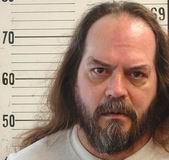 Billy Ray Irick
Murderer · USA · 1985
Billy Ray Irick was convicted for the 1985 rape and murder of 7-year-old Paula…
1 victim
Billy Ray Irick
Murderer · USA · 1985
Billy Ray Irick was convicted for the 1985 rape and murder of 7-year-old Paula…
1 victim
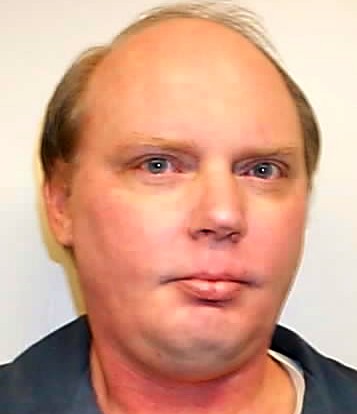 Dale Shackelford
Murderer · USA · 1999
Dale Carter Shackelford was convicted for the 1999 slayings of Donna Fontaine a…
2 victims
Dale Shackelford
Murderer · USA · 1999
Dale Carter Shackelford was convicted for the 1999 slayings of Donna Fontaine a…
2 victims
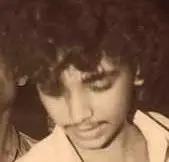 Sajal Barui
Homicide · India · 1993
Sajal Barui was a convicted criminal who was serving a life sentence in prison…
3 victims
Sajal Barui
Homicide · India · 1993
Sajal Barui was a convicted criminal who was serving a life sentence in prison…
3 victims
- Gender
- male
- Country
- USA
- Location
- Rochester, New York, USA
- Date of birth
- 1955
- Age at first offence
- 35
- Characteristics
- arguments
- Victim profile
- Moraine Armstrong, 24 / His girlfriend, Adrian Berger, 35 / Charles Grande, 40 / Vivian Irrizarry, 54
- Method of murder
- Ligature strangulation / Hitting with a hammer
- Date(s) of murder
- 1990 / 1991 / 2005
- Years active
- 1990–2005
- Date of arrest
- November 2005 (surrenders)
- Status
-
Imprisoned
Sentenced to 100 years in prison on December 13, 2006
Background
Robert Spahalski was sentenced to 100 years in prison on December 13, 2006.
Spahalski had a history of violent crimes. His twin brother had been imprisoned for murder in 1971. Spahalski was described as a cocaine addict his entire adult life and as suffering from “extreme emotional disturbance.” His attorney also said he was claustrophobic and suffered from post-traumatic stress disorder and that was why he heard voices and hallucinates.
Spahalski was 51 years old at the time he walked into police headquarters and made confessions last November. He had a girlfriend, Adrian Berger, 35. He also had an intimate relationship with Charles Grande. His “best friend” was Vivian Irizarry. His neighbor was Morraine Armstrong. Morraine Armstrong was 24.
Spahalski had an identical twin, Stephen Spahalski, who was 16 when he stabbed to death a store owner in Elmira in 1971. Stephen Spahalski served nearly eight years, was released, then was convicted within a year on charges of robbery and kidnapping, and was imprisoned again until a 1999 release. He was reincarcerated on a parole violation. Stephen Spahalski was associated with the Attica Correctional Facility and was scheduled for a review to determine whether he must take additional courses; he could be incarcerated until mid-2007 if he had to take the course.
Spahalski was born in Elmira. He moved to Rochester in the 1970s. He was imprisoned four times on felony burglary charges. He was imprisoned for robbery and kidnapping and served time on other burglary-related terms.
There was an account of Spahalski’s background involving employment. For one year in the 1980s, his salary was paid for with tax dollars as an employee of the city of Rochester. He had been hired by the city of Rochester on August 4, 1980. He worked as a mechanic’s helper and later a maintenance trainee at an operations building on Andrews Street and was under close supervision. He was fired after one year for not showing up for work. He was under arrest again and confessed to stealing a $15,000 coin collection. On the day he was fired in Rochester, Robert Spahalski already had a new home in Attica prison serving a 2-to-5 year sentence. After being released from Attica, he returned to Rochester, was sent back to prison for attempted burglary three years later, and it was after his parole on that crime that he allegedly committed at least two murders.
Spahalski was described as having lived a street life in Rochester and as operating a male escort service. People who knew him said he was known to use crack cocaine. He was described as having been enrolled in some sort of day treatment program. His landlord said his rent was paid by a nonprofit agency that provides treatment for drug addiction and mental health problems. One acquaintance said he told people he was HIV-positive.
The offence
Spahalski was linked to four killings over a 14-year period ending last fall. He was charged with killing four people in Rochester and Webster over that period.
Killing of Morraine Armstrong
Police said Spahalski strangled Morraine Armstrong, 24, on New Year’s Eve 1990. It was described as an unsolved murder until he later confessed. Armstrong’s aunt, Carrie Peterson, said: “This New Year's Eve it will be so much better because we won't have to wonder who killed her…we already know.” Armstrong’s sister, Melanie Armstrong, said she was happy that police had a suspect but also said: “I was pissed off that it took 15 years. He was able to live life all this time while my sister was dead.”
Police said Spahalski was angered when Armstrong demanded money for sex after he had shared $100 worth of cocaine with her. Spahalski said, “I choked her out,” when he was quoted as telling police.
In a separate description of the matter, Moraine Armstrong’s body was found dead with an electrical cord wrapped around her neck in her Lake Avenue apartment on December 31, 1990. At the time, Spahalski was living across the street. Police said they would not say exactly what connected him to Armstrong’s death other than a confession. The possible motive was unclear, but it was believed the two knew each other. Before she was killed, Moraine told her family that she was afraid, and her sister said she believed that came from the dark life she led and that Moraine wanted to get off drugs.
Killing of Adrian Berger
Police said Spahalski strangled his girlfriend Adrian Berger, 35, in her apartment in July 1991.
Killing of Charles Grande
Police said Spahalski beat to death Charles Grande, 40, with a hammer in his bedroom three months later after the Berger killing.
Police said Grande was shortchanged, and Spahalski said he had sex with Grande on three occasions in return for drug money and killed the landscape company owner in his bedroom when he shortchanged him. Hyland said Spahalski then stole about $1,000 in cash from Grande’s suburban home and fled in the victim’s car.
In a separate account of the confession, Spahalski confessed to killing Charles Grande, and he told police he beat Grande in the head with a hammer three or four times because Grande refused to pay him for sex. A court hearing in that case had been cancelled. Spahalski also expressed remorse in his statement while describing “past business.”
Killing of Vivian Irizarry
Spahalski strangled Vivian Irizarry, 54, on November 4, and police said he confessed to the killing days after. In the statement he made, Spahalski said he killed his “very good friend” Vivian Irizarry because he hallucinated that she was a demon while high on crack cocaine.
Police Sergeant Mark Mariano described finding the body unclothed, except for a sock. He said a cord or rope was wrapped tightly around her neck.
Spahalski said he and Irizarry were sharing $100 of crack at his home on November 4. He said, “She was cutting the bag open with a knife and all of the sudden I saw her as a demon. I freaked out.” He then described grabbing something from the kitchen and hitting her hard on the head three times. When he came down from his drug high, he said he saw her convulsing and suffering. He said he undressed the victim because during her convulsions she soiled herself and he wanted to wash her clothes. He said he lifted her body to the bed. He told police, “I couldn't bear to see her suffer,” and he told police, “I knew she was mortally wounded.” He said he then “choked her out” with a piece of twine. He said he left her body in the basement and went on a weekend-long crack binge. He said later he felt so bad he confessed to police.
Another description of his account said Vivian Irrizarry suddenly appeared to him as a “demon” when she was slicing open a bag of crack they planned on smoking. Police said he left Irizarry’s body in the basement for four days before coming forward.
Vivian Irizarry’s family members attended a hearing including her sister and son. Some sobbed quietly while the details were read.
Victims named and ages mentioned
- Morraine Armstrong, 24
- Adrian Berger, 35
- Charles Grande, 40
- Vivian Irizarry, 54
Investigation
Spahalski walked into police headquarters and confessed to multiple killings.
Police said that after he confessed to three murders, he was reluctant to admit to a fourth because he had it “fixed in his mind” that to do so might get him “labeled as a serial killer,” Hyland said. After urging him to heal her family’s heartache, police said Spahalski eventually confessed to strangling Moraine Armstrong, 24, on New Year’s Eve in 1990.
It was said he led police to the body of Vivian Irrizarry. Authorities said he also confessed to the 1991 Webster slaying of Charles Grande and to two other killings, though those two victims were not identified in one portion of the material.
Police described the statements as matching witnesses’ testimony and physical evidence, including some known only to investigators.
There were ongoing investigations into possible links to other unsolved homicides. The question of whether he was a serial killer was discussed with reference to legal definitions and thresholds. It was stated that New York had a legal definition requiring three or more victims, a very similar method of killing, and the crimes occurring within a specific time frame. Katherine Ramsland said a serial killer could be a person who had committed two murders but might have had the propensity to go on and commit more.
It was also stated that investigations were under way to determine whether he could be responsible for those and other unsolved homicides.
Known statements quoted in the investigation context
“I would like to say to the families I apologize, I'm very sorry.”
“I knew that coming forward is the best thing to do,”
“I settled all of my past business today and want to put it all behind me.”
Arrest and court proceedings
Spahalski pleaded not guilty to the 10-count indictment.
He was arraigned in Webster Court and Rochester Court on second-degree murder charges. He was being held without bond.
A judge postponed the murder trial of accused serial killer Robert Bruce Spahalski so his lawyer could decide whether to offer an insanity defense. Monroe County Court Judge Patricia D. Marks postponed the trial so defense lawyer Joseph S. Damelio could have Spahalski evaluated by mental health experts to determine whether Damelio would offer a defense that Spahalski should be found not guilty because of a mental disease or defect. Both sides were expected to return to court July 13 so Damelio could report on the progress of the evaluation. The judge told Damelio and First Assistant District Attorney Kenneth C. Hyland to prepare for a trial in August or September. Marks had two decisions pending in the case: whether incriminating statements Spahalski allegedly made could be used in his trial, and whether Spahalski should receive a separate trial for each homicide.
A judge ruled statements made by Robert Spahalski to Rochester police last year could be used against him. Prosecutors said Spahalski admitted to four killings dating back more than a decade when he turned himself in last November. The defense argued the police were under instructions from a 1991 letter sent by the public defender’s office not to question him about any homicides. The judge ruled there was no evidence the officers knew of the past letter.
A lawyer for accused serial killer Robert Spahalski asked a judge to throw out four murder confessions he allegedly gave to police. Rochester Police said Spahalski walked into their headquarters last fall and confessed to four killings dating back to 1990. Spahalski’s lawyer said police should not have questioned him because in 1991, another lawyer who represented him told police not to ask him about any homicides. Spahalski agreed to be questioned without a lawyer present. The judge reserved decision, and the trial was set for July 31.
Spahalski also sought the admissibility of confessions, and the two-day hearing wrapped up Tuesday with the judge reserving decision. He appeared in court in June 2006, and the Rochester Police Department sought to unseal 14-year-old court records that investigators said may relate to current charges against him. Prosecutors believed a 1992 acquittal on criminal impersonation charges related to one of the killings. Judge Patricia Marks reserved decision on unsealing the records.
Grand jury indictment
A grand jury indicted Robert Spahalski on five counts of murder involving four victims dating back 16 years. Spahalski pleaded not guilty to the 10-count indictment and appeared in court shackled until his attorney objected and the judge ordered the shackles removed. He remained in jail and no bail was set.
Evidence about confessions
It was said Spahalski was interrogated for 12 straight hours without access to medications he takes four times a day for mental health problems. His attorney added in disputing whether the confession was voluntary.
Trial
Spahalski’s trial lasted two weeks.
A jury took less than 2 1/2 hours to find Spahalski guilty of all charges: four counts of second-degree intentional murder plus an extra count of felony murder while committing a robbery.
Spahalski displayed no emotion but sipped water from a plastic cup and glanced briefly at the jury foreman as the verdict was being read.
At sentencing on Dec. 12, Spahalski could draw a maximum of 25 years to life in prison on each count. The judge sentenced him to 100 years in prison on December 13, 2006.
Prosecution statements and arguments
Prosecutor Ken Hyland said, “These were very violent crimes ... beating somebody to death with a hammer, strangling people with ropes and wires.”
Hyland also said, “I think Mr. Spahalski should never see the light of day again,” and said he would seek consecutive sentences on each count for a maximum of 125 years to life.
Prosecutor countered that the brutality of the crimes and Spahalski’s detailed description of how he committed them showed beyond doubt that he knew what he was doing.
In discussing the strangling of Vivian Irizarry, Hyland said:
“He said [the strangling] was to put her out of her misery, even taking it at face value that's still intentional murder. Whether that's actually his state of mind, we'll never know.”
Sentencing
Spahalski was sentenced to 100 years in prison.
The judge said the sentence of 100 years certainly amounted to a death sentence for anyone, but Spahalski also suffered from AIDS and other health problems and it was not likely he’d live a long life.
Spahalski’s attorney advised his client not to cooperate with the investigation that helps determine sentencing, which was described as a hint that he may appeal.
During sentencing, it was stated that some victim families had waited 15 years for justice.
Appeals
Spahalski’s attorney advised his client not to cooperate with the investigation that helps determine sentencing, which was described as a hint they may appeal.
Outcome
Spahalski was convicted of all charges after a jury took less than 2 1/2 hours to find him guilty of all charges: four counts of second-degree intentional murder plus an extra count of felony murder while committing a robbery.
He was sentenced to 100 years in prison on December 13, 2006.
Aftermath
Victims’ families spoke about the sentencing and the length of time taken to obtain justice.
Carrie Peterson said: “This New Year's Eve it will be so much better because we won't have to wonder who killed her…we already know.”
Rose Grande said:
“I still believe in non violence…in justice… no matter how long you have to wait.”
Moses Armstrong said:
“You lose your daughter, 24-years-old, and it’s very painful. But justice was served and hopefully he'll die in prison.”
In another family response, Damita Gibson’s mother said she was contacting police after recognizing Spahalski as a man who spent time with her daughter shortly before she disappeared.
In addition, Charles Grande’s sister Rose Van Dusen said: “I’m not surprised. We've known of him for 14 years, and I'm just not surprised.”
Other details
Spahalski’s identical twin was held at Attica and had a disciplinary record described as largely spotless in recent years, and maintained he could live successfully outside the walls if released.
There was an account of an attempted escape in 1978 at Auburn Correctional Facility in which it was unclear which brother tried to escape; prison officials could not figure out which one.
A corrections official showed Stephen Spahalski a newspaper article about Robert Spahalski’s confession, and Stephen said: “I thought I was the only murderer in the family,” and later said: “He'll never see the streets again. ... I assume he's gone forever, “ of his brother, who he called Bruce. Stephen also said: “Eventually, after he's pretty well done in the courts, I'll get in touch with him.”
In a description of Stephen Spahalski’s earlier case, Stephen said of Ripley: “I don't talk on it. If I kill someone, I kill them for a reason. That's all I know.” When pressed, Stephen said: “He's deceased, but I did business afterwards with him through a computer,” and: “His papers are in order with me. He don't owe me nothing. He's still going to try to get me, Ronald Ripley, but I already did business with him. “ and: “I'm real pissed with that man sometimes. He never saw me hit him from behind. ... He died. I made sure he died. But he never saw me kill him.”

Spotted an error, or have more information about this case?