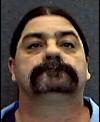
Jeffery Dana Sparks
Murderer Russell Ellwood
Murderer · USA · 1991
Russell Ellwood was a former taxi driver. Authorities suspected him of killing…
20 victims
Russell Ellwood
Murderer · USA · 1991
Russell Ellwood was a former taxi driver. Authorities suspected him of killing…
20 victims
 Robert Martines Perez
Murderer · USA · 1994
Name: Robert Martines Perez · Other name used in proceedings: Robert Martinez P…
15 victims
Robert Martines Perez
Murderer · USA · 1994
Name: Robert Martines Perez · Other name used in proceedings: Robert Martinez P…
15 victims
 Billy Frank Vickers
Murderer · USA · 1993
Billy Frank Vickers Vickers was executed by lethal injection in Texas on Januar…
14 victims
Billy Frank Vickers
Murderer · USA · 1993
Billy Frank Vickers Vickers was executed by lethal injection in Texas on Januar…
14 victims
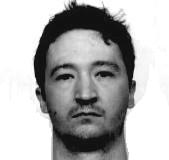 William Hamilton Little
Murderer · USA · 1983
December 3, 1983 — Michael John Rammel found the body of Marilyn Peter in her h…
1 victim
William Hamilton Little
Murderer · USA · 1983
December 3, 1983 — Michael John Rammel found the body of Marilyn Peter in her h…
1 victim
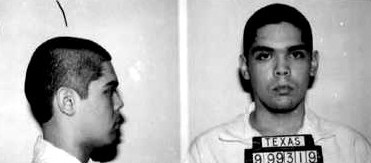 Richard Vasquez
Murderer · USA · 1998
Richard Vasquez was a Texas death row inmate. He stated: "Not Giving Up" My nam…
1 victim
Richard Vasquez
Murderer · USA · 1998
Richard Vasquez was a Texas death row inmate. He stated: "Not Giving Up" My nam…
1 victim
 Florence Bravo
Murderer? · United Kingdom · 1876
Florence Bravo was a Victorian heiress and young widow at 26. She met and marri…
1 victim
Florence Bravo
Murderer? · United Kingdom · 1876
Florence Bravo was a Victorian heiress and young widow at 26. She met and marri…
1 victim
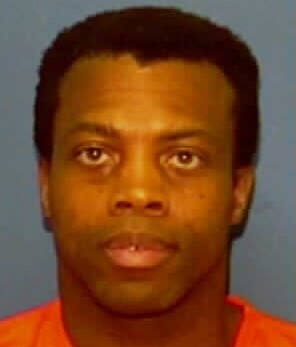 Pedro Medina
Murderer · USA · 1982
Pedro Medina was a Cuban refugee who was executed by electrocution in Florida o…
1 victim
Pedro Medina
Murderer · USA · 1982
Pedro Medina was a Cuban refugee who was executed by electrocution in Florida o…
1 victim
 Jackie Arklöv
Murderer · Sweden · 1999
Jackie Arklöv was sentenced to life imprisonment. Jackie Arklöv (born June 6, 1…
2 victims
Jackie Arklöv
Murderer · Sweden · 1999
Jackie Arklöv was sentenced to life imprisonment. Jackie Arklöv (born June 6, 1…
2 victims
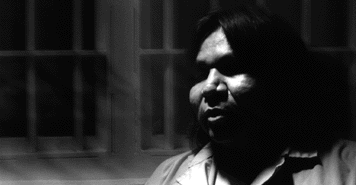 Vern Kills On Top
Murderer · USA · 1987
Vern Kills On Top was born in 1961. He was single and had no children. He was a…
1 victim
Vern Kills On Top
Murderer · USA · 1987
Vern Kills On Top was born in 1961. He was single and had no children. He was a…
1 victim
- Gender
- male
- Country
- USA
- Location
- Yamhill County, Oregon, USA
- Date of birth
- May 15, 1956
- Age at first offence
- 42
- Characteristics
- kidnapping, rape
- Victim profile
- Lacey Renee Robancho, 12
- Method of murder
- Strangulation
- Date(s) of murder
- April 20, 1998
- Years active
- 1998
- Date of arrest
- 2 days after
- Status
-
Sentenced to death
Sentenced to death on May 14, 1999
Case record: Jeffery Dana Sparks
Status
Jeffery Dana Sparks was sentenced to death on May 14, 1999.
Background
Jeffery Dana Sparks was 42 years old at the time of the offenses described in the case summary and appeal record.
Lacey Rene Robancho was the victim. She was 12 years old when she disappeared and was later found dead.
The offence
On April 20, 1998, the victim left her home on her bicycle. After speaking with her mother, she returned home briefly and then left again to retrieve her bicycle, which had a flat tire.
At about 6:00 p.m., the victim’s mother and her friend Blake saw the victim with some friends near the local post office. Defendant was also present.
At about 8:30 p.m., the victim’s grandmother saw the victim walking her bicycle with a man with long dark hair similar to defendant’s hair.
That night, defendant and the victim entered the trailer where Keith and defendant lived. Defendant took the victim into the back bedroom and told Keith that he was “not home.” An hour later, defendant came out of the bedroom and told Keith to go buy him condoms and a douche. Keith also heard what sounded like sexual sounds coming from the back bedroom.
At some point that night, Keith saw the victim come out of the bedroom and go into the bathroom. Defendant followed her into the bathroom, and Keith heard water running.
At about 12:30 a.m., defendant told Keith that he was taking the victim home, and left with her. Defendant returned alone about an hour later and seemed agitated. Defendant left again at 3:00 a.m. and returned at 6:00 a.m.
Rodriguez, an acquaintance of defendant, saw defendant at approximately 4:00 a.m. walking from the park or the railroad tracks. Defendant was wearing a black trenchcoat and a black stocking hat. When Rodriguez saw defendant again at 5:30 a.m., defendant was not wearing the coat or hat and appeared nervous and sweating. The victim did not return home.
During the investigation, Sparks told detectives that he invited the girl back to his trailer and fondled her in his bedroom, but he said they later went separate ways.
Police found the partially nude body of the victim near a railroad trestle at the edge of town on the morning of April 21, 1998, while an engineer was operating a train and observed what appeared to be a sleeping transient on the side of the railroad embankment. The engineer called his dispatcher, who then notified the Yamhill County Sheriff’s Office.
Someone had strangled the victim both manually and by ligature. There was a small bruise to the entrance of her vagina consistent with sexual assault. An autopsy showed the victim had been strangled.
Swabs of the victim’s body were negative for the presence of semen and defendant’s DNA. However, police found a Band-Aid near the victim’s body that contained DNA that was consistent with defendant’s DNA and could not have come from the victim.
The state charged defendant with 15 counts of aggravated murder, one count of first-degree sexual abuse, one count of first-degree kidnaping, one count of second-degree kidnaping, one count of first-degree attempted rape, and one count of second-degree attempted rape.
The indictment counts included the following underlying-crime bases described in the appeal:
- Counts 2, 6, and 11 were based on the underlying crime of first-degree sexual abuse.
- Counts 3, 7, and 12 were based on the underlying crime of first-degree kidnaping.
- Counts 4, 8, and 13 were based on the underlying crime of second-degree kidnaping.
- Counts 5, 9, and 14 were based on the underlying crime of first-degree attempted rape.
- Counts 10 and 15 were based on the underlying crime of second-degree attempted rape.
The jury found defendant guilty of all 20 counts in the indictment.
Investigation
During the investigation, sheriff’s deputies discovered the victim’s body the next morning after she disappeared.
On the morning of April 21, defendant told Keith to clean the trailer because the police would be searching it. Keith burned drug paraphernalia behind the trailer. Defendant also may have burned some items.
Defendant told Keith not to tell the police that he had left at 3:00 a.m. After the police interviewed Keith on April 22, defendant tried to convince Keith that the victim had not been at the trailer and threatened to kill Keith if he caused any problems.
On April 21, detectives Runyon and Crabtree interviewed defendant. Defendant had a fresh scratch on the right side of his face, fresh scratches on his arm, and bruising around his biceps. During the interview, defendant repeatedly changed his story.
After initially denying that he knew the victim or had had any contact with her, defendant admitted to meeting her once on April 20 in front of the market.
Runyon, Crabtree, and Detective Ludwig interviewed defendant a second time on April 23. They confronted defendant with the information that Keith had provided. Defendant admitted that he was with the victim in his bedroom and had fondled her buttocks, breasts, and vagina, but defendant denied having sex with her.
Arrest
Sheriff’s deputies arrested defendant 2 days after the victim disappeared.
Trial
Charges
The state charged defendant with:
- 15 counts of aggravated murder (ORS 163.095)
- 1 count of first-degree sexual abuse (ORS 163.427)
- 1 count of first-degree kidnaping (ORS 163.235)
- 1 count of second-degree kidnaping (ORS 163.225)
- 1 count of first-degree attempted rape (ORS 163.375 and ORS 161.405)
- 1 count of second-degree attempted rape (ORS 163.365 and ORS 161.405)
Jury verdict
Pretrial issues
Defendant sought to move the trial to another county, arguing prejudicial pretrial publicity made it impossible for him to receive a fair trial in Yamhill County. In support, defendant submitted copies of four newspaper articles and an opinion poll of 250 Yamhill County residents taken within one month of the victim’s murder.
The poll purported to show that 75 percent of residents recalled hearing about a case in which the authorities had accused defendant of raping and murdering a 12-year-old girl. Of those residents, 51 percent had an opinion that defendant was guilty, and 54 percent had an opinion that, if defendant was found guilty after a fair trial, he should receive the death penalty.
The trial court denied defendant’s motion. The trial court determined that the views shown by the poll, though somewhat useful, were “given in response to fairly general questions and do not appear to the [c]ourt to be so fixed as to foreclose a fair consideration of all the evidence in the case.”
The trial court concluded that the jury selection process would provide a sufficient safeguard for a fair and impartial jury. Defendant did not renew his motion for change of venue.
Defendant also sought to exclude post-mortem photographs of the victim and portions of the videotape of the crime scene depicting the victim’s body. The trial court denied defendant’s supplementary motion in limine.
Evidence admissions and instructions
The trial court allowed the photographs of the victim’s body and the video of the crime scene.
Defendant challenged the trial court’s instructions regarding jury unanimity on the aggravated murder counts. Defendant argued that the jury should have been instructed to agree unanimously on the same incident of the underlying crime (first-degree sexual abuse, kidnaping in two degrees, attempted rape in two degrees) for each aggravated murder count.
Defendant acknowledged he did not object at trial to the jury instructions in that regard.
Prosecutor’s closing argument (penalty phase)
In the penalty phase, defendant challenged remarks made by the prosecutor during closing arguments, including the following:
[PROSECUTOR]: *** “Is it more likely than not Defendant will commit criminal acts of violence that will constitute a continuing threat to society?
What is society, Ladies and Gentlemen? What did the legislature mean when they wrote that word into the statute? Did they mean [a] group of people that have been exiled from the community to prison?
Or did they mean the place where you and I live, where a system of community of life which individuals form a continuous and regulatory association for their mutual benefit and protection. Webster indicates this is a voluntary association of people. Prison is not a voluntary association of people.
[DEFENSE COUNSEL]: Objection. Webster is not in evidence.
THE COURT: Overruled.
[PROSECUTOR]: Community or nation or broad grouping of people having traditions, institutions and collective activities or interest.
That is not a prison. What the normal ordinary common meaning of that word is that community in which we live in, does the Defendant justify in receiving the death penalty because he is a continuing threat to live anyplace where people congregate.
Words have their ordinary and common meaning. The question to be addressed is [defendant] a danger to this community out here? And that is the issue that the state must prove beyond a reasonable doubt, is he a danger to the areas where we live?
So, I am going to argue in the alternative maybe one of you is thinking it might be okay to leave him in prison. Maybe that would be a sufficient society. That is not what the legislature intended, but maybe you are thinking that.”
Defense counsel objected on the basis that “Webster is not in evidence,” and the court overruled the objection.
Sentencing
Aggravated murder sentencing proceeding
In a separate sentencing proceeding on the counts of aggravated murder, the jury determined that:
- defendant had acted deliberately,
- defendant posed a continuing risk to society,
- defendant should receive a death sentence.
The trial court then entered a sentence of death.
Victim impact evidence
Before the penalty phase began, defendant moved to exclude witnesses who were not family members of the victim but who defendant expected would testify as to the personal characteristics of the victim.
The trial court ruled that evidence of the victim’s personal characteristics was admissible regardless of whether defendant attacked the victim’s character and stated that the statute did not prohibit the state “from introducing appropriate character evidence regarding the victim from third persons who are not members of the victim's family [or] otherwise legally defined as a victim.”
The trial court denied defendant’s motion for mistrial made on the same grounds.
Future dangerousness evidence
Defendant objected to admission of photographs of display boards of knives, drug paraphernalia, and tattoo guns that corrections officers had confiscated from inmates at the Oregon State Penitentiary.
The trial court denied the motion after reviewing the photographs and stating:
“I think, generally speaking, the availability of an opportunity to make a weapon in prison is all we are talking about here.
Obviously, you will be able to argue whether or not [defendant] is so inclined, but I think probably the State, well, the general perception of the public is that people in prison don't have access to weapons and consequently they can't be dangerous.
And I think the State is entitled to offer evidence to suggest if they are creative and decide they want to make a weapon, they can. Now, whether or not [defendant] will be one of those people will be something the jury will have to decide. Your motion on those photo[s] is denied.”
Defendant renewed his objection and moved for mistrial before testimony by the state’s witness, Detective Hepler. The trial court overruled the objections and denied the motion.
Hepler testified about prisoners’ use of weapons, prison gangs, and the “inmate code.” Defendant objected to Hepler’s testimony about gang violence and the inmate code, arguing relevance to future dangerousness. The trial court overruled the objections.
Number of death sentences issue
Defendant argued that the trial court improperly entered more than one sentence of death because the judgment of conviction stated that defendant “is sentenced to death on all fifteen counts [of aggravated murder] as provided in ORS 163.150(1)(f).”
The state responded that the trial court only sentenced him to a single sentence of death, and that the phrase “on all fifteen counts” indicated only the reason for the sentence.
Appeals
The case was before the Supreme Court of the State of Oregon on automatic and direct review of defendant’s judgment of conviction and sentence of death imposed by the Yamhill County Circuit Court.
The appeal materials included:
- “FILED: January 23, 2004 IN THE SUPREME COURT OF THE STATE OF OREGON”
- “STATE OF OREGON, Respondent, v. JEFFERY DANA SPARKS, Appellant. (CR98326; SC S46773) En Banc”
- “John W. Hitchcock, Judge.”
- “Argued and submitted September 8, 2003.”
The Supreme Court stated:
- “The judgment of conviction and sentence of death are affirmed.”
The Supreme Court analyzed defendant’s arguments in categories: pretrial issues, guilt-phase issues, and penalty-phase issues, and ultimately concluded that none of the assignments of error was well taken.
Venue
The Supreme Court reviewed and rejected defendant’s argument that denial of a change of venue was an abuse of discretion.
Photographs
The Supreme Court concluded that the trial court did not abuse its discretion in admitting the photographs and video of the victim’s body.
Jury unanimity on aggravated murder counts
The Supreme Court addressed defendant’s claim of jury unanimity error on the aggravated murder counts and concluded that the alleged legal point was not “error apparent on the face of the record,” so it did not address whether the trial court erred in the manner contended by defendant.
Victim impact evidence
The Supreme Court concluded that ORS 163.150(1)(a) did not limit the witnesses who may present victim impact evidence so long as the evidence pertains to “the personal characteristics of the victim or the impact of the crime on the victim's family,” and affirmed admission of victim impact evidence from non family members.
Future dangerousness evidence
The Supreme Court concluded that evidence about the prison’s violent environment, including photographs of confiscated items and testimony about prison gangs and the “inmate code,” was relevant to the statutory question whether there was a probability the defendant would commit criminal acts of violence constituting a continuing threat to society, including prison society.
Prosecutor’s closing argument
The Supreme Court reviewed defendant’s claim that the prosecutor misstated the law regarding what constitutes “society,” acknowledged the state’s concession that the prosecutor misstated the law, and concluded the prosecutor’s argument was not so prejudicial that the failure to give a curative instruction or grant a mistrial sua sponte denied defendant a fair trial.
Judgment of conviction entry language
The Supreme Court addressed defendant’s argument that the judgment improperly imposed multiple sentences of death and concluded remand for a corrected judgment was not necessary because the judgment did not purport to impose multiple sentences of death and could be read to conform with the law.
Outcome
The Supreme Court affirmed the judgment of conviction and the sentence of death.
DURHAM, J. “The judgment of conviction and sentence of death are affirmed.”
DURHAM, J. “The judgment of conviction and the sentence of death are affirmed.”
Spotted an error, or have more information about this case?