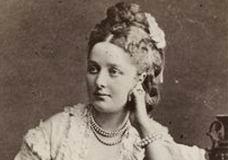
Florence Bravo
Murderer?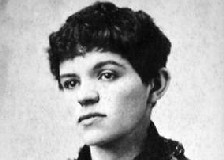 Adelaide Bartlett
Murderer? · United Kingdom · 1886
Adelaide Bartlett was tried for the murder of her husband, Thomas Edwin Bartlet…
1 victim
Adelaide Bartlett
Murderer? · United Kingdom · 1886
Adelaide Bartlett was tried for the murder of her husband, Thomas Edwin Bartlet…
1 victim
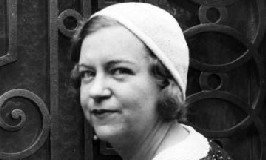 Elvira Barney
Murderer? · United Kingdom · 1932
Elvira Barney Elvira Barney was found not guilty on July 5, 1932. Michael Scott…
1 victim
Elvira Barney
Murderer? · United Kingdom · 1932
Elvira Barney Elvira Barney was found not guilty on July 5, 1932. Michael Scott…
1 victim
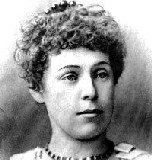 Florence Maybrick
Murderer? · United Kingdom · 1899
Florence Elizabeth Maybrick (Florence Maybrick) was an American woman convicted…
1 victim
Florence Maybrick
Murderer? · United Kingdom · 1899
Florence Elizabeth Maybrick (Florence Maybrick) was an American woman convicted…
1 victim
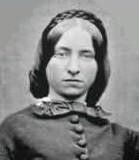 Madeleine Smith
Murderer? · United Kingdom · 1857
Madeleine Smith received a verdict of "not proven" on July 9, 1857. She died on…
1 victim
Madeleine Smith
Murderer? · United Kingdom · 1857
Madeleine Smith received a verdict of "not proven" on July 9, 1857. She died on…
1 victim
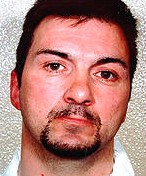 Barry George
Murderer? · United Kingdom · 1999
Barry George was also known as Barry Bulsara. He was born on 15 April 1960 in H…
1 victim
Barry George
Murderer? · United Kingdom · 1999
Barry George was also known as Barry Bulsara. He was born on 15 April 1960 in H…
1 victim
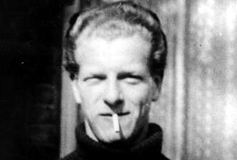 Derek Bentley
Murderer? · United Kingdom · 1952
Derek William Bentley (30 June 1933 – 28 January 1953) was a British teenager h…
1 victim
Derek Bentley
Murderer? · United Kingdom · 1952
Derek William Bentley (30 June 1933 – 28 January 1953) was a British teenager h…
1 victim
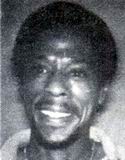 John Parish
Mass murderer · USA · 1982
John Parish (July 4, 1933 – August 9, 1982) was an American mass murderer. He s…
6 victims
John Parish
Mass murderer · USA · 1982
John Parish (July 4, 1933 – August 9, 1982) was an American mass murderer. He s…
6 victims
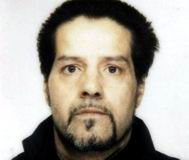 Bartolomeo Gagliano
Serial killer · Italy · 1981
Bartolomeo Gagliano was mentally ill and was serving time for multiple murders…
3 victims
Bartolomeo Gagliano
Serial killer · Italy · 1981
Bartolomeo Gagliano was mentally ill and was serving time for multiple murders…
3 victims
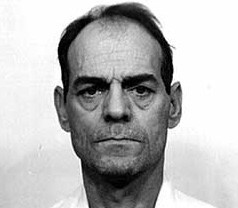 Johnny Meadows
Serial killer? · USA · 1968
Johnny J. E. Meadows was a convicted murderer. A later appellate decision descr…
4 victims
Johnny Meadows
Serial killer? · USA · 1968
Johnny J. E. Meadows was a convicted murderer. A later appellate decision descr…
4 victims
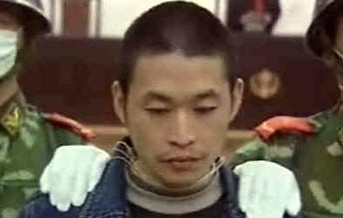 Dong Wenyu
Serial killer · China · 2006
Dong Wenyu Dong Wenyu was sentenced to death in June 2007 and was executed on N…
6 victims
Dong Wenyu
Serial killer · China · 2006
Dong Wenyu Dong Wenyu was sentenced to death in June 2007 and was executed on N…
6 victims
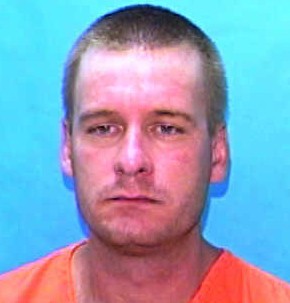 Michael Duane Zack
Murderer · USA
Michael Duane Zack was convicted and sentenced to death for the 06/13/96 murder…
1996 victims
Michael Duane Zack
Murderer · USA
Michael Duane Zack was convicted and sentenced to death for the 06/13/96 murder…
1996 victims
 Stanley Dean Baker
Murderer · USA · 1970
Stanley Dean Baker was a hitchhiker arrested in California and later convicted…
2 victims
Stanley Dean Baker
Murderer · USA · 1970
Stanley Dean Baker was a hitchhiker arrested in California and later convicted…
2 victims
- Gender
- female
- Country
- United Kingdom
- Location
- Balham, London, England, United Kingdom
- Date of birth
- 1850
- Age at first offence
- 26
- Characteristics
- alcohol, domestic violence, history of mental illness, rape
- Victim profile
- Charles Delauny Turner Bravo, 32
- Method of murder
- Poisoning (antimony)
- Date(s) of murder
- April 21, 1876
- Years active
- 1876
- Date of arrest
- —
- Status
-
At large
Unsolved; Florence Bravo died two years later, on September 17, 1878, from alcohol poisoning due to her chronic drinking
Background
Florence Bravo was a Victorian heiress and young widow at 26. She met and married Charles Delauney Turner Bravo, a barrister born in 1845, who was just 30 years old. They lived together at The Priory, a landmark house in Balham, London.
Florence previously had a first husband, Alexander Louis Ricardo. She married Alexander in 1864. She was separated from him because of his affairs and violent alcoholism. Alexander Ricardo died in 1871 in a hotel room in Cologne from drink. Florence inherited his estate.
Florence later had an extramarital affair with the much older Dr James Manby Gully, a fashionable society doctor who was also married at the time. Their relationship led to her becoming pregnant. The relationship faced complications when Florence and Gully attempted birth control and it failed. Dr Gully performed an abortion for Florence, after which Florence suffered severe complications and nearly died. Afterward, their relationship changed and became platonic, though Dr Gully remained in love with Florence.
Florence married Charles Bravo in December 1875. Charles Bravo took the surname Bravo from his stepfather Joseph Bravo. Police enquiries in the case revealed Charles's behaviour towards Florence as controlling, mean, violent, and a bully. The marriage was stormy. Florence had opted to keep her own money, supported by the Married Women's Property Act 1870, and this led to tensions within the marriage. Charles insisted Florence bear him a child regardless of consequences to her health.
The offence
Charles Bravo was fatally poisoned at The Priory in Balham in April 1876. The poison was determined to be antimony, specifically tarter emetic (antimony potassium tartrate).
At the time of his illness and death, multiple explanations were considered, including suicide, murder by the housekeeper Mrs Cox, murder by Florence, and murder by a disaffected groom discharged from employment at The Priory. No-one was ever charged.
A hypothesis about the poisoning was that Charles Bravo slowly poisoned Florence with small cumulative doses of antimony in the form of tartar emetic, which was described as explaining her chronic illness since shortly after their marriage. That hypothesis also suggested that Charles Bravo wanted to control her fortune from the start. Another theory described in the narrative was that Charles Bravo accidentally swallowed laudanum for toothache and toothache-related pain and then took tartar emetic, mistakenly believing it was the true emetic that would induce vomiting.
Investigation
Doctors attended Charles Bravo’s bedside, including Royal physician Sir William Gull. They all agreed that it was a case of antimony poisoning. Charles took three days to die and gave no indication of the source of the poison during that time.
During the hospital period, Charles Bravo told doctors he had taken laudanum for neuralgia and a tooth ache and might have accidentally swallowed some. Florence called in Sir William Gull. Police enquiries were ill-equipped to deal with a crime of this nature and took eight days after Charles’s death to question Florence and Mrs Cox.
A first inquest was held on April 25, 1876 at The Priory. The coroner was described as an acquaintance of Florence’s family and convinced Charles had committed suicide, taking care to keep any scandal to a minimum. The proceedings were kept private and Florence was never called to testify.
At the first inquest:
- Two of the five doctors present testified that when confronted with poisoning, Charles stated he had rubbed laudanum on his gums for a toothache and might have accidentally swallowed some.
- The doctors testified that Mrs Cox made known to them that Charles had admitted: "I've taken some of that poison, but don't tell Florence."
- The jury returned an open verdict: "the deceased died from the effects of poison - antimony - but we have not sufficient evidence under what circumstances it came into his body."
After public revelation of further facts and the open verdict, dissatisfaction and a demand for a deeper second inquiry led to legal steps:
- The Attorney General made application to the Court of Queen's Bench and was granted a rule squashing the first inquiry and ordering a new inquest.
A second inquest was held at the Bedford Hotel in Balham on July 11. Both Jane Cox and Florence testified that Charles Bravo was mean-spirited and deeply disturbed. Their testimony described him as verbally abusive and striking Florence once, and extremely jealous of her former relationship with Dr Gully.
Specific quoted statements included:
- "We find that Mr. Charles Delauney Turner Bravo did not commit sucide; that he did not meet his death by misadventure; that he was willfully murdered by the administration of tartar emetic; but there is not sufficient evidence to fix the guilt upon any person or persons."
Arrest
No arrest was made and no person was ever charged.
Trial
No criminal trial was described. Instead, there were two inquests. The second inquest concluded with a verdict of willful murder, while finding insufficient evidence to fix guilt on any person or persons.
Sentencing
No sentence was imposed because no-one was charged.
Appeals
No appeal history was described.
Outcome
The case remained unresolved. The first inquest returned an open verdict. The second inquest returned a verdict of wilful murder, but nobody was ever arrested or charged.
Aftermath
After the second inquest ended, the household broke up. Florence Bravo moved away and was described as twice widowed.
Florence died two years later, on September 17, 1878, from alcohol poisoning due to her chronic drinking. She was said to have been 28 in one account and 33 in another account.
Dr James Manby Gully suffered complete ruin to his social and professional reputation and died in 1883.
Mrs Cox returned to Jamaica with her sons, received a substantial inheritance from her husband's aunt, later returned to England, and died in 1913.
Two inquests were held, and women and children were banned from the room while Florence testified. The searching cross-examination launched the career of the lawyer George Henry Lewis.
A novel and later film, So Evil My Love by "Joseph Shearing" (pseudonym of Marjorie Bowen), were described as having elements of the Bravo poisoning in the plot. The novel Below Suspicion by John Dickson Carr was also described as having elements of the Bravo case in the first murder.
Other details
Charles Bravo was described as cruel and vindictive and as being accused of marrying Florence for her money. It was described that he forced Florence into degrading sexual acts and was verbally and at times physically abusive.
Florence and her female companion Mrs Jane Cannon Cox were described as being acquitted due to insufficient evidence in one account.
Spotted an error, or have more information about this case?