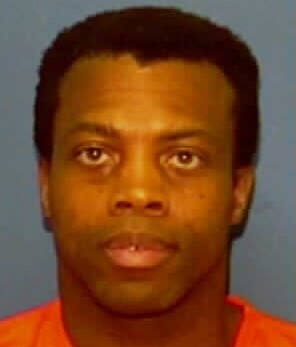
Pedro Medina
Murderer Ervil LeBaron
Murderer · USA · 1972
Ervil Morrell LeBaron (1925 to August 16, 1981) was the leader of a polygamous…
35 victims
Ervil LeBaron
Murderer · USA · 1972
Ervil Morrell LeBaron (1925 to August 16, 1981) was the leader of a polygamous…
35 victims
 Brian Kevin Rosenfeld
Murderer · USA · 1985
Brian Kevin Rosenfeld Brian Kevin Rosenfeld was sentenced to three concurrent l…
23 victims
Brian Kevin Rosenfeld
Murderer · USA · 1985
Brian Kevin Rosenfeld Brian Kevin Rosenfeld was sentenced to three concurrent l…
23 victims
 Marvin Gray
Murderer · USA · 1975
Marvin Gray was convicted killer who claimed responsibility for 23 slayings and…
23 victims
Marvin Gray
Murderer · USA · 1975
Marvin Gray was convicted killer who claimed responsibility for 23 slayings and…
23 victims
 Yahweh ben Yahweh
Murderer · USA · 1980
Yahweh ben Yahweh was born and legally named Hulon Mitchell Jr. (October 27, 19…
23 victims
Yahweh ben Yahweh
Murderer · USA · 1980
Yahweh ben Yahweh was born and legally named Hulon Mitchell Jr. (October 27, 19…
23 victims
 Russell Ellwood
Murderer · USA · 1991
Russell Ellwood was a former taxi driver. Authorities suspected him of killing…
20 victims
Russell Ellwood
Murderer · USA · 1991
Russell Ellwood was a former taxi driver. Authorities suspected him of killing…
20 victims
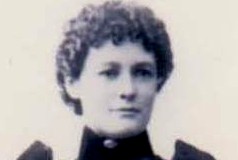 Martha Needle
Serial killer · Australia · 1885
Martha Needle was executed by hanging at the Old Melbourne Gaol on October 22,…
5 victims
Martha Needle
Serial killer · Australia · 1885
Martha Needle was executed by hanging at the Old Melbourne Gaol on October 22,…
5 victims
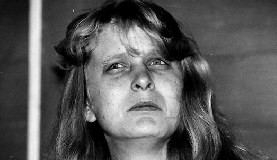 Gunn-Britt Ashfield
Murderer · Australia · 1993
Gunn-Britt Ashfield was the mother of six-year-old John Ashfield. In 2011 she w…
1 victim
Gunn-Britt Ashfield
Murderer · Australia · 1993
Gunn-Britt Ashfield was the mother of six-year-old John Ashfield. In 2011 she w…
1 victim
 Jose Alfredo Rivera
Murderer · USA · 1993
Jose Alfredo Rivera was sentenced to death on June 2, 1994. His direct appeal r…
1 victim
Jose Alfredo Rivera
Murderer · USA · 1993
Jose Alfredo Rivera was sentenced to death on June 2, 1994. His direct appeal r…
1 victim
 Claude Bloodgood
Murderer · USA · 1969
Claude Frizzel Bloodgood (born Klaus Frizzel Bluttgutt III; July 14, 1937 – Aug…
1 victim
Claude Bloodgood
Murderer · USA · 1969
Claude Frizzel Bloodgood (born Klaus Frizzel Bluttgutt III; July 14, 1937 – Aug…
1 victim
 Tommy David Strickler
Murderer · USA · 1989
Tommy David Strickler was executed by lethal injection in Virginia on July 21,…
1 victim
Tommy David Strickler
Murderer · USA · 1989
Tommy David Strickler was executed by lethal injection in Virginia on July 21,…
1 victim
 Eric John King
Murderer · USA · 1989
Eric John King was convicted of two first-degree murder counts and armed robber…
2 victims
Eric John King
Murderer · USA · 1989
Eric John King was convicted of two first-degree murder counts and armed robber…
2 victims
- Gender
- male
- Country
- USA
- Location
- Orange County, Florida, USA
- Date of birth
- October 5, 1957
- Age at first offence
- 25
- Characteristics
- mentally ill, drug addict
- Victim profile
- Dorothy James, 52 (his neighbor)
- Method of murder
- St abbing with knife
- Date(s) of murder
- April 4, 1982
- Years active
- 1982
- Date of arrest
- 4 days after
- Status
-
Executed
Executed by electrocution on March 25, 1997 in Florida
Case overview
Pedro Medina was a Cuban refugee who was executed by electrocution in Florida on March 25, 1997.
He was convicted of first-degree murder in a case arising from the 1982 stabbing murder of a former teacher, Dorothy James, 52, in Orlando. Medina was sentenced to death for the murder conviction and served the sentence on Death Row at Florida State Prison near the town of Starke.
During Medina’s execution, flames burst from behind the mask over his face, delaying Florida executions for almost a year. Medina’s last words before being executed were “I am still innocent”.
Timeline
- 1980 — Medina came to the United States from Cuba as part of the Mariel boatlift when he was nineteen years old; he was released from a Cuban mental hospital immediately before leaving Cuba.
- Late 1981 — Medina moved to Tampa.
- April 4, 1982 — Dorothy James was found dead in her Orlando home; she had been gagged, stabbed multiple times, and left to die.
- April 8, 1982 — Early in the morning, Medina was found asleep in James’ automobile at a rest stop on I-10 near Lake City and was arrested for theft of the automobile.
- April 9, 1982 — Medina was interviewed at the Lake City jail by Detective Daniel Nazarchuk; the interview included an initial unrecorded portion and a subsequent recorded portion.
- March 15-18, 1983 — Medina was tried before a jury; he was convicted of first-degree murder and auto theft.
- March 25, 1997 — Pedro Medina was executed by electrocution in Florida.
- 1999 — The state of Florida heard a petition involving arguments that the electric chair was a cruel and unusual punishment; Glen Dickson, Medina’s pastor, testified about flames and odors during the execution.
Background
Pedro Medina was nineteen when he came to the United States from Cuba in 1980 as part of the Mariel boatlift. He had been released from a Cuban mental hospital immediately before leaving Cuba.
Medina lived in the Orlando area and was befriended by Dorothy James.
In late 1981, Medina moved to Tampa.
The offence
Dorothy James was found dead in her Orlando home on April 4, 1982. She had been gagged, stabbed multiple times, and left to die.
Early in the morning of April 8, 1982, Medina was found asleep in James’ automobile at a rest stop on I-10 near Lake City and was arrested for theft of the automobile.
Detective Daniel Nazarchuk, a detective investigating the murder of James, interviewed Medina in the Lake City jail about the automobile and the murder.
Medina was arrested and indicted for the murder of James.
Investigation and arrest
On April 8, 1982, Medina was found asleep in James’ automobile at a rest stop on I-10 near Lake City and was arrested for theft of the automobile.
The next day, Detective Daniel Nazarchuk interviewed Medina in the Lake City jail about the automobile and the murder.
Detective Diane Payne, also from Orange County, was with Nazarchuk but did not actively participate in the interview.
Interview evidence and invocation of the right to remain silent
Procedural history around the statement
Medina alleged that the statement given to Nazarchuk on April 9, 1982 should not have been admitted at trial because Nazarchuk violated Medina’s constitutional right to remain silent after Medina indicated he did not wish to talk. Medina also alleged that any error was not harmless even though the statement was exculpatory because the state offered no direct evidence of his guilt and “distracted attention from the lack of direct evidence by suggesting that Mr. Medina’s statements were 'incredible.' ”
The state responded that Medina’s invocation of the right to remain silent was ambiguous and that it was reasonable for Nazarchuk to seek to clarify Medina’s response. The state also responded that admission of the statement, if error, was harmless because the statement was exculpatory, because Medina testified at trial, and because Medina was not put on the witness stand merely to counteract the April 9 statement but to explain “just why he was found in the victim's car with a knife that could have killed her.”
Legal standard quoted in the decision
The appellate decision set out the Miranda framework and quoted from Miranda v. Arizona and other cases. It included:
“If, during custodial interrogation, a suspect ‘indicates in any manner, at any time prior to or during questioning, that he wishes to remain silent, the interrogation must cease.’ Miranda v. Arizona, 384 U.S. 436, 473-74, 86 S.Ct. 1602, 1627, 16 L.Ed.2d 694 (1966).”
It also quoted:
“The requirement that law enforcement authorities must respect a person's exercise of that option counteracts the coercive pressures of the custodial setting.... [T]he admissibility of statements obtained after the person in custody has decided to remain silent depends under Miranda on whether his ‘right to cut off questioning’ was ‘scrupulously honored.’ Michigan v. Mosley, 423 U.S. 96, 103-04, 96 S.Ct. 321, 326, 46 L.Ed.2d 313 (1975).”
The decision further noted:
“Law enforcement officers are not required to terminate an interrogation unless the invocation of the right to remain silent is unambiguous. Davis v. United States, --- U.S. ----, ----, 114 S.Ct. 2350, 2355, 129 L.Ed.2d 362 (1994).”
Facts of the April 9, 1982 interview
On April 9, 1982, Medina was interviewed at the Lake City jail by Detective Daniel Nazarchuk. The interview consisted of two parts: an initial unrecorded interview lasting approximately thirty to forty-five minutes, and a subsequent recorded interview lasting approximately one hour. The recorded interview followed immediately after the unrecorded interview, with no break.
During the preliminary interview, Nazarchuk explained why they had come to Lake City, told Medina that Medina was in jail because he had been found in James’ car which had been stolen, and advised Medina that James “was deceased as a result of a homicide.” Medina was advised of his rights by reading a standard Miranda card.
Medina indicated that he understood his rights and was willing to talk with the detectives. Medina talked freely with the detectives, denying any knowledge about the death of James and denying that he had stolen the car.
After the preliminary conversation, Nazarchuk started a tape recorder. Nazarchuk asked whether it was all right to have the tape recorder on, stated that they were police officers investigating the James case, and again advised Medina of his rights by reading them from the Miranda card.
When Nazarchuk asked whether Medina wanted to talk to the detectives, Medina responded in the negative. Nazarchuk immediately asked a clarifying question: “You don't want to talk to us or you do want to talk to us?” Medina then indicated that he wanted to continue the interview.
Evidence about what Medina said during recorded questioning
During the recorded interview, the transcript indicated that Medina replied “No” when asked if he wanted to talk to the detectives at that time and that the transcript used “No” to indicate Medina’s response to multiple questions, including those about consulting or talking to an attorney and whether he had been threatened or coerced.
The appellate decision stated that when the appellate court listened to the tape, the reply was not exactly the clear “No” or clear “Nah” described for the earlier questions. The decision held that, although the transcript did not exactly reflect what was heard, there was sufficient evidence to conclude that none of the questions was answered in the affirmative.
Verbatim exchange from the record
The appellate decision reproduced the following exchange from the recorded interview:
“DETECTIVE NAZARCHUK: ... Okay, Pedro, right now there's a tape recorder going. Is it okay to have the tape recorder going? PEDRO MEDINA: (No audible response). DET. NAZARCHUK: Would you just say yes or no, 'cause the.... P. MEDINA: Yes. DET. NAZARCHUK: Yes, okay. But before--before we say anything again, like I explained to you before, okay, we're police officers. We're investigating this case and I have to read these rights to you, okay. One, you have the right to remain silent. .... Five, do you desire to consult with or talk to an attorney first, or to have one during this interview? I need an answer of yes or no. P. MEDINA: No. DET. NAZARCHUK: Okay. If, at any time hereafter, you wish to remain silent and have an attorney present, all questioning will be stopped. Now, has anyone, at any time, threatened you, coerced you or promised you anything in order to induce you to make a statement now? Have we done anything to you to encourage you to talk to us at this time? Have we done anything to you? P. MEDINA: No. DET. NAZARCHUK: (Simultaneous Speech) I need an answer, yes or no. P. MEDINA: No. DET. NAZARCHUK: Okay. Now, all these rights I read to you, do you understand them? P. MEDINA: (No audible response). DET. NAZARCHUK: You'll have to say yes or no because--for the tape recorder. Did you understand all the rights I read to you, Pedro? P. MEDINA: (Indiscernible words). DET. NAZARCHUK: Yes? P. MEDINA: (No audible response). DET. NAZARCHUK: Okay. Do you wish to talk to us at this time? P. MEDINA: Huh? DET. NAZARCHUK: Do you wish to talk to us at this time? P. MEDINA: No. DET. NAZARCHUK: You don't want to talk to us or you do want to talk to us? P. MEDINA: Okay, let me tell you what I'm think. DET. NAZARCHUK: Sure. The interview then continued.”
Trial
Medina was tried before a jury March 15-18, 1983. He was convicted of first-degree murder and auto theft.
The auto theft conviction resulted in a sentence of five years’ imprisonment.
The jury recommended the death penalty for the murder conviction by a 10 to 2 vote.
At sentencing, the trial court found two aggravating circumstances: that the murder was “especially heinous, atrocious, and cruel” and that it was “committed for pecuniary gain.” The trial court found a single mitigating circumstance: that Medina had “no significant history of prior criminal activity.”
The trial court found that the aggravating circumstances outweighed the mitigating circumstance and sentenced Medina to death.
Defendant testimony at trial
On the fourth day of trial, against advice of counsel, Medina testified on his own behalf. He admitted he had been at James’ home on the night she was killed but denied any involvement in her death.
He testified coherently about his activities on the evening of the murder and following the murder up to the time of his arrest. He stated that he thought James had been killed by three Cubans who were looking for him.
He concluded by stating that he had chosen to testify so that he could tell the jury the truth about what had happened.
During the penalty phase of trial, Medina testified coherently on his own behalf.
Sentencing and death row
Medina was sent to Death Row at Florida State Prison near the town of Starke.
Appeals
Florida Supreme Court direct appeal
Medina appealed to the Florida Supreme Court. The Florida Supreme Court affirmed both the conviction and sentence.
Postconviction relief in Florida
Medina filed a motion for postconviction relief pursuant to Fla.R.Crim.P. 3.850. The trial court determined that twelve of his fourteen claims were or could have been raised on direct appeal and were procedurally barred. The trial court held an evidentiary hearing on two remaining claims: withholding of material, exculpatory evidence by the state in violation of Brady v. Maryland, and ineffective assistance of counsel during the sentencing phase due to failure to investigate and present compelling and available mitigation evidence. The trial court denied all relief, and the Florida Supreme Court affirmed the denial.
Medina filed a state petition for a writ of habeas corpus, and the Florida Supreme Court denied the petition.
Federal habeas corpus appeal
Medina filed a federal petition for a writ of habeas corpus alleging numerous constitutional violations. The district court denied the petition, and Medina appealed.
The United States Court of Appeals for the Eleventh Circuit affirmed the district court’s denial. It addressed three claims on the merits:
- A “Statement” claim about whether the April 9, 1982 statement should have been admitted after Medina indicated he did not wish to talk.
- “Competency Claims” concerning procedural due process and substantive due process regarding mental competence.
- A claim concerning the “Heinous, Atrocious, or Cruel” aggravating factor.
Execution
Pedro Medina was executed by electrocution in Florida on March 25, 1997.
The decision and surrounding proceedings described the electric chair “Old Sparky” malfunctioning. It stated that during Medina’s execution flames burst from behind the mask over his face, delaying Florida executions for almost a year.
The decision included descriptions of the execution from the trial court in Jones:
“When Pedro Medina was executed on March 25, 1997, the following events occurred. When the electrical current was activated, within seconds . . . smoke emanated from under the right side of Medina's head piece, followed by a 4 to 5 inch yellow-orange flame which lasted 4 to 5 seconds and then disappeared. After the flame went out, more smoke emanated from under the head piece to the extent that the death chamber was filled with smoke--but the smoke was not dense enough to impair visibility in or through the chamber. The smoke continued until the electrical current was shut off in the middle of the third cycle. Although several witnesses to the execution tried to describe the odor of the smoke, only one witness, Florida State Prison Superintendent Ronald McAndrews, described the odor as burnt sponge . . .. This Court finds that the odor smelled was burnt sponge, not burnt flesh. ”
The decision further reproduced the trial court’s description:
“The physician's assistant, William Mathews, examined Medina's body. At that time, Medina was not breathing or exchanging air through his nostrils; his pupils were fixed and dilated; and he had an agonal pulse and heart sounds. When the physician's assistant was no longer able to detect any pulse or heart sounds, the attending physician, Dr. Almojera, examined Medina and pronounced him dead at 7:10 a.m. During Dr. Almojera's last examination Medina's chest was seen to move two or three times in a two to four minute period. A couple of witnesses thought Medina was trying to breathe. Several witnesses did not describe it as attempted breathing, but as a lurching, spasmodic movement, a shudder, and outward not upward movement. No witness, particularly those closest to Medina, could state that he was in fact breathing or attempting to breathe.”
It also reproduced the trial court’s summary of autopsy findings as summarized in Jones:
“1. The head had a ‘burn ring’ on the crown of the head that was common in executions by judicial electrocution.
2. Within the ‘burn ring’ there was a third degree burn on the crown of the head, with deposits of charred material. . .
3. There was a first degree burn of the upper front face and head, caused by scalding steam. . .”
The decision compared the execution effects with Tafero, stating that Medina’s execution did not include burning of eyebrows, eyelashes, or small hairs of the face that would have resulted if the burning had been the result of a flame rather than steam. It stated that Medina’s face was scalded and that his head was charred.
Witness testimony during later proceedings
In proceedings in 1999, Glen Dickson, Medina’s pastor, testified that he saw flames rising out of Medina’s head, smelled an acrid smell, and saw Medina take three labored breaths after the electrical current had been turned off and the strap holding him in it has been loosened.
Patricia McCusker, Assistant Superintendent of the Work Camp at Florida State Prison, also testified. She said she saw Medina’s left hand tighten as the current was being applied. She corroborated Dickson’s observation of smoke and flames coming from Medina’s head and a burning smell. She stated that she also saw movements in Medina’s chest after the current had been turned off, but claimed it was contractions of the chest muscle that did not imply breathing.
The appellate decision included a discussion of Jones and cited an issue presented by Shaw, J., dissenting.
Last words
Other details
People named in the appellate decision and execution-related testimony
- Detective Daniel Nazarchuk interviewed Medina on April 9, 1982.
- Detective Diane Payne was with Nazarchuk during the interview.
- Judge Gary L. Formet heard testimony and reviewed the transcript at Medina’s preliminary suppression hearing.
- Judge Rom W. Powell heard testimony and listened to the tape while reviewing the transcript immediately before trial.
- Ronald McAndrews was identified as Florida State Prison Superintendent and described the odor as “burnt sponge”.
- William Mathews was described as a physician’s assistant who examined Medina’s body.
- Dr. Almojera was described as the attending physician who pronounced Medina dead at 7:10 a.m.
- Glen Dickson was identified as Medina’s pastor and testified about flames and odors.
- Patricia McCusker was identified as Assistant Superintendent of the Work Camp at Florida State Prison and testified about smoke, flames, and chest movements.
Jury and sentencing details
- The jury recommended the death penalty by a 10 to 2 vote.
- The trial court found the murder was “especially heinous, atrocious, and cruel” and “committed for pecuniary gain,” and found mitigation based on “no significant history of prior criminal activity.”
Competency evaluations and related points (as discussed)
Before trial, Medina requested two psychiatrists to determine his mental state at the time of the offence charged and present competence. The court appointed Dr. Arturo Gonzalez and Dr. J. Lloyd Wilder, who jointly examined Medina at the Orange County jail on January 14, 1983.
Dr. Gonzalez reported that Medina “answer[ed] questions promptly with coherency and relevancy,” was “well oriented as to time, place and person,” and opined that Medina met the statutory criteria for competency to stand trial. Dr. Gonzalez stated that Medina “should be able to relate to his attorney in a relevant and coherent fashion” and that Medina “is capable of coping with the stress of incarceration prior to his trial without any significant deterioration in his mental status.”
Dr. Wilder’s report included that Medina’s “impaired” fund of general information was “a product of his education and background rather than any mental illness,” and that Medina’s statement about God sitting next to him was “more of a religious or pseudo-religious experience in time of trouble than a hallucination or delusion.” Dr. Wilder stated that Medina met criteria for competence under the order quoted from 918.15(1) of the Florida Statutes.
At the Rule 3.850 evidentiary hearing, mental health experts testified that Medina was psychotic: Dr. Joyce Carbonell met and evaluated Medina in September 1988; Dr. Dorita Marina met and evaluated Medina in June and July 1987, and believed Medina suffered from paranoid schizophrenia; and Dr. Stephen Teich met and evaluated Medina in the fall of 1988 and believed Medina’s psychosis was based on depression but could not rule out schizophrenia.
Dr. Marina’s proffered written report included the following statements:
“It appears that though this individual had a factual understanding of the charges against him, he lacked a rational ability to aid counsel in his defense.... There is a substantial probability that this individual was incompetent to stand trial at the time his trial was held.”
and:
“In my professional opinion, Mr. Medina was and is incompetent to stand trial under the criteria of Fla.R.Crim.P. 3.211.”
The appellate decision concluded that Medina had not presented clear and convincing evidence creating a real, substantial, and legitimate doubt as to his competence to stand trial and affirmed the denial of relief.
“Heinous, Atrocious, or Cruel” claim procedural posture and instruction wording
Medina argued Florida’s “heinous, atrocious, or cruel” aggravating factor was vague and overbroad and claimed the vagueness was not cured by a limiting instruction to the jury during sentencing.
The decision described that the trial court instructed the jury to consider whether the crime was “especially wicked, evil, atrocious, or cruel,” and that Medina’s counsel approved the instructions when the court asked, “Does counsel approve of the instructions and the advisory sentence form?” Counsel for Medina replied, “Yes, sir.” It stated Medina did not request a limiting instruction or object to the wording.
Names and quotes about Miranda-related procedural content
The appellate decision reproduced the state’s argument about the April 9 statement being exculpatory and about the purpose of Medina’s testimony:
- It included that Medina testified “just why he was found in the victim's car with a knife that could have killed her.”
It also reproduced Medina’s phrasing that “distracted attention from the lack of direct evidence by suggesting that Mr.
Spotted an error, or have more information about this case?