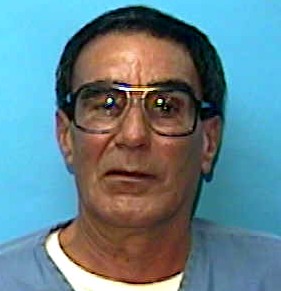
Joseph Spaziano
Murderer Ervil LeBaron
Murderer · USA · 1972
Ervil Morrell LeBaron (1925 to August 16, 1981) was the leader of a polygamous…
35 victims
Ervil LeBaron
Murderer · USA · 1972
Ervil Morrell LeBaron (1925 to August 16, 1981) was the leader of a polygamous…
35 victims
 Marvin Gray
Murderer · USA · 1975
Marvin Gray was convicted killer who claimed responsibility for 23 slayings and…
23 victims
Marvin Gray
Murderer · USA · 1975
Marvin Gray was convicted killer who claimed responsibility for 23 slayings and…
23 victims
 Yahweh ben Yahweh
Murderer · USA · 1980
Yahweh ben Yahweh was born and legally named Hulon Mitchell Jr. (October 27, 19…
23 victims
Yahweh ben Yahweh
Murderer · USA · 1980
Yahweh ben Yahweh was born and legally named Hulon Mitchell Jr. (October 27, 19…
23 victims
 Charles Manson
Murderer · USA · 1969
Charles Milles Manson (born November 12, 1934) was an American criminal and mus…
9 victims
Charles Manson
Murderer · USA · 1969
Charles Milles Manson (born November 12, 1934) was an American criminal and mus…
9 victims
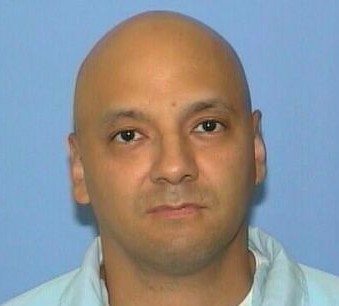 Andrew Urdiales
Serial killer · USA · 1986
Andrew Urdiales was in the Marines. While he was in the Marines, he was called…
8 victims
Andrew Urdiales
Serial killer · USA · 1986
Andrew Urdiales was in the Marines. While he was in the Marines, he was called…
8 victims
 Tracey Wigginton
Murderer · Australia · 1989
Tracey Wigginton (born 1965) was an Australian murderer who achieved notoriety…
1 victim
Tracey Wigginton
Murderer · Australia · 1989
Tracey Wigginton (born 1965) was an Australian murderer who achieved notoriety…
1 victim
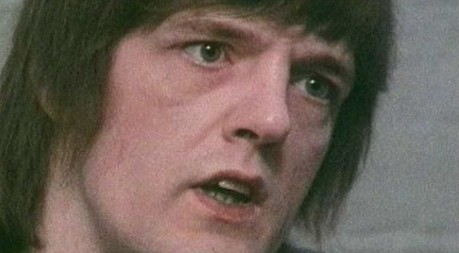 Robert Maudsley
Serial killer · United Kingdom · 1974
Robert Maudsley (born June 1953) was a British serial killer responsible for th…
4 victims
Robert Maudsley
Serial killer · United Kingdom · 1974
Robert Maudsley (born June 1953) was a British serial killer responsible for th…
4 victims
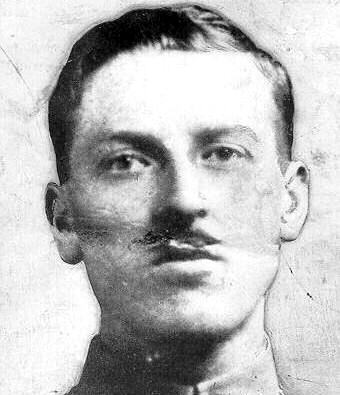 John Robinson
Murderer · London England United Kingdom · 1927
John Robinson was an estate agent who struggled to stay in business. He rented…
1 victim
John Robinson
Murderer · London England United Kingdom · 1927
John Robinson was an estate agent who struggled to stay in business. He rented…
1 victim
- Gender
- male
- Country
- USA
- Location
- Altamonte Springs, Florida, USA
- Date of birth
- September 12, 1945
- Age at first offence
- 28
- Characteristics
- rape, drug addict
- Victim profile
- Laura Lynn Harberts, 18. (The other body has never been identified)
- Method of murder
- St abbing with knife
- Date(s) of murder
- 1973
- Years active
- 1973
- Date of arrest
- —
- Status
-
Sentenced to death
Pleaded no contest to second degree murder in November 1998 and was sentenced to time served; death sentence reversed on April 17, 1997; sentenced to death on August 15, 1975
Case record: Joseph Spaziano
Background
Joseph Spaziano was tried for the murder of a young woman that had occurred two years earlier. There was no physical evidence linking him to the murder. His conviction relied primarily on the testimony of a drug-addicted teenager who, after hypnosis and a “refreshed-memory” interrogation, thought he recalled Spaziano describing the murder. The witness later said that his testimony was totally unreliable and not true. Hypnotically induced testimony was no longer admissible in Florida.
Spaziano also received a rape conviction. He was described as “Crazy Joe” Spaziano.
The offence
Murder case (Laura Harberts)
A badly decomposed body of Laura Harberts was found in a Seminole County trash dump in August 1973. Laura Harberts was an Orlando hospital clerk. She was found dead in a Seminole County dump and had been raped and sexually mutilated. A second body was found at the same time as Harberts’ body; the second body was a young woman who had never been identified, and no one had been prosecuted for her death.
Investigation
Most initial investigation centered on one suspect, Lynwood Tate. Lynwood Tate had been arrested by police in his hometown of Athens, Georgia, after he had been accused of rape by an Orlando woman. Bank receipts showed that he opened a bank account in Orlando around the time of Harberts’ disappearance. He also applied for a job at the hospital Harberts had worked at. Tate was interrogated, underwent a polygraph test, and was hypnotized. He failed a lie detector test, and the investigator concluded in a report that everything “indicated strongly that Lynwood Tate did commit the murder of Laura Lynn Harberts and the other unidentified female.” Tate was never charged but remained a suspect until 1974.
In 1974, investigators began talking to Tony DiLisio, a 16-year-old drug user who admired Joe Spaziano’s status as a chapter president of the Outlaws motorcycle gang. Investigators believed Spaziano may have been having a tumultuous affair with DiLisio’s stepmother. The stepmother had once told a reporter that she was raped by Spaziano but did not press charges. When first interrogated by police, DiLisio said he did not know about the murders. Investigators decided to have DiLisio hypnotized by Joseph McCawley, a local fellow whose work had been questioned in the past. After being hypnotized twice, DiLisio said he remembered Spaziano showing him two dead bodies. The induced testimony was used in the prosecution.
Arrest
Spaziano was convicted in connection with the murder case despite no physical evidence linking him to the crime. The case proceeded based on DiLisio’s testimony.
Trial
Murder trial
At trial in January 1976, DiLisio “remembered” that Spaziano had taken him to the dump to show him the two mutilated bodies and bragged about killing them. The jury was not told that DiLisio’s recollections were induced by hypnosis. Most of DiLisio’s testimony was inconsistent and went unchallenged by defense attorney Ed Kirkland.
DiLisio initially said he was taking LSD when he saw the bodies; at trial he said he did not use LSD until after he saw the bodies. He also gave testimony that conflicted with what he previously recounted about what he saw at the dump site.
Because the case hinged on DiLisio’s testimony, the prosecutor told the court:
“if we can't get in the testimony of Tony DiLisio, we'd have absolutely no case whatsoever.”
The prosecutor offered no physical evidence linking Spaziano to the murder.
After a lengthy deliberation, the jury returned a guilty verdict. The jury recommended life in prison. The jury’s recommendation was described as indicating that they might not have believed firmly in Spaziano’s guilt since if they believed he committed the brutal crime, they probably would have sentenced him to death. The jury’s only choices at the guilt/innocence stage were acquittal or conviction of first degree murder.
At trial, Spaziano’s Outlaw biker colleagues wore full biker regalia including tattoos. The judge overrode the jury’s recommendation and sentenced Spaziano to the death penalty. Judge Robert McGregor overrode their recommendation and sentenced Spaziano to the death penalty.
Rape trial (Orange County girl)
Spaziano was serving a life sentence for raping a 16-year-old Orange County girl in 1974. The victim testified at trial that she climbed into a truck with Spaziano and another man who offered her marijuana. The men took her to the clubhouse of the Outlaws motorcycle gang, where she was raped and beaten until she lost consciousness. The men then drove her to a patch of woods in the Lockhart area, where she was choked until she blacked out. When she came to, someone had slashed her neck and eyes, leaving her blind in the left eye.
The raping of the victim was described as not the only violent crime attributed to Spaziano.
Sentencing
Murder sentence
Judge Robert McGregor sentenced Spaziano to the death penalty. Spaziano was sentenced to death on August 15, 1975.
Murder appeal and new trial
In January 1996, Florida Circuit Court Judge O.H. Eaton granted Spaziano a new trial. This decision was upheld by the Florida Supreme Court on April 17, 1997. The death sentence was reversed on April 17, 1997.
Judge O.H. Eaton, Jr. ordered a new murder trial on the eve of the 20th anniversary of the murder conviction and wrote:
“In the United States of America every person, no matter how unsavory, is entitled to due process of law and a fair trial. The defendant received neither,” Eaton wrote in an eight-page ruling. “The validity of the verdict in this case rests upon the testimony of an admitted perjurer who had every reason to fabricate a story which he hoped would be believed.”
Plea and time served
In November 1998, Spaziano pleaded no contest to second degree murder and was sentenced to time served.
Rape sentence
A rape/assault sentence was described as life plus five years in 1975 for a victim blinded with a knife. The life sentence remained a reason he was kept incarcerated following developments in the murder case.
Appeals
The U.S. Supreme Court matter described a judge overriding a jury recommendation of life imprisonment. The U.S. Supreme Court upheld the conviction 6-3 in the case of Spaziano v. Florida, 468 U.S. 447 (1984), with Justices Brennan, Marshall and Stevens dissenting.
The Florida Supreme Court refused to apply its 1985 decision in Bundy v. State of Florida to Spaziano’s case, despite that decision ruling hypnosis-induced evidence was unreliable and inadmissible.
A stay of execution was granted and later rejected. After prosecutors agreed to let Spaziano plead no contest in exchange for a sentence, time already served was credited.
The murder case remained pending on a new trial that the state planned to appeal. The state had decided to appeal and had filed an initial brief.
Other legal developments and incarceration status
Execution orders and stays (murder case)
Death warrants were repeatedly signed for Spaziano even though the jury recommended a life sentence. In October 1984, the governor signed Spaziano’s first execution order. Mello won a stay of execution, although the Florida Supreme Court later rejected his argument.
On May 24, 1995, Florida Gov. Chiles signed another death warrant for Spaziano, and the execution date was set for 7 a.m., June 27, 1995. The June 27 execution was stayed, and the Florida Department of Law Enforcement was ordered to conduct a state investigation into DiLisio’s recantation. A sealed report challenged whether DiLisio’s recantation was credible.
Chiles signed a new death warrant on August 24, 1995, described as Spaziano’s fifth.
Parole hearing (Orange County rape keeping him incarcerated)
In October 2008, the Florida Parole Commission added six months to Spaziano’s prison sentence and reset his release date to October 2060, when he would be 115 years old. Spaziano’s age at the time was 63. The parole hearing discussed his life sentence for raping a 16-year-old Orange County girl.
Spaziano’s daughter, Marynoel Tabar of St. Petersburg, appeared at the hearing and begged the commission to release Spaziano. The rape victim identified for authorities the wrong man, Tabar said, perhaps out of confusion. Tabar also said the murder charge was unfounded and said:
“the state found the perfect patsy.”
Seminole County Assistant State Attorney Tom Hastings urged the commission to leave Spaziano in prison, calling him a “violent, vicious individual.”
Parole commissioners Tena Pate and Monica David discussed the matter and announced the extension of Spaziano’s sentence. Tena Pate said:
“His crimes were especially violent,”
In addition, Spaziano cursed at a corrections sergeant last November when told to keep his dorm room clean, which earned him 15 days of disciplinary confinement. An angry Tabar told commissioners she did not think the commission would ever free her father, saying:
“This is just unjust,” she said.
Other details
People mentioned
- Joseph “Crazy Joe” Spaziano — defendant; convicted in connection with a murder and a rape conviction.
- Laura Harberts (Laura Lynn Harberts) — victim; an Orlando hospital clerk; found dead in a Seminole County dump in August 1973; raped and sexually mutilated.
- Lynwood Tate — suspect; arrested in Athens, Georgia, after a rape accusation by an Orlando woman; interrogated, polygraphed, hypnotized; not charged but remained a suspect until 1974.
- Tony DiLisio — 16-year-old drug user/witness; hypnotized and gave testimony later recanted.
- Joseph McCawley — hypnotist who had been questioned in the past.
- Ed Kirkland — defense attorney at the murder trial.
- Judge Robert McGregor — overrode the jury’s recommendation and sentenced Spaziano to death.
- Judge O.H. Eaton — granted a new trial in January 1996.
- Judge O.H. Eaton, Jr. — ordered a new murder trial and wrote an eight-page ruling quoted above.
- Michael Mello — a University of Vermont law professor and former public defender; represented concerns and arguments about innocence.
- Stephen Hanlon — partner at Holland & Knight; involved in efforts after his death row involvement.
- Gregg Thomas — partner at Holland & Knight’s Tampa office; lead for the firm’s team handling an evidentiary hearing.
- Jim Russ — prominent Orlando criminal defense lawyer.
- Lori Rozsa — Miami Herald reporter; made multiple visits to DiLisio and obtained his statements.
- Warren Holmes — chief investigator involved through the Miami Herald reporting.
- Tena Jamison Lee — credited as the author of an article titled “Did Florida Almost Execute an Innocent Man?”
- Rene Stutzman — credited as the author of a parole-related hearing piece.
- Tom Hastings — Seminole County Assistant State Attorney.
- Tena Pate and Monica David — parole commissioners.
- Marynoel Tabar — Spaziano’s daughter from St. Petersburg.
Additional individuals discussed in relation to the murder narrative
- Joe Suarez — identified as a sex offender and described as a person Harberts was talking to in the context of undisclosed evidence concerns; the narrative described that Suarez denied being with Harberts on August 5, 1973, weeks before the body was found; the narrative also said police concluded Suarez was with Harberts on the night of her disappearance.
Victims and counts
- One murder victim was identified as Laura Harberts.
- A second young woman’s body was found at the same time as Harberts’, but the second body was never identified and no prosecution was described for her death.
- The rape conviction involved a single 16-year-old Orange County girl.
Spotted an error, or have more information about this case?