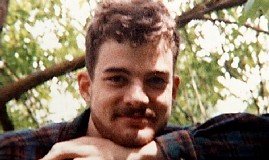
Ian Lee Stawicki
Mass murderer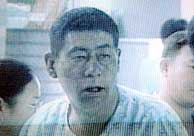 Kim Dae-Han
Mass murderer · South Korea · 2003
Name: Kim Dae-Han · Age: 56 · Occupation/background: He was an unemployed forme…
198 victims
Kim Dae-Han
Mass murderer · South Korea · 2003
Name: Kim Dae-Han · Age: 56 · Occupation/background: He was an unemployed forme…
198 victims
 Zhang Pilin
Mass murderer · China · 2002
Zhang Pilin (张丕林) died in the plane crash of China Northern Airlines Flight 613…
111 victims
Zhang Pilin
Mass murderer · China · 2002
Zhang Pilin (张丕林) died in the plane crash of China Northern Airlines Flight 613…
111 victims
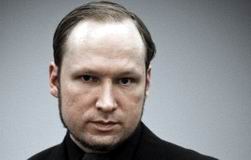 Anders Behring Breivik
Mass murderer · Norway · 2011
Anders Behring Breivik (born 13 February 1979) was the perpetrator of the 2011…
77 victims
Anders Behring Breivik
Mass murderer · Norway · 2011
Anders Behring Breivik (born 13 February 1979) was the perpetrator of the 2011…
77 victims
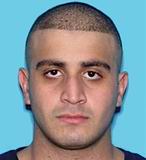 Omar Mateen
Mass murderer · USA · 2016
Omar Mir Seddique Mateen was an American mass murderer who killed 49 people and…
49 victims
Omar Mateen
Mass murderer · USA · 2016
Omar Mir Seddique Mateen was an American mass murderer who killed 49 people and…
49 victims
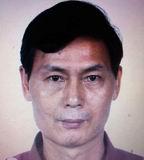 Chen Shuizong
Mass murderer · China · 2013
Chen Shuizong (simplified Chinese: 陈水总; traditional Chinese: 陳水總; pinyin: Chén…
46 victims
Chen Shuizong
Mass murderer · China · 2013
Chen Shuizong (simplified Chinese: 陈水总; traditional Chinese: 陳水總; pinyin: Chén…
46 victims
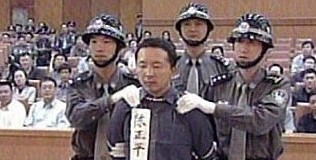 Cheng Zhengping
Mass murderer · China · 2002
Cheng Zhengping was executed on October 13, 2002. Cheng Zhengping confessed to…
42 victims
Cheng Zhengping
Mass murderer · China · 2002
Cheng Zhengping was executed on October 13, 2002. Cheng Zhengping confessed to…
42 victims
 Robert Bierenbaum
Murderer · USA · 1985
Robert Bierenbaum was a plastic surgeon who was convicted in October 2000 of mu…
1 victim
Robert Bierenbaum
Murderer · USA · 1985
Robert Bierenbaum was a plastic surgeon who was convicted in October 2000 of mu…
1 victim
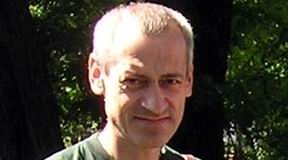 L'ubomír Harman
Mass murderer · Slovakia · 2010
Ľubomír Harman (31 March 1962 – 30 August 2010) was a Slovak spree killer. He a…
7 victims
L'ubomír Harman
Mass murderer · Slovakia · 2010
Ľubomír Harman (31 March 1962 – 30 August 2010) was a Slovak spree killer. He a…
7 victims
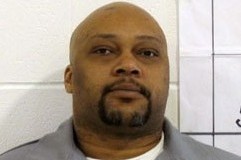 Mark Anthony Gill
Murderer · USA · 2002
Mark Anthony Gill — defendant · Ralph Lee Lape, Jr. — victim · Justin Brown — a…
1 victim
Mark Anthony Gill
Murderer · USA · 2002
Mark Anthony Gill — defendant · Ralph Lee Lape, Jr. — victim · Justin Brown — a…
1 victim
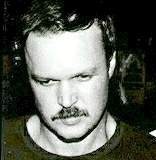 Larry Eyler
Serial killer · USA · 1982
Larry Eyler was born December 21, 1952, in Crawfordsville, Indiana, and was the…
23 victims
Larry Eyler
Serial killer · USA · 1982
Larry Eyler was born December 21, 1952, in Crawfordsville, Indiana, and was the…
23 victims
- Gender
- male
- Country
- Washington
- Location
- Seattle, King County, Washington
- Date of birth
- September 16, 1971
- Age at first offence
- 41
- Characteristics
- shooting spree, drunken rage, history of mental illness
- Victim profile
- Joseph Albanese, 52 / Andrew Keriakedes, 49 / Kimberly Lynn Layfield, 36 / Donald Largen, 57 / Gloria Leonidas, 52
- Method of murder
- Shooting ( two .45-caliber handguns)
- Date(s) of murder
- May 30, 2012
- Years active
- 2012
- Date of arrest
- —
- Status
-
Died in custody
Committed suicide by shooting himself as police closed in
Case information
Defendant: Ian Lee Stawicki (born September 16, 1971) Age at time of incident: 40 (described as “40-year-old Ellensburg native”)
Timeline
- May 30, 2012 (just before 11 am) — Stawicki walked into Café Racer in the University District of Seattle and opened fire with two .45-caliber handguns, killing four patrons and wounding the café’s chef.
- May 30, 2012 (about half an hour later) — Stawicki killed another woman in a parking lot next to Town Hall Seattle on First Hill while carjacking her SUV.
- May 30, 2012 (later that afternoon; about 4 p.m.) — Stawicki was seen on foot in West Seattle by a plainclothes officer; officers approached; Stawicki knelt and shot himself in the head.
- May 30, 2012 (Wednesday evening) — Stawicki died after being taken by ambulance to Harborview.
The offence
Stawicki opened fire with two .45-caliber handguns at Café Racer in the University District of Seattle. Four patrons died at the café, and the café’s chef was wounded. The manhunt that followed spanned several neighborhoods.
At the café, staff recognized Stawicki from having been thrown out, and reminded him of it. Stawicki lingered, walked near the door, pulled one of his two pistols, and shot his first victim in the back of the head. The body blocked the door and removed an escape route. One man fought Stawicki by throwing a barstool at him and using another barstool to fight him, allowing “two or three people to escape through the door the shooter had blocked,” according to Seattle Police Assistant Chief Jim Pugel.
Stawicki then went near the bar and shot the others “execution-style,” according to police. As he left, Stawicki took a hat from one of the victims. Assistant Chief Jim Pugel said:
“He wasn't trying to get any one person. He was trying to get everyone,” Pugel said.
Deputy Chief Nick Metz, who reviewed the video, said:
“never seen (anything) more horrific, callous and cold.”
A 911 caller from Café Racer saved himself by hiding in the bathroom. Audio from 911 calls was included in the photo gallery.
Stawicki wounded five people at the café, including two who died at the scene. After leaving Café Racer, Stawicki went on to shoot another woman in a parking lot next to Town Hall Seattle on First Hill. He carjacked her SUV and fled in it.
After abandoning the SUV in West Seattle, Stawicki was seen on foot and officers approached. Stawicki shot himself in the head and died later that evening.
Investigation
The investigation was ongoing, and detectives had not released any motive in the slayings.
Police with high-powered rifles combed through the neighborhood around Roosevelt Way Northeast after Stawicki moved south after the Café Racer shooting. Anxiety was high, and police told residents to stay inside. Nearby Roosevelt High School was among several schools on lockdown.
Around 3:15 p.m., police distributed surveillance images of Stawicki from moments before the Café Racer shooting. Investigators said Stawicki’s brother, also an Ellensburg native, identified Stawicki for police.
Investigators said Stawicki drove Leonidas’ black SUV to West Seattle, roamed in crowded areas for some time, and contacted an old acquaintance. The acquaintance did not know what had happened but thought Stawicki was acting erratically and speaking nonsense; the acquaintance contacted police after hearing about the shooting.
Police and bystanders tried to help Gloria Leonidas, but she was pronounced dead at Harborview Medical Center, where two more of Stawicki’s victims died late Wednesday.
Police were working with the Bureau of Alcohol, Tobacco, Firearms and Explosives to trace where the guns were purchased and whether they were stolen or involved in other crimes, according to Assistant Chief Jim Pugel.
Arrest / death on approach
Shortly after 4 p.m., a plainclothes officer spotted Stawicki near 36th Avenue Southwest and Southwest Morgan Street and called for backup. As uniformed officers approached, Stawicki knelt and shot himself in the head.
People involved
Victims (dead)
- Joseph “Meshuguna Joe” Albanese, 52 — killed at Café Racer
- Andrew “Schmootzi the Clod” Keriakedes, 49 — killed at Café Racer
- Kimberly Lynn Layfield, 36 — killed at Café Racer
- Donald Largen, 57 — killed at Café Racer
- Gloria Leonidas, 52 — killed on First Hill near Town Hall
In one account, Drew Keriakedes was identified as 45 and Joe Albranese as 52, with four café victims dying at the café and a fifth victim killed near Town Hall. Another account identified Kimberly Layfield as 38 and Donald Largen as an urban planner who played the saxophone, and described Leonard Meuse as the chef wounded at the café.
Injured
- Leonard Meuse, 46 — wounded at Café Racer; survived surgery; described as in critical but stable condition late Thursday
Firearms and alleged planning details
Stawicki previously owned six handguns: three 9mm handguns and three .45-caliber handguns, including the Para-Ordnance pistol he used in the shootings. He had a concealed weapons permit issued in August 2010 and listed six handguns in his ownership, including three 9mm and three .45-caliber pistols, according to records released by the Seattle City Attorney’s office.
Police said the two .45-caliber, semi-automatic handguns Stawicki carried Wednesday were legal.
Witnesses and quoted statements
A man who challenged Stawicki, described only as Lawrence, told a department spokesman:
“I just threw the frigging stool at him, legs first,” the man who challenged Stawicki, described only as Lawrence, told a department spokesman.
This man also said:
“My brother died in the World Trade Center. I promised myself, if something like this ever happened, I would never hide under a table.”
A maintenance worker at an apartment building across the street, Ibrahim Frishak, said he heard a loud pop and commented on the good samaritans administering CPR:
“They are brave, I tell you,” Frishak said of the good Samaritans.
A quote from Mayor Mike McGinn was given at a city leaders’ gathering Wednesday afternoon:
“highest priority to identify the strategies to try to bring an end to this wave of gun violence.”
At a City Hall news conference, Mayor Mike McGinn said:
“We also need to focus on laws that make it too easy for people to acquire guns and also undertake a full partnership with the community to end the culture where young men believe it's OK to resolve disputes with violence, including guns,” he said.
Seattle Police Assistant Chief Jim Pugel compared the scene to another mass killing, saying:
Pugel compared it to the Wah Mee massacre in 1983 in which 14 people were shot during a robbery in a Chinatown gambling room.
Suspect background and prior police contacts
Stawicki had prior contacts with police but a relatively short record. Police said he had charges for domestic-violence interference, fourth-degree assault, malicious mischief, and a 1989 Seattle case for unlawfully carrying a weapon; court records showed only a 1995 case for driving with a suspended license that resulted in an adverse finding.
A Seattle case from February 2008 included charges for domestic violence interference, assault and property damage. The charges were dismissed because the case lacked clear proof. Police were called to the Magnolia home of Stawicki and his then-girlfriend after officers were told to find the victim with a bloody nose and crying. The victim said Stawicki struck her and destroyed several of her belongings, and that in recent months he began breaking things and flying into rages, according to the police report.
The victim recanted later and wrote:
“Ian Stawicki never assaulted me on Feb 27, 2008 or at any other time. He never punched me or hit me in the nose, face or any part of my body,” she wrote in the statement.
“I suffer from frequent spontaneous nose bleeds and was experiencing such a spontaneous nose bleed on Feb 27 2008,” she wrote.
“The police must have thought this nose bleed was the result of an assault by Ian Stawicki. I told police that my nose bleed was spontaneous and not the result of any assault, because no assault occurred.”
Stawicki was described by family as “angry toward everything.” His brother Andrew Stawicki, 29, of Ellensburg, said that when he saw a photo on the news of the alleged gunman inside Café Racer, he recognized it as his big brother. Andrew Stawicki said that over the past five or so years, Ian Stawicki “severely changed,” saying:
“Angry. He was really angry toward everything,” Andrew Stawicki said.
Andrew Stawicki said Ian Stawicki would not talk about his mental illnesses, his anger, or other troubles, and said:
“Someone like that is so stubborn you can't talk to him,” he said.
“It's no surprise to me this happened. We could see this coming. Nothing good is going to come with that much anger inside of you.”
Andrew Stawicki said Ian Stawicki stayed in close contact with his parents and cared for their mother when she needed help, and she cared for him. Andrew Stawicki said their family long hoped Ian would go to mental-health treatment or take medications.
Andrew Stawicki said the family had been describing Ian as having “a history of anger and mental-health problems that he refused to deal with.”
Stawicki had been arrested in February 2008 on a misdemeanor domestic-violence charge in Seattle and posted $10,000 bail. He pledged to stay 500 feet away from a 37-year-old woman and listed his home address in Magnolia. His attorney fought the charges, and they were dismissed.
Stawicki was also charged with fourth-degree assault in Kittitas County in 2010; that case was dismissed as well, and court records did not indicate why.
Court records indicated that he had lived in Portland and in Ellensburg with his brother.
In one description, Café Racer employees and acquaintances said Stawicki was kicked out sometimes for being belligerent or too intoxicated, and a neighborhood acquaintance said Stawicki had been kicked out two or three times in recent weeks for “snapping” at people.
Places
- Café Racer, University District of Seattle, Washington
- Town Hall Seattle, First Hill neighborhood; parking lot at Eighth Avenue and Seneca Street
- West Seattle, sidewalk where he shot himself
- Harborview Medical Center, where victims later died and where the injured chef underwent surgery
- Roosevelt Way Northeast, including the 5800 block where two victims died and where police combed the neighborhood
- Roosevelt High School, among several schools on lockdown
- Beacon Hill and other South Seattle neighborhoods (where he grew up, per his brother)
- Ellensburg, mentioned as his native city and the home of his brother
- Magnolia, mentioned as his home address and as the location of a prior domestic-violence incident
- Kittitas County, where a fourth-degree assault charge occurred
- Portland, where he reportedly lived
- Maintenance witness location: apartment building across the street from the parking lot near Town Hall
Other details
Stawicki was identified by family and law-enforcement officials as the man who shot five people just before 11 a.m. at Café Racer Espresso in the University District. Four of the café victims died, and a fifth victim was fatally shot near Town Hall downtown Seattle.
A man hid in the bathroom during the Café Racer shooting and survived by calling 911. A 911 caller told a dispatcher that Leonidas was also run over.
A man and woman walking in the area came to Leonidas’ aid, and police and bystanders tried to help her.
Police said witnesses saw the gunman and a woman arguing near Town Hall. Ibrahim Frishak said he heard a loud pop.
One report said Stawicki took a hat from one of the victims. The investigation included questions about where the family member’s truck was taken from and whether he took a Metro bus, with investigators saying Stawicki may have taken a family member’s truck from the Ravenna neighborhood and dumped it somewhere near Eighth and Seneca, and there was speculation he had taken a Metro bus.
Friends of the victims gathered on the lawn of a house less than a block from the café to remember those who died. By early evening, the gathering had grown to dozens of people who spilled onto the sidewalk and street, and included embraces, tears, and stories. Pabst Blue Ribbon beer was present at the gathering and several people said it was one of Drew’s favorite brews.
The slayings pushed the number of homicides in Seattle to 21 for the year, one higher than the annual number of reported cases from all of last year. Police statistics listed 21 homicide cases last year because an investigation into the death of Michelle Thornton, a woman who died Dec. 30, 2010, began the following month.
The shootings occurred less than a week after a father was fatally wounded in front of his children by an errant bullet in the Central District, and less than a week after another innocent bystander was shot in the right leg near the Space Needle. The following day, Seattle had five drive-by shootings and a fatal home-invasion shooting.
Seattle Police Assistant Chief Jim Pugel said it was the worst Seattle killing spree since 2006. He compared the incident to the Wah Mee massacre in 1983.
Nearby schools were placed on lockdown, and police distributed surveillance images and conducted a door-to-door manhunt from North Seattle to West Seattle.
An account also stated that Stawicki contacted an old acquaintance who thought he was acting erratically and speaking nonsense, and that the acquaintance contacted police after hearing about the shooting.
Investigation status: The investigation was still ongoing, and detectives had not released any motive in the slayings.
Spotted an error, or have more information about this case?