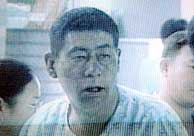
Kim Dae-Han
Mass murderer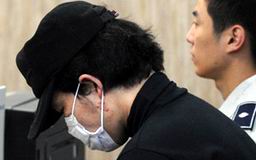 Jeong Sang-jin
Mass murderer · South Korea · 2008
Jeong Sang-jin Jeong Sang-jin was sentenced to death on May 12, 2009. The Nonhy…
6 victims
Jeong Sang-jin
Mass murderer · South Korea · 2008
Jeong Sang-jin Jeong Sang-jin was sentenced to death on May 12, 2009. The Nonhy…
6 victims
 Lee Ho-seong
Mass murderer · South Korea · 2008
Lee Ho-seong (July 17, 1967 – March 10, 2008) was a South Korean baseball playe…
4 victims
Lee Ho-seong
Mass murderer · South Korea · 2008
Lee Ho-seong (July 17, 1967 – March 10, 2008) was a South Korean baseball playe…
4 victims
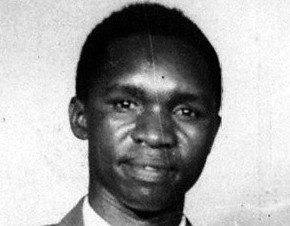 Joseph Kibweteere
Mass murderer · Uganda · 2000
Joseph Kibweteere led a breakaway sect known as the Movement for the Restoratio…
1000 victims
Joseph Kibweteere
Mass murderer · Uganda · 2000
Joseph Kibweteere led a breakaway sect known as the Movement for the Restoratio…
1000 victims
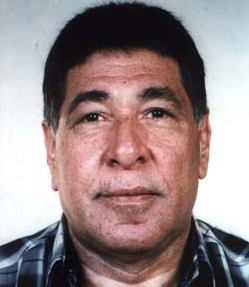 Gameel Al-Batouti
Mass murderer · USA · 1999
Gameel Al-Batouti (also rendered “Gamil ElBatouty” or “El Batouty” in U.S. offi…
216 victims
Gameel Al-Batouti
Mass murderer · USA · 1999
Gameel Al-Batouti (also rendered “Gamil ElBatouty” or “El Batouty” in U.S. offi…
216 victims
 Timothy McVeigh
Mass murderer · USA · 1995
Timothy James McVeigh (April 23, 1968 – June 11, 2001) was a United States Army…
168 victims
Timothy McVeigh
Mass murderer · USA · 1995
Timothy James McVeigh (April 23, 1968 – June 11, 2001) was a United States Army…
168 victims
 Zhang Pilin
Mass murderer · China · 2002
Zhang Pilin (张丕林) died in the plane crash of China Northern Airlines Flight 613…
111 victims
Zhang Pilin
Mass murderer · China · 2002
Zhang Pilin (张丕林) died in the plane crash of China Northern Airlines Flight 613…
111 victims
 Fallon Tallent
Murderer · USA · 2003
Fallon Tallent was convicted of two counts of first degree murder and received…
2 victims
Fallon Tallent
Murderer · USA · 2003
Fallon Tallent was convicted of two counts of first degree murder and received…
2 victims
 Lloyd Chase Allen
Murderer · USA · 1991
Lloyd Chase Allen was convicted and sentenced to death for the November 13, 199…
1 victim
Lloyd Chase Allen
Murderer · USA · 1991
Lloyd Chase Allen was convicted and sentenced to death for the November 13, 199…
1 victim
 Tyler Peterson
Mass murderer · USA · 2007
Tyler Peterson committed suicide by shooting himself the same day victims. Tyle…
6 victims
Tyler Peterson
Mass murderer · USA · 2007
Tyler Peterson committed suicide by shooting himself the same day victims. Tyle…
6 victims
 Michael Hance
Mass murderer · USA · 2011
Michael Hance, 51, was shot and killed by the police on August 7, 2011, after h…
7 victims
Michael Hance
Mass murderer · USA · 2011
Michael Hance, 51, was shot and killed by the police on August 7, 2011, after h…
7 victims
 Venecia DePaula
Murderer · USA · 2009
Venecia DePaula was 32 during the trial and was pregnant with Felipe Perez’s ba…
1 victim
Venecia DePaula
Murderer · USA · 2009
Venecia DePaula was 32 during the trial and was pregnant with Felipe Perez’s ba…
1 victim
- Gender
- male
- Country
- South Korea
- Location
- Daegu, South Korea
- Date of birth
- 1947
- Age at first offence
- 56
- Characteristics
- arson
- Victim profile
- Men, women and children (subway train passengers)
- Method of murder
- Fire
- Date(s) of murder
- February 17, 2003
- Years active
- 2003
- Date of arrest
- Same day
- Status
-
Died in custody
Sentenced to life in prison on August 5, 2003; died in prison on August 31, 2004 in the city of Jinju, where he had been receiving medical treatment.
Case identification
- Name: Kim Dae-Han
- Age: 56
- Occupation/background: He was an unemployed former taxi driver. He had suffered a stroke in November 2001 that left him partly paralyzed. He was dissatisfied with his medical treatment and had expressed sentiments of violence and depression.
- In-prison status: He died in prison on August 31, 2004 in the city of Jinju, where he had been receiving medical treatment.
Timeline
- November 2001 — Kim Dae-han suffered a stroke that left him partly paralyzed.
- February 18, 2003 — A Daegu subway fire occurred after Kim ignited a carton filled with a flammable liquid inside a subway train at Jungangno Station; the fire spread to a second train and killed at least 198 people and injured at least 147.
- February 18, 2003 (around 9:53 a.m.) — As train 1079 left Daegu Station, Kim began fumbling with two milk cartons and a cigarette lighter as the train pulled into Jungangno Station.
- February 18, 2003 (four minutes later) — Train 1080 entered Jungangno station and stopped alongside blazing train 1079 approximately four minutes later.
- February 26, 2003 — Authorities arrested Kim Dae-han after he had fled to a hospital for treatment; they also arrested Choi Sang-yeol and six officials of the Daegu Metropolitan Subway Corporation.
- April 2003 — Six stations were restored in April 2003 after refurbishment.
- August 5, 2003 — Kim Dae-han was sentenced to life in prison on August 5, 2003.
- August 7, 2003 — The Daegu District Court convicted Choi Sang-yeol and Choi Jeong-hwan and imposed sentences; Kim’s life sentence was part of the court’s sentencing.
- August 31, 2004 — Kim Dae-han died in prison in the city of Jinju while receiving medical treatment.
The offence
On February 18, 2003, an arsonist set fire to a train stopped at the Jungangno Station of the Daegu Metropolitan Subway in Daegu, South Korea. The fire then spread to a second train which had entered the station from the opposite direction.
Kim Dae-han was the arsonist. He carried a duffel bag containing two green milk cartons filled with a flammable liquid, possibly paint thinner or gasoline. By most accounts, on the morning of February 18, he boarded train 1079 on Line 1 in the direction of Daegok.
As the train left Daegu Station around 9:53 a.m., Kim began fumbling with the cartons and a cigarette lighter, alarming other passengers who tried to stop him. During the struggle, one of the cartons spilled and its liquid contents caught fire as the train pulled into Jungangno Station in downtown Daegu.
Kim, his back and legs on fire, managed to escape along with many passengers on train 1079, but within two minutes the fire had spread to all six cars. The fire spread quickly in the insulation between the layers of aluminum that formed the shell of the cars, the vinyl and plastic materials in seat cushions and strap handles, and heavy plastic matting on the floors, producing thick smoke as it burned.
Victims and impact
The Daegu subway fire of February 18, 2003 killed at least 198 people and injured at least 147.
The intensity of the fire made it difficult to accurately assess the number of victims. Most were burned beyond recognition, many to the bone, and required DNA analysis to identify. A total of 191 bodies were found and identified; 6 additional bodies were found but so thoroughly destroyed that they could not be identified; and one person’s possessions were identified but remains could not be located.
Because the incident occurred late in the morning rush hour, most of the victims were students or young women who worked in the downtown district’s department stores, which opened at 10:30 a.m. Many were able to contact loved ones on their mobile phones, and mobile phone operators released call connection and attempt records to help authorities determine who was in the station.
Later investigation showed 79 passengers remained trapped inside train 1080 and died there.
Investigation and arrests
- The operator of train 1079 was Choi Jeong-hwan. He failed to notify subway officials immediately of the fire.
- Smoke was visible on closed-circuit television monitors. Subway officials radioed the operator of train 1080, Choi Sang-yeol, advising him to proceed with caution because there was a fire in the station.
- Train 1080 entered Jungangno station and stopped alongside blazing train 1079 approximately four minutes later. The doors opened only briefly, then shut, apparently to keep out toxic smoke that had filled the station.
- An automatic fire detector shut down the power supply to both trains, preventing train 1080 from leaving the station.
- Transcripts showed Choi Sang-yeol made three announcements advising passengers in train 1080 to remain seated while he attempted to reach superiors. Finally, he was advised:
"Quickly, run somewhere else. Go up... kill the engine and go."
- Shortly after, he opened the doors and fled. In doing so, he removed the master key, shutting down the onboard batteries which powered the train doors—effectively sealing passengers inside.
Investigators also identified omissions from transcripts of radio communications as heightening suspicion of an attempted coverup. Investigators discovered that Choi Sang-yeol could not be located for 11 hours after the accident and had made contact with officials from the subway corporation during that time. The master key from train 1080 was found in an office at the Ansim train depot.
On February 26, 2003, authorities arrested Kim Dae-han, who had fled to a hospital for treatment. They also arrested both Choi Sang-yeol and Choi Jeong-hwan and six officials of the Daegu Metropolitan Subway Corporation, whose head was fired the same day.
The police considered the fire started when a deranged man ignited a plastic container of paint thinner with a cigarette lighter.
Trial
The court proceedings included convictions for arson and criminal negligence involving train operators and subway officials.
Convictions and sentencing of train operators and subway officials
The Daegu District Court convicted:
- Choi Sang-yeol, operator of train 1080, and sentenced him to prison for five years for criminal negligence.
- Choi Jeong-hwan, operator of train 1079, and sentenced him to prison for four years for criminal negligence.
The material also states that prosecutors and victims’ families asked for the death penalty for Kim Dae-han, but the court sentenced him to life in prison on account of his remorse and mental instability.
Additionally, the court sentencing included:
- Four and five years for two drivers of the trains on negligent manslaughter charges for failing to evacuate passengers.
- Three-year terms for two subway officials on negligent manslaughter charges.
- Three other subway officials received suspended jail terms on the same charges.
Both prosecutors and the accused could appeal the verdicts within a week.
Kim Dae-han’s conviction and sentence
Kim Dae-han was convicted of arson and homicide. Although prosecutors had asked for the death penalty, the court gave him a life sentence.
Kim’s sentence was issued on August 5, 2003: sentenced to life in prison on August 5, 2003.
Aftermath and broader responses
The tragedy prompted outpourings of sympathy and anger from throughout South Korea and internationally.
Officials promised to install better safety equipment in subway stations and added spray-on fire resistant chemicals to the interiors of the cars of the Daegu Metropolitan Subway. Six stations were taken out of service for refurbishment and restored in April 2003.
Several metro trains throughout the country were subsequently refurbished to improve fire-resistant standards within a few years of the accident.
The tragedy was considered by many a national embarrassment and provoked debate about whether South Korea had cut too many corners in safety during its rapid industrialization.
Other details
Emergency equipment and emergency response factors
Daegu subway trains were not equipped with fire extinguishers, and the stations lacked sprinklers and emergency lighting. Emergency ventilation systems also proved inadequate.
Many victims became disoriented in the dark, smoke-filled underground station and died of asphyxiation while looking for exits. Over 1,300 fire and emergency personnel responded, and the fire was extinguished around 1:25 p.m.; however, the toxicity of the smoke prevented them from entering the station for another three and a half hours.
Public addresses, controller actions, and door shutdown
The doors worked on three cars before the power was cut, officials said.
Investigators’ views on materials, temperatures, and fire spread
The root cause for the blaze’s spreading so quickly appeared to be the insulation between the layers of aluminum that formed the shell of the cars, as well as vinyl and plastic materials in seat cushions and strap handles, and heavy plastic matting on the floors.
A safety inspector, Chung Hee Gwon, said:
"When things reach a certain heat, they burn," a safety inspector, Chung Hee Gwon, said. "The basic frames are metal, but the support material is plastic."
A civil engineer for the subway system, Jung Chan Kyo, said:
"The cars were built 10 years ago with material that is not used in later models. "Because the cars were so old, that's why they caught fire," he said. "There's no safety standard for vinyl material. New cars have cushions, but they are not made of vinyl."
A manager of an emergency fire crew, Chun Pak Chung, said:
"Some of the doors were open and some were closed on the second train," the manager of an emergency fire crew, Chun Pak Chung, said as he headed into the depths of the station. "The control room turned off the power to stop the flames."
Chun Pak Chung also said:
"When he pulled in the station, he opened the doors and the smoke was too heavy. He closed the doors again."
The overriding question in the investigation concerned why the train entered the station at all, since it had stopped for several minutes a few hundred yards away as flames and smoke spread through the first train.
President-elect visit and statements
President-elect Roh Moo Hyun visited the scene on Thursday, promising a thorough investigation after meeting with grief-stricken friends and relatives of victims. He said he felt:
"shame and strong responsibility" that people entrusted with the public's safety would have had "such a poor sense of safety awareness."
Lessons and precautions
The manager of an emergency fire crew, Chun Pak Chung, said the disaster had taught subway engineers lessons in how to prevent a recurrence. He said:
"You should put in materials that are not flammable," he said. "The vinyl, the polyester in the advertisements were all responsible. We will be taking many more precautions."

Spotted an error, or have more information about this case?