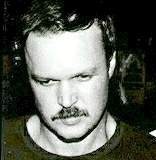
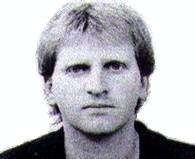
Larry Eyler
Serial killer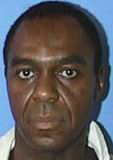 Carl Eugene Watts
Serial killer · USA · 1974
Carl Eugene Watts (born November 7, 1953; died September 21, 2007), also known…
100 victims
Carl Eugene Watts
Serial killer · USA · 1974
Carl Eugene Watts (born November 7, 1953; died September 21, 2007), also known…
100 victims
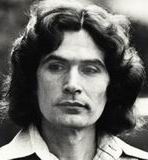 Rodney Alcala
Serial killer · USA · 1977
Rodney James Alcala (born August 23, 1943) was also known as Rodrigo Jacques Al…
100 victims
Rodney Alcala
Serial killer · USA · 1977
Rodney James Alcala (born August 23, 1943) was also known as Rodrigo Jacques Al…
100 victims
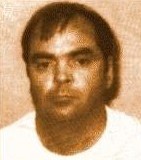 Donald Leroy Evans
Serial killer · USA · 1975
Donald Leroy Evans (born July 5, 1957) was an American serial killer who murder…
60 victims
Donald Leroy Evans
Serial killer · USA · 1975
Donald Leroy Evans (born July 5, 1957) was an American serial killer who murder…
60 victims
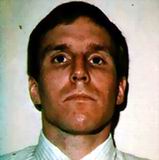 Michael Swango
Serial killer · USA · 1981
Michael Swango (Joseph Michael Swango) was a physician and American serial kill…
60 victims
Michael Swango
Serial killer · USA · 1981
Michael Swango (Joseph Michael Swango) was a physician and American serial kill…
60 victims
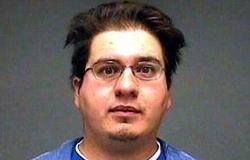 Efren Saldivar
Serial killer · USA · 1989
Efren Saldivar (born 30 September 1969) was an American serial killer who murde…
50 victims
Efren Saldivar
Serial killer · USA · 1989
Efren Saldivar (born 30 September 1969) was an American serial killer who murde…
50 victims
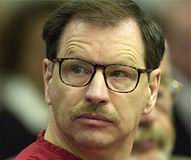 Gary Ridgway
Serial killer · USA · 1982
Gary Leon Ridgway Ridgway was born 18-February-1949 in Salt Lake City, UT. He w…
49 victims
Gary Ridgway
Serial killer · USA · 1982
Gary Leon Ridgway Ridgway was born 18-February-1949 in Salt Lake City, UT. He w…
49 victims
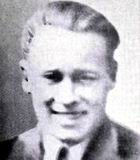 George Percy Stoner
Murderer · United Kingdom · 1935
George Percy Stoner was sentenced to death on May 31, 1935. His sentence was co…
1 victim
George Percy Stoner
Murderer · United Kingdom · 1935
George Percy Stoner was sentenced to death on May 31, 1935. His sentence was co…
1 victim
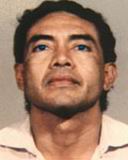 Roberto Solis
Murderer · USA · 1969
Roberto Solis (born 1945) was an armored car robber, convicted murderer, and po…
1 victim
Roberto Solis
Murderer · USA · 1969
Roberto Solis (born 1945) was an armored car robber, convicted murderer, and po…
1 victim
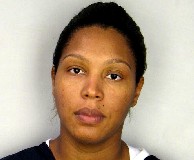 Venecia DePaula
Murderer · USA · 2009
Venecia DePaula was 32 during the trial and was pregnant with Felipe Perez’s ba…
1 victim
Venecia DePaula
Murderer · USA · 2009
Venecia DePaula was 32 during the trial and was pregnant with Felipe Perez’s ba…
1 victim
 Janeen Snyder
Murderer · USA · 1996
Michael Forrest Thornton and Janeen Marie Snyder were convicted of kidnapping,…
2 victims
Janeen Snyder
Murderer · USA · 1996
Michael Forrest Thornton and Janeen Marie Snyder were convicted of kidnapping,…
2 victims
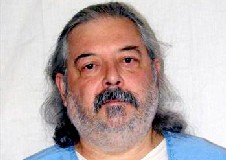 James Karis
Murderer · USA · 1981
James Karis (full name: James Leslie Karis Jr.) was convicted in connection wit…
1 victim
James Karis
Murderer · USA · 1981
James Karis (full name: James Leslie Karis Jr.) was convicted in connection wit…
1 victim
 Claude Howard Jones
Murderer · USA · 1976
Claude Howard Jones was a Harris County native who refused to speak with report…
3 victims
Claude Howard Jones
Murderer · USA · 1976
Claude Howard Jones was a Harris County native who refused to speak with report…
3 victims
- Gender
- male
- Country
- USA
- Location
- Indiana/Illinois, USA
- Date of birth
- December 21, 1952
- Age at first offence
- 30
- Characteristics
- rape, convicted rapist
- Victim profile
- Gay men
- Method of murder
- St abbing with knife
- Date(s) of murder
- 1982 - 1984
- Years active
- 1982–1984
- Date of arrest
- August 21, 1984
- Status
-
Died in custody
Sentenced to death October 3, 1986; died of AIDS in prison on March 6, 1994
Background
Larry Eyler was born December 21, 1952, in Crawfordsville, Indiana, and was the youngest of four children. His parents divorced while he was young. He dropped out of high school in his senior year, later worked odd jobs, and earned his GED. He enrolled sporadically in college between 1974 and 1978 but left without a degree.
Eyler later moved to Chicago. He struggled to cope with homosexual tendencies which simultaneously fascinated and repelled him. He took sex where he could find it, forcefully, and then eliminated evidence.
Eyler lived in Terre Haute with Robert David Little, a professor of library science at Indiana State University. Eyler also worked part-time at a Greencastle liquor store and frequently drove to Chicago on business of unknown nature.
The offence
Eyler killed a series of male victims across multiple states. His victims were stabbed, strangled, mutilated after death, and sometimes disemboweled. Bodies were dumped in rural locales along highways and in fields.
Known victims named in the case narrative
- Jay Reynolds was found stabbed to death on March 22, 1982, on the outskirts of Lexington, Kentucky.
- Delvoyd Baker, aged 14, was strangled on October 3 of an unspecified year in the narrative; his body was dumped on the roadside north of Indianapolis.
- Steven Crockett, aged 19, was stabbed 32 times with four wounds in the head and discarded outside Lowell, Indiana, on October 23 of an unspecified year.
- Robert Foley was left dumped in a field northwest of Joliet on November 6 of an unspecified year.
- John Johnson, aged 25, was left in a field outside Belshaw, Indiana, on December 25 of an unspecified year.
- John Roach, aged 21, was discovered near Belleville, and Steven Agan was discovered still tied up north of Newport, Indiana, on December 28 of an unspecified year.
- Ralph Calise was discovered in a field near Lake Forest, Illinois, on August 31, 1983. He had been dead less than twelve hours when discovered, bound with clothesline and surgical tape, stabbed 17 times, and his pants were pulled down around his ankles.
- Derrick Hansen, aged 14, was found dismembered near Kenosha, Wisconsin, on October 4, 1983.
- A young “John Doe” was discovered near Rensselaer, Indiana, on October 15 of an unspecified year.
- Four bodies were found in Newton County and dumped together on October 18, 1983; one victim was decapitated and all had their pants pulled down.
- Another “John Doe” was recovered near Effingham, Illinois, on December 5, 1983.
- Richard Wayne and an unidentified male were found dead near Indianapolis on December 7, 1983.
- Michael Bauer was identified among the four victims found outside Lake Village, Indiana, on an unspecified date after the mushroom hunters discovered a private graveyard.
- John Bartlett was identified among the four victims found outside Lake Village, Indiana, on an unspecified date after the mushroom hunters discovered a private graveyard.
- Craig Townsend was attacked, drugged and beaten near Lowell, Indiana, on November 4 of an unspecified year; he escaped from the hospital.
- Danny Bridges, aged 15, was found dismembered and bagged after a janitor’s dog led the janitor to garbage bags; Eyler was identified as dumping the trash. Bridges’ mutilations were noted as a carbon copy of the Derrick Hansen case.
- David Block, aged 22, was found murdered near Zion, Illinois, on May 7, 1984.
- Gustavo Herrera was found near the Wisconsin border in Lake County, Illinois, on April 8, 1983.
- Ervin Gibson, aged 16, was found outside Lake Forest on April 15, 1983, and his body was stretched out beside the lifeless body of a dog.
- Jimmy T. Roberts was found stabbed more than thirty times in Cook County, Illinois, near the Indiana border, on May 9, 1983.
- Daniel McNeive, aged 21, was found stabbed 27 times, with an abdominal gash leaving entrails exposed, in Henderson County on May 9, 1983.
- Edgar Underkofler was found stabbed to death outside Danville, Illinois, on March 4, 1983.
- Jay Reynolds was described as the sixth to die in a “confirmed hit parade” portion of the narrative.
- John R. Johnson vanished from Chicago and was found near Lowell, Indiana, on Christmas Day of an unspecified year.
- Steven Agan was described as having been slashed across the throat and stabbed repeatedly about the abdomen, leaving him disemboweled.
- Steven Agan’s body was discovered in a wooded area near Newport, in Vermillion County.
- The narrative additionally referred to “twenty-one murders” confessed by Eyler before his death.
Investigation
The investigation struggled to connect separate homicides across jurisdictions.
Illinois and Indiana police had initially not connected earlier cases, and forensics links were made through similarities in wounds and victim treatment. Dr. John Pless examined victims at Bloomington Hospital and suspected a serial killer at large after similarities in multiple cases involving stabbed victims. He reported his suspicions to Indiana State Police, and the suspicions were initially dismissed.
FBI profiling described the killer as a macho man who affected military garb and patronized redneck bars to deny his sexuality, and suggested denial through murder after sex.
Investigators later used forensic matches involving blood type, tire tracks, boot imprints, handcuff marks, and matching evidence such as surgical tape, nylon clothesline, and a hunting knife stained with human blood.
Blood and footprint matches tied to the Calise investigation
Forensic experts noted that the blood type matched Ralph Calise’s and that tire tracks and imprints of Eyler’s boots made a match with tracks from the field where Calise was discovered. Later, FBI lab technicians found human blood type A-positive on the knife removed from Eyler’s truck and found distinctive nicks on the soles of his boots matched plaster casts of footprints from the Calise murder scene. When technicians cut open Eyler’s boots on October 26, they found more blood type A-positive soaked through the inner lining. Handcuffs seized from Robert Little’s home were found consistent with the marks left on Calise’s wrists. The tires on Eyler’s truck matched casts of tracks from the Calise crime scene.
Key investigative leads
A Chicago lead involving Craig Townsend was used after Townsend had been drugged and beaten, dumped semi-conscious near Lowell, Indiana, and later identified photographs of Eyler. Another survivor also gave testimony, and investigators pursued Eyler for homicide.
Eyler was connected through the discovery of tire tracks and boot prints from the Calise scene, and through a later connection to the Bridges case found in garbage bags.
A preliminary hearing in Waukegan before U.S. District Judge Paul Plunkett was convened on October 28, 1983, with witnesses describing evidence connecting Eyler to Calise’s murder, and Eyler was held over for trial in jail in lieu of $500,000 bond.
Arrest
On September 30, 1983, Chicago police spotted Larry Eyler cruising and established rolling surveillance as he picked up a young man and then dropped him off a few blocks later. Surveillance continued as Eyler stopped for Arkansas transplant Darl Hayward. Eyler offered Hayward $100 for sex, specifying bondage as his preference. Eyler then drove south on Interstate 90, leaving Chicago and crossing into Lake County, Indiana.
Eyler parked along the highway east of Lowell and convinced Hayward to remove his shirt and then to leave the truck and hike across a nearby field to have sex in an abandoned barn. State Trooper Kenneth Buehrle passed by and saw the truck parked illegally and two men emerging from the woods. After Buehrle checked Eyler’s name for outstanding warrants, task force members arrived, questioned both men, and handcuffed Eyler.
Eyler was driven to the state police barracks at Lowell, and his truck was towed. Hayward later admitted Eyler had offered him money for sex. Eyler was questioned for about twelve hours, with the narrative describing uncertainty regarding legal authority for jailing and searches.
After continued investigation, on October 4 (early morning), a search warrant was used to seize items from Robert Little’s home in Terre Haute, including handcuffs, credit card receipts, and telephone records.
Eyler was later found at John Dobrovolskis home and was questioned after Lake County police visited on impulse, seized his truck, and took him in for questioning while assuring him he was not under arrest and would not need a lawyer. By the time Eyler requested an attorney at 4:00 A.M. on October 4, he had already confessed to having a long-term affair with John Dobrovolskis and admitted he preferred to bind partners prior to sex.
Trial
Bridges murder conviction and sentencing
At 6:00 A.M. on August 21, 1984, a janitor of an apartment house on West Sherman Street in Chicago prepared the building’s garbage dumpster for pickup. Overflowing gray plastic trash bags were found, and one bag slipped, disgorging a severed human leg. Police found other trash bags holding dismembered remains of a young white male cut into eight pieces.
Witnesses recalled watching a tenant of the house next door deposit the bags around 3:30 P.M. on August 20, identifying the man as Larry Eyler, a tenant at 1618 West Sherman. Police raided Eyler’s apartment at 7:00 A.M. and caught him in bed with John Dobrovolvolskis. Eyler was jailed for questioning, and the dumpster remains were sent to the Chicago Police Department’s crime lab, where they were identified as 16-year-old Danny Bridges.
Fingerprints lifted from the trash bags matched Eyler, and Eyler was formally charged with first-degree murder at 8:00 P.M. Evidence found in his apartment included numerous bloodstains, a box of trash bags matching those from the alley, a hacksaw, and a T-shirt owned by Danny Bridges. Prosecutors announced their intent to seek the death penalty, with states attorneys Mark Rakoczy and Rick Stock assigned to handle the case.
Eyler’s legal team included public defenders Claire Hilliard and Tom Allen. David Schippers declined to represent Eyler at trial but agreed to serve Hilliard and Allen in an advisory capacity. Eyler pled not guilty on September 13, and legal maneuvers delayed his trial for nearly two years.
The proceedings opened in Cook County Criminal Court on July 1, 1986, before Judge Joseph Urso. Jurors convicted Eyler of all counts on July 9. The penalty phase began September 30.
On October 3, 1986, Judge Urso sentenced Eyler to die for killing Bridges. Eyler was also sentenced to fifteen years in prison for aggravated kidnapping and five years for attempting to conceal his victim’s death.
Criminal procedure suppression and impact
Eyler’s counsel filed a motion to suppress all evidence collected in the case, including statements to police and items seized in searches of Eyler’s truck and Robert Little’s home conducted on September 30, October 1, November 1, and November 22, 1983. The suppression hearing convened in Lake County before Judge William Block on January 23, 1984, spanning four days with witnesses including seven police officers, John Dobrovolvolskis, his wife Sally, and Larry Eyler himself.
On February 2, Judge Block ruled that there had been no justification for jailing Eyler on September 30 or searching his pickup, and ruled that subsequent acts were consequences of the illegal arrest and detention. The court excluded evidence including Eyler’s boots, his handcuffs, and the bloody knife, with only tire tracks described as remaining admissible. Eyler was released.
Appeals
On October 25, 1989, the Illinois Supreme Court affirmed Eyler’s conviction and capital sentence, fixing a tentative execution date for March 14, 1990.
Sentencing
On October 3, 1986, Judge Joseph Urso sentenced Eyler to death for killing Bridges. Eyler also received fifteen years in prison for aggravated kidnapping and five years for attempting to conceal his victim’s death.
On December 28, 1990 (as described in the narrative), Eyler received a 60-year prison term for the Agan murder.
Appeals / other proceedings involving agreements and related cases
Cooperation and the Little acquittal
In October 1990, Vermillion County prosecutor Larry Thomas announced reopening of the Agan murder case. A month later, Eyler agreed to cooperate and named an alleged accomplice in that slaying: 53-year-old Robert David Little, chairman of the Department of Library Science at Indiana State University in Terre Haute.
Eyler made a formal statement to police on December 4, 1990, including a comment: “I ask God to forgive me, because I can never forgive myself.” Four days later, detectives served search warrants at Robert Little’s Terre Haute home and his office on the campus of Indiana State University. Items seized included numerous videotapes and some 300 still photographs, including snapshots of Larry Eyler posed in jockey shorts and boots, holding a riding crop. Little was detained at City Hall, answered preliminary questions, and demanded an attorney when the subject matter changed to murder; his lawyer was summoned but never arrived, and Little was soon released without charges.
On December 13, Eyler was escorted to Clinton, Indiana by Vermillion County Sheriff Perry Hollowell. Eyler pled guilty to the Agan murder and agreed to testify against Little at trial. Eyler’s statement to Judge Don Darnell included that on August 19, 1982, “[Little] asked me, did I want to play a scene--allegedly their code for a staged homosexual act, climaxed by murder.” Eyler stated they picked up Agan together, drove him to an abandoned farm building off Route 63, bound him suspended from a rafter, and stabbed him to death. Eyler stated that Little photographed the murder and kept Agan’s T-shirt as a souvenir.
On December 18, Eyler returned to Clinton for a polygraph test, which the narrative says he reportedly passed. Little surrendered in Terre Haute the same day and pled not guilty to first-degree murder. Little was held without bond, suspended with pay from his university post pending disposition.
On April 17, 1991, Little was acquitted of all charges.
Deal involving commutation and rejected offer
Back in Illinois, Eyler offered to clear 20 murders in exchange for commutation of his sentence to life imprisonment, but state authorities refused. It was also described that Cook County prosecutors rejected a deal on January 8, 1991, offering 60-year prison terms if Eyler would confess to unsolved murders, and Eyler offered to clear twenty homicides for commutation of his death sentence.
Other details
Earlier attempted cases and contacts with police
In 1978, Eyler was arrested for stabbing a young male after putting the kid in handcuffs; the kid fled from the hospital so Eyler was released. The narrative also described Eyler being arrested for drugging a 14-year-old boy and dumping him unconscious in the woods near Greencastle, Indiana; that victim survived and his parents dropped charges after he left the hospital without lasting damage.
In the narrative, a 1978 incident involving hitchhiker Mark Henry was described: Eyler gave Henry a ride on August 3, drew a butcher knife when Henry rejected sexual overtures, forced Henry into the bed of Eyler’s pickup truck, stripped and handcuffed his victim, bound Henry’s ankles, and began stroking Henry’s body with the knife; Henry broke free and hobbled from the truck, Eyler pursued him and stabbed him once. Henry played dead and Eyler sped away. Henry later roused a tenant and was driven to the hospital. Eyler surrendered a handcuff key and was arrested, with a sword, three knives, a whip, and a canister of tear gas confiscated. Bond was initially set at $50,000 and reduced to $10,000 on August 4; a friend posted $1,000 surety. Eyler was charged with attempted murder and beat the rap on August 23 after Henry declined to press charges; Judge Harold Bitzegaio dismissed the case on November 13, 1978 after charging Eyler another $43 in court costs.
Medical condition and death
By the time of sentencing to death for Bridges, Eyler was infected with AIDS. Eyler died of AIDS in prison on March 6, 1994, in the infirmary at Pontiac Correctional Center. Before his death, the narrative says he confessed to twenty-one murders and stated that he was joined in four of the crimes by an accomplice still at large.
Eyler’s lawyer announced an intent to aid survivors of those victims in suing the alleged accomplice for wrongful death, but no such litigation had been filed in the narrative.
Spotted an error, or have more information about this case?