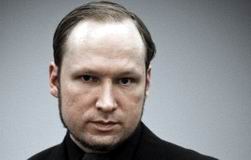
Anders Behring Breivik
Mass murderer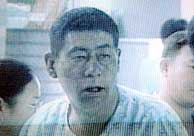 Kim Dae-Han
Mass murderer · South Korea · 2003
Name: Kim Dae-Han · Age: 56 · Occupation/background: He was an unemployed forme…
198 victims
Kim Dae-Han
Mass murderer · South Korea · 2003
Name: Kim Dae-Han · Age: 56 · Occupation/background: He was an unemployed forme…
198 victims
 Zhang Pilin
Mass murderer · China · 2002
Zhang Pilin (张丕林) died in the plane crash of China Northern Airlines Flight 613…
111 victims
Zhang Pilin
Mass murderer · China · 2002
Zhang Pilin (张丕林) died in the plane crash of China Northern Airlines Flight 613…
111 victims
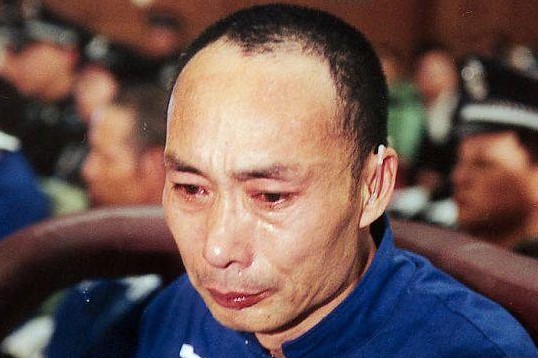 Jin Ruchao
Mass murderer · China · 2001
Jin Ruchao was blamed and arrested for planning and carrying out the Shijiazhua…
108 victims
Jin Ruchao
Mass murderer · China · 2001
Jin Ruchao was blamed and arrested for planning and carrying out the Shijiazhua…
108 victims
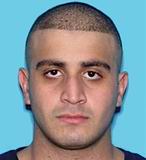 Omar Mateen
Mass murderer · USA · 2016
Omar Mir Seddique Mateen was an American mass murderer who killed 49 people and…
49 victims
Omar Mateen
Mass murderer · USA · 2016
Omar Mir Seddique Mateen was an American mass murderer who killed 49 people and…
49 victims
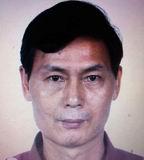 Chen Shuizong
Mass murderer · China · 2013
Chen Shuizong (simplified Chinese: 陈水总; traditional Chinese: 陳水總; pinyin: Chén…
46 victims
Chen Shuizong
Mass murderer · China · 2013
Chen Shuizong (simplified Chinese: 陈水总; traditional Chinese: 陳水總; pinyin: Chén…
46 victims
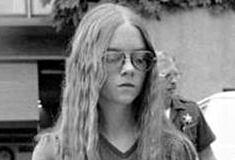 Brenda Spencer
Homicide · USA · 1979
Brenda Spencer was convicted after a school shooting at Grover Cleveland Elemen…
2 victims
Brenda Spencer
Homicide · USA · 1979
Brenda Spencer was convicted after a school shooting at Grover Cleveland Elemen…
2 victims
 Ashley Coulston
Murderer · Australia · 1992
Ashley Coulston was an Australian sailor and triple murderer who was serving th…
3 victims
Ashley Coulston
Murderer · Australia · 1992
Ashley Coulston was an Australian sailor and triple murderer who was serving th…
3 victims
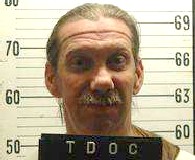 Harold Roy Hester
Murderer · USA · 1999
Harold Roy Hester was convicted in Tennessee of first degree murder, attempted…
1 victim
Harold Roy Hester
Murderer · USA · 1999
Harold Roy Hester was convicted in Tennessee of first degree murder, attempted…
1 victim
- Gender
- male
- Country
- Norway
- Location
- Oslo/ Utøya island, Norway
- Date of birth
- February 13, 1979
- Age at first offence
- 32
- Characteristics
- hate crime, white supremacist, shooting spree
- Victim profile
- Anne Lise Holter, 51 / Hanne Ekroll Løvlie, 30 / Ida Marie Hill, 34 / Jon Vegard Lervåg, 32 / Hanna Endresen, 61 / Tove Åshill Knutsen, 56 / Kjersti Sandberg, 26 / Kai Hauge, 32 / Monica Elisabeth Bøsei, 45 / Christopher Perreau, 25 / Tore Eikeland, 21 / Havard Vederhus, 21 / Hanne Kristine Fridtun, 19 / Anders Kristiansen, 18 / Tarald Kuven Mjelde, 18 / Guro Vartdal Håvoll, 18 / Jamil Rafal Yasin, 21 / Ismail Haji Ahmed, 19 / Karar Mustafa Qasim, 19 / Bano Abobakar Rashid, 18 / Mona Abdinur, 18 / Gizem Dogan, 17 / Lejla Selaci, 17 / Henrik André Pedersen, 27 / Sverre Flåte Bjørkavåg, 28 / Gunnar Linaker, 23 / Tamta Lipartelliani, 23 / Diderik Aamodt Olsen, 19 / Lene Maria Bergum, 19 / Andreas Edvardsen, 18 / Henrik Rasmussen, 18 / Simon Sæbø, 18 / Carina Borgund, 18 / Ingrid Berg Heggelund, 18 / Monica Iselin Didriksen, 18 / Tina Sukuvara, 18 / Espen Jørgensen, 18 / Sondre Furseth Dale, 17 / Sondre Kjøren, 17 / Syvert Knudsen, 17 / Torjus Jakobsen Blattmann, 17 / Håkon Ødegaard, 17 / Ronja Søttar Johansen, 17 / Eva Kathinka Lütken, 17 / Isabel Victoria Green Sogn, 17 / Silje Merete Fjellbu, 17 / Aleksander Aas Eriksen, 16 / Steinar Jessen, 16 / Andrine hills Espeland, 16 / Margrethe Bøyum Kløven, 16 / Elisabeth Trønnes Lie, 16 / Kevin Daae Berland, 15 / Karin Elena Holst, 15 / Johannes Buø, 14 / Trond Berntsen, 51 / Rune Havdal, 43 / Hanne Balch Fjalestad, 43 / Porntip Ardam, 21 / Bendik Rosnæs Ellingsen, 18 / Even Flugstad Malmedal, 18 / Fredrik Lund Schjetne, 18 / Silje Stamneshagen, 18 / Synne Røyneland, 18 / Andreas Dalby Grønnesby, 17 / Ida Beathe Rogne, 17 / Maria Maagerø Johannesen, 17 / Victoria Stenberg, 17 / Thomas Margido Antonsen, 16 / Åsta Sofie Helland Dahl, 16 / Marianne Sandvik, 16 / Eivind Hovden, 15 / Emil Okkenhaug, 15 / Birgitte Smetbak, 15 / Modupe Ellen Awoyemi, 15 / Ruth Benedicte Vatndal Nilsen, 15 / Sharidyn Svebakk-Bøhn, 14 / Snorre Haller, 30
- Method of murder
- Bombing / Shooting
- Date(s) of murder
- July 22, 2011
- Years active
- 2011
- Date of arrest
- Same day
- Status
-
Sentenced to containment—a special form of a prison sentence that can be extended indefinitely—with a time frame of 21 years and a minimum time of 10 years, the maximum penalty in Norway, on August 24, 2012
Case record: Anders Behring Breivik
Anders Behring Breivik (born 13 February 1979) was the perpetrator of the 2011 Norway attacks.
He carried out a sequential bombing and mass shooting on 22 July 2011. He bombed government buildings in Oslo, resulting in eight deaths, then carried out a mass shooting at a camp of the Workers' Youth League (AUF) of the Labour Party on the island of Utøya, where he killed 69 people, mostly teenagers. The attacks were described as the 2011 Norway attacks, involving two sequential terrorist attacks against the government, the civilian population, and a summer camp in Norway on 22 July 2011.
Timeline
- 22 July 2011 — Breivik bombed government buildings in Oslo and later carried out the mass shooting at Utøya.
- 25 July 2011 — Breivik was charged with violating paragraph 147a of the Norwegian criminal code; an arraignment was held in Oslo District Court.
- 13 August 2011 — Police took Breivik to Utøya for a re-creation of his actions on the day of the massacre.
- 16 April 2012 — The criminal trial began in Oslo Courthouse under the jurisdiction of Oslo District Court.
- 22 June 2012 — Closing arguments were held.
- 24 August 2012 — Oslo District Court found Breivik sane and sentenced him to containment with a time frame of 21 years and a minimum time of 10 years.
- 26 July 2012 — As of 26 July 2012, Breivik had received almost 600 letters in his prison cell.
- 23 July 2012 — Breivik was transferred to Skien Prison.
- 23 March 2013 — Breivik’s mother Wenche Behring Breivik died from complications from cancer.
- 14 September 2013 — Verdens Gang reported that before Wenche Behring Breivik died, she hired a lawyer to prevent Marit Christensen from publishing a book.
- 17 August 2013 — Journalist Marit Christensen informed the Norwegian press about interviews with Wenche Behring Breivik and a book planned for autumn 2013.
The offence
Oslo bombing
On 22 July 2011 at 15:25:22 (CEST), a car bomb explosion occurred in Oslo within Regjeringskvartalet, the executive government quarter of Norway. The car bomb was placed outside the office of Prime Minister Jens Stoltenberg and other government buildings. The explosion killed eight people and wounded several others, with more than 10 people critically injured.
Following the explosion, fires started in the H block (H-blokka) and R4. The shock wave blew out the windows on all floors as well as in the VG house and other buildings on the other side of the square. Streets in the area were filled with glass and debris. A wreckage of a car was sighted near one of the affected buildings, and a cloud of white smoke was reported as a fire continued to burn at the Department of Oil and Energy.
The blast was heard at least 7 kilometres (4.3 mi) away. At 15:26, police received the first message about the explosion, and at 15:28, the first police patrol reported that it had arrived at the scene. At the same time, news agency NTB was told that the Prime Minister was unhurt and safe.
After the explosion, police cleared the area and searched for any additional explosive devices. Through media outlets, police urged citizens to evacuate central Oslo.
Police later announced that the bomb was composed of a mixture of fertiliser and fuel oil (ANFO), similar to that used in the Oklahoma City bombing.
Impact on transportation
Immediately after the explosion, the area surrounding the damaged buildings was cordoned off and evacuated. People were asked to remain calm and leave the city center if possible, but there was no general evacuation. The subway system remained operational, and most of the tram network also ran, although sporadically, except for the line through Grensen (the street between Prof. Aschehoug's plass and Stortorvet).
Buses also continued to run, and at least one articulated bus on the No.37 line, which stops outside the Ministry of Finance, was commandeered to evacuate the walking wounded. An e-mail communication with the BBC from a traveller indicated that police were conducting searches in cars on the road to Oslo Airport, Gardermoen, which remained open.
The Gardermoen Line between Lillestrøm and Oslo Airport was shut down after a suspicious package was found close to the tracks. The same happened at the offices of TV 2, which were evacuated after a suspicious package was found outside the building.
Utøya massacre
Approximately one and a half hours after the Oslo explosion, a man wearing a police uniform, confirmed to be Anders Behring Breivik, boarded a ferry at Tyrifjorden, a lake some 40 kilometres (25 miles) northwest of Oslo, to the island of Utøya. The camp was organised by the Workers' Youth League (AUF), the youth division of the ruling Norwegian Labour Party (AP), and approximately 600 teenagers attended.
Former prime minister Gro Harlem Brundtland, whom Breivik said he hated and referred to in his writings as "the murderer of the nation", had been on the island earlier in the day to give a speech to the camp.
After the attack, Breivik stated that he originally wanted to target her specifically, but due to delays related to the ongoing renovation of Oslo Central railway station she was already gone when the shooting started.
When Breivik arrived on the island, he presented himself as a police officer who had come over for a routine check following the bombing event in Oslo. He signalled and asked people to gather around him before pulling weapons and ammunition from a bag and indiscriminately firing his weapons, killing and wounding numerous people.
He first shot people on the island and then started shooting at people trying to escape by swimming across the lake. Survivors described a scene of terror, including accounts of wounded victims pretending to be dead and being shot again.
The mass shooting reportedly lasted for around an hour and a half, ending when a police special task force arrived and the gunman surrendered at 18:35, despite having ammunition left.
The police have declined to say what guns he used for the attacks or how he acquired them.
Rescue and emergency response
As besieged people from Utøya tried to call emergency services, they were told to keep off the line unless they were calling about the Oslo bomb.
The first person to arrive on the scene was Marcel Gleffe, a German resident of Ski vacationing at a holiday camp on the mainland. Recognizing gunshots, he piloted his boat to the island and began throwing lifejackets to young people in the water, rescuing as many as he could in four or five trips, after which the police asked him to stop. The Daily Telegraph credited him with saving up to 30 lives.
Another forty were saved by Hege Dalen and Toril Hansen. The couple made four trips to the island to rescue campers, and at one point came under fire.
Several dozen more were rescued by Kasper Ilaug, a local resident. He received a telephone call requesting help, initially thought it was a prank, and acted anyway.
At 17:27, the local police district learned about the shooting, and two minutes later, police in Oslo were informed. By 17:38, the Norwegian central counter-terrorist unit Beredskapstroppen was dispatched to Utøya from its headquarters in Oslo.
Special forces in Oslo did not have a helicopter available that could take them straight to the island. The only helicopter available to the Oslo-based unit was a military one parked 60 km south of the capital at Moss Airport in Rygge. The unit reached the ferry crossing at 18:09, waited for a boat to take them across, and reached Utøya at 18:25.
When confronted by heavily armed police on the island, the gunman initially hesitated for a few seconds. When an officer yelled "surrender or be shot" he decided to lay down his weapons.
Anders Breivik called 112 at least twice to surrender, at 18:01 and 18:26, and continued killing people in between. The police said he hung up both times; they tried to call him back but did not succeed. Survivors begged officers to throw away their weapons because they were afraid that the men in uniforms would open fire on them.
Shortage of transport capacity
The Norwegian police had no helicopters suitable for transporting groups of police for an airdrop; the helicopter they had was useful only for surveillance. When helicopter transport was needed, the Norwegian police relied on assistance from the military.
When at the shore, police could not find a suitable boat to reach the island. The boat they finally located almost sank because their equipment was heavy; they had to continuously bail out water during the crossing. All the crews of the police surveillance helicopter were on vacation.
Arrest of innocent survivor
Upon arrival on the island of Utøya, the police arrested, in addition to Breivik, Anzor Djoukaev, an innocent 17-year old survivor who represented the Akershus branch of AUF.
He was reportedly stripped naked and locked up in a jail cell meters away from the cell housing the self-confessed killer. The youth was suspected of being an accomplice because his haircut was different from that shown on his identity document and because he did not react to the carnage with the same tears and hysteria as most other survivors. He was kept in custody for seventeen hours.
Barrister Harald Stabell criticised the police for failing to contact the youth's family, who feared he was killed, and for interrogating the victim without lawyer present.
Investigation and arrest
On 25 July 2011, Breivik was charged with violating paragraph 147a of the Norwegian criminal code, “destabilising or destroying basic functions of society” and “creating serious fear in the population,” both of which were acts of terrorism under Norwegian law.
He was ordered held for eight weeks, the first four in solitary confinement, pending further court proceedings. Custody was extended in subsequent hearings.
He was remanded at Ila Prison since his arrest, where the prison had three prison cells: one for rest, sleep, and watching DVD movies or television; a second set up for use of a PC without Internet connection; and a third cell with gym equipment. Only selected prison staff with special qualifications were allowed to work around him, and prison management aimed to not let his presence as a high-security prisoner affect other inmates.
After the lifting of letters and visitors censorship in January 2012, he received several inquiries from private individuals and devoted time to writing back.
Breivik was transferred to Skien Prison on 23 July 2012. The transfer was unannounced to the public and unknown to Breivik himself due to reconstruction work at Ila Prison, where he was to serve out his prison sentence under psychiatric care due to inadequate security at Norwegian psychiatric hospitals. He was incarcerated at Skien for approximately ten weeks.
In December 2011, he underwent his first examination by court-appointed forensic psychiatrists in the autumn of 2011.
On 8 June 2012, Professor of Psychiatry Ulrik Fredrik Malt testified in court as an expert witness, stating that he found it unlikely that Breivik was schizophrenic.
Trial
Charges and plea
On 25 July 2011, Breivik was arraigned in Oslo District Court.
The prosecution indicted him on terrorism charges. Breivik admitted to being the gunman at Utøya and the perpetrator behind the Oslo bomb, while also admitting the other actual events. He pleaded not guilty, stating "I do not recognise this justice system".
At the time of arraignment, the police feared that Breivik would use the hearing to communicate with possible accomplices, so it was held completely closed to media and other spectators. Instead, judge Kim Heger held a press conference afterwards where he read the court’s decision.
The judge ruled in favor of the prosecution, stating: "the accused is an imminent danger to society and must be confined for the safety of himself and others. It is highly probable that he is guilty of the alleged crimes and imprisonment is necessary to prevent destruction of evidence".
At the arraignment, Breivik was sentenced to eight weeks detention without mail or visitation, four of which in complete isolation, with renewal no later than 19 September 2011.
Start and structure of proceedings
The criminal trial began on 16 April 2012 in Oslo Courthouse under the jurisdiction of Oslo District Court.
Closing arguments were held on 22 June.
Breivik was represented by his defence counsel Geir Lippestad, Vibeke Hein Bæra, Tord Jordet, and Odd Ivar Grøn. Lippestad and Bæra were both in their late forties, while Jordet and Grøn were both in their thirties and were employed at Lippestad’s law firm prior to 22 July 2011 as associates. Bæra had ten years of experience as public prosecutor and was hired as a partner following Lippestad’s accepting the request from Breivik to defend him.
The prosecution was represented by state prosecutors Svein Holden and Inga Bejer Engh.
The presiding judge was Wenche Elizabeth Arntzen, joined by judge Arne Lyng, and lay judges Ernst Henning Eielsen, Anne Wisløff, and Diana Patricia Fynbo. Wisløff came in as an alternate after Thomas Indrebø had to recuse on the second day of the trial when it came to light that he had advocated the death penalty on a Facebook page the day after the terror attacks.
Three coordinating counsel for the aggrieved representing the 166 in court included Siv Hallgren (for aggrieved from the Government quarter), Frode Elgesem (for AUF and aggrieved from Utøya), and Mette Yvonne Larsen (assisting the appointed, spokesperson).
166 counsel for the aggrieved were appointed.
Forensic psychiatric evaluations
Breivik was examined by court-appointed forensic psychiatrists in the autumn of 2011. The first psychiatrists diagnosed him with paranoid schizophrenia, concluding that he was psychotic both when he carried out the attacks and during the observation. He was also diagnosed with abuse of non-dependence-producing substances antecedent of 22 July. The psychiatrists found Breivik to be criminally insane.
The outcome of the first competency evaluation was debated in Norway due to criticism.
A second psychiatric evaluation was commissioned following criticism and was published on 10 April 2012. It concluded that Breivik was not psychotic during the attacks nor during the evaluation and diagnosed antisocial personality disorder and narcissistic personality disorder.
Breivik sent a letter to several Norwegian newspapers shortly before his trial writing: "I must admit this is the worst thing that could have happened to me as it is the ultimate humiliation. To send a political activist to a mental hospital is more sadistic and evil than to kill him! It is a fate worse than death."
During the trial, Professor Ulrik Fredrik Malt testified on 8 June 2012, stating that he found it unlikely Breivik was schizophrenic.
Trial testimony and conduct
Breivik’s trial testimony included statements about his ideology and his view of criminal responsibility. On Monday 16 April 2012, when offered the opportunity to speak, Breivik said he did not recognize the legitimacy of the Court because it derived its authority from parties supporting multi-culturalism.
He claimed that presiding judge Wenche Elizabeth Arntzen was a close friend of Hanne Harlem, the sister of former prime minister Gro Harlem Brundtland. Geir Lippestad responded that it was not a formal assertion of conflict of interest.
When asked about the greatest influence on his ideology and the biggest source of his worldview, Breivik said, "Wikipedia".
Breivik also claimed that he would repeat the attacks given the chance, stated he acted to fight "communism" and to defend Norway and Europe against Muslims and multiculturalists, and maintained he could not be insane.
On 17 April 2012, the court was told that a lay judge posted remarks in the immediate aftermath of the acts on 22 July 2011 that the perpetrator ought to be given the death penalty. Proceedings were adjourned to consider implications and that judge was dismissed.
Breivik was cross-examined about his contacts made in preparation, including an alleged contact in Liberia, and controversies about claims of Serb contacts.
In testimony, Breivik stated that his goal at Utøya had not been to kill 69 people but to kill everybody, and that he wanted to frighten the youth enough so that everybody would get into the water to escape.
Defense and prosecution positions
The central theme of the defense closing speech was that Breivik, who never denied the facts of the case, was sane and should therefore not be committed to psychiatric care.
In closing arguments, the prosecutor Svein Holden argued that since the first psychiatric report was written in a non-falsifiable manner, it was impossible to disprove that Breivik was insane, and it then followed that he should be committed to psychiatric care.
Breivik delivered a 45-minute defense speech on the last day, 22 June 2012. The court refused video or audio transmission of his speech.
On 26 July 2012, it became known that a bootleg recording of this speech was posted on the video-sharing site YouTube. The recording was removed from YouTube after media reporting.
Sentencing
On 24 August 2012, Oslo District Court found Breivik sane and sentenced him to containment—a special form of a prison sentence that could be extended indefinitely—with a time frame of 21 years and a minimum of 10 years, the maximum penalty in Norway.
The court stated: "many people share Breivik's conspiracy theory, including the Eurabia theory. The court finds that very few people, however, share Breivik's idea that the alleged "Islamisation" should be fought with terror."
When asked whether he accepted the verdict and sentence, Breivik announced that he did not recognize the legitimacy of the court and therefore would neither accept nor appeal. His attorney said there would be no appeal. Breivik’s lead counsel Geir Lippestad confirmed Breivik would not appeal the sentence. The prosecuting attorneys announced at a press conference that they would not appeal either.
After sentencing, Breivik was transferred due to reconstruction work at Ila Prison and inadequate security at Norwegian psychiatric hospitals. He was incarcerated at Skien Prison for approximately ten weeks.
Outcome
Breivik was found sane and sentenced to containment with a minimum of 10 years and a total time frame of 21 years, with the possibility of extension.
Aftermath
After the trial, his computer was taken away and replaced with an electric typewriter, and all correspondence was sent on paper with prison authorities monitoring content.
The newspaper Verdens Gang reported on 26 July 2012 that Breivik planned to set up an organisation he called the Conservative Revolutionary Movement, consisting of around 50 right-wing activists in Europe, as well as an organization for imprisoned right-wing activists.
Verdens Gang also reported that Breivik had written to, among others, Peter Mangs and Beate Zschäpe and that he spent 8–10 hours per day writing. Breivik said he wanted to write three books: first an account of the events on the day of the attacks, second discussing the ideology underlying his actions, and third on his visions for the future. He also stated he wanted to study political science during his prison sojourn.
Politicians from several Norwegian parties protested his activities in prison, viewing it as continuing to espouse his ideology and possibly encouraging further criminal acts. Prison authorities queried the Ministry of Justice on whether his activities, described by Breivik as network building, could be perceived in the context of the terrorist acts; the ministry responded affirmatively. The clause authorising such measures contained wording: "...if the package contains information on planning or execution of punishable offense, evasion of the execution or acts which will disturb peace, order, and security".
In November 2012, Breivik wrote a 27-page letter of complaint to prison authorities about security restrictions, claiming that the prison director personally wanted to punish him. His complaints included that his cell was not adequately heated and he had to wear three layers of clothing to stay warm, guards interfered with his strictly-planned daily schedule, his cell was poorly decorated and had no view, his reading lamp was inadequate, guards supervised him while brushing his teeth and shaving and put indirect mental pressure on him by tapping their feet while waiting, he was not given candy and was served cold coffee, and he was strip-searched daily, sometimes by female guards.
He described his prison conditions as a "mini Abu Ghraib." Authorities lifted only one minor restriction by replacing his rubber safety pen with a regular pen. Breivik described the rubber safety pen as an "almost indescribable manifestation of sadism."
Breivik sent a list of 12 demands to prison authorities in November, including easier communication with the outside world and a PlayStation 3 to replace the PlayStation 2 in his cell because the PlayStation 3 offered more suitable games.
In February 2014, Breivik sent a letter to the Associated Press listing the 12 demands sent in November and announced he was going on hunger strike, saying he would starve himself to death if the demands were not met. In the letter, he described the conditions of his confinement as “torture.”
On 23 March 2013, Breivik’s mother Wenche Behring Breivik died from complications from cancer. On the same day, media said mother and son "took farewell during a meeting at Ila last week. Breivik was permitted to move himself out of the cage in the visit room—to give his mother a goodbye hug (avskjedsklem)". Breivik had asked for permission by prison officials to attend his mother’s funeral service; the request was rejected.
People and roles
- Anders Behring Breivik — perpetrator of the 2011 Norway attacks.
- Wenche Behring Breivik (1946–2013) — nurse; Breivik’s mother; died on 23 March 2013 from complications from cancer.
- Jens David Breivik (born 1935) — civil economist; Breivik’s father; a diplomat who worked for the Norwegian Embassy in London and later Paris.
- Gro Harlem Brundtland — former prime minister; she was on Utøya earlier in the day to give a speech to the camp.
- Jens Stoltenberg — Prime Minister of Norway; his office area was targeted in the Oslo bombing.
- Knut Storberget — Justice Minister; addressed the country after the attacks.
- Eskil Pedersen — leader of the Workers' Youth League; vowed to "return to Utøya" and urged Norway to continue its tradition of openness and tolerance.
- Øystein Mæland — Norway’s National Police Commissioner; stated in a live press conference that the number of fatalities at Utøya had reached "at least 80" with the count expected to increase.
- Marcel Gleffe — German resident of Ski who rescued young people from the water.
- Hege Dalen and Toril Hansen — a married female couple who rescued campers.
- Kasper Ilaug — local resident who made three trips to rescue campers.
- Marit Christensen — journalist who informed Norwegian press about planned publication of interviews with Wenche Behring Breivik.
Counsel and judges
- Geir Lippestad — lead counsel for Breivik’s defence.
- Vibeke Hein Bæra — defence counsel.
- Tord Jordet — defence counsel (associate lawyer).
- Odd Ivar Grøn — defence counsel (associate lawyer).
- Inga Bejer Engh — prosecutor.
- Svein Holden — prosecutor.
- Wenche Elizabeth Arntzen — presiding judge.
- Arne Lyng — judge.
- Ernst Henning Eielsen — lay judge.
- Anne Wisløff — lay judge (entered as alternate after Thomas Indrebø recused).
- Diana Patricia Fynbo — lay judge.
- Thomas Indrebø — lay judge who recused after it came to light he had advocated the death penalty on a Facebook page day after the terror attacks.
- Kim Heger — judge involved in the press conference read-out after the arraignment decision.
Other details
Containment sentence characterization
The sentence was described as the maximum penalty in Norway, with a time frame of 21 years and a minimum time of 10 years, and it could be extended as long as he was deemed a danger to society.
Confiscation and correspondence restrictions
Following changes to letters and visitors censorship, he received inquiries from private individuals and wrote back. After trial, prison authorities monitored his content as correspondence.
Internet activity and writings
Janne Kristiansen, Chief of the Norwegian Police Security Service (PST), stated that Breivik "deliberately desisted from violent exhortations on the net [and] has more or less been a moderate, and has neither been part of any extremist network." Breivik was reported to have written posts on the Islam-critical website document.no and attended meetings of "Documents venner" (Friends of Document).
A YouTube video was posted six hours before the attacks, urging conservatives to "embrace martyrdom" and showing himself wearing a thermal sports top and pointing a Ruger Mini-14.
Breivik was linked to a document titled 2083: A European Declaration of Independence, which was described as 1,518 pages and bearing the name "Andrew Berwick." The file was e-mailed to 1,003 addresses about 90 minutes before the bomb blast in Oslo. Breivik admitted in court that it was mostly other people’s writings he had cut-and-pasted from the web.
Orchestrated reconstruction
Police took Breivik to Utøya on 13 August 2011 wearing a bulletproof vest and a leash, and saw him mimic a shooting action. Media and public were not alerted to the operation.
The police explained that the walk-through was necessary because Breivik would be charged and tried for all 77 murders individually, and it was deemed less offensive to survivors now rather than during the trial.
Administrative information about victims and casualties
Casualty figures were reported in stages. Eight people were killed in the Oslo bombing, with eleven seriously wounded and fifteen suffering minor injuries. Later reporting described the number of fatalities at Utøya as reaching "at least 80" and later being revised downwards to 68 and then to 69, with a total of 77 including eight from the bombing in Oslo.
By 29 July, police announced that one of the severely wounded victims from Utøya had died in a hospital, bringing the death toll from the island massacre to 69 (and 77 total, including 8 from the bombing in Oslo). Names and dates of birth of the victims were released starting 26 July, and by 29 July, all 77 victims were published. The median age of the deceased was 18 and the average age 21.8.
On 1 August, NRK revealed that 153 people were injured during the attacks, in addition to the 77 deaths. Ninety-one of the injured were brought to hospital or other medical treatment from the Oslo bombing, and 62 from the Utøya shooting. On 2 August, the number of injured from the Oslo bombing was revised to 89, for a total of 151 injured.
Named victims and individuals mentioned
- Sharidyn Svebakk-Bøhn — youngest victim at Utøya, just turned 14 years old.
- Dana Barzingi — 21-year-old survivor who described victims pretending to be dead and being shot again.
- Monica Bøsei (45), known as “Mother Utøya” — island manager for over 20 years and a victim.
- Trond Berntsen — step-brother of Norway's crown princess Mette-Marit; an off-duty, unarmed police officer among the dead.
- Dana Barzingi — survivor who described the scene.
- Eivind Dahl Thoresen (26) — first bomb survivor to give evidence who described his injuries and being thrown backwards by the blast.
- Vidar Vestli — bomb survivor whose statement was read to the court, describing loss of a leg and injuries.
- Tone Maria With — bomb survivor who claimed she was too afraid to venture into central Oslo, described a hole in her chest, and hearing loss.
- Harald Føsker — prosecution witness and survivor who needed surgery on his face.
- Tore Raasok — prosecution witness who had a leg amputated, undergone 10 surgical operations, and lost use of one arm.
- Kristian Rasmussen — prosecution witness who described being in his office sending an email when "everything went black" and then going into a coma for 12 days.
- Hayder Mustafa Qasim — spectator who shouted "Go to hell, go to hell, you killed my brother" and threw a shoe toward Breivik but hit defence attorney Vibeke Hein Bæra.
- Karar Mustafa Qasim — victim at Utøya whose brother Hayder Mustafa Qasim was.
- Ylva Helene Schwenke (aged 14 at attacks) — prosecution witness who took four bullets and said her scars were "the price for democracy".
- Henrik Rasmussen — described as jumping into the line of fire to save Andrine Johansen, while Breivik was described as laughing with joy.
- Mathias Eckhoff (aged 21) — prosecution witness who described being shot in the thighs and scrotum.
- Mohamad Hadi Hamed (aged 21) — prosecution witness who was wheelchair-bound and had amputations due to injuries.
- Adrian Pracon — witness who testified about meeting Breivik at Utøya and Breivik sparing him.
- Mehmet — not named in a separate identity; multiple casualties and survivors were referred to by first names, ages, and roles without complete biographical details.
Attempted arrest and other contested matters
Police arrested Anzor Djoukaev in addition to Breivik during the attack response, though he was described as innocent. Barrister Harald Stabell criticised the police for failing to contact his family and for interrogating him without a lawyer present.
Witness descriptions raised uncertainty about whether there was only one shooter, with police receiving descriptions of a second gunman and working to confirm or deny accuracy. Breivik claimed he acted alone and had no accomplices, while other reports indicated he claimed to have accomplices.
Manifests, ideology, and religious-political views mentioned
Breivik described his far-right militant ideology in a compendium of texts entitled 2083: A European Declaration of Independence, which he distributed electronically on the day of the attacks.
The compendium’s worldview was described as including Islamophobia, support of Zionism, opposition to feminism, and opposition to "cultural Marxism." It was described as arguing for violent annihilation of "Eurabia" and multiculturalism, and for deportation of all Muslims from Europe based on the model of the Beneš decrees.
Breivik wrote in his writings that his main motive for the atrocities was to market his manifesto.
He wrote that he had played video games such as World of Warcraft to relax and Call of Duty: Modern Warfare 2 for "training-simulation." He told a court in April 2012 that he trained for shooting using a holographic device while playing Call of Duty and claimed it helped him gain target acquisition.
Behaviour during trial and comments attributed to Breivik
Breivik’s defence and testimony included:
- “Necessity” as the basis for his actions when responding to charge questions.
- Claims about his ideology’s sources, including the statement: "Wikipedia".
- Claims about repeating the attacks if given the chance.
- Statements that "I do not recognise this justice system" when pleading not guilty.
A court translator incorrectly rendered a concept connected to his plea as "self-defence" instead of "necessity" (nødrett), and court officials corrected the error on the second day.
Spotted an error, or have more information about this case?