
Robert Bierenbaum
Murderer Brian Kevin Rosenfeld
Murderer · USA · 1985
Brian Kevin Rosenfeld Brian Kevin Rosenfeld was sentenced to three concurrent l…
23 victims
Brian Kevin Rosenfeld
Murderer · USA · 1985
Brian Kevin Rosenfeld Brian Kevin Rosenfeld was sentenced to three concurrent l…
23 victims
 Marvin Gray
Murderer · USA · 1975
Marvin Gray was convicted killer who claimed responsibility for 23 slayings and…
23 victims
Marvin Gray
Murderer · USA · 1975
Marvin Gray was convicted killer who claimed responsibility for 23 slayings and…
23 victims
 Yahweh ben Yahweh
Murderer · USA · 1980
Yahweh ben Yahweh was born and legally named Hulon Mitchell Jr. (October 27, 19…
23 victims
Yahweh ben Yahweh
Murderer · USA · 1980
Yahweh ben Yahweh was born and legally named Hulon Mitchell Jr. (October 27, 19…
23 victims
 Russell Ellwood
Murderer · USA · 1991
Russell Ellwood was a former taxi driver. Authorities suspected him of killing…
20 victims
Russell Ellwood
Murderer · USA · 1991
Russell Ellwood was a former taxi driver. Authorities suspected him of killing…
20 victims
 Derek Rocco Barnabei
Murderer · USA · 1993
Derek Rocco Barnabei — convicted person; petitioner-appellant · Sarah Wisnosky…
1 victim
Derek Rocco Barnabei
Murderer · USA · 1993
Derek Rocco Barnabei — convicted person; petitioner-appellant · Sarah Wisnosky…
1 victim
 Mark Twitchell
Murderer · Canada · 2008
April 12, 2011 — Mark Twitchell was sentenced to life in prison with no chance…
1 victim
Mark Twitchell
Murderer · Canada · 2008
April 12, 2011 — Mark Twitchell was sentenced to life in prison with no chance…
1 victim
 Juan Velazquez
Murderer · USA · 2001
Juan Velazquez moved in with Virginia Venegas and her two young children, 3-yea…
1 victim
Juan Velazquez
Murderer · USA · 2001
Juan Velazquez moved in with Virginia Venegas and her two young children, 3-yea…
1 victim
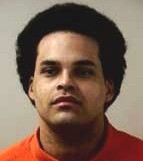 Luis Reyes
Murderer · USA · 1996
Name: Luis Reyes (Luis E. Reyes) · Date of birth: 02/08/1977 · Race: White · Ge…
2 victims
Luis Reyes
Murderer · USA · 1996
Name: Luis Reyes (Luis E. Reyes) · Date of birth: 02/08/1977 · Race: White · Ge…
2 victims
 Donald Jay Miller
Murderer · USA · 1992
June 12, 1992 — Jennifer Geuder went out with her married boyfriend, Jose Luna,…
1 victim
Donald Jay Miller
Murderer · USA · 1992
June 12, 1992 — Jennifer Geuder went out with her married boyfriend, Jose Luna,…
1 victim
- Gender
- male
- Country
- USA
- Location
- Manhattan, New York, USA
- Date of birth
- 1955
- Age at first offence
- 30
- Characteristics
- dismemberment
- Victim profile
- His wife, Gail Katz-Bierenbaum, 29
- Method of murder
- Strangulation
- Date(s) of murder
- July 7, 1985
- Years active
- 1985
- Date of arrest
- —
- Status
-
Life imprisonment
Sentenced to 20 years to life in prison on November 29, 2000
Case summary
Robert Bierenbaum was a plastic surgeon who was convicted in October 2000 of murder in the strangulation death of his wife, Gail Katz-Bierenbaum. The death occurred in their Manhattan apartment on July 7, 1985. Bierenbaum was a licensed pilot.
Timeline
- July 7, 1985 — Gail Katz-Bierenbaum vanished after being strangled in their Manhattan apartment.
- 1985 — Bierenbaum came under suspicion after Gail's disappearance.
- 1989 — Bierenbaum moved to Reno, Nevada.
- 1989 — Alayne Katz believed that a female torso washed ashore on Staten Island was that of her dead sister.
- 1990 — Bierenbaum began frequently flying his own plane to El Fuerte, Mexico, to perform free reconstructive surgery on poor children with cleft palates.
- 1996 — Bierenbaum moved to Minot, North Dakota.
- November 12, 1983 — Gail filed a police report claiming that her husband had choked her until she lost consciousness.
- December 8, 1999 — Bierenbaum was arraigned in New York City and freed on bail to await trial.
- October 2-24, 2000 — Trial took place.
- October 24, 2000 — The jury found Bierenbaum guilty of second-degree murder.
- November 29, 2000 — Judge Leslie Crocker Snyder sentenced Bierenbaum to 20 years to life in prison.
- 2001 — The Bierenbaum case was the subject of the 2001 New York Times non-fiction bestseller book The Surgeon's Wife.
- 2002 — Bierenbaum’s conviction was upheld in the New York state Supreme Court.
- September 2002 — New Jersey revoked Bierenbaum’s medical practice license.
- 2002 — The television show Dominick Dunne: Power, Privilege, & Justice included the case.
The offence
The prosecution stated that Bierenbaum strangled Gail Katz-Bierenbaum, then discarded her dismembered body in the ocean. Bierenbaum was said to have squeezed her body into a duffle bag and dumped it from an airplane.
Investigation and evidence
Police investigations and Gail Katz-Bierenbaum’s sister, Alayne Katz, suspected Bierenbaum of murder from the beginning, even though there was no corpse. Immediately after Gail’s disappearance, Alayne Katz launched a campaign against him, writing letters to his New York neighbors and to hospitals where he worked, and she later took credit for driving him from New York.
Airport records later verified a two-hour flight in a Cessna 172 taken from Essex County, New Jersey over the Atlantic Ocean on the day Gail vanished. The prosecution stated that Bierenbaum failed to mention this fact during initial questioning. The prosecution also said it appeared he had attempted to alter the flight log, including that airport records later verified the trip while it appeared he had attempted to cover up the flight by altering the log.
The trial focused on the problem of the “missing body.” The law requires the prosecution of any crime to pass the corpus delicti test, which refers to the “body of the crime,” not a human corpse, proving that the crime actually took place. Prosecutors argued they could show that the crime took place by circumstantial evidence, even without a corpse.
Prosecutors testified that there had been no sign of Gail Katz-Bierenbaum’s existence after her disappearance and that there had been no subsequent activity in her bank, credit card, or Social Security accounts. Investigators explained they combed through records across the United States without finding any trace of her.
The prosecution contended that Gail intended to tell Bierenbaum on the weekend of her disappearance that she was leaving permanently for another man. Prosecutor Daniel Bibb claimed that Bierenbaum strangled Gail after she told him she was ending the marriage, placed her body in a duffel bag, put it in the trunk of his father’s Cadillac, drove to the Essex County Airport in Fairfield, New Jersey, rented a plane, flew low over the ocean, and disposed of the body. A police reenactment was videotaped and shown to the jury demonstrating how bags could be dumped from an identical airplane.
The prosecution said Bierenbaum lied repeatedly and gave conflicting versions of specific events. The prosecution described false claims that a private detective had spotted his wife as a waitress in a California resort after her disappearance. Another lie was that Gail’s psychotherapist, Dr. Sybil Baran, had told him Gail was suicidal; Dr. Baran testified that she had never reported such a thing. Baran also said Gail had gone apartment hunting and had bought birth control devices just before she disappeared.
The prosecution described one additional lie as an omission: that Bierenbaum never disclosed to police a two-hour flight on the day Gail disappeared and then apparently attempted to cover up the flight by altering the log.
Three psychiatrists had warned Gail Bierenbaum that her husband was homicidal, but Judge Leslie Snyder ruled they could not testify because of patient confidentiality. Judge Snyder said she was distressed that she had to exclude testimony of the three psychiatrists but that she had to balance that against protections afforded by the law for patient-doctor relationships.
Prosecutors argued Bierenbaum waived his right to confidentiality by allowing his own psychiatrists to speak about his treatment with his parents and his wife. Two groups opposing the testimony—the New York State Psychiatric Association and the American Psychoanalytic Association—argued in a brief that the waiver of confidentiality that allows psychiatrists to warn third parties of potential harm ends when that threat ends. The attorney for the psychiatric association argued: “goal of warning is to protect people, not to prosecute them.”
Therapists argued that using such evidence in court would discourage patients from sharing feelings of violence in the future.
Defense attorney David Lewis said the prosecution’s case was based entirely on guesswork and that there were no eyewitnesses and no physical evidence. Lewis admitted Gail’s disappearance with no trace suggested she was dead but argued no one could know how she died.
The defense pointed to Gail’s risky behavior, including love affairs with drug users. Under the defense’s theory, Gail’s threats to leave Bierenbaum suggested she might have done so and then met with foul play. The defense also said Gail had a background of erratic behavior and had once attempted suicide.
A defense witness testified that he saw Gail in a Manhattan bagel shop during the time that Bierenbaum took his airplane flight.
Arrest and court proceedings
Brought back from North Dakota, Bierenbaum was arraigned in New York City on December 8, 1999, and was freed on bail to await trial.
The trial opened on October 2, 2000. The jury found Bierenbaum guilty of second-degree murder on October 24.
State sentencing rules called for a minimum sentence of 15 years to life and a maximum of 25 years to life.
Trial
- Date of trial: October 2-24, 2000
- Verdict: Guilty of second-degree murder
- Place: Manhattan, New York
- Judge: Leslie Crocker Snyder
- Chief prosecutor: Daniel Bibb
- Chief defense lawyers: Scott Greenfield; David Lewis
Sentencing
On November 29, 2000, Judge Leslie Crocker Snyder sentenced Bierenbaum to 20 years to life in prison.
Scott Greenfield requested the minimum sentence of 15 years to life, saying: “He is no threat to society and doesn't need rehabilitation.”
The victim’s sister, Alayne Katz, asked for the maximum sentence, 25 years to life, and said:
“He shall remind this court that he was a productive citizen, a doctor,”
but added that he used his “wealth, intelligence and education” to discard her sister's body.
“He shall remind this court that he was a productive citizen, a doctor,” she said, but added that he used his “wealth, intelligence and education” to discard her sister's body.
In describing the defendant, Judge Snyder said:
“hours and hours”
and that “the portrait that emerges of this defendant is one that needs a psychiatrist” to sort through.
Bierenbaum maintained his innocence and did not speak at sentencing.
Appeals and outcomes
Bierenbaum appealed, and his conviction was upheld in the New York state Supreme Court in 2002.
Other details
People and relationships
Gail Katz-Bierenbaum was the victim and was aged 29. The trial included testimony and statements by the victim’s sister, Alayne Katz. The defense included attorneys Scott Greenfield and David Lewis. Judge Leslie Crocker Snyder presided.
Bierenbaum later remarried and had a baby girl.
Bierenbaum’s new wife was Dr. Janet A. Chollet-Bierenbaum.
Legal precedent
The case “People of the State of New York v. Robert Bierenbaum” was described as setting precedent on upholding physician-patient privilege even when a Tarasoff warning is invoked. The cited statement was: “Neither a psychiatrist issuing a Tarasoff warning nor a patient telling his friends he's in treatment constitutes a waiver of a patient's psychiatrist-patient privilege.”
The case was described as being used as precedent in the California case of Glyn Sharf, where the accused was charged of murdering his wife even though the victim’s body was never found.
Media and notoriety
The case was the subject of the 2001 New York Times non-fiction bestseller book The Surgeon's Wife. It was also one of the stories in the television show Dominick Dunne: Power, Privilege, & Justice on Court TV.
The ISBN database summary of the book included the following passages:
“…Robert Bierenbaum, a prominent surgeon and certified genius...”
“Gail's parents had been thrilled to learn she was marrying Robert Bierenbaum. He seemed to be the perfect match for their daughter. he was from a well-to-do family, a medical student who spoke five languages fluently, a skier, and he even flew an airplane.”
“…Robert had tried to choke Gail because he caught her smoking, she filed a police report. She also alleged that he tried to kill her cat because he was jealous of it.”
Bierenbaum was referred to as “The Lady Killer.” It was also said in Vanity Fair and New York magazine that women still found him attractive, even though he had been convicted of murdering his first wife.
Medical licensing
Following the court case, Bierenbaum surrendered his License to Practice medicine in November 2000. In September 2002, New Jersey also revoked his medical practice license.
Body status
The victim’s body was never recovered. The case was described as involving dismemberment and that the bodies were never found and the body was never found.


Spotted an error, or have more information about this case?