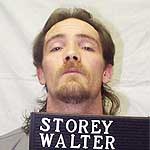
Walter Storey
Murderer Brian Kevin Rosenfeld
Murderer · USA · 1985
Brian Kevin Rosenfeld Brian Kevin Rosenfeld was sentenced to three concurrent l…
23 victims
Brian Kevin Rosenfeld
Murderer · USA · 1985
Brian Kevin Rosenfeld Brian Kevin Rosenfeld was sentenced to three concurrent l…
23 victims
 Yahweh ben Yahweh
Murderer · USA · 1980
Yahweh ben Yahweh was born and legally named Hulon Mitchell Jr. (October 27, 19…
23 victims
Yahweh ben Yahweh
Murderer · USA · 1980
Yahweh ben Yahweh was born and legally named Hulon Mitchell Jr. (October 27, 19…
23 victims
 Russell Ellwood
Murderer · USA · 1991
Russell Ellwood was a former taxi driver. Authorities suspected him of killing…
20 victims
Russell Ellwood
Murderer · USA · 1991
Russell Ellwood was a former taxi driver. Authorities suspected him of killing…
20 victims
 Robert Martines Perez
Murderer · USA · 1994
Name: Robert Martines Perez · Other name used in proceedings: Robert Martinez P…
15 victims
Robert Martines Perez
Murderer · USA · 1994
Name: Robert Martines Perez · Other name used in proceedings: Robert Martinez P…
15 victims
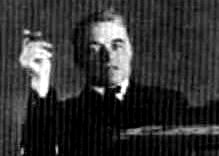 Andrew Kehoe
Mass murderer · USA · 1927
Andrew P. Kehoe committed suicide the same day by killing himself in the explos…
44 victims
Andrew Kehoe
Mass murderer · USA · 1927
Andrew P. Kehoe committed suicide the same day by killing himself in the explos…
44 victims
 David Stephen Middleton
Murderer · USA · 1994
David Stephen Middleton was a one-time Miami police officer who was sentenced t…
2 victims
David Stephen Middleton
Murderer · USA · 1994
David Stephen Middleton was a one-time Miami police officer who was sentenced t…
2 victims
 Deyan Deyanov
Homicide · Spain · 2011
Jennifer Joan Mills-Westley was murdered on 13 May 2011 in Tenerife. Her death…
1 victim
Deyan Deyanov
Homicide · Spain · 2011
Jennifer Joan Mills-Westley was murdered on 13 May 2011 in Tenerife. Her death…
1 victim
 Cindy Lou Beck
Murderer · USA · 2010
Cindy Lou Beck was 47 at the time of additional charges in Marion County. She w…
2 victims
Cindy Lou Beck
Murderer · USA · 2010
Cindy Lou Beck was 47 at the time of additional charges in Marion County. She w…
2 victims
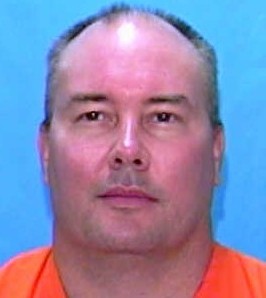 Donald Dillbeck
Murderer · USA · 1979
Donald Dillbeck (May 24, 1963) was also known as “Dill Dillbeck” and “Robert La…
2 victims
Donald Dillbeck
Murderer · USA · 1979
Donald Dillbeck (May 24, 1963) was also known as “Dill Dillbeck” and “Robert La…
2 victims
- Gender
- male
- Country
- USA
- Location
- St. Charles County, Missouri, USA
- Date of birth
- February 20, 1967
- Age at first offence
- 23
- Characteristics
- robbery
- Victim profile
- H is across-the-hall neighbor Jill Frey
- Method of murder
- St abbing with knife
- Date(s) of murder
- February 2, 1990
- Years active
- 1990
- Date of arrest
- —
- Status
-
Sentenced to death
Sentenced to death on November 26, 1991
Case information
Walter Timothy Storey (also known as Walter Storey) was convicted in the case State of Missouri v. Walter Timothy Storey, Appellant and sentenced to death.
Court (appeal): Supreme Court of Missouri, en banc Case citation: 901 S.W.2d 886 (Mo. banc 1995) Case number: SC82324 Handdown date: 03/06/2001 Appeal from: Circuit Court of St. Charles County, Hon. Ellsworth Cundiff Affirmed: AFFIRMED (Opinion Vote: AFFIRMED; Limbaugh, White, Holstein, Wolff and Benton, JJ., concur)
Timeline
- February 2, 1990 — Storey received a divorce petition from his wife; by his own admission he entered Jill Frey’s apartment, “struggled” with her, and stole her car after taking her pocketbook and car keys.
- February 3, 1990 — By his own admission, Storey reentered Frey’s apartment using the stolen keys, attempted to wipe fingerprints, cleaned under Frey’s fingernails with her own toothbrush, put evidence in a dumpster, and threw Frey’s keys in the lake behind her apartment.
- December 17, 1999 — The trial court adopted a third jury’s recommendation that Storey be put to death.
- November 26, 1991 — Storey was sentenced to death.
- 1995 — The Supreme Court of Missouri affirmed the convictions but reversed and remanded the death sentence for new penalty phases due to violations of constitutional rights.
- 1997 — A second jury recommended a sentence of death; the trial court adopted it; the Supreme Court of Missouri reversed and remanded the death sentence again due to failure to properly instruct the jury concerning Storey’s constitutional right not to testify.
- 1999 — The Supreme Court of Missouri reversed and remanded the death sentence due to the failure to properly instruct the jury concerning Storey’s constitutional right not to testify.
- 03/06/2001 — The Supreme Court of Missouri, en banc, affirmed the sentence of death.
Background
Storey killed Jill Frey in her St. Charles apartment in February 1990.
Storey was convicted by a jury of:
- first degree murder
- armed criminal action
- second degree burglary
- tampering with evidence
The jury recommended the death sentence, and the trial court imposed it.
This Court affirmed Storey’s convictions but has twice reversed and remanded his sentence for new penalty phases because of violations of constitutional rights. On a third time, a jury recommended and the court imposed the death penalty. Storey appealed, and the Supreme Court of Missouri affirmed.
The offence
On February 2, 1990, Storey received a divorce petition from his wife. Later that night, by his own admission, Storey:
- got a knife from his kitchen,
- climbed up the balcony of his across-the-hall neighbor Jill Frey,
- entered Frey’s apartment,
- took her pocketbook and car keys,
- “struggled” with her, and
- stole her car.
On the next day, by his own admission, Storey reentered Frey’s apartment using the stolen keys and:
- tried to wipe his fingerprints from anything he had touched,
- cleaned under Frey’s fingernails with her own toothbrush,
- put evidence in a dumpster, and
- threw Frey’s keys in the lake behind her apartment.
The day after that, Frey failed to appear for work, and her co-workers came to check on her. They found Frey’s dead body in the bedroom.
Frey had:
- six broken ribs,
- having been hit in the face and head 12 times,
- a non-fatal stab wound in her side.
Most or all of these injuries were inflicted before Frey was killed by two six-inch cuts across her throat.
Investigation and evidence at trial (as described on appeal)
During the penalty-phase litigation, the Supreme Court of Missouri addressed disputes about jury selection, victim impact evidence, closing argument, jury instructions, and submission and sufficiency of aggravating circumstances.
Trial
Jury selection
Storey raised claims regarding jury selection, including the denial of motions related to mistrial and juror strikes.
Explanation of life imprisonment during voir dire
During jury voir dire, defense counsel asked the venire panel whether they understood the meaning of life imprisonment. A venireperson asked whether a person sentenced to life without the possibility of parole might later be released from prison due to an appeal. The trial court explained:
“[T]here is always a possibility that there are appeals that you are aware and that there is always the possibility that the governor has the power to give clemency.”
Storey argued that the explanation violated Caldwell v. Mississippi (472 U.S. 320 (1985)) by shifting responsibility from the sentencing jury to the appellate court and created juror bias. The Supreme Court of Missouri denied the point because Storey’s jury was selected entirely from the first venire panel and therefore did not hear the comments.
Defense-requested strikes for cause after peremptory strikes
Storey argued that the trial court abused its discretion by overruling defense counsel’s motion to strike two prospective jurors for cause. Storey contended:
- the first venireperson testified that “a murder’s life had no value,” and
- the second venireperson testified she could not consider graphic photographs of the crime scene and autopsy.
The Supreme Court of Missouri held that because the defense struck those venirepersons peremptorily, section 494.480.4, RSMo 1994 controlled and the qualification of those venirepersons could not constitute grounds for reversal.
Storey also argued that section 494.480.4 violated the United States Constitution and the Missouri Constitution. The Supreme Court of Missouri held these issues were waived because they were not raised until the motion for new trial and were not supported beyond abstract and conclusory statements.
State death-qualification strike for cause
Storey argued that the trial court abused its discretion by striking a venireperson due to an inability to consider the death penalty as punishment. The Supreme Court of Missouri quoted the exchange:
[Counsel]: [G]iven our discussions, given what you have heard so far, could you form the opinion that for killing Jill Frey, Mr. Storey should get the death penalty?
[Venireperson]: No.
[Counsel]: When you indicate no, is that because you have a moral or religious belief that stops you from considering it?
[Venireperson]: Yes.
[Counsel]: Given that decision and that belief, realistically speaking, do you think there is any evidence I could give you that would let you temporarily set aside that belief so that in fact in this case, you could vote for the death penalty?
[Venireperson]: It's possible, but not likely. . . . It would only be in a very severe case. You would really have to show me some evidence.
Over defense counsel’s objection, the trial court struck the venireperson for cause. The Supreme Court of Missouri affirmed the denial of the point, finding the venireperson’s equivocal and shifting responses provided a sufficient basis to conclude he could not consider the full range of punishment.
Sentencing
Death sentence imposed
After the jury recommended the death sentence, the trial court sentenced Storey to death on November 26, 1991.
On appeal, the Supreme Court of Missouri described the procedural history:
- In 1995, it affirmed convictions but reversed and remanded the death sentence for new penalty phases due to ineffective assistance of counsel during the penalty phase.
- In 1997, a second jury recommended death and the trial court adopted it; the Supreme Court reversed and remanded again due to trial court’s failure to properly instruct the jury concerning Storey’s constitutional right not to testify.
- On December 17, 1999, the trial court adopted the third jury’s recommendation to put Storey to death.
- On 03/06/2001, the Supreme Court affirmed the death sentence.
Appeals
Issues raised and disposition
Storey alleged eleven points of error. The Supreme Court of Missouri addressed them in categories:
- Jury selection (points 1 and 7): denied.
- Victim impact evidence and expert testimony limits (points 4, 5, and 8): denied.
- State’s closing argument (points 2 and 3): denied.
- Jury instructions eleven and twelve (points 9 and 10): denied.
- Statutory aggravators submission (point 6): denied.
The Court also conducted independent sentence review under section 565.035, RSMo 1994 and addressed proportionality, ultimately affirming.
Mitigating and aggravating evidence rulings
Late disclosure and endorsed witnesses
Storey argued the trial court erred by admitting eleven exhibits and endorsing witnesses:
- Trinje Reidelberger
- Bobby Reidelberger
- Jody Harrison because of late disclosure after commencement of trial, prejudicing his due process and fair trial rights.
The Supreme Court discussed a discovery process standard and addressed late endorsement issues in light of factors such as waiver, surprise, disadvantage, and whether the testimony could have been contemplated.
The Court quoted an in-court discussion during objection:
THE COURT: Now you wanted to make a record on something this morning, ma'm?
[Defense Counsel]: Yes, your Honor. Yesterday morning before we began opening statements, we indicated to the Court that we had just moments before received from the prosecuting attorney, Nels Moss, an endorsement of four new witnesses and then a number of items, a photo album. . . . [T]he matters that have now been disclosed are brand new witnesses, documents, items that have not previously been disclosed until the third day of trial. We are at a significant disadvantage.
THE COURT: Tell me about the first three [referring to Trinje Reidelberger, Bobby Reidelberger, and Jody Harrison]. . . . These are basically victim character witnesses?
[Prosecutor]: Basically victim character witnesses. . . .
THE COURT: So they don't have any knowledge of the incident itself?
[Prosecutor]: No, none whatsoever. . . .
THE COURT: With respect to the first three, they are character witnesses what a good person the deceased was. I'm going to allow the endorsement of those first three witnesses, two Reidelbergers and Jody Harrison. . . . Is there anything further?
[Defense Counsel]: Yes Judge. The physical exhibits, again, I will object to those items as having not been disclosed in a timely manner to the State . . ..
THE COURT: I am going to deny the motion and allow it.
[Defense Counsel]: If I could, just for the record, indicate that . . . we have no testimony, no statements, no notes. . . . If we had been given timely notification of their endorsement, we would have exercised our discovery rights to depose them so we are fully prepared for the information they will provide. In light of the Court's ruling, we are going to be unable to provide effective assistance of counsel to question these witnesses on cross-examination should that be necessary. For that reason, I would request a mistrial or in the alternative, ask that these witnesses be excluded. . . .
THE COURT: I'll make them available so that you can talk to them before they testify. (Record at 1123-1130).
The Supreme Court found no credible showing of prejudice during voir dire and during presentation of evidence and closing arguments, noting that defense counsel did not cross-examine the character witnesses and did not indicate the remedy was inadequate. The Court also did not warrant reversal despite disapproving untimely endorsement without good cause.
Victim impact evidence
Storey argued victim impact evidence exceeded permissible victim impact evidence boundaries under Payne v. Tennessee.
The Supreme Court addressed testimony by:
- Lavon Marshall, who testified about apartment proximity and that on the day of the murder she heard Storey murder Frey but failed to call the police; she said the murder traumatized her, forcing four years of counseling and making her give up her job.
- Karen Stepson, a close friend of Frey, who testified she discovered Frey’s body after the murder; she said the experience caused her fear and anxiety; she testified Frey was valued as a teacher of handicapped children; she said Frey’s students continually looked for her after Frey’s death and were confused that she never returned to school.
The Supreme Court held this testimony described the specific harm caused by the defendant and did not find abuse of discretion.
Storey also challenged eleven exhibits related to structures and events dedicated to Frey after her death. The Court listed:
- a photograph of Frey with her first class of handicapped students,
- a photograph of a memorial garden built in Frey’s memory,
- a photograph of a memorial plaque commemorating the garden,
- a photograph of a “balloon release” ceremony by the children at the United Services school,
- a sketch of Frey that hung in the school as a memorial,
- a special edition of the school newsletter commemorating Frey’s death,
- a picture of the inscription on Frey’s tombstone,
- a poem written by Trinje Reidelberger that she read to the jury,
- a eulogy written by Jody Harrison that she read to the jury.
The Supreme Court held that most of these exhibits were properly admitted as victim impact evidence to show Frey’s value and unique characteristics. It found that only the photograph of Frey’s tombstone exceeded the scope of proper victim impact evidence. It still found that the error did not deprive Storey of a fair trial in light of other evidence establishing the murder as senseless and brutal.
Expert testimony exclusion
Storey challenged exclusion of defense expert James Aiken testimony. The Supreme Court stated that Aiken testified that the classification of “maximum security inmate” would remain with Storey for the rest of his life because “the sentence and the crime that he committed will never ever change.”
The trial court sustained the State’s objection based on speculative nature. The Supreme Court agreed, stating that whether the Department of Corrections classification system would ever change was speculation and noting the Governor of Missouri’s power to grant clemency and reduce Storey’s sentence under Mo. Const. art. IV, section 7.
Closing argument
Storey argued the trial court abused its discretion by overruling objections to the State’s closing argument. The Supreme Court addressed three specific claims.
Characterizing mitigating evidence and “excuses”
Storey argued the State characterized mitigating circumstances as “a laundry list of excuses.” The Supreme Court held the prosecutor was permitted to comment on evidence and credibility and that the State’s argument did not tell the jury to disregard evidence or instructions.
“Mercy” equated with “weakness”
Storey challenged the prosecutor’s comparison between mercy and weakness. The Supreme Court quoted the portion of closing argument:
What the defense I think enjoys here, and they depend upon is that you are good and decent people, and for you killing is a last resort . . .. They come here and they beg you for mercy. Well they ask for mercy and they're praying for weakness. . . . Ladies and gentlemen, mercy is a good thing. Weakness is something that we can ill afford. . . . Mercy is something that the strong give to the weak and to the innocent. You are strong because you have the power here, but that man doesn't qualify for mercy.
The Supreme Court held the comment about weakness was isolated and part of a larger argument and did not create a reasonable probability of a different verdict.
References to facts not in evidence
Storey argued the prosecutor referred to statistical probability about whether jurors had been abused. The Supreme Court quoted:
“Folks, a lot of people come up rough, real rough. Chances are from the statistics that I read, there are at least two or three of you that were abused some way yourself, as I understand it, it is about somewhere around twenty percent. . . . The simple fact of the matter is, that's not good enough reason to kill, to commit murder.”
The Supreme Court acknowledged the reference was improper because the record lacked evidence on those statistics, but it found the reference isolated and non-prejudicial, allowing jurors to draw on common experience.
Jury instructions
Storey argued jury instructions eleven and twelve violated federal and Missouri constitutions and should have incorporated proffered modifications. The Supreme Court found no error.
Instruction No. 11 (“life option”)
The Court noted Instruction No. 11 was patterned after MAI-CR 3d 313.46B and was presumptively valid. It rejected Storey’s proposed highlighted language on the ground it was superfluous because the MAI-CR instruction already required the jury to consider all circumstances, including mitigation, in deciding between death and life imprisonment.
Instruction No. 12 (“Verdict Mechanics”)
Instruction No. 12 was patterned after MAI-CR 3d 313.48B. The Supreme Court held the proposed modifications were:
- superfluous, and
- contrary to the Notes on Use, because MAI-CR 3d 313.41B was inapplicable and the prosecution did not submit non-statutory aggravating circumstances.
Storey also argued for additional language about the verdict form and statutory process under section 565.030.4, but the Supreme Court held the trial court’s given instructions already covered the process. It also noted an objection to one proposed modification was waived because Storey did not address it on appeal.
Aggravating circumstances
The Supreme Court addressed Storey’s complaint that the trial court submitted two statutory aggravating circumstances.
Pecuniary gain aggravator and double jeopardy
The trial court submitted to the jury the following “pecuniary gain” aggravating circumstance for the murder of Jill Lynn Frey:
“In determining the punishment to be assessed against defendant for the murder of Jill Lynn Frey, you must first unanimously determine whether one or more of the following aggravating circumstances exist:
- Whether the defendant murdered Jill Lynn Frey for the purpose of the defendant receiving money or any other thing of monetary value from Jill Lynn Frey.”
Storey argued submission to a third jury violated the constitutional prohibition against double jeopardy because earlier juries failed to find “pecuniary gain.” The Supreme Court rejected the argument, citing Poland v. Arizona and explaining that aggravating circumstances are standards guiding the choice between death and life, not separate penalties or offenses. The Court also cited State v. Simmons that failure to find an aggravating circumstance can support acquittal basis for double jeopardy only when there is a complete failure to find that any aggravating circumstance exists to support the death sentence.
The Supreme Court further rejected Storey’s reliance on Jones v. United States and Apprendi v. New Jersey, stating Apprendi rejected that its ruling affected capital sentencing findings of aggravating factors.
It concluded the submission of the “pecuniary gain” aggravating circumstance did not violate the Double Jeopardy Clause.
Sufficiency of evidence for aggravators
Storey challenged sufficiency of evidence supporting the aggravators but did not preserve the claim for appeal. The Supreme Court reviewed only under plain error standards and still denied the point, stating:
- Storey entered Jill Frey’s apartment with a knife, knew she was home, and admitted intent was “to obtain something of value to purchase more alcohol.”
- After murdering Frey, Storey rummaged through her belongings and took her wallet, keys, and vehicle.
- This evidence supported a finding that Storey murdered Frey for receiving money or other thing of monetary value.
- The evidence supported that Storey brutally beat Jill Frey to death, inflicting no fewer than twenty blunt force impacts, six broken ribs, a stab wound to the abdomen, and two incise wounds to the neck.
- The evidence supported that the wounds were inflicted while Frey was alive and conscious.
- The “depravity of mind” aggravating circumstance was “fully supported by the evidence.”
Outcome
The Supreme Court affirmed the death sentence.
Sentence proportionality review under section 565.035, RSMo 1994
Storey argued the sentence was disproportionate and complained that the prosecutor appealed to passions and prejudices through victim impact evidence and other arguments and procedure. The Supreme Court stated it had cautioned and condoned overzealous advocacy no more than in previous trials reversed, but found the extent here did not reach prior cases reversed.
The Supreme Court found:
- the death penalty was imposed in response to a senseless and brutal murder and not due to improper influence of passion, prejudice, or any other arbitrary factor,
- evidence supported beyond a reasonable doubt two statutory aggravating circumstances found by the jury:
- murder for pecuniary gain, and
- depravity of mind,
- and the penalty was neither excessive nor disproportionate considering the crime, the strength of the evidence, and the defendant.
Other details
The Supreme Court’s opinion identified several holdings in its en banc disposition, including:
- no prejudice from the judge’s explanation of life imprisonment to a second group when Storey’s jury was selected from the first group,
- no basis for reversal based on peremptory strikes under section 494.480.4,
- striking a venireperson for equivocal and shifting responses about imposing death penalty,
- no credible claim that untimely disclosure of three victim impact witnesses prejudiced the defense,
- proper victim impact evidence included a neighbor’s testimony about problems after hearing the murder and a friend’s testimony about finding Frey and her handicapped students looking for her,
- ten of eleven exhibits relating to structures and events dedicated to Frey after her death were properly admitted, with only a tombstone photograph beyond scope,
- no abuse of discretion excluding speculative testimony about whether the Department of Corrections would change its classification system,
- allowance of closing argument comparing mercy to weakness as permissible,
- the statistical-data reference was improper but isolated and non-prejudicial,
- no error in refusing to insert language in three instructions because they were superfluous and one phrase was contrary to the Notes on Use,
- submission of the “pecuniary gain” aggravator did not violate double jeopardy principles, and
- the sentence was not excessive or disproportionate.

Spotted an error, or have more information about this case?