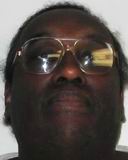
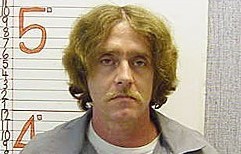
David Stephen Middleton
Murderer Brian Kevin Rosenfeld
Murderer · USA · 1985
Brian Kevin Rosenfeld Brian Kevin Rosenfeld was sentenced to three concurrent l…
23 victims
Brian Kevin Rosenfeld
Murderer · USA · 1985
Brian Kevin Rosenfeld Brian Kevin Rosenfeld was sentenced to three concurrent l…
23 victims
 Russell Ellwood
Murderer · USA · 1991
Russell Ellwood was a former taxi driver. Authorities suspected him of killing…
20 victims
Russell Ellwood
Murderer · USA · 1991
Russell Ellwood was a former taxi driver. Authorities suspected him of killing…
20 victims
 Robert Martines Perez
Murderer · USA · 1994
Name: Robert Martines Perez · Other name used in proceedings: Robert Martinez P…
15 victims
Robert Martines Perez
Murderer · USA · 1994
Name: Robert Martines Perez · Other name used in proceedings: Robert Martinez P…
15 victims
 Billy Frank Vickers
Murderer · USA · 1993
Billy Frank Vickers Vickers was executed by lethal injection in Texas on Januar…
14 victims
Billy Frank Vickers
Murderer · USA · 1993
Billy Frank Vickers Vickers was executed by lethal injection in Texas on Januar…
14 victims
 Vernon Lamont Smith
Murderer · USA · 1993
Vernon Lamont Smith n/k/a Abdullah Sharif Kaazim Mahdi was convicted in Lucas C…
1 victim
Vernon Lamont Smith
Murderer · USA · 1993
Vernon Lamont Smith n/k/a Abdullah Sharif Kaazim Mahdi was convicted in Lucas C…
1 victim
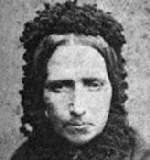 Maria Swanenburg
Serial killer · Netherlands · 1880
Maria Catherina Swanenburg (Leiden 9 September 1839 - Gorinchem 11 April 1915)…
27 victims
Maria Swanenburg
Serial killer · Netherlands · 1880
Maria Catherina Swanenburg (Leiden 9 September 1839 - Gorinchem 11 April 1915)…
27 victims
 Patricia Columbo
Murderer · USA · 1976
Patricia Columbo and Frank DeLuca were convicted after a jury trial of three co…
3 victims
Patricia Columbo
Murderer · USA · 1976
Patricia Columbo and Frank DeLuca were convicted after a jury trial of three co…
3 victims
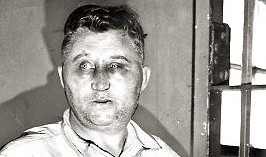 Herman Drenth
Murderer · USA · 1931
Herman Drenth was also known by the aliases Harry F. Powers and Cornelius O. Pi…
5 victims
Herman Drenth
Murderer · USA · 1931
Herman Drenth was also known by the aliases Harry F. Powers and Cornelius O. Pi…
5 victims
 Jana Mallory
Murderer · USA · 2008
Jana Mallory (also referred to as Jana Porter Mallory and Jana Porter Mallory)…
1 victim
Jana Mallory
Murderer · USA · 2008
Jana Mallory (also referred to as Jana Porter Mallory and Jana Porter Mallory)…
1 victim
 Ashley Humphrey
Murderer · USA · 2003
Ashley Humphrey was the wife of Timothy "Tracey" Humphrey. She was born Oct. 13…
1 victim
Ashley Humphrey
Murderer · USA · 2003
Ashley Humphrey was the wife of Timothy "Tracey" Humphrey. She was born Oct. 13…
1 victim
- Gender
- male
- Country
- USA
- Location
- Washoe County, Nevada, USA
- Date of birth
- June 25, 1961
- Age at first offence
- 33
- Characteristics
- convicted rapist, abuse, torture, domestic violence, former mental patient
- Victim profile
- Thelma Davila, 42 (employee at Circus Circus) / Katherine Powell, 45 (elementary school teacher)
- Method of murder
- Suffocation
- Date(s) of murder
- August 7, 1994 / February 3, 1995
- Years active
- 1994–1995
- Date of arrest
- —
- Status
-
Sentenced to death
Sentenced to death on September 15, 1997; Nevada Supreme Court affirmed the death sentence on November 25, 1998.
Case overview
David Stephen Middleton was a one-time Miami police officer who was sentenced to death in Nevada for the murder of two women. The Nevada Supreme Court affirmed his judgment of conviction and sentence. The case involved the kidnapping and killing of Katherine Powell and Thelma Amparo Davila, and it also involved firearms and credit card-related conduct.
People
- David Stephen Middleton — defendant; former Miami police officer.
- Katherine Powell — victim; a Sun Valley Elementary School teacher in Reno, Nevada; age 45 at the time of death.
- Thelma Amparo Davila — victim; an employee at Circus Circus in Reno; Sparks resident; age 42 at the time of disappearance.
- Evonne Haley — Middleton’s girlfriend; convicted in separate proceedings in connection with the circumstances of Davila’s case.
- Buffy Rice Donohue — alleged Colorado victim; investigated as part of the Colorado investigation while Middleton was on Nevada’s death row.
- Jeff Powell — brother of Katherine Powell.
- Dora Valverde — Davila’s sister; lived with Davila in a one-bedroom apartment in Sparks; reported Davila missing.
- Angela Green — neighbor of Powell.
- Charles Corning — neighbor of Powell.
- Gerald Brown — Powell’s friend.
- Candace Kelly — Powell’s friend.
- Gary Cable — Good Guys store employee who took the call for the stereo equipment purchase.
- Mark Decker — Good Guys store manager.
- Steven Reed — Reno police detective who determined Middleton was a TCI Cable technician who made a service call at Powell’s home on January 28, 1995.
- David Jenkins — detective who investigated the brand of the yellow plastic bag and later interviewed Middleton and pursued questions regarding Davila.
- Donald Means — forensic investigator with the Washoe County Sheriff’s Office.
- Dr. Roger Ritzlin — performed the autopsy on Powell.
- Dr. Raymond Rawson — professor in dentistry; concluded that a bite mark was inflicted while Powell was alive and that Middleton inflicted it.
- Dr. Frederick Laubscher — performed a “medical examination” of Davila’s remains.
- Dr. Vincent Di Maio — chief medical examiner in Texas; testified for the state.
- Dr. Robert Bucklin — deputy medical examiner for Clark County; testified for the defense.
- Dr. Jerry Howle — psychiatrist; testified for the defense.
- Thomas Viloria — deputy district attorney who prosecuted Middleton in Reno; also involved in penalty-phase proceedings.
- John Helzler — assistant district attorney.
- Wyatt Angelo — San Miguel District Attorney at the time of the Colorado investigation discussion and earlier district attorney during the Colorado discussion.
- Mike Specchio — public defender.
- Peter I. Breen — judge in the Second Judicial District Court, Washoe County.
- Frankie Sue Del Papa — Attorney General (appeared in the Nevada Supreme Court proceeding).
- Richard A. Gammick — District Attorney (appeared in the Nevada Supreme Court proceeding).
- Gary H. Hatlestad — Chief Appellate Deputy District Attorney (appeared in the Nevada Supreme Court proceeding).
- Michael R. Specchio — public defender (appeared in the Nevada Supreme Court proceeding).
- John Reese Petty — Deputy Public Defender (appeared in the Nevada Supreme Court proceeding).
- Susan McCurdy — Executive Secretary of the Parole and Pardons Board.
Timeline
- February 11, 1995 — Katherine Powell’s body was found in a trash dumpster at a Reno apartment complex.
- February 23, 1995 — Detective Jenkins interviewed Middleton; Middleton admitted a service call on January 28, 1995, and ownership of a red 1972 International Harvester pickup, but denied knowing anything about the Good Guys stereo purchase and Powell’s credit card.
- March 4, 1995 — An anonymous caller informed police that Middleton and Haley had a storage unit.
- March 5, 1995 — Police searched the storage unit pursuant to a warrant.
- April 9, 1995 — A man walking with his dog in a secluded area near Verdi found a human skull and other skeletal remains and notified police.
- June 7, 1995 — At Middleton’s request Detective Jenkins again interviewed Middleton, asking questions regarding Davila.
- June 20, 1995 — Detective Jenkins spoke with Middleton again.
- August 11, 1997 — Middleton’s trial began.
- September 15, 1997 — Middleton was convicted by a Washoe County jury and sentenced to death.
- November 25, 1998 — The Nevada Supreme Court affirmed Middleton’s judgment of conviction and sentence in case number 31499.
Background
David Stephen Middleton was described as a former police officer who was on Nevada’s death row for the murder of two women. A later Colorado investigation into the 1993 disappearance and death of Buffy Rice Donohue was conducted while Middleton remained on Nevada’s death row, and the district attorney in Colorado indicated there had been no comment while the criminal investigation was pending.
The offence
Murder of Katherine Powell (Reno)
Katherine Powell, age 45, lived alone in Reno. She was divorced, had a Ph.D. in psychology, and taught third grade at Sun Valley Elementary School. Powell was last heard from or seen alive on the evening of Friday, February 3, 1995. She failed to show up for work on Monday, February 6, although she was known to be extremely reliable. A school custodian went to her home and knocked, noticed an attempted service tag from TCI Cable on the door dated Saturday, February 4, and later, after Powell’s body was found, police learned additional information from neighbors and from evidence of missing items.
At around 9:30 p.m. on the night of February 11, 1995, a woman’s body was found in a trash dumpster at a Reno apartment complex. The body was in a sleeping bag and covered by plastic garbage bags, with a large yellow plastic bag covering the sleeping bag. The body was taken to the coroner’s office and, from its fingerprints, was later identified as Katherine Powell.
Dr. Roger Ritzlin performed the autopsy on Powell’s body. Powell’s body was loosely bound by rope and, aside from a black tank top and blue socks, was naked. The body exhibited bruises, particularly on the elbows and knees; most of the bruises were incurred prior to death. Ritzlin found that Powell had likely been dead for at least two days. There were blue fibers on her body and a nontoxic amount of lithium was in her blood. Powell had been prescribed lithium for a bipolar disorder. Microscopic analysis of sections of the left ventricle of her heart exhibited some fibrosis and acute cell death; the latter occurred a few days before death. Ritzlin found no petechiae or any fecal staining. At trial, Ritzlin testified that after death by suffocation, petechiae are usually seen and fecal staining is often seen. Ritzlin could not determine the cause of death, but suffocation or cardiac arrhythmia were possible causes. Bite marks were later found on Powell’s body, and a semen stain was found on her right thigh.
A statewide investigation included evidence that Powell’s home items were taken and that her credit card was used. After Powell’s body was found, evidence included that neighbors had noticed a pickup truck parked in front of her home early on Saturday, February 4, and later identified it as resembling Middleton’s pickup. Friends of Powell returned from a trip on February 5 and used a key to enter, retrieved the dog, and later reported missing items including a phone, a camera, a FAX machine, a laptop computer, and a laser printer. In the kitchen they found condoms and a wad of duct tape. On Sunday, February 5, a person telephoned the Good Guys store and ordered a $1,900 piece of stereo equipment using Powell’s credit card. The caller’s voice was described as husky and it could not be determined if the caller was male or female. Mark Decker approved the transaction, believed the caller was male, and received a telephone call regarding the purchase on Monday morning. He believed a courier would be sent to pick up the equipment. On Monday afternoon, a woman arrived with a red handtruck to pick up the equipment, and employees later identified the woman as Haley. A description of the truck led police to Middleton’s pickup: an early 1970s red International Harvester with Colorado license plates.
Reno police detective Steven Reed determined that Middleton was the TCI Cable technician who made a service call at Powell’s home on January 28, 1995. Detective David Jenkins determined that the brand of yellow plastic bag covering the sleeping bag was sold at only two hardware stores in Reno, and that only one store, Commercial Hardware in downtown Reno, had recently sold the yellow bags; the bags were sold on Wednesday, February 8, along with a box of 33-gallon garbage bags. Police later tied the purchases to items found in the storage unit.
In interviews, Middleton admitted the service call and pickup ownership but denied knowledge of the credit-card purchase at Good Guys and denied knowledge of Powell’s credit card use. He was also equivocal about whether he bought garbage bags and initially said he did not know where Commercial Hardware was.
Police searched Middleton’s storage unit pursuant to a warrant and found the stereo equipment purchased from Good Guys, a box of yellow plastic bags, and a box of garbage bags, both with Commercial Hardware price tags. Items missing included one yellow bag from the first box and some garbage bags from the second. The unit also contained Powell’s house and car keys, camera, computer, printer, and other personal property. A refrigerator was lying on its back on the floor of the unit, and it contained blue fibers similar to the fibers found on Powell’s body. The refrigerator had shelves removed, its freezer compartment floor cut and folded down to make one space, and two air holes drilled. Police also found restraint and assault items including a switchblade knife, a stun gun, a foam ball with apparent teeth marks, and rope similar to the rope used to bind Powell’s body. Additional evidence included tension clamps, hair and fiber from one clamp, belts with velcro, black wire ties, handcuffs, condoms, partial rolls of duct tape, a large speaker box with a space behind it, hairs and fibers from the speaker box, several blankets, and chains.
A seizure order was used to obtain a mold of Middleton’s teeth for comparison to the bite marks found on Powell’s body. Dr. Raymond Rawson testified that the bite mark on Powell’s left breast was inflicted while she was still alive and was a hard and painful bite causing bleeding below the skin, and that Middleton inflicted it.
During trial, the state presented expert testimony about asphyxiation in the refrigerator based on volume and drilled holes. Dr. Vincent Di Maio testified for the state that despite mild perivascular fibrosis, Powell’s heart was healthy and normal, long-term lithium users did not die of heart disease at a rate greater than the general population, and the circumstances of Powell’s disappearance and body when found indicated her death was a homicide. He testified that the lack of pathological findings indicated she probably died of asphyxiation. He testified that petechiae were found in only about thirteen percent of suffocation homicides handled by Di Maio’s office. He also testified that bruises on Powell’s elbows and knees were consistent with struggles to free herself from a confined space such as the refrigerator.
The defense presented two physicians: Dr. Robert Bucklin testified that Powell suffered from heart disease but he did not know if it caused her death and he did not believe she died from asphyxiation. Dr. Jerry Howle testified that taking lithium could cause cardiac arrhythmia and carried some risk of sudden death, but he did not know what effect it had on Powell. Middleton’s own decision not to testify was addressed outside the presence of the jury when he said: “testify on the Davila case part of it. But I guess I can?t because the cases are joined. I cannot testify on one without looking bad on the other one. So I guess I can't testify.”
Murder of Thelma Davila (Sparks)
Thelma Davila was age 42 at the time of her disappearance. She shared a one-bedroom apartment in Sparks with her sister, Dora Valverde. She worked an evening shift at the Hickory Pit restaurant in Circus Circus in Reno on Sunday, August 7, 1994, and she failed to show for work the next day despite having not missed a single day in more than six years of employment. She also failed to show up for a dental appointment that day.
Valverde last saw Davila around 8:00 a.m. on Monday, August 8, 1994. Valverde reported that when she left for work, Davila was sleeping on the couch in the living room. When Valverde returned that evening, the door was not locked, and a plant by the couch had been knocked onto the floor. Valverde and one of Davila’s friends later identified a blanket, a black lacy top, and a red hair tie found in Middleton’s storage unit as Davila’s.
On Wednesday, August 10, 1994, Valverde reported Davila missing. Davila occasionally went with a friend to Cheers, a Latin dance club in downtown Reno. The friend testified that Davila had a preference for black men; Middleton is African-American. Another friend testified that when he visited Davila and Valverde, they always looked out their window at him before opening the door.
The former owner of Cheers saw Middleton using the pay phone at Cheers sometime in the latter part of 1994. Two employees of the Hickory Pit restaurant remembered seeing Haley at the restaurant, including on three occasions in June and July of 1994 usually with a black man, and on one day or two before Davila disappeared. A third employee saw Davila and Haley together in 1994 on three occasions: at the restaurant, at a grocery store, and at a medical complex. A Citifare bus driver knew Davila because she was a regular passenger for many years and saw her on the afternoon of Friday, August 5, 1994, at the Sparks bus station. Davila was quite dressed up and told the bus driver that her friends were picking her up to go out to dinner. A white or beige pickup truck pulled up, and the truck included a woman with curly, reddish blond hair and a black man. Davila jumped into the truck and sat in the middle; the truck drove off.
Evidence included that TCI Cable had been installed in the sisters’ apartment in June 1993 and serviced in July 1994, but Middleton performed neither service. Middleton did not work on Monday, August 8, 1994, the day Davila disappeared. Around 6:45 a.m. that same day, a neighbor of Davila and Valverde saw Middleton walk partway up the stairs leading to Davila’s apartment and then come back down.
The case included storage unit evidence. Middleton first leased a storage unit in Sparks on June 30, 1994, under the name of Hal Data Research; the initial unit measured five feet by ten feet. On the afternoon of August 8, 1994—the day Davila was last seen alive—Middleton leased a unit measuring ten feet by ten feet and moved out of the smaller unit. The facility required computer code entries and kept records of entries.
On Friday, February 3, 1995, Middleton entered the storage facility at 2:13 a.m. and 8:06 p.m. On Saturday, February 4, the log showed entries by Middleton at 12:37 a.m., 5:47 a.m., 6:49 a.m., 8:45 a.m., 11:53 a.m., and 5:38 p.m. On Sunday, February 5, he entered at 6:19 a.m., 11:09 a.m., and 3:30 p.m. On Monday, February 6, he entered at 9:26 a.m. and 3:15 p.m. There were no entries on Tuesday, February 7. There was one entry at 6:49 p.m. on Wednesday, February 8; no entries on Thursday, February 9; and one entry on Friday, February 10, at 7:45 p.m. The log showed one entry on Saturday, February 11, at 7:26 p.m.; Powell’s body was found about 9:30 p.m. that same night. Middleton entered again at 12:53 a.m. on Sunday, February 12, 1995.
Evidence included forensic analysis linking Davila’s remains and Powell’s remains to the refrigerator and other items. Forensic analysis showed that fibers found in the refrigerator in Middleton’s storage unit were indistinguishable from those found on Powell’s body: cotton and blue-green in color. Two human head hairs found in the refrigerator and one found on a black restraint belt could have come from Powell. Rope found in Middleton’s storage unit, rope around Powell’s body, and rope found with Davila’s remains were all white, nylon, woven twelve-strand, one-quarter inch in diameter. DNA analysis was also performed on multiple pieces of evidence including the foam ball; cellular material obtained from the foam ball matched Powell’s DNA with a match rarer than one in 100 million people. Additional hair and clamp evidence matched Powell’s DNA with a match about one in every 780,000 Caucasians. A semen stain on Powell’s right thigh was consistent with Middleton’s DNA and that of about one of every 100 African-Americans. DNA obtained from duct tape and another blanket matched Davila’s DNA with a match one in 690,000 among Hispanics.
An expert in knot analysis testified that the ropes contained “SS granny knots,” and stated that a granny knot is very common.
The discovery of Davila’s remains occurred on April 9, 1995. A man walking with his dog in a secluded area near Verdi found a human skull and other skeletal remains and notified police. From August through October 1994, another Verdi resident had smelled a foul odor in the area where the remains were later found and saw remnants of a sleeping bag there in late September or early October 1994. Donald Means performed forensic investigation and noted “a lot of animal activity” and “trash bags, bones, and bone fragments strewn several hundred yards.” A matted hairpiece was found with rope in it; the rope diameter matched the rope found with Powell’s body. Means found it unusual to see two “body dumps” “with trash bags and rope” within such a short period. A dental bridge in the skull led to identification as Davila. Dr. Frederick Laubscher performed a “medical examination” of the remains, and an autopsy was not possible due to lack of tissue. Laubscher examined for cause of death but was unable to determine cause of death because the remains were incomplete and none of the other bones exhibited evidence of gunshot, knife wound, crushing injury, or traumatic injury of any sort. Laubscher could not rule out suffocation or most other possible causes of death.
The state’s evidence was also that Middleton used the storage unit to hold victims and that the refrigerator and restraint items supported kidnapping findings. In discussing kidnapping, the Nevada Supreme Court discussed that kidnapping required willful seizing, confining, or carrying away of a live person.
Investigation
Discovery of Powell’s body and ensuing investigation
At around 9:30 p.m. on February 11, 1995, Powell’s body was discovered in a trash dumpster at a Reno apartment complex. The body’s condition led to forensic steps including fingerprint identification, autopsy examination by Dr. Ritzlin, and later matching of evidence to items in a storage unit.
Discovery of Davila’s remains and ensuing investigation
On April 9, 1995, skeletal remains were discovered near Verdi, and identification of the remains as Davila was made using a dental bridge. Forensic investigation by Donald Means documented the scene, including trash bags, bones, bone fragments, and rope.
Storage unit evidence
The investigation located and searched Middleton’s storage unit after an anonymous call on March 4, 1995. Police seized numerous items including stereo equipment purchased with Powell’s credit card, yellow plastic bags and garbage bags with Commercial Hardware price tags, personal property belonging to Powell, rope, restraints, a modified refrigerator containing blue fibers, a switchblade knife, a stun gun, condoms, and other items.
In addition, the state obtained a mold of Middleton’s teeth to compare to bite marks found on Powell’s body, and experts testified to matches and inferences about captivity and asphyxiation.
Arrest and custody
The Nevada Supreme Court opinion described that it was not clear when Middleton was first arrested on the charges in this case. Middleton said it was February 23, 1995. The state claimed that the February 23, 1995, arrest was for being an ex-felon in possession of a firearm, and that on May 17, 1995, Middleton pled guilty to conspiracy to commit ex-felon in possession of a firearm and received a one-year jail sentence. The record contained a copy of a plea memorandum supporting the state’s claim. The parties agreed that Middleton was first formally charged in the case on June 22, 1995.
Trial
Proceedings and joinder
Before trial, Middleton moved to sever counts relating to Davila from counts relating to Powell; the district court denied the motion but severed the two counts charging him with being an ex-felon in possession of a firearm.
At trial, the state presented evidence that Middleton committed murder on two separate occasions, each involving abducting a woman from her home, holding her captive in a leased storage unit, killing her, and then dumping her body.
The Nevada Supreme Court affirmed that joinder was proper under NRS 173.115(2) because the acts constituted parts of a common scheme or plan. It also addressed cross-admissibility of evidence between the two victims and reviewed arguments concerning prejudice from joinder.
Right to testify
The district court asked Middleton if he wished to testify outside the presence of the jury. Middleton stated: “testify on the Davila case part of it. So I guess I can't testify.”
Conviction
The jury found Middleton guilty of two counts of first-degree murder, two counts of first-degree kidnapping, one count of grand larceny, and one count of fraudulent use of a credit card. At a bench trial the next month, the district court found him guilty of two counts of ex-felon in possession of a firearm.
Sentencing
Penalty phase proceedings
At the penalty hearing, outside the presence of the jury, the defense moved to preclude evidence that Middleton had been charged with sexual assault and kidnapping in Florida in 1990. The Florida case resulted in conviction of one count of aggravated battery and one count of false imprisonment. The district court ruled that the conviction was admissible, but it stated: “I'm not going to allow testimony concerning sexual assault in the state?s case in chief. However, I warn counsel that any explanation of this conviction . . . is going to open up the door to Mr. Viloria's ability to explain what he perceives as the facts in this case.”
The district court also ruled regarding death-penalty requests by victims, eventually ruling victims could request neither the death penalty nor “the maximum penalty.” During penalty-phase proceedings, assistant district attorney Thomas Viloria made a lengthy statement, including: “the rights of the defendant outside the Constitution have wallowed [sic] the Constitution, making it meaningless. I would submit that it is just but that, an old rag that needs to be modified. It has no meaning.”
Middleton’s stepmother testified for him. Toward the end of direct examination, defense counsel asked: “And did you know he got in trouble in Miami?” and she answered: “Yes.” On cross-examination, Viloria asked: “You are aware, ma?am, that he took a sixteen-year-old woman to a remote area, kept her in his car, and engaged in sexual activity with her?” Defense counsel objected and moved for a mistrial, and the district court excused the jury. The court asked Viloria: “Why now, Mr. Viloria? . . . Why now without my advance permission?” Viloria argued that the defense had opened the door to his question, but the court rejected that argument. The court said: “I'm questioning your motives here,” and ruled: “You are precluded from bringing up any evidence concerning any criminal activity in the rest of your case. You are precluded from asking any questions, any further questions of this witness, and you'll pack this to the Ninth Circuit on your back.”
When the jurors returned, the court admonished them that Middleton’s prior conviction did not relate to sexual activity and asked if anyone would have trouble disregarding Viloria’s question. No jurors indicated that they would.
The defense also called Susan McCurdy, Executive Secretary of the Parole and Pardons Board. Counsel asked whether, if Middleton were sentenced to life imprisonment without possibility of parole under NRS 213.085, it could be commuted to parole. McCurdy answered: “No, it cannot.” Viloria then cross-examined with the following questions and answers:
- Q Ma'am, that assumes that the legislature doesn't decide to change the law the next session or the next session after that or the next session after that, doesn't it? A That is correct.
- Q They are always free to change the law as they do every other year? A That is correct.
- Q So there will be no guarantee that life without won't be subjected to legislative change down the road? A There is no guarantee.
The Nevada Supreme Court later found that this cross-examination about legislative change did not produce reversible error.
Aggravating and mitigating circumstances
For Davila’s murder, the jury found four aggravators: two previous convictions for felonies involving the use or threat of violence; the murder was committed in the commission of or attempt to commit first-degree kidnapping; and Middleton was convicted of more than one murder in this proceeding.
For Powell’s murder, the jury found the same four aggravators and a fifth: the murder involved torture and/or depravity of mind. For both murders, the jury found no mitigating circumstances sufficient to outweigh the aggravators and sentenced Middleton to death for each murder.
Additional sentences
For the two counts of first-degree kidnapping, one count of grand larceny, one count of fraudulent use of a credit card, and two counts of ex-felon in possession of a firearm, the district court sentenced Middleton to consecutive prison terms: life without possibility of parole, life without possibility of parole, ten years, ten years, six years, and six years.
Appeals
1998 Nevada Supreme Court decision
Middleton appealed the judgment of conviction pursuant to a jury verdict of two counts of first-degree murder, two counts of first-degree kidnapping, one count of grand larceny, one count of fraudulent use of a credit card, and two counts of ex-felon in possession of a firearm, and from two sentences of death. The appeal was assigned case number 31499. The Second Judicial District Court, Washoe County, was identified as the court of first instance with Judge Peter I. Breen.
The Nevada Supreme Court decision was per curiam and stated that the Supreme Court concluded Middleton’s contentions lacked merit and affirmed. In the opinion, the court summarized trial evidence that Middleton abducted victims, held them in a leased storage unit, killed them, and dumped their bodies. The Supreme Court addressed arguments including sufficiency of evidence for death by criminal agency (corpus delicti), the kidnapping element that victims were seized alive and against their will, sufficiency regarding fraudulent use of the credit card, severance and joinder arguments, speedy trial arguments, suppression of statements and evidence, reasonable doubt instruction challenges, prosecutorial misconduct in the penalty phase, cross-examination about commutation, residual doubt mitigation instruction requests, the validity and support for aggravators (including torture and depravity of mind), and constitutional challenges to Nevada’s death penalty statutes.
The Supreme Court’s conclusion was that Middleton’s claims lacked merit and it affirmed his judgment of conviction and sentence.
2004 McConnell reference and later 2009 discussion
The case summary included that Middleton argued his death sentence should be erased in line with the high court’s 2004 McConnell decision. The McConnell decision was described as ruling in favor of inmate Robert McConnell that a defendant can’t be convicted of first-degree murder using a particular circumstance as a killing during a robbery and then have robbery used again as an aggravating circumstance in the penalty phase. The later discussion also stated that while one felony aggravator against Middleton was erased, other aggravators remained valid, including previous felony convictions involving violence, convictions for more than one murder, and the torture of Powell. It also quoted the court stating: “The remaining aggravators in this case are compelling,” and that Powell’s torture, including being bitten, shocked by a stun gun, and forced into a refrigerator where she suffocated, “was nothing less than sadistic.” The discussion also stated that even with one aggravator gone, “the jury would have imposed death for each murder.”
Outcome
The Nevada Supreme Court affirmed Middleton’s judgment of conviction and death sentence. The Supreme Court affirmed the convictions of two counts of first-degree murder, two counts of first-degree kidnapping, one count of grand larceny, one count of fraudulent use of a credit card, and two counts of ex-felon in possession of a firearm, and it affirmed two sentences of death. The opinion included a final conclusion stating: “We therefore affirm his judgment of conviction and sentence.”
Aftermath
Cost and representation details reported
The case summary described reported costs of the trial and representation. It reported that the Washoe County Comptroller’s Office reported county paid $292,005.90 to the two court-appointed lawyers who represented Middleton at trial, and it described that time and money spent by the Washoe County Public Defender’s Office before removal due to conflict of interest was not included. It reported that public defender Mike Specchio said his office had only $5,000 in out-of-pocket expenses but that staff put an estimated 3,500 hours into the case before it was removed and estimated about $105,000 in salaries. It also reported that assistant district attorney John Helzler could trace $46,000 in overtime costs, laboratory costs, and expert-witness fees to the Middleton trial, not including regular staff salaries. It reported additional juror-related costs: $12,804 in juror fees for prospective jurors and jurors selected plus $450 for three meals while they deliberated, putting the price for justice at least those costs that could be determined at $461,260.
Jeff Powell’s statement
Jeff Powell, brother of slain elementary school teacher Katherine Powell, traveled to Reno frequently before Middleton went on trial and stayed there through the trial, and the summary reported that trial postponements and the trial cost him customers. The summary included a direct quotation:
- Jeff Powell said: “it will be years before I recover from this. At the moment, I am treading water with my head just above the surface. I am in massive debt. I am getting just enough to make monthly payments...It will be a long time before I get back to where I was. But at least David Middleton is in prison and will stay there.”
Colorado investigation into Donohue and legal developments
The summary reported that Colorado authorities stepped up an investigation into Middleton as prime suspect in the November 1993 abduction and death of Buffy Rice Donohue of Montrose, Colorado, and that no charges had been filed. It reported that San Miguel County Sheriff Bill Masters said the investigation was continuing and that the office was awaiting results from the FBI. The summary stated that Beginning today, Masters would have two investigators working the case full time. It also reported statements by San Miguel District Attorney Wyatt Angelo that he had no comment while the criminal investigation was pending, and it stated that Washoe County Deputy District Attorney Thomas Viloria said he had looked at the evidence and that in his opinion there was sufficient evidence to charge both Mr. Middleton and (girlfriend Evonne Haley) with murder if they elected to do so, and he also referenced witness credibility.
The summary stated that Montrose police were found in noncompliance with the Victims Rights Act by the Colorado Division of Criminal Justice as a result of its investigation into Donohue’s disappearance. It also stated that lawsuits filed by Donohue’s parents and widower against the Montrose Police were dismissed, as were attempts to force trial by a special prosecutor.
Statements and book-related commentary
The summary also referenced a book by retried Reno Police Sgt. Jeff Kaye and included statements and quotations. It described Kaye’s assertions that Middleton killed more women including Montrose resident Buffy Rice Donohue, and that Middleton and his girlfriend Evonne Haley lived in Montrose at the time of Donohue’s disappearance and knew the victim, and that forensics could link Middleton to the body but was not as conclusive as popular theory contended. It also reported that Haley served prison time as an accessory to Donohue’s murder, while Middleton was never charged.
The summary included quotations from Kaye and other officials:
- Jeff Kaye said: “Beware of the Cable Guy: From Cop to Serial Killer” tracks the case of David Middleton, a former Miami detective condemned to die in Nevada for the brutal slayings of Kathy Powell and Thelma Davilla.”
- Kaye said: “Originally when I started writing it, I just wanted to tell the stories of the murders committed here,”
- Kaye said: “The more I looked into it, the more I was intrigued about how he ever made it to Reno after what he did in Colorado.”
- Kaye said: “The bottom line, Kaye said, is that Middleton is a sociopath and — as sociopaths are adept at doing — was able to pass himself off as an ordinary guy.”
- Kaye said: “The premise of the book is basically that people need to look at who you let into the inner circle of your life,”
- Kaye said: “I had several people read this book and say, ‘You opened my eyes.’ That’s the purpose.”
- Jeff Kaye said: “Her story breaks my heart,”
- Kaye said: “I was pretty much crying like Bambi when I saw that (tombstone photo). I’m honestly hoping someone will take a second look at this case and decide to do something with it, if for no other sake than for the victim’s family.”
- Montrose Police Chief Tom Chinn said: “But he questioned the accuracy of information in Kaye’s book.”
- Tom Chinn said: “The things that are in the book have been said before. They have been public, however, a lot of those things are not factual. They weren’t factual, ever,”
- Tom Chinn said: “I don’t know where most of the information came from, but I guess people can print whatever they want to. There were a lot of people who worked very hard on that case.”
- Wyatt Angelo said: “declined” to prosecute Middleton for Donohue’s murder was not accurate; Angelo said it made little sense to expend resources trying a man already on death row in Nevada and said: “We were prepared to move forward if he was going to be released from prison,” and Kaye said he did not talk to Angelo or Chinn for the book.
Spotted an error, or have more information about this case?