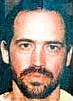
Willie Lawrence Celestine
Murderer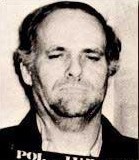 Ervil LeBaron
Murderer · USA · 1972
Ervil Morrell LeBaron (1925 to August 16, 1981) was the leader of a polygamous…
35 victims
Ervil LeBaron
Murderer · USA · 1972
Ervil Morrell LeBaron (1925 to August 16, 1981) was the leader of a polygamous…
35 victims
 Brian Kevin Rosenfeld
Murderer · USA · 1985
Brian Kevin Rosenfeld Brian Kevin Rosenfeld was sentenced to three concurrent l…
23 victims
Brian Kevin Rosenfeld
Murderer · USA · 1985
Brian Kevin Rosenfeld Brian Kevin Rosenfeld was sentenced to three concurrent l…
23 victims
 Marvin Gray
Murderer · USA · 1975
Marvin Gray was convicted killer who claimed responsibility for 23 slayings and…
23 victims
Marvin Gray
Murderer · USA · 1975
Marvin Gray was convicted killer who claimed responsibility for 23 slayings and…
23 victims
 Yahweh ben Yahweh
Murderer · USA · 1980
Yahweh ben Yahweh was born and legally named Hulon Mitchell Jr. (October 27, 19…
23 victims
Yahweh ben Yahweh
Murderer · USA · 1980
Yahweh ben Yahweh was born and legally named Hulon Mitchell Jr. (October 27, 19…
23 victims
 Russell Ellwood
Murderer · USA · 1991
Russell Ellwood was a former taxi driver. Authorities suspected him of killing…
20 victims
Russell Ellwood
Murderer · USA · 1991
Russell Ellwood was a former taxi driver. Authorities suspected him of killing…
20 victims
 Debra Hartmann
Murderer · USA · 1982
Debra Hartmann was sentenced to 22 years in prison for conspiracy connected to…
1 victim
Debra Hartmann
Murderer · USA · 1982
Debra Hartmann was sentenced to 22 years in prison for conspiracy connected to…
1 victim
 Virginia Larzelere
Murderer · USA · 1991
Virginia Gail Larzelere (white) was born on 12-27-1952 and was 38 years old at…
1 victim
Virginia Larzelere
Murderer · USA · 1991
Virginia Gail Larzelere (white) was born on 12-27-1952 and was 38 years old at…
1 victim
 Alexander Pichushkin
Serial killer · Russia · 1992
Alexander Yuryevich “Sasha” Pichushkin (Russian: Алекса́ндр Ю́рьевич Пичу́шкин,…
49 victims
Alexander Pichushkin
Serial killer · Russia · 1992
Alexander Yuryevich “Sasha” Pichushkin (Russian: Алекса́ндр Ю́рьевич Пичу́шкин,…
49 victims
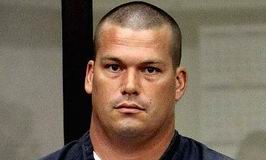 John Albert Gardner
Murderer · USA · 2009
On May 14, 2010, John Albert Gardner was sentenced to two terms of life impriso…
2 victims
John Albert Gardner
Murderer · USA · 2009
On May 14, 2010, John Albert Gardner was sentenced to two terms of life impriso…
2 victims
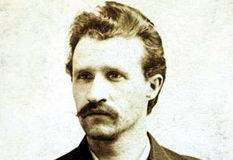 August Spies
Mass murderer? · USA · 1886
August Vincent Theodore Spies (December 10, 1855 – November 11, 1887) was an an…
7 victims
August Spies
Mass murderer? · USA · 1886
August Vincent Theodore Spies (December 10, 1855 – November 11, 1887) was an an…
7 victims
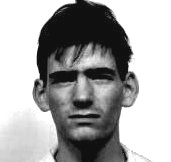 Robert Madden
Murderer · USA · 1985
Robert Anthony Madden (born Sept. 9, 1963); executed as Robert Madden #822 at a…
2 victims
Robert Madden
Murderer · USA · 1985
Robert Anthony Madden (born Sept. 9, 1963); executed as Robert Madden #822 at a…
2 victims
- Gender
- male
- Country
- USA
- Location
- Lafayette Parish, Louisiana, USA
- Date of birth
- 1957
- Age at first offence
- 24
- Characteristics
- serial rapist, rape
- Victim profile
- Marcelianne Richard (female, 81)
- Method of murder
- Strangulation
- Date(s) of murder
- September 13, 1981
- Years active
- 1981
- Date of arrest
- Same day
- Status
-
Executed
Executed by electrocution in Louisiana on July 20, 1987
Case overview
Willie Lawrence Celestine was executed by electrocution in Louisiana on July 20, 1987.
He was convicted of raping and strangling Marcelianne Richard, an 81-year-old woman, in her Lafayette home on September 13, 1981. Celestine had also been convicted of raping two other elderly women in the same neighborhood.
In a four-minute taped confession played at his 1982 trial, Celestine said he was drunk and “full of speed” when he strangled Mrs. Richard and broke seven of her ribs and a vertebra in her neck after raping her.
Celestine’s final statement was: “I'd just like to tell the Richard family that I'm very, very sorry. I hope in their hearts they can forgive.”
Timeline
- September 13, 1981 — Marcelianne Richard, an 81-year-old woman, was raped and killed in her home in Lafayette Parish, Louisiana; Celestine was arrested later that day at his home after receiving Miranda warnings and voluntarily confessed to raping two other women as well as Mrs. Richard.
- 1982 — Celestine’s trial featured a four-minute taped confession played to the court and jury.
- 1983 — The Louisiana Supreme Court affirmed Celestine’s conviction and sentence: State v. Celestine, 443 So.2d 1091 (1983).
- December 28, 1984 — The United States Court of Appeals for the Fifth Circuit affirmed the district court’s denial of Celestine’s habeas corpus petition and vacated the stay of execution (Willie Lawrence Celestine v. Frank Blackburn, Warden).
- July 20, 1987 — Celestine was executed by electrocution in Louisiana; the execution was delayed about 10 minutes for attorney-witness eligibility and he was pronounced dead at 12:27 A.M.
The offence
Some time between five-thirty and seven o’clock in the morning of September 13, 1981, Celestine raped and killed Mrs. Marcelianne Richard, an 81-year-old woman, at her home in Lafayette Parish, Louisiana.
Celestine had ingested alcohol and amphetamines during the previous night and earlier morning of September 13. A friend dropped him off near his house, and he walked toward it until he saw a light shining in Mrs. Richard’s residence. He did not know Mrs. Richard. He entered the house through a bathroom window, leaving a latent handprint on the lavatory. Mrs. Richard had risen early to take a trip to visit her sisters in Texas. Celestine raped Mrs. Richard and strangled her, fracturing a bone in her neck in the process. The nature of the break indicated that Celestine applied “tremendous force in choking the victim.” He severely disfigured her face and fractured seven ribs on both sides of her body. Mrs. Richard suffered internal injuries as a consequence of the beating. She died before seven o’clock, when friends arrived to take her on the Texas visit.
Celestine’s mother opened the door to the Celestine house for Celestine when he arrived home at seven o’clock.
After arrest and Miranda warnings at the police station, Celestine voluntarily confessed to raping two other women as well as Mrs. Richard. All three women lived in Celestine’s neighborhood, and the three attacks occurred within a relatively short period. The police recorded the confession on a cassette tape.
A Lafayette Parish jury convicted Celestine of two counts of aggravated rape. Those trials preceded the conviction that Celestine later challenged.
Investigation and arrest
In the late afternoon of September 13, 1981, Celestine was arrested at his home.
After receiving Miranda warnings at the police station, Celestine voluntarily confessed to raping two other women as well as Mrs. Richard.
Trial
A Lafayette Parish jury found Celestine guilty of first-degree murder and recommended imposition of the death penalty.
The jury supported its death penalty recommendation by finding the presence of three statutory aggravating circumstances:
- commission of aggravated rape in the course of the murder,
- previous conviction of an unrelated aggravated rape,
- committing the murder in an especially cruel manner.
The trial court sentenced Celestine to death.
During his trial, a four-minute taped confession was played. In that confession, Celestine said he was drunk and “full of speed” when he strangled Mrs.
Sentencing
At trial, Celestine’s trial counsel submitted, and the court presented to the jury for its consideration, the following specifications of mitigating circumstances:
- The youth of the defendant to be considered in relation to the possible sentence, along with the probability of reform and future gains in maturity.
- The lack of guidance, role models and opportunity have produced a depressed and frustrating social, as well as economic background, causing severe distortion of the defendant's values and judgment.
- The psychological condition of the defendant at the time in question rendered his perceptions, values and judgment decisions completely distorted in terms [of] acceptable values.
- At the time in question, the defendant was under the influence of disabling drugs and alcohol, more specifically an[ ] unidentified form of “speed”[,] marijuana, as well as considerable amounts of alcohol, all of which cumulatively produced an extended period within which defendant was unable to control or recall his actions.
Appeals
Direct appeal and state post-conviction
On direct appeal, the Louisiana Supreme Court affirmed the conviction and sentence: State v. Celestine, 443 So.2d 1091 (1983), cert. denied, --- U.S. ----, 105 S.Ct. 224, 83 L.Ed.2d 154 (1984). That court also refused post-conviction relief.
Federal habeas corpus and Fifth Circuit review
After exhausting state remedies, Celestine filed a habeas corpus petition under 28 U.S.C. Sec. 2254 (1982) in the United States District Court for the Western District of Louisiana. The district court denied the petition without holding an evidentiary hearing.
On appeal, Celestine urged that the district court erred in:
- not finding merit in an ineffective assistance of counsel claim,
- not conducting an evidentiary hearing on that claim,
- dismissing a claim of juror bias,
- finding no violation of Witherspoon v. Illinois, 391 U.S. 510, in the exclusion of a juror for cause.
The United States Court of Appeals for the Fifth Circuit stated that it had stayed Celestine’s execution to permit full briefing and oral argument on claims of constitutional infirmity in the selection of jurors and in counsel performance during the penalty phase, and then affirmed the district court’s judgment and vacated the stay.
Case citation and procedural posture:
- 750 F.2d 353
- Willie Lawrence CELESTINE, Petitioner-Appellant, v. Frank BLACKBURN, Warden, Louisiana State Penitentiary, Respondent-Appellee.
- No. 84-4745.
- United States Court of Appeals, Fifth Circuit.
- Dec. 28, 1984.
- Appeal from the United States District Court for the Western District of Louisiana.
- Before WILLIAMS, JOLLY and HILL, Circuit Judges.
- JERRE S. WILLIAMS, Circuit Judge.
Ineffective assistance of counsel (penalty phase)
Celestine contended that his attorney’s failure to present evidence of mitigating circumstances at sentencing denied him effective assistance of counsel. The Fifth Circuit found no merit in the claim and agreed that it did not require an evidentiary hearing.
The Fifth Circuit relied on Strickland v. Washington and discussed the two-prong test, stating the question in a death sentence ineffective assistance challenge as whether there was a reasonable probability that, absent counsel’s errors, the sentencer would have concluded that the balance of aggravating and mitigating circumstances did not warrant death.
The court described the mitigation evidence Celestine asserted should have been presented as testimony of relatives, friends, and employers regarding affection, work, conscientiousness, dependability, faith, and non-violent disposition, and some evidence regarding tests in 1973 showing an I.Q. of 69 and that Celestine committed the murder at age 25.
The Fifth Circuit concluded that in light of the overwhelming aggravating circumstances, there was no prejudice from counsel’s alleged failure to present mitigating evidence and that counsel’s failure to put on such evidence did not so prejudice Celestine as to violate the constitutional right to effective counsel.
The Fifth Circuit also stated that the district court was not required to hold an evidentiary hearing and that conclusory allegations did not warrant such a hearing.
Juror bias
Celestine asserted two juror-bias grounds.
- Mrs. Broussard During jury selection, Mrs. Broussard admitted she knew both the prosecuting attorney and the granddaughter of Mrs. Richard, the victim. She said she knew the granddaughter “pretty well,” and that the granddaughter was a friend who went to school with her children. When asked about discussing the matter with the granddaughter, she said: “No, not really.” and “No.”
Key voir dire excerpts quoted by the court included:
MR. HARSON: “Would that factor, or the fact that you know that person, would that have any bearing upon your ability to be impartial in this case?” MRS. BROUSSARD: “I don't think so.”
MR. HARSON: “How well do you know this granddaughter?” MRS. BROUSSARD: “I know her pretty well. She's a friend.”
MR. BEARD: “And in spite of all these facts, you feel like you can be fair and impartial towards the accused and not favor the prosecution side of this case?” MRS. BROUSSARD: “I would try to do my civic duty and be fair, yes.”
MR. BEARD: “But wouldn't it be very difficult on your part?” MRS. BROUSSARD: “I would believe so.”
MR. BEARD: “To such an extent that it's almost impossible, wouldn't you say?” MRS. BROUSSARD: “I wouldn't say impossible. I would--”
MR. BEARD: “Nothing is impossible, but it's very impractical, isn't it?” MRS. BROUSSARD: “--I would try to do my civic duty. Sort of impractical.”
MR. BEARD: “Yes, you would be pulling for the prosecution, wouldn't you? I would.” MRS. BROUSSARD: “I would try to be fair to both sides; however, I couldn't say that I would actually pull for either side until after I would hear the testimony.”
MR. BEARD: “But the question is can you do it under the circumstances?” MRS. BROUSSARD: “I would try it as a case. I would try very hard to put my personal feelings aside.”
MR. BEARD: “Do you think you can put your personal feelings aside? Is that possible under the circumstances?” MRS. BROUSSARD: “I don't know.”
After defense counsel challenged her for cause, the trial judge asked additional questions and denied the motion:
THE COURT: “I have a question that I want to ask Mrs. Broussard. You said that you would give it your best shot.” THE COURT: “In a trial such as this, the only issue is innocen[c]e or guilt, and you must put aside any factor that would tend to influence your decision other than from the evidence that's been adduced.” THE COURT: “The fact that you know Mr. Harson or he has represented your father, if you are convinced that this man is innocent, would it embarass you to find him not guilty when you see Mr. Harson?” MRS. BROUSSARD: “No, sir.” THE COURT: “Would that bother you at all?” MRS. BROUSSARD: “No, sir.” THE COURT: “Of if you saw the victim's granddaughter?” MRS. BROUSSARD: “I haven't seen her in a while.” THE COURT: “Then you would not let those two factors I have just named influence you at all in determining his innocen[c]e or guilt?” MRS. BROUSSARD: “No, sir.” THE COURT: “The fact that you know the granddaughter and the fact that you know Mr. Harson?” MRS. BROUSSARD: “Well, the way I feel, if he's right, I would vote him right, but if he done wrong, I would vote him wrong.”
THE COURT: “I will deny the motion.”
The Fifth Circuit agreed with the district court that no constitutional violation arose from the trial court’s refusal to excuse Mrs. Broussard for cause.
- Mr. Lemmon Celestine argued that Mr. Lemmon admitted racial prejudice against blacks. The voir dire excerpt quoted by the Fifth Circuit included:
MR. BEARD: “The fact that Willie is black, would that in any manner whatsoever make it more difficult for you to be fair and impartial than if he were say white?” MR. BEARD: “I know that's a question that may be embarrassing, but I want you to be truthful with me, because there's no harm in being truthful.” MR. BEARD: “I mean we have a great responsibility here, you and me.” MR. LEMMON: “That's difficult for a person to answer, like you said.” MR. BEARD: “What's that?” MR. LEMMON: “That's difficult for a person to answer.” MR. BEARD: “I understand that.” MR. LEMMON: “I'm not particularly prejudice[d] against this man, but I am prejudice[d], if that's the question you're asking.” MR. BEARD: “Yes. You are prejudice[d], racially?” MR. LEMMON: “Yes, sir.”
The Fifth Circuit noted that defense counsel did not ask the trial court to excuse Mr. Lemmon for cause and did not exercise a peremptory strike. Mr. Lemmon served on the jury that convicted Celestine.
The Fifth Circuit described the failure to challenge as a procedural default under Louisiana law and held that Celestine showed no cause for the default. The court discussed that defense counsel sought and elicited responses indicating the prospective juror’s willingness to decide based on evidence, to discount police testimony, to presume Celestine innocent until proven otherwise, and to vote for death only if facts justified it. The Fifth Circuit stated such judgments of counsel bound the defendant.
Exclusion of Mrs. Holmes (Witherspoon)
Celestine asserted improper exclusion of Mrs. Holmes because of scruples against imposition of the death penalty, invoking Witherspoon v. Illinois.
The Fifth Circuit held there was no merit and quoted voir dire testimony showing Mrs. Holmes would not vote for the death penalty:
MR. BEARD: “In other words, you're telling us that you would never include or consider the death penalty?” MRS. HOLMES: “No, sir. That's correct.”
MR. HARSON: “[A]ssuming the defendant is found guilty of the charge, and you're instructed by the Court that one of the possible penalties to be imposed is that of death, in the course of your fulfilling your duties as a Juror and deliberating on the penalty to be recommended by the Jury, would you be able to accept that instruction by the Court and consider the imposition of the death penalty?” MRS. HOLMES: “No, sir.”
MR. HARSON: “.... And you could not under any circumstances come back with a recommendation of death in the case, regardless of what the facts and circumstances are which are brought out?” MRS. HOLMES: “That's right.”
The Fifth Circuit concluded that Mrs. Holmes committed herself to vote automatically against capital punishment at Celestine’s trial and that the district court correctly determined no constitutional violation arose from excluding her for cause.
Outcome
The Fifth Circuit affirmed the district court’s decision and vacated its stay, stating: “Judgment AFFIRMED and stay of execution VACATED.”
On July 20, 1987, Celestine was executed in Louisiana’s electric chair.
Aftermath and execution details
On July 20, 1987, Celestine went to his death in Louisiana’s electric chair after apologizing to the family of Marcelianne Richard.
Celestine was described as “the 30-year-old slayer” in the execution coverage, and he was reported to have been executed “after apologizing to the family of Marceliane Richard, the 81-year-old woman he raped, beat and strangled six years ago.”
Celestine said: “I'd just like to tell the Richard family that I'm very, very sorry,” and he added, “I hope in their hearts they can forgive.”
At the time of the execution, the warden reported timing including that Celestine was pronounced dead at 12:27, and the execution occurred after electricity was switched on at 12:20 A.M.
The execution was delayed about 10 minutes because Celestine’s attorney, Millard Farmer, was not a Louisiana resident; officials had to contact Gov. Edwin W. Edwards after midnight to get permission for him to be a witness.
Witnesses and participants reported for the execution included:
- Robert and John Broussard, grandsons of Mrs. Richard, who watched the execution from behind a glass window,
- Sister Helen Prejean, described as an opponent of the death penalty and Celestine’s spiritual adviser,
- Millard Farmer, of Atlanta, Celestine’s attorney.
Celestine mouthed the words “I love you” to those witnesses as he was strapped into the electric chair.
Execution protests were described as having one death penalty opponent outside the prison gate Sunday night, who left by 10:30 P.M., leaving seven pro-death penalty demonstrators.
Governor Edwin W. Edwards rejected an 11th-hour plea for a reprieve from Celestine’s lawyers to allow him a hearing before the state Pardon Board.
The Inter-American Commission on Human Rights sent telegrams to Secretary of State George P. Shultz and Governor Edwards asking that the execution be halted, based on studies showing that blacks are more likely to get the death penalty, particularly if they kill whites. The Supreme Court earlier that year rejected appeals based on that argument. Earlier Sunday, the United States Supreme Court refused to stop the execution, and the United States Court of Appeals for the Fifth Circuit rejected Celestine’s appeal on Saturday.
Celestine’s death date had been postponed five times in the last three years.
Celestine had several visitors on the day of execution, including his parents, a brother and a sister, and Millard Farmer and Sister Prejean, and he talked to some friends by telephone, as said by the warden.
Other details
The Fifth Circuit described the statutory aggravating circumstances categories generally and noted that a Louisiana Supreme Court decision had struck down part of a statute for unconstitutional vagueness in State v. David. The Fifth Circuit also noted that because the jury in Celestine’s case did not find the constitutionally infirm circumstance existed, David did not implicate Celestine’s death sentence.
The Fifth Circuit discussed that trial counsel submitted mitigating circumstances, and later it stated it did not need to decide whether trial counsel’s performance at the penalty hearing failed to meet the requisite standard because it found no prejudice.
The Fifth Circuit noted that Celestine relied on Narcisse v. Maggio as support for a remand to conduct an evidentiary hearing, and that Narcisse did not constitute precedent for a remand in Celestine’s case.
The Fifth Circuit noted it did not decide further procedural default issues beyond the cause and prejudice findings for Mr. Lemmon’s bias claim.

Spotted an error, or have more information about this case?