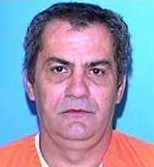
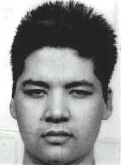
Rigoberto Sanchez-Velasco
Murderer Brian Kevin Rosenfeld
Murderer · USA · 1985
Brian Kevin Rosenfeld Brian Kevin Rosenfeld was sentenced to three concurrent l…
23 victims
Brian Kevin Rosenfeld
Murderer · USA · 1985
Brian Kevin Rosenfeld Brian Kevin Rosenfeld was sentenced to three concurrent l…
23 victims
 Yahweh ben Yahweh
Murderer · USA · 1980
Yahweh ben Yahweh was born and legally named Hulon Mitchell Jr. (October 27, 19…
23 victims
Yahweh ben Yahweh
Murderer · USA · 1980
Yahweh ben Yahweh was born and legally named Hulon Mitchell Jr. (October 27, 19…
23 victims
 Russell Ellwood
Murderer · USA · 1991
Russell Ellwood was a former taxi driver. Authorities suspected him of killing…
20 victims
Russell Ellwood
Murderer · USA · 1991
Russell Ellwood was a former taxi driver. Authorities suspected him of killing…
20 victims
 Kimberly Cargill
Murderer · USA · 2010
Name: Kimberly Cargill · TDCJ Number: 999572 · Sex: Female · Race: White · Hair…
1 victim
Kimberly Cargill
Murderer · USA · 2010
Name: Kimberly Cargill · TDCJ Number: 999572 · Sex: Female · Race: White · Hair…
1 victim
 Serhiy Tkach
Serial killer · Ukraine · 1980
Serhiy Tkach (Russian: Серге́й Фёдорович Ткач, born 12 September 1952 in Kisely…
100 victims
Serhiy Tkach
Serial killer · Ukraine · 1980
Serhiy Tkach (Russian: Серге́й Фёдорович Ткач, born 12 September 1952 in Kisely…
100 victims
 Georges Gauchet
Murderer · France · 1930
Georges Gauchet was a French aristocrat described as a “playboy” of Paris. He w…
1 victim
Georges Gauchet
Murderer · France · 1930
Georges Gauchet was a French aristocrat described as a “playboy” of Paris. He w…
1 victim
 Luis Aguilar Perez
Murderer · USA · 1984
Luis Aguilar Perez was convicted of sexually assaulting and attempting to murde…
2 victims
Luis Aguilar Perez
Murderer · USA · 1984
Luis Aguilar Perez was convicted of sexually assaulting and attempting to murde…
2 victims
- Gender
- male
- Country
- USA
- Location
- Florida, USA
- Date of birth
- January 4, 1959
- Age at first offence
- 27
- Characteristics
- rape
- Victim profile
- Katixa "Kathy" Ecenarro, 11 ( daughter of his live-in girlfriend) / Edward Kaprat and Charles Street ( fellow Death Row inmates )
- Method of murder
- Strangulation / St abbing with homemade knife
- Date(s) of murder
- 1986 / 1995
- Years active
- 1986–1995
- Date of arrest
- December 12, 1986
- Status
-
Executed
Executed by lethal injection in Florida on October 2, 2002
Case overview
Rigoberto Sanchez-Velasco was a Florida death row inmate convicted of the rape and murder of 11-year-old Katixa “Kathy” Ecenarro, the daughter of his live-in girlfriend, and later convicted of the 1995 stabbing deaths of two fellow death row inmates, Edward B. “Mike” Kaprat III and Charles Street. He was executed by lethal injection in Florida on October 2, 2002.
Timeline
- December 12, 1986 — Marta Molina left her eleven-year-old daughter in the care of Sanchez-Velasco; Molina returned home to find that her daughter had been murdered.
- December 1986 — Sanchez-Velasco was tried and convicted for the murder, sexual battery, and robbery of young Kathy Encenarro in December of 1986.
- August 1988 — Sanchez-Velasco was tried and convicted for the murder, sexual battery, and theft of young Kathy Encenarro in December of 1986.
- 1988 — A death sentence was imposed for the first-degree murder conviction.
- 1990 — Sanchez-Velasco’s convictions and death sentence were affirmed on direct appeal.
- May 1993 — Lawyers representing him filed a motion pursuant to Florida Rule of Criminal Procedure 3.850 seeking to have his conviction and death sentence overturned.
- March 31, 1994 — Sanchez-Velasco wrote to Governor Lawton Chiles requesting that no further appeals be undertaken on his behalf.
- April 28, 1994 — Sanchez-Velasco wrote again to Governor Lawton Chiles requesting that no further appeals be undertaken on his behalf.
- 1995 — Sanchez-Velasco stabbed to death two fellow death row inmates, Edward Kaprat and Charles Street, and received two 15-year sentences for the killings.
- June 20, 1995 — Sanchez-Velasco wrote to Governor Lawton Chiles seeking to have his post-conviction appeals waived and his death warrant signed.
- October 11, 1990 — Citation: Sanchez-Velasco v. State, 570 So. 2d 908.
- 1994 — Sanchez v. Wilson, 639 So. 2d 980 (Florida Supreme Court) was cited in connection with a petition.
- October 24, 1996 — A hearing began on Sanchez-Velasco’s Rule 3.850 motion; he moved to discharge post-conviction counsel Michael Bowen and again asked to waive post-conviction proceedings.
- October 25, 1996 — The trial judge questioned Sanchez-Velasco to determine if he understood the consequences of waiving post-conviction counsel and proceedings.
- October 31, 1996 — The trial court entered an order finding Sanchez-Velasco competent to dismiss the Rule 3.850 motion and discharge counsel.
- December 4, 1997 — Citation: Sanchez-Velasco v. State, 702 So. 2d 224.
- October 1998 — The United States Supreme Court denied certiorari review; a citation to 525 U.S. 811 was included.
- December 1998 — Todd Scher filed a federal habeas corpus petition in Sanchez-Velasco’s name.
- March 2000 — Sanchez-Velasco filed a pro se motion to “waive all my legal rights of appeals in any federal and state court.”
- April 2, 2002 — Citation: Decision in the United States Court of Appeals for the Eleventh Circuit, No. 01-13969, with the court’s opinion dated April 2, 2002.
- April 2, 2002 — The Final Meal and Final Words are included in the provided material.
- April 2, 2002 — A reference to (11th Cir. April 2, 2002) Final Meal and Final Words appears in the provided material.
- April 2, 2002 — The provided material lists “Final Meal” and “Final Words” associated with the execution date.
- October 2, 2002 — Sanchez-Velasco was executed by lethal injection; he was strapped to the execution table and pronounced dead at 9:39 a.m. in the provided material.
- October 3, 2002 — Newspaper and report dates appear in the provided material describing the execution.
Background
Sanchez-Velasco came to Florida in the 1980 Mariel boatlift. He resided with Marta Molina in Hialeah. Molina left her eleven-year-old daughter in his care on December 12, 1986. After the murder of Kathy Ecenarro, he was tried and convicted for murder, sexual battery, and theft, and was sentenced to death.
The provided material also stated that Sanchez-Velasco had been convicted in 1982 for burglary and grand theft in Broward County. He had confessed to the 1986 crime after his arrest, but later recanted. He was later convicted in 1995 in the deaths of two fellow Death Row inmates: Edward B. “Mike” Kaprat III and Charles Street, and he received two 15-year sentences for those killings.
Sanchez-Velasco attempted to drop his appeals and quicken the pace of his execution, including efforts since 1994 to waive appeals and have his execution carried out.
The offence
Murder and sexual battery of Katixa “Kathy” Ecenarro
Molina returned home from work on the evening of December 12, 1986 to find her daughter had been murdered. The victim’s face was swollen, and she was naked and bleeding from her vagina. A medical examination concluded that the victim was raped and that strangulation caused her death.
Missing from Molina’s apartment were the victim’s gold chains, her identification bracelet, and Molina’s fur coat.
Sanchez-Velasco was located by police and, following Miranda warnings, confessed to robbery, rape, and murder. During trial and sentencing, the jury found Sanchez-Velasco guilty of first-degree murder, sexual battery of a victim under twelve years of age, and theft as a lesser included offense of grand theft.
Killing of fellow inmates
While on death row, Sanchez-Velasco murdered two inmates: Edward B. In 1995, he was convicted of fatally stabbing them and was given two 15-year sentences. The provided material described his position that he denied killing Ecenarro but admitted committing other murders, including an apparent reference to the two 1995 prison killings.
Investigation and arrest
Police apprehended Sanchez-Velasco, questioned him, and, after Miranda warnings, he confessed to robbery, rape, and murder. The provided material also stated that he confessed after arrest and admitted the killing during his trial for her death, but that he denied it in a statement issued by his lawyer after the execution.
Trial
Pretrial competency and sanity evaluations
Before trial, defense counsel requested that Sanchez-Velasco be evaluated for competency to stand trial and for sanity at the time of the offense. The trial court appointed six mental health experts—Drs. Riechenberg, Marina, Haber, Berglass, Mutter, and Jaslow—to examine him; none found him either insane at the time of the crime or incompetent to stand trial.
During trial, after Sanchez-Velasco interrupted a government witness’s testimony with an outburst, his counsel asked for another competency evaluation. He was examined by two new doctors—Drs. Castiello and Jimenez—both of whom found him competent.
Guilt phase
At the conclusion of the guilt phase, the jury found Sanchez-Velasco guilty of murder, sexual battery, and theft.
Penalty phase and mental condition evidence
During the penalty phase, the defense presented testimony from Dr. Haber, who testified that Sanchez-Velasco had an emotional disturbance but was legally sane. Sanchez-Velasco made a statement to the jury denying that he was mentally ill, emotionally disturbed, or unable to appreciate the criminality of his conduct.
At the sentence phase, the defense sought to establish that Sanchez-Velasco’s mental condition should serve as a mitigating circumstance. Dr. Marina testified that Sanchez-Velasco was mentally competent but might be suffering from some sort of mental disturbance. The court rejected the opinions of the two defense mental health experts and concluded that Sanchez-Velasco had no extreme mental or emotional condition that might mitigate against a death sentence.
Sentencing findings
The penalty phase jury recommended the death penalty by a vote of eight to four. The trial judge imposed a sentence of death for the first-degree murder conviction.
In the sentencing order, the trial judge found:
- The capital felony was especially heinous, atrocious, or cruel.
- The capital felony was committed while the defendant was engaged in the commission of a sexual battery.
The trial judge found no statutory or nonstatutory mitigating circumstances and explained why mental condition was not found to be a mitigating circumstance.
Sentencing
Sanchez-Velasco was sentenced to death for the 1986 murder of Kathy Ecenarro. In 1995, after conviction for the 1995 stabbing deaths of Edward B. “Mike” Kaprat III and Charles Street, he received two 15-year sentences.
Appeals
Florida Supreme Court review of direct appeal and Rule 3.850 proceedings
Following trial, this Court affirmed the convictions and death sentence and the United States Supreme Court denied certiorari review.
After affirmance, Sanchez-Velasco filed a Rule 3.850 motion for post-conviction relief, challenging convictions and sentences on sixteen grounds.
The provided material included an appeal where Michael Bowen appealed the trial judge’s order discharging Bowen and dismissing Sanchez-Velasco’s Florida Rule of Criminal Procedure 3.850 challenge. The Florida Supreme Court affirmed the order. The cited per curiam decision was labeled:
- No. 89,511 — December 4, 1997 — “An Appeal from the Circuit Court in and for Dade County, Victoria Platzer, Judge — Case No. F86-37102.”
Waiver of counsel and post-conviction proceedings
The record described competency evaluations over the course of proceedings. A pretrial mental health examination demonstrated that Sanchez-Velasco was competent at the time of the crime and competent to stand trial. During the trial, a competency evaluation ordered by the trial judge again demonstrated competence to stand trial.
In support of the Rule 3.850 motion, the defense retained Dr. Jorge Herrera and Dr. Alec Whyte to evaluate Sanchez-Velasco; they determined he suffered from significant psychological disorders. During the Rule 3.850 proceedings, Sanchez-Velasco also underwent a competency evaluation by Dr. Richard Greer in connection with a separate murder trial in Broward County, where Greer found him competent to represent himself and enter a guilty plea.
On October 24, 1996, the trial judge held proceedings related to the request to discharge counsel and to withdraw the Rule 3.850 motion, and ordered a competency evaluation out of an abundance of caution. The following day, Dr. Sonia Ruiz interviewed and evaluated Sanchez-Velasco. Ruiz issued a report concluding he was fully competent to proceed, with no major mental illness noted, and that no major mental illness or defect interfered with his ability to reasonably assist counsel or himself.
On October 25, 1996, the trial judge questioned Sanchez-Velasco about consequences of waiving post-conviction counsel and proceedings, including understanding that withdrawing the Rule 3.850 motion would forfeit the right to further appeals. The judge conducted a detailed Faretta-type inquiry and found Sanchez-Velasco competent to dismiss counsel and withdraw his post-conviction motion. The order stated Sanchez-Velasco freely, voluntarily, knowingly and intelligently waived his right to counsel for collateral appeal.
Michael Bowen, as Sanchez-Velasco’s former counsel, appealed the discharge order. The Florida Supreme Court affirmed, finding no reasonable basis for doubt concerning Sanchez-Velasco’s competency to dismiss attorney and withdraw his post-conviction motion.
Next friend habeas proceedings and Eleventh Circuit decision
The provided material also described federal habeas proceedings involving Todd Scher and the Capital Collateral Regional Counsel (CCRC). It stated that Scher filed a habeas petition without Sanchez-Velasco’s consent and without even telling him, and that neither Scher nor CCRC visited or communicated with him until after the petition was filed.
The United States Court of Appeals for the Eleventh Circuit addressed the issues in:
- Nos. 01-13969 — “RIGOBERTO SANCHEZ-VELASCO, Petitioner-Appellant, versus SECRETARY OF THE DEPARTMENT OF CORRECTIONS, Respondent-Appellee.”
- April 2, 2002 — opinion by Circuit Judge CARNES.
The Eleventh Circuit affirmed the district court’s judgment dismissing the habeas petition. The court concluded there were no faults with the district court’s conclusion that Sanchez-Velasco was mentally competent to decide his own fate, but disagreed with parts of the district court’s ruling about next friend standing. The Eleventh Circuit stated it affirmed dismissal based on the failure to satisfy Whitmore’s requirements for next friend standing and also based on adequate explanation requirements.
Outcome
Sanchez-Velasco was executed by lethal injection in Florida on October 2, 2002.
In connection with his execution, the provided material stated:
- Sanchez-Velasco denied killing Ecenarro and issued a statement through his lawyer after the execution.
- Family members of the victim witnessed the execution.
- Sanchez-Velasco was pronounced dead at 9:39 a.m., with the execution began at 9:31 a.m. in the provided material.
- His last words were: “I love you, everybody.”
Aftermath and final statements
Visitors and last words
The provided material stated that in the hours before his execution, Sanchez-Velasco was visited by a brother, two nephews, and a priest.
After he was strapped to the execution table, he said: “I love you, everybody.” The material also stated that his mouth trembled slightly before the execution began and that his eyes began to close as chemicals flowed.
Attorney’s presentation of a written statement
After the execution, attorney Craig DeThomasis of Gainesville presented reporters with a statement Sanchez-Velasco wrote that morning. The statement denied killing Ecenarro but admitted committing other murders, with an apparent reference to the 1995 prison killings.
The provided material included the following statement attributed to Sanchez-Velasco:
- “I did not commit the crime for which I will die. It does not matter who believes me and who won't believe me,”
- “I cannot call myself totally innocent because I have committed all kinds of sins, including murder. I am receiving my punishment and am proud to receive my punishment for those lives I have taken.”
Specific quotes from interviews and proceedings (verbatim)
The provided material included the following quoted statement attributed to Sanchez-Velasco in connection with dropping appeals:
- “I hate people. I don't like them. I want to kill people. You understand?”
The provided material included the following quoted statement attributed to Sanchez-Velasco during the federal competency discussion:
- “I has killed people repeatedly, repeatedly, repeatedly, even while being on death row. . . . I don't see myself in other way, is no choice I am making because I want to die . . . but since I been all this year on death row and every year since then hurt somebody or kill somebody, and I haven't do anything, I don't see myself to change my life around. . . . I has been like that all my life and it is nothing I can do.”
Final meal
The provided material listed the final meal as: chicken fried rice, fish filets, avocado salad and cheesecake.
Competency findings and execution stays
The provided material stated that Gov. Jeb Bush imposed a temporary stay Monday for Sanchez-Velasco and lifted the stay after a psychiatric panel found him competent. It also described similar competency issues for Aileen Wuornos and a stay lifted later Wednesday after a panel found her competent. The material included a quote attributed to Gov. Jeb Bush:
- “The mother of the 11 year-old child that was raped and murdered, think of her for a moment, think about her family,”
- “I hope they get closure on this now. I put greater weight on that than all this talk about politics.”
The provided material also included a quoted response attributed to Celia Ecenarro:
- “They were nine long minutes, but justice was done,”
- “She was a nice little girl. … The thing that is always in my mind is how innocent she was.” and
- “And that is the truth. Justice was done. I don't think he realized the amount of pain he caused.”
Other details
People named
- Katixa “Kathy” Ecenarro — victim; daughter of Marta Molina.
- Marta Molina — live-in girlfriend; mother of the victim; left her daughter in Sanchez-Velasco’s care.
- Edward B. “Mike” Kaprat III — fellow death row inmate killed in 1995.
- Charles Street — fellow death row inmate killed in 1995.
- Craig DeThomasis — attorney who presented Sanchez-Velasco’s statement after the execution.
- Todd Scher — litigation director of the Capital Collateral Regional Counsel (CCRC) South Florida office; filed a federal habeas petition described as unauthorized.
- Michael Bowen — pro bono post-conviction counsel discharged by the trial judge and later appealed.
- Dr. Sonia Ruiz — clinical psychologist who evaluated Sanchez-Velasco and issued a report.
- Dr. Richard Greer — Chief of the Forensic Psychology Division at the University of Florida Medical School; evaluated Sanchez-Velasco in prior and later proceedings.
- Dr. Robert Stetson — accompanied Dr. Greer during examination.
- Drs. Riechenberg, Marina, Haber, Berglass, Mutter, Jaslow — appointed to examine Sanchez-Velasco pretrial for competency to stand trial and sanity at the time of offense.
- Drs. Castiello and Jimenez — examined Sanchez-Velasco for competency during trial after an outburst.
- Dr. Jorge Herrera and Dr. Alec Whyte — defense-retained experts who evaluated Sanchez-Velasco for post-conviction claims.
- Victoria Platzer — judge referenced in the appeal docket (Case No. F86-37102).
- KOGAN, C.J., and OVERTON, SHAW, HARDING and WELLS, JJ., and GRIMES, Senior Justice — names appearing as concurring justices in the December 4, 1997 per curiam decision.
- ANSTEAD, J. — recused (December 4, 1997 decision).
- Dianne Abshire — member of the Florida Support Group mentioned in discussion of claims of insanity.
- Baya Harrison III — lawyer appointed to represent the inmate in a state psychiatric context described in the provided material.
- Governor Jeb Bush — ordered and managed stays and the execution.
- Celia Ecenarro — stepmother of the victim; quoted about the execution.
- Abe Bonowitz — quoted criticizing execution timing as politics.
- Aileen Wuornos — serial killer mentioned in connection with competency issues and execution stays.
- Katie Muniz — spokeswoman for Gov. Jeb Bush mentioned in connection with execution timing.
Jurisdiction and case citations as stated
The provided material included citations and docket labels for the Florida Supreme Court and federal appellate proceedings:
- Sanchez-Velasco v. State, 570 So. 2d 908.
- Sanchez-Velasco v. State, 702 So. 2d 224.
- Sanchez v. Wilson, 639 So. 2d 980.
- U.S. Court of Appeals for the Eleventh Circuit, Nos. 01-13969, dated April 2, 2002 (D.C. Docket No. 98-02967-CV-DMM).
Legal issues and procedural claims included in the provided material
The provided material described:
- competency evaluations for trial, sentencing, and waiver of counsel and post-conviction proceedings;
- waiver of post-conviction counsel and Rule 3.850 proceedings after a competency evaluation;
- challenges to next friend standing and procedural propriety in federal habeas proceedings filed without consent;
- the Eleventh Circuit’s discussion of Whitmore requirements and reasons for affirming dismissal of the habeas petition.
Spotted an error, or have more information about this case?