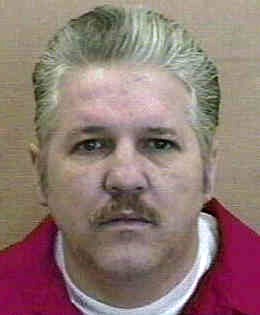
Ricky Lee Sanderson
Murderer Brian Kevin Rosenfeld
Murderer · USA · 1985
Brian Kevin Rosenfeld Brian Kevin Rosenfeld was sentenced to three concurrent l…
23 victims
Brian Kevin Rosenfeld
Murderer · USA · 1985
Brian Kevin Rosenfeld Brian Kevin Rosenfeld was sentenced to three concurrent l…
23 victims
 Marvin Gray
Murderer · USA · 1975
Marvin Gray was convicted killer who claimed responsibility for 23 slayings and…
23 victims
Marvin Gray
Murderer · USA · 1975
Marvin Gray was convicted killer who claimed responsibility for 23 slayings and…
23 victims
 Yahweh ben Yahweh
Murderer · USA · 1980
Yahweh ben Yahweh was born and legally named Hulon Mitchell Jr. (October 27, 19…
23 victims
Yahweh ben Yahweh
Murderer · USA · 1980
Yahweh ben Yahweh was born and legally named Hulon Mitchell Jr. (October 27, 19…
23 victims
 Russell Ellwood
Murderer · USA · 1991
Russell Ellwood was a former taxi driver. Authorities suspected him of killing…
20 victims
Russell Ellwood
Murderer · USA · 1991
Russell Ellwood was a former taxi driver. Authorities suspected him of killing…
20 victims
 James Kopp
Murderer · USA · 1998
James Charles Kopp (born in Pasadena, California on August 2, 1954) was an Amer…
1 victim
James Kopp
Murderer · USA · 1998
James Charles Kopp (born in Pasadena, California on August 2, 1954) was an Amer…
1 victim
 Floyd Allen Medlock
Murderer · USA · 1990
Floyd Allen Medlock was executed by lethal injection in Oklahoma on January 16,…
1 victim
Floyd Allen Medlock
Murderer · USA · 1990
Floyd Allen Medlock was executed by lethal injection in Oklahoma on January 16,…
1 victim
 Juan Velazquez
Murderer · USA · 2001
Juan Velazquez moved in with Virginia Venegas and her two young children, 3-yea…
1 victim
Juan Velazquez
Murderer · USA · 2001
Juan Velazquez moved in with Virginia Venegas and her two young children, 3-yea…
1 victim
 James Dellinger
Murderer · USA · 1992
James A. Dellinger was convicted in the 1992 shooting death of Tommy Griffin. G…
1 victim
James Dellinger
Murderer · USA · 1992
James A. Dellinger was convicted in the 1992 shooting death of Tommy Griffin. G…
1 victim
 Jose DeJesus
Murderer · USA · 1997
Jose DeJesus was convicted of first-degree murder in July 1998 for the 1997 sho…
1 victim
Jose DeJesus
Murderer · USA · 1997
Jose DeJesus was convicted of first-degree murder in July 1998 for the 1997 sho…
1 victim
 Werner Boost
Serial killer · Germany · 1953
Werner Boost was a German offender who carried out attacks on lovers’ lanes and…
5 victims
Werner Boost
Serial killer · Germany · 1953
Werner Boost was a German offender who carried out attacks on lovers’ lanes and…
5 victims
- Gender
- male
- Country
- USA
- Location
- Iredell County, North Carolina, USA
- Date of birth
- February 25, 1959
- Age at first offence
- 26
- Characteristics
- rape
- Victim profile
- Sue Ellen "Suzi" Holliman (female, 16)
- Method of murder
- St abbing with knife
- Date(s) of murder
- March 14, 1985
- Years active
- 1985
- Date of arrest
- January 21, 1986
- Status
-
Executed
Executed by asphyxiation-gas in North Carolina on January 30, 1998
Case record: Ricky Lee Sanderson
Timeline
- March 14, 1985 — Hugh Holliman's sixteen-year-old daughter disappeared.
- March 15, 1985 — A farmer found Sue Ellen Holliman's body in a shallow grave; her pants were down around her knees and she had three stab wounds in her chest.
- April 15, 1985 — The body of Sue Ellen Holliman was found in a remote field in the woods.
- May 15, 1985 — Elwood “Woody” Jones confessed to the murder of Sue Ellen Holliman.
- March 3, 1986 — Ricky Lee Sanderson was indicted in Davidson County for first-degree kidnapping and murder of Sue Ellen Holliman.
- April 7, 1986 — Sanderson pled guilty to first-degree kidnapping and first-degree murder.
- January 21, 1986 — While an inmate at Central Prison, Sanderson called the Davidson County Sheriff's Department and indicated that he wished to make a statement about a murder.
- February 5, 1986 — Sanderson made another statement describing driving around the Sapona area of Davidson County looking for a home to break into and details of the offense.
- January 26, 1998 — Sanderson selected execution by lethal gas.
- January 28, 1998 — Sanderson was moved from death row to Central Prison’s death watch area around 6:10 PM.
- January 29, 1998 — Sanderson did not request a special last meal; he ate a honey bun ordered from the commissary and did not eat the meal served.
- January 30, 1998 — The lethal gas was administered at 2:01 a.m.; Sanderson was declared dead at 2:19 a.m.
- January 30, 1998 — Sanderson gave his last words.
- January 30, 1998 — Sanderson was buried in a cemetery of a Pfafftown Methodist church, whose minister befriended him.
Background
Ricky Lee Sanderson declined his last meal as a protest against abortion before being put to death in the gas chamber. He stated that “Innocent babies died in abortions for no reason” and that he deserved to be put to death for his crime.
Sanderson became intensely religious in 1986 after arriving at Central Prison.
Sanderson had dropped his appeals and went willingly to the death chamber.
Central Prison Warden James French named official witnesses for the January 30 execution. The official witnesses were District Attorney Eugene Morris, Jr., Assistant District Attorney Patricia Bruce, Assistant District Attorney Chris Collier, Hugh Holliman, Lt. Michael Phillips and Sheriff Gerald Hege. Media witnesses were Martin Kady, The Winston-Salem Journal, Karen Hillenbrand, The Lexington Dispatch, Robert Marshall, WFMY-TV Greensboro, Mark Mottern, WLFL-TV Raleigh, and Estes Thompson from the Associated Press. Under the Department of Correction policy, the district attorney and sheriff in the county of conviction nominated the six official witnesses. These witnesses may include members of the victim’s family. A 1997 amendment to state statute insured the crime victim’s family the right to witness the execution. The six official witnesses signed an affidavit of execution following the execution. The Radio Television News Directors Association of the Carolinas selected the two broadcast reporters and the N.C. Press Association selected the two print reporters. The Associated Press selected its own wire service representative. Following the execution, the media witnesses were required to relate their experience to other reporters in Central Prison’s visitor center.
Sanderson was scheduled for execution at Central Prison in Raleigh on January 30, 1998 at 2 AM.
Sanderson was an Edgecombe County, NC native. He had been convicted in Davidson County on Nov. 3, 1995 of the March 1985 stabbing death of 16-year-old Sue Ellen Holliman.
The offence
Sanderson was indicted in Davidson County on March 3, 1986 for the first-degree kidnapping and murder of Sue Ellen Holliman.
Sanderson abducted sixteen-year-old Sue Ellen Holliman from her home and drove her to a secluded area. There he raped, strangled, and stabbed her and buried her body in a shallow grave.
Sue Ellen was last seen alive by her father at around 12:30 p.m. on 14 March. She had stayed home from school because of an illness, and Mr. Holliman returned to work after ten or fifteen minutes. When her mother came home later in the afternoon, she could not find Sue Ellen and called the police.
The body was found on 15 April 1985 in a remote field in the woods. The body was clothed in sweatpants gathered around the ankles, a T-shirt pulled up prior to the stabbings, a bra that appeared to have been torn or cut, and a pair of panties pulled down to the lower thighs. The body had three stab wounds just below the breastbone, most likely caused by a knife. Decomposition precluded any possibility for the medical examiner to examine the body for physical evidence of strangulation or rape. The victim died of stab wounds to the chest and abdomen.
Investigation and confessions
On 15 May 1985, Elwood “Woody” Jones, an employee of a business managed by the victim’s family, confessed to the murder of Sue Ellen Holliman. He was indicted for first-degree murder and was awaiting trial when Sanderson, in prison for another crime, confessed to the same murder.
On January 21, 1986, Sanderson called the Davidson County Sheriff's Department from Central Prison and indicated he wished to make a statement about a murder. During the initial interview, he told officers from the Davidson County Sheriff's Department and the State Bureau of Investigation that he had stabbed, raped, and buried Sue Ellen Holliman.
On February 5, 1986, Sanderson made another statement describing driving around the Sapona area of Davidson County looking for a home to break into. He selected the Hollimans’ house because it was surrounded by woods. As he attempted to enter the home, the victim met him at the door. Sanderson asked if he could use the phone; when she replied that she was not allowed to let anybody into the house while her parents were away, he barged into the house. He asked if there was money in the house, and she told him there was not. He decided to “just get out of there” and took the victim with him to prevent her from reporting his license plate number. He told her to get on the floorboard of his car. He drove to a secluded area, laid the victim on the ground, and raped her. He then forced the victim into the trunk of his vehicle while he dug her grave. He removed the victim from the trunk, forced her to sit down, and began choking her until she lay on her side. Unsure whether she was dead, he got a knife from his car, rolled the victim over, and stabbed her in the chest.
Paint chips recovered from the victim’s clothing were consistent with paint from Sanderson’s car. A pubic hair recovered from the driver's seat was microscopically consistent with the victim's pubic hair. Various fibers recovered from the victim’s clothing were found to match fibers taken from Sanderson’s car.
Arrest / prison proceedings
Sanderson selected execution by lethal gas. Lethal injection was made an option in 1983, and lethal gas had been used to execute North Carolina inmates since 1936. The death row inmate had to notify the warden of Central Prison in writing at least five days before the execution that he preferred lethal injection; otherwise the execution would be carried out with lethal gas.
Sanderson was moved from death row to Central Prison’s death watch area around 6:10 PM on January 28, 1998. The death watch area was adjacent to the execution chamber and was located in the prison's custody control building.
Trial
Sanderson was indicted for first-degree kidnapping and murder of Sue Ellen Holliman.
He pled guilty to both charges on April 7, 1986.
At a capital sentencing proceeding held in May 1987, a jury recommended the death sentence and the trial court sentenced Sanderson to death and to a term of forty years’ imprisonment for the kidnapping.
On appeal, this Court found McKoy error in the capital sentencing proceeding and remanded for resentencing in State v. Sanderson, 327 N.C. 397, 394 S.E.2d 803 (1990).
A second capital sentencing proceeding was conducted in May 1991. Again, the jury recommended death and the trial court sentenced accordingly.
On a second appeal, this Court concluded the proceeding was tainted by the prosecutor's “persistent misconduct” and remanded for another capital sentencing proceeding in State v. Sanderson, 336 N.C. 1, 442 S.E.2d 33 (1994).
This defendant’s third capital sentencing proceeding was conducted at the 16 October 1995 Criminal Session of Superior Court, Iredell County. This jury recommended death and the trial court sentenced Sanderson accordingly.
The Supreme Court decision (in the case titled “STATE OF NORTH CAROLINA v. RICKY LEE SANDERSON,” No. 374A86-3, filed 24 July 1997) addressed assignments of error including the submission of rape as an aggravating circumstance and the submission of kidnapping as an aggravating circumstance.
The State’s evidence at the third capital sentencing proceeding included confessions by Sanderson that he kidnapped the victim prior to killing her, and defense counsel acknowledged on several different occasions that Sanderson kidnapped the victim.
Sentencing
The Supreme Court decision stated that the jury found aggravating circumstances and that it found neither statutory mitigating circumstance to exist. The jury found three aggravating circumstances in the proportionality discussion:
- that Sanderson committed the murder to prevent arrest or effect escape;
- that Sanderson committed the murder while engaged in the commission of kidnapping; and
- that Sanderson committed the murder while engaged in the commission of rape.
The Supreme Court stated that the jury found neither of the statutory mitigating circumstances submitted to exist. Of the ten nonstatutory mitigating circumstances submitted, the jury found nine to exist.
Sanderson moved for imposition of a life sentence before the third capital sentencing proceeding because of the prosecutor's allegedly persistent misconduct in the prior capital sentencing proceeding; the trial court denied the motion.
The Supreme Court held that Sanderson received a fair capital sentencing proceeding, free of prejudicial error, and that the sentence of death must be left undisturbed. The decision concluded “NO ERROR.”
Appeals
The Supreme Court decision described the procedural history of three capital sentencing proceedings and the remands:
- The first capital sentencing proceeding in May 1987 resulted in a death sentence and a forty-year term for kidnapping; on appeal, McKoy error led to remand for resentencing.
- The second capital sentencing proceeding in May 1991 again resulted in death; on appeal, the proceeding was remanded due to persistent misconduct by the prosecutor.
- The third capital sentencing proceeding occurred at the 16 October 1995 Criminal Session of Superior Court, Iredell County; the Supreme Court affirmed the death sentence.
In addressing the double jeopardy argument, the Supreme Court discussed State v. Silhan, Bullington v. Missouri, and Poland v. Arizona, and concluded that principles of double jeopardy did not prevent submitting rape as an aggravating circumstance at the third sentencing proceeding.
In addressing the argument about kidnapping as an aggravating circumstance, the Supreme Court described the indictment language and the fact of the guilty plea to kidnapping, concluding that it was irrelevant which theory of unlawful purpose was later used for submission of the aggravator.
In addressing requested nonstatutory mitigating circumstances, the Supreme Court described the requested mitigating circumstance that Sanderson’s voluntary confession may have saved Woody Jones and prevented execution of an innocent man, and concluded it was subsumed in mitigating circumstances submitted regarding the confession.
In addressing jury instructions, the Supreme Court reviewed Issue Three instructions related to mitigating circumstances and concluded no plain error occurred. It also addressed an ineffective assistance of counsel claim connected to failure to object to Issue Three instructions and rejected it under Strickland.
The Supreme Court also addressed a preservation issue about denial of other requested jury-related matters and concluded there was no compelling reason to depart from prior holdings, overruling each.
Outcome
Sanderson was executed by asphyxiation-gas in North Carolina on January 30, 1998.
Execution
Sanderson declined to request a special last meal; he was served a meal of scalloped potatoes, ham, broccoli, salad, bread and a beverage and did not eat it. He ate a honey bun ordered from the commissary.
Early Friday, he was led into the execution chamber. He wore only a pair of white boxer shorts and was strapped into the wooden chair. He was smiling and mouthing the words “Thank you, Jesus” and “I’m going home” before prison officials tied a leather mask over his face, according to accounts of witnesses. When the poisonous gas was released at 2:01 a.m., he breathed deeply and regularly. His head then jerked around. He was declared dead at 2:19.
Last words (verbatim)
Sanderson’s last words were:
Yeah, about the last meal I do. I didn't take that because I have very strong convictions about abortion and with 33 million babies that have been aborted in this country, died for no reason, I'm dying for a deed I did and I deserve death for it and I'm glad Christ forgave me. Those babies never got a first meal and that's why I didn't take the last, in their memory. I'm just thankful God has been gracious to me. That's it.
Burial
Sanderson was buried in a cemetery of a Pfafftown Methodist church, whose minister befriended him.
Aftermath
About 100 opponents of the death penalty held a quiet, somber prayer service outside Central Prison.
About 100 feet away, supporters counted down from 25 and broke into a song familiar to most sports fan: “Nah-nah-nah-nah, nah-nah-nah-nah, hey-hey-hey, goodbye.”
About 10 feet away stood Diane Kelly, Suzi Holliman’s best friend. Kelly said:
"I don't see how people can get joy out this,"
Kelly and her husband had been in bed in Durham, teeth brushed, when she decided they had to be at the prison Thursday night. Kelly was sharing some memories of Suzi when the pro-death chanting started, including that:
- how the two girls had backyard shortcuts to each other's houses;
- how they once botched a batch of carmel corn and hid it in the vegetable drawer of the Hollimans' refrigerator; and
- how they made prank phone calls asking if people's refrigerators were running.
Kelly said that if Suzi were alive, she would have a college degree, a career and a husband now. Kelly also said:
"And she wouldn't approve of people cheering anyone's death,"
and: "There's nothing happy about it."
Other details
Sanderson had been convicted in Davidson County for the 1985 abduction and murder of Sue Ellen “Suzi” Holliman of Lexington.
Friends described Elwood “Woody” Jones as an introvert who lacked self-confidence and said he was pressured into signing a confession by aggressive law enforcement officers. Sanderson had been in prison serving a life sentence plus 110 years at the time he confessed to Holliman’s killing. The Supreme Court record included that Sanderson was in prison for another crime when he confessed.
The Supreme Court record described that, at the time Sanderson confessed to Holliman’s killing, Sanderson was serving a life sentence plus 110 years for other offenses that included raping a South Carolina woman in a Lexington motel room while the woman’s 3-year-old daughter slept inches away. It also stated that a month later, Sanderson kidnapped a woman from High Rock Lake, near Salisbury, raped her and stabbed her 82 times, and that she survived even though she was stabbed so viciously the knife blade broke.
Sanderson pleaded guilty to the 1985 abduction and murder of Sue Ellen “Suzi” Holliman, a 16-year-old Lexington girl. The record stated that his confession freed another man from almost certain conviction and that Sanderson declined to pursue years of appeals.
The Supreme Court record stated that a capital sentencing proceeding used aggravating circumstances including murder during commission of rape and kidnapping, and it described arguments about motion in limine, double jeopardy principles, and jury instructions.
Spotted an error, or have more information about this case?