
Kimberly Cargill
Murderer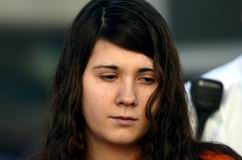 Miranda Barbour
Murderer · USA · 2013
Miranda Barbour, 19, defendant. · Elytte Barbour, 22, defendant and husband of…
100 victims
Miranda Barbour
Murderer · USA · 2013
Miranda Barbour, 19, defendant. · Elytte Barbour, 22, defendant and husband of…
100 victims
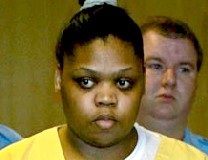 Tiffany Hall
Murderer · USA · 2006
Tiffany Hall was 24 when she was charged in September 2006. She later entered a…
5 victims
Tiffany Hall
Murderer · USA · 2006
Tiffany Hall was 24 when she was charged in September 2006. She later entered a…
5 victims
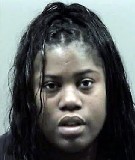 Banita Jacks
Murderer · USA · 2007
Banita Jacks was a Washington, DC resident convicted of murdering her four daug…
4 victims
Banita Jacks
Murderer · USA · 2007
Banita Jacks was a Washington, DC resident convicted of murdering her four daug…
4 victims
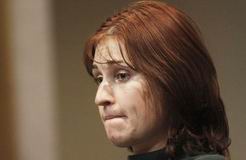 Holly Grigsby
Murderer · USA · 2011
Holly Grigsby was sentenced to life in prison without parole on July 15, 2014.…
4 victims
Holly Grigsby
Murderer · USA · 2011
Holly Grigsby was sentenced to life in prison without parole on July 15, 2014.…
4 victims
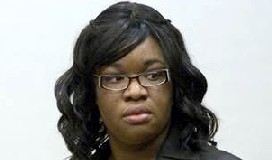 Jessica Tata
Murderer · USA · 2011
Jessica Tata was a Houston home day care owner who fled to Nigeria after a fire…
4 victims
Jessica Tata
Murderer · USA · 2011
Jessica Tata was a Houston home day care owner who fled to Nigeria after a fire…
4 victims
 Amanda Bennett
Murderer · USA · 2011
Amanda Bennett was an Indiana woman who shot her three children and set the fam…
3 victims
Amanda Bennett
Murderer · USA · 2011
Amanda Bennett was an Indiana woman who shot her three children and set the fam…
3 victims
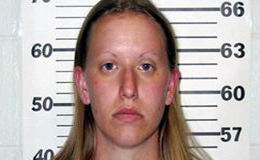 Jessica Hill
Murderer · USA · 2007
Jessica Hill was convicted in connection with the death of her husband, Michael…
1 victim
Jessica Hill
Murderer · USA · 2007
Jessica Hill was convicted in connection with the death of her husband, Michael…
1 victim
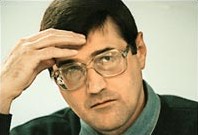 Eugene de Kock
Murderer · S outh Africa · 1970
Eugene de Kock was a former assassin for the apartheid government in South Afri…
6 victims
Eugene de Kock
Murderer · S outh Africa · 1970
Eugene de Kock was a former assassin for the apartheid government in South Afri…
6 victims
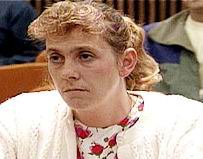 Dixie Shanahan
Murderer · USA · 2002
Dixie Lynn Shanahan (also known as Dixie Duty; formerly Shanahan; later Shanaha…
1 victim
Dixie Shanahan
Murderer · USA · 2002
Dixie Lynn Shanahan (also known as Dixie Duty; formerly Shanahan; later Shanaha…
1 victim
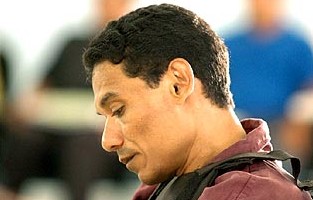 Francisco Das Chagas
Serial killer · Brasil · 1989
Francisco das Chagas was a bicycle mechanic in Brazil. He confessed to killing…
42 victims
Francisco Das Chagas
Serial killer · Brasil · 1989
Francisco das Chagas was a bicycle mechanic in Brazil. He confessed to killing…
42 victims
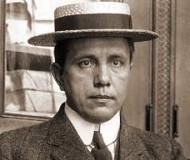 Harry Thaw
Murderer · USA · 1906
Harry Kendall Thaw (February 12, 1871 - February 22, 1947) was the son of Pitts…
1 victim
Harry Thaw
Murderer · USA · 1906
Harry Kendall Thaw (February 12, 1871 - February 22, 1947) was the son of Pitts…
1 victim
 Joseph Ferguson
Mass murderer · USA · 2001
Joseph Ferguson was a former security guard who committed a 24-hour rampage beg…
5 victims
Joseph Ferguson
Mass murderer · USA · 2001
Joseph Ferguson was a former security guard who committed a 24-hour rampage beg…
5 victims
- Gender
- female
- Country
- USA
- Location
- Smith County, Texas, USA
- Date of birth
- November 30, 1966
- Age at first offence
- 44
- Characteristics
- torture, domestic violence, history of mental illness, abuse, drug addict
- Victim profile
- Cherry Walker, 39 (her son's mentally-challenged babysitter)
- Method of murder
- The mechanism of death was unknown (doused the victim with lighter fluid and set her clothes on fire)
- Date(s) of murder
- June 18, 2010
- Years active
- 2010
- Date of arrest
- —
- Status
-
Sentenced to death
Sentenced to death on June 7, 2012
Identifiers and offender information
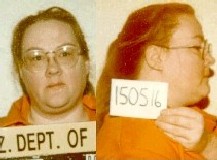
- Name: Kimberly Cargill
- TDCJ Number: 999572
- Sex: Female
- Race: White
- Hair color: Gray
- Height: 5 ft 3 in
- Weight: 145
- Eye color: Green
- Age when received: 45
- Age at time of offense: 43
- Education level (highest grade completed): 12
- County: Smith
- Date received: 06/07/2012
- Gender: Female
- Native county: Jones
- Native state: Mississippi
- Prior occupation: Office Clerk
- Prior prison record: None
The offence
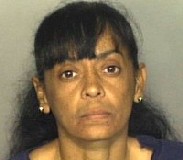
Kimberly Cargill was convicted of murdering her son's mentally-challenged babysitter, Cherry Walker, and setting her on fire.
Subject did not want Cherry Walker to testify against her in a child protective case. Cargill told the victim she would come and get her and hide her so she would not be required to testify because of the subpoena.
Cargill claimed the victim had a seizure and quit breathing while they were driving. Cargill drove the victim to a county road, doused the victim with lighter fluid, and set her clothes on fire. Cargill then left the scene.
The victim was a Black female.
Investigation
Investigators responded to a rural road where a dead body had been located, and used a Sphereon 360 Camera to capture aerial photos of the crime scene.
Evidence described around Cherry Walker included a fast food straw wrapper and a dairy fresh creamer package. Investigators concluded that the placement of items indicated the body had been transported to the location by a vehicle and that the items came out of the car when the body was dumped.
Investigators reported that the dirt and tire-track conditions indicated it would be possible for a car to come in and out of the area without leaving tracks, and they described the area as not private and traveled moderately.
A medical examiner, Dr. Meredith Lann, conducted an autopsy on Cherry Walker on June 20, 2010.
Dr. Lann testified that the manner of death was ruled a homicide, while the mechanism of death was undetermined. She explained that small bleeds observed in the lining that covered Walker’s eyes could be components of asphyxiation, but because Walker was found face down, those bleeds could also be the result of body decomposing and asphyxiation could neither be ruled a cause nor ruled out. Dr. Lann testified she did not believe Walker died of a seizure and that Walker’s means of death was undetermined.
A retired special agent with the Bureau of Alcohol Tobacco and Firearms, Larry Smith, testified that investigators determined Cherry Walker’s body was intentionally set on fire with an igniting fluid and an open flame, and that burning and charring to Walker’s face would not have occurred without ignitable liquid being used. Smith testified he would expect the creamer package or straw package not to be burned at all in that situation and stated: “100%.”
Smith also testified from experience that people burn bodies to make them unrecognizable and to destroy fingerprints and dental records, and he testified that the body burned for a short duration.
Investigators searched Cargill’s residence on June 23 and described items found in the master bedroom and master bathroom, including dairy fresh creamer containers and fast-food trash.
A forensic discussion was presented about DNA testing and mitochondrial DNA testing of hair.
- Huma Nasir, working in a private accredited DNA forensics laboratory, testified that neither profile on dairy fresh creamer were more present than the other, and that partial profile results showed Cargill could not be excluded as a contributor.
- Romy Franco testified that Cherry Walker could not be excluded as the owner of hair found in Cargill’s car, and that the hair could have belonged to 8 in 1305 individuals. Franco also testified that Walker’s mitochondrial DNA was a very close match to mitochondrial DNA found in Cargill’s car.
Justice and forensic testimony included a statistical calculation about exclusion and matching, including a stated figure that “1 in 226,000 people could have a DNA profile that matched the DNA on the creamer and Cargill couldn't be excluded.”
Arrest and pretrial events
Cargill was arrested and held in the Smith County Jail.
Arrest affidavit reporting included that DNA evidence was discovered on a container found on the ground between the knees of Cherry Walker’s body, and that Cargill’s DNA was discovered on that container. It also described Cargill being in contact with people while in jail, asking them to take items from her home that could be possible evidence, and planning to mail a letter listing accounts, user names, and passwords. It described that she was being held on felony injury to a child and faced another charge of injuring one of her children.
The jail communication reporting also described that Cargill asked a male friend to remove an orange bicycle that could be evidence in the CPS case, and that the bike was later discovered at the man’s residence by a sheriff’s deputy. It described two separate investigations underway.
Cargill was held on bonds totaling $1.5 million as reported in court coverage.
Trial
Procedural and evidentiary matters
The trial took place in a Tyler courtroom and jurors were instructed on options for finding guilt of murder instead of capital murder if certain criteria were met.
During closing argument and trial proceedings, references were made to removal of “obstruction” from the charge language so it read “retaliation” instead.
Guilt-innocence evidence and witness testimony
The defense presented that Cargill panicked because Cherry Walker had a seizure in the car. The defense argued it was not as simple as the prosecution portrayed and contested whether the State proved homicide rather than seizure.
Witnesses included:
- Paula Wheeler, a case worker for Cherry Walker, who described Cherry Walker’s daily functioning and response to events.
- Pertena Young and other community access personnel describing Cherry Walker’s childlike behavior and stated susceptibility to being manipulated.
- Chandler Police Officer Arthur McKenzie, who testified about a traffic warning and described notes about Cargill being a nurse at ETMC and being informed to slow down.
- Bobby Lewis, who called 9-1-1 after seeing a burned body on the side of the road.
- Josh Brunt, a Whitehouse police officer, who testified about arriving and taping off the area.
- Texas Ranger Brent Davis, who testified about the Sphereon camera and aerial photos.
- Forensic and medical witnesses including dental and autopsy testimony.
Trial testimony included that Cherry Walker received a subpoena to testify against Cargill in a child custody hearing before she was killed.
A timeline relevant to the trial included testimony about June 18, including communications about the subpoena and Cargill’s alleged calls to the victim.
Autopsy and cause of death testimony
Dr. Meredith Lann testified that Walker’s manner of death was ruled a homicide, while the mechanism of death was undetermined. She testified she was confident Walker died as a result of homicidal violence at the hands of another but that the means of death was undetermined, and she testified she did not believe Walker died from a seizure.
Dr. Lann also testified that there were no bruises around the neck or evidence of the trachea being crushed.
Statements and quotations from trial and victim impact proceedings
During victim impact statement reporting, Cherry Walker’s stepmother Rueon Walker said:
“Ms. Cargill, Cherry loved you and she loved (your son)”
and:
“She didn't deserve the horrible thing you did. You took her away from people that loved her.”
Rueon Walker also said:
“When I saw my baby in the morgue, her eyebrows singed. … You took away my memories of her”
and:
“I couldn't give her a beautiful pink dress. All I had was a black body bag.”
Rueon Walker also said:
“We don't hate you,” she told Ms. Cargill. “We only have love, pity and compassion for you. Jesus loves you, and he will forgive you.”
Rueon Walker also said:
“There are no winners, but there is justice. God gave her life, and it matters. Every life matters.”
During a prosecutor statement after the jury was dismissed, Smith County District Attorney Matt Bingham was quoted:
“We are so pleased that Cherry Walker has received justice and Kim Cargill will not hurt anyone anymore,”
and:
“It was truly an honor to have the opportunity to represent Cherry, her family and the community in this case,”
Prosecutor April Sikes was quoted:
“It's been an emotional two years for me. I have become so emotionally attached to Cherry Walker and her family — she's so childlike,”
and:
“They are safe, now,” she said.
Defense attorney Brett Harrison argued:
“there was sufficient evidence to say her conduct is being driven by her disorder.”
Defense attorney Jeff Haas told the jury:
“the defendant is going away.”
He also told the jury:
“that justice had already been done.”
Jeff Haas was quoted:
“Cherry Walker achieved justice on May 18 when Ms. Cargill was convicted. She goes away for life and she is convicted.”
He also quoted Ms. Cargill as saying:
“I hope you die a miserable old lady.”
and:
“That's exactly what will happen to her — she will die a miserable old lady,'”
Prosecutor April Sikes told the jury:
“evil was sitting right there, in a purple shirt,”
and:
“Cherry's life mattered to me … she stole Cherry Walker's chance to say goodbye,”
Matt Bingham’s closing argument quotations included:
“Cherry Walker had a life, and it was hers and she was living it. The defendant took her life,”
and:
(As presented in reporting, this quotation was part of the victim impact statement section.)
Jury deliberation
Jurors returned a decision following nine hours of deliberation on punishment.
Sentencing
Smith County Judge Jack Skeen sentenced Kimberly Cargill to death by lethal injection on June 7, 2012.
Closing arguments addressed whether Cargill presented a continuing threat to society and whether there were mitigating circumstances.
After punishment was pronounced, Cargill showed no reaction when the punishment was read but did tear up when Rueon Walker read her victim impact statement.
Timeline
- 06/18/2010 — Date of offense; Cargill drove the victim to a county road, doused the victim with lighter fluid, and set her clothes on fire as described in incident summary and witness testimony context.
- 06/19/2010 — A passerby/Pizza Hut worker and other witnesses reported seeing the body; subsequent events described during trial testimony.
- 06/20/2010 — Dr. Meredith Lann conducted the autopsy on Cherry Walker.
- 06/23/2010 — Custody-related hearing date referenced; in testimony, the subpoena delivery and planned testimony were discussed as leading up to the killing.
- 06/07/2012 — Date received; sentencing outcome reported as death sentence on June 7, 2012.
- 05/18/2012 — Cargill was convicted (capital murder) as described in multiple trial coverage items; sentencing followed later.
- 06/07/2012 — Judge Jack Skeen sentenced Cargill to death by lethal injection.
Other details
- Cargill entered a not guilty plea at the start of trial proceedings.
- Co-defendants were listed as none.
- A number of trial proceedings and witness testimonies included details about Cargill’s employment as an LVN temp at ETMC in Athens and that she was working a shift on June 18 as described in testimony.
- Trial proceedings included testimony about a traffic stop in Chandler, and that Cargill’s car, cell phone, and purse were detained during the stop as described in trial coverage.
- Trial coverage described Cargill’s phone communications including calls around the time the victim received a subpoena.
- Trial coverage described that a subpoena was delivered and that Cherry Walker called Cargill after delivery.
- Trial coverage described that the prosecutor used a timeline of calls and texts on the day the victim went missing and that calls to the victim later decreased as described during the guilt phase opening.
- Trial coverage also described discussion of DNA evidence associated with the creamer container and a hair found in Cargill’s car.
- Reporting described the prosecutor and defense closing arguments as focused on whether the State proved homicide and whether mitigating circumstances existed.
Spotted an error, or have more information about this case?