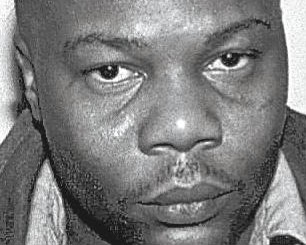
Michael Satcher
Murderer Brian Kevin Rosenfeld
Murderer · USA · 1985
Brian Kevin Rosenfeld Brian Kevin Rosenfeld was sentenced to three concurrent l…
23 victims
Brian Kevin Rosenfeld
Murderer · USA · 1985
Brian Kevin Rosenfeld Brian Kevin Rosenfeld was sentenced to three concurrent l…
23 victims
 Yahweh ben Yahweh
Murderer · USA · 1980
Yahweh ben Yahweh was born and legally named Hulon Mitchell Jr. (October 27, 19…
23 victims
Yahweh ben Yahweh
Murderer · USA · 1980
Yahweh ben Yahweh was born and legally named Hulon Mitchell Jr. (October 27, 19…
23 victims
 Russell Ellwood
Murderer · USA · 1991
Russell Ellwood was a former taxi driver. Authorities suspected him of killing…
20 victims
Russell Ellwood
Murderer · USA · 1991
Russell Ellwood was a former taxi driver. Authorities suspected him of killing…
20 victims
 Robert Martines Perez
Murderer · USA · 1994
Name: Robert Martines Perez · Other name used in proceedings: Robert Martinez P…
15 victims
Robert Martines Perez
Murderer · USA · 1994
Name: Robert Martines Perez · Other name used in proceedings: Robert Martinez P…
15 victims
 Ronnie Thornton
Murderer · USA · 1991
Ronnie Thornton was sentenced to death on January 11, 1993. His convictions wer…
1 victim
Ronnie Thornton
Murderer · USA · 1991
Ronnie Thornton was sentenced to death on January 11, 1993. His convictions wer…
1 victim
 Connie Williams
Murderer · USA · 1974
Connie Williams murdered and dismembered his wife, Francesca. The Supreme Court…
2 victims
Connie Williams
Murderer · USA · 1974
Connie Williams murdered and dismembered his wife, Francesca. The Supreme Court…
2 victims
 Shawna Nelson
Murderer · USA · 2007
Shawna Nelson was found guilty of first-degree murder in the slaying of Heather…
1 victim
Shawna Nelson
Murderer · USA · 2007
Shawna Nelson was found guilty of first-degree murder in the slaying of Heather…
1 victim
 Christopher Wayne Pritchard
Murderer · USA · 1988
Christopher “Chris” W. Pritchard (born November 25, 1968) was an American man c…
1 victim
Christopher Wayne Pritchard
Murderer · USA · 1988
Christopher “Chris” W. Pritchard (born November 25, 1968) was an American man c…
1 victim
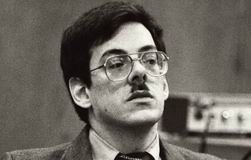 Frank Spisak
Serial killer · USA · 1982
Frank W. Spisak Jr. was a transvestite who was wanted to be Hitler. He was friz…
3 victims
Frank Spisak
Serial killer · USA · 1982
Frank W. Spisak Jr. was a transvestite who was wanted to be Hitler. He was friz…
3 victims
- Gender
- male
- Country
- USA
- Location
- Arlington County, Virginia, USA
- Date of birth
- 1968
- Age at first offence
- 22
- Characteristics
- rape
- Victim profile
- Anne Elizabeth Borghesani (female, 23)
- Method of murder
- St abbing with an awl
- Date(s) of murder
- March 31, 1990
- Years active
- 1990
- Date of arrest
- —
- Status
-
Executed
Executed by lethal injection on December 9, 1997, Virginia
Parties and case identifiers
Michael Charles Satcher was the petitioner-appellee and petitioner-appellant in proceedings before the United States Court of Appeals, Fourth Circuit, involving Samuel V. Pruett, Warden, Mecklenburg Correctional Center, as respondent-appellant and respondent-appellee. Virginia Capital Representation Resource Center appeared as amicus curiae.
The case numbers were Nos. 96-22 and 96-23.
Timeline
- March 31, 1990 — Deborah Abel rode her bicycle on a path running parallel to Lee Highway in Arlington County, Virginia, entered a hidden section of the bicycle path near a sound barrier wall, and was pulled off her bicycle from behind, beaten, dragged into a ditch, and had her pants pulled part way down; Mark Polemani saw the attacker, a purse was taken, and the attacker escaped after a chase.
- March 31, 1990 — Ann Borghesani was last seen alive on March 31, 1990, at 7:10 p.m. in her apartment.
- March 31, 1990 — Around 7:00 p.m., Deborah Abel was attacked along the bicycle path in Arlington County, Virginia.
- March 31, 1990 — Police arrived at the scene at about 7:30 p.m. and searched the area for about an hour.
- April 1, 1990 — Ann Borghesani’s body was discovered some time after 6:45 a.m. at the bottom of a stairwell in an Air Force Association building alongside the bicycle path about 100 yards from where Abel was attacked.
- August 18, 1990 — Police arrested Satcher for trying to attack three different women that morning on a different bicycle path in Arlington County.
- November 19, 1990 — A grand jury indicted Satcher for the murder, rape, and robbery of Borghesani.
- April 15, 1991 — Three months before trial, Satcher was indicted for the attack and robbery of Abel.
- 1991 — The jury found Satcher guilty in the first phase of the bifurcated trial of the robbery, assault and battery, and attempted rape of Deborah Abel and of the robbery, rape, and capital murder of Ann Borghesani; Virginia sought the death penalty.
- 1991 — The Circuit Court of Arlington County sentenced Satcher to death.
- 1992 — The Virginia Supreme Court affirmed Satcher’s conviction and sentence on direct appeal (Satcher v. Virginia, 244 Va. 220, 421 S.E.2d 821 (1992)).
- 1993 — The United States Supreme Court denied Satcher’s petition for writ of certiorari on direct review (Satcher v. Virginia, 507 U.S. 933 (1993)).
- February 19, 1993 — Satcher’s conviction became final for Teague purposes when the United States Supreme Court denied his petition for certiorari on direct appeal.
- April 19, 1993 — Satcher’s motion for rehearing on the petition for certiorari was denied (Satcher v. Virginia, 507 U.S. 1046 (1993)).
- 1995 — Satcher filed a habeas case in the United States District Court for the Eastern District of Virginia in 1995; the district court granted the writ on due process grounds related to Abel’s in-court identification testimony and denied other claims.
- February 27, 1995 — The United States Supreme Court denied Satcher’s petition for a writ of certiorari (from state habeas review) (Satcher v. Netherland, 513 U.S. 1193 (1995)).
- July 21, 1995 — Satcher filed a petition in federal court for a writ of habeas corpus pursuant to 28 U.S.C. § 2254.
- September 18, 1997 — The United States Court of Appeals, Fourth Circuit reversed in part, affirmed in part, and remanded with instructions to dismiss the petition.
- December 9, 1997 — Satcher was executed by lethal injection by the state of Virginia.
Background
Michael Satcher was convicted in Arlington County, Virginia, in 1991 of the robbery, assault and battery, and attempted rape of Deborah Abel and of the robbery, rape, and capital murder of Ann Borghesani. Satcher was sentenced to death.
After his convictions and sentence were affirmed on direct and habeas review in state court, Satcher filed a habeas case in the United States District Court for the Eastern District of Virginia in 1995. Satcher challenged various state court rulings and produced new DNA evidence, which he maintained proved his innocence or at least allowed him to raise certain claims procedurally defaulted in state court.
The district court granted the writ on the grounds that Abel’s in-court identification of Satcher violated his right to due process under the Fourteenth Amendment. The district court denied his other claims. Virginia appealed the grant of the writ and Satcher cross-appealed the denial of the writ on several other claims.
The offence
Attack on Deborah Abel (March 31, 1990)
On March 31, 1990, around 7:00 p.m., Deborah Abel rode her bicycle on a path running parallel to Lee Highway in Arlington County, Virginia. As Abel rode along, she entered a section of the bicycle path hidden from the view of passing motorists by a sound barrier wall about fifteen to twenty feet high. She noticed an “unthreatening” man walking toward her on the path; they made eye contact as they passed. Two or three seconds later, the man pulled Abel off her bicycle from behind, knocking her eyeglasses off; he then dragged her into a ditch along the path.
The man began to beat her in the face and head, using one hand to keep her face turned toward the ground. The man also managed to pull Abel’s pants part way down.
Meanwhile, as Mark Polemani was riding his bicycle along the same section of the path, he noticed a man kneeling near a bicycle lying just off the path. Looking back over his shoulder, Polemani saw the man “throw a punch to the ground.” Polemani got off his bicycle and walked toward the man to investigate. As Polemani approached, the man stopped beating Abel, grabbed her purse, and ran. Polemani chased the attacker along the path and up a hill to the street, but the man escaped. Polemani returned to the path and helped Abel to a nearby apartment complex, where they called the police.
Police arrived at the scene at about 7:30 p.m.
Attack and death of Ann Borghesani (March 31, 1990 to April 1, 1990)
Ann Borghesani was expected to arrive at a party around 8:00 p.m. that same night. Borghesani was ironing some clothes for the party when her roommate left their apartment around 7:10 p.m.
When Borghesani failed to arrive at the party, her friends called the police. Her friends then began looking for her along her usual route to the Metro, searching late into the night and resuming the search early the next morning. Shortly after 8:00 a.m., her body was found at the bottom of a stairwell in an Air Force Association building alongside the bicycle path about 100 yards from where Abel was attacked.
Borghesani was found nude from the waist down. She had been stabbed twenty-one times with a sharp-tipped object and had been raped. Her purse and some of her jewelry were missing. One of Borghesani’s shoes was found on the bicycle path next to the building.
A few days later, both victims’ purses were found together in some bushes in a parking lot about two blocks away from the Air Force Association building.
Joinder of offences and alleged trial issues
Satcher was indicted and tried for crimes against two separate victims. The dissent stated that offenses relating to Deborah Abel were attempted rape, assault and battery, and robbery, and that offenses relating to Ann Borghesani were rape and capital murder. The dissent also stated that the offenses involving Deborah Abel occurred on March 31, 1990, at approximately 7:15 p.m., and that the record did not establish the time that Ann Borghesani was raped and murdered.
The dissent stated that Ms. Borghesani was last seen alive on March 31, 1990, at 7:10 p.m. in her apartment and that her body was discovered some time after 6:45 a.m. on the following morning, April 1, 1990. The dissent stated that there was no evidence in the record revealing that the acts committed against Deborah Abel and Ann Borghesani were based on the same act or transaction, or connected or parts of a common scheme or plan.
Investigation
Police arrested Satcher on August 18, 1990, for trying to attack three different women that morning on a different bicycle path in Arlington County.
The police said nothing to Satcher about the Borghesani murder before or during the trip to the station. When they arrived, an officer asked Satcher, “What’s up?,” and he replied that the police were “trying to frame [him] for a murder or something or rape or something.”
Police later found an awl (a pointed metal tool used for boring holes) in the glove compartment of Satcher’s car. Borghesani’s wounds could have been made with the awl, although it was never conclusively identified as the murder weapon.
Satcher voluntarily gave blood, saliva, and hair samples to the police.
Tests showed that Satcher’s blood type, carried by seven percent of the population, matched the semen sample taken from Borghesani’s body.
Tests performed on pubic hairs found on Borghesani’s clothing were inconclusive: two hairs did not match Satcher, and the rest could be neither confirmed nor eliminated as coming from Satcher.
Virginia’s DNA tests showed that Satcher’s DNA matched the DNA from swabs taken from Borghesani’s body and clothing.
Arrest and evidence at arrest
At the time of his arrest in August, Satcher was twenty-one years old, 5'6", 152 pounds, with short hair and a facial scar.
Abel described her attacker just after the attack in March 1990 as a stocky black male between twenty-five and thirty years old, about 5'9" or 5'10" and 190 to 200 pounds, with no remembered facial scars and a short “Afro” haircut. A police artist made a sketch from Abel’s description. Polemani reported similar physical characteristics, and the police artist drew a sketch from Polemani’s description as well. Polemani noted that the sketches were “almost identical,” though he thought the sketch based on Abel’s description was better.
The dissent stated that Satcher did not even fit the description that the witness gave to the police, stating that the person described was three to four inches taller and 50 pounds heavier than Michael.
Trial
Indictment dates and jury selection
A grand jury indicted Satcher on November 19, 1990, for the murder, rape, and robbery of Borghesani.
On April 15, 1991, three months before trial, Satcher was also indicted for the attack and robbery of Abel.
Police brought in Abel and Polemani to view a lineup fifteen days before trial. Before looking at the lineup, they reviewed the sketch the police artist had made from Abel’s description of the attacker the year before.
At the lineup, Abel narrowed the choices down to number two and number four (Satcher). She decided that number four looked “almost identical” to the sketch. She picked out number two because he looked “unthreatening,” remembering that the man who attacked her had looked unthreatening as she passed him on the bicycle path.
Polemani was unable to positively identify anyone at the lineup, although he testified at trial that he was “pretty sure” that the attacker was number four (Satcher).
Abel was in the courtroom during the two days of jury selection. She observed Satcher as he sat at the defense table and was led in and out of the courtroom. After the first few hours Abel approached the prosecutor and told her, “that’s the guy.”
In-court identification issue
At trial, over Satcher’s objection, the judge allowed Abel to identify Satcher for the jury as her attacker. Abel explained (on redirect examination) that after watching Satcher in the courtroom, she believed he was the attacker because of “the way he walked, the way he shrugged his shoulders when he would come back from the bench, it would put the picture in my mind or remind me of exactly that night.”
The sketch based on Abel’s description, the sketch based on Polemani’s description, both witnesses’ testimony about the lineup, and the lineup picture were introduced as identification evidence.
At trial, Virginia sought the death penalty.
Verdict and sentence
In the first phase of the bifurcated trial, the jury found Satcher guilty of the robbery, assault and battery, and attempted rape of Abel and of the robbery, rape, and capital murder of Borghesani.
In the sentencing phase, the jury recommended the death penalty for the killing of Borghesani based on statutory predicates of “future dangerousness” and “vileness.” Virginia Code section 19.2-264.2 was cited.
The Circuit Court of Arlington County sentenced Satcher to death.
Specific trial factual sequence as analyzed
The appellate opinion described additional details of the sequence of events relevant to identification evidence.
A police artist made a sketch of the attacker based on Abel’s description the day after the attack while she still “had a pretty clear picture in [her] mind.” At trial, this sketch was admitted and shown to the jury.
Abel testified that she “felt that it was an extremely accurate picture” and that she “would rate it an eight or nine on a scale of ten.” Polemani confirmed that the sketch was “almost identical” to a sketch based on his recollection.
Abel testified that she explained what happened at the lineup in 1991. She said the police “told me to choose one [of the lineup participants] only if I felt completely, absolutely sure that I could match that person with who attacked me.”
Abel picked number two and number four (Satcher) out of the lineup and had the detective ask them to come forward and turn around. She then picked out number two. She explained her thinking to the jury as follows:
Well, number four, I had decided in my mind, looked extremely close and accurate to the picture that I had seen since fifteen months previous to that, since the attack and since I had helped the artist draw it. And I had decided that four looked very, very--almost identical to the picture. And I also had a weird feeling about number two. To me, he looked very unthreatening. And that night that I had ridden my bike, I felt that the man that passed me looked unthreatening.
A photograph of the lineup was admitted into evidence.
At a point in trial when Abel was not asked whether her attacker was in the courtroom until after several identification items had been presented, she pointed to Satcher when asked if her attacker was in the courtroom.
Satcher’s counsel objected, and the objection was overruled.
On cross-examination, Satcher’s counsel chose not to focus on the circumstances and reliability of the in-court identification. Instead, counsel challenged the accuracy of Abel’s memory of the attack, questioning her about the amount of light and the length of time she saw the attacker before her glasses were knocked off. Abel explained she was forced to lie face down while the man beat her in the head, did not try to look behind her, and saw only his profile as he ran away.
Satcher’s counsel questioned Abel about disparities between Satcher’s height and weight and the description she gave to police. Counsel then questioned Abel about the lineup, having her explain that she picked out number two, not Satcher.
Counsel finally challenged the in-court identification briefly by having Abel confirm that she knew Satcher was on trial, that she watched him at the defense table, and that he was “the only black man in this area [of the courtroom].”
On redirect, the prosecutor asked Abel to elaborate on the circumstances of her in-court identification. Abel explained:
I just would observe him and just look at him a lot ... to kind of bring myself back to that night. And the way he walked, the way he shrugged his shoulders when he would come back from the bench, it would put the picture in my mind or remind me of exactly that night.
The appellate opinion described the appellate argument about whether the identification could have been tainted by subconscious change, and referenced United States v. Emanuele.
Sentencing
Satcher was sentenced to death by the Circuit Court of Arlington County after the jury recommended death for the killing of Borghesani based on statutory predicates of “future dangerousness” and “vileness.”
Appeals and collateral review
State direct appeal and certiorari denial
The Virginia Supreme Court affirmed Satcher’s conviction and sentence on direct appeal (Satcher v. Virginia, 244 Va. 220, 421 S.E.2d 821 (1992)).
On February 22, 1993, the United States Supreme Court denied Satcher’s petition for writ of certiorari on direct review (Satcher v. Virginia, 507 U.S. 933 (1993)).
Satcher’s motion for rehearing on the petition for certiorari was denied on April 19, 1993 (Satcher v. Virginia, 507 U.S. 1046 (1993)).
State habeas dismissal and federal certiorari denial
Satcher filed a habeas petition for collateral review in the Circuit Court of Arlington County, asserting the same arguments he had made on direct appeal. The Circuit Court dismissed the petition.
Because of an error in the Circuit Court Clerk’s office, the Clerk failed to notify Satcher’s state habeas counsel that the petition was dismissed until after the deadline for filing a notice of appeal. The Circuit Court entered a new order dismissing the petition to preserve Satcher’s right to appeal. The Supreme Court of Virginia dismissed the appeal anyway, holding that the Circuit Court did not have jurisdiction to enter the new order and that Satcher’s appeal was untimely.
The United States Supreme Court denied Satcher’s petition for a writ of certiorari on February 27, 1995 (Satcher v. Netherland, 513 U.S. 1193 (1995)).
Federal habeas and Fourth Circuit decision
On July 21, 1995, Satcher filed a petition in federal court for a writ of habeas corpus pursuant to 28 U.S.C. § 2254.
The district court granted relief on the grounds that Abel’s in-court identification violated due process and that the admission of her identification testimony was not harmless error. The district court denied other claims.
The Fourth Circuit’s decision addressed harmless error on federal habeas review for the in-court identification issue. The appellate court concluded that admitting Abel’s in-court identification testimony was harmless error if erroneous, reversed the district court’s grant of the writ on that issue, and affirmed the district court on other claims. It remanded with instructions to dismiss the petition.
The Fourth Circuit described its harmless error analysis, including that Abel’s in-court identification was one part of the identification evidence and did not have a substantial and injurious effect or influence on the verdict.
The Fourth Circuit also addressed Satcher’s cross-appeal claims:
- It affirmed the district court’s rejection of Satcher’s actual innocence gateway argument based on DNA testing, concluding the Schlup standard was not met.
- It affirmed the district court’s denial of Satcher’s ineffective assistance of counsel claim, concluding Satcher was not actually prejudiced by state habeas counsel’s failure to raise an ineffective assistance claim and affirming on that ground.
- It affirmed the district court’s decision that Satcher’s due process joinder claim was procedurally defaulted because he did not fairly present the federal due process basis to state court.
- It affirmed the district court’s decision on the due process juror-for-cause issue under Teague v. Lane, concluding the rule sought was not dictated by existing precedent.
Dissent regarding joinder and motion for separate trials
The dissent stated it believed the trial court committed reversible error by failing to grant Satcher’s motion for separate trials.
The dissent stated that Satcher was indicted and tried for crimes against two separate victims, and that Satcher was found guilty of offenses relating to Deborah Abel and offenses relating to Ann Borghesani. The dissent asserted there was no evidence in the record establishing the time Borghesani was raped and murdered and that there was no evidence showing that the acts committed against the two victims were based on the same act or transaction, connected, or parts of a common scheme or plan.
Other details
DNA testing description and later claims
The dissent and appellate opinion described the evidence relating to DNA.
Tests showed that Satcher’s blood type matched semen taken from Borghesani’s body, with Satcher’s blood type carried by seven percent of the population.
Tests performed on pubic hairs found on Borghesani’s clothing were inconclusive, with two hairs not matching Satcher and the rest neither confirmed nor eliminated as coming from Satcher.
The appellate opinion described Satcher’s new DNA evidence based on DNA testing performed in 1995. A sample of Satcher’s blood was sent to Lifecodes Corporation to compare with the Commonwealth’s Tidewater lab test of swabs taken from Borghesani’s body and clothing.
DNA test results were compared using autoradiographs with bands of differing widths. Satcher’s expert, Dr. Aimee Bakken, concluded that on one of four probes comparing Satcher’s DNA to the DNA taken from the crime scene, the width of the relevant bands differed by 3.66% and 3.06% between the Lifecodes and Tidewater autoradiographs. Virginia argued that differences were attributable to procedure differences and that the new evidence did not show innocence.
The appellate opinion concluded that Satcher’s DNA evidence did not show the Commonwealth’s test was wrong and that it did not show someone else was the source of the DNA sample taken from the crime scene. It noted that Satcher did not contest that three out of four probes still matched and that none of the experts concluded Satcher did not contribute the DNA. It further stated that discounting Virginia’s DNA test altogether, it could not say that no reasonable juror would have found petitioner guilty beyond a reasonable doubt.
Lineup identification disputes
The appellate opinion described the lineup process and in-court identification sequence.
Abel had identified number four and number two at the lineup but picked number two because he looked “unthreatening.” During jury selection, Abel sat in the courtroom and later told the prosecutor “that’s the guy” after the first few hours.
At trial, the in-court identification was allowed over objection and Abel later explained her belief based on how Satcher walked and shrugged his shoulders when he would come back from the bench.
Quotes included in the record
Several verbatim quotes were recorded within the trial and appellate discussion, including:
- Mark Polemani’s description: “throw a punch to the ground.”
- Satcher’s reply to an officer: “trying to frame [him] for a murder or something or rape or something.”
- Abel’s comment on the lineup picture match: “almost identical.”
- Abel’s explanation about why number two was chosen: “unthreatening.”
- Abel’s courtroom comment to the prosecutor: “that’s the guy.”
- Abel’s redirect explanation: “the way he walked, the way he shrugged his shoulders when he would come back from the bench, it would put the picture in my mind or remind me of exactly that night.”
- Abel’s cross-examination confirmation: “the only black man in this area [of the courtroom].”
- Abel’s redirect explanation of in-court identification circumstances: “I just would observe him and just look at him a lot ... to kind of bring myself back to that night. And the way he walked, the way he shrugged his shoulders when he would come back from the bench, it would put the picture in my mind or remind me of exactly that night.”
- Abel’s lineup explanation quoted in the opinion: the extended “Well, number four…” paragraph.
Outcome
The Fourth Circuit reversed in part, affirmed in part, and remanded with instructions to dismiss the petition. Satcher was executed by lethal injection by the state of Virginia on December 9, 1997.
Spotted an error, or have more information about this case?