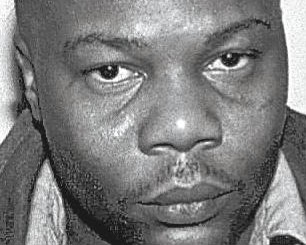
John Thomas Satterwhite
Murderer Ervil LeBaron
Murderer · USA · 1972
Ervil Morrell LeBaron (1925 to August 16, 1981) was the leader of a polygamous…
35 victims
Ervil LeBaron
Murderer · USA · 1972
Ervil Morrell LeBaron (1925 to August 16, 1981) was the leader of a polygamous…
35 victims
 Brian Kevin Rosenfeld
Murderer · USA · 1985
Brian Kevin Rosenfeld Brian Kevin Rosenfeld was sentenced to three concurrent l…
23 victims
Brian Kevin Rosenfeld
Murderer · USA · 1985
Brian Kevin Rosenfeld Brian Kevin Rosenfeld was sentenced to three concurrent l…
23 victims
 Marvin Gray
Murderer · USA · 1975
Marvin Gray was convicted killer who claimed responsibility for 23 slayings and…
23 victims
Marvin Gray
Murderer · USA · 1975
Marvin Gray was convicted killer who claimed responsibility for 23 slayings and…
23 victims
 Yahweh ben Yahweh
Murderer · USA · 1980
Yahweh ben Yahweh was born and legally named Hulon Mitchell Jr. (October 27, 19…
23 victims
Yahweh ben Yahweh
Murderer · USA · 1980
Yahweh ben Yahweh was born and legally named Hulon Mitchell Jr. (October 27, 19…
23 victims
 Anthony Wainwright
Murderer · USA · 1994
Anthony Wainwright (DOB: 10/22/70) was tried in the Third Judicial Circuit, Ham…
1 victim
Anthony Wainwright
Murderer · USA · 1994
Anthony Wainwright (DOB: 10/22/70) was tried in the Third Judicial Circuit, Ham…
1 victim
 Adam Ezerski
Murderer · USA · 2001
August 11, 2001 — Kevin Begoon met Ezerski at a Polk Street cafe and let Ezersk…
1 victim
Adam Ezerski
Murderer · USA · 2001
August 11, 2001 — Kevin Begoon met Ezerski at a Polk Street cafe and let Ezersk…
1 victim
 Henry Curtis Jackson
Mass murderer · USA · 1990
Henry Curtis Jackson, Jr. was convicted in the Leflore County Circuit Court in…
4 victims
Henry Curtis Jackson
Mass murderer · USA · 1990
Henry Curtis Jackson, Jr. was convicted in the Leflore County Circuit Court in…
4 victims
 Misty Witherspoon
Murderer · USA · 2005
Misty Witherspoon — defendant; her husband was Quinn Witherspoon (a Concord Pol…
1 victim
Misty Witherspoon
Murderer · USA · 2005
Misty Witherspoon — defendant; her husband was Quinn Witherspoon (a Concord Pol…
1 victim
 Alfred Gaynor
Serial killer · USA · 1995
Alfred Gaynor was a serial killer from western Massachusetts who was convicted…
9 victims
Alfred Gaynor
Serial killer · USA · 1995
Alfred Gaynor was a serial killer from western Massachusetts who was convicted…
9 victims
- Gender
- male
- Country
- USA
- Location
- Bexar County, Texas, USA
- Date of birth
- December 29, 1946
- Age at first offence
- 33
- Characteristics
- robbery, mentally ill, mentally retarded, escape
- Victim profile
- Mary Francis Davis, 54 (convenience store clerk)
- Method of murder
- Shooting
- Date(s) of murder
- March 12, 1979
- Years active
- 1979
- Date of arrest
- Next day
- Status
-
Executed
Executed by lethal injection in Texas on August 16, 2000
Overview
John Thomas Satterwhite was convicted and sentenced to death for the March 1979 murder of 54 year-old Mary Francis Davis, a convenience store clerk.
Timeline
- March 12, 1979 — San Antonio Police were dispatched to a local convenience store and found Mary Francis Davis in a bathroom stall with gunshot wounds on both temples; more than $600 was missing from the cash register and the last entry on the cash register tape reflected a 79 cent purchase.
- The day after Davis' murder — Police stopped Satterwhite for speeding; Sharon Bell was a passenger in Satterwhite's car, and Bell claimed a gun police found in the car was hers; Bell was arrested for unlawfully carrying a weapon.
- A few days later — Bell was arrested again; during an interview with police, she said she had been involved in the robbery and murder of Mary Francis Davis, but said Satterwhite was the person who shot and killed Davis.
- 1988 — Satterwhite’s first death sentence was reversed.
- March 10, 1993 — Texas Court of Criminal Appeals affirmed Satterwhite's conviction and denied rehearing.
- June 9, 1993 — Texas Court of Criminal Appeals denied rehearing.
- Nov. 8, 1993 — U.S. Supreme Court denied Satterwhite's petition for writ of certiorari.
- Feb. 22, 1994 — The trial court recommended denying Satterwhite's claims.
- June 26, 1996 — Court of Criminal Appeals denied habeas relief based on the trial court's recommendation.
- Dec. 13, 1996 — Satterwhite filed his second federal petition for writ of habeas corpus in the United States District Court for the Western District of Texas, San Antonio Division.
- Sept. 25, 1998 — District Court denied federal habeas relief and denied Satterwhite permission to appeal.
- Jan. 7, 2000 — United States Court of Appeals for the Fifth Circuit denied Satterwhite permission to appeal.
- Feb. 3, 2000 — The Court of Appeals denied motion for rehearing and a motion for stay of proceedings on Feb. 7, 2000.
- June 29, 2000 — U.S.
- August 16, 2000 — Satterwhite was executed by lethal injection in Huntsville, Texas; he was pronounced dead at 6:29 p.m.
- Wednesday evening, August 16th — Texas Attorney General Media Advisory stated he was scheduled to be executed after 6 p.m.
The offence
On the morning of March 12, 1979, San Antonio Police were dispatched to a local convenience store. When they arrived, they found the clerk, Mary Francis Davis, in a bathroom stall with gunshot wounds on both temples. A pack of cigarettes and an open soda container were found on the store's counter. A set of keys, a purse, and a roll of pennies were found on the floor behind the cash register. More than $600 was missing from the cash register and the last entry on the cash register tape reflected a 79 cent purchase.
Bell testified that after they entered the store, Satterwhite pulled a gun and demanded money from Davis. Bell testified that Davis fully cooperated and told Satterwhite there was more money in the safe in the back room. Bell said she and Satterwhite escorted Davis to the back and got money from the vault. Bell testified that as she was heading for the door, she saw Satterwhite put the gun to Davis' temple and heard Davis ask Satterwhite not to shoot her. Bell testified that shortly thereafter she heard two or three gunshots.
Bell also testified at trial that as Bell and Satterwhite drove away from the store, Bell asked Satterwhite why he had shot the clerk. Satterwhite told Bell that he did not want to leave any witnesses.
Two witnesses identified Satterwhite as the person they saw in the convenience store the morning of the murder. One of the witnesses also identified Bell as being with Satterwhite and saw Satterwhite and Bell make the 79 cent purchase, which was the last entry found on the cash register tape.
The gun recovered from Satterwhite's car the day after the murder had been sold to Satterwhite's mother and was determined to have fired the bullets that killed Mary Francis Davis.
Authorities said Satterwhite and Bell were also responsible for a string of other robberies in San Antonio, including another where a clerk was killed.
Investigation
The day after Davis' murder, police stopped Satterwhite for speeding. Sharon Bell was a passenger in Satterwhite's car. Bell claimed that a gun police found in the car was hers. Bell was arrested for unlawfully carrying a weapon.
A few days later, Bell was arrested again. During an interview with police, she said she had been involved in the robbery and murder of Mary Francis Davis, but said that Satterwhite was the person who shot and killed Davis.
Arrest
Satterwhite was stopped for speeding the day after the murder. Sharon Bell was present as a passenger in Satterwhite's car at the time of the arrest.
Trial
Bell testified at Satterwhite's trial about how the two of them went to the convenience store. She testified about Satterwhite demanding money, Davis cooperating and mentioning money in the safe, the pair escorting Davis to get money from the vault, Davis asking Satterwhite not to shoot her, and the two or three gunshots.
At trial, two witnesses identified Satterwhite as being in the store that day. One witness also identified Bell with Satterwhite and described the 79 cent purchase as the last entry on the cash register tape.
Bell testified against Satterwhite at trial and received a 20 year sentence for Aggravated Robbery.
Sentencing
After Satterwhite's first death sentence was reversed in 1988, he was tried, convicted, and sentenced to death a second time.
Eight law enforcement officers testified at the punishment phase that Satterwhite had a bad reputation and was known for not being a law-abiding citizen.
A state prison guard testified at the punishment phase about an incident where Satterwhite started a fire in his cell. The guard told Satterwhite to put out the fire, and Satterwhite threw hot water on him, causing second-degree burns to the guard's face, neck and chest.
A deputy sheriff testified at the punishment phase that at a court proceeding in January 1987, Satterwhite threatened to kill the trial judge and Assistant District Attorney.
A county jailer testified at the punishment phase that one day when Satterwhite was angry for not receiving a newspaper, he threatened to beat up the officer and said "someone should kill deputies who don't do their jobs."
Satterwhite's step-father testified at the punishment phase that in June 1978, he had locked Satterwhite out of the house. Satterwhite responded by shooting his step-father twice through the door, hitting him in the chest, and his step-father was seriously wounded.
Evidence at the punishment phase showed Satterwhite had a conviction for burglary and a 1970 conviction for robbery with a firearm. Evidence was also presented that his parole was revoked in May 1974.
Evidence was presented that Satterwhite was involved in an attempted armed robbery of a liquor store, three days after murdering Mary Francis Davis.
Appeals
Nov. 8, 1993 — U.S. June 26, 1996 — The Court of Criminal Appeals denied habeas relief based on the trial court's recommendation to deny Satterwhite's claims filed Feb. 22, 1994. **Dec. **Sept. **Jan. **Feb. 7, 2000. June 29, 2000 — U.S.
Satterwhite filed a petition for clemency with the Texas Board of Pardons and Paroles.
Outcome
Satterwhite’s execution proceeded on August 16, 2000. Texas Attorney General Media Advisory stated that John T. Satterwhite was scheduled to be executed after 6 p.m. Wednesday August 16th.
Prison officials generally allowed an inmate a few final calls to relatives preceding an execution, but Satterwhite made a phone call to the media. In a telephone call to The Associated Press less than an hour before he was strapped to the Texas death chamber gurney for killing Mary Francis Davis, 54, Satterwhite, 53, said:
“What I want to say is I have remorse and I'm really sorry about what happened to that family,”
Satterwhite declined to make a final statement in the death chamber and was pronounced dead at 6:29 p.m.
In that phone call, he also said:
“I wanted them to know that I hope my remorse does them good. But would it help them any? No,”
Earlier, from death row, Satterwhite said:
and:
“I wouldn't say I'm totally innocent,”
and:
“I'm guilty of some things.”
When asked about the shooting, he replied:
“There's a possibility I could be the person that did it. ... I can't say I did or didn't.”
Satterwhite also said:
and during a conversation, he said:
“He's wonderful,”
He also said:
“I'm at peace.”
At the execution, Satterwhite nodded to reporters who were to witness his death, closed his eyes, took a deep breath as the drugs began to take effect, sputtered twice and gasped twice.
Aftermath / related events
The European Union to the United States appealed by letter to Governor George W. Bush of Texas to commute Satterwhite's sentence. The appeal requested clemency and stated the EU considered the case to merit compassion because Satterwhite was considered by many experts to be both mentally ill (borderline paranoid schizophrenic) and mentally retarded.
The appeal stated:
“We, as the representatives of the Presidency of the European Union, France, together with the next president, Sweden, and the European Commission wish to convey to you an urgent humanitarian appeal by the EU on behalf of Mr. John Satterwhite.
We make this request in the framework of the European Union's policy of seeking a global moratorium on the use of the death penalty (which we have long renounced in Europe), as a step toward its worldwide abolition.
The execution of Mr. Satterwhite, a U.S. citizen, is scheduled to be carried out by Texas State Authorities on August 16, 2000.
The case of Mr. Satterwhite seems to us to particularly merit your clemency, as Mr. Satterwhite is considered by many experts to be both mentally ill (borderline paranoid schizophrenic) and mentally retarded.
Furthermore, according to Mr. Satterwhite's defense, there was mitigating evidence withheld by the state and not made known to the jury.
We urge you to demonstrate compassion with regard to this case.
The EU considers that the execution of Mr. Satterwhite would be contrary to generally accepted human rights norms.
In particular, it is our opinion that his execution would violate the United Nations Economic and Social Council (ECOSOC) Resolution 1989/64 of 24 May 1989 on the implementation of the safeguards guaranteeing protection of the rights of those facing the death penalty.
As you know, this resolution recommends that United Nations Member States eliminate the death penalty for persons suffering from mental retardation or extremely limited mental competence, whether at the stage of sentence or execution.
It would also be contrary to Resolution 2000/65 adopted at the last session of the United Nations' Commission on Human Rights, which specifically urges all States that still maintain the death penalty "not to impose the death penalty on a person suffering from any form of mental disorder or to execute any such person."
The European Union respectfully urges you to commute Mr. Satterwhite's sentence to any other penalty compatible with international law”
In 1988, the U.S. Supreme Court removed Satterwhite's death sentence because he was not allowed to visit with a lawyer before taking a psychiatric test, and the results of the test were used to show the jury that he was a continuing threat to society, which is an essential factor in death penalty sentences.
After the first death sentence was reversed in 1988, a second trial resulted in another death sentence, and the U.S. Supreme Court rejected his appeal in June.
Satterwhite claimed he was discriminated against because he was male, whereas Bell was not convicted of capital murder because she was female.
Other details
Satterwhite was 32 at the time of the March 12, 1979 murder and 53 at the time of his execution. Sharon Bell was 23 at the time of the robbery and murder.
Bell testified that she and Satterwhite escorted Davis to the back and got money from the vault; as Bell headed for the door, she saw Satterwhite put the gun to Davis' temple.
A ninth-grade dropout with an extensive arrest record worried about his victim's family in the moments before he was put to death.
Texas Attorney General Media Advisory stated that John Cornyn offered information on John T. Satterwhite, scheduled to be executed after 6 p.m. Wednesday August 16th.
Bill Harris, the former Bexar County assistant district attorney who prosecuted Satterwhite, said:
“He's a very cold-blooded psychopath, one of the worst I ever prosecuted, just because he had no regard for his victims,”
Satterwhite said:
“To me, it was total discrimination,”
and:
“They never tried any deal with me. I'm the dude. I'm the male.”
Satterwhite appeared worried about his victim's family in the hour before he was executed by injection.
Michael Graczyk of the Associated Press interviewed Satterwhite on death row and Satterwhite said:
and:
When asked about Davis' murder, he replied:
Satterwhite was reported to have eight prior arrests and four convictions. Evidence was presented that he had a conviction for burglary and a 1970 conviction for robbery with a firearm. He had his parole revoked in May 1974. Evidence was presented that he was involved in attempted armed robbery of a liquor store three days after murdering Mary Francis Davis.
Bell received a 20-year sentence for aggravated robbery, served seven years, and was paroled in 1986, and her parole was discharged in March 1999 upon completion of her sentence.

Spotted an error, or have more information about this case?