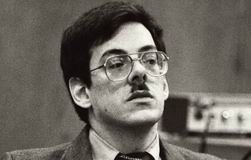
Frank Spisak
Serial killer Carl Eugene Watts
Serial killer · USA · 1974
Carl Eugene Watts (born November 7, 1953; died September 21, 2007), also known…
100 victims
Carl Eugene Watts
Serial killer · USA · 1974
Carl Eugene Watts (born November 7, 1953; died September 21, 2007), also known…
100 victims
 Rodney Alcala
Serial killer · USA · 1977
Rodney James Alcala (born August 23, 1943) was also known as Rodrigo Jacques Al…
100 victims
Rodney Alcala
Serial killer · USA · 1977
Rodney James Alcala (born August 23, 1943) was also known as Rodrigo Jacques Al…
100 victims
 Donald Leroy Evans
Serial killer · USA · 1975
Donald Leroy Evans (born July 5, 1957) was an American serial killer who murder…
60 victims
Donald Leroy Evans
Serial killer · USA · 1975
Donald Leroy Evans (born July 5, 1957) was an American serial killer who murder…
60 victims
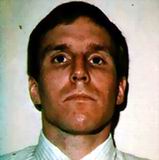 Michael Swango
Serial killer · USA · 1981
Michael Swango (Joseph Michael Swango) was a physician and American serial kill…
60 victims
Michael Swango
Serial killer · USA · 1981
Michael Swango (Joseph Michael Swango) was a physician and American serial kill…
60 victims
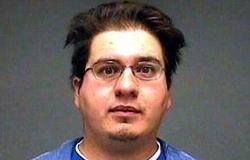 Efren Saldivar
Serial killer · USA · 1989
Efren Saldivar (born 30 September 1969) was an American serial killer who murde…
50 victims
Efren Saldivar
Serial killer · USA · 1989
Efren Saldivar (born 30 September 1969) was an American serial killer who murde…
50 victims
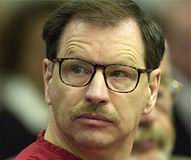 Gary Ridgway
Serial killer · USA · 1982
Gary Leon Ridgway Ridgway was born 18-February-1949 in Salt Lake City, UT. He w…
49 victims
Gary Ridgway
Serial killer · USA · 1982
Gary Leon Ridgway Ridgway was born 18-February-1949 in Salt Lake City, UT. He w…
49 victims
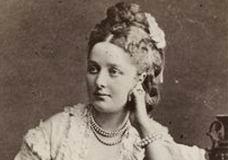 Florence Bravo
Murderer? · United Kingdom · 1876
Florence Bravo was a Victorian heiress and young widow at 26. She met and marri…
1 victim
Florence Bravo
Murderer? · United Kingdom · 1876
Florence Bravo was a Victorian heiress and young widow at 26. She met and marri…
1 victim
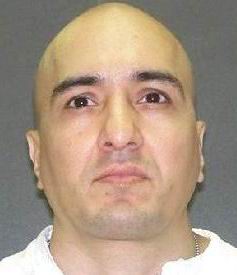 Peter Anthony Cantu
Murderer · USA · 1993
Defendant: Peter Anthony Cantu Victims: Jennifer Ertman (14), Elizabeth Pena (1…
2 victims
Peter Anthony Cantu
Murderer · USA · 1993
Defendant: Peter Anthony Cantu Victims: Jennifer Ertman (14), Elizabeth Pena (1…
2 victims
 Billy Don Alverson
Murderer · USA · 1995
Billy Don Alverson was executed by lethal injection in Oklahoma on January 6, 2…
1 victim
Billy Don Alverson
Murderer · USA · 1995
Billy Don Alverson was executed by lethal injection in Oklahoma on January 6, 2…
1 victim
- Gender
- male
- Country
- USA
- Location
- Cleveland, Ohio, USA
- Date of birth
- June 6, 1951
- Age at first offence
- 31
- Characteristics
- abuse, drug addict
- Victim profile
- Rev. Horace Rickerson, 57 / Timothy Sheehan, 50 / Brian Warford, 17
- Method of murder
- Shooting (.22 handgun)
- Date(s) of murder
- February-August 1982
- Years active
- 1982
- Date of arrest
- September 1982
- Status
-
Executed
Executed by lethal injection in Ohio on February 17, 2011
Case record: Frank Spisak
Background
Frank W. Spisak Jr. was a transvestite who was wanted to be Hitler. He was frizzy-haired and had been looking forward to having a sex-change operation. He later decided he no longer wanted to be a woman and instead wanted to be Hitler. He stopped wearing frocks and make-up and changed his appearance to “silly suits,” slicked back hair, and a toothbrush moustache.
Spisak later suffered from bipolar disorder and had a lifelong struggle over his sexual identity. He referred to himself as Frances and, in 1999, sued the state for “keeping her locked up on Death Row in an all-male prison environment where she cannot receive appropriate hormonal and surgical treatment for her physical and mental defects.”
Spisak was an admirer of Nazi leader Adolf Hitler. He carried a copy of Mein Kampf and grew a Hitler mustache during his 1983 trial. He also carried a copy of Mein Kampf and greeted a judge with a “Heil Hitler” salute during proceedings.
Several mental-health professionals evaluated Spisak. He pleaded not guilty by reason of insanity. He was deemed competent when he killed. At trial, psychiatrists and a clinical psychologist provided testimony about mental disorders and mental illness during the mitigation portion of the trial; other doctors concluded he was legally sane at the time of the offenses.
The offence
Between February and August of 1982, Spisak murdered three people on three separate occasions on the Cleveland State University campus. He also shot at other people; at least two victims survived.
He shot and killed Rev. Horace Rickerson and later shot and killed Timothy Sheehan and Brian Warford. John Hardaway survived being shot seven times, and Coletta Dartt survived being shot at but missed. Spisak later admitted to the other shootings and to all of the murders.
Victims and injuries (as stated)
- Rev. Horace Rickerson, 57: shot and killed in a men's room at Cleveland State University.
- John Hardaway, 55: shot seven times at a transit platform; survived and identified Spisak at trial.
- Coletta Dartt: Cleveland State University employee; ordered back into a stall during an encounter at the restroom; Spisak shot at her but missed.
- Timothy Sheehan, 50: found in a restroom at Cleveland State University shot four times; died.
- Brian Warford, 17: shot and killed at a bus stop near campus; died from a single gunshot wound to the head.
Spisak later claimed he shot Timothy Sheehan because he thought Sheehan “may have been Jewish.” He also stated he blamed mental illness for his hatred of gays, blacks and Jews.
Investigation
Cleveland police received reports of shootings and received tips connected to the firearms used.
On September 4, 1982, Cleveland police answered a call that a man was firing shots from a window at 1367 East 53rd Street. Officers went to the apartment, where Spisak admitted firing one shot and invited the officers inside. A shotgun and a .22 caliber automatic pistol were observed. Officers found additional weapons including a loaded .38 caliber handgun and a two-shot derringer under the couch cushions.
Spisak was arrested for possession of unregistered handguns and discharging firearms within city limits, but was later released on bond and had the weapons confiscated.
The next day, an anonymous caller told police the confiscated weapons had been used in the Cleveland State University shootings. Ballistics testing confirmed the tip. Police obtained a warrant and returned to the apartment, confiscating items including newspaper clippings of the homicides and Nazi-White Power paraphernalia.
Police later arrested Spisak while he was hiding in the basement of a friend's house. During a search of Spisak's suitcase, police discovered Timothy Sheehan's beeper.
At trial, the prosecution presented ballistics evidence linking Spisak’s firearms to the shootings and an identification by surviving victims.
Arrest
Spisak was arrested on September 4, 1982, after a call reported shots fired from a window at 1367 East 53rd Street. He was found inside the apartment and admitted firing one shot. Officers confiscated several weapons and he was later released on bond.
Trial
Charges and pleas (as stated)
Spisak was indicted on four counts of aggravated murder with 20 separate specifications, on two counts of attempted murder, on three counts of aggravated robbery, and one count of receiving stolen property.
Spisak entered pleas of not guilty and not guilty by reason of insanity to all counts but one, to which he entered a plea of no contest.
Trial timeline (as stated)
- The case went to trial on June 7, 1983.
- The jury convicted Spisak on four counts of aggravated murder, on the two counts of attempted murder, and on two counts of aggravated robbery on July 15.
- Spisak was acquitted on one count of aggravated robbery and on one specification on the fourth count of aggravated murder.
- A sentencing hearing began on July 16, 1983.
Verdict and insanity defence
Spisak pled insanity. He asserted that the “one-man war was launched under direct orders from God.” At trial he also used Nazi-related remarks and claimed he was following orders and a belief system.
At his trial, the defense called Dr. Oscar B. Markey and presented an insanity defence. The court refused to instruct the jury on insanity after deciding the defense had not met its burden of going forward with evidence of legal insanity.
At least four doctors examined Spisak and concluded he was legally sane at the time of the offenses for which he was indicted. Markey’s testimony was stricken during the guilt-phase process.
During proceedings, the trial court struck Markey’s testimony from the record after determining it was irrelevant to legal insanity. The appellate review later addressed that ruling and concluded it was not error to strike Markey’s testimony from the record.
Penalty phase
During the penalty phase, multiple mental-health professionals testified for mitigation. Dr. Sandra B. McPherson described Spisak’s lack of remorse and discussed his responses in testing. The trial court heard evidence about diagnosed personality disorders and gender identification conflict.
A line of psychiatrists and psychologists took the stand for the defense, including Dr. Oscar B. Markey, Dr. Sandra B. McPherson, and Dr. Kurt Bertschinger.
After weighing testimony and considering death against life with the possibility of parole, the jury voted for a death sentence.
Language, statements, and quotations during trial
Spisak greeted questions with German “jawohl” instead of “yes.” He answered Judge Sweeney’s questions with a German “jawohl” instead of “yes.”
In his final address to the court during sentencing proceedings, Spisak made statements in German and said:
“Even though this court may pronounce me guilty a thousand times, the higher court of our great Aryan warrior god pronounces me innocent,” he shouted.
“Heil Hitler!”
Spisak’s statement during closing included:
“Not offhand; can you?”
During trial, defense counsel Thomas M. Shaughnessy told the jury:
“Part of the job that you’ve undertaken is going to be sitting in judgment of a sick and demented mind that spews forth a philosophy that will offend each and every one of you,”
Defense counsel also told the jury:
“Make no mistake about that, you will be offended.”
In summation, Shaughnessy told the jury:
“Don’t look to him for sympathy, because he demands none,”
“He is sick, he is twisted. He is demented, and he is never going to be any different.”
Shaughnessy also told the jury:
“Whatever you do, we are going to be proud of you.”
A reporter asked Spisak about electrocution, and Spisak replied:
Sentencing
Spisak was sentenced to death on August 10, 1983.
He also received additional terms:
- 7-25 years on each conviction for attempted murder.
- 7-25 years on each conviction for aggravated robbery.
Appeals
Direct appeal
On April 13, 1988, the Ohio Supreme Court affirmed Spisak’s conviction and death sentence on direct appeal.
Federal habeas and Sixth Circuit
- On April 18, 2003, the federal district court denied Spisak’s petition for a writ of habeas corpus.
- On July 31, 2003, Spisak filed a notice of appeal to the 6th Circuit.
- On October 20, 2006, the 6th Circuit reversed the district court’s decision, vacated Spisak's conviction on an improper jury instruction claim and ineffective assistance of counsel, and remanded for re-trial.
- On November 17, 2006, the State filed a petition for rehearing en banc.
- On December 12, 2006, Spisak filed a memorandum in opposition.
Ohio Appellate decision summary
In State v. Spisak, the appellate court addressed whether the trial court erred by ruling that an expert doctor must have found the defendant legally insane before testifying before the jury. The appellate court concluded that it was not error to strike Markey’s testimony and affirmed judgment and sentence as modified.
The appellate court also addressed sentencing review and ordered vacating a conviction for aggravated murder on a count identified by the court under Ohio allied offenses principles.
U.S. Supreme Court habeas decision
Spisak v. Mitchell was discussed in later Supreme Court material, and Smith, Warden v. Spisak is cited for the U.S. Supreme Court’s habeas decision.
The Supreme Court reversed the Sixth Circuit’s grant of habeas relief and held that:
- The jury instructions and verdict forms at the penalty phase did not unconstitutionally require the jury to consider in mitigation only factors unanimously found to be mitigating.
- Assuming counsel performed deficiently in the penalty-phase closing argument, Spisak was not prejudiced.
Outcome
Spisak’s execution proceeded.
In a clemency context, Gov. John Kasich agreed with the Ohio Parole Board’s unanimous recommendation against granting clemency for Spisak. A last appeal to the U.S. Supreme Court was denied.
Spisak was executed on February 17, 2011 in Ohio. He was pronounced dead at 10:34 a.m. at the Southern Ohio Correctional Facility near Lucasville.
Aftermath
Execution details
- Spisak was executed by lethal injection.
- He was the last person in Ohio to be lethally injected with sodium thiopental.
- Ohio planned to use pentobarbital starting with the execution of Johnnie Baston on March 10.
Spisak recited Biblical verses from the book of Revelations in German as his final statement. He read the first seven verses of the 21st chapter of Revelations and did not include the eighth verse.
At the end of his statement, Spisak said:
“Heil Herr,”
roughly translated to “Praise God.”
His final written statement included Revelations 21:1-7, quoted as:
1 Then I saw "a new heaven and a new earth," for the first heaven and the first earth had passed away, and there was no longer any sea.
2 I saw the Holy City, the new Jerusalem, coming down out of heaven from God, prepared as a bride beautifully dressed for her husband.
3 And I heard a loud voice from the throne saying, "Look! God's dwelling place is now among the people, and he will dwell with them. They will be his people, and God himself will be with them and be their God. 4 'He will wipe every tear from their eyes. There will be no more death' or mourning or crying or pain, for the old order of things has passed away."
5 He who was seated on the throne said, "I am making everything new!" Then he said, "Write this down, for these words are trustworthy and true."
6 He said to me: "It is done. I am the Alpha and the Omega, the Beginning and the End. To the thirsty I will give water without cost from the spring of the water of life. 7 Those who are victorious will inherit all this, and I will be their God and they will be my children.
Last meal
Spisak’s last meal consisted of spaghetti with tomato sauce, a salad, chocolate cake and coffee.
Statements by family and witnesses during execution
Cora Warford said in memory of her baby boy Brian Warford, she could “finally say justice has been served,” and that if it brings closure she could say it is peace of mind for her and her family.
Jeffrey Duke, brother of one of Spisak’s victims, said:
“They ought to hook him up to a generator. If I could get to him, that's what I'd do. A person like him, thinking he could go around killing people because he didn't like the color of their skin or their religion. I'm sorry, that's just the way I feel.”
John Hardaway survived the shooting and was among the witnesses at the execution.
Brendan Sheehan, Timothy Sheehan’s son, was identified in later material as a judge in Cuyahoga County in 2009.
Legal and custody details cited
Spisak was identified as an inmate:
- Inmate#: OSP #A175-472
- Inmate: Frank W. Spisak Jr.
- DOB: June 6, 1951
- County of Conviction: Cuyahoga County
- Institution: Ohio State Penetentiary
Dates of sentencing were listed as February 1, 1982, August 27, 1982, August 30, 1982. (Multiple sentencing dates were presented in that context.)
Timeline
- Feb. 1, 1982 — Rev. Horace Rickerson was shot and killed in a men's room at Cleveland State University.
- June 4, 1982 — John Hardaway was shot seven times while waiting for an RTA train at the West 117th Rapid Station in Cleveland; he survived.
- Aug. 9, 1982 — Coletta Dartt encountered Spisak holding a gun when leaving her office to use the restroom; Spisak shot at her but missed.
- Aug. 27, 1982 — Timothy Sheehan was found in a restroom at Cleveland State University shot four times.
- Aug. 30, 1982 — Brian Warford was found in a bus shelter on the campus of Cleveland State University with a gunshot wound to the head.
- Sept. 4, 1982 — Cleveland police arrested Spisak after a report of shots fired from a window at 1367 East 53rd Street; he admitted firing one shot.
- June 7, 1983 — Trial began.
- July 15, 1983 — Jury convicted Spisak on aggravated murder, attempted murder, and aggravated robbery counts.
- Aug. 10, 1983 — Spisak was sentenced to death.
- Apr. 13, 1988 — Ohio Supreme Court affirmed Spisak’s conviction and death sentence on direct appeal.
- Apr. 18, 2003 — Federal district court denied Spisak’s habeas corpus petition.
- Oct. 20, 2006 — Sixth Circuit reversed and vacated the conviction and remanded for re-trial.
- Jan. 13, 2010 — U.S. Supreme Court proceedings reported in material discussing the final legal appeal.
- Jan. 2010 — U.S. Supreme Court denied what was described as the final legal appeal.
- Feb. 17, 2011 — Spisak was executed by lethal injection in Ohio; pronounced dead at 10:34 a.m.
Other details
Individuals named in connection with the case
- Michael Benza and Alan Rossman and Bill Kimberlin were identified as part of Spisak’s lawyers and associated people described around the execution.
- Warden Donald Morgan participated in asking Spisak if he wanted to say last words.
- Prosecuting attorney: Doinald Nugent (also referred to as Jim Oliver in one context as an investigator).
- Presiding judge during the 1983 trial: James J. Sweeney.
- Trial defence and counsel names appearing: Thomas M. Shaughnessy; Alan C. Rossman; Eric Barnes; William White; Steve Dever; Michael Benza.
- Judge Donald Nugent was referenced in later material as prosecuting earlier material and then as a U.S. District Judge.
Case numbers and legal citations presented
- State v. Spisak, Not Reported in N.E.2d, 1984 WL 13992 (Ohio App. 1984).
- Smith v. Spisak, 130 S.Ct. 676, 175 L.Ed.2d 595 (2010).
- Additional citations were provided in the material including Mills v. Maryland and Strickland v. Washington and Beck v. Alabama in Supreme Court discussions.
Additional details recorded about offences in appellate narrative
The appellate narrative described Spisak’s alleged motives at trial, including assertions related to homosexual advance allegations, fear of recognition, suspected Jewish identity, and a “hunting” approach seeking to kill a black person. It also described equipment and evidence including pellets, bullet casings, a beeper pager belonging to Timothy Sheehan, and Spisak’s admission to shooting and attempting to kill various victims.
Execution witness statements and related remarks
Eric Barnes said:
“Speak English, you fool,”
A quotation attributed to Cathy Sheehan Daly said:
“He's making it up.”
Spotted an error, or have more information about this case?