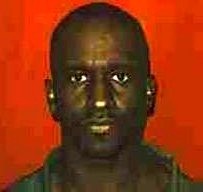
Calvin Shuler
Murderer Russell Ellwood
Murderer · USA · 1991
Russell Ellwood was a former taxi driver. Authorities suspected him of killing…
20 victims
Russell Ellwood
Murderer · USA · 1991
Russell Ellwood was a former taxi driver. Authorities suspected him of killing…
20 victims
 Robert Martines Perez
Murderer · USA · 1994
Name: Robert Martines Perez · Other name used in proceedings: Robert Martinez P…
15 victims
Robert Martines Perez
Murderer · USA · 1994
Name: Robert Martines Perez · Other name used in proceedings: Robert Martinez P…
15 victims
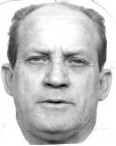 Billy Frank Vickers
Murderer · USA · 1993
Billy Frank Vickers Vickers was executed by lethal injection in Texas on Januar…
14 victims
Billy Frank Vickers
Murderer · USA · 1993
Billy Frank Vickers Vickers was executed by lethal injection in Texas on Januar…
14 victims
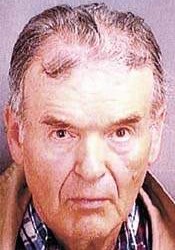 Sergei Babarin
Homicide · USA · 1999
1995 — Sergei Babarin was arrested in Salt Lake City after an incident in a dep…
2 victims
Sergei Babarin
Homicide · USA · 1999
1995 — Sergei Babarin was arrested in Salt Lake City after an incident in a dep…
2 victims
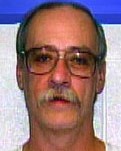 Sedley Alley
Murderer · USA · 1985
Sedley Alley was executed by lethal injection in Tennessee on June 28, 2006. Se…
1 victim
Sedley Alley
Murderer · USA · 1985
Sedley Alley was executed by lethal injection in Tennessee on June 28, 2006. Se…
1 victim
 Lloyd Donald Greeson
Murderer · USA · 1964
Lloyd Donald Greeson liked to see himself in uniform but could not follow milit…
2 victims
Lloyd Donald Greeson
Murderer · USA · 1964
Lloyd Donald Greeson liked to see himself in uniform but could not follow milit…
2 victims
 Jose Antonio Jimenez
Murderer · USA · 1990
Jose Antonio Jimenez (DOB: 10/12/63) was sentenced to death on December 14, 199…
2 victims
Jose Antonio Jimenez
Murderer · USA · 1990
Jose Antonio Jimenez (DOB: 10/12/63) was sentenced to death on December 14, 199…
2 victims
 Margaret Allen
Murderer · United Kingdom · 1948
Margaret Allen was a cross-dressing lesbian who preferred to be called "Bill" a…
1 victim
Margaret Allen
Murderer · United Kingdom · 1948
Margaret Allen was a cross-dressing lesbian who preferred to be called "Bill" a…
1 victim
 John Nixon
Murderer · USA · 1985
John B. Nixon Sr. was executed by lethal injection in Mississippi on December 1…
1 victim
John Nixon
Murderer · USA · 1985
John B. Nixon Sr. was executed by lethal injection in Mississippi on December 1…
1 victim
- Gender
- male
- Country
- USA
- Location
- Dorchester County, South Carolina, USA
- Date of birth
- December 3, 1966
- Age at first offence
- 31
- Characteristics
- armed robbery, kidnapping, drug addict
- Victim profile
- James "J.B." Brooks, 77 ( armored car guard )
- Method of murder
- Shooting
- Date(s) of murder
- December 3, 1997
- Years active
- 1997
- Date of arrest
- —
- Status
-
Executed
Executed by lethal injection in South Carolina on June 22, 2007
Case overview
Calvin Alphonso Shuler was sentenced to death for killing guard James “J.B.” Brooks during an armed robbery of an Anderson Armored Car.
Shuler waited under a house for an armored car to make its routine stop at a bank in Harleyville. When the armored car made its stop, he came out from under the house, pointed a gun at the driver, and shouted for the driver to get out of the truck. Brooks and Shuler exchanged gunfire. Investigators said Brooks fired every shot in his five-shot revolver prior to his death.
After the robbery and gun battle, Shuler dumped the armored car on a back road. Brooks’ body was found in the armored car. Shuler confessed to the robbery and murder when questioned by police officers and FBI agents. After the confession, investigators searched Shuler’s home and found physical evidence, including items containing traces of Shuler’s DNA that matched DNA found in blood inside the armored car. At trial, DNA experts testified that Shuler matched blood taken from the top of the driver’s seat and the passenger’s sun visor, as well as blood taken from other locations including the outside passenger door handle and the double door on the passenger side of the armored car, the top of the cooler between the seats, the SKS clip found on the bank of a ditch, and the ski mask.
Legal proceedings summarized by appellate holdings
The South Carolina Supreme Court affirmed Shuler’s convictions and death sentence. The Supreme Court consolidated Shuler’s direct appeal with the mandatory review provisions of S.C. Code Ann. § 16-3-25 (1985). The federal appeals court affirmed the denial of Shuler’s federal habeas corpus petition.
Timeline
- December 3, 1997 — Three Anderson Armored Car guards (Alton Amick, Sherman Crozier, and James “J.B.” Brooks) collected and delivered money to various banks in the Low County area; they arrived at First National Bank of Harleyville at 10:45 a.m.
- January 28, 1998 — The State served a notice of intent to seek the death penalty.
- November 11, 1998 — The penalty stage commenced.
- June 22, 2007 — Shuler was executed by lethal injection; he was declared dead at 6:17 p.m.
- Wednesday (before June 22, 2007) — The South Carolina Supreme Court rejected Shuler’s attorneys’ appeals to stop the execution on grounds that lethal injection constituted a cruel and unusual punishment.
- Friday (before June 22, 2007) — Governor Mark Sanford denied Shuler’s request for clemency.
Background
Shuler had been an employee of Anderson Armored Car Service and had briefly worked with his victims: James “J.B.” Brooks, driver James Amick, and Sherman Crozier.
During the crime, Brooks sat in the back of the armored car. A metal wall topped by a steel mesh screen separated Brooks in the back from Amick and Crozier in the cab. The driver and passenger side doors had “double locks” that take two hands to open. The car’s side double doors on the passenger side and double doors in the rear were kept locked. Both Amick and Brooks had keys to access the back of the car, but Brooks did not need the key to get out. Brooks also had access to “kill switches” in the rear—one switch would totally disable the car’s engine, and the other switch would sound a visual and audible alarm.
Shuler’s profile included: S.C. Department of Corrections inmate information identifying him as Calvin Alfonzo Shuler (SCDC ID 00005064; SID SC01036071; DOB 12/03/1966; race Black; county of conviction Dorchester; sentence start date 11/12/1998). He was described as 40 at the time of execution.
The offence
Arrival at the bank and orders to exit
At 10:45 a.m. on December 3, 1997, the three Anderson Armored Car guards arrived at First National Bank of Harleyville.
Amick looked around twice to see if the area was clear, opened the door, and turned his head to grab his clipboard. When Amick turned around, the attacker was pointing a semi-automatic pistol in his face. The attacker wore army fatigues, a camouflage face mask, and gloves. An assault rifle was slung over the attacker’s shoulder.
The attacker shouted three times, “Get out of the God d*mn truck.” Amick got out of the car.
The attacker climbed into the driver’s seat, pointed the gun at Crozier’s head, and ordered him out of the car. Crozier exited the car but left his door open.
Gun battle and departure
Inside the van, the attacker and Brooks engaged in a gun battle through the screen mesh separating the cab and the rear area. Amick stood near the doorway on the driver’s side while Crozier ran around the back of the car.
After the gunfire stopped, the attacker threw his semi-automatic handgun out of the car’s window. The attacker hesitated briefly while trying to get the car into gear and then drove off at a high rate of speed.
As the van sped away, Amick fired four shots at the car’s tires with his .38 revolver. Several eye witnesses saw the attacker drive the car down Shortcut Road at a high rate of speed.
Discovery of Brooks’ body and money loss
Deputy Thomas Limehouse initially responded to the call from First National Bank but was told to go to the dirt road in his four-wheel-drive police vehicle. After about a half mile, officers saw the armored car on the road and approached it. They saw Brooks laying in the back of the van. EMS responded but Brooks was dead due to numerous gunshot wounds.
The rear compartment of the car contained $1,555,400 in currency. Much of the currency was shredded by gunfire and soaked in Brooks’ blood.
Victim list and ages/counts stated in the record
- James “J.B.” Brooks (77) was the guard killed during the robbery.
- James Amick was a guard and the driver.
- Sherman Crozier was a guard and passenger in the front passenger seat.
- Three guards were involved in the armored car at the time of the offence.
Investigation
After the armored car was found abandoned along a dirt road, members of the Charleston County Sheriff’s canine team responded to track the attacker. An officer found a SKS assault rifle submerged under water in a canal, with the SKS’s 30-round clip found on the bank of the canal. Officers found a bloody ski mask hanging on a tree branch, then after another 75 yards found a box of 7.62 mm ammunition on the ground. Dogs also found a folded green duffel bag before they lost the attacker’s scent.
The armored car guards recovered a pink-handled, Lorcin .25 semi-automatic handgun the attacker threw out of the window at the bank. Police traced the gun and found it was registered to Shuler’s mother, who was deceased. Police contacted Shuler, and he agreed to meet police at his residence that afternoon. Shuler claimed he had given the gun to his mother for protection and had not seen it since giving it to her prior to her death.
The SKS rifle was traced to Demond Jones (“Jones”), who was Shuler’s cousin’s fiancé. Because Jones was a convicted felon, it was illegal for him to purchase a SKS, and Jones was arrested on federal firearm charges. Jones testified that he agreed to buy the SKS from Woody’s Pawn Shop for Shuler in order to satisfy a debt Jones owed Shuler for a Cadillac.
Jones testified that a week after the purchase, Shuler asked Jones to stand guard while he robbed an armored car in Harleyville. Shuler offered Jones a .44 pistol and $5,000 to help in the robbery. Jones refused.
After further information implicated Shuler, FBI agents interviewed Shuler. During the interview, an agent noticed Shuler nervously pulled on his knit hat. When the hat was removed, the agent noticed lacerations to the back of his head. A FBI agent then conducted a polygraph examination. Shuler confessed to the murder. The polygraph test was not mentioned to the jury.
Confession details included in the record
Shuler was questioned about the crime and confessed to the murder. He indicated that he had planned the robbery two weeks in advance and had lain in wait under a house adjacent to the First National Bank until the armored car made its routine stop. Shuler stated his plan involved hiding underneath a house adjacent to the bank, waiting patiently all night until the armored car arrived the following morning.
After Shuler’s confession, police procured a search warrant for his home. Inside Shuler’s home, police found ammunition, Shuler’s Anderson Armored Car badge, a pistol pouch, and a .44 magnum pistol in the attic. Inside Shuler’s pickup truck, police found a pair of camouflage hunting gloves and three other camouflage knit hunting gloves.
The physical evidence was described as demonstrating that Shuler was the attacker. DNA experts testified at trial that Shuler matched blood taken from multiple locations, including the top of the driver’s seat, the passenger’s sun visor, the outside passenger door handle, the double door on the passenger side of the armored car, the top of the cooler between the seats, the SKS clip found on the bank of a ditch, and the ski mask.
Medical and forensic testimony
According to the pathologist who conducted Brooks’ autopsy, there were three major pre-mortem injuries that could have been fatal. The pathologist theorized that some wounds were post-mortem. The pathologist opined that many wounds were consistent with injury from a high-powered rifle and stated that all of the shooting happened quickly.
A ballistics expert matched a bullet fragment removed from the right front of Brooks’ neck with the SKS rifle. The SKS also matched three fragments from Brooks’ right thigh and buttock and one fragment from his right lateral torso.
A X-ray of Shuler’s head wounds indicated the wounds were consistent with gunshot wounds. An ER doctor who performed the X-rays testified the X-rays reflected gunshot fragments in Shuler’s head, and Shuler had shoulder bruising consistent with recoil from a high-powered rifle.
Trial
Charges and verdict
During the January 1998 term, Shuler was indicted for murder, armed robbery, and kidnapping.
The jury found Shuler guilty on each count.
Penalty stage and sentence
The penalty stage commenced on November 11, 1998. The jury recommended a death sentence, and the trial judge sentenced Shuler to death.
Defense counsel and counsel-related proceedings
Marva Hardee-Thomas was appointed as defense counsel after Shuler’s indictment for murder, armed robbery, and kidnapping. The record stated that Hardee-Thomas was not qualified under South Carolina law to serve as counsel in a capital case. Shuler was appointed new counsel: Norbert Cummings and Doyle Mark Stokes.
Because Cummings and Stokes were concerned about a “taint[ ]” from the involvement of unqualified counsel, they engaged Dr. Harold Morgan as a new psychiatric expert. Counsel spoke with Dr. Schwartz-Watts and obtained her report.
Dr. Donna Schwartz-Watts conducted an evaluation in which Shuler informed her that he had used anabolic steroids. The record stated Dr. Schwartz-Watts noticed Shuler’s physique and recalled judging him in a previous bodybuilding competition. Shuler informed Dr. Schwartz-Watts that he had gotten into a fight with a coworker and had been shot, and that his parents had recently died. Shuler blamed these events on “himself and his steroid use.”
Shuler also told Dr. Schwartz-Watts that he had begun using cocaine base shortly before the murder.
Issues raised on direct appeal (as described in the Supreme Court opinion)
The Supreme Court addressed multiple issues, including:
- A Batson v. Kentucky claim related to a solicitor’s peremptory strike.
- Whether the trial judge erred by proceeding with the Jackson v. Denno hearing in Shuler’s absence.
- Whether the solicitor impermissibly vouched for credibility by asking the State’s chief witness, Jones, about whether he was required under a plea agreement to tell the truth.
- Whether Brooks’ firing at Shuler constituted sufficient legal provocation for a voluntary manslaughter instruction.
- Refusal of Shuler’s request to charge on citizen’s arrest and use of force.
- Whether the death sentence resulted from passion, prejudice, or other arbitrary factor and whether it was excessive or disproportionate.
The Supreme Court affirmed Shuler’s convictions and death sentence.
Voluntary manslaughter instruction discussion
The Supreme Court held that Brooks’ act of firing at Shuler was not sufficient legal provocation for use of deadly force against Brooks, as necessary for a finding of voluntary manslaughter. The Court also found that a proposed instruction regarding a citizen’s arrest was not warranted.
Sentencing
Shuler was sentenced to death. He was placed on death row on Nov. 12, 1998, upon being convicted for murder in the death of James B. Brooks on Dec. 3, 1997.
Appeals
Direct appeal (South Carolina Supreme Court)
Federal habeas corpus appeal (United States Court of Appeals)
After the state proceedings, Shuler filed a petition for writ of habeas corpus. The United States District Court for the District of South Carolina denied the petition but granted a certificate of appealability. Shuler appealed.
The United States Court of Appeals affirmed the denial of habeas relief. It addressed claims regarding:
- trial counsel’s failure to present evidence of steroid and cocaine use,
- trial counsel’s failure to present evidence regarding an alleged suicide attempt hours before the offense,
- the prosecution allowing uncorrected witness testimony about terms of Jones’ plea agreement,
- and the prosecution’s failure to disclose a purported deal regarding Jones’ place of incarceration.
The federal appellate court affirmed denial of relief on all claims.
Outcome
Shuler was executed by lethal injection in South Carolina on June 22, 2007. He was declared dead at 6:17 p.m.
Aftermath / clemency and execution details
Clemency
Shuler’s request for clemency was denied by Gov. Mark Sanford.
Last meal and final statement
Corrections Department officials said Shuler was served a last meal of a T-bone steak, well done with A-1 Steak sauce, baked potato, french fries, grape drink and chocolate cake. Shuler made no final statement.
Witnesses and final moments
Corrections Department officials said Shuler kept his eyes locked on a man described as his spiritual adviser during the execution. The adviser said, “Amen, amen, my brother,” and then hummed softly as the execution was carried out. Another report included the final words heard in the witness room: “Amen, Calvin.”
The record stated Shuler was clad in a bright green jumpsuit and had been strapped to a gurney with tubing connecting one outstretched arm to lethal chemicals kept behind a brick wall. A doctor entered the room several minutes after the chemicals began flowing, used a stethoscope to check for a heartbeat, and then nodded before corrections officials said at 6:17 p.m. that Shuler had been executed.
The record stated Shuler spent the afternoon of his death eating his last meal and meeting with his spiritual adviser, who stayed with Shuler until the hour of his death. Three members of Brooks’ family attended the execution. Shuler’s family did not attend.
Additional execution-place detail included in the record
One report stated the execution occurred at Broad River Correctional Institution in Columbia.
Spotted an error, or have more information about this case?