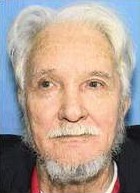
John Nixon
Murderer Brian Kevin Rosenfeld
Murderer · USA · 1985
Brian Kevin Rosenfeld Brian Kevin Rosenfeld was sentenced to three concurrent l…
23 victims
Brian Kevin Rosenfeld
Murderer · USA · 1985
Brian Kevin Rosenfeld Brian Kevin Rosenfeld was sentenced to three concurrent l…
23 victims
 Marvin Gray
Murderer · USA · 1975
Marvin Gray was convicted killer who claimed responsibility for 23 slayings and…
23 victims
Marvin Gray
Murderer · USA · 1975
Marvin Gray was convicted killer who claimed responsibility for 23 slayings and…
23 victims
 Yahweh ben Yahweh
Murderer · USA · 1980
Yahweh ben Yahweh was born and legally named Hulon Mitchell Jr. (October 27, 19…
23 victims
Yahweh ben Yahweh
Murderer · USA · 1980
Yahweh ben Yahweh was born and legally named Hulon Mitchell Jr. (October 27, 19…
23 victims
 Russell Ellwood
Murderer · USA · 1991
Russell Ellwood was a former taxi driver. Authorities suspected him of killing…
20 victims
Russell Ellwood
Murderer · USA · 1991
Russell Ellwood was a former taxi driver. Authorities suspected him of killing…
20 victims
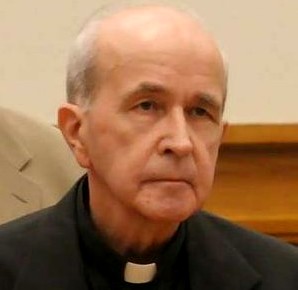 Rev. Gerald Robinson
Murderer · USA · 1980
Rev. Gerald Robinson (born April 14, 1938) was an American murderer and a Roman…
1 victim
Rev. Gerald Robinson
Murderer · USA · 1980
Rev. Gerald Robinson (born April 14, 1938) was an American murderer and a Roman…
1 victim
 Andrew Yellowbear
Murderer · USA · 2004
Andrew John Yellowbear Jr. (born September 5, 1974) was the defendant in a Wyom…
1 victim
Andrew Yellowbear
Murderer · USA · 2004
Andrew John Yellowbear Jr. (born September 5, 1974) was the defendant in a Wyom…
1 victim
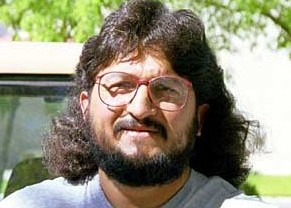 Robert Stewart Flores
Murderer · USA · 2002
Robert Stewart Flores Jr. was 41. He was a Gulf War veteran and worked at the S…
3 victims
Robert Stewart Flores
Murderer · USA · 2002
Robert Stewart Flores Jr. was 41. He was a Gulf War veteran and worked at the S…
3 victims
 Richard Angelo
Serial killer · USA · 1987
Richard Angelo was 26 years old when he went to work at Good Samaritan Hospital…
25 victims
Richard Angelo
Serial killer · USA · 1987
Richard Angelo was 26 years old when he went to work at Good Samaritan Hospital…
25 victims
 Sheldon Ward
Murderer · USA · 2002
Name: Sheldon Ward · TDCJ Number: 999454 · Date of birth: 09/20/1979 · Race: Wh…
1 victim
Sheldon Ward
Murderer · USA · 2002
Name: Sheldon Ward · TDCJ Number: 999454 · Date of birth: 09/20/1979 · Race: Wh…
1 victim
- Gender
- male
- Country
- USA
- Location
- Rankin County, Mississippi, USA
- Date of birth
- April 1, 1928
- Age at first offence
- 57
- Characteristics
- murder for hire
- Victim profile
- Virginia Tucker (female, 45)
- Method of murder
- Shooting ( .22 caliber pistol)
- Date(s) of murder
- January 2, 1985
- Years active
- 1985
- Date of arrest
- November 4, 1985
- Status
-
Executed
Executed by lethal injection in Mississippi on December 14, 2005
Case record: John B. Nixon Sr.
Status and sentence execution
John B. Nixon Sr. was executed by lethal injection in Mississippi on December 14, 2005.
Nixon was pronounced dead at 6:25 p.m. He had been scheduled to die by lethal injection at 6:00 p.m. at the Mississippi State Penitentiary (MSP) in Parchman, Mississippi. He was transported to the execution room at 6:00 p.m., with witnesses transported to Unit 17 at 5:30 p.m.
The execution included a statement by Nixon shortly before the fatal chemicals were injected, and he gave a final meal and shower before execution.
People involved
- John B. Nixon Sr. — defendant; oldest person executed in the United States since the death penalty was reinstated in 1976; convicted of capital murder for a murder-for-hire scheme.
- Virginia Tucker — victim; 45 years old; shot in the head and died the next day at the University of Mississippi Medical Center.
- Thomas Tucker — victim; husband of Virginia Tucker; 40 years old; shot twice while Nixon and accomplices attacked; survived and identified Nixon.
- Elster Joseph Ponthieux (Elester Ponthieux) — hired Nixon; ex-husband of Virginia Tucker; convicted of capital murder and sentenced to life imprisonment.
- John Nixon Jr. — Nixon’s son; convicted on lesser charges for involvement in the murder plot.
- Henry Leon Nixon — Nixon’s son; convicted on lesser charges for involvement in the murder plot; chased Thomas Tucker and fired a shot that grazed Thomas Tucker’s head.
- Gilbert Jimenez — accomplice; testified against Nixon and others; convicted of conspiracy to commit capital murder; received a 20 year sentence.
- Ruth Lee — sister of Nixon (listed among visitors).
- Paige Walden — sister of Nixon (listed among visitors).
- Janell Veach — niece of Nixon (listed among visitors).
- Denny Veach — husband of Janell Veach (listed among visitors).
- Billy Mitchell — spiritual advisor (listed among visitors).
- Willie Bays — MSP Chaplain (listed among visitors).
- Brian Toohey — attorney (visited and received a collect phone call at 12:41 p.m.).
- David Mills — attorney (visited).
- Chris Epps — Mississippi Department of Corrections Commissioner.
- Haley Barbour — Governor of Mississippi; reviewed Nixon’s request for clemency and denied it.
- Daryl Neely — policy adviser for Gov. Haley Barbour.
- J.B. Torrence — retired Rankin County Sheriff (quoted).
- Jacob Tellez — Virginia Tucker’s brother (quoted).
- Dorothy Nixon-Clark (Dorothy Nixon-Clark) — Nixon’s daughter; remained in Texas and issued a written statement.
- Joey Ponthieux — Virginia Tucker’s son; issued a written statement after execution.
- ClarkProsecutor.org / Mississippi Department of Corrections (MDOC) — operational and scheduling information related to execution and media access (not involved in the offense).
Timeline
- Jan. 22, 1985 — Three intruders arrived at the home of Thomas and Virginia Tucker; Nixon and accomplices attacked; Virginia Tucker was shot in the head and died the next day; Thomas Tucker was shot twice and survived.
- Nov. 4, 1985 — Nixon was arrested after being identified in a personal lineup by Thomas Tucker.
- Nov. 1985 — Nixon was charged with capital murder in what authorities called a murder-for-hire plot; four others were charged, including Elster J. Ponthieux who paid $1,000 each to kill his ex-wife.
- Jan. 7, 1986 — Gilbert Jimenez was arrested in Houston, Texas after the Ford van discovery.
- Mar. 24, 1986 — Nixon’s case severed and tried in a three day trial beginning this date.
- Jan. 16, 1986 — Gilbert Jimenez was sentenced to 20 years for conspiracy to commit capital murder.
- Mar. 26, 1986 — Nixon was convicted in Rankin County Circuit Court and sentenced to death.
- Apr. 2, 1986 — Nixon received a death sentence (as stated in part of the record).
- Apr. 1998 — Nixon’s case moved to the top of the list of those most likely to face execution in Mississippi after U.S. District Judge David Bramlette rejected Nixon’s appeal.
- Dec. 10, 2005 — Gov. Haley Barbour denied clemency for Nixon.
- Dec. 12, 2005 — Nixon’s last hope for avoiding execution rested with the U.S. Supreme Court after Gov. Haley Barbour denied his clemency request.
- Dec. 14, 2005 — Nixon’s execution date; lethal injection execution occurred at MSP in Parchman.
The offence
On January 22, 1985, John B. Nixon Sr., along with his son Henry Leon Nixon, and Gilbert Jimenez, arrived at the home of Thomas and Virginia Tucker.
Entry and initial exchange
Thomas Tucker answered a knock at the back door after Virginia Tucker answered. Virginia Tucker ran backwards from the door through which an “old man,” later identified as John Nixon, entered, along with two younger men identified as Henry Leon Nixon and Gilbert Jimenez.
After telling the Tuckers, “I brought y'all something,” John Nixon pulled a .22 caliber pistol from his coat.
Thomas Tucker responded: “I know Joe Ponthieux hired you to kill us, but we got some money if that's what you (sic) after.”
John Nixon responded: “That's not what I'm after. The deal has already been made.” (Virginia Tucker was the former wife of Joe Ponthieux.)
Attempt on Thomas Tucker
John Nixon pointed the pistol at Thomas Tucker and pulled the trigger, but the pistol misfired. Thomas Tucker seized the opportunity to dart toward the front door and pull it open. He was hit in the left side and knocked to the ground by a second shot. Thomas managed to pull himself up and continued his escape.
John Nixon passed the pistol to Henry Leon Nixon. Henry Leon Nixon chased Thomas Tucker into the yard and fired a third shot that grazed Thomas Tucker’s head.
Thomas Tucker made his way over 100 yards to the road and was picked up by a small truck and carried to his work site, the Mississippi Power & Light office in Brandon, Mississippi. When Thomas arrived at the Mississippi Power & Light office, he asked Mr. Carl Corley to go to the aid of Mrs. Tucker.
Thomas Tucker later survived the attempt and identified Nixon as the man who killed his wife.
Assault and killing of Virginia Tucker
Inside the Tucker house, Gilbert Jimenez wrestled Virginia Tucker to the floor where he kept her pinned during the shooting.
When Henry Leon Nixon returned the pistol to John Nixon, John Nixon held the pistol one inch from Virginia Tucker’s head, behind an ear, and fired a shot into her brain. The intruders then drove away in a Ford van.
Virginia Tucker was discovered by Tucker’s co-worker and was taken to the hospital. She died the next day. Virginia Tucker was reported as 45 years old.
Investigation and arrests
Ongoing search
The search for Virginia Tucker’s killers was ongoing for most of 1985.
Arrest and identifications
On November 4, 1985, John Nixon Sr. was arrested after being identified in a personal lineup by Thomas Tucker.
John Nixon Jr. was arrested in Louisiana shortly afterward. Henry Leon Nixon was arrested in Los Angeles, California.
The Ford van used as a getaway was eventually discovered in Houston, Texas. That discovery led to the arrest of Gilbert Jimenez on January 7, 1986 in Houston.
Written statement by Jimenez
While in the custody of the Houston, Texas police, Gilbert Jimenez executed a written statement implicating the three Nixons in the murder-for-hire scheme.
Charges and prosecution theories
Capital murder charge
Nixon was charged and convicted of capital murder as the trigger man in a murder-for-hire scheme. The charge in the record described “murder … by any person who has been offered or has received anything of value for committing the murder” and that all parties to such a murder are guilty as principals (Miss.Code Ann. § 97-3-19(2)(d) (1987)).
Jury findings during sentencing
During sentencing, the jury found:
- The capital offense was committed for pecuniary gain.
- The capital offense was especially heinous, atrocious, and cruel.
- The defendant had previously been convicted of a felony involving the use and threat of violence to a person.
Trial
Trial court and timing
Nixon’s case was severed and tried in a three day trial beginning March 24, 1986. The trial commenced and culminated in a verdict of guilty of capital murder and a death sentence.
Jury deliberations
The jury deliberated only thirty-one minutes before returning a verdict of guilty of capital murder.
In the penalty phase, the jury deliberated sixty-seven minutes before returning their decision in an improper form. The jury was sent back with a correcting instruction, and twenty-five minutes later the jury returned a death penalty verdict.
Evidence and witness testimony
Gilbert Jimenez testified for the prosecution after plea-bargaining to conspiracy to commit capital murder. His testimony described the details of pre-murder preparations and the payments to John Nixon Sr. and John Nixon Jr. by Joe Ponthieux.
Previous conviction issue raised in appeals
The State sought to introduce Nixon’s prior felony conviction involving the use or threat of violence to a person as an aggravating circumstance. Defense counsel objected that the record was not given to the defendant as part of the aggravating circumstance material and that the prior record reflected the name “John B. Nixon” instead of “John B. Nixon, Sr.” Nixon’s objections were overruled.
The prior conviction introduced by the State was a 1958 Texas rape conviction in which Nixon pleaded guilty and was sentenced to fifteen years in prison. Nixon argued it was statutory rape and facially invalid.
The appeal record included the text of the Texas rape indictment and discussed Texas caselaw regarding “ravish” implying force and want of consent.
Sentencing
Nixon was sentenced to death.
Nixon’s motion for new trial was overruled, and he perfected an appeal.
Appeals
Direct appeal (Mississippi Supreme Court)
Nixon’s conviction and sentence were affirmed by the Mississippi Supreme Court.
The direct appeal decision affirmed the guilt and sentencing phases, including findings that:
- the jury was fair and impartial,
- prosecutor’s comments in both guilt and penalty phases were not improper,
- the court’s levity did not constitute reversible error,
- defendant could not make a Batson claim,
- attempted victim’s in-court identification was admissible,
- defendant was not entitled to counsel at lineup,
- prosecution’s failure to disclose pursuant to discovery order was not reversible error,
- coconspirator’s written statements disclosure complied,
- coconspirator’s testimony was admissible,
- witness did not testify after being refreshed by hypnosis,
- jury instructions were proper,
- defendant was not entitled to psychiatric examination,
- defendant was not subjected to double jeopardy,
- admission of prior rape guilty plea was not reversible error, and
- sufficient aggravating circumstances existed for imposition of death penalty.
The decision included an execution date set by the court: “The date of Wednesday, December 16, 1987, is set as the date of the execution of the sentence and the infliction of the death penalty.”
The direct appeal decision ended with: “AFFIRMED.”
Post-conviction relief (PCR)
Nixon v. State (post-conviction relief) affirmed the conviction and denied the petition for post-conviction relief, with the United States Supreme Court decision not applied retroactively.
Federal habeas appeal
In the Fifth Circuit habeas review, the federal court affirmed the judgment denying habeas relief.
The court held that:
- Nixon was not denied effective assistance of counsel at trial and sentencing,
- admission of the prior rape conviction as an aggravator even though Nixon pleaded guilty to statutory rape, was harmless error.
The federal court included discussion of a prosecutor’s closing argument statements:
- “Also introduced into evidence has been a prior conviction of this man. You will be able to take it back in the jury room with you. I encourage you to read it. This man was convicted in the State of Texas for the crime of rape. Certainly, in a rape, ladies and gentlemen, the victim of that crime was faced with threats of bodily injury, another requirement in the findings you have to make. I submit to you that all of these have been proved by the State by the testimony of the witnesses in the guilt phase and by the subsequent introduction into evidence of his prior crime.”
- “The only way to protect society from John B. Nixon, Sr. is to order that he die by lethal injection. He has proven this over the years. He has been convicted of rape; and that, of course, involves the use of threat of violence.”
The Fifth Circuit also quoted a prosecutor’s further description of the murder-for-hire details, including:
- “Ladies and Gentlemen, if this is not heinous, if it is not cruel or atrocious, I don't know what is. Looking at other aspects of what has constituted capital murder, you could not have returned a verdict of capital murder in this case had you not found what was in the prior jury instructions, that of the paynment [sic] of money. There was money exchanged for this murder. That satisfies the Court's instruction to you that the Judge has just read. Who actually committed this murder? Who actually pulled the trigger? John Nixon, Sr. He is the man that fired the fatal shot, the trigger man···· A plea of mercy, ladies and gentlemen, on January the 22nd, 1985, would have availed Virginia Tucker nothing. John Nixon, Sr., was set and determined on taking her life. A plea of mercy in this Court today should not help John Nixon, Sr.”
Execution: conditions, last meal, and statements
Last meal and shower
Nixon’s last meal included:
- a well-done T-bone steak,
- buttered asparagus spears,
- a baked potato with sour cream,
- peach pie,
- vanilla ice cream,
- sweet tea.
Nixon had a shower from 4:00 to 4:30 p.m., and was served his last meal from 4:00 to 4:30 p.m.
Visits and communications on execution day
Nixon received a collect telephone call to his attorney Brian Toohey at 12:41 p.m. The call lasted for 4 minutes.
Nixon visited with:
- Ruth Lee (sister),
- Paige Walden (sister),
- Janell Veach (niece),
- Denny Veach (nephew-in-law),
- Billy Mitchell (spiritual advisor),
- Willie Bays (MSP Chaplain).
He also visited with his attorneys:
- Brian Toohey and David Mills (at 2:04 p.m. – 4:00 p.m. and 4:00 p.m. – 4:30 p.m. for last meal and shower timing).
Quote from Nixon to pass to media
Nixon’s attorneys said Nixon gave the following quote to pass on to media:
- “That I was where I would be/then should I be where I am not/ here I am where I must be/where I would be I cannot”
In reporting about the execution, the quote was described as taken from a Mother Goose poem titled “Katy Cruel.”
Final words and statement
Nixon made a statement just before the fatal chemicals were injected.
Final words were quoted as:
- “I'm sorry for what I've done. I'm sorry to the world. I'm sorry for myself and I'm sorry to the family. I did not kill Virginia Tucker. I know within my heart, and it hurts to acknowledge, that it was a son of mine and a Spanish friend and another man from Jackson.”
Additional reporting stated that Nixon said:
- “Friends, I pray for everybody.”
Mood and observations
State corrections officials said Nixon’s mood changed from cheerful and chatty to somber and withdrawn as the execution approached.
Mississippi Department of Corrections Commissioner Chris Epps said:
- “He’s not playing anymore,”
- “Time is caving in on Mr. Nixon, and it appears to me that he is realizing that.”
Epps also said earlier that Nixon denied committing the crime but knew who did.
Requests for sedation
The record included that at that time Nixon had not requested any sedative.
Clemency and Supreme Court activity
Governor Barbour’s denial
Gov. Haley Barbour reviewed Nixon’s request for clemency and denied it.
Barbour said:
- “I find nothing to convince me that clemency is justified in this case,”
- “The real tragedy is that justice in this case has been delayed for more than 20 years. A delay of this length greatly reduces the deterrent effect of the death penalty.”
In another statement, Barbour said:
Daryl Neely said:
- “We do have communication in place should it change,”
and noted that a last-minute pardon was not likely.
Supreme Court refusal
The U.S. Supreme Court denied Nixon’s application for stay of execution and denied a petition for a new hearing.
Outcome of other convicted participants
Elster Joseph Ponthieux
Elester Ponthieux was convicted of capital murder and sentenced to life imprisonment. He was serving a life sentence for ordering the killing and hiring Nixon.
The record included parole eligibility details:
- eligible for parole consideration in January 1996,
- next parole hearing in April (as stated in reporting),
- eligible for parole consideration in April 2006.
The record also stated that he was housed at the Central Mississippi Correctional Facility in Rankin County.
Nixon’s sons
Nixon’s sons were convicted on lesser charges:
- John B. Nixon Jr. was sentenced on 04/16/86 to 5 years for a conviction of Accessory After the Fact to Capital Murder; discharged 11/25/89.
- Henry L. Nixon was sentenced on 04/16/86 to 20 years for a conviction of Conspiracy to Commit Capital Murder; discharged 06/30/95.
Gilbert Jimenez
Gilbert Jimenez was sentenced to 20 years for conspiracy to commit capital murder and had a discharge date of 10/28/94. He testified against Nixon.
Aftermath and statements by family
After Nixon’s execution, his sister Paige Walden would claim his body.
Statement by Joey Ponthieux
Joey Ponthieux issued a written statement thanking “God for the opportunity to have lived long enough to witness this day.”
The statement continued:
- “She was made to know fear and horror as her last conscious thoughts before a bullet permanently destroyed her brain tissue at the command of her assassin,”
as quoted in the execution reporting.
Statement by Dorothy Nixon-Clark
Dorothy Nixon-Clark issued a written statement in which she said Nixon’s execution was:
- “just and called for.”
She also said:
- “My sympathies go with the remaining family of the victim,”
and wrote about “violent outbursts towards anyone in his path.”
Other details
Media and execution procedures described in the record
The record contained detailed scheduling and media-witness procedures for the execution day, including media briefings and procedures for identification and contraband restrictions.
Execution-day schedule times included
The record listed procedures and times such as:
- media center opening at 10:30 a.m.,
- inmate’s attorneys and chaplain allowed to visit at 3:00 p.m.,
- last meal and shower at 4:00 p.m. to 4:30 p.m.,
- witnesses transported to Unit 17 at 5:30 p.m.,
- inmate escorted from holding cell to execution room at 6:00 p.m.,
- post execution briefing at 7:00 p.m.,
- media center closed at 10:30 p.m.
Health, background, and life details included in the record
The record described Nixon as a one-time car mechanic and discussed aspects raised during appeals relating to mitigation. It also included references to a severe personality disorder and alcohol abuse, and described alleged heroic acts Nixon was said to have performed (including rescuing a boy from a flooded irrigation ditch and pulling a woman from burning plane crash wreckage).
Trial court information and judge names included
The record included direct appeal language stating Nixon was convicted before the Circuit Court, Rankin County, with Alfred G. Nicols, Jr., J.
Additional quotes included from legal narrative
The direct appeal narrative included quoted terms from trial proceedings:
- “I brought y'all something.”
- “I know Joe Ponthieux hired you to kill us, but we got some money if that's what you (sic) after.”
- “That's not what I'm after. The deal has already been made.”
Citations included in the record
The record listed citations:
- Nixon v. State, 533 So.2d 1078 (Miss. 1987) (Direct Appeal)
- Nixon v. State, 641 So.2d 751 (Miss. 1994) (PCR)
- Nixon v. Epps, 405 F.3d 318 (5th Cir. Miss. 2005) (Habeas)
Spotted an error, or have more information about this case?