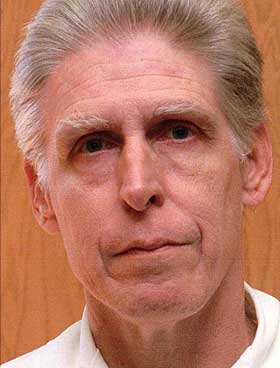
George Sibley
Murderer Brian Kevin Rosenfeld
Murderer · USA · 1985
Brian Kevin Rosenfeld Brian Kevin Rosenfeld was sentenced to three concurrent l…
23 victims
Brian Kevin Rosenfeld
Murderer · USA · 1985
Brian Kevin Rosenfeld Brian Kevin Rosenfeld was sentenced to three concurrent l…
23 victims
 Russell Ellwood
Murderer · USA · 1991
Russell Ellwood was a former taxi driver. Authorities suspected him of killing…
20 victims
Russell Ellwood
Murderer · USA · 1991
Russell Ellwood was a former taxi driver. Authorities suspected him of killing…
20 victims
 Robert Martines Perez
Murderer · USA · 1994
Name: Robert Martines Perez · Other name used in proceedings: Robert Martinez P…
15 victims
Robert Martines Perez
Murderer · USA · 1994
Name: Robert Martines Perez · Other name used in proceedings: Robert Martinez P…
15 victims
 Billy Frank Vickers
Murderer · USA · 1993
Billy Frank Vickers Vickers was executed by lethal injection in Texas on Januar…
14 victims
Billy Frank Vickers
Murderer · USA · 1993
Billy Frank Vickers Vickers was executed by lethal injection in Texas on Januar…
14 victims
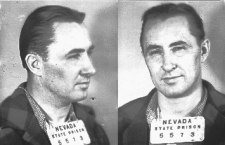 Theodore Gregory
Murderer · USA · 1948
Theodore W. Gregory was executed at the Nevada State Prison on January 29, 1951…
1 victim
Theodore Gregory
Murderer · USA · 1948
Theodore W. Gregory was executed at the Nevada State Prison on January 29, 1951…
1 victim
 Robert Pickton
Serial killer · Canada · 1995
Robert William "Willie" Pickton (born October 26, 1949) of Port Coquitlam, Brit…
49 victims
Robert Pickton
Serial killer · Canada · 1995
Robert William "Willie" Pickton (born October 26, 1949) of Port Coquitlam, Brit…
49 victims
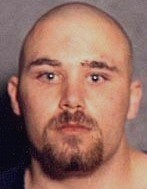 Zane Michael Floyd
Mass murderer · USA · 1999
Zane Michael Floyd (born 1976) had attended high school, enlisted in the United…
4 victims
Zane Michael Floyd
Mass murderer · USA · 1999
Zane Michael Floyd (born 1976) had attended high school, enlisted in the United…
4 victims
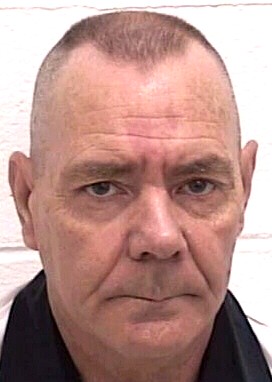 William Howard Putman
Murderer · USA · 1980
July 9, 1980 — William Putman purchased a .38 caliber revolver at a Talladega,…
3 victims
William Howard Putman
Murderer · USA · 1980
July 9, 1980 — William Putman purchased a .38 caliber revolver at a Talladega,…
3 victims
 Kanae Kijima
Serial killer · Japan · 2009
Kanae Kijima was sentenced to death on April 13, 2012. She was convicted of thr…
3 victims
Kanae Kijima
Serial killer · Japan · 2009
Kanae Kijima was sentenced to death on April 13, 2012. She was convicted of thr…
3 victims
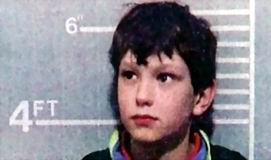 Jon Venables
Homicide · United Kingdom · 1993
Jon Venables was born 13 August 1982. He was a 10-year-old boy when he abducted…
1 victim
Jon Venables
Homicide · United Kingdom · 1993
Jon Venables was born 13 August 1982. He was a 10-year-old boy when he abducted…
1 victim
- Gender
- male
- Country
- USA
- Location
- Lee County, Alabama, USA
- Date of birth
- September 8, 1942
- Age at first offence
- 51
- Characteristics
- —
- Victim profile
- Roger Lamar Motley, 39 ( Opelika Police Sergeant )
- Method of murder
- Shooting
- Date(s) of murder
- October 4, 1993
- Years active
- 1993
- Date of arrest
- October 1993
- Status
-
Executed
Executed by lethal injection in Alabama on August 4, 2005
Case record: George Sibley Jr.
Background
George Sibley Jr. was executed in Alabama on August 4, 2005. His common-law wife, Lynda Lyon Block, was executed in 2002 for her role in the shooting death of an Opelika police officer.
George Sibley Jr. was 62 at the time of his execution. His common-law wife, Lynda Lyon Block, was 54.
The offence
George Sibley Jr. was convicted of capital murder for the shooting death of Opelika police officer Roger Motley.
The police officer was gunned down by both Sibley and Block in a Wal-Mart parking lot when he approached their car after a passer-by said a child in the car had asked for help. Block’s 9-year-old son was in the vehicle as Block and Sibley emptied their guns into Motley and his patrol car.
The pair claimed they shot in self-defense after the officer touched his holster. A 13A-3-23 “justified deadly force” defense is mentioned in connection with the arguments about the evidence that was allegedly withheld.
At trial, forensic tests were inconclusive as to which gun fired the fatal shot. Sibley and Block were both found guilty and sentenced to death.
Investigation
A passer-by, Ramona Robertson, heard the child call for help and reported what she had observed to Sgt. Roger Lamar Motley of the Opelika Police Department. The officer approached the vehicle.
A tape recording of radio contacts Motley made was admitted at trial and played for the benefit of the jury.
Arrest / Fugitive status
At the time of the Opelika policeman’s killing, Sibley and Block were fleeing from Orlando, Florida to avoid being sentenced on assault convictions in the stabbing of Block’s 79-year-old former husband during an argument.
On October 4, 1993, the Sibleys were fugitives from Florida, where they faced sentencing for burglary and stabbing of Block’s 79-year-old former husband.
Trial
Sibley was indicted for capital murder under § 13A-5-40(a)(5) for the murder of a police officer while the officer was on duty, regardless of whether the defendant knew or should have known the victim was an officer on duty.
A Lee County jury convicted Sibley of capital murder for the killing of Roger Motley. The jury unanimously recommended a sentence of death, and the trial court imposed a sentence of death after a sentencing hearing.
Sibley admitted that he shot Officer Motley but argued that his actions were in self-defense. The prosecution’s case was described as overwhelming, with the murder made capital because Motley was a police officer and on duty at the time of the murder.
Sibley stated that he intended to proceed without an attorney before the appeals process began. The trial court informed him of the appellate process and the advantages and disadvantages of proceeding with counsel, including difficulties meeting time standards while incarcerated. The trial court stressed he could waive counsel and later withdraw that waiver and request an attorney to represent him. Sibley continued to state that he wanted to present his own case.
The trial court allowed him to proceed pro se. Sibley indicated in many pro se documents filed with the Court of Criminal Appeals that he did not intend to file a brief. The Court of Criminal Appeals appointed an attorney to help prepare a brief despite Sibley rejecting the appointment and refusing to file.
Sentencing
Sibley received a sentence of death.
The trial court found two aggravating circumstances:
- that Sibley knowingly created a great risk of death to many persons; and
- that the capital offense was committed for the purpose of avoiding or preventing a lawful arrest.
Appeals
Sibley consistently refused the assistance of counsel on appeal and did not file pro se briefs. The Alabama Court of Criminal Appeals examined the trial record to determine whether he validly waived counsel, whether there was sufficient evidence to support conviction, and whether he was properly given the death penalty.
The case was remanded to the circuit court to determine whether Sibley’s waiver of appellate counsel was knowing and intelligent. On March 8, 1996, the Court of Criminal Appeals remanded to determine whether Sibley “understood the consequences” of acting pro se.
On remand, the trial court made findings including:
- “The Defendant has refused to answer questions directed to him by the court but has read a prepared statement into the record.”
- “This court has had frequent contact with the Defendant since he was first brought before the court in October 1993.”
- The trial court concluded the waiver was knowing and voluntary and that Sibley understood the consequences of failing to file an appellate brief.
- The trial court found that “It further appears to this Court that the Defendant is attempting to manipulate the appellate courts to his advantage by refusal of appellate counsel.”
On March 21, 1997, the Court of Criminal Appeals described the remand as being made “[o]ut of an abundance of caution” and satisfied itself that Sibley’s waiver was a knowing and intelligent one. It reviewed the case for plain error and affirmed the conviction and the sentence of death.
After that process, the Alabama Supreme Court issued a writ ex mero motu, appointed counsel, and affirmed. The Alabama Supreme Court stated that it found no error plain or otherwise, and that death was the proper sentence. It also stated that it independently weighed aggravating and mitigating circumstances and concluded the sentence was neither disproportionate nor excessive. The Alabama Supreme Court affirmed the judgment of the Court of Criminal Appeals.
A federal habeas petition was later dismissed as untimely by the United States District Court for the Middle District of Alabama, and the dismissal was affirmed. The appellate court held that AEDPA’s one-year limitations period was not tolled and that Sibley made insufficient showing of actual innocence.
Sibley and Block refused for years to file appeals. Block was put to death in May 2002 after they failed to file appeals for years. Sibley’s scheduled execution in November of that year was stopped two days before he was to die when he finally filed an appeal.
Sibley pursued appeals after Block was executed, including unsuccessfully seeking a stay from the Alabama Supreme Court. In his petition to the United States Supreme Court, Sibley wrote that his appeal had never been fully reviewed by the court in Washington, D.C., and it was “crucial in a case such as this.” State attorneys filed a response brief stating Sibley was not entitled to a delay and that “For no good reason, Sibley has waited until the eve of his execution to file this motion.”
In the litigation about waiver, a hearing was held where the trial court described the dangers and possible disadvantages of waiving counsel and failing to file a brief on appeal.
Verbatim statements from that hearing included:
“Mr. Sibley, the first thing I want to do is to advise you of some rights and then get your response to those rights.”
“You have a right under Alabama law for appointed counsel on appeal. However you may represent yourself if that's what you choose to do.”
“Now, a criminal appeal is a legally technical process.”
“It is difficult to do those things without legal training.”
“But, my impression is that you are an intelligent man.”
“What are your wishes in that regard?”
“THE DEFENDANT: Sir, first of all I am not representing myself per se, I'm appearing in proper person, propria persona, and there is a difference. I don't-I cannot, I'm not two people in one. I can't represent myself, I am myself and I do want to make that clear on the record that I'm not in pro se and not representing myself. I am in propria persona and will present my own case in my own cause.”
“THE COURT: All right.”
“THE DEFENDANT: No, sir, I do not.”
“THE COURT: You do not want that and you understand everything I told you now with reference to the procedural steps that are to be taken?”
“THE DEFENDANT: Yes, sir. I've been reading books forever since I've been able to get a hold of them.”
“THE COURT: All right. If that is the case then I will relieve Mrs. Brown and Mrs. Camp from the initial appointment that I made and you two ladies will have no further role in this proceedings at all and you're free to go at this time.”
The Court of Criminal Appeals remanded the case for a hearing because it found unclear from the record that Sibley fully understood the consequences of his waiver of counsel and failure to file a brief.
Outcome
The United States Supreme Court denied Sibley’s request for a delay. Governor Bob Riley turned down Sibley’s request for a six-month postponement. Riley stated: “There is no new evidence that would justify such a delay.”
Sibley was executed at Holman Prison near Atmore. Officials at Holman Prison said Sibley died at 6:26 p.m.
Other details
Execution-day conduct and last statement
Before the lethal injection began, Sibley nodded to his relatives, stared at the victim’s family, and gave a final statement of defiance.
Verbatim final statement:
“Everyone who is doing this to me is guilty of a murder,”
“My sister and my niece, I want to express my love and gratitude ... and gratitude to my Lord and Savior, Jesus Christ,”
Sibley’s sister, Annie Holloway of Florida, and his niece, Lori Holland, witnessed the execution, holding hands and praying with Holloway making the sign of the cross repeatedly. Motley's widow, Juanita Motley Kirkwood, witnessed the execution, along with Motley's mother, sister, son, and two stepsons.
The victim’s mother, Anne Motley, said: “Thank the good Lord I had a son like mine and not like George Sibley.”
Motley’s widow, Juanita Motley Kirkwood, said, “I am ready to just close this chapter of my life and go on. I believe justice was served,” and also said she personally did not want the execution and that it was extremely difficult to watch.
Counsel and legal positions
Sibley renounced U.S. citizenship and claimed the courts were biased and without jurisdiction. He tried to cut ties to the government by getting rid of his driver’s license, car registrations, and birth certificates.
At the time of the execution litigation, Sibley acted as his own lawyer and earlier filed a handwritten petition that was rejected by the Alabama Supreme Court.
Sibley declined the traditional last meal and had not eaten since Tuesday.
Sibley left all of his possessions to his sister and niece. Items left included a wedding ring, watch, pictures, a Book of Mormon, a Bible, and $33.94.
Individuals mentioned in connection with appeal filings and events
Clay Crenshaw, an assistant attorney general, was quoted as expecting Sibley to ask a court to block his execution, and stated: “If something is filed, and we certainly anticipate it will be, we'll file the appropriate response.”
Mentioned post-conviction material and habeas litigation descriptions
A block of narrative includes “Lynda Block v. State, 744 So.2d 404 (Ala.Crim.App. 1996) (Direct Appeal)” and “Ex parte Sibley, 775 So.2d 246 (Ala. 2000) (Direct Appeal)” and federal habeas case “Sibley v. Culliver, 377 F.3d 1196 (11th Cir. 2004).”
Locations and factual settings stated in the record
Sibley and Block were arrested after being stopped at a roadblock on Wire Road in Auburn, Alabama. The child was released after the roadblock, and Sibley and Block surrendered after a four-hour standoff.
The Wal-Mart parking lot involved Big B Drug[s] and Pepperell Corners Shopping Center in Opelika, Alabama.
Timeline
- May 10, 2002 — Lynda Lyon Block was executed in the electric chair for her role in the shooting death of Opelika police officer Roger Motley.
- October 4, 1993 — Sibley and Block were fugitives from Florida where they faced sentencing for a burglary and stabbing attack on Block’s 79-year-old former husband; on this date they were described as parked near Big B Drug[s] in Pepperell Corners Shopping Center in Opelika, Alabama.
- May 4, 1994 — Sibley was tried before a jury for the offense of capital murder.
- August 4, 2005 — George Sibley Jr. was executed by lethal injection in Alabama.
- August 10, 2000 — A deadline established by 28 U.S.C. § 2244(d)(1) was described as the deadline for Sibley to file a federal petition for a writ of habeas corpus.
- November 1, 2002 — Sibley filed a petition for a writ of habeas corpus and a motion for stay of execution in the United States District Court for the Middle District of Alabama.
- March 8, 1996 — The Court of Criminal Appeals remanded for a hearing on whether Sibley “understood the consequences” of acting pro se.
- March 21, 1997 — The Court of Criminal Appeals issued its opinion on return to remand affirming the conviction and sentence of death.
- April 20, 2000 — The Sibleys mailed several members of Congress a “petition for orders commanding release from unlawful restraint of liberty.”
- July 12, 2001 — Sibley filed a Notice with the Alabama Supreme Court related to an “appeal” to Congress.
- May 12, 2000 — The Alabama Supreme Court affirmed Sibley’s conviction in the described proceedings.
- June 10, 1994 — The prose account described Sibley as being executed for the “June 10, 1994 murder” of Opelika police officer Roger Lamar Motley (as stated in the execution notice narrative).
- 6:26 p.m. — Sibley died after the lethal injection at Holman Prison near Atmore.
Spotted an error, or have more information about this case?