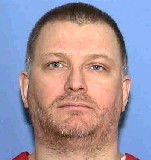
Gary Carl Simmons
Murderer Russell Ellwood
Murderer · USA · 1991
Russell Ellwood was a former taxi driver. Authorities suspected him of killing…
20 victims
Russell Ellwood
Murderer · USA · 1991
Russell Ellwood was a former taxi driver. Authorities suspected him of killing…
20 victims
 Robert Martines Perez
Murderer · USA · 1994
Name: Robert Martines Perez · Other name used in proceedings: Robert Martinez P…
15 victims
Robert Martines Perez
Murderer · USA · 1994
Name: Robert Martines Perez · Other name used in proceedings: Robert Martinez P…
15 victims
 Billy Frank Vickers
Murderer · USA · 1993
Billy Frank Vickers Vickers was executed by lethal injection in Texas on Januar…
14 victims
Billy Frank Vickers
Murderer · USA · 1993
Billy Frank Vickers Vickers was executed by lethal injection in Texas on Januar…
14 victims
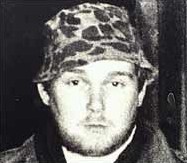 Michael Robert Ryan
Spree killer · United Kingdom · 1987
Michael Robert Ryan was an unemployed local labourer. He lived in Hungerford, B…
16 victims
Michael Robert Ryan
Spree killer · United Kingdom · 1987
Michael Robert Ryan was an unemployed local labourer. He lived in Hungerford, B…
16 victims
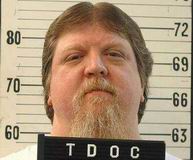 Jonathan Wesley Stephenson
Murderer · USA · 1989
Jonathan Wesley Stephenson was convicted of hiring a hit man to kill his wife,…
1 victim
Jonathan Wesley Stephenson
Murderer · USA · 1989
Jonathan Wesley Stephenson was convicted of hiring a hit man to kill his wife,…
1 victim
 Raul Osiel Marroquin
Serial killer · Mexico · 2005
Raúl Osiel Marroquín Reyes was born around 1981 in Tampico, Tamaulipas. At the…
4 victims
Raul Osiel Marroquin
Serial killer · Mexico · 2005
Raúl Osiel Marroquín Reyes was born around 1981 in Tampico, Tamaulipas. At the…
4 victims
- Gender
- male
- Country
- USA
- Location
- Jackson County, Mississippi, USA
- Date of birth
- November 18, 1962
- Age at first offence
- 34
- Characteristics
- dismemberment, rape, drugs, robbery
- Victim profile
- Jeffery Wolfe, 21
- Method of murder
- Shooting (.22-caliber rifle)
- Date(s) of murder
- August 11, 1996
- Years active
- 1996
- Date of arrest
- Next day (surrenders)
- Status
-
Executed
Sentenced to death on August 29, 1997; executed by lethal injection in Mississippi on June 20, 2012
Overview
Gary Carl Simmons, Jr. was sentenced to death and executed in Mississippi by lethal injection.
Timeline
- August 11, 1996 — Jeffery Wolfe and Charlene Brooke Leaser drove from Houston, Texas, to Jackson County, Mississippi to “pick up some money” from friends that were in Wolfe’s debt.
- October 11, 1996 — Gary Carl Simmons, Jr. (Simmons) and Timothy John “Timmy” Milano (Milano) were indicted for the capital murder of Jeffery Wolfe, while engaged in the commission of a robbery; Simmons and Milano were also indicted for the kidnaping and rape of Charlene Brooke Leaser.
- January 9, 1997 — Simmons was arraigned in the Circuit Court of Jackson County and pled not guilty to the pending charges.
- February 21, 1997 — The trial judge granted a change of venue motion to allow jury selection from the venire in Lauderdale County, but held that the remainder of the trial would be conducted in Jackson County, sequestering the jury for the duration of the trial.
- August 25, 1997 — Simmons’s trial began.
- August 29, 1997 — Simmons was sentenced to death on the capital murder charge (and to two consecutive life sentences for kidnapping and rape).
- 1998 — The Mississippi Legislature amended Section 99-19-51, Mississippi Code of 1972, describing the manner of inflicting the punishment of death.
- June 20, 2012 — Simmons was executed by lethal injection in Mississippi.
- 2012 — News coverage described the execution as scheduled for 6 p.m. local time at the Mississippi State Penitentiary in Parchman.
Background
Simmons and Milano were indicted for capital murder and for the kidnaping and rape of Charlene Brooke Leaser. Milano’s trial was severed from Simmons’s.
Simmons was arraigned in the Circuit Court of Jackson County on January 9, 1997, and pled not guilty to the pending charges.
On February 21, 1997, the trial judge granted a change of venue motion to allow jury selection from the venire in Lauderdale County. The remainder of the trial proceeded in Jackson County, and the jury was sequestered for the duration of the trial.
The offence
Who arrived and why
Jeffery Wolfe and Charlene Brooke Leaser traveled from Houston, Texas, to Jackson County, Mississippi to “pick up some money” from friends that were in Wolfe’s debt. Leaser learned that the debt accrued from a transaction involving drugs.
Wolfe left Houston with twelve hundred dollars in his wallet and Leaser had approximately two hundred dollars in her purse.
Upon arrival on the Mississippi Gulf Coast, Wolfe and Leaser checked into the King’s Inn Hotel. Wolfe left to meet Sonny Milano, who worked at a local tire store.
Later, Wolfe and Sonny returned to the hotel room to pick up Leaser for dinner. Sonny left to get his girlfriend, and the four met at Wolfe and Leaser’s hotel room, then dined together at Shoney’s using Wolfe’s white Honda Civic.
During dinner, Wolfe asked if Sonny planned to go to Simmons’s house that evening. Sonny Milano decided to go to Simmons’s house, arriving late that evening after dropping off his girlfriend. When Sonny arrived at Simmons’s house, Simmons and Timothy Milano were the only two at the house.
Simmons asked Sonny to get in touch with Wolfe. Sonny conveyed that information, and Simmons told Sonny to leave.
Wolfe and Leaser later arrived at Simmons’s house. Simmons walked into the kitchen to get a beer while Leaser sat at a table in the living room to roll another marijuana cigarette.
Confrontation and shooting
Leaser heard Wolfe and Milano chatting and Wolfe mentioned the money he was owed. Simmons and Milano owed Wolfe between twelve and twenty thousand dollars, and they did not have the money or the drugs.
Leaser testified that she heard gunshots and saw Wolfe fall to the ground. Simmons grabbed Leaser and ordered her not to look in the direction of Wolfe’s body.
Kidnaping and rape of Charlene Brooke Leaser
Leaser testified that Milano was standing directly behind Wolfe holding a .22 caliber rifle.
Simmons took Leaser to a back bedroom and forced her to lie face down on the floor. He questioned her about whether she or Wolfe were law enforcement officers, whether Wolfe had any drugs, and who knew they were in Mississippi. She responded that she did not know anything, as she and Wolfe had only become acquainted a few weeks earlier.
After Simmons finished questioning her, he tied her hands behind her back, bound her hands and feet with rope, and locked her in a metal box with dimensions similar to a large footlocker near his bedroom. Simmons told her he was “on a time frame” that he could not “mess up.”
Leaser managed to untie her hands and feet and began kicking the top of the box unsuccessfully trying to get out. Simmons removed her from the box, stripped her nude, tied her up again, and returned her to the box. She again freed herself from the knotted ropes but could not get the top off the metal box.
After further time, Simmons returned, took Leaser out, stripped her of her clothes and jewelry, and forced her to lie face down on the floor of the bedroom. Leaser was in the middle of her menstrual cycle, and Simmons forced her to remove her tampon.
Simmons raped Leaser. Leaser testified that she thought he was holding a pistol to the back of her head during the assault, and that Simmons told her her life depended on how well she performed sexually.
Afterward, Simmons tied her up and locked her in the box again. While she was secured in the box, Simmons and Milano went about their plan to dispose of Wolfe’s body. Simmons returned to the box smoking marijuana and offered some to Leaser; she accepted, and Simmons locked her in the box with a blanket. She fell asleep, awoke to the telephone ringing, and, when it was not answered, reasoned that the house was empty. She banged on the top until the lid popped off and then managed to get out of the house.
Leaser grabbed a bag with clothes and belongings, ran to a neighbor’s house, and convinced the neighbor to call the police.
Leaser’s suitcases were still inside Simmons’s house when she reentered with the police, but her money was gone.
Dismemberment and disposal of Wolfe’s body
Simmons worked as a butcher in a meat market. Testimony established that he sharpened his knives and took them home for the weekend.
Simmons began dismembering Wolfe in the bathtub. After gutting him and severing his head and limbs, Simmons, with Milano’s help, began distributing Wolfe’s remains into the bayou that ran behind Simmons’s property using a boat Simmons borrowed from neighbor Donald Taylor only hours before.
Alligators were known to inhabit the area. Simmons told Taylor he needed the boat “to go fishing.”
Officers later began collecting body parts from the bayou. Testimony established that officers and coroner’s office officials collected eighty-five pounds of human remains on the first day and forty-one pounds on the second day.
Dr. Paul McGarry testified that the body parts had been cut sharply and precisely and bones were separated from flesh. Several portions had bullet holes, and he testified that the gunshot wounds caused death. Some of the flesh pieces had bullet holes, including portions of the chest and internal organs. His testimony also included that he found and examined remains such as skin, muscle, chest, abdominal walls, penis and testicles, lungs, heart, intestines, liver, and fingers and toes from a young human white male.
A further search revealed Wolfe’s severed head, upper chest portion, and pelvic area without reproductive organs. Over two days of searching, additional remains were collected; some pieces were large enough to have identifiable tattoos. The remains were identified as Wolfe’s.
Investigation and evidence
Many different law enforcement agencies investigated the scene.
Leaser told officers that Wolfe was inside, had been shot, and that she had been raped. Moss Point police officers Lee Merrill and Richard Cushman entered the house with Leaser to determine whether a crime had been committed and whether other victims were still in the house. Once officers saw blood and other evidence of violent crimes, they left the house and secured a search warrant.
After obtaining a search warrant, police called the Mississippi Crime Lab and entered the house to gather evidence. From inside the house, they collected portions of fingernails from a wastebasket, a used condom, and two used tampons, among other items.
Local police recovered a Marlin model # 60 .22 caliber rifle, eight empty .22 caliber shell casings, and Wolfe and Leaser’s personal items originally left in their hotel room.
Near the rear of the property, officers spotted a small “jon boat” near the water. Near the boat they found four five gallon white buckets, one green plastic barrel, a one gallon bottle of Clorox bleach, a brush, a knife, and a bushhook; the brush and bushhook appeared covered in blood. An aluminum boat paddle covered in bloody fingerprints was also found. In the boat, officers discovered a piece of flesh.
Dr. McGarry was called to help with the investigation. Outside the house but still on or near Simmons’s property, Dr. McGarry floated approximately two hundred yards down the bayou over which various parts were found.
Arrest and post-offence events
Simmons drove to Mobile, Alabama after dismembering and disposing of Wolfe’s body and made a videotape for his ex-wife and children. Simmons mailed the video cassette to his wife and drove back to the Coast.
Simmons noticed Leaser had escaped when he arrived at his house, and then he left again and went to see his friend Dennis Guess.
Guess testified that Simmons told him he had “whacked a drug dealer, ... deboned him, cut him up in little pieces, and put him in the bayou.” Guess also testified that Simmons told him he used a butcher knife and bolt cutters to accomplish the task.
Guess further testified that Simmons told him he had “a girl in a box” and planned to “train her” and “keep her around as a sex toy,” but that she escaped.
After confiding to Guess that he felt his only options were to run, commit suicide, or turn himself in, Simmons decided to turn himself in. Simmons called a Jackson County deputy who picked him up.
The videotape Simmons recorded for his ex-wife, Lori, and his two daughters was made on the morning of the murder before turning himself in. In the videotape, he expressed remorse without referring directly to Wolfe’s murder.
After Simmons sent the videotape to Lori, she turned it over to Simmons’s attorneys. The State moved to compel Simmons to turn over the videotape, and the court granted the motion. Simmons attempted to introduce the videotape during both the guilt and sentencing phases of the trial, but the court ruled it inadmissible.
Trial
Pleadings and venue
Simmons was arraigned in the Circuit Court of Jackson County and pled not guilty. Milano’s trial was severed.
The trial began on August 25, 1997. Four days later, the jury returned a guilty verdict on all three counts of the indictment.
Guilty verdicts and sentencing at trial
For the kidnaping and rape convictions, Simmons was sentenced to separate life sentences.
A separate sentencing hearing was held on the capital murder conviction. The jury found unanimously that Simmons should suffer death. Immediately thereafter, the trial judge sentenced Simmons to die by lethal injection on the capital murder charge and to two consecutive life sentences for the kidnaping and rape convictions.
Simmons’s motion for a new trial and amended motion for a new trial were denied.
Witness testimony and evidence described at trial
At trial, the court heard that Simmons borrowed the boat to distribute Wolfe’s body and that he took butcher knives home for the weekend.
The record included testimony by investigator Lee Merrill concerning the bayou and the distance at which body parts were found, including the bayou’s dimensions, its fish and crabs, and that he had seen an alligator during his time there. The bayou had a current and ran into a tributary flowing into the Gulf of Mexico.
Rita Taylor testified that she referred to the bayou as the “canal,” described their neighborhood as “somewhat rural,” stated she had seen alligators, and noted Simmons would “play around with them.” She also testified that she had seen him shoot at an alligator a few times.
Dennis Guess provided crucial testimony regarding Simmons’s post-offense statements about the dismemberment and placing remains in the bayou.
Quotations from the videotape
Simmons made the following statements in the videotape:
" I guess it's a real mess, isn't it? It wasn't supposed to go like that. Things got pressing in. I was in a bind three or four different ways. To my way of thinking, I didn't have much of a choice. I mean, I'd already taken his money. There's no excuses. It's hard sitting here doing this, knowing under what conditions you'll probably be watching it. I'm so dreadfully sorry. I didn't think about it until after it was done. And then it couldn't be undone. There was nothing in the world I could do to make it undone. And I would have. Oh, God, I would have. You never realize how close you are to the edge until you actually step over it. I don't know how it happened, I really don't. And after it had happened, I would have gave anything to take it back, even my life. "
Sentencing details
At the sentencing hearing, the jury was instructed that to impose the death penalty it must first find that Simmons either (1) killed Wolfe; (2) attempted to kill Wolfe; (3) intended that the killing of Wolfe take place; or (4) contemplated that lethal force would be employed.
If one of those findings was made, the jury then decided whether one or both aggravating circumstances submitted by the State applied, and if so weighed aggravating and mitigating circumstances.
The State submitted the following two aggravating circumstances:
- Simmons “knowingly created a great risk of death to many people”.
- “the capital offense was committed for pecuniary gain during the course of a robbery.”
Simmons called six mitigation witnesses, including his ex-wife, his half-brother, and his half-sister, who testified generally about Simmons caring for his daughters and working multiple jobs, and that the crimes were out of character. His step-brother also testified about his childhood, including that his step-father beat him and their mother.
Appeals
Direct appeal
Simmons v. State, 805 So.2d 452 (Miss. 2001). The Supreme Court affirmed. The Court addressed claims including self-defense and manslaughter instructions, evidence sufficiency, effective assistance of counsel, searches, admissibility of the videotape as mitigation evidence, and other alleged errors.
The direct appeal record included two specific points of relevance about the capital sentencing instruction and aggravation:
- The Supreme Court found sufficient evidence to support the aggravating circumstance regarding “knowingly created a great risk to many people,” including disposal of Wolfe’s remains into the bayou.
- The Supreme Court found the videotape inadmissible as mitigation evidence.
The Supreme Court held:
- "COUNT I: CONVICTION OF CAPITAL MURDER AND SENTENCE OF DEATH BY LETHAL INJECTION AFFIRMED."
- "COUNT II: CONVICTION OF KIDNAPING AND SENTENCE OF LIFE IMPRISONMENT IN THE CUSTODY OF THE MISSISSIPPI DEPARTMENT OF CORRECTIONS AFFIRMED."
- "COUNT III: CONVICTION OF RAPE AND SENTENCE OF LIFE IMPRISONMENT IN THE CUSTODY OF THE MISSISSIPPI DEPARTMENT OF CORRECTIONS AFFIRMED."
Post-conviction relief
Simmons v. State, 869 So.2d 995 (Miss. 2004). The Supreme Court denied the motion for leave to proceed with post-conviction relief. The Court held, among other points, that:
- Simmons was not entitled to psychological expert at sentencing.
- Simmons failed to establish ineffective assistance of trial counsel.
- The death sentence was not disproportionate to Simmons’s involvement as an aider and abettor.
- The aggravating factors used to sentence Simmons were not constitutionally required to be specified in the indictment.
Federal habeas corpus proceedings
Simmons filed a federal habeas petition under 28 U.S.C. § 2254. The Fifth Circuit affirmed the denial of habeas relief in Simmons v. Epps, 654 F.3d 526 (5th Cir. 2011).
The Fifth Circuit held:
- Evidence was insufficient to permit submission, as a possible aggravating factor, of the “knowingly created a great risk of death” aggravator for jury consideration at punishment phase; however, the erroneous submission was harmless.
- Exclusion of the videotape as mitigating evidence was not objectively unreasonable under clearly established constitutional precedent and did not render sentencing fundamentally unfair.
Other details
Biographical details in the case materials
Height: 5' 11"; Weight: 264; Complexion: FAIR; Build: LARGE; Eye Color: BLUE; Hair Color: BROWN.
Execution procedure and lethal injection description included in materials
The materials included discussion of Mississippi’s lethal injection method, the contents of syringes described as anesthetic and chemical agents, and a chronology of actions “48 Hours Prior to Execution” through “2030 Hours Day of Execution,” including media center operations and witness transportation.
Mississippi Department of Corrections entry date referenced
Entry date referenced as 09-03-97 under Mississippi Department of Corrections.
Immaterial narrative removed
Repetitive navigation-style fragments and unrelated general execution history were treated as non-case narrative and excluded from factual case record organization where they did not add distinct case facts about Simmons’s guilt, sentencing, or appeals.

Spotted an error, or have more information about this case?