
Kermit Smith
Murderer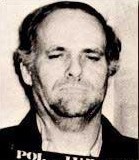 Ervil LeBaron
Murderer · USA · 1972
Ervil Morrell LeBaron (1925 to August 16, 1981) was the leader of a polygamous…
35 victims
Ervil LeBaron
Murderer · USA · 1972
Ervil Morrell LeBaron (1925 to August 16, 1981) was the leader of a polygamous…
35 victims
 Brian Kevin Rosenfeld
Murderer · USA · 1985
Brian Kevin Rosenfeld Brian Kevin Rosenfeld was sentenced to three concurrent l…
23 victims
Brian Kevin Rosenfeld
Murderer · USA · 1985
Brian Kevin Rosenfeld Brian Kevin Rosenfeld was sentenced to three concurrent l…
23 victims
 Marvin Gray
Murderer · USA · 1975
Marvin Gray was convicted killer who claimed responsibility for 23 slayings and…
23 victims
Marvin Gray
Murderer · USA · 1975
Marvin Gray was convicted killer who claimed responsibility for 23 slayings and…
23 victims
 Yahweh ben Yahweh
Murderer · USA · 1980
Yahweh ben Yahweh was born and legally named Hulon Mitchell Jr. (October 27, 19…
23 victims
Yahweh ben Yahweh
Murderer · USA · 1980
Yahweh ben Yahweh was born and legally named Hulon Mitchell Jr. (October 27, 19…
23 victims
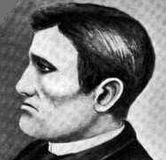 Patrick Prendergast
Murderer · USA · 1893
Patrick Prendergast was born in Ireland. His grandfather was reported to have d…
1 victim
Patrick Prendergast
Murderer · USA · 1893
Patrick Prendergast was born in Ireland. His grandfather was reported to have d…
1 victim
 Holly Grigsby
Murderer · USA · 2011
Holly Grigsby was sentenced to life in prison without parole on July 15, 2014.…
4 victims
Holly Grigsby
Murderer · USA · 2011
Holly Grigsby was sentenced to life in prison without parole on July 15, 2014.…
4 victims
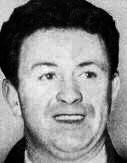 Patrick Joseph Byrne
Murderer · United Kingdom · 1959
Patrick Joseph Byrne was a 27 year old Irish labourer. Margaret Brown was a 21…
1 victim
Patrick Joseph Byrne
Murderer · United Kingdom · 1959
Patrick Joseph Byrne was a 27 year old Irish labourer. Margaret Brown was a 21…
1 victim
 Bai Baoshan
Serial killer · China · 1996
Bai Baoshan was executed by shot in the head on May 6, 1998. · October 16, 1997…
14 victims
Bai Baoshan
Serial killer · China · 1996
Bai Baoshan was executed by shot in the head on May 6, 1998. · October 16, 1997…
14 victims
 Lam Kor-wam
Serial killer · United Kingdom · 1982
Lam Kor-wan (Traditional Chinese 林過雲, born 1955) was one of Hong Kong's two kno…
4 victims
Lam Kor-wam
Serial killer · United Kingdom · 1982
Lam Kor-wan (Traditional Chinese 林過雲, born 1955) was one of Hong Kong's two kno…
4 victims
- Gender
- male
- Country
- USA
- Location
- Halifax County, North Carolina, USA
- Date of birth
- June 7, 1957
- Age at first offence
- 23
- Characteristics
- kidnapping, rape
- Victim profile
- Whelette Collins, 20 (college cheerleader)
- Method of murder
- Smashing her head between two cinder blocks
- Date(s) of murder
- December 4, 1980
- Years active
- 1980
- Date of arrest
- —
- Status
-
Executed
Executed by lethal injection in North Carolina on January 24, 1995
Case record: Kermit Smith
Background
Kermit Smith, Jr. was executed by the state of North Carolina for the kidnap, rape, and murder of a 20-year-old college cheerleader. He was one of only a few white criminals since 1976 to have been executed for murdering a black victim.
He was sentenced to death for the rape and murder of a black woman on 4 December 1980.
The offence
Kermit Smith kidnapped Whelette Collins and two other cheerleaders from N.C. Wesleyan College after a basketball game in December 1980. Smith raped Collins, bludgeoned her to death, jammed her legs into a cinder block and threw her body in a rock quarry.
The other two cheerleaders, Dawn Killen and Yolanda Woods, escaped after they beat Smith with a tire iron and stabbed him with a straightened hair pin.
Whelette Collins was found at the bottom of a rock quarry with her feet stuffed into the openings of a heavy cinder block, and her head smashed. The injection and pronouncement account stated that Smith abducted Whelette Collins and two other North Carolina Wesleyan College cheerleaders, then raped Ms. Collins while the others were locked in the trunk of his car.
The federal appellate discussion described additional details of the kidnapping and murder: Smith kidnapped Collins and her two companions at gunpoint and took them to deserted woods. It described psychological and physical torture lasting for many hours before Collins was murdered. With her two friends locked in the trunk of a car, Smith threatened Collins with death and brutally raped her. After the rape, Smith forced her to remain naked outside at night in below-freezing December temperatures for a substantial period of time, mocking her as she begged him for clothing or a blanket. Smith then bludgeoned Collins with a cinder block and dragged her body to a quarry pond where he crammed her feet inside the cinder block to make her body sink. Her skull fractured and she died from blunt trauma to her head.
Investigation
The companions escaped from the trunk of the car physically unharmed.
Smith was arrested within hours after the escape.
Trial
Following the jury conviction, the trial court held a sentencing hearing in which it submitted four aggravating circumstances and five mitigating circumstances for the jury’s consideration.
The court instructed the jury on the aggravating circumstance concerning whether the murder was “especially heinous, atrocious or cruel.” The instruction given included the following explanation:
[E]very murder is not especially heinous, it is not atrocious nor cruel. While every murder, if it results from an unlawful killing, of course, is a violation of the law, but it does not necessarily mean that there is anything aggravated about it or that it was especially heinous or atrocious or cruel. And our Supreme Court has said that the words “especially heinous, atrocious or cruel” means extremely or especially or particularly heinous or atrocious or cruel. Heinous means extremely wicked or shockingly evil. Atrocious means marked by or given to extreme wickedness, brutality or cruelty, marked by extreme violence or savagely fierce. It means outrageously wicked and violent. Cruel means designed to inflict a high degree of pain, utterly indifferent to or the enjoyment of suffering of others.
The jury found the existence of all four aggravating circumstances submitted by the judge, finding that Smith committed the murder while (1) raping, (2) robbing, and (3) kidnapping Collins, and (4) that the murder was “especially heinous, atrocious or cruel.”
The jury found the existence of one of the five mitigating circumstances, finding that Smith committed the murder while under the influence of a mental or emotional disturbance. The jury determined that the aggravating circumstances outweighed the mitigating circumstances and recommended that Smith be sentenced to death.
According to the North Carolina Resource Center (NCRC), the trial was “fundamentally unfair” because authorities of Halifax County were anxious to secure a conviction to demonstrate that they were not biased on grounds of race. The NCRC also reported that Smith had a “long history of serious mental disturbance.” The NCRC reported that the trial lasted only four days; the jury sentenced him to death after only just over an hour of deliberation; the trial attorney presented no evidence on Smith’s behalf, and failed to object when, during jury selection, a juror admitted that she could not give Smith a fair trial.
The NCRC also reported that when jurors asked the Court the meaning of a life sentence after being told by a defence attorney that Smith would never get out again, they were told to disregard the attorney’s argument.
Charges found by the federal appellate summary
In the federal appellate discussion, Smith was described as having been sentenced to death following his conviction of the December 3, 1980 first-degree murder, second-degree rape, and common-law robbery of Whelette Collins.
Sentencing
At sentencing, the jury found aggravating circumstances including that Smith committed the murder while raping, robbing, and kidnapping Collins, and that the murder was “especially heinous, atrocious or cruel.”
The jury also found a mitigating circumstance that Smith committed the murder while under the influence of a mental or emotional disturbance.
The jury determined aggravating circumstances outweighed mitigating circumstances and recommended a death sentence.
Verdict-form unanimity issues discussed in federal appeal
The federal appellate discussion stated that the verdict form in Smith’s case asked the jury to answer four questions:
- whether it unanimously found any of the four aggravating circumstances listed on the form,
- whether it found any of the five mitigating circumstances listed on the form,
- whether it unanimously found beyond a reasonable doubt that the aggravating circumstances outweighed the mitigating circumstances, and
- whether it unanimously found beyond a reasonable doubt that the aggravating circumstances were substantial enough to warrant the death penalty.
The federal appellate discussion described the sentencing instructions regarding unanimity and mitigation. It stated that the court instructed the jury that it had to vote unanimously on Issues One (presence of aggravating circumstances), Three (aggravating factors outweigh mitigating factors), and Four (aggravating circumstances are severe enough to warrant death). It further stated that the court was not told, however, that it had to vote unanimously on Issue Two (presence of mitigating factors). The trial court explained each of the five potential mitigating circumstances and told the jurors they were to write “Yes” on the verdict form beside each mitigating circumstance for which “the defendant has satisfied you” of its existence.
Appeals
Direct appeal and finality
Smith appealed his conviction and sentence. The Supreme Court of North Carolina conducted a review of the record pursuant to N.C. Gen. Stat. § 15A-2000(d) and determined that the evidence was sufficient to support each of the aggravating factors, and affirmed Smith’s conviction and sentence.
The United States Supreme Court denied Smith’s request for certiorari and Smith’s conviction became final on November 29, 1982.
Motion for Appropriate Relief (postconviction relief)
Smith filed his first application for postconviction relief in North Carolina superior court in June 1983, raising 57 grounds attacking his conviction and sentence grouped into five claims.
Claim IV raised the argument that the § 15A-2000(e)(9) statutory aggravating factor of heinousness was unconstitutionally vague in violation of the Eighth and Fourteenth Amendments, and that the jury was not charged with a constitutionally limiting definition of this factor.
Claim V raised multiple allegations of ineffective assistance of counsel at trial. Smith also alleged two errors at the direct appeal stage:
- that North Carolina’s system of appellate review of death sentences was constitutionally inadequate, and
- that he was denied the right to effective assistance of appellate counsel because his attorney had failed to advance on direct appeal many issues raised in his Motion for Appropriate Relief.
Before the State responded, the superior court entered an order summarily denying all claims except those based on ineffective assistance (Claim V). The order stated that Claims I, II, III, and IV set forth no probable grounds for relief, and it required a plenary hearing in Claim V.
After an evidentiary hearing, the superior court denied the remaining claims in Smith’s Motion for Appropriate Relief.
The Supreme Court of North Carolina summarily denied Smith’s petition for a writ of certiorari. The United States Supreme Court also denied certiorari.
Federal habeas corpus petition and conditional relief
In May 1988, Smith filed his habeas corpus petition in federal court for relief under 28 U.S.C. 2254.
The district court concluded federal consideration of the claims was not barred by procedural default because the last state court opinion had not included a plain statement that it was based on state grounds. It found the heinousness instruction unconstitutionally vague and held Smith was not foreclosed by Teague v. Lane from raising this as error. It held that the Supreme Court of North Carolina did not cure the vagueness error by reweighing the evidence or conducting a constitutional harmless-error analysis.
The district court declined the State’s invitation to conduct harmless-error analysis in the first instance and rejected the other asserted errors. It conditionally granted habeas relief by ordering that Smith’s death sentence be set aside unless the State retried him within 180 days.
The district court also stayed entry of judgment to permit the State to petition the Supreme Court of North Carolina for further review under Clemons v. Mississippi.
In October 1991, the State petitioned the Supreme Court of North Carolina to clarify the basis for the decision rendered on direct appeal. The Supreme Court of North Carolina denied the request, believing it lacked jurisdiction to hear the matter.
Accordingly, the district court ordered its prior decision into effect.
4th Circuit decision in habeas appeal
The appellate opinion described the case as Kermit Smith, Jr., Petitioner-Appellee, v. Gary Dixon, Warden, Central Prison, Raleigh, North Carolina, Respondent-Appellant; and Kermit Smith, Jr., Petitioner-Appellant, v. Gary Dixon, Warden, Central Prison, Raleigh, North Carolina, Respondent-Appellee. It gave the docket number as 91-4011, 91-4012 and described the panel as July 23, 1993, with WILKINS, Circuit Judge, and BUTZNER and SPROUSE, Senior Circuit Judges.
The appellate court affirmed the district court’s grant of habeas relief. It affirmed that the North Carolina Supreme Court on direct appeal did not cure the unconstitutionally vague sentencing instruction relating to “especially heinous, atrocious or cruel.” It also affirmed the district court’s rejection of Smith’s other claims for relief.
The court held that Smith was not procedurally barred from federal habeas review of his claims.
Direct discussion of vagueness instruction and Clemons cure
The appellate court stated that it agreed the state supreme court did not remedy the vagueness error. It reasoned that the state supreme court’s ruling was not sufficiently clear to determine it cured the error under Clemons’ third method, because the state supreme court did not cite Martin or Goodman or other cases applying the constitutionally narrowed definition, and the existence of findings of brutality and torture did not necessarily mean application of the Martin/Goodman standard.
Harmlessness analysis and federal habeas limits (majority position)
The appellate court stated that it declined to conduct harmless-error analysis itself in the first instance. It held that because harmless-error analysis of factual weighing was a state-law question, it concerned a question not cognizable in federal habeas proceedings, and it found the district court properly refrained from conducting harmless-error analysis in the first instance.
Cross-appeal issues (rejected)
The appellate court rejected Smith’s cross-appeal arguments, including the McKoy claim and other assignments of error.
It rejected the Caldwell v. Mississippi “recommendation” argument.
It rejected Smith’s claim of ineffective assistance of counsel on appeal based on failure to present three significant claims, concluding that there was no reasonable probability of a different result because the claims were rejected on the merits.
It rejected Smith’s claim of ineffective assistance at trial and found no Strickland violation based on the district court and superior court factual findings.
It rejected the cross-examination claim relating to the pathologist and sustained objection to a hypothetical question, holding that even if erroneous, it was harmless beyond a reasonable doubt because Smith’s attorney elicited from the pathologist that the injuries could have been caused by a fall.
Quoted last statement
The execution account stated that Smith said in his last statement that execution was unlawful, and added: “The only thing that I'm going to say is what the judge imposed on me: Lord have mercy on your souls.”
It also stated that moments after Smith was given the injection, witnesses said, he whispered: “I'm O.K. Don't worry about me.”
Outcome
Kermit Smith, Jr. was executed by lethal injection in North Carolina on January 24, 1995. He was pronounced dead by prison officials 11 minutes later after the injection was administered at 2:01 A.M.
The execution was described as the second of a white person for killing a black since the death penalty was allowed to resume in 1976. It was also described as only the second white person executed for killing a black person since the death penalty was reinstated in 1976.
The appellate decision had affirmed the district court’s grant of habeas relief related to the unconstitutionally vague sentencing instruction concerning “especially heinous, atrocious or cruel,” and it rejected Smith’s remaining cross-appeal issues.
Aftermath
Corrections officials rejected Smith’s request to let Collins’ mother and the two survivors press the plungers to send the lethal injection into his bloodstream.
Spotted an error, or have more information about this case?