Chester Lee Wicker
Murderer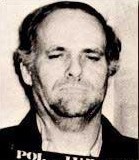 Ervil LeBaron
Murderer · USA · 1972
Ervil Morrell LeBaron (1925 to August 16, 1981) was the leader of a polygamous…
35 victims
Ervil LeBaron
Murderer · USA · 1972
Ervil Morrell LeBaron (1925 to August 16, 1981) was the leader of a polygamous…
35 victims
 Brian Kevin Rosenfeld
Murderer · USA · 1985
Brian Kevin Rosenfeld Brian Kevin Rosenfeld was sentenced to three concurrent l…
23 victims
Brian Kevin Rosenfeld
Murderer · USA · 1985
Brian Kevin Rosenfeld Brian Kevin Rosenfeld was sentenced to three concurrent l…
23 victims
 Marvin Gray
Murderer · USA · 1975
Marvin Gray was convicted killer who claimed responsibility for 23 slayings and…
23 victims
Marvin Gray
Murderer · USA · 1975
Marvin Gray was convicted killer who claimed responsibility for 23 slayings and…
23 victims
 Yahweh ben Yahweh
Murderer · USA · 1980
Yahweh ben Yahweh was born and legally named Hulon Mitchell Jr. (October 27, 19…
23 victims
Yahweh ben Yahweh
Murderer · USA · 1980
Yahweh ben Yahweh was born and legally named Hulon Mitchell Jr. (October 27, 19…
23 victims
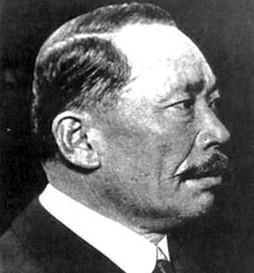 Lock Ah Tam
Murderer · United Kingdom · 1925
Lock Ah Tam was 54 when he killed his wife and two daughters. He had been a suc…
3 victims
Lock Ah Tam
Murderer · United Kingdom · 1925
Lock Ah Tam was 54 when he killed his wife and two daughters. He had been a suc…
3 victims
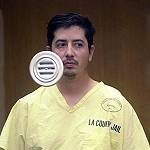 Adair Javier Garcia
Mass murderer · USA · 2002
February 19, 2002 — Adair Javier Garcia killed five of his children in their li…
5 victims
Adair Javier Garcia
Mass murderer · USA · 2002
February 19, 2002 — Adair Javier Garcia killed five of his children in their li…
5 victims
 Mark Arlo Sheppard
Murderer · USA · 1993
November 28, 1993 — Mark Arlo Sheppard and his companion Andre Graham shot and…
2 victims
Mark Arlo Sheppard
Murderer · USA · 1993
November 28, 1993 — Mark Arlo Sheppard and his companion Andre Graham shot and…
2 victims
 Mahanand Naik
Serial killer · India · 1994
Mahanand Naik was a three-wheel rickshaw driver from Ponda in the Indian state…
18 victims
Mahanand Naik
Serial killer · India · 1994
Mahanand Naik was a three-wheel rickshaw driver from Ponda in the Indian state…
18 victims
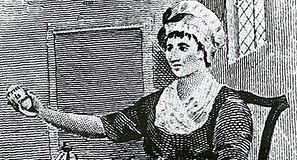 Mary Bateman
Murderer · United Kingdom · 1807
Mary Bateman (1768–1809) was known as the Yorkshire Witch. She was associated w…
1 victim
Mary Bateman
Murderer · United Kingdom · 1807
Mary Bateman (1768–1809) was known as the Yorkshire Witch. She was associated w…
1 victim
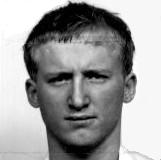 Joseph John Cannon
Homicide · USA · 1977
Joseph John Cannon was executed by lethal injection in Texas on April 22, 1998.…
1 victim
Joseph John Cannon
Homicide · USA · 1977
Joseph John Cannon was executed by lethal injection in Texas on April 22, 1998.…
1 victim
- Gender
- male
- Country
- USA
- Location
- Galveston County, Texas, USA
- Date of birth
- 1943
- Age at first offence
- 37
- Characteristics
- kidnapping, attempted rape
- Victim profile
- Suzanne Knuth (female, 22)
- Method of murder
- Strangulation - Buried alive
- Date(s) of murder
- April 4, 1980
- Years active
- 1980
- Date of arrest
- —
- Status
-
Executed
Executed by lethal injection in Texas on August 26, 1986
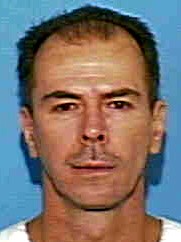
Case record: Chester Lee Wicker
Background
Chester Lee Wicker was a white male. He was convicted of capital murder and sentenced to death.
Wicker was scheduled to be executed in 1984, but won two reprieves on his appeals, arguing that the trial court committed reversible errors by failing to sustain his motion to suppress two written statements and one oral statement given after his arrest. His last execution date was set, and hours before he was to be executed, his attorney Bruce Griffiths made a final attempt to stay the execution. Griffiths argued that in Texas, the killer of a white person was more likely to be sentenced to death than the killer of a black person. This final appeal was lost by one vote and Wicker seemed ready for his fate.
Wicker’s prior arrest record included aggravated assault on a female in Galveston and auto theft in San Marcos. He had served nearly two years of a 10-year sentence for rape, and was released on parole in 1973.
Wicker calmly awaited execution with his mother, grandfather, the prison chaplain, and a “spiritual adviser.” After visiting, Wicker threw a tantrum, smashed his belongings and stomped on them. He later calmed down and requested his last meal to be lettuce, tomatoes and two glasses of milk. He was pronounced dead at 12:20 a.m.
The victim’s mother, Juanita Fielder, expressed no desire to witness the execution. “I just want to know it’s finally over,” Fielder said.
The offence
On Good Friday, April 4, 1980, Chester Lee Wicker abducted Suzanne Knuth. On that date, shortly after dark, Wicker was driving his mother’s car on a street in Beaumont, Texas. He saw a young woman, Suzanne Knuth, walking along the street. He had never seen the woman before, but he turned the car around, pushed her into the car, and drove away.
Two witnesses, Dee Ann Barthell and Jerry Adkins, told police officers that they had seen a woman struggling with a white man, who forced her into a grayish-silver Oldsmobile.
Wicker later confessed to attempting to rape and strangle Knuth, eventually burying her alive at the beach. Wicker also gave a written statement in which he affirmatively waived his rights to counsel and to remain silent, stating that Suzanne Knuth had jumped from the moving car, and that the fall either knocked her unconscious or killed her. On April 23, 1980, the police laboratory reported that the clothing of the deceased showed no signs of having fallen out of a moving car. Thomas told Wicker of the lab results, and Wicker then made an oral statement to Thomas that was not reduced to writing.
The evidence showed that Wicker had abducted Knuth, assaulted her, and then buried her in a shallow grave on a beach near Galveston, Texas. There was evidence that, although critically wounded, Knuth may have been alive when buried.
Knuth’s body was found 18 days later. Wicker led police to the area of the beach where he had killed her. Upon returning to Beaumont, the police photographed Wicker and then, at 8:35 a.m., brought him before a magistrate who gave him the warnings required by Texas statute. Wicker showed the location where the body was buried. Part of the body, which was only partially buried in an area surrounded by weeds, was sticking out of the sand.
Investigation and evidence
Knuth’s purse and necklace were found near the place the witnesses pointed out, and the area showed signs of a scuffle. From a photograph, Barthell tentatively identified Calvin Knuth, Suzanne Knuth’s husband, as the abductor.
Wicker went to the home of Olive King, a family friend at Crystal Beach, Galveston, Texas, in the early morning hours of April 5, 1980. At Wicker’s request, King telephoned Wicker’s uncle, Bob Wicker, for help. The car that Wicker had been driving, his mother’s gray Oldsmobile Cutlass, was stuck in the sand on the beach, three or four miles from the Sun Oil field. Bob Wicker noticed blood on the floormat of the car and on his nephew’s shirt, and asked Wicker about it. Wicker said that he had cut his arm. Bob Wicker noticed, however, that the blood on his shirt was not in the place where Wicker said he had been cut. Wicker later fled to California and thence to Washington.
On April 11, 1980, Wicker was seen by another uncle, Chester Vaughn, in El Centro, California. Acting on information gained in investigating Ms. Knuth’s disappearance, a deputy sheriff from the Jefferson County Sheriff’s Office informed Beaumont police that they should investigate the Crystal Beach area. Following the suggestion, Beaumont police spoke with Bob Wicker, who directed them to where Wicker’s car had been stuck in the sand. They searched the area for two hours, but found nothing of significance. The police then went to the apartment of Wicker’s mother, Mary Wicker, where they noticed a car matching the description of the one seen during the abduction.
While the police were inside the apartment interviewing Mrs. Wicker, the telephone rang and Detective Larry Thomas answered. The operator indicated it was a long distance call from “Chet” Wicker. He handed the phone to Mrs. Wicker, who took it to the far side of the room. Although she spoke in a low tone, the officers heard her say that the police were there. After she had completed the conversation, Mrs. Wicker told the police that the call was from her sister.
With the consent of Mrs. Wicker, the police searched her car and took hair and carpet samples. Two days later, Mrs. Wicker brought the car’s floormats, which the police had seen inside the apartment, to the police station. At the time the police first saw the mats, they were dirty, but, when brought to the station, they were clean.
After being hypnotized by a police hypnotist on April 14, Barthall, who was sixteen and who had witnessed the abduction en route to a disco, identified Wicker (rather than Calvin Knuth) from a photo spread.
Wicker’s cousin, Adana Bennett, of El Centro, California, spoke by telephone with two Beaumont detectives, and with Wicker’s grandparents and mother. She said that Wicker had telephoned her on April 18, said that he was in the state of Washington and that he wanted to return to Texas to “straighten out” his problems there. In these conversations, Wicker’s family and the police made arrangements for Wicker to return to Galveston by bus. When Wicker later arrived in El Centro, California, he told Bennett that “he was in trouble, he was afraid he would have to go to prison,” and his mother had been “pressuring” him to leave Beaumont. A next morning, April 21, a member of Wicker’s family notified the Beaumont detectives that Wicker would arrive in Galveston and was coming back to tell what happened.
Arrest
The Beaumont police and Wicker’s grandfather, Paul Long, agreed that Long would meet Wicker in Galveston and take him to the Beaumont Police Station. Then the police learned from Long that Mary Wicker was planning to meet her son at the bus station in Houston.
Apprehensive that Wicker might again flee, the police decided to obtain a warrant for his arrest on a charge of aggravated kidnapping. Armed with the warrant, Beaumont and Houston police arrived at the Houston bus station between 10:30 and 11:00 p.m. on April 21. They met Mary Wicker and spoke with her.
There is a dispute about what was said, but the police version is that Mrs. Wicker informed them that she had spoken with an attorney and asked that they let her talk with Wicker once he arrived. The police officers say they agreed that she might talk with him in their presence. As Wicker got off the bus in Houston, just before midnight, April 21, he was arrested by two Houston police officers who turned him over to the Beaumont police.
The Beaumont police gave Wicker Miranda warnings within minutes of the arrest. They testified that they then looked around for Mrs. Wicker, but did not see her. Mrs. Wicker, however, said that the police refused to let her meet with her son.
Four policemen traveled from Houston to Beaumont with Wicker by car. One officer testified that, during the ride, he told Wicker what he knew about the offense and that he wanted Wicker to show him where the body was. He urged Wicker to give this information so the victim’s family could give her “a decent burial,” a “Christian burial.” Wicker responded that he “wanted to [help] but that it was bad” and asked for assurance that he would not be hurt. The officer testified that after he reassured Wicker, Wicker agreed to show the police where he had buried the body.
They proceeded to that part of Crystal Beach where the Oldsmobile had been stuck in the sand, and conducted a quick search in the dark, but were unable to locate anything. Wicker gave some details of the offense and agreed to give a statement in Beaumont.
Wicker gave a different account, asserting that he had been threatened and physically abused by the police and he thereafter acted in fear of physical harm.
Statements and confessions
At 4:30 a.m. after his transport to Beaumont, Wicker gave a written statement (the Beaumont statement) in which he affirmatively waived his rights to counsel and to remain silent; the taking of the statement was completed about 4:30 a.m., at which time Wicker was booked. At about 6:00 a.m., Beaumont authorities took Wicker back to the beach. Wicker showed them where the body was buried and also led them to where he had buried some of the victim’s belongings. Part of the body was sticking out of the sand.
Wicker asked to telephone his mother and was permitted to do so. He was then confined in the Beaumont County jail. Wicker informed the police that his mother had communicated with an attorney. Two lawyers arrived shortly thereafter and asked to speak with Wicker. The police allowed the conference. The lawyers advised Wicker not to say anything or sign any statement and then left.
On April 23, the police laboratory reported that the clothing of the deceased showed no signs of having fallen out of a moving car. Wicker made an oral statement to Detective Thomas, which was not reduced to writing.
Wicker was indicted by the Galveston County grand jury for capital murder on April 24. That same day, about 5:00 p.m., a criminal investigator from the Galveston County District Attorney’s Office informed him of the charges by giving him Miranda warnings again. After Wicker arrived in Galveston, a Galveston County Justice of the Peace met with him at the Galveston city jail and gave him warnings required by Texas statute, post-Miranda, specifically informing Wicker of his right to appointed counsel. Wicker made no request for appointed counsel, responding only that he understood what the magistrate was saying.
Defense counsel was not appointed to represent Wicker until sixteen days after his arrest and thirteen days after his indictment.
Later that day, an assistant district attorney moved to appoint a psychiatrist to examine Wicker. The court appointed Dr. Ed Gripon. Wicker met with Dr. Gripon at the district attorney’s office on April 26 for about two hours. Before this interview, Wicker was given Miranda warnings and expressly waived his rights. After the meeting, Wicker agreed to give the police a statement.
At 7:26 p.m., the police again gave Wicker Miranda warnings, with at least the fifth time informed of his rights. The authorities then went over Wicker’s Beaumont statement and asked him to indicate which portions were correct. After several hours, a new statement (the Galveston statement) was typed. Wicker was again given Miranda warnings, and after verbally waiving his rights, he reviewed his statement, made corrections, and signed it.
Before signing the statement, he asked that he be permitted to call his grandfather. The police did not allow the phone call and told Wicker that the statement was “his alone to make or not to make.” Wicker signed the statement, which contained an express waiver of his rights.
Only the Galveston written confession was introduced against Wicker at trial. Parts of the confession were omitted by the state, but introduced by the defense.
Trial
Wicker was convicted of capital murder. After a separate sentencing proceeding, he was sentenced to death based on the jury’s findings.
Wicker asserted that his conviction involved hypnotically enhanced testimony and related constitutional issues. The admissibility of such testimony was evaluated as a case-by-case issue. Ms. Barthell’s hypnotically-induced identification was admitted. Her in-court testimony was somewhat tentative, and she testified that after hypnosis she picked out Wicker’s picture from a photo spread.
Trial counsel objected on the ground that the testimony was unreliable and suggestive, but confrontation and due process issues were not specifically raised by counsel.
Wicker contended that his right to an impartial jury was violated by the trial court’s exclusion of a prospective juror, W.N. Jones. Jones, a retired Army Reserve officer, expressed doubts that he could assess the death penalty and that, knowing a death sentence might result, he could answer affirmatively the questions that would be asked at the punishment phase of the trial.
The trial court excluded Jones for cause. The legal standard applied was whether the juror’s views would prevent or substantially impair the performance of juror duties in accordance with instructions and oath.
Sentencing
At the punishment phase, Wicker’s attorneys called two psychiatrists. Wicker asserted that the testimony on direct examination virtually required the jury to answer one of the special issues on punishment affirmatively, resulting in his death sentence.
The psychiatrists testified that Wicker had an antisocial personality and that antisocial personalities “repeat the pattern.” Their testimony was that such persons cannot learn from past experience, and violent behavior tends to increase rather than abate.
Wicker’s counsel testified at the federal habeas corpus evidentiary hearing that they were aware that parts of the doctors’ testimony might be harmful on future dangerousness. They called the doctors to attempt to establish that Wicker had previously sought psychiatric help and to show he was suffering from a recognized psychiatric disease heightened by drug and alcohol abuse, because Wicker had stated in his confession that, immediately before committing the crime, he had drunk gin and taken drugs.
Counsel sought to show that if precipitating factors were removed, Wicker’s violent sexual tendencies toward women would burn out as he aged, and the factors stimulating these impulses (women, alcohol, and drugs) would not be available in prison. Counsel believed the state’s punishment phase evidence was devastating because Wicker had been convicted twice previously of felonies involving assault and rape and once of a misdemeanor after the charge of a similar assault had been reduced. In addition, two females, one a particularly young and attractive college student, had testified in the sentencing hearing that Wicker had assaulted them.
Defense counsel viewed presenting the psychiatric testimony as a calculated risk, taking what they called a reasonable alternative to the imposition of death. One counsel testified that, even with hindsight, he would make the same decision again.
Wicker was ultimately resentenced to be executed by lethal injection on August 26, 1986.
Appeals
Wicker sought habeas corpus relief, asserting multiple bases.
Procedural history and habeas litigation
Wicker v. McCotter described the procedural history:
- On February 5, 1981, in the 56th Judicial District Court of Galveston County, Texas, Wicker was convicted of the murder of Suzanne Knuth in April 1980 and sentenced to death.
- Wicker’s conviction and sentence were affirmed by the Court of Criminal Appeals of Texas, and certiorari was denied by the Supreme Court of the United States on October 9, 1984.
- Wicker filed an application for a writ of habeas corpus and motion to withdraw the death warrant in a Texas state court on January 17, 1985; that application was denied by the trial court. On January 23, 1985, Wicker’s counsel presented the application to the Court of Criminal Appeals of Texas, where it was denied without opinion on February 4, 1985.
- On February 5, 1985, Wicker filed an application for a writ of habeas corpus and a motion for stay of execution in the United States District Court for the Eastern District of Texas, Galveston Division. The court granted the motion and stayed execution pending further order on February 6, 1985.
- An evidentiary hearing was set for April 9, 1985, and held on April 9 and 10. Finding no merit in his claims, the district court denied the petition on June 26, 1985.
- The Fifth Circuit affirmed the district court judgment on February 18, 1986.
- Wicker sought consideration by the Supreme Court again, and certiorari was denied.
- On July 25, 1986, Judge Larry Gist, sitting as judge in the 56th Judicial District Court of Galveston County, resentenced Wicker to be executed by lethal injection on August 26, 1986.
- On August 18, 1986, but only eight days before the sentence was to be carried out, Wicker filed a second application for writ of habeas corpus in the Texas trial court and a motion to withdraw the death warrant. He filed a motion for stay of execution with the Texas Court of Criminal Appeals the following day.
- Both courts denied relief on August 20, 1986.
- On August 21, 1986, Wicker filed a petition for habeas corpus and stay of execution in federal district court again.
- District Judge Hugh Gibson entered a judgment denying relief on August 22, 1986, together with a statement of reasons, and refused to issue a certificate of probable cause.
- On August 23, 1986, the Fifth Circuit affirmed the denial of a certificate of probable cause and denied a stay of execution.
Equal protection claim
Wicker asserted denial of equal protection because the death penalty was arbitrarily imposed based on the race of the victim. He asserted that regardless of the race of the defendant, if the victim was white, prosecutors more frequently charged defendants with capital murder and sought the death penalty than when the victim was of another race. He also asserted that defendants tried for capital murder of a white person had a significantly greater likelihood of being convicted and sentenced to death than defendants charged with murder of a victim of another race.
The appellate court determined that, even assuming a valid claim, the statistical evidence relied upon was inadequate under prevailing law, and denied relief.
Due process claim regarding discovery of the body
Wicker claimed due process violation because evidence about the body’s discovery was introduced only as a result of an illegal arrest and involuntary statements. The appellate court described that the state court found that the body and personal effects on Crystal Beach would inevitably have been discovered by law enforcement officers or private citizens had Wicker not taken the police to the scene. The Texas Court of Criminal Appeals upheld those findings, and the Fifth Circuit’s earlier review had sustained the approach. The appellate court held that the question whether inevitable discovery would have occurred was a question of fact and that the legal result remained the same despite the framing as due process rather than fourth amendment.
As a result, the appellate court ordered that the applications for a certificate of probable cause and for a stay of execution were denied, and the district court denial of habeas relief was affirmed.
Outcome
Wicker was executed by lethal injection in Texas on August 26, 1986.
Other details
Two specific witness identification issues were discussed in the federal habeas proceedings: the hypnotically-enhanced testimony of Dee Ann Barthell and the alleged procedural default for issues not raised at trial.
Wicker’s claim about the admissibility of the hypnotically-enhanced testimony was evaluated, and the appellate court concluded that Wicker was not denied his right to confront the witness Barthell and was not denied a fair trial.
In the federal habeas discussion, Wicker also challenged counsel’s effectiveness across guilt and sentencing phases. The appellate court reviewed alleged failures including acceptance of Dr. R. Simmons as a juror, failure to make a mistrial motion and to inquire into community attitudes, failure to seek jury instructions after certain closing arguments, and decisions at the punishment phase regarding psychiatric testimony. The appellate court concluded that there was no ineffectiveness or resulting prejudice.
Wicker also challenged both the Beaumont and Galveston statements as involuntary. The appellate court stated that by the time of the Galveston confession, Wicker had spoken to his mother and to his grandfather, had received advice of counsel, and had been given Miranda warnings at least five times. The appellate court said the allegations of strong-arm tactics were contradicted by testimony of four witnesses credited by the state trial court. The appellate court concluded that Wicker’s Galveston statement was knowingly and voluntarily made.
The appellate court also affirmed that counsel’s performance on appeal satisfied the applicable standards, noting that counsel perfected the appeal, raised and extensively briefed several issues, and researched other issues and raised only those with plausible merit.
Spotted an error, or have more information about this case?