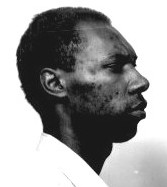
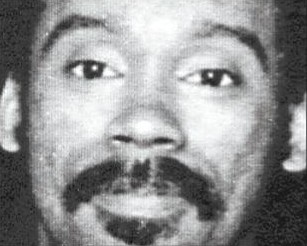
Larry Smith
Murderer Ervil LeBaron
Murderer · USA · 1972
Ervil Morrell LeBaron (1925 to August 16, 1981) was the leader of a polygamous…
35 victims
Ervil LeBaron
Murderer · USA · 1972
Ervil Morrell LeBaron (1925 to August 16, 1981) was the leader of a polygamous…
35 victims
 Brian Kevin Rosenfeld
Murderer · USA · 1985
Brian Kevin Rosenfeld Brian Kevin Rosenfeld was sentenced to three concurrent l…
23 victims
Brian Kevin Rosenfeld
Murderer · USA · 1985
Brian Kevin Rosenfeld Brian Kevin Rosenfeld was sentenced to three concurrent l…
23 victims
 Marvin Gray
Murderer · USA · 1975
Marvin Gray was convicted killer who claimed responsibility for 23 slayings and…
23 victims
Marvin Gray
Murderer · USA · 1975
Marvin Gray was convicted killer who claimed responsibility for 23 slayings and…
23 victims
 Yahweh ben Yahweh
Murderer · USA · 1980
Yahweh ben Yahweh was born and legally named Hulon Mitchell Jr. (October 27, 19…
23 victims
Yahweh ben Yahweh
Murderer · USA · 1980
Yahweh ben Yahweh was born and legally named Hulon Mitchell Jr. (October 27, 19…
23 victims
 Charles Edward Smith
Murderer · USA · 1988
Charles Edward Smith was executed by lethal injection in Texas on May 16, 2007.…
1 victim
Charles Edward Smith
Murderer · USA · 1988
Charles Edward Smith was executed by lethal injection in Texas on May 16, 2007.…
1 victim
 Marcia Kelly
Murderer · USA · 2005
Marcia Gayle Kelly was sentenced to life in prison without parole in August 200…
1 victim
Marcia Kelly
Murderer · USA · 2005
Marcia Gayle Kelly was sentenced to life in prison without parole in August 200…
1 victim
 Franklin Floyd
Murderer · USA · 1989
Franklin Floyd was prosecuted for the murder of Cheryl Ann Commesso in Pinellas…
1 victim
Franklin Floyd
Murderer · USA · 1989
Franklin Floyd was prosecuted for the murder of Cheryl Ann Commesso in Pinellas…
1 victim
 Thomas Neal
Murderer · USA · 1965
Thomas Neal (January 28, 1914 – August 7, 1972) was an American actor and convi…
1 victim
Thomas Neal
Murderer · USA · 1965
Thomas Neal (January 28, 1914 – August 7, 1972) was an American actor and convi…
1 victim
 Wayne Adam Ford
Serial killer · USA · 1997
Wayne Adam Ford (born December 3, 1961) was an American serial killer. Ford sur…
4 victims
Wayne Adam Ford
Serial killer · USA · 1997
Wayne Adam Ford (born December 3, 1961) was an American serial killer. Ford sur…
4 victims
- Gender
- male
- Country
- USA
- Location
- Dallas County, Texas, USA
- Date of birth
- August 26, 1955
- Age at first offence
- 23
- Characteristics
- robbery, convicted rapist
- Victim profile
- Michael Dean Mason ( night manager of a Seven-Eleven store )
- Method of murder
- Shooting
- Date(s) of murder
- February 3, 1978
- Years active
- 1978
- Date of arrest
- —
- Status
-
Executed
Executed by lethal injection in Texas on August 22, 1986
Case identification
Larry Smith (offender #643)
Background
Larry Smith was convicted for intentionally causing the death of Michael Dean Mason.
The offence
Michael Dean Mason was a night manager of a Seven-Eleven store. He died from a bullet wound suffered during a robbery at the store in the early morning hours of February 3, 1978.
On February 3, 1978, Fred Norris, then a high school student sixteen years old, was working with Mason at the Seven-Eleven store. Norris was sweeping the porch in front of the store when a man walked by, spoke to him, and entered the store. Norris identified that man as Larry Smith. Norris then went into the store, and at this time, a second man came in as well. Norris proceeded to the frozen food section. When he turned around, he saw Smith pull a cap down over his face so that it became a ski mask.
Smith, holding a pistol in his hand, stood at the main register across from Mason. The cash drawer lay on the counter. The second man circled around the counter and threw Mason to the floor, face down. Both the second man and Smith demanded Mason open the safe, but Mason explained he did not have the keys. The second man withdrew from behind the counter, taking the cash drawer with him.
Smith backed toward the front door to exit, but then stepped forward, leaned over the counter, and fired one shot at Mason, who was still lying face down on the floor. Mason died of a bullet wound to his left back.
Trial
At the guilt-innocence stage of the trial, the State presented Norris’ testimony and other evidence. Larry Smith offered no evidence. The jury returned a guilty verdict.
At the penalty stage of the trial, the State introduced evidence concerning Smith’s reputation for peaceful and law-abiding conduct, characterized as poor, his prior convictions, an unadjudicated robbery, and a psychiatrist’s testimony concerning Smith’s future dangerousness. Smith produced a psychologist who testified that psychiatric testimony cannot predict future dangerousness.
The jury returned affirmative answers to the special issues submitted pursuant to Tex.Crim.Proc.Code Ann. art. 37.071 (Vernon Supp. 1986). Accordingly, Smith was sentenced to death by lethal injection.
On direct appeal, the Texas Court of Criminal Appeals affirmed the trial court’s judgment: Smith v. State, 683 S.W.2d 393 (Tex.Ct.Crim.App. 1984).
Timeline
- February 3, 1978 — Michael Dean Mason died from a bullet wound suffered during a robbery at a Seven-Eleven store during the early morning hours.
- August 7, 1985 — Larry Smith applied to federal district court for a writ of habeas corpus and a stay of execution.
- August 8, 1985 — The federal district court issued an order staying Smith’s execution.
- November 1, 1985 — The federal district court referred Smith’s application for habeas relief to a magistrate for a report and recommendation.
- February 3, 1986 — The federal district court adopted the recommendation, denied and dismissed Smith’s habeas application, and vacated the stay of execution.
- May 21, 1986 — Smith’s execution was scheduled anew.
- May 13, 1986 — Smith applied to the state trial court for a stay of execution and habeas relief asserting a Batson v. Kentucky claim.
- May 14, 1986 — Smith again applied to federal district court for habeas relief and a stay of execution raising the same ground.
- May 19, 1986 — The Texas Court of Criminal Appeals granted a stay of execution and ordered the state trial court to hear evidence on Smith’s claim of unconstitutional juror selection.
- May 19, 1986 — The federal district court denied Smith’s request for a stay of execution as moot and dismissed his habeas application for failure to exhaust state law remedies.
- May 20, 1986 — The Texas Court of Criminal Appeals withdrew its order for an evidentiary hearing and specified that Smith’s execution would be stayed for thirty days.
- May 30, 1986 — Smith sought habeas relief in the state trial court asserting a Batson claim.
- June 12, 1986 — Relief was denied in the state trial court.
- July 2, 1986 — The Texas Court of Criminal Appeals denied habeas relief, citing Allen v. Hardy and noting its May 20, 1986 stay had lapsed by its own terms.
- August 18, 1986 — Smith sought another stay of execution from the Texas Court of Criminal Appeals.
- August 19, 1986 — The Texas Court of Criminal Appeals denied the stay.
- August 21, 1986 — The United States Court of Appeals, Fifth Circuit denied Smith’s motion for a certificate of probable cause and a stay of execution.
- August 22, 1986 — Larry Smith was executed by lethal injection in Texas.
Appeals
Smith’s procedural history included:
- A prior direct appeal in which the Texas Court of Criminal Appeals affirmed the trial court’s judgment (Smith v. 1984)).
- Habeas corpus applications and stays of execution in federal district court starting with his application on August 7, 1985, and subsequent orders described below.
- Additional habeas proceedings and stays tied to his Batson v. Kentucky claim.
United States Court of Appeals (Fifth Circuit)
The case was titled Larry Smith, Petitioner, v. O.L. McCotter, Director, Texas Department of Corrections, Respondent, No. 86-1615, in the United States Court of Appeals, Fifth Circuit.
The appellate court decision, issued in connection with a motion for a certificate of probable cause and a stay of execution, was entered on August 21, 1986 by PER CURIAM. The appellate court denied the motion and denied a stay.
Grounds raised in the third habeas corpus petition before the Fifth Circuit
Smith raised three grounds in his application; the district court denied the relief sought.
Batson retroactivity
Smith asserted that Batson v. Kentucky should be given retroactive effect in cases where the death penalty had been assessed. The court described Batson’s rule that “Equal Protection Clause forbids the prosecutor to challenge potential jurors solely on account of their race or on the assumption that black jurors as a group will be unable impartially to consider the State’s case against a black defendant.”
The appellate court’s discussion also included the Batson test, quoting:
“To establish such a case, the defendant first must show that he is a member of a cognizable racial group and that the prosecutor has exercised peremptory challenges to remove from the venire members of the defendant’s race. Second, the defendant is entitled to rely on the fact, as to which there can be no dispute, that peremptory challenges constitute a jury selection practice that permits "those to discriminate who are of a mind to discriminate." Finally, the defendant must show that these facts and any other relevant circumstances raise an inference that the prosecutor used that practice to exclude the veniremen from the petit jury on account of their race.”
The appellate court rejected Smith’s argument based on prior case law, citing Allen v. Hardy and Esquivel v. McCotter. The court stated:
“Batson [had] overruled [a] portion of Swain, changing the standard for proving unconstitutional abuse of peremptory challenges.”
and concluded that Batson’s new standard should not be applied retroactively on collateral review of convictions that became final before Batson was decided.
Exclusion of veniremember Mark Robbe Eaker
Smith also asserted that the state trial court erred in sustaining the State’s challenge for cause of veniremember Mark Robbe Eaker.
The appellate court concluded that the exclusion for cause was fairly supported by the record and that Smith failed to make a substantial showing of denial of a federal right regarding Eaker’s exclusion.
The court referenced Wainwright v. Witt and quoted the standard that a prospective juror may be excluded when views would “prevent or substantially impair the performance of his duties as a juror in accordance with his instructions and his oath.”
The appellate court described extensive testimony and included verbatim exchanges from the trial record about Eaker’s views. The exchanges included:
Prosecutor: I realize that you're being honest with me, and I'm being honest with you in your feelings that you don't know whether you could or you couldn't. But now is the time, you see, when we have to get down to either saying, "yes, I could," or "no, I couldn't." Prospective Juror: The best I can do is to say I doubt if I could. Prosecutor: Doubt if you could. Prospective Juror: I doubt if I could do it. Record Vol. VII at 1573.
and:
I guess that the problem that I have, is that answering yes to all three of those questions, I still haven't answered the question in my mind whether or not someone should die or be condemned to life imprisonment. Record Vol. VII at 1576.
and:
Prosecutor: A person is qualified if he says that he will answer these questions, these three fact questions based upon the evidence, period. Prospective Juror: With a period then I couldn't take the oath. Prosecutor: Could not. Record Vol. VII at 1586.
and:
The Court: Are you saying you would not take the oath as a juror? * * * Prospective Juror: In order not to break that oath under a set of circumstances in which the defendant was found guilty and evidence was provided that merited "yes" answer to all three of those votes, that a vote of "no" on my part recognizing that would be breaking the oath, then I could not take that oath because of the fact that I might find myself voting "no" anyway, and therefore breaking my oath. The Court: So you might vote "no" regardless of what the evidence was? Prospective Juror: Yes, sir. The Court: You might violate your oath? Prospective Juror: Yes, I would violate my oath. Yes, that is correct. I would violate the oath, and I don't want to be placed in a position of that. * * * The Court: I don't think it's necessary that you agree with the decision of other courts and jurors in other cases. You don't even have to agree with the other jurors, it's up to you. But I think the question, Dr. Eaker, is whether or not you would ignore the law, or violate your oath if you were taken on the jury. Prospective Juror: Yes, I would. Under some circumstances. The Court: I think that disqualifies him. Your feelings about the death penalty are so strong you would ignore the law or violate your oath in some way? Prospective Juror: Yes, I would. The Court: I excuse you. Record Vol. VII at 1600-03.
The appellate court concluded it could not conclude the trial court erred in excluding Eaker for cause, given the presumption of correctness and the testimony.
Notification method for execution date
Smith further argued that the method used to notify him of his August 22 execution date, a letter sent from the Texas District Court, “shocks the conscience” and so offended deeply rooted conceptions of fairness and justice to violate the due process clause.
The appellate court referenced Rochin v. California and quoted the opinion’s statement that the conviction had been overturned in a case where evidence was obtained “by bursting into the defendant's home without a warrant and forcing him to vomit two morphine capsules.” The court also referenced Justice Frankfurter’s caution and quoted:
“personal and private notions”
as well as:
“personal and private notions” to enlarge due process beyond its true function of defending our country's most fundamental values.
The appellate court held that the method of notifying Smith did not rise to the level of a denial of fundamental fairness. It also said Smith had not alleged substantial prejudice usually required for due process claims, and that staying execution on that basis would be a useless gesture because the state court could immediately hold a hearing to inform him in person of a new execution date.
Sentencing
The jury imposed a death sentence. Larry Smith was sentenced to death by lethal injection.
The court records also noted that Smith’s execution was originally scheduled to take place on August 13, 1985.
Outcome
Smith’s motion for a certificate of probable cause and a stay of execution was denied by the United States Court of Appeals, Fifth Circuit on August 21, 1986. Larry Smith was executed by lethal injection in Texas on August 22, 1986.
Other details
Smith’s application for habeas corpus and stay of execution on August 7, 1985 asserted:
- That the trial court violated Witherspoon v. Illinois and progeny by sustaining the State’s challenge for cause of veniremember Mark Robbe Eaker.
- That the State, while cross-examining Smith’s expert witness during the penalty stage, unconstitutionally adverted to Smith’s decision to remain silent.
The appellate court explained that no appeal was taken from the federal district court judgment entered February 3, 1986.
Smith’s May 13, 1986 state court application relied on Batson v. Kentucky and asserted that the State, through peremptory challenges, unconstitutionally excluded prospective black jurors. Smith’s May 14, 1986 federal application raised the same ground.
After the Texas Court of Criminal Appeals’ May 19, 1986 order, the federal district court denied Smith’s request for a stay as moot and dismissed his federal habeas application for failure to exhaust state law remedies. On May 20, 1986, the Texas Court of Criminal Appeals withdrew its evidentiary hearing order due to defects in Smith’s habeas application before that court and specified that his execution would be stayed for thirty days.
On May 30, 1986, Smith again sought habeas relief in the state trial court asserting a Batson claim. Relief was denied on June 12, 1986. On July 2, 1986, the Texas Court of Criminal Appeals denied habeas relief, citing Allen v. Hardy and noting the May 20, 1986 stay had lapsed by its own terms.
Smith’s last statement before execution was: “Tell my mother I love her and continue on without me. God bless her. Tell the guys on death row to continue their struggle to get off death row. That’s about it.”
Spotted an error, or have more information about this case?