
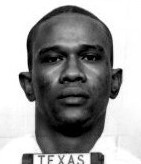
Roy Allen Stewart
Murderer Ervil LeBaron
Murderer · USA · 1972
Ervil Morrell LeBaron (1925 to August 16, 1981) was the leader of a polygamous…
35 victims
Ervil LeBaron
Murderer · USA · 1972
Ervil Morrell LeBaron (1925 to August 16, 1981) was the leader of a polygamous…
35 victims
 Brian Kevin Rosenfeld
Murderer · USA · 1985
Brian Kevin Rosenfeld Brian Kevin Rosenfeld was sentenced to three concurrent l…
23 victims
Brian Kevin Rosenfeld
Murderer · USA · 1985
Brian Kevin Rosenfeld Brian Kevin Rosenfeld was sentenced to three concurrent l…
23 victims
 Marvin Gray
Murderer · USA · 1975
Marvin Gray was convicted killer who claimed responsibility for 23 slayings and…
23 victims
Marvin Gray
Murderer · USA · 1975
Marvin Gray was convicted killer who claimed responsibility for 23 slayings and…
23 victims
 Yahweh ben Yahweh
Murderer · USA · 1980
Yahweh ben Yahweh was born and legally named Hulon Mitchell Jr. (October 27, 19…
23 victims
Yahweh ben Yahweh
Murderer · USA · 1980
Yahweh ben Yahweh was born and legally named Hulon Mitchell Jr. (October 27, 19…
23 victims
 Timothy Alexander Robinson
Murderer · USA · 1988
02/28/89 — Timothy Alexander Robinson was indicted on counts including First-De…
4 victims
Timothy Alexander Robinson
Murderer · USA · 1988
02/28/89 — Timothy Alexander Robinson was indicted on counts including First-De…
4 victims
 Eric Hanson
Mass murderer · USA · 2005
Eric Hanson — defendant; self-employed mortgage broker of Naperville; convicted…
4 victims
Eric Hanson
Mass murderer · USA · 2005
Eric Hanson — defendant; self-employed mortgage broker of Naperville; convicted…
4 victims
 Ronell Wilson
Murderer · USA · 2003
Ronell Wilson was federally sentenced to death on January 30, 2007. Ronell Wils…
2 victims
Ronell Wilson
Murderer · USA · 2003
Ronell Wilson was federally sentenced to death on January 30, 2007. Ronell Wils…
2 victims
 Tony Egbuna Ford
Murderer · USA · 1991
Tony Egbuna Ford Tony Egbuna Ford was 18 years old in 1991. Ford gave a ride to…
1 victim
Tony Egbuna Ford
Murderer · USA · 1991
Tony Egbuna Ford Tony Egbuna Ford was 18 years old in 1991. Ford gave a ride to…
1 victim
 Roger Dale Stafford
Mass murderer · USA · 1978
Roger Dale Stafford was a white man who was 27 when he received death sentences…
9 victims
Roger Dale Stafford
Mass murderer · USA · 1978
Roger Dale Stafford was a white man who was 27 when he received death sentences…
9 victims
- Gender
- male
- Country
- USA
- Location
- Dade County, Florida, USA
- Date of birth
- 1956
- Age at first offence
- 22
- Characteristics
- rape, torture
- Victim profile
- Margaret Haizlip (female, 77)
- Method of murder
- Strangulation with an electrical cord
- Date(s) of murder
- February 22, 1978
- Years active
- 1978
- Date of arrest
- —
- Status
-
Executed
Executed by electrocution in Florida on April 22, 1994
Case overview
Roy Allen Stewart was convicted and sentenced to death for beating, raping and strangling Margaret Haizlip, a 77-year-old Sunday school teacher. He was executed by electrocution in Florida on April 22, 1994.
Timeline
- February 22, 1978 — Roy Allen Stewart committed the beating, rape and strangling of Margaret Haizlip of Perrine in Dade County.
- September 19, 1986 — The governor of Florida signed a death warrant (Stewart's second).
- September 25, 1986 — Supreme Court of Florida docket #69338; Roy Allen Stewart, Petitioner, v. Louie L. Wainwright, etc., et al., Respondents, 494 So. 2d 489.
- October 1, 1986 — Supreme Court of Florida opinion docket #69387; Roy Allen Stewart, Appellant vs. State of Florida, Appellee, 495 So. 2d 164.
- October 7, 1986 — Stewart's execution was scheduled to occur.
- December 9, 1993 — Supreme Court of Florida opinion docket #78498; Roy Allen Stewart, Appellant, vs. State of Florida, Appellee, 632 So. 2d 59.
- April 18, 1994 — Supreme Court of Florida opinion docket #83509; State of Florida, Appellant, vs. Roy Allen Stewart, Appellee, 636 So. 2d 16.
- April 22, 1994 — Roy Allen Stewart was executed by electrocution.
- June 27, 1989 — Federal habeas appeal in 877 F.2d 851.
The offence
Margaret Haizlip was a pioneer of South Florida living in a small home across from Roy Allen Stewart's temporary residence. About 10:00 p.m., Mrs. Haizlip was out on her porch and saw Stewart. She waved to him, invited him into her home, and fixed him a sandwich.
Shortly thereafter, Stewart went to her bathroom and stole a gold watch from the medicine cabinet. After going into the bathroom, Mrs. Haizlip confronted the defendant, apparently about the stolen watch. Stewart beat and pummelled Mrs. Haizlip about her ribs, face and head, and tore the clothing and ultimately the underwear from her body.
As she lay on the floor, bleeding from her face and moaning and making noises, Stewart forcibly had sexual intercourse with her in a manner so vicious as to tear her vagina.
Stewart fastened a cord with an iron attached to it around her neck, pulled tightly on the cord, and strangled her, leaving a ligature mark on her neck. The medical examiner testified that the victim suffered eight broken ribs, multiple contusions, and that her larynx was broken. A bite mark was identified on her thigh, and what appeared to be a bite mark was on her breast.
There were blood stains and disarray in the living room and bedroom area of her house, indicating the victim was fighting and running for her life. Stewart left the victim at the scene with blood on his hands.
Investigation
A medical examiner testified that the victim suffered eight broken ribs, multiple contusions, and that her larynx was broken.
Trial
Federal habeas posture and issues
Roy Allen Stewart brought a federal habeas petition challenging his sentence of death. His petition set forth four claims for relief:
- Comments made by the trial judge diminished the role of the jury in violation of Caldwell v. Mississippi, 472 U.S. 320.
- Improper exclusion of a juror in violation of Witherspoon v. Illinois, 391 U.S. 510.
- Ineffective assistance of counsel at sentencing.
- Racial discrimination in imposing the death penalty.
The United States District Court for the Southern District of Florida denied relief on all four claims. The district court denied a stay of execution but granted a certificate of probable cause to appeal. The Eleventh Circuit granted a stay of execution.
Caldwell v. Mississippi issue
Stewart contended that comments made during voir dire diminished the role of the jury in violation of Caldwell v. Mississippi. During voir dire, the trial court asked the following question of a juror:
Just briefly, let me ask you about capital punishment. We have to ask this question, ... because this is one of those cases where the legislature has said that the death penalty is the appropriate penalty. Trial Transcript at 409.
Stewart claimed the impact was compounded by an earlier judge comment to the jury that:
"You will assume that all the proper evidence and the proper law will be presented to you." Id. at 358-59.
Stewart argued that the jury would assume the appropriateness of execution had already been decided by the state legislature, minimizing the jury’s sense of responsibility for determining the death penalty. The court disagreed and concluded that the jurors were not under an impression that the legislature had predetermined the appropriateness of death for Stewart, and that throughout voir dire the jury was informed that not all murders call for capital punishment and that a finding of guilt as to first-degree murder did not require a verdict of death.
Witherspoon issue and exclusion of a potential juror (Tom Gillis)
Stewart contended that the exclusion for cause of a potential juror (Tom Gillis) constituted a violation of Witherspoon. The venireman's comments were described as showing that his views would prevent or substantially impair the performance of his duties as a juror in accordance with his instructions and his oath.
The appellate decision concluded that no Witherspoon violation occurred.
An appendix reproduced the relevant voir dire exchange. The court, Tom Gillis, and counsel conducted the following proceedings:
THE COURT: Mr. Gillis, you have heard all of the questions that the attorneys have been asking and the--
MR. GILLIS: Yes, Your Honor.
THE COURT: Now seated--
MR. GILLIS: I don't believe in capital punishment at all.
THE COURT: Under any facts or circumstances?
MR. GILLIS: No, ma'am.
THE COURT: Let us take it in the two part question. Do you feel that your feelings about capital punishment would prevent you from reaching a decision as to the guilt or innocence of the defendant in the first trial?
MR. GILLIS: No.
THE COURT: Do you feel there are no circumstances, no matter how atrocious or heinous or cruel, that could be presented or shown to you that would warrant you in recommending--and only in recommendation--to the Court that the death penalty be imposed?
MR. GILLIS: No, ma'am. Trial Transcript at 425-26.
MR. SHERMAN: Is it that you really understand no set of circumstances that you could impose the death penalty, or any other reason why you don't want to serve on this jury?
MR. GILLIS: I mean, in the Manson case, I would think about it hard in something like that. But, I just don't think I could.
THE COURT: But, you would consider it in the Manson case?
MR. GILLIS: Sure, I would, but I don't think that--
THE COURT: What?
MR. GILLIS: I would consider it, but I don't think that I could do it.
THE COURT: You don't think you could do it?
MR. SHERMAN: But, you are not sure? Would it be fair to say that you have to hear the facts and then maybe you could consider it? Is that a fair statement?
MR. GILLIS: Yes, sir.
MR. STELZER: Mr. Gillis, can you envision any set of circumstances in this case where you could look at that person and say that, "I recommend that he be sentenced to death in the electric chair." Can you do that?
Mr. Gillis: If I saw gross and gorey pictures.
THE COURT: What did he say?
MR. GILLIS: If I saw a lot of gorey pictures and they turned my stomach and everything, I guess I could.
MR. STELZER: What if the law makes no mention of gorey pictures at all, and in the law it has nothing to do with gorey pictures as to whether or not you will recommend death or life imprisonment?
MR. SHERMAN: I will object to the form of the question.
THE COURT: Form is improper. Sustained.
MR. STELZER: Can you form in your own opinion whether it will relate to death penalty, and follow the law even if the law is totally different than what you think?
MR. GILLIS: I really don't think that any case deserves the death penalty except on--I stuttered when I said that.
MR. STELZER: Say what you said.
MR. GILLIS: (No response.)
THE COURT: Say what you said, I want to hear it.
MR. STELZER: Would you tell, Your Honor, the comment that you made.
MR. SHERMAN: I object, Your Honor.
MR. GILLIS: All I said was that I stuttered when I said that.
THE COURT: Oh, I see. Will the attorneys and the court reporter please come side bar. (Thereupon, Counsel for the respective parties and the court reporter approached the bench and the following proceedings were had:)
MR. STELZER: Challenge for cause.
MR. SHERMAN: Objection, Your Honor. All he said at the end was I don't think that the death penalty--he doesn't think that he would vote for the death penalty. He doesn't think it is deserved of anyone. Under an atrocious crime, he could consider it.
THE COURT: He finally said he wouldn't vote to impose the penalty, but he said that under the facts of Charles Manson, he could. Over objections of Defense, Mr. Gillis is excused for cause. Id. at 436-39.
Ineffective assistance of counsel issue
Stewart asserted that he was denied effective assistance of counsel in violation of Strickland v. Washington. The appellate decision rejected the claim, describing the physical evidence available to the state as overwhelming and noting that Stewart confessed to police. It stated that at trial defense counsel argued Stewart was innocent, and that even after the jury returned a verdict of guilty, counsel used a portion of his allotted time during sentencing to argue that Stewart was innocent.
Stewart contended that the reliance upon a claim of innocence to the exclusion of all else was ineffective and resulted in defense counsel's failure to investigate Stewart's background sufficiently. He claimed evidence of his mental condition, background, and character would have changed the result of the sentencing proceeding. He relied upon a psychological examination conducted four years after his conviction that concluded Stewart had been mentally ill his entire life. He also claimed witnesses were available who could have evoked a sympathetic response from the jury if contacted.
The appellate decision described counsel’s strategy as a strategic decision and held that counsel was not constitutionally deficient for devoting resources to that strategy. It further concluded that even if counsel’s conduct fell below Strickland’s performance standard, no prejudice occurred because the appellate court did not find significant impact from additional character witnesses, describing such testimony as cumulative.
Racially discriminatory imposition of the death penalty issue
Stewart claimed that the death penalty was imposed in a racially discriminatory manner in the state of Florida. The appellate decision concluded that the claim was without merit in light of McCleskey v. Kemp.
Sentencing
Stewart received a sentence of death.
Appeals and post-conviction proceedings
Supreme Court of Florida docketed opinions
The Supreme Court of Florida considered multiple docketed matters involving Roy Allen Stewart:
- Docket #69338: Roy Allen Stewart, Petitioner, v. Louie L. 2d 489, September 25, 1986.
- Docket #69387: Roy Allen Stewart, Appellant vs. 2d 164, October 1, 1986.
- Docket #78498: Roy Allen Stewart, Appellant, vs. 2d 59, December 9, 1993.
- Docket #83509: State of Florida, Appellant, vs. 2d 16, April 18, 1994. (Consolidated Case).
A death warrant (Stewart's second) was signed by the governor of Florida on September 19, 1986, and Stewart’s execution was scheduled for October 7, 1986.
Federal habeas appeal
The federal appeal was 877 F.2d 851, Roy Allen Stewart, Petitioner-Appellant, v. Richard L. Dugger, as Secretary Department of Corrections, State of Florida, Respondent-Appellee, in the Federal Circuits, 11th Cir. The decision was issued June 27, 1989, before RONEY, Chief Judge, and HILL and KRAVITCH, Circuit Judges. The court sua sponte reconsidered the case insofar as the previous opinion addressed an issue raised sua sponte.
It held that the judgment of the district court was AFFIRMED.
Outcome
Roy Allen Stewart was executed by electrocution in Florida on April 22, 1994.
Other details
Stewart was described as 38 years old at execution. He was described as an inmate executed in the electric chair.
He was described as convicted of murdering Margaret Haizlip of Perrine, and the account described that she was beaten, raped and strangled with an electrical cord in 1979.
Stewart acknowledged beating and raping Mrs. Haizlip, but he said he left her alive. The defense argued that the question of Stewart's sanity at the time of the crime had not been considered and that the state had failed to turn over letters favorable to Stewart, including one from a former prosecutor.
The account described the Supreme Court’s turn down of a round of appeals without comment, except for a standard dissent from Justice Harry A. Blackmun, who opposed capital punishment.
Spotted an error, or have more information about this case?