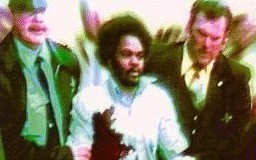
Raymond Lee Stewart
Spree killer Paul John Knowles
Spree killer · USA · 1974
Paul John Knowles (April 17, 1946 – November 18, 1974) was an American spree ki…
35 victims
Paul John Knowles
Spree killer · USA · 1974
Paul John Knowles (April 17, 1946 – November 18, 1974) was an American spree ki…
35 victims
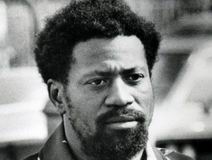 Bobby Joe Maxwell
Spree killer · USA · 1978
Name: Bobby Joe Maxwell Sex: M Race: B Type: T Motive: PC-nonspecific Method of…
11 victims
Bobby Joe Maxwell
Spree killer · USA · 1978
Name: Bobby Joe Maxwell Sex: M Race: B Type: T Motive: PC-nonspecific Method of…
11 victims
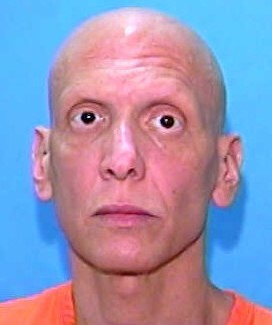 Manuel Pardo
Spree killer · USA · 1986
Manuel Pardo, Jr. was a former police officer who was convicted of nine counts…
9 victims
Manuel Pardo
Spree killer · USA · 1986
Manuel Pardo, Jr. was a former police officer who was convicted of nine counts…
9 victims
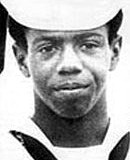 Mark Essex
Spree killer · USA · 1973
Mark James Robert Essex was a Navy veteran who engaged in a shooting and arson…
9 victims
Mark Essex
Spree killer · USA · 1973
Mark James Robert Essex was a Navy veteran who engaged in a shooting and arson…
9 victims
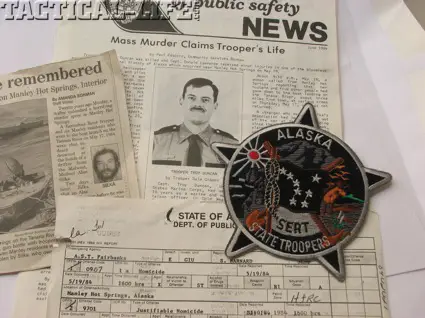 Michael Alan Silka
Spree killer · USA · 1984
Michael Alan Silka was killed during a shoot-out with the police on May 19, 198…
9 victims
Michael Alan Silka
Spree killer · USA · 1984
Michael Alan Silka was killed during a shoot-out with the police on May 19, 198…
9 victims
 Melissa Memmer
Murderer · USA · 2003
Melissa Memmer — defendant; former Shelby Township caregiver; she admitted disc…
1 victim
Melissa Memmer
Murderer · USA · 2003
Melissa Memmer — defendant; former Shelby Township caregiver; she admitted disc…
1 victim
 Robert Spangler
Murderer · USA · 1978
Robert Spangler was prosecuted after the deaths of his wife and children in Col…
4 victims
Robert Spangler
Murderer · USA · 1978
Robert Spangler was prosecuted after the deaths of his wife and children in Col…
4 victims
 Thomas McIlvane
Mass murderer · USA · 1991
Thomas McIlvane was a former postal worker who committed suicide by shooting hi…
4 victims
Thomas McIlvane
Mass murderer · USA · 1991
Thomas McIlvane was a former postal worker who committed suicide by shooting hi…
4 victims
 Dennis Duane Webb
Murderer · USA · 1973
Defendant: Dennis Duane Webb · Victims: John Rainwater and Lori Rainwater · Cou…
7 victims
Dennis Duane Webb
Murderer · USA · 1973
Defendant: Dennis Duane Webb · Victims: John Rainwater and Lori Rainwater · Cou…
7 victims
- Gender
- male
- Country
- USA
- Location
- Illinois/Wisconsin, USA
- Date of birth
- 1952
- Age at first offence
- 29
- Characteristics
- spree killer
- Victim profile
- Willie Fredd, 54, and Albert Pearson, 20 / Kevin Kaiser, 18 / Kenny Foust, 35 / Richard Boeck, 21, and Donald Rains, 26
- Method of murder
- Shooting
- Date(s) of murder
- January -February 1981
- Years active
- 1981
- Date of arrest
- —
- Status
-
Executed
Executed by lethal injection in Illinois on September 18, 1996
Case record: Raymond Lee Stewart
Background
Raymond Lee Stewart was a serial killer convicted and sentenced to death in two separate trials for three murders. He executed for a weeklong killing spree that left four people dead in Rockford, Illinois and two people dead in Beloit, Wisconsin. The murders terrified both communities.
Stewart was captured with the help of an F.B.I. profiler. Just when Rockford and Beloit residents thought it was safe to go out again, Raymond Lee Stewart made a daring escape from jail. He was re-captured after a two hour manhunt.
Journalist Greg Kelly described the jarring effect of the killings on his hometown of Rockford and on his childhood. Kelly was 9 years old during the killings in January and February 1981. He became “borderline obsessed” with covering Stewart’s case after a news release about the upcoming execution was faxed to the WGN newsroom in 1996 and caught his attention. Kelly said Stewart “was kind of like the boogeyman of my childhood,” and said that for people in the area, Stewart was “right up there with people like (John Wayne) Gacy and (Richard) Speck . . . It just kind of brought it all back.”
Kelly said he even called in sick so he could attend a clemency hearing for Stewart in Springfield. During the hearing, Kelly began to appreciate the story behind the murders, including Stewart’s background as an abused child and the suffering of the victims’ families. Kelly delved into those complexities in his book through interviews with family members of Stewart and his victims, with police, and in a telephone interview with Stewart himself shortly before the execution. Kelly said the experience left him with mixed feelings about the death penalty:
“He was a terrible person who destroyed many lives,” Kelly said. “But at the same time, I really feel that we almost did him a favor by executing him.”
Kelly said Stewart relished the publicity he got while on death row, including interest from the Rev. Jesse Jackson and Cardinal Joseph Bernardin. Kelly said:
“I don’t know that obscurity would've been a more suitable punishment for him,” Kelly said.
The offence
The killing spree began in Rockford, Illinois and ended in Beloit, Wisconsin, with six people killed in a week.
Police discovered the first deaths at Tiny Fredd’s Grocery store in Rockford, Illinois:
- Willie Fredd, 54, owner of Tiny Fredd’s Grocery store: shot several times in the head
- Albert Pearson, 20, clerk: shot several times in the head
The next day, at two separate service stations, police found:
- Kevin Kaiser, 18: bullet-riddled body
- Kenny Foust, 35: bullet-riddled body
The spree ended at a Beloit shopping center in a Radio Shack store, where police found:
- Richard Boeck, 21: killed in the Radio Shack store
- Donald Rains, 26: killed in the Radio Shack store
Investigation
Lt. Dan Gray, commander of detectives with the Rockford Police Department and an investigator on the case at the time, described the early investigation as involving “no evidence, no witnesses and no leads,” and said the killings stopped “as suddenly as they started.”
Kelly said people in the area were scared:
“ . . . People here, for the first time in my life, were scared.”
Gray agreed:
“It made people in this area very uneasy. Nobody knew what was going to happen next.”
Police did not get their first big break until several weeks after the last murder was committed in Beloit. Kelly said that at that time, “six murders in a year was a big deal,” let alone “six murders in a week in the area.”
Arrest and custody
profiler. The communities later faced further fear when he made a daring escape from jail.
Trial
Stewart had two trials, each with sentencing hearings before a jury, and each trial had sentencing in a bifurcated structure.
Trial for Willie Fredd and Albert Pearson murders
Stewart was convicted and sentenced to death for the murders of Willie Fredd and Albert Pearson.
At sentencing in the Fredd/Pearson murders, the prosecution argued for the death penalty by describing Stewart’s long history of violent acts, his lack of remorse, and the absence of any rehabilitation. The prosecution emphasized that rehabilitation was unlikely, and argued to the jury to do:
“everything in [its] power to make sure that this defendant doesn't get out, be released and kill another innocent victim.”
During the defence closing argument in this case, an exchange occurred:
[Mr. Berry—defense counsel]: You will be instructed on the death penalty phase and you will see in one of the instructions that if you find any mitigating factor then you may impose a sentence other than the death penalty and the judge would probably impose life without parole.
[Mr. Koski—state's attorney]: Objection, that improperly states the law.
[The Court]: Objection sustained. The sentence other than the death penalty is of no concern to this jury.
The trial court did not instruct the jury that Stewart was ineligible for parole under Illinois law.
The jury sentenced Stewart to death for the Fredd/Pearson murders on January 27, 1982.
Trial for Kevin Kaiser murder
Stewart was convicted and sentenced to death for the murder of Kevin Kaiser.
The case involved a second trial for the Kaiser murder. At sentencing in the Kaiser case, the government painted a similar picture of Stewart’s long and violent criminal history. The prosecution argued:
“Stewart ... is very special, he's dangerous, he's desperate to escape.”
The second jury sentenced Stewart to death for the Kaiser murder on May 6, 1982.
Sentencing
Stewart received two death sentences in separate trials: one for the Fredd/Pearson murders and another for the Kaiser murder.
The sentence for the Fredd/Pearson murders was imposed on January 27, 1982. The sentence for the Kaiser murder was imposed on May 6, 1982.
See 730 ILCS 5/5-8-1 (formerly Ill.Rev.Stat., Ch. 38, Sec. 1005-8-1(a)(1)(c)).
Appeals
Illinois Supreme Court
On direct review, the Illinois Supreme Court affirmed Stewart’s convictions and sentences:
- 104 Ill.2d 463, 85 Ill.Dec. 422, 473 N.E.2d 1227 (1984) (Kaiser)
- 105 Ill.2d 22, 85 Ill.Dec. 241, 473 N.E.2d 840 (1984) (Fredd/Pearson)
United States Supreme Court
The United States Supreme Court denied review of the Kaiser case on May 20, 1985, 471 U.S. 1120, 105 S.Ct. 2368, 86 L.Ed.2d 267 (1985). The United States Supreme Court denied review of the Fredd/Pearson case on May 28, 1985, 471 U.S. 1131, 105 S.Ct. 2666, 86 L.Ed.2d 283 (1985).
Post-conviction proceedings under Illinois Post-Conviction Hearings Act
In each case, Stewart filed a timely petition for collateral review under the Illinois Post-Conviction Hearings Act, 725 ILCS 5/122-1.
The Circuit Court denied relief on both petitions without holding evidentiary hearings. The Illinois Supreme Court affirmed these decisions, 121 Ill.2d 93, 117 Ill.Dec. 187, 520 N.E.2d 348 (1988), in a consolidated opinion. Eight months later, the United States Supreme Court again denied review:
- 488 U.S. 900, 109 S.Ct. 246, 102 L.Ed.2d 234 (1988) (Kaiser)
- 488 U.S. 987, 109 S.Ct. 544, 102 L.Ed.2d 574 (1988) (Fredd/Pearson)
Stewart filed a second post-conviction petition in each case. The Circuit Court dismissed these petitions on May 4, 1989. The Illinois Supreme Court affirmed these dismissals on November 20, 1990, 141 Ill.2d 107, 152 Ill.Dec. 286, 565 N.E.2d 968 (1990). The United States Supreme Court again denied certiorari, 502 U.S. 853, 112 S.Ct. 162, 116 L.Ed.2d 126 (1991).
Federal habeas corpus proceedings
Stewart filed petitions for habeas corpus relief in the United States District Court for the Central District of Illinois on May 1, 1989. These petitions were transferred to the Northern District of Illinois, Western Division.
After the second set of post-conviction petitions was still pending, the district court dismissed Stewart’s habeas petitions without prejudice. After the conclusion of proceedings on his second post-conviction petitions, the district court allowed Stewart to reinstate his habeas petitions on November 10, 1992.
On June 8, 1993, the district court consolidated and denied his petitions. The appeal was decided by the United States Court of Appeals for the Seventh Circuit.
Seventh Circuit habeas appeal
Raymond Lee Stewart, Petitioner-Appellant, v. Michael Lane, Director, Illinois Department of Corrections; and Howard Peters, Warden, Respondents-Appellees, Seventh Circuit.
- Argued: Nov. 22, 1994
- Decided: July 13, 1995
- Before: COFFEY, FLAUM, and RIPPLE, Circuit Judges
In Stewart’s habeas appeal, the central question involved the prosecutor’s arguments regarding Stewart’s future dangerousness combined with the trial court’s failure to instruct the jury on Stewart’s ineligibility for parole.
Stewart contended that the Supreme Court’s decision in Simmons v. South Carolina required vacating his death sentence in both cases on these grounds. Stewart argued that, under Illinois law, the only alternative to a death sentence was a sentence of natural life in prison without possibility of parole. See 730 ILCS 5/5-8-1.
The court addressed Teague v. Lane nonretroactivity, assuming Simmons would dictate a different result. It determined Stewart’s convictions became final for Teague purposes on May 20, 1985, and May 28, 1985. The court concluded the Simmons rule was not dictated by precedent existing at the time Stewart’s convictions became final and that Simmons was a “new rule.”
The court reasoned that Simmons relied on Gardner v. Florida and Skipper v. South Carolina, but Skipper was decided after Stewart’s convictions became final. It concluded the broad principles in Gardner were too general to compel Simmons. The court also concluded the second Teague exception was inapplicable because denying jury instructions regarding parole ineligibility after the state had raised future dangerousness did not seriously diminish the likelihood of obtaining an accurate determination in sentencing proceedings.
Stewart raised additional arguments. The court addressed allegations that prosecutor statements misled the jury in the Fredd/Pearson trial and in the Kaiser trial and found no basis for relief under the governing legal framework and waiver determinations described in the opinion.
The court affirmed denial of the habeas petition:
- “For the foregoing reasons, the district court's denial of Stewart 's habeas petition is therefore AFFIRMED.”
RIPPLE, Circuit Judge, concurred, supplementing the discussion of the Teague waiver issue.
The court also included additional materials about Simmons, Skipper, Gardner, and the Teague analysis, including verbatim quoted language:
“where the defendant's future dangerousness is at issue, and state law prohibits the defendant's release on parole, due process requires that the sentencing jury be informed that the defendant is parole ineligible.” --- U.S. at ----, 114 S.Ct. at 2190.
Rehearing petition and supplemental discussion
After July 13, 1995, Stewart petitioned for rehearing regarding the affirmance.
- United States Court of Appeals for the Seventh Circuit
- 70 F.3d 955
- Decided: December 4, 1995
- Panel: COFFEY, FLAUM, and RIPPLE, Circuit Judges
- Disposition: rehearing denied; supplemented Section III of the earlier opinion in response to issues emphasized in the rehearing petition
The court found no issues that merited reconsideration and denied the rehearing petition. The court supplemented discussion of claims that prosecutor and court statements misled the jury about the potential sentence if the death penalty was not imposed.
The court addressed:
- Fredd/Pearson trial statements together with a related jury instruction
- Kaiser trial statements including trial judge instruction and voir dire comments, comments regarding rehabilitative potential, and a colloquy during defense closing argument
The court quoted the colloquy again:
The court also repeated the Fredd/Pearson prosecutor statement under review:
Execution
Stewart was put to death early Wednesday, September 18, 1996, in Joliet.
Authorities administered a lethal injection at Stateville Correctional Center at 12:30 a.m. Wednesday. Stewart was pronounced dead moments after the lethal injection began.
While on a gurney in the death chamber shortly before the execution began, Stewart said:
“Hello to everyone. May you all have peace because of this. May my victims' families have peace,” Stewart said as he lay on a gurney in the death chamber just before the execution began.
Outcome
Raymond Lee Stewart was executed by lethal injection in Illinois on September 18, 1996.
Other details
Stewart was 44 years old at the time of his execution and was “the eighth person to be executed in Illinois since the state reinstituted the death penalty in 1977.”
The Illinois Supreme Court and federal court materials identified his case citations:
- People v. Raymond Lee Stewart, Case 1: 104 Ill. 2d 463, 473 N.E.2d 1227 (1984); cert. denied 471 U.S. 1120, 105 S.Ct. 2368 (1985); 121 Ill. 2d 93, 520 N.E.2d 348 (1988); cert. denied 488 U.S. 900, 109 S.Ct. 246 (1988); 141 Ill. 2d 107, 565 N.E.2d 968 (1990); cert. denied 502 U.S. 853, 112 S.Ct. 162 (1991); 1993 WL 207807 (1993); 60 F.3d 296 (1994)
- People v. Raymond Lee Stewart, Case 2: 105 Ill. 2d 22, 473 N.E.2d 840 (1985); cert. denied 471 U.S. 1131, 105 S.Ct. 2666 (1985); 121 Ill. 2d 93, 520 N.E.2d 348 (1988); cert. denied 489 U.S. 900, 109 S.Ct. 246 (1988); 141 Ill. 2d 107, 565 N.E.2d 968 (1990); cert. denied 502 U.S. 853, 112 S.Ct. 162 (1991); 1993 WL 207807, 60 F.3d 296 (1994)

Spotted an error, or have more information about this case?