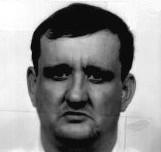
David Wayne Stoker
Murderer Brian Kevin Rosenfeld
Murderer · USA · 1985
Brian Kevin Rosenfeld Brian Kevin Rosenfeld was sentenced to three concurrent l…
23 victims
Brian Kevin Rosenfeld
Murderer · USA · 1985
Brian Kevin Rosenfeld Brian Kevin Rosenfeld was sentenced to three concurrent l…
23 victims
 Yahweh ben Yahweh
Murderer · USA · 1980
Yahweh ben Yahweh was born and legally named Hulon Mitchell Jr. (October 27, 19…
23 victims
Yahweh ben Yahweh
Murderer · USA · 1980
Yahweh ben Yahweh was born and legally named Hulon Mitchell Jr. (October 27, 19…
23 victims
 Russell Ellwood
Murderer · USA · 1991
Russell Ellwood was a former taxi driver. Authorities suspected him of killing…
20 victims
Russell Ellwood
Murderer · USA · 1991
Russell Ellwood was a former taxi driver. Authorities suspected him of killing…
20 victims
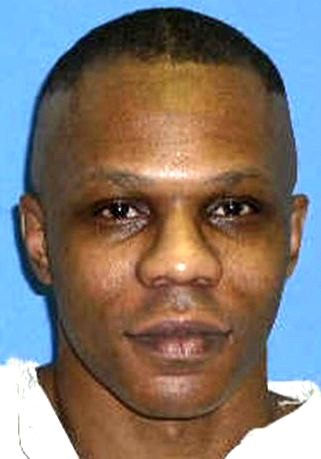 Larry Donell Davis
Murderer · USA · 1995
Larry Donnell Davis was executed by lethal injection in Texas on July 31, 2008.…
1 victim
Larry Donell Davis
Murderer · USA · 1995
Larry Donnell Davis was executed by lethal injection in Texas on July 31, 2008.…
1 victim
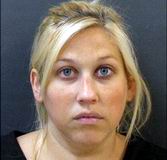 Lindsey Lowe
Murderer · USA · 2011
Lindsey Lowe was convicted of felony murder, premeditated murder, and aggravate…
2 victims
Lindsey Lowe
Murderer · USA · 2011
Lindsey Lowe was convicted of felony murder, premeditated murder, and aggravate…
2 victims
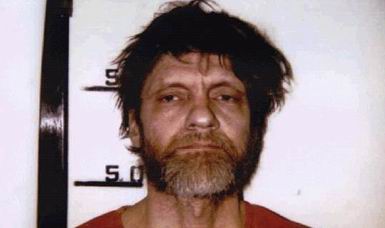 Theodore Kaczynski
Murderer · USA · 1985
Theodore John “Ted” Kaczynski (born May 22, 1942), also known as the Unabomber…
3 victims
Theodore Kaczynski
Murderer · USA · 1985
Theodore John “Ted” Kaczynski (born May 22, 1942), also known as the Unabomber…
3 victims
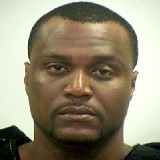 Tyrone Cade
Murderer · USA · 2011
Defendant: Tyrone Cade (Black male) · TDCJ number: 999575 · Prior prison record…
2 victims
Tyrone Cade
Murderer · USA · 2011
Defendant: Tyrone Cade (Black male) · TDCJ number: 999575 · Prior prison record…
2 victims
- Gender
- male
- Country
- USA
- Location
- Hale County, Texas, USA
- Date of birth
- January 25, 1959
- Age at first offence
- 27
- Characteristics
- murder for hire, robbery
- Victim profile
- David Mannrique, 50 (convenience store clerk)
- Method of murder
- Shooting ( .22 caliber pistol)
- Date(s) of murder
- November 9, 1986
- Years active
- 1986
- Date of arrest
- —
- Status
-
Executed
Executed by lethal injection in Texas on June 16, 1997
Case overview
David Wayne Stoker (born October 26, 1987 referenced in the record as “David Stoker October 26th 1987”) was found guilty of murdering David Mannrique, a 50-year old Baptist minister, in an alleged robbery of a convenient store in Hale Center, fifty miles north of Lubbock.
Background
David Stoker refused two plea offers by District Attorney Terry McEachern, professing until the end that he was innocent.
Stoker associated with a rough gang in town that included Carey Todd and Deborah and Ronnie Thompson. Todd was supplying the group with crank and allowing Deborah to live with him when she needed drugs. The group carried a number of weapons, which they continuously traded amongst themselves for drugs. Stoker’s job in the group was that of gunsmith; he cleaned and made the necessary repairs of all the guns.
The weapon used in the murder of David Mannrique was a .22 caliber pistol that was turned over to the DA’s office by Todd, who was also a witness for the prosecution and an FBI informant.
The offence
David Mannrique, a Baptist minister, was murdered in an alleged robbery of a convenient store in Hale Center. The store manager, Sandra Back, found the victim lying face down on the store room floor. The gunman shot the clerk three times and stole $96. The record also described the murder as the “fatal shooting of a convenience store clerk in a $96 robbery in 1986.”
Stoker’s appellate challenge included the point that there was no proof that a robbery even took place. The record stated that the register had not been counted in over twenty-four hours and only a few dollars were said to have been missing.
Investigation
The initial investigation by law enforcement officers of Hale Center led to a series of blunders. The store manager, Sandra Back, found a piece of paper with a bloody fingerprint on it. Hale Center’s police chief tossed the paper saying it was not important. The shell casings found on the floor were also tampered with.
During the trial, a deputy stated he placed the three bullets in three separate canisters. The police chief was then called to the stand and commented that he had received the three bullets in three separate envelopes. As the defense recalled the first deputy, his story changed to placing all three bullets in a single envelope.
Another mistake involved the location of the original inventory list of the car’s contents. The prosecution said it had been misplaced and provided the court with a photocopy; the defense opposed this but to no avail.
Authorities seized Stoker’s car after Stoker was pulled over while driving, weeks after the murder, on an unrelated charge. The record stated that members of the police from four different counties seized his car and claimed that they found shell casings matching those fired from the .22 pistol. The record also stated that Stoker did not own the car at the time of the murder and that his sister claimed he bought it later. The sister further stated that Todd gave Stoker the gun a month after the crime to fix a broken trigger, which was described as the first time Stoker came into possession of the gun.
Police Chief Richard Cordell testified that there was no local crime-stoppers’ group but acknowledged on the witness stand that he was, in fact, one of the group’s founders.
Riley Rogers, an investigator for the district attorney’s office, took the stand and denied any knowledge of the $1,000 payment. The appeals team later uncovered bank records that linked the $1,000 payment to him.
The record described the star witness as having been paid by a crime-stopper program, and stated that the DA’s investigator and the police gave false testimony.
Arrest
Stoker was arrested one month after Carey Todd implicated him. The record also stated that Stoker was pulled over while driving weeks after the murder and was arrested after Todd came forward and implicated him.
The record stated that Todd went to police five months later and implicated Stoker. It further stated that Todd gave police the murder weapon. Another account in the record stated that Todd, described as a “low-life scum drug dealer,” went to police five months later and implicated Stoker, and gave police the murder weapon.
The record also stated that authorities arrested Stoker and described him as having an assault conviction and, according to his own lawyer, being involved in drugs.
Trial
Pleadings and threats
The trial was described as sensational and featured a number of death threats. Security was increased as Stoker had received a death threat in the courtroom.
Stoker’s defense team included Ronald Felty and Gary A. Taylor. The record stated that Felty was appointed as the lead lawyer and a former prosecutor, and that Taylor was appointed as well.
Prosecutor and key witnesses
The district attorney who prosecuted Stoker was Terry McEachern. The record stated that a witness called forth by the state, James Grigson, better known as “Dr. Death,” provided damaging evidence to the jury.
The record also stated that Dr. Death never evaluated Stoker, yet concluded Stoker was a sociopath who would continue to be a threat if freed. Another account in the record stated that Grigson testified Stoker was a sociopath who would “absolutely” be violent again. The record described Grigson as famed for a 100 percent conviction rate and one of the state’s most feared witnesses.
In the record, a brother of a dead bandito claimed Stoker was the murderer.
Stoker’s list of witnesses in defense was described as slim. His mother was so upset that she could not be put on the stand, and his closest friends were known drug dealers.
Evidence described in the record
Carey Todd testified that Stoker had given him the murder weapon following the shooting. Stoker did not dispute he had the gun at one point and said he got it from Todd, who asked him to repair it, and that he then returned the gun.
Two other prosecution witnesses, Ronnie Thompson and his wife, Debra, testified that Stoker bragged about the murder. Ronnie Thompson’s position in the record was that his statement to police and his testimony were false due to pressure from his wife, who had become romantically involved with Todd and was angry at Stoker.
Ronnie Thompson said: “I told McEachern I didn't mean to sign it,” and the record included: “He said, 'It's too late. You signed it.'”
McEachern denied pressuring Thompson to testify untruthfully. Debra Thompson stuck by her testimony in a brief interview, while Todd declined to comment. The record further said that prosecutors claimed a shell casing found in Stoker’s car linked him to the murder, but stated Stoker did not own the car when the crime occurred; the record attributed later discovery to Stoker’s appellate attorney.
Defence team remarks and allegations
The record included remarks attributed to Gary Taylor, a member of Stoker’s defense team: “evil and terrible person who plays games with the defense. And it is a game he will always win.”
The record included remarks attributed to Stoker’s appellate attorneys and described their contention that Todd had ample motive to lie.
The record stated that under questioning by the prosecutor, Todd said he received nothing for his testimony, but that court records indicated Todd was facing drug and weapons charges in nearby Potter County, and that on the day he testified those charges were dropped. It also stated that he received a $1,000 crime-stoppers reward passed on to him by the Hale County district attorney’s office.
The record described documents found by appellate attorneys as indicating the charges were dropped against Todd in exchange for his testimony, including a telephone message showing that Hale County District Atty. Terry McEachern called a Potter County prosecutor regarding Todd’s case. Another prosecutor’s court file note was quoted: “Dismissed: this defendant helped Terry McEachern D.A. solve a murder case.”
The record stated that McEachern denied Todd’s drug charges were dropped in exchange for testimony but acknowledged Todd received reward money with the help of his office. McEachern was quoted: “Yes, the record indicates that that happened,” and continued: “Is that of substantial importance? I don't know whether I wore white socks or blue socks on that day, and I really don't think it matters.”
Deliberations and verdict
The trial ended after seven hours of deliberation by the jurors of Hale County. The record stated that with scant evidence, Stoker was convicted and each concurrent appeal rejected.
Sentencing
Three days after conviction, Stoker was sentenced to death by lethal injection.
During sentencing, McEachern called Dr. James P. Grigson, the psychiatrist nicknamed “Dr. Death.” The record stated that Grigson never examined Stoker, but testified Stoker was a sociopath who would “absolutely” be violent again.
The record stated that Felty assigned the inexperienced Taylor to cross-examine Grigson. With Stoker’s life in the balance, Felty put on only one witness at sentencing: Stoker’s mother, who testified briefly about the most superficial aspects of the Stoker family.
Felty was quoted: “When we went to trial, we were a hell of a lot better prepared than the D.A.'s office,” and McEachern was quoted as saying: “Twelve jurors believed [the witnesses] were credible and reliable.”
Appeals and clemency
The record stated that Steve Latimer, a lawyer from New Jersey, answered an emergency plea to save Stoker issued by the Texas Resource Center and began an investigation that lasted an additional year.
Latimer uncovered news that two days preceding the initial trial, Carey Todd and Deborah Thompson split a $1000 reward offered by Crimestoppers. The record stated that the check had been paid by the Plainview Bank but drafted by the District Attorney’s office, and that Terry McEachern denied this and kept it undercover for five years.
The record also stated that a district court judge appointed Ronald Felty and Gary A. Taylor and later described issues leading to Felty giving up his law license less than two years after Stoker’s trial. It further stated that Sutton, Bush’s criminal justice aide, said the courts had an opportunity to review all these issues on appeal and found they did not merit a new trial. Sutton was quoted describing evidence against Stoker as “very strong” but not overwhelming.
The record included statements attributed to jurors in recent interviews. Myron Grisham was quoted: “I don't know that we would have believed everything,” and continued: “Knowing [Todd] was paid or he got a deal, I would have had a harder time believing his testimony.” Wanda Carter was quoted: “If we had known some of these things, I'm sure it would have weighed on us.”
The record stated that Police Chief Cordell acknowledged there was no “direct tie” between Stoker and the crime, and Cordell was quoted: “I was really surprised we did what we did with the amount of evidence we had.”
Thomas Moss, a Bush appointee to the Board of Pardons and Paroles, voted to grant Stoker clemency once of only two times he has favored commuting a death sentence. Moss wrote to one of Stoker’s sisters that he believed there was “the possibility that [Stoker] was innocent.” The record stated that the board usually denies clemency requests without dissent.
Defence counsel aftermath
The record stated that Felty later gave up his law license in the face of disciplinary action. It also stated that Felty forged the signatures of two clients on a settlement check, then pocketed the money, and that records showed Felty pleaded guilty to felony charges for forging a judge’s signature on a court order and falsifying a government document. The record stated that Felty was sentenced to 5 years of community service.
The record stated that Stoker’s other court-appointed attorney, Gary A. Taylor, had been a lawyer less than a year when Stoker stood trial in October 1987.
Other details
Stoker left a note professing his innocence. The record included the note’s text addressed to the victim’s family: “I am truly sorry for your loss, but I didn't kill anyone. The D.A. knows this. I do wish you peace and comfort.”
Stoker’s last statement before execution was included in the record: “I have a statement prepared that I have given to the Chaplain that I want released to the media. I am ready, Warden. David Wayne STOKER October 26th 1987, David Stoker was found guilty of murdering David Mannrique, a 50-year old Baptist minister, in an alleged robbery of a convenient store in Hale Center, fifty miles north of Lubbock. Stoker refused two plea offers by District Attorney Terry McEachern, professing until the very end that he was innocent.”
The record also described Stoker’s final profession: “… I didn't kill anyone.”
The record stated that five members of the victim’s family witnessed the execution.
Al Gore was mentioned in the record as supporting the death penalty but as having never held an office where he would authorize an execution or grant clemency, in connection with capital punishment emerging as a national issue.
The record stated that Stoker was a carpenter and handyman.
The record described the murder as taking place in a north Texas town of Hale Center, a small, dusty town just north of Lubbock.
Outcome
On June 16, 1997, Stoker was executed by lethal injection in Texas.
Spotted an error, or have more information about this case?