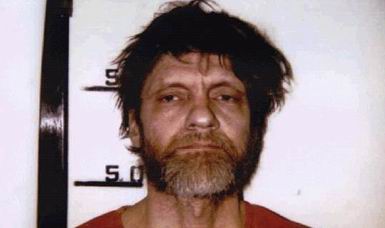
Theodore Kaczynski
Murderer Brian Kevin Rosenfeld
Murderer · USA · 1985
Brian Kevin Rosenfeld Brian Kevin Rosenfeld was sentenced to three concurrent l…
23 victims
Brian Kevin Rosenfeld
Murderer · USA · 1985
Brian Kevin Rosenfeld Brian Kevin Rosenfeld was sentenced to three concurrent l…
23 victims
 Marvin Gray
Murderer · USA · 1975
Marvin Gray was convicted killer who claimed responsibility for 23 slayings and…
23 victims
Marvin Gray
Murderer · USA · 1975
Marvin Gray was convicted killer who claimed responsibility for 23 slayings and…
23 victims
 Yahweh ben Yahweh
Murderer · USA · 1980
Yahweh ben Yahweh was born and legally named Hulon Mitchell Jr. (October 27, 19…
23 victims
Yahweh ben Yahweh
Murderer · USA · 1980
Yahweh ben Yahweh was born and legally named Hulon Mitchell Jr. (October 27, 19…
23 victims
 Russell Ellwood
Murderer · USA · 1991
Russell Ellwood was a former taxi driver. Authorities suspected him of killing…
20 victims
Russell Ellwood
Murderer · USA · 1991
Russell Ellwood was a former taxi driver. Authorities suspected him of killing…
20 victims
 Robert Wesley Knighton
Murderer · USA · 1973
Robert Wesley Knighton was executed by lethal injection in Oklahoma on May 27,…
5 victims
Robert Wesley Knighton
Murderer · USA · 1973
Robert Wesley Knighton was executed by lethal injection in Oklahoma on May 27,…
5 victims
 Jerry Terrell Jackson
Murderer · USA · 2001
Jerry Terrell Jackson was a Black male. He grew up in James City County. He was…
1 victim
Jerry Terrell Jackson
Murderer · USA · 2001
Jerry Terrell Jackson was a Black male. He grew up in James City County. He was…
1 victim
 Joel Carl Smith
Murderer · United Kingdom · 2003
Joel Carl Smith (born 1973) was a drug dealer. He was also known as “Cocaine” o…
2 victims
Joel Carl Smith
Murderer · United Kingdom · 2003
Joel Carl Smith (born 1973) was a drug dealer. He was also known as “Cocaine” o…
2 victims
 James Ernest Hitchcock
Murderer · USA · 1976
Name: James Ernest Hitchcock Date of birth: 04/05/56 Court: Ninth Judicial Circ…
1 victim
James Ernest Hitchcock
Murderer · USA · 1976
Name: James Ernest Hitchcock Date of birth: 04/05/56 Court: Ninth Judicial Circ…
1 victim
- Gender
- male
- Country
- USA
- Location
- California/New Jersey, USA
- Date of birth
- May 22, 1942
- Age at first offence
- 43
- Characteristics
- —
- Victim profile
- Hugh Scrutton, 38 (computer rental store owner) / Thomas J. Mosser, 50 (advertising executive) / Gilbert P. Murray (timber industry lobbyist)
- Method of murder
- Explosives (homemade bombs)
- Date(s) of murder
- 1985 / 1994 / 1995
- Years active
- 1985–1995
- Date of arrest
- April 3, 1996
- Status
-
Life imprisonment
Sentenced to four life terms in prison on May 5, 1998
Overview
Theodore John “Ted” Kaczynski (born May 22, 1942), also known as the Unabomber (University and Airline Bomber), was an American mathematician and social critic who engaged in a mail bombing spree that spanned nearly 20 years, killing three people and injuring 23 others.
He was born in Chicago, Illinois. He became known through a Federal Bureau of Investigation (FBI) investigation in which the case was referred to by the handle “UNABOM” (“UNiversity and Airline BOMber”), which resulted in media calling him the Unabomber. He was not caught as a result of this investigation; his brother recognized Kaczynski’s style of writing and beliefs from the manifesto and tipped off the FBI.
Kaczynski’s lawyers were court appointed, but he eventually dismissed them because they wanted to plead insanity in order to avoid the death penalty, and he did not believe he was insane. He pleaded guilty under a plea agreement and was sentenced to life in prison with no possibility of parole. The FBI designated him a “domestic terrorist.”
Background
Early life and education
Kaczynski was born on May 22, 1942, in Chicago, Illinois, to second-generation Polish Americans Wanda (née Dombek) and Theodore Richard Kaczynski. At six-months of age, Ted’s body was covered in hives. He was placed in isolation in a hospital where visitors were not allowed. Treatment continued for eight months. His mother wrote in March 1943, “Baby home from hospital and is healthy but quite unresponsive after his experience.”
From grades one through four, Kaczynski attended Sherman Elementary School in Chicago. He attended grades five through eight at Evergreen Park Central School. As a result of testing conducted in the fifth grade which determined he had an IQ of 167, he was allowed to skip the sixth grade and enroll in the seventh grade. He described this as a pivotal event in his life, recalling not fitting in with the older children and being subjected to their bullying. As a child, Kaczynski had a fear of people and buildings, and played beside other children rather than interacting with them. His mother was worried by his poor social development and considered entering him in a study for autistic children led by Bruno Bettelheim.
He attended high school at Evergreen Park Community High School. He excelled academically but found the mathematics too simple during his sophomore year. He became obsessed with mathematics, spending prolonged hours locked in his room practicing differential equations instead of socializing with his peers. During secondary schooling he surpassed classmates, solving advanced Laplace Transforms before his senior year. He was placed in a more advanced mathematics class, yet still felt intellectually restricted. He mastered the material and skipped the eleventh grade. With the help of a summer school course for English, he completed his high school education when he was 15 years old. He was encouraged to apply to Harvard University and was accepted as a student beginning in fall 1958 at the age of 16.
At Harvard, he was taught by logician Willard Van Orman Quine, scoring at the top of Quine’s class with a 98.9% final grade. He participated in a multiple-year personality study conducted by Dr. Henry Murray, an expert on stress interviews. Students in Murray’s CIA-sponsored study were told they would be debating personal philosophy with a fellow student, but were subjected to a “purposely brutalizing psychological experiment” stress test. During the test, students were taken into a room, strapped into a chair and connected to electrodes that monitored their physiological reactions, while facing bright lights and a two-way mirror. Students had previously written an essay detailing their personal beliefs and aspirations; the essays were turned over to an anonymous attorney, who entered the room and individually belittled each strapped-down student based in part on the disclosures. This was filmed, and students’ expressions of impotent rage were played back to them several times later in the study.
The account attributed author Alston Chase as noting that Kaczynski’s records from that period suggested he was emotionally stable when the study began. Kaczynski’s lawyers attributed some of his emotional instability and dislike of mind control to his participation in this study. Some suggested it may have been instrumental in his future actions.
Career in mathematics
Kaczynski graduated from Harvard University in 1962 and subsequently enrolled at the University of Michigan, where he earned a PhD in mathematics. His specialty was geometric function theory. Professors at Michigan were impressed with his intellect and drive.
Peter Duren, a math professor at Michigan, said: “He was an unusual person. He was not like the other graduate students,” and “He was much more focused about his work. He had a drive to discover mathematical truth.” George Piranian, another Michigan math professor, said: “It is not enough to say he was smart.”
Kaczynski earned his PhD with his thesis entitled “Boundary Functions.” Maxwell Reade, a retired math professor who served on Kaczynski’s dissertation committee, commented on the thesis by noting, “I would guess that maybe 10 or 12 men in the country understood or appreciated it.”
In 1967, he won the University of Michigan’s $100 Sumner B. Myers Prize recognizing his dissertation as the school’s best in mathematics that year. While a graduate student, he held a National Science Foundation fellowship and taught undergraduates for three years. He published two articles related to his dissertation in mathematical journals and four more after leaving Michigan later.
In the fall of 1967, he became an assistant professor of mathematics at the University of California, Berkeley, where he taught undergraduate courses in geometry and calculus. He was noted as the youngest professor ever hired by the university. He received numerous complaints and low ratings from undergraduates, who said he seemed uncomfortable in the teaching environment, stuttering and mumbling during lectures, becoming excessively nervous in front of a class, and ignoring students during designated office hours. He resigned in 1969 at age 26.
J. W. Addison, chairman of the mathematics department, called this a “sudden and unexpected” resignation. Calvin Moore, vice chairman, said that given Kaczynski’s “impressive” thesis and record of publications, “He could have advanced up the ranks and been a senior member of the faculty today.”
Life in Montana
In summer 1971, Kaczynski moved into his parents’ small residence in Lombard, Illinois. Two years later he moved into a remote cabin he built himself just outside Lincoln, Montana where he lived a simple life on very little money without electricity or running water. He worked odd jobs and received financial support from his family, which he used to purchase his land and, without their knowledge, later used to fund his bombing campaign.
In 1978, he worked briefly with his father and brother at a foam-rubber factory, where he was fired by his brother, David, for harassing a female supervisor he had previously dated.
He began teaching himself survival skills including tracking, edible plant identification, and how to construct primitive technologies such as bow drills. He concluded it was not possible for him to live that way because of watching wild land around his cabin be destroyed by development and industry. He performed isolated sabotage acts initially targeted at developments near his cabin.
He described an event as the ultimate catalyst driving him to begin his bombing campaign after going out for a walk to a favorite wild spot only to find it destroyed and replaced with a road. He said:
“The best place, to me, was the largest remnant of this plateau that dates from the tertiary age. It’s kind of rolling country, not flat, and when you get to the edge of it you find these ravines that cut very steeply in to cliff-like drop-offs and there was even a waterfall there. It was about a two days hike from my cabin. That was the best spot until the summer of 1983. That summer there were too many people around my cabin so I decided I needed some peace. I went back to the plateau and when I got there I found they had put a road right through the middle of it”
His voice trailed off; he paused, then continued:
“You just can’t imagine how upset I was. It was from that point on I decided that, rather than trying to acquire further wilderness skills, I would work on getting back at the system. Revenge.”
He began dedicating himself to reading about sociology and books on political philosophy, including works of Jacques Ellul, and stepped up sabotage. He concluded that more violent methods would be the only solution to what he saw as the problem of industrial civilization. He said he lost faith in reform and saw violent collapse as the only way to bring down the techno-industrial system:
“I don’t think it can be done. In part because of the human tendency, for most people, there are exceptions, to take the path of least resistance. They’ll take the easy way out, and giving up your car, your television set, your electricity, is not the path of least resistance for most people. As I see it, I don’t think there is any controlled or planned way in which we can dismantle the industrial system. I think that the only way we will get rid of it is if it breaks down and collapses ... The big problem is that people don’t believe a revolution is possible, and it is not possible precisely because they do not believe it is possible. To a large extent I think the eco-anarchist movement is accomplishing a great deal, but I think they could do it better... The real revolutionaries should separate themselves from the reformers… And I think that it would be good if a conscious effort was being made to get as many people as possible introduced to the wilderness. In a general way, I think what has to be done is not to try and convince or persuade the majority of people that we are right, as much as try to increase tensions in society to the point where things start to break down. To create a situation where people get uncomfortable enough that they’re going to rebel. So the question is how do you increase those tensions?”
The offence
Kaczynski engaged in a mail bombing spree spanning from 1978 to 1995, in which he mailed or hand delivered explosive devices. The spree killed three people and injured 23 others. He sent 16 bombs to targets including universities and airlines.
He sent 16 bombs from 1978 to 1995, killing three people and injuring 23. Devices varied, and many contained the initials “FC.” Kaczynski later asserted that “FC” stood for “Freedom Club.”
Explosive-device pattern and tactics
Authorities and investigators described Kaczynski’s bombs as built from scrap materials, handcrafted, and often camouflaged for delivery. The initial bomb did not cause severe damage because wooden ends lacked the strength to allow significant pressure to build within the pipe.
Investigators later found that Kaczynski sometimes left false clues in bombs to mislead investigators. He left a metal plate stamped with “FC,” hidden in locations such as a pipe end cap in every bomb. One false clue was a note in a bomb that did not detonate that read “Wu—It works! I told you it would—RV”. Another clue involved Eugene O’Neill $1 stamps used to send boxes. One bomb was sent embedded in a copy of Sloan Wilson’s novel Ice Brothers. Investigators theorized that Kaczynski had a theme of nature, trees and wood in the crimes and noted he included bits of tree branch and bark in bombs.
Casualties and victims
- John Hauser, a graduate student and Captain in the United States Air Force, was injured in 1985, losing four fingers and vision in one eye.
- Hugh Scrutton, a 38-year-old California computer store owner, was killed in 1985.
- Gary Wright was injured in 1987 when a bomb severed nerves in his left arm and propelled more than 200 pieces of shrapnel into his body.
- David Gelernter was critically injured in 1993 but recovered.
- Charles Epstein lost multiple fingers after opening a bomb in 1993.
- Joel Gelernter received a telephone call and warning that he “You are next.”
- Phillip Sharp, a geneticist at Massachusetts Institute of Technology, received a threatening letter two years later.
- Thomas J. Mosser was killed by a mail bomb in 1994.
- Gilbert Murray was killed in 1995 by a mail bomb addressed to previous president William Dennison.
- Percy Wood was injured (cuts and burns) in a 1980 attack.
Targets included universities and airlines, and Kaczynski also threatened more people by letters and phone calls.
Timeline
May 22, 1942 — Theodore John “Ted” Kaczynski was born in Chicago, Illinois. March 1943 — Wanda Kaczynski wrote: “Baby home from hospital and is healthy but quite unresponsive after his experience.” Fall 1958 — Kaczynski began attending Harvard University at age 16. 1962 — Kaczynski graduated from Harvard University. 1967 — Kaczynski won the University of Michigan’s $100 Sumner B. Myers Prize. Fall 1967 — Kaczynski became an assistant professor of mathematics at the University of California, Berkeley. 1969 — Kaczynski resigned from his Berkeley position. Summer 1971 — Kaczynski moved into his parents’ small residence in Lombard, Illinois. 1973 — Kaczynski moved into a remote cabin built just outside Lincoln, Montana. May 25-26, 1978 — A first bomb was discovered in a parking lot at the University of Illinois at Chicago campus; it exploded when opened by police, injuring a campus officer. April 3, 1996 — Agents arrested Theodore Kaczynski at his remote cabin outside Lincoln, Montana. September 19, 1995 — The New York Times and The Washington Post published his manifesto. April 24, 1995 — Kaczynski sent a letter to The New York Times promising “to desist from terrorism” if his manifesto was published. January 22, 1998 — Kaczynski pleaded guilty to all government charges. May 5, 1998 — Kaczynski was sentenced to four life terms in prison.
Bombings: initial bombings and investigation
Kaczynski’s activities came to attention of the FBI in 1978 with the explosion of his first primitive homemade bomb. Over the next 17 years, he mailed or hand delivered increasingly sophisticated explosive devices that killed three people and injured 24 more.
First mail bomb: Northwestern University (late May 1978)
The first mail bomb was sent in late May 1978 to materials engineering professor Buckley Crist at Northwestern University. The package was found in a parking lot at the University of Illinois at Chicago, with Crist’s return address. The package was “returned” to Crist. However, when Crist received the package, he noticed it was not addressed in his own handwriting. He contacted campus policeman Terry Marker, who opened the package; it exploded immediately. Marker required medical assistance at Evanston Hospital for his left hand, though he received minimal injuries.
The bomb was made of metal from a home workshop, with a primary component of a metal pipe about 1 inch (25 mm) in diameter and 9 inches (230 mm) long. The box and plugs that sealed the pipe ends were handcrafted from wood. The primitive trigger device used a nail tensioned by rubber bands designed to slam into six match heads when the box was opened. The match heads would ignite the explosive powders, but when triggered only three ignited. A more efficient technique later used by Kaczynski used batteries and heat filament wire to ignite explosives.
The initial 1978 bombing was followed by bombs sent to airline officials. In 1979, a bomb was placed in the cargo hold of American Airlines Flight 444, a Boeing 727 flying from Chicago to Washington, D.C. Smoke forced an emergency landing and passengers received treatment for smoke inhalation. A faulty timing mechanism prevented explosion. Authorities said it had enough firepower to “obliterate the plane.”
Because bombing an airliner is a federal crime in the United States, the FBI became involved and derived the code name UNABOM. U.S. Postal Inspectors called the suspect the Junkyard Bomber because of material used in the mail bombs. In 1979, an FBI-led task force formed that included the ATF and U.S. Postal Inspection Service and grew to more than 150 full-time investigators.
The task force performed forensic examination of recovered components and studied victims in detail. These efforts did not identify the suspect because bombs were built from “scrap” materials available almost anywhere and victims were chosen irregularly from library research.
In 1980, chief agent John Douglas working with agents in the FBI’s Behavioral Sciences Unit issued a psychological profile describing the offender as a man with above-average intelligence and connections to academia. This was later refined to describe him as a neo-Luddite holding an academic degree in the hard sciences. The psychologically based profile was discarded in 1983 in favor of a physical-evidence theory from FBI analysts characterizing the suspect as a blue-collar airplane mechanic.
A 1-800 hotline was set up by the UNABOM Task Force to take calls and a $1 million reward was offered for information leading to capture.
Bombings: injuries, threats, and murders
1985 incidents
The first serious injury occurred in 1985 when John Hauser lost four fingers and vision in one eye. In 1985, Hugh Scrutton, a 38-year-old California computer store owner, was killed by a nail-and-splinter-loaded bomb placed in the parking lot of his store.
1987 attack in Salt Lake City, Utah
A similar attack occurred on February 20, 1987 in Salt Lake City, Utah. The bomb injured Gary Wright when he attempted to remove it from the store’s parking lot. The explosion severed nerves in Wright’s left arm and propelled more than 200 pieces of shrapnel into his body.
1993 bombings
After a six-year hiatus, Kaczynski sent a bomb in 1993 to David Gelernter, a computer science professor at Yale University. Gelernter was critically injured but recovered. Another bomb sent in the same weekend was sent to the home of geneticist Charles Epstein from University of California, San Francisco; Epstein lost multiple fingers. Kaczynski then called Gelernter’s brother, Joel Gelernter, a behavioral geneticist, and told him, “You are next.”
Geneticist Phillip Sharp at Massachusetts Institute of Technology also received a threatening letter two years later.
Kaczynski wrote a letter to The New York Times claiming that his “group”, called FC, was responsible for attacks.
1994 and 1995 murders
In 1994, Burson-Marsteller executive Thomas J. Mosser was killed by a mail bomb sent to his North Caldwell, New Jersey home.
In another letter to The New York Times, Kaczynski claimed FC “blew up Thomas Mosser because [...] Burston-Marsteller [sic] helped Exxon clean up its public image after the Exxon Valdez incident” and, more importantly, because “its business is the development of techniques for manipulating people’s attitudes.”
This was followed by the 1995 murder of Gilbert Murray, president of the timber industry lobbying group California Forestry Association, by a mail bomb actually addressed to previous president William Dennison, who had retired.
Manifesto and correspondence
In 1995, Kaczynski mailed several letters outlining goals and demanding that a 50-plus page, 35,000-word essay, Industrial Society and Its Future (also called the “Unabomber Manifesto”), be printed verbatim by a major newspaper or journal.
The manifesto was densely written and called for a worldwide revolution against modern society’s “industrial-technological system.” Kaczynski stated that if his demand was met, he would then end his bombing campaign.
There was controversy about whether the document should be published. A further letter threatening to kill more people was sent, and the United States Department of Justice, along with FBI Director Louis Freeh and Attorney General Janet Reno, recommended publication out of concern for public safety and in hopes that a reader could identify the author.
The pamphlet was published by The New York Times and The Washington Post on September 19, 1995. Prior to The New York Times decision to publish the manifesto, Bob Guccione of Penthouse volunteered to publish it, but Kaczynski replied that since Penthouse was less “respectable” than the other publications, he would “reserve the right to plant one (and only one) bomb intended to kill, after our manuscript has been published.”
Within the manuscript, Kaczynski capitalized entire words for emphasis and referred to himself as “we” or “FC” (Freedom Club), though he appeared to have acted alone.
Industrial Society and Its Future began with Kaczynski’s assertion that “the Industrial Revolution and its consequences have been a disaster for the human race.” In the opening and closing sections, he addressed Leftism and analyzed leftists, stating they were “True Believers in Eric Hoffer’s sense.” He described “oversocialized” leftists and wrote:
“The moral code of our society is so demanding that no one can think, feel and act in a completely moral way. [...] Some people are so highly socialized that the attempt to think, feel and act morally imposes a severe burden on them. In order to avoid feelings of guilt, they continually have to deceive themselves about their own motives and find moral explanations for feelings and actions that in reality have a non-moral origin. We use the term ‘oversocialized’ to describe such people.”
He argued that social and psychological problems stemmed from society requiring people to live under conditions radically different from those under which the human race evolved and to behave in ways conflicting with earlier patterns. He defined a “power process” with elements including goal, effort and attainment of goal, and also autonomy. He wrote:
“The three most clear-cut of these we call goal, effort and attainment of goal. (Everyone needs to have goals whose attainment requires effort, and needs to succeed in attaining at least some of his goals.) The fourth element is more difficult to define and may not be necessary for everyone. We call it autonomy and will discuss it later. [...] We divide human drives into three groups: (1) those drives that can be satisfied with minimal effort; (2) those that can be satisfied but only at the cost of serious effort; (3) those that cannot be adequately satisfied no matter how much effort one makes. The power process is the process of satisfying the drives of the second group. Kaczynski goes on to claim that ‘[i]n modern industrial society natural human drives tend to be pushed into the first and third groups, and the second group tends to consist increasingly of artificially created drives.’”
He argued that “surrogate activities” were directed toward artificial goals set up merely for “fulfillment,” and he claimed scientific research was a surrogate activity for scientists. He wrote that “science marches on blindly, without regard to the real welfare of the human race or to any other standard, obedient only to the psychological needs of the scientists and of the government officials and corporation executives who provide the funds for research.”
In his discussion of control methods, he wrote:
“Imagine a society that subjects people to conditions that make them terribly unhappy, then gives them the drugs to take away their unhappiness. Science fiction? It is already happening to some extent in our own society.”
He described entertainment as an “essential means of escape” and included discussion of education and “Parenting” techniques. He discussed freedom in the final sections, saying it would be “hopelessly difficult [...] to reform the industrial system in such a way as to prevent it from progressively narrowing our sphere of freedom.” He wrote:
“If the system succeeds in acquiring sufficient control over human behavior quickly enough, it will probably survive. Otherwise it will break down”
and
“the issue will most likely be resolved within the next several decades, say 40 to 100 years.”
He stated revolution was possible and called for strategies including “heighten[ing] the social stresses within the system so as to increase the likelihood that it will break down” and “develop and propagate an ideology that opposes technology.”
He also recommended tactics including avoiding collaboration with leftists and supporting free trade agreements. He concluded by noting his manifesto had “portrayed leftism in its modern form as a phenomenon peculiar to our time and as a symptom of the disruption of the power process” and that he was “not in a position to assert confidently that no such movements have existed prior to modern leftism,” saying “[t]his is a significant question to which historians ought to give their attention.”
Additional letters and threats
A letter threatening to kill more people was included in 1995 as part of attempts to compel publication. Kaczynski also mailed letters to his former victims and to major media outlets.
Kaczynski sent a letter to The New York Times on April 24, 1995, promising “to desist from terrorism” if the Times or The Washington Post published his manifesto.
A letter to The New York Times claimed FC responsibility and stated:
“We are an anarchist group calling ourselves FC.”
The letter further stated:
“This will prove that we knew about the event in advance, so our claim of responsibility is truthful. Ask the FBI about FC. They have heard of us. We will give information about our goals at some future time. Right now we only want to establish our identity and provide an identifying number that will ensure the authenticity of any future communications from us. Keep this number secret so that no one else can pretend to speak in our name.”
Investigation and arrest
Role of the manifesto and brother’s recognition
Kaczynski was not caught during the FBI’s investigation. After the manifesto’s publication, Kaczynski’s brother David recognized the writing style and beliefs and tipped off the FBI.
Prior to the publishing of the manifesto, David Kaczynski had been encouraged by his wife Linda to follow up on suspicions that Ted was the Unabomber. David read the manifesto a week after it was published in September 1995. He browsed through old family papers and found letters dating back to the 1970s written by Ted that contained phrasing similar to the manifesto.
The FBI received over a thousand calls a day for months after offering a $1 million reward.
David hired a private investigator, Susan Swanson, in Chicago to investigate Ted’s activities discreetly. The brothers had become estranged in 1990 and David had not seen Ted for ten years. David later hired Washington, D.C. attorney Tony Bisceglie to organize evidence and make contact with the FBI.
In early 1996, former FBI hostage negotiator and criminal profiler Clinton R. Van Zandt was contacted by an investigator working with Bisceglie. Bisceglie asked Van Zandt to compare the manifesto to typewritten copies of handwritten letters David had received from Ted. Van Zandt’s initial analysis determined there was better than a 60 percent chance that the same person had written the letters and the manifesto. A second analytical team determined an even higher likelihood. Van Zandt recommended that Bisceglie’s client contact the FBI immediately.
In February 1996, Bisceglie provided a copy of the 1971 essay written by Ted Kaczynski to the FBI. At UNABOM Task Force headquarters in San Francisco, Supervisory Special Agent Joel Moss recognized similarities in the writings. Linguistic analysis determined that the author of the essay papers and the manifesto were almost certainly the same. This analysis, combined with facts from bombings and Kaczynski’s life, provided the basis for a search warrant.
David was identified after attempting to remain anonymous, and an FBI agent team was dispatched to interview David and his wife with their attorney in Washington, D.C. David provided letters written by Ted in their original envelopes. Postmark dates enabled the enhancement of the timeline of Ted Kaczynski’s activities. David met many times with the primary Task Force behavioral analyst, Special Agent Kathleen M. Puckett, in Washington, D.C., Texas, Chicago, and Schenectady, New York, over nearly two months before a federal search warrant was served on Theodore Kaczynski’s cabin.
Arrest
Agents arrested Theodore Kaczynski on April 3, 1996 at his remote cabin outside Lincoln, Montana, where he was found in an unkempt state.
Inside the cabin, investigators found bomb components, 40,000 handwritten journal pages including bomb-making experiments and descriptions of Unabomber crimes, and one live bomb ready for mailing. Investigators also found what appeared to be the original typed manuscript of the manifesto.
The search and arrest warrant affidavit reflected a conflict where FBI search warrant paragraphs 204 and 205 stated that experts believed the manifesto had been written by another individual not Theodore Kaczynski, and that numerous other opinions from experts had been provided and none named Theodore Kaczynski.
After his arrest, Kaczynski was briefly considered among several individuals who had been suspected of being the unidentified Zodiac Killer, but he was eliminated because he lived in Illinois during most of the Zodiac’s confirmed killings. Similarities discussed included Kaczynski living in the Bay Area from 1967 to 1969 and both cases involving intelligent individuals with an interest in bombs and codes.
David donated reward money, less his expenses, to families of victims.
David Kaczynski’s identity was leaked to CBS News in early April 1996, and CBS anchorman Dan Rather called FBI director Louis Freeh for a 24-hour request before CBS broke the story. An internal leak investigation was conducted, but the source was never identified.
Court proceedings and sentencing
Competency, defense strategy, and indictment
Kaczynski’s lawyers, headed by Montana federal defender Michael Donahoe, attempted to enter an insanity defense to save his life, but Kaczynski rejected this plea. A court-appointed psychiatrist diagnosed him as suffering from paranoid schizophrenia but declared him competent to stand trial.
Kaczynski’s family said he would psychologically “shut down” when pressured. In Technological Slavery, Kaczynski recalled prison psychologists Dr. James Watterson and Dr. Michael Morrison, who visited him almost every day for four years, telling him they saw no indication he suffered from any serious mental illness and that the diagnosis of paranoid schizophrenic was “ridiculous” and a “political diagnosis.” Dr. Morrison made remarks to him about psychologists and psychiatrists providing any desired diagnosis if they were well paid for doing so.
A federal grand jury indicted Kaczynski in April 1996 on 10 counts of illegally transporting, mailing, and using bombs. He was also charged with killing Scrutton, Mosser, and Murray.
Attempted suicide and plea
On January 7, 1998, Kaczynski attempted to hang himself.
The prosecution initially indicated it would seek the death penalty after authorization by United States Attorney General Janet Reno. Kaczynski’s guilty plea was entered on January 22, 1998 after he avoided the death penalty by pleading guilty to all the government’s charges. He later attempted to withdraw his guilty plea, arguing it was involuntary. Judge Garland Ellis Burrell Jr. denied his request, and the United States Court of Appeals for the Ninth Circuit upheld that decision.
Sentencing
On May 5, 1998, Kaczynski was sentenced to four life terms in prison.
Appeals and later court actions
On August 10, 2006, Judge Garland Burrell Jr. ordered that personal items seized in 1996 from Kaczynski’s Montana cabin should be sold at a “reasonably advertised Internet auction.” Items considered bomb-making materials, including writings containing diagrams and “recipes” for bombs, were excluded from the sale. The auctioneer would pay the cost and keep up to 10% of the sale price, and the rest of proceeds had to be applied to the $15 million in restitution Burrell ordered Kaczynski to pay his victims. The judge ordered that references in the auctioned documents that alluded to any victims must be removed before sale. Kaczynski challenged ordered redactions in court on first amendment grounds, arguing that altering his writings would be an unconstitutional violation of his freedom of speech.
He served a life sentence without possibility of parole as Federal Bureau of Prisons register number 04475–046 at ADX Florence, the federal Administrative Maximum Facility supermax near Florence, Colorado.
In 2010, the U.S. Court of Appeals for the Ninth Circuit in San Francisco rejected arguments that the government’s sale of his writings violated his freedom of expression. His writings, books, and other possessions were sold online and proceeds were to be sent to several of his victims.
Aftermath: prison life, correspondence, and custody-related items
Kaczynski was an active writer in prison. The Labadie Collection at the University of Michigan’s Special Collections Library housed his correspondence from over 400 people since his arrest in April 1996, including carbon copy replies, legal documents, publications, and clippings. The names of most correspondents would be kept sealed until 2049.
He also continued to write while incarcerated. In 2010, a collection of his essays and a corrected version of the manifesto were published by Feral House under the title Technological Slavery.
Kaczynski’s cabin was removed and stored in a warehouse in an undisclosed location. It was to be destroyed but was eventually given to Scharlette Holdman, an investigator on his defense team. It was on display at the Newseum in Washington, D.C. as of July 2008. In a three-page handwritten letter to the United States Court of Appeals for the Ninth Circuit, Kaczynski objected to public exhibition of the cabin, claiming it violated a victim’s objection to be publicly connected with the Unabomber case.
In a letter dated October 7, 2005, Kaczynski offered to donate two rare books to the Melville J. Herskovits Library of African Studies at Northwestern University’s campus in Evanston, Illinois, the location of the first two attacks. David Easterbrook turned the letter over to the university’s archives. Northwestern rejected the offer, noting that the library already owned the volumes in English and did not desire duplicates.
David Kaczynski, Theodore’s brother and the person who turned him in to the FBI, sent monthly letters to Theodore in prison; as of 2007 he had never received a response.
When asked if he was afraid of losing his mind in prison, Kaczynski replied:
“No, what worries me is that I might in a sense adapt to this environment and come to be comfortable here and not resent it anymore. And I am afraid that as the years go by that I may forget, I may begin to lose my memories of the mountains and the woods and that’s what really worries me, that I might lose those memories, and lose that sense of contact with wild nature in general. But I am not afraid they are going to break my spirit.”
Victims and incidents (bomb list as described)
The record described the following bombings and related outcomes:
- March 25-26, 1978 — Northwestern University, Evanston, Illinois campus police officer Terry Marker, minor injury.
- May 9, 1979 — Northwestern University graduate student John Harris, slight injury.
- November 15, 1979 — Chicago, Illinois; American Airlines passengers, smoke inhalation.
- June 10, 1980 — Chicago, Illinois; United Airlines President Percy Wood, cuts and burns.
- October 8, 1981 — University of Utah, Salt Lake City, Utah; none—bomb defused.
- May 5, 1982 — Vanderbilt University, Nashville, Tennessee; university secretary Janet Smith, minor injury.
- July 2, 1982 — University of California, Berkeley, California; Professor Diogenes Angelakos, right hand and face; near-complete recovery.
- May 15, 1985 — University of California, Berkeley; graduate student John Hauser, partial loss of vision in left eye, loss of four fingers on right hand.
- June 13, 1985 — Auburn, Washington; none—bomb defused.
- November 15, 1985 — Ann Arbor, Michigan; two injured.
- December 11, 1985 — Sacramento, California; computer rental store owner Hugh Scrutton, first fatality.
- February 20, 1987 — Salt Lake City, Utah; computer store owner injured.
- June 22, 1993 — Tiburon, California; University of California geneticist Charles Epstein, severe injuries.
- June 24, 1993 — Yale University, New Haven, Connecticut; computer science Professor David Gelernter, right hand and right eye.
- December 10, 1994 — North Caldwell, New Jersey; advertising executive Thomas J. Mosser, second death.
- April 24, 1995 — Sacramento, California; timber industry lobbyist Gilbert P. Murray, third and final murder.
The record also stated that in all, 16 bombs were attributed to Kaczynski, injuring 23 people and killing three.
Other details: books, related works, and popular culture references
Related works on the Unabomber
The record listed the following works about the Unabomber:
- Terry D. Turchie and Kathleen M. Puckett, Ph.D., Hunting the American Terrorist: The FBI’s War on Homegrown Terror, 2007, ISBN 978-1933909349.
- Ron Arnold, Ecoterror: The Violent Agenda to Save Nature: The World of the Unabomber, 1997, ISBN 0-939571-18-8.
- Alston Chase, Harvard and the Unabomber: The Education of an American Terrorist, ISBN 0-393-02002-9.
- Alston Chase, A Mind for Murder: The Education of the Unabomber and the Origins of Modern Terrorism, 2004, ISBN 0-393-32556-3.
- Douglas and Olshaker, Unabomber: On the Trail of America’s Most-Wanted Serial Killer, 1996, Pocket Books, ISBN 0-671-00411-5.
- Don Foster, Author Unknown: Tales of a Literary Detective, pages 95-142, 2000, Henry Holt & Co., ISBN 978-0805063578.
- James A. Fox, et al., Technophobe - The Unabomber Years: The Ultimate Sourcebook of Facts..., 1997, Dove Books, ISBN 0-7871-1159-7.
- David Gelernter, Drawing Life: Surviving the Unabomber, 1997, ISBN 0-684-83912-1.
- Robert Graysmith, Unabomber: Desire to Kill, 1997, ISBN 0-89526-397-1.
- Steven D. Levitt and Steven J. Dubner, Freakonomics, 2005, ISBN 978-0-141-03008-1.
- Michael Mello, The United States of America versus Theodore John Kaczynski: Ethics, Power and the Invention of the Unabomber, 1999, ISBN 1-893956-01-6.
- Jay Nash, Terrorism in the 20th Century: A Narrative Encyclopedia from the Anarchists, Through the Weathermen, to the Unabomber, 1998, ISBN 0-87131-855-5.
- Jill Smolowe, et al., Mad Genius: Odyssey, Pursuit & Capture of the Unabomber Suspect, 1996, ISBN 0-446-60459-3.
- Chris Waits and Dave Shors, Unabomber: The Secret Life of Ted Kaczynski, 1999, ISBN 1-56037-131-5.
The record also referenced an American white power band Mudoven recording a tribute song “Unabomber” in their Aryan vs. Alien 7" EP (Tri-State Terror, 1997).
Film and television references
The record described a docudrama titled “Unabomber: The True Story” featuring Dean Stockwell as Ben Jeffries, Robert Hays as David Kaczynski and Tobin Bell as Theodore Kaczynski.
It also described fictional references including:
- A quote sequence in the film Good Will Hunting in which Maguire yells, “Jimmy, who’s Ted Kaczynski?” and Jimmy answers, “The unabomber!”
- A statement in Shoot 'Em Up where Mr. Smith says he is the Unabomber and replies with “That’s what they think.”
- A skit on Saturday Night Live in Season 21, Episode 17 featuring Ted Kaczynski (Will Ferrell) escorted by two FBI agents at a class reunion.
- Comments in The Upright Citizen’s Brigade and references in NewsRadio and Law & Order: Special Victims Unit episodes comparing sketches to “The Unabomber.”
Music reference
The record stated that in 2005, Camper Van Beethoven released the concept album New Roman Times and that Track 7, titled “Militia Song,” was inspired by Ted Kaczynski in the refrain: “Studied mathematics in Berkeley/Now I don’t like society./Got me a little shack in the woods,/gonna mail you out some explosive goods”.
Bibliography (works attributed)
Works written by the Unabomber
- Industrial Society and its Future: The Unabomber Manifesto (ISBN 1-59986-990-X).
- Kaczynski, T. J. (1967). Boundary Functions [doctoral dissertation]. Ann Arbor: University of Michigan.
- Kaczynski, T. J. (1964). “Another proof of Wedderburn’s theorem”. American Mathematical Monthly 71: 652–653.
- Kaczynski, T. J. (1964). “Advanced problem 5210”. American Mathematical Monthly 71: 689.
- Kaczynski, T. J. (1965). “Boundary functions for functions defined in a disk”. Journal of Mathematics and Mechanics 14 (4): 589–612. doi:10.1512/iumj.1965.14.14039. MR0176080.
- Kaczynski, T. J. (1965). “Distributivity and (-1)x = -x (solution to advanced problem 5210)”. American Mathematical Monthly 72: 677–678.
- Kaczynski, T. J. (1966). “On a boundary property of continuous functions”. Michigan Mathematical Journal 13: 313–320. MR0210900.
- Kaczynski, T. J. (1968). “Note on a problem of Alan Sutcliffe”. Mathematics Magazine 41: 84–86. MR0228409.
- Kaczynski, T. J. (1969). “The set of curvilinear convergence of a continuous function defined in the interior of a cube”. Proceedings of the American Mathematical Society 23: 323–327.
- Kaczynski, T. J. (1969). “Boundary functions for bounded harmonic functions”. Transactions of the American Mathematical Society 137: 203–209. MR0236393.
- Kaczynski, T. J. (1969). “Boundary functions and sets of curvilinear convergence for continuous functions”. Transactions of the American Mathematical Society 141: 107–125. MR0243078.
- Kaczynski, T. J. (1971). “Problem 787”. Mathematics Magazine 44 (1): 41; a match stick problem (solution to problem 787) in Mathematics Magazine 44 (5): 286–299.
- The record stated that this article was subsequently plagiarized by Dănuţ Marcu in Geombinatorics.
Late publications
- Technological Slavery was published by Feral House in 2010 as a collection of essays and a corrected version of the Manifesto.
Spotted an error, or have more information about this case?