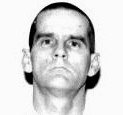
Winford Stokes
Homicide Edward Charles Allaway
Homicide · USA · 1976
Edward Charles Allaway Edward Charles Allaway was found not guilty by reason of…
7 victims
Edward Charles Allaway
Homicide · USA · 1976
Edward Charles Allaway Edward Charles Allaway was found not guilty by reason of…
7 victims
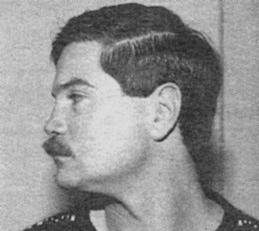 Thomas McIlvane
Mass murderer · USA · 1991
Thomas McIlvane was a former postal worker who committed suicide by shooting hi…
4 victims
Thomas McIlvane
Mass murderer · USA · 1991
Thomas McIlvane was a former postal worker who committed suicide by shooting hi…
4 victims
 Anthony Spears
Murderer · USA · 1992
Defendant: Anthony Spears (Caucasian). He lived near San Diego. · Victim: Jeane…
1 victim
Anthony Spears
Murderer · USA · 1992
Defendant: Anthony Spears (Caucasian). He lived near San Diego. · Victim: Jeane…
1 victim
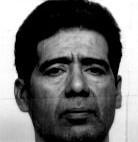 Mariano Juarez Rosales
Murderer · USA · 1985
Mariano Juarez Rosales was sentenced to death on December 27, 1985. · 1984 — Ma…
2 victims
Mariano Juarez Rosales
Murderer · USA · 1985
Mariano Juarez Rosales was sentenced to death on December 27, 1985. · 1984 — Ma…
2 victims
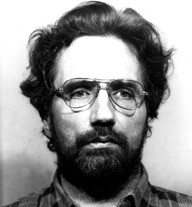 Gary Heidnik
Murderer · USA · 1986
Gary Heidnik was executed by lethal injection in Pennsylvania on July 6, 1999.…
2 victims
Gary Heidnik
Murderer · USA · 1986
Gary Heidnik was executed by lethal injection in Pennsylvania on July 6, 1999.…
2 victims
- Gender
- male
- Country
- USA
- Location
- Missouri, USA
- Date of birth
- March 21, 1951
- Age at first offence
- 18
- Characteristics
- mentally ill
- Victim profile
- Women
- Method of murder
- Strangulation
- Date(s) of murder
- 1969 / 1978
- Years active
- 1969–1978
- Date of arrest
- —
- Status
-
Executed
Executed by lethal injection in Missouri on May 11, 1990
Background
Winford L. Stokes was staying with Darlene at a hotel in the city of St. Louis on February 18, 1978. That evening Darlene had a date with Wilbert, and Stokes joined the two for dinner at the Heritage House and later arrived at a lounge called "Some Place Else" where victim Pamela R. Brenda was as well.
Stokes went to find a waitress after drink orders were delayed.
Soon thereafter, Stokes was seen dancing with Pamela R. Brenda. Brenda returned to the table with him, introduced herself to Darlene and Wilbert, and joined the group which imbibed several rounds of drinks. It was agreed that no one was intoxicated.
At approximately 11:30 pm, Darlene and Wilbert announced they were ready to leave. Stokes asked Wilbert to go to the restroom with him. Wilbert said he "would catch a ride home" as Brenda had promised to take him.
The offence
On Tuesday, February 21, 1978, the manager of the apartment building used his pass-key to allow a serviceman to enter Brenda's apartment. When they entered a back bedroom, they discovered Brenda's nude body sprawled on the floor with a pillow or pillow case over her head and an apron wrapped around her neck.
The apartment was in disarray, and the bedroom was ransacked. The police remained nearly eight hours collecting evidence.
The next day an autopsy was performed and the cause of death was determined to be manual strangulation, with death occurring more than one day prior to the autopsy.
Although Stokes ended up with Brenda's car and pendant watch after the murder, the facts did not show that the homicide occurred "in the perpetration of" a robbery. The evidence indicated that Stokes met Brenda in a St. Louis bar on Saturday night and accompanied her home in the early morning. On Tuesday, Brenda's nude body was found in her apartment, riddled with knife wounds. Stokes's fingerprints were found on several items in the apartment.
Investigation
Several latent fingerprints were lifted from different objects in the room. Four prints were determined later to be those of Stokes.
After the murder, Brenda's body was identified by her employer, who arrived later.
Arrest
About a month later, Stokes was arrested in Indiana with Brenda's car.
Stokes's wife, Ramona, had sold the victim's pendant watch shortly before the arrest.
At first Stokes told the police that he had never heard of Brenda. In his third version of his story, he told the police that he and Ramona had gone to Brenda's home, taken some items, and that he had struck Brenda and knocked her down before he and Ramona left. Ramona emphatically denied this story at trial.
Trial
Stokes was convicted of capital murder in the Circuit Court of St. Louis County in October 1979. He was sentenced to death.
The conviction was affirmed by the Missouri Supreme Court in State v. Stokes, 638 S.W.2d 715 (Mo. 1982) (en banc).
Stokes was tried for capital murder after the State withdrew an amended indictment for second degree murder and reinstated the original indictment for capital murder following a failed plea proceeding in the county court.
At the close of Stokes's trial, the judge instructed the jury on capital murder, second degree murder, and manslaughter. The judge gave no instruction on first degree murder.
The jury considered instructions on second degree murder and manslaughter before convicting Stokes of capital murder. After a separate sentencing hearing, the jury prescribed the death penalty and then fixed Stokes's punishment at death, which the judge imposed as the sentence.
During the sentencing phase, the State presented evidence of four statutory aggravating circumstances: (1) the defendant had a "substantial history of serious assaultive convictions," (2) he murdered for pecuniary gain, (3) the murder "involved torture or depravity," and (4) the defendant was a prison escapee at the time of the murder. Defense counsel presented no evidence in mitigation but pleaded for mercy in a closing statement.
The judge instructed the jury to consider one statutory mitigating circumstance: whether Stokes had acted under extreme emotional or mental distress. After deliberating for three hours, the jury found evidence beyond a reasonable doubt of all four aggravating circumstances.
Appeals
Missouri post-conviction and direct appeal
Petitioner moved to vacate the judgment under Missouri Supreme Court Rule 27.26.
The St. Louis Circuit Court held an evidentiary hearing and denied petitioner's motion. The Missouri Court of Appeals affirmed the circuit court's denial of post-conviction relief (Stokes v. State, 688 S.W.2d 19 (Mo. Ct. App. 1985)).
Federal habeas corpus
In June 1985 Stokes filed a federal habeas corpus petition. It was referred to a federal magistrate, who wrote a 32-page report recommending that the petition be denied (Stokes v. Armontrout, No. 85-1496 C (6), Report & Recommendation, (Sept. 22, 1986)).
In November 1986 the District Court adopted the magistrate's recommendation, and Stokes appealed.
The United States Court of Appeals, Eighth Circuit, submitted the appeal on Nov. 11, 1987 and decided it on July 13, 1988. Rehearing was denied Sept. 9, 1988. The court affirmed.
Stokes asserted ten grounds for relief: (1) the State improperly withdrew from a plea agreement; (2) the State's endorsement of twenty-five new witnesses on the day of trial and his attorney's failure to interview these witnesses deprived petitioner of his constitutional right to effective cross-examination; (3) he was denied due process when the State was allowed to give notice of its evidence in aggravation on the day of trial, and by the State notifying him only one month before trial of its intent to seek the death penalty; (4) he was denied due process and effective assistance of counsel when the court refused to grant a continuance after the State's late endorsements, and his attorney failed to interview five witnesses who did testify; (5) his attorney was ineffective because he failed to raise the issue of the court's error in not instructing the jury on the lesser-included offense of first degree murder in petitioner's motion for new trial; (6) his attorney was ineffective because he did not prepare for or present any evidence in the sentencing phase of the trial; (7) his right to a speedy trial was violated, inter alia, by the sixteen-month delay between indictment and trial; (8) his attorney was ineffective because he submitted a deficient motion for new trial; (9) his attorney was ineffective because he wrote a deficient brief on direct appeal; and (10) he was denied due process because the jury was "death-qualified."
The appellate court found only three issues (grounds one, five, and six) required discussion.
Plea agreement enforcement claim
In September 1979 Stokes had seven felony charges pending in St. Louis City, including capital murder, in addition to the unrelated capital murder charge in St. Louis County on which the court focused today.
As Stokes's City trial drew near, he and his trial counsel reached an agreement with St. Louis City and County prosecutors. Under the agreement, Stokes would plead guilty to second degree murder in both City and County courts, and the State would recommend fifty year sentences to be served concurrently.
On September 10, 1979, Stokes pled guilty in the City court to second degree murder, two counts of first degree robbery, armed criminal action, two counts of escaping custody, and stealing a motor vehicle. In keeping with the plea agreement, the City prosecutor recommended fifty years, and the City judge gave sentences for all the crimes totaling fifty years.
Stokes was transferred to St. Louis County ten days later.
At a second plea proceeding on September 20, 1979, Stokes refused to plead guilty to second degree murder in County court after a two or three minute discussion with counsel off the record. Stokes told his attorney that he felt that the State was "lying on" him. The judge was unaware that Stokes may have been confused.
When the plea session broke down, the County prosecutor withdrew the amended indictment for second degree murder and reinstated the original indictment for capital murder. That afternoon Stokes met with his attorney and showed him an erroneous newspaper article. After counsel explained that the article was incorrect, the defendant was again ready to plead guilty in the County.
The next morning, when Stokes's counsel told the County prosecutor about Stokes's confusion and renewed willingness to plead guilty, the prosecutor said that the State would not re-extend its offer. Stokes was tried for capital murder and convicted.
In his habeas petition, Stokes asserted that the State improperly withdrew its offer for a plea bargain on the capital murder charge in the County. He asserted that the City and County plea agreements comprised a single two-part package deal. He argued detrimental reliance on the State's promise to recommend a fifty year concurrent sentence on the unrelated capital murder charge in the County during a brief period of confusion, and that the State was estopped from withdrawing its offer.
Stokes also claimed the State withdrew its offer to use the City guilty pleas as evidence of aggravating circumstances for the death penalty and for impeachment if Stokes decided to testify.
Stokes did not raise this issue on direct appeal to the Missouri Supreme Court and first presented it as part of an ineffective assistance allegation in his Rule 27.26 motion.
The Rule 27.26 court held that trial counsel had fully explained the agreement to Stokes and that counsel properly contacted the County to re-open the original deal after the failed plea proceeding.
The Missouri Court of Appeals stated: "The record clearly establishes that [Stokes], not the state, reneged on the plea agreement. But for the action of [Stokes], he would have been sentenced in the county circuit court in accordance with the original plea agreement." (Stokes, 688 S.W.2d at 22.)
The appellate court dismissed Stokes's suggestion that he did not actually reject the State's offer. During the failed plea proceeding in County court, Stokes said: "I'm not going to plead guilty." The County prosecutor responded: "Your Honor, in that case, since, as I stated in my announcement as a result of specific plea negotiations and, therefore, since that is not going through with, the State would like to withdraw the [second degree murder] amendment and stand on the original Indictment of Capital Murder." The County judge said: "THE COURT: But my point is, [Stokes] was aware of the State's recommendation. He was aware that it was a concurrent sentence of 50 years, concurrent with the sentence imposed in the City. And with that knowledge, he chose not to plead guilty? [DEFENSE COUNSEL]: Yes."
The appellate court held that the State's withdrawal after Stokes repudiated the agreement violated neither the law of contracts nor the Constitution. The appellate court held the prosecutor's decision left Stokes free to exercise his right to a trial by jury.
Ineffective assistance claim regarding omission of first degree murder instruction
Stokes asserted trial counsel was ineffective because he failed to raise in his motion for new trial the trial court's error in not offering a mandatory first degree (felony) murder instruction.
At the close of trial, the judge instructed the jury on capital murder, second degree murder, and manslaughter. The judge did not instruct on first degree murder. The magistrate found that instruction to be mandatory under Missouri law as it stood when Stokes committed the capital murder.
Trial counsel did not request a first degree murder instruction, did not object to its absence, and did not raise the issue in the motion for new trial. Appellate counsel did not raise the issue on direct appeal. Stokes raised the instructional issue first in his Rule 27.26 motion, which included about forty issues. The Rule 27.26 court denied the motion.
The Rule 27.26 counsel did not advance the ineffective assistance claim to the Missouri Court of Appeals in his three-issue brief. The appellate court held the claim was procedurally barred and that Stokes failed to show cause based on ineffective assistance of Rule 27.26 counsel.
The appellate court described Strickland's cause standard and held that Stokes failed to demonstrate that performance by Rule 27.26 counsel was "professionally unreasonable" under Strickland. The appellate court noted testimony that Rule 27.26 counsel considered including the claim but decided it would not justify reversal. The appellate court characterized the winnowing and focusing of issues as effective appellate advocacy.
The appellate court also held that Stokes failed to establish prejudice in that he was not denied fundamental fairness and that the claim was barred by procedural default.
Ineffective assistance claim regarding mitigation evidence in sentencing phase
Stokes asserted trial counsel was ineffective because trial counsel failed to prepare for or offer mitigating evidence during sentencing.
The appellate court described the statutory aggravating circumstances presented by the State, the defense counsel's lack of mitigating evidence, the instruction on extreme emotional or mental distress, the jury's three-hour deliberation, the finding of all four aggravating circumstances, and the jury's death sentence.
On post-conviction appeal, Stokes presented evidence that both his parents and witnesses opposed to the death penalty would have been willing to testify on his behalf during sentencing. At the Rule 27.26 hearing, trial counsel testified: "I guess I anticipated [the death phase] in a sense but I didn't prepare for it in the sense of calling witnesses or anything." When questioned further, counsel testified: "Q: Or planning to call witnesses or anything?" "A: Right...."
Stokes's parents testified at the Rule 27.26 hearing. Mrs. Stokes said she was unaware of Stokes's actual crimes until she heard about the death sentence on TV and that she was never in contact with her son in jail. She said she was the head of a twelve-child household and that she was religious.
Mr. Stokes, identified as a storeroom clerk and Baptist preacher, divorced Mrs. Stokes when their son was five, but said he saw him regularly during his youth. He testified: "I'm not quite sure what you mean by 'close relationship.' We had a father-son relationship and I would see him on occasion." Father visited son in prison four or five times in as many years.
The appellate court agreed with the lower courts that Stokes failed to prove prejudice under Strickland. The appellate court stated the parents' testimony would have provided virtually no mitigating evidence concerning character or background, and it refused to speculate beyond the record. It held that counsel's failure to elicit testimony from Mr. and Mrs. Stokes did not result in prejudice with a "reasonable probability."
The appellate court rejected Stokes's assertion that he was prejudiced by counsel's failure to offer testimony that the death penalty flouts the Bible and fails as a deterrent. The appellate court held such generalized testimony was irrelevant and that Stokes was not prejudiced.
The appellate court affirmed the District Court's judgment and found the other seven grounds without merit.
Outcome
The United States Court of Appeals for the Eighth Circuit affirmed the District Court's judgment denying Stokes's petition for a writ of habeas corpus.
Winford Stokes was executed by lethal injection in Missouri on May 11, 1990.
Timeline
- February 18, 1978 — Stokes stayed with Darlene at a hotel in St. Louis and joined Darlene and Wilbert for dinner at the Heritage House before going to "Some Place Else" where Pamela R. Brenda was present.
- Approximately 11:30 pm (February 18, 1978) — Darlene and Wilbert announced they were ready to leave; Stokes asked Wilbert to go to the restroom with him.
- February 21, 1978 — Brenda's body was discovered in her apartment; police were called and evidence collection began; an autopsy followed the next day.
- October 1979 — Stokes was convicted of capital murder in the Circuit Court of St. Louis County and sentenced to death.
- September 10, 1979 — Stokes pled guilty in St. Louis City to second degree murder and related offenses as part of a plea agreement that included a recommended total sentence of fifty years.
- September 20, 1979 — Stokes refused to plead guilty to second degree murder in St. Louis County; the prosecutor withdrew the second degree murder amendment and reinstated the capital murder indictment.
- June 1985 — Stokes filed a federal habeas corpus petition.
- Sept. 22, 1986 — The federal magistrate issued a report recommending denial of the petition.
- November 1986 — The District Court adopted the magistrate's recommendation.
- July 13, 1988 — The Eighth Circuit decided the appeal.
- Sept. 9, 1988 — Rehearing was denied.
- May 11, 1990 — Stokes was executed by lethal injection in Missouri.
Other details
The case involved: Stokes, Darlene, Wilbert, Pamela R. Brenda, Ramona, and the Missouri and federal courts. The Eighth Circuit panel consisted of McMillian, Arnold, and Bowman, Circuit Judges, and Bowman authored the opinion.
Stokes's plea proceeding transcript included the remarks quoted by Stokes, the County prosecutor, and the County judge.
Stokes was characterized as a psychotic slayer of women, and the record described him as psychotic.
The narrative included: "Ruled insane on two counts; escaped from asylum, 1978; executed on third count, May 12, 1990."
Spotted an error, or have more information about this case?