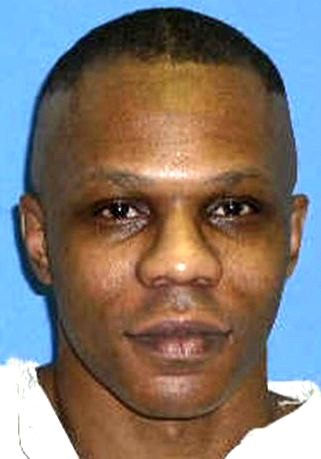
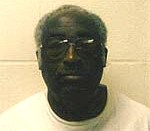
Larry Donell Davis
Murderer Brian Kevin Rosenfeld
Murderer · USA · 1985
Brian Kevin Rosenfeld Brian Kevin Rosenfeld was sentenced to three concurrent l…
23 victims
Brian Kevin Rosenfeld
Murderer · USA · 1985
Brian Kevin Rosenfeld Brian Kevin Rosenfeld was sentenced to three concurrent l…
23 victims
 Russell Ellwood
Murderer · USA · 1991
Russell Ellwood was a former taxi driver. Authorities suspected him of killing…
20 victims
Russell Ellwood
Murderer · USA · 1991
Russell Ellwood was a former taxi driver. Authorities suspected him of killing…
20 victims
 Robert Martines Perez
Murderer · USA · 1994
Name: Robert Martines Perez · Other name used in proceedings: Robert Martinez P…
15 victims
Robert Martines Perez
Murderer · USA · 1994
Name: Robert Martines Perez · Other name used in proceedings: Robert Martinez P…
15 victims
 Billy Frank Vickers
Murderer · USA · 1993
Billy Frank Vickers Vickers was executed by lethal injection in Texas on Januar…
14 victims
Billy Frank Vickers
Murderer · USA · 1993
Billy Frank Vickers Vickers was executed by lethal injection in Texas on Januar…
14 victims
 Edward Edwards
Serial killer · USA · 1977
Edward Edwards (June 14, 1933 – April 7, 2011) was a convicted American serial…
5 victims
Edward Edwards
Serial killer · USA · 1977
Edward Edwards (June 14, 1933 – April 7, 2011) was a convicted American serial…
5 victims
 Randy Arroyo Baez
Homicide · USA · 1997
Randy Arroyo Baez received a sentence of death on April 14, 1998. His sentence…
1 victim
Randy Arroyo Baez
Homicide · USA · 1997
Randy Arroyo Baez received a sentence of death on April 14, 1998. His sentence…
1 victim
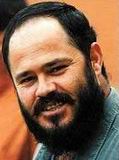 Stewart Wilken
Serial killer · South Africa · 1990
Stewart Wilken was sentenced to seven terms of life imprisonment on February 23…
10 victims
Stewart Wilken
Serial killer · South Africa · 1990
Stewart Wilken was sentenced to seven terms of life imprisonment on February 23…
10 victims
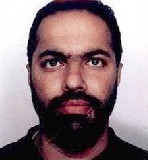 Maninder Pal Singh Kohli
Murderer · United Kingdom · 2003
Maninder Pal Singh Kohli murdered Hannah Foster, a 17-year-old British student,…
1 victim
Maninder Pal Singh Kohli
Murderer · United Kingdom · 2003
Maninder Pal Singh Kohli murdered Hannah Foster, a 17-year-old British student,…
1 victim
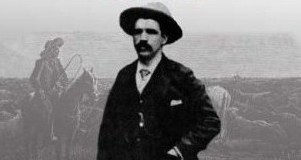 Jackson Lee Davis
Murderer · USA · 1896
Jackson Lee Davis, also known as Diamondfield Jack, was an inmate. · June 4, 18…
2 victims
Jackson Lee Davis
Murderer · USA · 1896
Jackson Lee Davis, also known as Diamondfield Jack, was an inmate. · June 4, 18…
2 victims
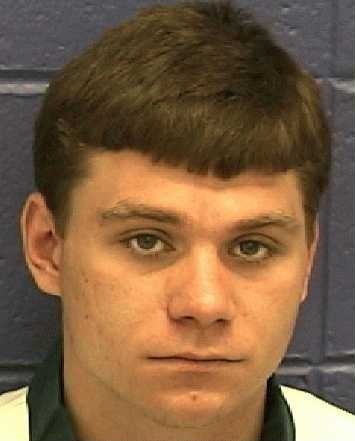 Joshua Daniel Bishop
Murderer · USA · 1994
Joshua Daniel Bishop was 22 years old when he was sentenced to death in Baldwin…
1 victim
Joshua Daniel Bishop
Murderer · USA · 1994
Joshua Daniel Bishop was 22 years old when he was sentenced to death in Baldwin…
1 victim
- Gender
- male
- Country
- USA
- Location
- Potter County, Texas, USA
- Date of birth
- October 9, 1967
- Age at first offence
- 28
- Characteristics
- robbery
- Victim profile
- Michael Barrow (male, 26)
- Method of murder
- St abbing with knife
- Date(s) of murder
- August 28, 1995
- Years active
- 1995
- Date of arrest
- —
- Status
-
Executed
Executed by lethal injection in Texas on July 31, 2008
Case record: Larry Donnell Davis
Status / sentence
Larry Donnell Davis was executed by lethal injection in Texas on July 31, 2008.
Timeline
- August 28, 1995 — Michael Barrow’s parents found him dead inside his house in Amarillo, Texas; he had suffered blunt force trauma and puncture and laceration wounds; a shoe impression and evidence of stolen items were found at the residence.
- March 19, 1999 — Davis was convicted of capital murder.
- March 27, 1999 — Davis was sentenced to death.
- December 18, 2002 — The Texas Court of Criminal Appeals denied state habeas relief.
- April 28, 2003 — The Supreme Court denied certiorari review.
- July 31, 2006 — The district court denied federal habeas relief.
- August 31, 2006 — The district court granted Davis’ application for COA.
- June 19, 2007 — The Fifth Circuit Court of Appeals denied relief.
- July 31, 2008 — Davis was executed by lethal injection at the Texas Department of Criminal Justice Walls Unit; he was pronounced dead at 6:19 p.m.
Background
Larry Donnell Davis was scheduled for execution after 6 p.m. Thursday, July 31, 2008. He was convicted of capital murder and sentenced to death for the August 1995 murder and robbery of Michael Barrow in Amarillo.
The offence
Victim
Michael Barrow was murdered during a robbery at his home.
Account of the crime (confession and trial evidence)
Larry Donnell Davis gave a fourteen-page confession that was admitted at his trial.
Davis said he was approached by his friends and brothers Ray (“Ray-Ray”) and Donald Drew (“Drew”), who had a plan to rob Michael Barrow, an acquaintance of the men. Drew asked Davis if they could use his car. In exchange for Davis’ help, Davis was promised the wheels from Barrow’s car and a stereo system; Davis agreed.
Davis, Ray-Ray, Drew, and two “youngsters” rode in two separate cars to Barrow’s house. Ray-Ray, Drew, and Davis knocked on the door and entered Barrow’s house under the guise that they were there to visit.
While Barrow was sitting on a couch, Davis distracted him. Drew hit Barrow in the back of the head with a dumbbell. Barrow fell to one knee on the floor; Davis helped him back to the couch and tied his hands behind his back with Drew’s bandana. Ray-Ray stood over Barrow trying to get the nerve to kill him.
While Davis searched through Barrow’s closet for things to steal, Davis told Ray-Ray to “take care of his business.” Ray-Ray then stabbed and punched Barrow. Barrow began to struggle and the knife broke. Davis handed Ray-Ray a “little ice pick” and Ray-Ray continued to stab Barrow.
Davis and Ray-Ray looked around the house and Barrow’s car for speakers but did not find them. They were gathering a TV and VCR when they heard Barrow cough. Davis and Ray-Ray went back to Barrow and discovered Barrow had undone his feet, which had also been tied.
At this point Barrow tried to put up a fight. Davis hit him in the mouth and held him down while Ray-Ray hit him with a pipe. When Barrow continued to crawl around, Davis retrieved a butcher knife from one of the kitchen drawers and gave it to Ray-Ray, who began to stab Barrow with it.
Because they were still not sure Barrow was dead, Ray-Ray started kicking him in the ribs. Davis told Ray-Ray to “do what I say.” Davis instructed Ray-Ray to position himself on Barrow’s neck; Ray-Ray complied. Davis admitted that both he and Ray-Ray got blood on their shoes during the murder. Davis and Ray-Ray then left with Barrow’s property.
Davis also provided details about the days immediately following Barrow’s murder, including attempts to pawn some of the property and conceal other property.
Evidence
The State introduced evidence indicating that shoes found in Davis’ home had Barrow’s blood on them. Prints from the shoes Davis wore were consistent with shoe impressions found at the scene of the crime, on the victim’s clothing, and on the victim’s body. These prints were impressed on the skin of the deceased and over his heart.
On the night of the murder, Cynthia Green testified that Davis came home late at night nervous and upset, with blood on his face and leg. The next day Davis brought a TV, VCR, some jewelry, and a tape rewinder into their house, and told Green that he had been with Ray-Ray.
Ray-Ray gave a statement to the police confirming that he and Davis had killed Barrow.
A pathologist established that the victim had sustained multiple blunt force injuries to the skull, blunt force trauma to the chest sufficient to cause rupture of the heart, and knife wounds to the body as a whole, particularly two sharp wounds to the neck. The hands displayed defensive wounds. Cause of death was multiple blunt force and sharp force injuries with massive internal injuries.
A criminalist identified footprints left at the scene of the crime, more specifically on the floor and on the body of the victim, which were consistent with prints lifted from tennis shoes identified by Cynthia Green as belonging to Davis.
Defensive theory and argument at trial
The jury trial included a guilt-innocence phase that lasted six days. The defense theory was that Davis had been recruited by Castillo and the Drew brothers to assist in the robbery of the victim and the fencing of the loot taken from the residence, but that the original conspiracy to break into the victim’s home and kill him in order to carry out the burglary originated with Castillo and the Drew brothers only, and that Davis could not be considered an accomplice to those acts.
The defense final argument highlighted “irreconcilable inconsistencies” between Davis’ confession and the physical evidence recovered from the crime scene. The defense asked the jury to find Davis guilty of the lesser included offense of murder.
The prosecution argued for conviction of capital murder, including by finding Davis to be a party to felony murder or by finding Davis personally delivered the blow to Barrow’s chest that ruptured his heart. The jury found Davis guilty of capital murder.
Investigation
On the night of August 28, 1995, an Amarillo police officer was dispatched to a house in reference to a report that a body had been found in a house. The victim, Michael Barrow, had been beaten and slashed about the throat. The crime scene investigation revealed shoe impressions left on the floors of the residence; it was theorized that there had been more than one assailant. Numerous items, including jewelry, a television and other electronics, had been taken from the residence.
Interviews with the victim’s known friends revealed evidence leading to the arrest of two persons: Kristy Castillo and Donald Drew. These individuals were later indicted for the murder of Barrow, along with Davis.
Further investigation led to the arrest of Ray Drew, brother of Donald Drew. Ray Drew provided a written statement implicating himself and Davis in the murder and robbery of Barrow. Based upon the confession of Drew, Davis was arrested.
After his arrest, Davis provided a lengthy, detailed written confession to law enforcement that implicated him and the Drew brothers, described the robbery manner carried out and the beating and stabbing inflicted on Barrow by Ray Drew, and described taking various items from the house and where these items were taken for storage, and efforts at selling the stolen items and the money realized from fencing the loot.
Cynthia Green testified that she pawned jewelry, a television, a VCR, and a tape rewinder that Davis gave to her, and that she later consented to a search of her residence by the Amarillo Police Department. The search turned up bloody clothing linked to the slaying.
Green also testified that she was permitted to testify at trial about a visitation she had with Davis at the Potter County Correctional Facility where Davis was incarcerated while awaiting trial; Green said Davis made an admission to her that he had pinned the victim down while others committed the murder.
Green was also permitted to testify that Davis was a known gang member. Davis’ written statement confirmed that the murder of Barrow was gang-related.
Kristy Castillo provided law enforcement with a written confession. This statement was read to the jury and directly implicated Castillo, Donald Drew and two other individuals in the burglary of the Barrow residence, the resulting robbery of the victim, and his murder. Castillo recounted in the statement that she held the knife with Drew as the victim’s throat was cut, described the beating inflicted on Barrow prior to the stabbing murder, and described the theft of many items from the Barrow residence. At no time in any portion of the written statement did Castillo mention Davis by name or implicate him in the burglary, robbery, theft of items or murder. Castillo did not testify live before the jury.
In a federal appellate record discussion, it was described that the state introduced Davis’ confession in which he admitted his involvement in a gang plot to murder Barrow and steal his property. Davis confessed that he was approached by Raydon (“Ray-Ray”) Drew and his brother, Donald Drew, that they needed money, and that Ray-Ray wanted to earn a “teardrop” tattoo as a member of the Crips street gang. They planned to kill Barrow and offered Davis Barrow’s stereo and chrome wheels in exchange for his help.
The confession described Davis, Ray-Ray, and Donald Drew going to Barrow’s house with two “look-outs,” Davis, Ray-Ray, and Donald Drew going inside and visiting with Barrow, Ray-Ray hitting Barrow on the head with a weight, feet being tied, Donald Drew leaving, Ray-Ray asking for his knife, Davis giving him his knife, Ray-Ray repeatedly stabbing Barrow, and the knife handle breaking so Ray-Ray continued stabbing with the blade. Davis handed Ray-Ray an ice pick, and Ray-Ray attacked Barrow with the ice pick. The confession also described hearing Barrow cough, finding Barrow had untied his feet, Davis hitting Barrow in the mouth and holding him down while Ray-Ray hit him with a pipe, Davis getting a butcher knife from Barrow’s kitchen and giving it to Ray-Ray who began to stab Barrow with it, and Davis instructing Ray-Ray to stand on Barrow’s neck while Davis said both he and Ray-Ray got blood on their shoes. The confession additionally stated that Ray-Ray acted alone in inflicting Barrow’s fatal injuries while also admitting Davis tied Barrow’s hands with a bandanna, supplied Ray-Ray with each of the weapons used to attack Barrow, and held Barrow down while Ray-Ray attacked him, and that he encouraged Ray-Ray and gave instructions on how to accomplish the killing. It further stated that he took some of Barrow’s property and pawned it.
Acting on information provided by Davis, police found the bloody shoes and clothing Davis had worn on the night of the murder in the attic of Cynthia Green.
Arrest and detention-related altercation
While in jail awaiting trial, Davis had an altercation with members of the Potter County Sheriff’s Department.
Deputy Johnny Cox testified that on May 23, 1997, an officer received word that another inmate was in danger and that the officer would have to be moved to another cell. The officers attempted to switch Davis and the other inmate, but Davis refused to be moved. When the officers attempted to put handcuffs on Davis and forcibly move him, he resisted and struck a female deputy, knocking her to the ground, then struck another officer in the chest. Davis was holding an uncapped Bic pen (considered a weapon in this context) in his fist in a “stabbing” manner. Deputy Cox struggled with Davis until another officer knocked them both to the ground; Davis was then placed in handcuffs and leg irons. Officer Cox was struck in the face and received several bumps and bruises on his knees and elbows.
Deputy Gregory Gill received scratches and cuts to his arms during the altercation. Davis unsuccessfully tried to strike Gill in the face and chest and kick him between the legs. A search of Davis’ cell revealed several ink pens hidden with his socks; inmates were only allowed to have two pens in their cells.
Trial
Charges and conviction
Davis was convicted of capital murder.
Jury and guilt-innocence
The guilt-innocence phase lasted six days. The defense asked for conviction of the lesser included offense of murder.
Confession and trial statements
Davis’ fourteen-page confession was admitted at trial.
In a federal appellate record discussion, it was stated that the State introduced into evidence Davis’ confession in which he admitted involvement in a gang plot to murder Barrow and steal his property. Davis’ confession stated he was approached by Raydon (“Ray-Ray”) Drew and his brother, Donald Drew, that they needed money, and that Ray-Ray wanted to earn a “teardrop” tattoo as a member of the Crips street gang. Davis’ confession described the planned exchange involving Barrow’s stereo and chrome wheels from Barrow’s car, entry to Barrow’s house, the sequence of attacks, the instructions given to Ray-Ray, and the tying of Barrow’s hands and feet, as well as Davis’ admissions about blood on shoes and efforts to pawn property.
Evidence collection linking Davis to the scene
Photographs of a shoe print on Barrow’s chest were introduced in the federal appellate record discussion, described as matching the pattern on the bottom of the shoes worn by Davis on the night of the murder.
Barrow’s bank card was described as being found in Davis’ wallet, along with a pawn ticket that had belonged to Barrow.
Sentencing
Punishment-phase evidence relating to abusive treatment of women
At the punishment phase, the State presented evidence of Davis’ abusive treatment of women.
Mary Cornelius (former wife)
Mary Cornelius testified that Davis was mentally and physically abusive during their marriage. She said Davis monitored her every move, did not allow her to use the phone or leave the house, and held her at knifepoint on occasion. She said he required her to stand before him for long periods, sometimes naked, not allowing her to sit down or to leave the house. Cornelius testified that Davis kicked her and beat her, including during her pregnancy. Cornelius testified that she miscarried after being kicked in the stomach during one beating. Cornelius testified that Davis would rub her with alcohol because he thought it would keep her from bruising when he hit her.
Cornelius testified that she stole a car for Davis by telling the car dealership she wanted to take it for a test-drive. She said Davis took the car and left with the couple’s daughter, intending to get out of town quickly. Cornelius was to join Davis but went into labor a few hours later and went into the hospital where she was questioned about the stolen car. Cornelius testified that while she was still in the hospital, she agreed to take responsibility for the stolen car so that Davis would not get into trouble. She later attributed the theft to Davis after he suggested she abandon the newborn baby in the hospital—stating that “they ‘could have another baby’” and get out of town.
Cornelius testified that she finally left Davis when Davis became abusive toward their children.
Sherry Morrison (former girlfriend; mother of one of Davis’ children)
Sherry Morrison testified that Davis physically and verbally abused her. Morrison said she met and moved in with Davis when she was fifteen. She said Davis became physically and verbally abusive, locked her in the house, and marked the door to know if she tried to leave. Morrison said that after she became pregnant Davis kicked her in the stomach, telling her he did not want her to keep the baby. When Morrison left him, Davis refused to return her belongings.
Sentence imposed
Davis was sentenced to death after his March 1999 conviction.
Appeals
Direct appeal and state habeas
The Texas Court of Criminal Appeals affirmed Davis’ conviction and sentence. The Supreme Court denied certiorari review.
It was stated that Davis’ conviction and sentence were affirmed by the Texas Court of Criminal Appeals. The Supreme Court denied certiorari review on April 28, 2003. The Texas Court of Criminal Appeals denied state habeas relief on December 18, 2002.
Federal habeas and COA
The district court denied federal habeas relief on July 31, 2006. The district court granted Davis’ application for COA on August 31, 2006. The Fifth Circuit Court of Appeals denied relief on June 19, 2007. Davis did not seek certiorari review of this decision.
Griffin/closing-argument claim (Davis v. Quarterman)
A federal habeas issue described in the record concerned prosecutorial comment on Davis’ failure to testify during closing argument at the guilt-innocence phase.
The appellate discussion included verbatim trial argument and exchanges. The challenged comment included:
“And what you will determine is Larry Donell Davis' shoes stepped on that boy three times. Maybe more. There was even one of his prints on the pants. Let me tell you, when this man with the teardrop on his eye, who sits here silently- MR. CLARK: Your Honor- MR. MURPHY:-and sits there and watches while- MR. CLARK: That is a direct comment on his failure to testify, and we object. THE COURT: I will sustain the objection. MR. CLARK: Please instruct the jury to disregard that last comment. THE COURT: Ladies and gentlemen, please disregard the last statement. MR. CLARK: Move for a mistrial. THE COURT: and the Motion to- MR. CLARK: For mistrial is denied? THE COURT: Is denied. MR. MURPHY:-watches while his attorneys get up here, and say: What's going on here? Has the state caused you to tell you this lie? No. The physical evidence brings you here. And let me tell you what he did. He instructed him. He provided him with three weapons, according to his own mind, and they talked about earning a teardrop just like he wears on his eye, before they ever got there. He provides him three weapons, as a party to this crime, and then he stoops down and he bursts the heart of this boy. That's what the physical evidence shows you. You want to get theatric? I'm going to win the Oscar for the Best Actor or Best Attorney in a Prosecuting Role. Because I am right.”
The appellate discussion described that Davis filed a motion for new trial claiming that the prosecutor’s comment on his failure to testify violated his Fifth and Fourteenth Amendment rights. The trial court conducted an evidentiary hearing with three witnesses testifying for the defense and a jury foreman testifying for the state regarding jury instructions and disregard of the comment. The trial court denied the motion for new trial.
The appellate discussion described that the Texas Court of Criminal Appeals held the comment was a direct comment on Davis’ failure to testify and assumed arguendo that the trial court’s instruction did not cure the error, but concluded it was harmless because none of the criteria from Anderson v. Nelson were met.
The appellate discussion further stated that the Court of Appeals for the Fifth Circuit affirmed the district court’s denial of habeas relief and concluded Davis was not entitled to federal habeas corpus relief on violation of right to remain silent, and that the judgment was affirmed.
Prior criminal history
The prior criminal history included multiple guilty pleas and sentences:
- Davis pled guilty to unauthorized carrying of a weapon, namely a club and an 8 1/4 inch hunting knife, on April 10, 1986, for which he was fined and sentenced to three days in jail.
- Davis pled guilty and was sentenced to three years in TDCJ for possession of a prohibited weapon; he received a probated sentence on June 26, 1989. His probation was revoked in February 1990 for violating the terms, and he was re-sentenced to two years in TDCJ.
- Davis pled guilty to theft by check on February 6, 1991 and received a probated sentence of five years; probation was revoked on March 11, 1992 for not following the terms, and he was sentenced to two years in TDCJ.
- Davis pled guilty to theft committed on June 26, 1993 for which he was sentenced to four years in state prison.
- Davis was identified as the assailant in the armed robbery of a children’s clothing consignment shop; Davis had not been convicted of this crime.
- Davis had been charged with a second capital murder for another murder in the course of a robbery; Davis had not been convicted.
- It was also stated that in February 1992, Davis received a 2-year sentence for one count each of Possession of a Prohibited Weapon and Theft Over $750, and that in July 1992 he was released on Parole; he was returned from Parole in August 1993; on 05/11/94 he was released on Mandatory Supervision; less than three months later, on July 1, 1994, he was returned from Parole with a new conviction and a four-year sentence for one count of Theft; and on May 3, 1995 he was again released on Mandatory Supervision. Less than four months later, Larry Davis and his co-defendants, Raydon Drew, Donald Drew, Jr. and Christie Castillo committed the capital murder of Michael Barrow.
Co-defendants and other related matters
Raydon Doen Drew pleaded guilty to murder and was sentenced to 50 years in prison. He was described as remaining in prison as of the writing in the record. Donald Drew Jr. pleaded guilty to conspiracy to commit murder and received a 5-year sentence; after completing that sentence, he received two convictions for assault causing bodily injury to a family member. For the first conviction in 2001, he was sentenced to 250 days in jail. For the second conviction in 2004, he was sentenced to 5 years in prison. Two juveniles who served as lookouts were also charged and pleaded guilty.
It was also stated that prosecutors maintained Davis was the leader of the pack who directed the attack so his friends could earn a coveted gang tattoo.
Other details
Execution details and last words
Davis’ execution took place at the Texas Department of Criminal Justice Walls Unit. He was pronounced dead at 6:19 p.m.
In his last statement, Davis said:
“Blessed are they that mourn, for they shall be comforted. It is finished.”
Michelle Lyons, TDCJ public information officer, said: “Larry Davis was executed Thursday for the Aug. 28, 1995 murder and robbery of Michael Barrow in Amarillo,” and added: “In his last statement, Davis recited a Bible verse — ‘Blessed are they who mourn, for they shall be comforted’ — but did not speak to the victim’s family.”
Robert Mares, Barrow’s father, said: “I never expected that,” and: “In my opinion, he had 12, almost 13, years to make an apology. He could have very easily contacted someone from the system to make some kind of an apology, but no.”
Mares said he wished to thank several law enforcement agencies from the Amarillo area including the district attorney’s office, the Amarillo Police Department and several forensic investigators who worked on the case. He said: “I would also like to thank the state of Texas, because I’m very happy and thankful we do have the death penalty,” and: “It’s something we definitely need in our society.” He also said: “When you lose a family member like we lost, it never escapes your mind. It’s the first thing on your mind in the morning and the last thing on your mind at night.”
A Reuters account stated Davis’ last meal request was a hamburger with cheese and jalapenos and a vanilla shake.
Additional procedural and advisory details
Texas Attorney General Greg Abbott’s media advisory said Davis was scheduled to be executed after 6 p.m. Thursday, July 31, 2008.
A jury foreman testified at the evidentiary hearing that the jury was instructed not to consider Davis’s failure to testify as evidence against him, that the court instructed the jury to disregard the improper comment, and that, to his knowledge, the jury followed the trial court’s instructions.
Spotted an error, or have more information about this case?